Author Archives | Sloan Salinas

Indie artist Kid Bloom brings life to Purgatory

A little bit past sundown on Saturday, March 2, the doors of Purgatory at The Masquerade were opened to fans of indie artist Kid Bloom. With a capacity of roughly 300 people, Purgatory is the second smallest of The Masquerade’s performance spaces, Heaven, Hell and the new “Altar” (set to open in late March), and offers a more intimate concert experience than fans may find at most venues. 

While most shows have anywhere from two to three headliners, Sunday night only had one: rapper/singer RMR (pronounced “rumor”). Garnering nearly instantaneous fame when he dropped his first single on YouTube in February 2020, RMR quickly became known for disregarding any rules of genre. 

The single, titled “RASCAL,” is a reimagined version of Rascal Flatts’ “Bless the Broken Road” and was just the beginning of a career that pulls hip-hop, pop and country music together with the artist’s skilled voice and songwriting ability. From 2020 to late 2023, RMR was an anonymous artist, always wearing a ski mask and giving vague answers about his past during interviews. 

However, in November 2023, he decided to unmask for the first time. For the Atlanta concert, the singer took to the stage wearing the signature ski mask, though he took it off part of the way through his set. Throughout his time in front of the audience, RMR interacted with the crowd as much as he could, leading the room in singing “Happy Birthday” for an audience member, playing a unreleased song titled “Sweet Divorce,” before which he asked the audience if anyone had experience being happy about getting a divorce and telling the crowd that he wanted to meet “every single one of [them].” 

At 9 p.m., the moment the audience had been waiting for finally arrived: Kid Bloom walked onstage. 

Similarly to his opener, Lennon Kloser (who goes by the stage name “Kid Bloom”) blends genres to create his own unique sound. However, instead of rap and country, Kid Bloom merges elements of the psychedelic rock of the ‘70s, electronic and indie pop. Though he started releasing music in 2016, he gained a more significant following in 2020 with his EP “Blood Sugar.” This past February, he released his newest EP, “Inner Light (Phase 1),” before embarking on tour (aptly named the “Inner Light tour”). Kloser himself plays multiple instruments in addition to writing and singing, and he played guitar at the Atlanta show alongside other band members who played bass, guitar, keyboard and drums.

While many musicians don elevated or even theatrical outfits while touring, Kloser did almost the opposite, strolling onstage in baggy jeans, a plain T-shirt and a denim jacket (which he removed after playing the first song). For most of the show, a baseball cap monogrammed with the letters “IL” covered a significant portion of his face. If fans had not been there specifically to see him, they might have thought him some random guy. 

Along with his laid-back appearance, he also had a very relaxed demeanor that perfectly paired with Purgatory’s intimacy. Between songs, he joked around with the crowd, at one point asking if anyone would be willing to get him a beer (and appearing slightly surprised when an audience member actually did, not just for him but for the whole band). 

Another humorous between-song moment happened when Kloser realized his guitar was out of tune and asked someone to play a C. After unsuccessfully messing with it for a few seconds, he quickly put the drummer on the spot, announcing that he would tell jokes while the audience waited. Unprepared, the other young man resisted but ultimately reluctantly took the microphone. “There’s a reason they don’t give the drummer a microphone,” he lamented, laughing nervously, “this is a nightmare…my hands are literally shaking right now.” Lucky for him, Kloser quickly took the microphone back, encouraging the crowd to give the unwitting comedian a round of applause. 

About halfway through the set, Kloser announced that, in honor of “Inner Light (Phase 1),” they were going to play some songs from the unreleased “Phase 2,” rhetorically asking the crowd if that was “okay with them,” a question that was immediately met with cheering and applause. After two songs titled “4 the Best” and “Backseat Driver” (which he initially said was his favorite from the upcoming EP but later changed his mind in favor of a different one), there was a small interlude, during which the band played “Electric U,” Kid Bloom’s most popular song on Spotify. They finished the “unreleased portion” of the set with “Smoke In My Eyes” and “Water.” 

The second-to-last song the group played was “Different State of Mind” from their first EP by the same name. At the beginning of the song, Kloser asked the light board operator to turn off all of the stage lights, plunging the room into darkness for several lines of the song before one audience member turned on their phone flashlight; the rest of the crowd promptly followed suit to light the room with firefly-esque pinpricks. Following the display, they played one final song before thanking the crowd. Unlike many bands, Kid Bloom did not reappear for an encore. 

Overall, the night was one of humor and carefree music enjoyment. Kloser was personable and relatable, feeling much like “just another person” than many musicians, which allowed him to connect with his fans and interact with them like friends rather than people who paid to see him. 

Though initially scheduled to end on Tuesday, March 12, the Inner Light Tour will continue throughout the United States until the end of the month. There is no official date for “Inner Light (Phase 2),” but fans excitedly await its release.

The post Indie artist Kid Bloom brings life to Purgatory appeared first on Technique.

Posted in UncategorizedComments Off on Indie artist Kid Bloom brings life to Purgatory

“Seagrass” explores inter-generational trauma

From the Japanese-Canadian writer, actress and director Meredith Hama-Brown comes “Seagrass,” an award-winning film that explores how internal turmoil stemming from intergenerational trauma can affect the dynamics within an already struggling family unit. 

The movie begins with a family arriving at an immersive personal growth retreat. Along with wife Judith (Ally Maki, “Wrecked”) and husband Steve (Luke Roberts, “Black Sails”) are their two daughters, Stephanie (Nyha Huang Breitkreuz) and Emmy (Remy Marthaller). Though the couple enrolled in the program to attempt to fix their strained marriage following the recent death of Judith’s mother, the relationship continues to deteriorate rapidly, affecting not just the two of them but also their kids. Their struggles only seem to be exacerbated by one of the other couples at the retreat, Pat (Chris Pang, “Crazy Rich Asians”) and Sam (Hannah Bos).

Like Judith and Steve, Pat and Sam are a mixed-race couple, though Pat is Chinese-Australian instead of Japanese-Canadian like Judith. As Pat asks Judith various questions about her mom — or her parents in general — that she is unable to answer, Judith’s feelings of guilt around her lack of knowledge of her heritage increase as she tries to handle her grief.

As she and Steve are trudging through the retreat’s programming, Judith’s perception of Pat and Sam as having a flawless marriage further highlights how fractured hers and Steve’s is, pulling them further apart. 

The effects of their parents’ splintering relationship show in Stephanie and Emmy more prominently as the movie progresses, as Stephanie experiences peer pressure while attempting to make friends her age, and Emmy deals with unfamiliar feelings of fear and instability stemming from her grandmother’s death. The collapse of their parents’ relationship emotionally isolates the two girls as they face their own personal challenges while not fully understanding what is happening to their parents and why. 

Hama-Brown shared insight into some of the different themes throughout “Seagrass,” as well as her goals in creating it, during an interview with the Technique. 

What is the story behind how “Seagrass” came to fruition?

“I definitely [started] with some ideas around a family going to a retreat and it being the breakdown of family, but I knew from the outset that it wasn’t so much about whether the family would kind of collapse or not. For me, it was more about the internal worlds of the characters and the sense of uncertainty and this feeling [of] a loss of foundation within all of them. That was something that I knew, right from the start, was the central theme. [Even though] I expanded into so many different themes, [it would work] as long as everything tied back to that.”

I felt like there were different themes within each character; how did you come up with each character’s journey and how
their story-line would go? 

“I think I knew early on the general main thing each character was tackling. [Emmy] is encountering death for the first time and [it’s] shocking her to her core…[e]ven though she is so young, she’s really encountering some very profound fears around death and trying to wrap her head around what that means and what the idea of impermanence means in general. For Stephanie’s character, I knew that, [at her] age, she’s really seeking a sense of belonging [that] partially has to do with her mixed-race identity, but [it mainly] has to do with finding her place in the world as a young girl moving into teenagehood, and all the pressures that go along with that and wanting, more than anything, to belong. Then, for Judith, I knew from the beginning that she was having a kind of identity crisis. Not only is she questioning her place in the world as a mother, [and] as a wife, but she’s also questioning her place as a Japanese-Canadian person and trying to understand more about who she is…[T]hey all come back to uncertainty.” 

Switching topics a bit here, would you say that Judith is representative of people’s expectations
for their mothers?

“Absolutely. I think there are so many expectations around motherhood, and Judith is grappling with her own expectations. [Y]ou see her talk a bit about [how a lot of] these expectations [came] from her mother [because], as she says in the film, [her mother] didn’t have the same life that [she] does. [Her mother] had a much harder life in some ways…[and] didn’t have time to think about her own happiness [because she] had to think about her duty and responsibility to her family. And although Judith…wants to move beyond that and find self-actualization, she’s still coming up against guilt around what motherhood looks like. And she’s maybe holding on to a model that isn’t right for her [and]…in many ways, that could be one of the central conflicts for her character. I think people who don’t have a more complex understanding [of] motherhood may miss that in some ways and not understand why she’s acting the way she is. But…people who do have a deeper understanding of motherhood and the complexities of it get [that] she’s trying her best to do everything for her family, and sometimes she’s falling short, or she’s falling short in the ways that she thinks she shouldn’t be but not standing up in the way that she actually needs to.”

How did your identity and experiences as a Japanese-Canadian person factor into making the movie?

“[T]here are some projects that look more [at] the incarceration of Japanese-Canadians and Americans. But I wanted to look at the trickle-down effect and inter-generational trauma from that [part of history]. It’s something that I haven’t seen explored in films much, maybe in some documentaries, but not…in this way. I wanted to put something forward that felt honest and truthful…Someone said to me once, ‘Oh, Judith didn’t…care to learn [about her heritage],” [which] is a misinterpretation because it’s [so common] in the Japanese-Canadian community. There is so much loss of history and culture; Personal family history is not something my grandparents’ generation talked about. [That] loss of culture comes from the fracturing of communities because Japanese-Canadians were dispossessed of their homes, and they were never able to return to a Japanese-Canadian community…. So… I wouldn’t say it’s Judith’s fault; this is part of the trauma. This is part of the trickle-down effect.” 

Does that trickle-down effect play into the Juxtaposition of Judith and Pat as people of Asian descent?

“So, Pat’s character is Chinese-Australian. [Because of that,] he has a very different connection to his Asian identity. It was important to see this contrast between two people of Asian heritage [with] different relationships to their Asian identity. I think sometimes it’s easy, in film, to blend everything together and that’s not what I wanted to do with this film. I wanted to show a very specific identity and how, in a sense…it brings up a lot of uncomfortable feelings [in Judith] that he has at this different connection. Because…people come from so many different walks of life, it’s important to show those different walks of life
with their identity.”

Why do you think it is important for people to see your debut
feature film, “Seagrass”?

“There’s a few things I want to put out into the world. The film explores what people call ‘casual racism,’ like microaggressions, [which are] a very insidious form of racism…[S]ince this film is set in the 90s, we didn’t have these words in the general lexicon…but now, in the current day, we’re starting to have
more discussions around it. 

Back in the 90s, if you tried to bring it up, it’d be like, ‘Oh, well, I’m just joking.’ These things still do happen; it’s just that we’re starting to talk about them. So, for me, it was important to explore that type of racism so that there’s more discussion around it.

 And, of course, looking at the Japanese-Canadian identity and history. And, you know, I think Japanese-Americans can also probably relate to a lot of it…I think there are a lot of people who still don’t know much about this horrific time in history in both the US and Canada, and I didn’t feel the need to explain all the history, but I was interested in putting it in the story in the hopes that people will reflect on it and potentially look into it more if they don’t know much about it.”

“Seagrass” is a poignant, visually mesmerizing film that combines the impact of grief on a crumbling marriage, as well as on the children witnessing the relationship’s downfall. 

The post “Seagrass” explores inter-generational trauma appeared first on Technique.

Posted in UncategorizedComments Off on “Seagrass” explores inter-generational trauma

Black artists being overlooked in rock industry

African American culture and musicians have always been at the forefront of musical progress. In fact, nearly every genre traces its origins back to the ingenuity of Black musicians. Such talent, however, remains largely unacknowledged by those outside communities of color, primarily due to the institutionalized racism and discrimination that has been rampant within the music industry since the very beginning. 

Even in today’s seemingly inclusive society, many Black musicians face predatory recording contracts, hostile work environments and significantly fewer opportunities for success in the music industry than their white counterparts. 

Bias against Black musicians is not hard to spot, either. Consider the Grammy Awards, which, year after year, pigeonhole artists of color into particular genres like “Progressive R&B” (formerly known as “Urban Contemporary” before being changed due to controversy), regardless of whether their music would objectively fit better into another genre like pop. 

Black artists have historically been discouraged from venturing into larger, white-dominated styles of music. Genres such as R&B pose the highest likelihood of success for non-white artists. This trend dates back to the 1940s when “Billboard” coined the term as a replacement for the problematic genre title of “race music.” Industry executives believed that genre was only for African American listeners.

This systemic restriction of musicians of color to a limited assortment of genres leads to a significant underrepresentation in others. Even for the few artists who attempt to make names for themselves as Black artists in predominantly white genres, they often do not get the recognition they deserve. This happens often in rock. 

Like most other music genres, rock music’s foundations stand on the contributions of the Black community. Still, the industry fails to give the same praise to Black artists as they give their white counterparts.

One could say that “rock and roll” was born in the 1950s when popular disc jockey Alan Freed used the title to describe a music style that blended elements of various genres, including rhythm and blues, jazz, gospel and country. Freed was one of the first white DJs to play music by Black musicians on a radio station that had a white audience. 

While the term may have originated with Freed, the characteristics that made the genre unique were all derived from the artistry of Black musicians. 

Rhythm and blues, arguably the most significant component of rock and roll, was also, at its core, an amalgamation of African American culture and musical stylings. The genre began taking shape around the 1920s, when large African American communities were moving from the rural areas of the South to larger cities like Chicago, Harlem and Los Angeles.

Though the pioneering artists behind rock and roll music included names like Sister Rosetta Tharpe, Little Richard, Chuck Berry and Fats Domino, people frequently associate the genre more with white musicians such as Elvis Presley, Bill Haley and Buddy Holly, all of whom received influence from the Black musicians who came before them. 

Over the years, rock music has expanded dramatically, branching into different subgenres and gaining more popularity than in the 1950s. Despite their cruciality to the genre’s birth, overshadowing occurred quickly for African American artists. Today, though, numerous Black musicians on the alternative scene are working to build a following while simultaneously fighting against industry stereotypes. Listed below are some of these musicians. 

Joshua Roberts and Joe Horsham –  Magnolia Park

Magnolia Park is a five-part alternative rock band from Orlando, Fla., made up of Joshua Roberts (vocals), Tristan Torres (guitar), Freddie Criales (guitar), Vincent Ernst (keyboard) and Joe Horsham (drums). The group curates their sound by infusing their music with elements of the emo, nu-metal, pop-punk and hardcore subgenres, with dashes of hip-hop. The resulting instrumentals combine with Roberts’ standout vocals to create a sound unique to Magnolia Park. 

Promoting their music through social media platforms like TikTok and Instagram, the band writes about important topics that the members themselves can personally relate to, such as mental health struggles and, as part of the BIPOC (Black, Indigenous People of Color) community, experiences with police brutality or discrimination based on their race or ethnicities. Roberts often talks about his experiences within the music industry and receives comments about how, as a Black man, there are specific genres that he should “stick to.” 

On the band’s website, a quote from Torres, one of the band’s founding members, reads, “Our goal when we’re together is to make sure the next generation doesn’t have to face as much racial backlash for being a rock band. In the industry, people look at us a certain way and try to impose things on us — and we want to make sure the next generation of rock bands don’t have to go through what we’ve been through.”

Kele Okereke – Bloc Party

London-based indie rock band Bloc Party was first formed in 1999, making them veterans of the alternative music world. Currently, the band’s official lineup includes Kele Okereke (lead vocals and rhythm guitar), Russell Lissack (lead guitar) and Louise Bartle (drums). In 2023, they brought on Harry Deacon (bass) as a touring member. 

Critics have categorized Bloc Party within sub genres ranging from post-Britpop to art-punk. Blending impressive guitar riffs with open and raw lyrics, the group has the versatility and skill to move between the laid-back, nostalgic feeling of indie soft rock and the racing sound of 90s punk. Some compare their sound to bands like Joy Division, The Pixies, Radiohead and Depeche Mode. No matter what style they have embraced, the band has found success, whether embracing the emo scene of the early 2000s or returning to alternative rock stylings with their newest release, “The High Life EP.”

Throughout their discography, the band has touched on relevant issues such as personal traumas, queer relationships and experiences with racism. While they may not be as popular as they were during emo’s heyday, many emerging Black artists like Willow Smith, Genesis Owusu and KennyHoopla cite Okereke and Bloc Party as a significant influence, having felt inspired by seeing a successful musician who looked like them. 

Cullen Moore – Sleep Theory

The newest of the bands on this list, Sleep Theory began as a solo project by retired Army veteran Cullen Moore and became a duo when he met Paolo Vergara, a bassist who had moved to the United States from the Philippines several years prior (2016). Between 2019 and 2023, the two musicians found two more band members, brothers Daniel and Ben Pruitt (guitar and drums). 

The goal of Sleep Theory was to find a way to create a hard rock group that incorporated elements of R&B, hip-hop and a little bit of pop. The group saw nearly instant success when they posted a TikTok with a clip of their debut single, “Another Way,” and the views and likes poured in. In September 2023, they released their first EP, “Paper Hearts,” a collection of songs that showcase just how unique the band’s multi-genre sound is. 

Emphasizing lyrical vulnerability and vocal experimentation, Sleep Theory quickly rose in the ranks of rock and metal, opening in amphitheaters on their first-ever tour. Though Moore is the principal vocalist — his powerful vocals communicate their music’s emotional intensity — every band member sings, contributing harmonies and backing vocals to the songs. Spurred by such overwhelming success, Sleep Theory has plans to continue working on new music for 2024. 

Edith Victoria and Téa Campbell – Meet Me @ the Altar

Not only are rock and its various subgenres incredibly white-dominated, but they are also incredibly male-dominated. But Meet Me @ the Altar challenges that narrative; women of color comprise the three-piece pop punk band. 

When Téa Campbell (guitar/bass) found Ada Juarez’s drum covers on YouTube in 2015, the two quickly decided to start a band despite living in  different states. They hosted online auditions for a vocalist and eventually welcomed Atlanta-native Edith Victoria into the band in 2017. All three young women recognized that they had not grown up seeing artists who looked like them in the music they loved, so they decided to be those artists for others, no matter what it took. 

During an interview with “Popsugar,” Campbell said, “We always knew that there was no one in the scene who looks like us. There’s no one doing the type of music that we’re doing that isn’t a straight white guy. That’s all that there was. But we always felt very comfortable with taking on that role, because we knew that we would want to have it. And we were super comfortable with being that for other people.”

The band utilizes grungy, early 2000s instrumentals and Victoria’s cheerfully feminine vocals to revive the sounds of MySpace pop punk from the eyes of BIPOC women in the LGBTQ+ community. 

Through their music, they address topics like struggling with self-esteem, hateful comments online and allowing yourself to feel the bad and not just the good. Though they have met significant pushback, from aggressive comments on social media to opening for all-white, male bands who clearly did not want them there, the women of MM@tA are persistent and determined to carve a place for themselves in the genre that they love, even if it does not always love them back. 

Magnolia Park, Bloc Party, Sleep Theory and Meet Me @ the Altar are all tackling different areas of rock music and, in doing so, are helping to ensure that Black musicians and musicians of color get the recognition they should have received from the beginning,inspiring a new generation of BIPOC kids. 

However, it is essential to note that this list was barely the tip of the iceberg of Black artists and artists of color beginning to make waves in rock music. 

Take the time to look into those artists and similar artists in other genres not listed, in which people of color do not see the representation or praise that white musicians do. Who knows, your new favorite artist could be one song away.


The post Black artists being overlooked in rock industry appeared first on Technique.

Posted in UncategorizedComments Off on Black artists being overlooked in rock industry

“Lisa Frankenstein” reanimates a morbid classic

People have seen plenty of classic literature film adaptations. Books that many read for the first time in a high school English class, from “Pride and Prejudice” to “Romeo and Juliet,” have made appearance after appearance on the big screen, each time with a different, unique take. Now, director Zelda Williams digs up Mary Shelley’s “Frankenstein” with the horror rom-com, “Lisa Frankenstein.”

Set in 1989, “Lisa Frankenstein” tells the story of Dr. Frankenstein and his monster through the lens of ‘80’s camp and teenage romance. In the movie, withdrawn high school senior Lisa Swallows (Kathryn Newton, “Big Little Lies”) struggles to fit in at a new school, instead preferring to spend her time at an abandoned cemetery amongst weather-worn headstones. One headstone becomes her favorite: the grave of a young man from the Victorian era.

One night, a lightning strike from a powerful storm reanimates the young man (Cole Sprouse, “The Suite Life of Zack and Cody”), who finds his way to Lisa’s house. After her initial panic, she quickly decides to hide him. Unable to speak and missing a few parts, the young man — known only as “The Creature” — is enamored with Lisa, who seems relatively unphased by her newly undead confidante.

As the film continues, the two realize they can acquire new parts for The Creature by killing people and taking what they need. With the help of Lisa’s sewing skills and a defective tanning bed with an electrical-safety problem, The Creature slowly becomes more alive and more in love with Lisa, a feeling that she appears to reciprocate. However, murder always has its consequences, and the young lovers find themselves racing to stay ahead of the authorities.

The movie itself feels like a reconfiguration of cult classics like “Heathers,” “Rocky Horror Picture Show” and “Jennifer’s Body” mixed with the sometimes questionable elements of ‘80’s teen movies like “The Breakfast Club” and “Sixteen Candles.”

Written by Diablo Cody, known for “Jennifer’s Body,” a horror-comedy cult classic, “Lisa Frankenstein” also marks the directorial debut of Zelda Williams, daughter of the late Robin Williams. Cody’s offbeat writing style and penchant for snappy dialogue are apparent throughout the movie, and Williams’ ambitious homages to other directors, such as Tim Burton, are commendable. Though Williams’ lack of experience made some of the movie feel overstuffed and disjointed, “Lisa Frankenstein” shows a promising future for the director as she continues to improve.

Leaning into the weirdness of movies like Burton’s “Edward Scissorhands,” the plot does not always make the most sense; it has a fair number of holes and occasionally leaves audiences unsure of what they just watched.

Despite these shortcomings, the movie is held aloft by not taking itself too seriously. The sheer ridiculousness of Lisa’s nonchalant, one-sided discussions with her new companion and the strange charm of The Creature himself create an end product that can still be enjoyed despite its imperfections.

The bright color palette and bizarre home decor of the late ‘80s setting also offset certain morbid and gross parts of the movie. Crimped and teased hair, puffy shoulders, ruffled collars, blue eyeshadow and a generous number of patterns grace the screen, courtesy of the makeup and wardrobe teams.

Alongside the iconic clothes (much of which was authentic vintage from head wardrobe stylist Meagan McLaughlin Luster’s storage unit, as well as eBay, Depop and other thrift sites) is a fun and nostalgic soundtrack, including songs like “The Promise” and “Can’t Fight This Feeling.” One of the best parts, however, is the gothic styling of Lisa’s clothes, as she embraces a darker aesthetic throughout the duration of the film.

With Madonna-esque black lace and tulle, the audience gets to watch as Lisa gains new confidence as her style evolves. At the same time, she and The Creature dig themselves further into a hole of murder and lies, symbolized by the darkening of her wardrobe.

“Lisa Frankenstein” also includes much of the slang and social attitudes prominent in the ‘80s. From harmless throwbacks, such as Lisa’s step-sister rattling off a series of nicknames for social cliques, to lines that exhibit some of the more questionable views of the time, such as Lisa’s boss commenting on the size of her breasts, the movie has an air of authenticity.

Because “Lisa Frankenstein” is written through a modern female lens rather than the typical male view of most ‘80s movies, Lisa’s reactions are the focus of shots during these “problematic” moments. Outdated comments are treated as the questionable statements they truly

were, as opposed to exploitative attempts to make people laugh.

In terms of the cast, Newton threw herself into the role of Lisa Swallows, giving a terrific performance. Recognizable from her role as Cassie Lang in “Ant-Man and the Wasp: Quantumania,” Newton settles into the horror genre with skillful grace, starting the movie as a shy outcast and transforming into a slightly deranged murder accomplice. Newton’s acting successfully shows how Lisa rationalizes her actions, even if viewers are well-aware that those actions are wrong.

Sprouse plays Lisa’s recently reanimated love interest, an unmarried young man from the Victorian era. Despite having virtually no lines in the movie, Sprouse shines as a modern take on Frankenstein’s monster. Recognizable to many as Jughead from “Riverdale,” Sprouse’s skills are tested as he relies on facial expressions, body language and the occasional groan to create a character that can stand on his own.

As the creature becomes more human, less zombie with each new body part and zap from the tanning bed, his movements become less lurchy and his face more expressive. In every stage of recomposition, Sprouse’s well-timed eyebrow raises, shrugs and vulnerable expressions help viewers understand The Creature without needing to hear a word of dialogue from him.

Lisa’s step-sister, Taffy, is another character worth mentioning. Played by Liza Soberano, the preppy cheerleader genuinely cares about Lisa, contrasting her unbearable mother (Lisa’s new stepmother), Janet. Though the step-sister of the protagonist archetypally seems like a character that audiences are supposed to dislike, that is not the case with Taffy. Her moments of catty dialogue have audiences wrinkling their noses and wondering where she got such audacity, but, ultimately, she is not written to be an antagonist. Instead, viewers can tell that she is a product of her environment.

Targeting people with a penchant for the unconventional and moderately gruesome, “Lisa Frankenstein” is a compromise for those who love full-fledged horror movies and those who lean towards romance.

Piecing together a modern, feminine take on a classic story, Cody and Williams paid their respects to Mary Shelley and the hits of the ‘80s in this charming romantic horror comedy. A macabrely funny, cute, campy and wholly weird experience, “Lisa Frankenstein” seems poised to follow in the footsteps of “Jennifer’s Body” and rise to the cult classic status it deserves.


The post “Lisa Frankenstein” reanimates a morbid classic appeared first on Technique.

Posted in UncategorizedComments Off on “Lisa Frankenstein” reanimates a morbid classic

“True emotions:” Meet the Funeral Portrait

Home to more than 30 concert venues and over 100 recording studios, Atlanta is a vibrant music hub within the South. While many people view the city as the center of hip-hop and R&B, it also contains a thriving alternative scene, going strong since the early 1980s. 

As the birthplace of many well-known names ranging from Lil Nas X to the Zac Brown Band, there seems to be musical greatness wherever people look. However, Atlanta is not just the home of artists who have already made it big. The city is also represented by the local artists who work to build their careers and add their names to the diverse and distinct culture of Atlanta music. 

One such band is the up-and-coming emotional-hardcore band The Funeral Portrait. The five-piece rock group is comprised of vocalist and frontman Lee Jennings, bassist Robert Weston, drummer Homer Umbanhower and guitarists Cody Weissinger and Caleb Freihaut (who also plays keyboard). Though the band first formed in 2014, the current lineup was established in 2019, with Jennings being the only remaining member from what he referred to during an interview with the Technique as “TFP 1.0.”

In their current form, The Funeral Portrait combines the musical stylings of punk, early/mid-2000s “emo” and alternative rock to create their signature “dark, spooky” sound and open, vulnerable lyrics. 

When talking about their music, Jennings admitted he tends to focus more on the lyrics than anything else. He told the Technique, “I think it’s important to have music that actually represents true feeling. True emotions and true self.” 

Channeling the same emotional honesty that popularized bands like My Chemical Romance and La Dispute, The Funeral Portrait strives to record music that makes their fans feel less alone in the world, a feeling that Jennings appreciated in the bands he grew up listening to. “I really wanted to focus, with our new music, on finding that [relatability],” he said. “There [are] a lot of people out there that I think it makes them feel better about themselves to know that they’re not the only ones struggling with something.” 

The band has a large social media presence, particularly on TikTok, which Jennings likes because it enables him to explain the meaning behind different songs, allowing a broader audience to understand and connect with the music. 

Social commentary is a staple in alternative music, especially within the punk subgenre from bands like Green Day, and The Funeral Portrait is no different. They join the ranks of socially-conscious bands by addressing themes such as mental health and issues within LGBTQ+ communities. 

Such topics have seen an increase in awareness recently, especially as specific communities face discrimination both on and offline. When asked what he thought about their music resonating with members of these underrepresented communities, Jennings told the Technique, “Having members of the queer community in our band and being in relationships with people that are part of the queer community, I think that’s something that’s really important to us.” 

Given Jennings’s emphasis on lyrics, the Technique asked him about the songwriting process. One strategy he explained included using Spotify’s lyrics feature underneath songs to gain inspiration. “I think it helps me become a better writer, [because I can listen to songs while reading the lyrics and say] ‘oh, that’s what that is. That’s the true emotion.’” While writing, Jennings also thinks about how he plans to sing a song or how the rest of the band might play it. He said, “For me, it’s about [the] deliverance of how you say something or how you sing it, and I guess that’s the musical theater aspect of me.” 

Jennings shared that he was a theater kid when he was younger, factoring into The Funeral Portrait’s live performances. He is not the only one who loves a high-quality performance, however. All five members seem to enjoy putting on the band’s trademark over-the-top shows. 

Talking about their performance style, Jennings said, “We practice [playing the songs] first, of course, to make sure [we] sound good. Then it’s like, ‘Okay, well, what can we do to add to the show?’ And then one thing led to the next, and now, we’re this theatrical rock band.” 

“Dull” is never a word used to describe a TPF show. Whether performing for 1,000 people or just ten, the band puts their all into each show, creating an energetic chemistry that has people who entered the venue having never heard of them leaving as new fans. Every member performs with a passion that shows they are not just doing a job, they are having fun. 

From Jennings’ fluorescent hair and constant movement around the stage to the stage actors who appear as characters from cover art and music videos, the shows have no shortage of memorable moments that help The Funeral Portrait stand out amongst other performers. 

One particular element of the group’s stage presence is an onstage kiss between bassist Weston and guitarist Freihaut. While the two men are not in a relationship, Jennings explained that they “just did it” at one of their shows and were met with an overwhelmingly positive reaction from the audience. 

He said, “We started posting photos of [the kisses] online. And then I guess it just spread around that it was ‘a thing’ that our band does…And it’s now turned into this brand.”

The so-called “brand” has not only helped The Funeral Portrait raise money for charity through merchandise inspired by the kiss but also helped the band establish itself as a safe space for many of their fans. 

Affectionately dubbed “the coffin crew” by the band, The Funeral Portrait truly treasures their fanbase. While talking about touring, Jennings told The Technique, “Really, [my favorite part is] meeting people…that’s something that’s so important to me…I do like playing the show, don’t get me wrong, I love the performance. But for me, it’s way more about sitting there talking to people and answering their questions or seeing how they’re doing; I think that’s the best part for me.” That focus on people extends past just conversation, too.

Jennings likes to personally run the band’s merch table – with the occasional assistance of an additional helper when the crowds are too much for one person. He explained, “You’re spending your hard-earned money on this stuff that I create — or helped create — and you’re here [at the show. I feel like the least that I could do is be there for you and talk to you and see what you’re going through because I’m probably going through it just as well.”

While the frontman oversees the merch immediately following the performance, the other four members pack up their gear before joining Jennings at the table, where they hang out with fans, take pictures and sign various things. 

Despite their electric intensity onstage, interacting directly with the band offstage feels much less intimidating. While talking with their fans, all the members of The Funeral Portrait seem to share the same down-to-earth modesty that makes fans feel genuinely cared about rather than an obligation. 

Regarding the band’s future, Jennings said, “I can only control what is happening right now. I think a lot of people really focus on the ‘future’…I think we have finally found our place and our fans, what we call ‘the coffin crew.’ If it grows, it grows. And if it’s huge, that’d be sick, but I don’t live for that moment. I live for now, and I live for the people that are here, that are listening and that…really identify with…the stuff that we’re talking about….That’s huge for me, I think that’s the feeling that I live for.”

Between their unique and catchy sound, unforgettable live performances and friendly, compassionate personalities, The Funeral Portrait is a force to be reckoned with. The band has plans to release their debut album this year, along with soon-to-be-announced tours. 

The post “True emotions:” Meet the Funeral Portrait appeared first on Technique.

Posted in UncategorizedComments Off on “True emotions:” Meet the Funeral Portrait

Issue’s farewell brings fans to The Masquerade

This past Sunday, outside Heaven at the Masquerade, thousands of fans lined up to see the American metalcore band Issues play the last show of their career. 

With the first person getting in line at 8:45 in the morning, there were over 1,000 people in the audience by the time the sold-out show began that evening.

Issues formed in 2012 as the spin-off project of several former members of the metalcore band Woe, Is Me. Releasing three studio albums and two EPs throughout their career, the band won the Alternative Press Music Award for Artist of the Year in 2015. They went on to receive a total of seven Alternative Press Music Awards nominations. 

In 2020, the band kicked out their lead singer, Tyler Carter, due to allegations of sexual misconduct. The remaining members were Skylar Acord (bass and vocalist), AJ Rebollo (guitar and vocals) and Josh Manuel (drums). For the next three years, the band was inactive, leading many people to wonder if they would be returning to the music scene. 

In 2023, Issues released a formal statement announcing that they would officially be breaking up after a farewell tour of just three shows (which later became four when they added a second night in Atlanta). 

Many fans in the crowd on Sunday night — the band’s very last show — had also been there the night before and wore the shirts and jackets that they had bought. 

Approximately two hours before the venue doors opened, after Masquerade staff began allowing people to go through the security lineup outside Heaven’s doors, the band joined fans outside, taking pictures and signing autographs. For many long-time Issues fans, it was an incredibly special moment. 

Following energetic performances by openers The Funeral Portrait and He Is Legend, the time finally came for Issues to take the stage for the last time. 

The band selected Brian Butcher, lead singer of heavy pop band The Home Team, as their lead singer, having never replaced Carter. Despite not being the recording artist for any of the songs, Butcher’s vocals and energy fit perfectly into the dynamic of the other three members. 

After the first few songs, Acord took some time to talk to the crowd, something that happened sporadically throughout the night. The band was doing a “time capsule” in which their setlist included songs from every album, going backwards through the life of Issues. 

Over the course of the night, the band gave speeches, stories and toasts celebrating each member. They also recognized those who had helped them throughout their career — such as Acord’s brother, “Scout,” who produced for the band — as well as the fans.

As a sold out show, the venue was packed, both on the floor and the balcony above. On the main floor, the mosh pit went strong the entire set. Venue security worked diligently to catch the steady stream of crowd surfers being passed to the front.

During the last chorus of the headlining set, Butcher stopped singing, letting the crowd’s vocals echo through the room. The volume of the audience, combined with the lyrics “Remember when I didn’t need you? Well I need you now to hold my head up high, say it’s all better child. Remember when I was alone and crying out? You will be missed but I know that you’re all better now,” brought Acord, Rebollo and Manuel to tears onstage. At that moment, it fully sunk in that this was the last time that  Issues would ever be onstage. 

The band members left the stage to overwhelming applause. As the audience waited for the expected encore, they were surprised as someone new walked onto the stage. 

Michael Bohn, one of the founding co-vocalists of Issues, surprised fans by joining the band at their final show. Together, they played through the entirety of the band’s first EP, “Black Diamonds.”

Afterwards, they took one last picture with the audience, and the show was over. 

However, the energy continued after, with fans buying merch and meeting different members from all three bands, including Butcher, Acord, Rebollo and Manuel. Members of other bands were in the crowd that night, too, coming to support their fellow band’s farewell. 

Overall, the night was a spectacle of energy, excitement, sadness, nostalgia and community. After inspiring metalcore fans and bands for years, Issues will surely be missed by many. 

The post Issue’s farewell brings fans to The Masquerade appeared first on Technique.

Posted in UncategorizedComments Off on Issue’s farewell brings fans to The Masquerade

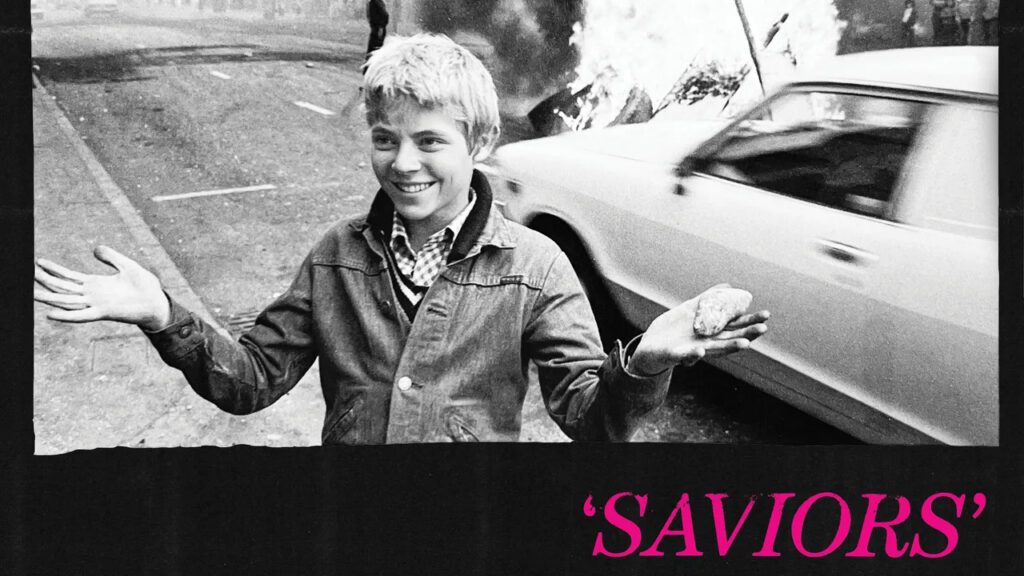
Does Green Day’s album “Saviors” save punk?

On Jan. 19, punk rock band Green Day released their 14th studio album, “Saviors.”  The Grammy-Award-winning group released the album’s first single, “The American Dream is Killing Me,” in October 2023, aptly setting the tone of their first full-length album since 2020’s “Father Of All…” 

The single was the last of the tracks from “Saviors” to be recorded but the first to be released to the public. Emphasizing the harm that the traditional “American Dream” is doing to people through lyrics about gentrification, homelessness and unemployment, the song seemingly promised a return to the politically charged themes synonymous with Green Day and that many fans felt were missing from “Father of All…”  

The album’s release coincidentally followed online controversy regarding the band’s substitution of “MAGA” for “redneck” in the line “I’m not a part of the redneck agenda” during “American Idiot,” one of the band’s most well-known songs from their 2005 album of the same name. 

Though the band’s discography has always included scathing commentary on controversial issues, and on-stage political statements are nothing new for Green Day, many people — including Tesla CEO Elon Musk — took to the internet to complain about “wokeness” and bands needing to “stay out of politics.” Almost ironically, “Saviors” dropped three weeks later with a politics and social commentary-filled tracklist, starting with “The American Dream is Killing Me.” 

Immediately, the album leans away from the poppier sound of “Father of All…” with heavy power chords and a gritty, angry sound to the vocals that fits comfortably alongside the band’s earlier work with “American Idiot” and “Holiday,” — both songs notorious for their criticism of the Bush administration, the war in Iraq, bias and rising extremism in the United States.

Tracks like “Look Ma, No Brains!” “One Eyed Bastard,” “Coma City” and “Living in the 20s” feature criticism of modern topics, including billionaire space travel, mass shootings and mass media consumption. 

Interspersed with the raging punk songs are tracks that evoke early 2000s nostalgia, such as “1981” and “Suzie Chapstick,” through references to MTV and feelings of longing for lost connections.

Other songs simply have a teenage, carefree feeling, such as “Corvette Summer,” which includes an allusion to the Beach Boys and “Bobby Sox,” a song notable for using “girlfriend” and “boyfriend” interchangeably as a reference to Armstrong’s bisexuality.  

Lastly, the band made sure to include a few power ballads in “Goodnight Adeline” and “Father to a Son” to round off the versatile yet still wholly punk-rock album. “Saviors” finishes with the more relaxed and distinctly final-sounding “Fancy Sauce,” during which Armstrong makes one final reference, this time to the late Nirvana frontman Kurt Cobain, with the words “Everybody’s famous, stupid and contagious.”  

The album itself was produced by Rob Cavallo, who has worked with Green Day before on several albums like “Dookie” and “American Idiot,” both award-winning albums that played significant roles in the band’s success. The album sounds similar to these two hit albums, too.

Each song on the album has a distinct sound, instrumentally and harmonically, while still fitting together as a cohesive final product. Long-time fans will be happy to hear Armstrong’s vocals still holding up after the band’s career of over 30 years. If “Saviors” shows anything, it is that these Rock and Roll Hall of Famers are not slowing down anytime soon. 

The post Does Green Day’s album “Saviors” save punk? appeared first on Technique.

Posted in UncategorizedComments Off on Does Green Day’s album “Saviors” save punk?

Urban explorers get haunted this Halloween

Many people have a fascination with forgotten parts of humanity.While the more standard route to satisfying this interest is reading history textbooks, visiting museums and watching documentaries, some find more unconventional — and sometimes illegal — ways to rediscover the past. 

Urban exploration, sometimes referred to as “urbex,” is a practice that gained popularity in the mid-90s and describes venturing into man-made structures that have been abandoned or hidden and, as the name states, exploring. It is very often driven by photography-related desires, though historical documentation and thrill-seeking are also known to be motivators. With the rise of the internet and social media, viewership has brought even more people into the hobby. 

There are rules to urbex that its practitioners use as a way of respecting the spaces they explore. These rules include things like “don’t go anywhere alone,” “don’t break anything to enter a structure” and the most well-known one, “take nothing but pictures, leave nothing but footprints.” These rules ensure as much safety as possible, distinguishing explorers from vandals who cover the walls with graffiti and the floors with trash. Dedicated explorers see themselves as being there to study and document the stages of Earth’s reclamation of man-made structures and the way urban fixtures decay over time. Because of that perspective, they know to do their research beforehand, bring necessary equipment and emergency supplies and not enter a space that doesn’t have an already-existing entrance. 

While an incredibly cool hobby, urbex is definitely not something to be classified as fully “safe” or “legal.” A number of people have died during urbex excursions due to structural unsoundness or becoming trapped, and many have been arrested for offenses of trespassing. 

Though most urbex is meant strictly for observing the reintegration of nature into unnatural structures, some tend to combine the thrill of exploration with the chill of the supernatural and find places that are rumored
to be “haunted.” 

“Haunted” urbex is especially popular among exploration YouTube channels, with photoshop-collaged thumbnails and exaggerated titles. With such videos, though, a lot of the creators get permission to be there beforehand so as not to get in any legal trouble while there and after the video is released. Creators will travel to different places with dark and disturbing backgrounds and spend extended periods of time there in hopes of capturing ghosts and other spirits on tape. Such is the case of creators Kallmekris and CelinaSpookyBoo’s overnight stay inside the Trans-Allegheny Asylum, posted to YouTube in several parts less than two weeks ago. 

The two women and their team start with an introduction to a few staff members of the asylum — whose grisly history attracts groups of tourists — and a quick tour outlining the different wings of the hospital. From there, the group is locked in for the night to conduct their paranormal investigations. Throughout their stay, the creators provide viewers with facts about the history of the asylum and mental health practices during the hospital’s years of operation, all of which are questionable. 

One thing that was especially enjoyable about Kallmekris and CelinaSpookyBoo’s video series was that, unlike some creators, they were very respectful of the space they were in, a trademark of dedicated urban explorers. Especially with people who engage in urbex for views, there is a tendency to make jokes and comments about any “spirits” that may or may not be present. Whether or not someone believes in the supernatural, it is still important to be considerate of the space being explored, especially if people died there (which is usually on the criteria list for a “haunted” location).

Throughout the multi-part exploration, the creators attempted to contact spirits through an assortment of several paranormal practices. With each one, they explained what they were using and what the purpose was. Their main goal was to learn more about the asylum and its forgotten victims.

These kinds of paranormal exploration videos are all over YouTube; they seem to be quite a popular genre of content, though they tend to spike during Halloween when everyone is looking for new spooky videos and fun facts to delve into during the season of scares. People explore hospitals, castles, hotels, bars, theaters and pretty much any structure one can think of. Though they often differ in tone and approach — not all take the same approach as Kallmekris and CelinaSpookyBoo — they make for entertaining seasonal watching. 

Whether audiences believe in ghosts and spirits is up for them to decide, but regardless, the spirit of Halloween is alive and well in the urbex community. Who knows? Some of the videos that turn up might even be located in Tech’s very own city of Atlanta.

The post Urban explorers get haunted this Halloween appeared first on Technique.

Posted in UncategorizedComments Off on Urban explorers get haunted this Halloween

Cirque du Soleil’s ‘ECHO’ returns with twists

Cirque du Soleil will return to Atlanta this November with their new show “ECHO,” which focuses on “the symbiotic connection between humans and the natural world.” Though the show was supposed to open in 2020, the COVID-19 pandemic halted its planning and production. The show finally was able to resume production and rehearsals in 2022. The first ever performance of “ECHO” finally happened in late April 2023 in Montreal. 

As the 20th Big Top Show from Cirque du Soleil, “ECHO” includes modern, technology-based visuals and new acts to create a world brought to life by veteran and first-time Cirque du Soleil performers alike. 

The show’s choreography balances the fluidity of nature with the calculated essence of science in a series of repetition-based metaphors that reflect how people’s actions have resounding effects on the world around them. The running metaphor makes the name “ECHO” fit the show perfectly. 

“ECHO” is the first Cirque du Soleil show to have six different vocalists, most playing instruments in addition to singing. The full cast comprises 52 people from 19 different nationalities, from the United States to Poland to Kazakhstan. 

The Technique attended Cirque du Soleil’s advance media day on Tuesday, Oct. 10, to see a preview of the jaw-dropping performances that make “ECHO” a spectacle that audiences can only find in Cirque du Soleil’s shows. In addition to the performance, the Technique also had the opportunity to speak with two of the show’s artists, Penelope Elena Scheidler and Shakirudeen Adewale Alade. 

Scheidler is from Salzburg, Austria and performs in Cirque du Soleil’s first duo hair suspension act with her partner, Charlotte O’Sullivan. Alade is from London, England and is a self-taught contortionist specializing in “bone breaking.”

Both artists originally started performing as dancers before moving to their current disciplines. Scheidler gave some insight into the art of “hair hanging,” which is when an aerial performer executes a variety of tricks and movements while suspended only by their hair. When asked about how she learned the art, she said, “it took me a while to figure it out [and] to find someone who teaches it because it’s very [secretive]…it’s one of the parts that’s different [from] other circus disciplines like handstands [where] you can get a coach.” 

Her and her partner’s hair must be tied in specific ways to ensure their weight is distributed evenly and minimize the discomfort of hanging only by their hair. “It’s this ancient discipline and also technique [for] how you tie the hair. And it comes with a special hair routine and … haircare,” Scheidler said. 

Contortionist Alade also learned his craft more unconventionally: he taught himself. Using videos and practicing stretches with a tie every day, he eventually increased his shoulder mobility and continued to become the highly skilled professional he is today. 

“ECHO” is Alade’s first show with Cirque du Soleil. “I’ve always wanted to work with them…since I was younger,” Alade said, “so this was a big dream of mine. [It’s] something ticked off my goal list.”  

The show tours for months at a time, performing up to 10 shows a week in approximately six different cities. With much of the cast from multiple areas of the world, most spend more time away from home than at home. Scheidler, who is originally from Austria and currently lives in Germany, said, “[the] people that you see in the tent every day [are] like your family. They see you when you’re sad; they see you when you’re happy; they celebrate with you. [It is] beautiful.”

Alade shared the sentiment, saying, “genuinely …[it] sounds cliche, but they do become your family in a way … we just motivate each other to keep going, and we inspire each other as well.” 

“ECHO” is split into 13 acts, all featuring acrobatics, stunts and acting and all requiring incredible talent and dedication from the Cirque du Soleil performers. When asked about the show’s highlights, Alade and Scheidler said “Double Trouble,” the show’s clowns, was their favorite part. “It’s a no-brainer,” Scheidler said, “I remember having the first ever presentation, and I usually don’t like clowns [but] I couldn’t stop laughing.” 

The white and blue tents of Cirque du Soleil’s “ECHO” will open on Nov. 9, and the beautiful world of human-nature collaboration will be a fixture in Atlantic Station through late January. Atlanta will be the show’s first stop on its tour across the United States. With new acts, new technology and artists of only the highest caliber, “ECHO” promises to be nothing short of magical. 

Tickets, booking and information can be found through cirquedusoleil.com/echo.

The post Cirque du Soleil’s ‘ECHO’ returns with twists appeared first on Technique.

Posted in UncategorizedComments Off on Cirque du Soleil’s ‘ECHO’ returns with twists

‘Metalcore Dropouts’ dropped in

As September turns to October and fall arrives, the air turns cooler, leaves change colors and, for rock music fans, calendars fill up with show dates of bands beginning their fall tour season. On Sunday, Oct. 8, Heaven at the Masquerade filled with people ready to see metalcore heavyweights The Devil Wears Prada and
Fit For A King. 

The Atlanta stop on the “Metalcore Dropouts” Tour, a co-headliner between the two bands, sold out the largest of the three venue spaces at the Masquerade. Supporting them as show openers were LANDMVRKS — all the way from Marseille, France — along with Connecticut natives, Currents.

While it is standard for alternative music shows to have two to three opening bands, co-headliners often only have to divide the headlining time evenly between the two main acts. The Devil Wears Prada and Fit For A King had 13 songs on their respective setlists, ensuring that both bands got equal time onstage and equal love
from the audience. 

Another common trait of co-headlining shows is the interchanging order in which the headliners perform each night. At the Atlanta date, The Devil Wears Prada was the first of the two, with Fit For A King performing after. This also meant Fit For A King would play the show’s encore song as part of their setlist. 

Following the opening acts, the house lights went down, eliciting a cheer from the packed crowd. The only light from the stage was a faint red illuminating the white letters “tdwp” on a cloth backdrop. The silhouettes of the six-person band strolled out, taking their respective places around the stage. 

The Devil Wears Prada, originally from Ohio, was formed in 2005 and was named for the book by the same name. The founding members were all practicing Christians and reportedly based much of their music’s themes on their religious values — specifically anti-materialism. This led to their music being classified as “Christian Metal,” in addition to metalcore. 

Now, 18 years into their career, the band has not marketed itself as a religion-based band in a long time, as many of the current members do not identify as Christians (according to lead guitarist Kyle Sipress). 

The band has released eight studio albums, with their most recent, “Color Decay,” dropping in September 2022. Most of their lead vocals are done by Mike Hranica, along with Jeremy DePoyster, who also plays rhythm guitar. 

In addition to the standard stage lights, the stage was outfitted with vertical LED cylinders that lit up in various colors (often red), patterns and degrees of brightness.  

They began their set on Sunday night with “Exhibition,” a song from “Color Decay.” The energy was instant, and it didn’t take long for a pit to form in the center of the floor. This would be the first of many throughout the night. 

For the rest of their time onstage, The Devil Wears Prada catered to fans new and old, playing primarily from Color Decay but also pulling from five other albums. They closed their set with a song called “Hey John, What’s Your Name Again?”’ which was from their 2007 album “Plagues.” It was the oldest song they played. 

Throughout their 13 songs, neither the band nor the crowd lost stamina, even during “slower” songs like “Broken” and “Chemical.” Whether people were moshing, crowd surfing or just singing along, everyone seemed to be enjoying themselves. 

As a fun “intermission” after The Devil Wears Prada, during the preparation for Fit For A King, a giant beach ball was released into the audience and was met with much delight. People cheered if the ball ever reached the balcony level, and they booed when security eventually removed it before the next band. 

Fit For A King started strong with “Annihilation” from their 2020 album “The Path.” Like The Devil Wears Prada, they also utilized the upright LEDs in front of a cloth backdrop with the band name written in near-illegible —  but classic — metal band font. 

The Texas-based band has been around nearly as long as their co-headliners, having formed in 2007. Since then, they have released seven studio albums, with the most recent, “The Hell We Create,” coming out in October 2022. 

Their setlist stretched across five different albums, the oldest being the title track of their album “Slave to Nothing.” If there is anything that the five-member group wanted known, it was that they liked things rowdy. 

The lead vocalist Ryan Kirby encouraged every kind of pit and, during one song, told the crowd he wanted to see as many people crowd surfing as possible. He charged those who weren’t crowd surfing with helping anyone who wanted to crowd surf do so.  

After playing “When Everything Means Nothing” as their “last song,” the band announced that they were not going to leave the stage between the regular set and the encore; it did not make sense for them to leave the stage if they were already there. 

Instead, they launched into their encore song, “God of Fire,” prompting a huge “wall of death,” which is a particular kind of mosh pit in which the crowd splits in two to create a large empty space through the center before both sides run at each other, slamming into one another. Though it sounds dangerous, no one gets seriously injured, and everyone looks out for one another. Moshers make sure not to involve any audience members who do not want to be involved and hastily pick up anyone who falls down. 

The song concluded with bassist Ryan “Tuck” O’Leary and guitarist Daniel Gailey crowd surfing along the front of the venue, their instruments held out above them. The “Metalcore Dropouts” tour was packed with heavy vocals and instrumentals, intense energy and passionate fans. 

If The Devil Wears Prada and Fit For A King proved anything, it is that they definitely did not drop out of metal.

The post ‘Metalcore Dropouts’ dropped in appeared first on Technique.

Posted in UncategorizedComments Off on ‘Metalcore Dropouts’ dropped in