Author Archives | Sloan Salinas

Green Day show is the “Time of Your Life”

On Wednesday, Aug. 28, the sounds of grungy guitars and thousands of voices echoed from Truist Park. By 8 p.m., the field and bleachers that usually housed baseball players and their loyal fans were instead filled with multiple generations of music lovers who all flocked to see Rock and Roll Hall-of-Fame inductees, Green Day.

When many people think of “punk rock,” they think of Green Day. Considered to be among a select group of bands that brought punk music back into the mainstream, Green Day first formed under the name “Blood Rage” in 1987, when the members were just fifteen years old. Since then, they have gone on to become one of the best-selling bands of all time. 

Starting in the underground punk scene, Green Day rose to the attention of more “mainstream” audiences in 1993 when they signed with Reprise Records. While to many people, this would sound like a move toward success, the band faced backlash from many on the punk scene for being “sellouts.” Despite the criticism, the band — comprised of frontman Billy Joe Armstrong, Bassist Mike Dirnt and drummer Tré Cool — continued on their journey to become the successful artists they are now. 

The love that fans have for Green Day is something that is passed down from generation to generation, something that could easily be seen in the wide array of ages attending the show. 

In a gesture that rewarded fans who wanted to get the most out of their rather expensive tickets and enjoy the entirety of the show, the concert would be a nearly six-and-a-half-hour affair, with doors to the stadium opening at 4:30 p.m. The first band, an Atlanta-local pop-punk group called The Paradox, kicked the evening off at 5:00 p.m., playing a short but energetic and well-received set. They were the only local opener, meaning they were not traveling with the tour but playing for just Atlanta. 

Following The Paradox was the all-female pop-punk outfit, The Linda Lindas. The first of the touring lineup, the band’s name comes from a Japanese film. The Linda Lindas could still easily be considered relatively new, having only been formed in 2018. Despite this, they quickly rose in prominence in the pop-punk scene. Since their beginning, the band has opened for bands like Paramore, performed at Coachella and been featured in movies, most recently “Inside Out 2.” 

The last two openers would be considered “bigger” bands, having been around longer and having a larger fanbase. The first was punk band Rancid, who have been around since the early ‘90s and are cited alongside Green Day as one the bands who sparked increased interest in punk rock music. They had a longer set than the previous bands, playing for a little under an hour. 

Playing right before the iconic headliners was the alternative rock band The Smashing Pumpkins. This Grammy-winning band formed in 1988 but broke up in 2000. Five years later, frontman Billy Corgan announced their reunion, and in 2007, the band played together again for the first time in seven years, though they had several changes in their lineup since their breakup. 

Over the duration of their career, The Smashing Pumpkins have traversed into multiple genres, ranging from goth rock to shoegaze to psychedelia and are cited as an inspiration for numerous bands, including Deftones, Fall Out Boy, Panic! At The Disco and My Chemical Romance. Gerard Way of My Chemical Romance even said that he modeled much of MCR’s career on The Smashing Pumpkins (this would be further proven by the band breaking up in 2013 and returning five years later to announce their reunion in 2019). 

At a little after 8:00 p.m., it was finally time for the night’s main event: Green Day. However, rather than the band coming out immediately as would be expected, the speakers began to play Queen’s “Bohemian Rhapsody.” As the sun was finally starting to set, basking the stadium in gold light, thousands of voices sang along to the iconic song while a mounted camera on wheels broadcasted images of the crowd onto the large screens flanking the stage. 

After this, the band still did not come out. Instead, someone in an aged bunny suit ran out to the Ramones’ “Blitzkrieg Bop.” The mascot spent the song running around the stage, hyping up the crowd, at one point throwing a T-shirt into the pit and doing the worm on the runway extension of the stage at another. At the end of the song, a crew member quickly grabbed the bunny and “dragged” him offstage. 

Two full-length songs in and no sign of the headlining band, fans were unsure what to expect next. Whatever they did expect, however, it probably was not a mash-up instrumental of “The Imperial March” from Star Wars, “We Will Rock You” and “I Love Rock and Roll,” but that is indeed what they received. To this theme music, the members of Green Day finally took to the stage to raucous applause and immediately launched into “The American Dream is Killing Me” from their newest album, “Saviors.” 

Despite the tour itself being called “The Saviors Tour,” only five songs from their thirty-seven-song setlist were from the newest album. Instead of simply celebrating their newest release, Green Day celebrated their entire career, most notably the 30th anniversary of “Dookie,” their first major label album, and the 20th anniversary of “American Idiot,” their first album to debut at number one on the Billboard charts. Both albums won the band Grammy Awards and still currently sit on Rolling Stone’s “500 Greatest Albums of All Time.” To commemorate these anniversaries, the band played both albums in their entirety. In total, the setlist that night spanned eight albums. 

To say that Green Day put on the show of a lifetime might be an understatement. The band pulled out all the stops for this tour, complete with a giant mushroom cloud backdrop to mimic the cover of “Dookie,” an equally large 3D hand holding a heart-shaped grenade to mimic the cover of American Idiot, animations and videos on the screens behind the set pieces, lots of pyrotechnics, fireworks, streamers and lighting effects. 

The band played through “Dookie” first, a set that featured a large inflatable “Bad Year” blimp, an image that can be found on the album cover. This real life version carried a bundle of smaller identical blimps, which were released over the crowd. 

After “Dookie,” the band did not launch right into “American Idiot.” Instead, they played a few songs from “Saviors,” as well as a few from “21st Century Breakdown,” “Insomniac” and “Warning.” 

An especially memorable part of this portion of the show was during the song “Know Your Enemy,” where Armstrong called out to the audience before the bridge of the song, asking if there was anyone who knew all of the words. Searching through the crowd in the pit, he asked, “You’re sure?” before telling security to bring a young fan onstage to sing the bridge and last chorus with the band. 

Then, the familiar riff from the titular song of “American Idiot” played and the next portion of the show began. Since the album’s original release, its political themes have been one of its most recognizable — and criticized — elements. During “American Idiot,” Armstrong changed the lyrics of “I’m not a part of the redneck agenda” to “I’m not a part of the MAGA agenda,” something he has done several times, most publicly while performing on ABC’s “Dick Clark’s New Year’s Rockin’ Eve With Ryan Seacrest 2024.”

Later, as the opening riff of “Holiday” sounded, Armstrong shouted, “This song is anti-war! Ceasefire!” before counting into the song. During the song, before launching into the bridge, he called out, “I said Georgia! I said Alabama! I said Florida! Destroy Mar-a-Lago!” — referring to the luxury resort owned by Donald Trump. 

During his many calls of encouragement to the crowd, Armstrong referenced all three states due to the fact that the tour was not going to Alabama or Florida and many fans had traveled to Georgia to see the band play. 

Green Day closed their two-and-a-half hour set with “Good Riddance (Time of Your Life)” from their album “Nimrod.” The acoustic ballad has become one of their most well-known songs since the album’s release in 1997, very often seen at sentimental events such as weddings and graduations. Armstrong was alone onstage for most of the set, his acoustic guitar the only instrumentals. During the last chorus, Dirnt and Cool skipped back onstage to flank the singer and the three hugged during the final chords of the song. For the very last chord, Armstrong handed Dirnt the guitar pick and he officially closed out the show. The night ended with fireworks and thunderous applause.

The post Green Day show is the “Time of Your Life” appeared first on Technique.

Posted in UncategorizedComments Off on Green Day show is the “Time of Your Life”

Mxmtoon delivers bubbly bedroom pop in Atlanta

To a crowd of over 12,000 people last weekend, bedroom pop artist mxmtoon opened for indie trio AJR at State Farm Arena. 

The singer-songwriter began learning several instruments at an early age and eventually released her first song on YouTube when she was 17. Initially, her YouTube channel and the music she created were kept secret, but the popularity that she began to see online led to her sharing the hobby with her family. 

In the spring of 2018, her music went viral on TikTok, with many people connecting with the lo-fi, minimalistic sound of her songs — usually featuring a ukulele — and the soft, relatable lyrics. A year later, “Prom Dress,” the lead single off her debut album, “The Masquerade,” was met with the love of thousands of people who used the song in TikTok videos, especially throughout the COVID-19 lockdown. 

Songs like “Coming of Age,” “Feelings Are Fatal,” “Seasonal Depression” and “Sad Disco” have an intimate feel to them as she sings about falling in love, struggling with self-doubt and family heritage in an endearing, vulnerable manner.  

The night of the AJR show, mxmtoon was all smiles, moving around the stage as she performed, mic in hand. At other times, the mic stayed fastened to the stand to allow for the singer to bring out her signature ukulele.

In addition to her melodic voice, mxmtoon also had a bubbly and humble personality. Between songs, she spoke to the crowd as if they were her friends and not fans in a packed arena. Whether it comes from her youth or long-time presence on the internet, she had the attitude of any other person and not some big, larger-than-life rockstar, something that clearly helped her connect with the crowd. 

Directly contrasting with AJR’s elaborate performance later that night, mxmtoon had minimal set and theatrics, yet her music, jokes and stage presence succeeded in keeping the crowd engaged and singing along. 

At several points throughout her performance, it seemed that, despite her virality, mxmtoon had not truly realized just how many people love her music. This was most apparent when she asked the audience to turn on their flashlights and had to physically take a step back, not expecting the sheer number of lights that filled the room.

Whether playing her slower, more stripped songs or the bright, pop ones, the singer’s energy and passion never dimmed; rather, it bled into the audience, leaving them thoroughly warmed up and ready for the main act. 

The post Mxmtoon delivers bubbly bedroom pop in Atlanta appeared first on Technique.

Posted in UncategorizedComments Off on Mxmtoon delivers bubbly bedroom pop in Atlanta

Halestorm and I Prevail co-headline Ameris Bank Amphitheatre

For avid concert-goers, summertime is either constantly busy or disappointingly slow. It can feel like artists are playing festival after festival without coming to a city close by for their own headlining show. However, for metalcore fans, this summer brought about an incredible co-headlining tour between Grammy-nominated bands I Prevail and Halestorm that spanned across the United States. 

While both bands are highly established, Halestorm is the most famous of the two. Formed in 1997 by siblings Lzzy (lead vocals, rhythm guitar) and Arejay Hale (drums, backing vocals), the two were just thirteen and ten years old when they started writing and performing music. Since then, the band has released five studio albums and became the first female-fronted band to win the Grammy Award for “Best Hard Rock/Metal Performance,” as well as launched the campaign “#Roadiestrong” to raise money for live entertainment crews affected by the COVID-19 lockdown in 2020. 

I Prevail has been making music since late 2013, but they saw their first major breakthrough when they posted a cover of Taylor Swift’s “Blank Space,” reimagined in their metalcore style, on YouTube. Fast-forward to 2019, and the band was nominated for the Grammy Award for “Best Metal Performance” for their song “Bow Down” and “Best Rock Album” for their second studio album, “Trauma.” 

The bands stopped in Georgia midway through the tour to play the Ameris Bank Amphitheatre. Though the day of the show was almost unbearably hot, the 12,000-person capacity venue was still packed with fans. 

The night began with the first of two opening acts, metalcore group Fit For A King. Originating from Texas, the band consists of Bobby Lynge (guitar, backing vocals), Ryan Kirby (lead vocals), Ryan “Tuck” O’Leary (bass, clean vocals), Daniel Gailey (guitar, backing vocals) and Trey Celaya (drums). Despite being first on the lineup — and probably the hottest set out of the four — Fit For A King came out onto the stage with an energized performance of “Keeping Secrets,” released earlier this year. 

Their set ran for eight songs, each featuring the band’s signature mix between melodic prowess and metallic passion. By the time they reached their final song, “When Everything Means Nothing,” the crowd was ready for the rest of the night. 

Rap-rock group Hollywood Undead followed Fit For A King. The multi-vocalist, six-member band has a slightly different style than the rest of the lineup and almost every member of the band got to take the lead on the mic. 

Though the band no longer wears the masks they used to be known for, their performance had more than enough personality to make up for it. The members each have their own well-known nicknames: Jorel “J-Dog” Decker (vocals, guitar, bass, keyboards, “programming”), Dylan “Funny Man” Alvarez (Vocals), George “Johnny 3 Tears” Ragan, Jordon “Charlie Scene” Terrell (vocals, guitar), Danny Murillo (vocals, keyboard, guitar, bass, “programming” and touring member Matt “The Cat” Oloffson (drums, percussion). 

Hollywood Undead’s set was longer than Fit For A King’s at twelve songs. Their performance was not only musically impressive — especially with members switching between several instruments depending on the song — it was also nothing short of pure fun. They interacted with the crowd constantly, had a crew member come out to play tambourine (as well as share a beer) and invited several young kids from the front row of the pit onto the stage for a song (all while joking about how their music was definitely not meant for children). 

Because this tour was a co-headliner, the two main acts rotated who would go first nightly. For the Alpharetta show, Halestorm was up next after Hollywood Undead. With a theatrical red-curtain backdrop set up and the sun starting to set, Lzzy Hale took to the stage, bright red guitar matching the lipstick on her wide smile. Joining her was Joe Hottinger (lead guitar, backing vocals), Josh Smith (bass, keyboard, backing vocals) and, of course, younger brother and co-founding member Arejay Hale. The younger Hale sibling had an almost Beetlejuice look — bright green hair matching his drum kit and a black and white striped suit. 

Lzzy Hale has long been known as a vocal powerhouse, with her voice having just the right amount of grit, an incredible range and the capacity for a stunning, clean belt. Arejay Hale is equally talented on the drums, playing like it was second nature, throwing his sticks in the air and spinning them around. With the air of seasoned performers, Halestorm rocked their way through their twelve-song setlist. 

I Prevail was the last to grace the crowd. By the time the crew began setting up platforms and LED screens, the sun had fully set, marginally cooling things down. The band’s set began with all the screens playing a video introduction narrated by a mysterious hooded figure. The entirety of I Prevail’s fourteen-song performance would be accompanied by different visuals on these screens, from abstract graphics to lyrics. 

Something that makes I Prevail stand out from other bands in the scene is that they have two members who are solely on vocals and do not play an instrument. Vocalist Brian Burkheiser tackles the clean vocals, which are often at the forefront of the choruses. At the same time, vocalist Eric Vanlerberghe takes the lead on harsh vocals, which tend to make up the majority of the verses. Vanlerberghe spent most of the set closer to the edge of the stage, while Burkheiser constantly moved around, at one point even ending up on the higher platform next to drummer Gabe Helguera. The other members, Steve Menoian (lead guitar), Dylan Bowman (rhythm guitar, backing vocals) and Jon Eberhard (bass, keyboard) were positioned around the stage, both on the high platform with Helguera and toward the front of the stage by Vanlerberghe. 

Most of the setlist was from the band’s newest album, “True Power,” with a few older ones mixed in, including their cover of “Blank Space.” Despite having been standing in the heat for hours, the crowd somehow managed to give the band incredible amounts of energy. 

At one point, Vanlerberghe talked about how a lot of the venues they had been playing on the tour had not had a designated pit section, but Ameris Bank Amphitheatre did and, because of that, he wanted to see some mosh pits. The crowd in that section happily delivered over the course of the next few songs with a regular mosh pit, a circle pit and a “wall of death.” Even fans not in the pit section still stood singing, dancing and headbanging along to all the songs. 

From the openers to the headlining acts, the I Prevail and Halestorm summer tour delivered an evening of nonstop energy and excitement for metal fans. The tour concluded with its final performance in Las Vegas, Nevada on August 17.

The post Halestorm and I Prevail co-headline Ameris Bank Amphitheatre appeared first on Technique.

Posted in UncategorizedComments Off on Halestorm and I Prevail co-headline Ameris Bank Amphitheatre

Winnetka Bowling League brings summertime indie to the Masquerade

On Tuesday, July 16, indie rock band Winnetka Bowling League played their first-ever show in Atlanta at The Masquerade’s Altar. The headlining tour follows the release of the band’s first full-length album, “Sha La La,” on May 31.

The band was formed a little over five years ago, and they began by putting out several EPs, including “Winnetka Bowling League,” “Cloudy With A Chance Of Sun” and “Congratulations,” before having to pause their work due to the COVID-19 pandemic.

In an interview with the Technique, frontman Matthew Koma talked about the band’s formation, saying, “We’ve all been in different bands and have done music our whole lives and in different forms and different ways. So this was sort of a practice in [saying], ‘Let’s be a little selfish and make stuff that we really like.’ And at first, it started [by] putting EPs out because it felt a little bit less committal. [It was a chance to] figure out what [we] want[ed] it to be, without taking as much of a statement as [we] would with putting out an album.” 

He later stated that post-lockdown, as the world began to open again, the group felt that putting out a full album was a way for the band to have a “fresh start” and to begin a “new chapter.”

“Sha La La” is a ten-track album that has just the right sound for long road trips through the countryside. 

When talking about writing the album, Koma said, “I don’t think [there] was necessarily a purposeful direction, but it ended up being very much a retrospective look at growing up and [feeling] like you’re not able to really fairly judge something until you’re through it. So, just looking back at the mid to late ‘20s or ‘30s, and what that all felt like. I think it ended up feeling somewhat nostalgic for us and for a lot of people who listen to it.” 

The same subtle feelings of nostalgia were present onstage at the band’s show. Their “set” featured a small stack of several types of old televisions, a quarter candy machine filled with Mike & Ikes, multi-colored gumballs and jellybeans and string lights wrapped around the keyboard. 

Several weeks after the release of “Sha La La,” Winnetka Bowling League released their single “This is Life” with fellow musicians Medium Build and Dawes. 

Such a quick turnaround time is unusual for most bands, which Koma acknowledged during his interview with the Technique. He said that when it comes to writing music, he “never really stops…that’s the part of [music] that keeps me sane and not attached, which is probably even part of the reason [for] putting out an album and then a song a couple of weeks later. It’s just nice to have that freedom to just put stuff out [whenever we want].”

The band played “This is Life” at their show, joined onstage by one of the openers, singer-songwriter Darryl Rahn. 

Koma also shared that he has a lot of fun playing shows on tour and getting to perform for more fans who know their songs, something that can undoubtedly be seen in his live performance. There was an overarching, wholesome feeling throughout Winnetka Bowling League’s set, with fans singing along and dancing with each other. It was clear that the audience was there not just to see a band that they loved but also simply to have fun with each other. If someone were to think of the perfect summer experience, this show was it.

The post Winnetka Bowling League brings summertime indie to the Masquerade appeared first on Technique.

Posted in UncategorizedComments Off on Winnetka Bowling League brings summertime indie to the Masquerade

Sadistic Ritual Talks Thrash Metal and Life on the Road

Thrash metal band Sadistic Ritual stopped by the Masquerade’s newest stage, Altar, this past weekend to play a hometown show. They were fresh off their most recent tour supporting Colombian death metal group, Masacre. 

Prior to their headline set, guitarist and lead vocalist Charlie Southern, sat down with The Technique to talk about their music, touring and the metal genre, as well as to answer some extra fun questions. 

To start off, what would you describe your guys’ genre as? 

We are originally a thrash metal band. Lately, we’ve been trying to get weird with it [and] kind of putting in psychedelic elements, but still ripping and heavy. So yeah, I would just call it thrash metal. 

What made you decide to start [the band]?

I’ve always been a huge thrash fan. My mom started me on Megadeth and Metallica when I was in fifth grade or something, so I’ve always been infatuated with it. But as of recent – like the 2000s [maybe] – the whole thrash revival thing has been really [cringey]. I’m a big lyric guy and I don’t want to hear another [song] about zombies and nuclear waste. Like, give me something real, you know? So I made this band to kind of fight that. It’d be like, “Yo, thrash metal can be pure, it can be real, it can convey emotion and real [stuff].”

So when you’re writing music, what do you draw from? 

Lyrically, I [use a lot of] my personal disgust with humanity. Something will happen to me throughout the day, and I’ll make a song about that. [I take] personal experiences [and] basically make it poetry, or brutal poetry or whatever. That may not be the right word, but I don’t know.

For example, our song “Area Denial” [is about] being so disgusted with someone’s existence that you just phase them out, you block them out, they don’t exist… you give them no conscience, [stuff] like that. I try to keep everything real and relatable, or personal, and that way, on stage, it’s more personal to me to deliver the vocals if it’s something I’ve gone through or felt.

In terms of your “sound,” who would you say were your “inspirations,” both growing up and specifically with the band? 

Sepultura, Metallica, Slayer… Megadeath, Rest in Peace…they’re the best for a reason [and] the more we can emulate them, the better we’ll be. But, you know, I said we started getting [into] incorporating psychedelic stuff. So like our last album we wrote was over quarantine and I wasn’t really listening to that much metal because I was living in a house full of rock and roll dudes. And [so] I wrote that album listening to [basically] nothing but Pink Floyd. So I try to incorporate other genres of music, but like, tastefully? I don’t want to [just] start mashing genres together. Yeah, but I want to, you know, tastefully put my own spin [on it]. 

A lot of these thrash revival bands [are] just emulating bands. You’re never going to be remembered if you’re just an emulation of someone else. I’m interested in bands who push the genre to new boundaries, like yes we’re playing [stuff] that’s been played for 40 years, but I want to take it somewhere else that’s memorable. Like, if you sound just like Slayer, well, I’d just rather listen to Slayer. 

When it comes to actually playing shows, would you say there’s a lot of difference between you onstage and you offstage?

Oh yeah, definitely. I’m a pretty shy, reserved person normally, but I, you know, had to learn how to be like a frontman. It’s taken a long time but I’m coming around to it. 

Would you say that the band name plays into any “misconceptions” about you guys? I know hearing a name like “Sadistic Ritual” probably gives people a specific idea. 

That we’re like grungy Satan worshippers? Well, we are….nah I’m just kidding. [I feel like] any metal band you talk to or hang out with, they’re all the goofiest nerds you’ve ever met. But I will say [for] my band’s aesthetic, I like to keep serious. I don’t want to come off as goofy or whatever because it isn’t the message I’m conveying, [which] is very serious. But offstage I am, just like the goofiest [person]. 

And where did [the band name] come from?

There’s no “special story” behind it. We were 14 when we started the band, and we were just like, “Oh, I like the name ‘sadists,’ ‘sadistic’s’ cool. “Sadistic Ritual,” okay.” But it’s worked. We’ve got the same name and same logo since we were 14. I’m 30 now, so it’s worked out. I remember mailing the artists $20 cash in the mail to do the logo. And he sent me the internet files. We still use that logo to this day.

Okay, so how long have you guys been on tour?

We just got back like two weeks ago. But we did a four-week tour with Masacre from Colombia. And it was [absolutely] awesome. They’re the coolest [people] and the goofiest [people]. It was really awesome. It was our first time touring the West Coast, [and it] went really well.

What’s your favorite part of touring? 

The shows. Everything else is like saying, “Hurry up and wait,” get here at 4pm and sit till 10 o’clock, you know? So it’s a lot of just sitting around staring into space and driving. Luckily, hopefully, the van doesn’t break down or anything, but the shows [are like the] release. That’s why you’re out there, that’s why we do it.

Who’s the best driver?

I’m gonna say that I’m the best driver, and I probably do most of the driving, but I am not great with the trailer. So my drummer Matt – I’ll get to the place, and I’m like, “Matt, wake up dude. Get us parked.”

Who’s the neatest?

Definitely not me. Probably my guitar player Alex. He complements my playing very well. I’m the creative end, but he’s like a virtuoso…he owns his own studio [and] records all of our stuff. And he also helps manage the band for the most part too. So he’s definitely got his [stuff] together the most outside of him just playing guitar.

In terms of people who don’t normally listen to metal, what would be things that you would want them to know about your band or the genre in general? 

I don’t need them to know anything. I’m confident enough that [anyone] who walks into my show to see us is going to have a good time. I don’t care who you are. We will turn your head and we will convince you. I’ve always said that, and I stand by it; all you’ve got to do is get [people] in the door. A lot of times I’ll just be like, “Yeah, I’m a rock and roll band” and they show up and they love it, you know? People generally like high energy shows and we bring it. You can’t have a bad time.

After the interview, Southern and the rest of the band hung around the venue while the opening bands played their sets. Southern’s parents were in attendance, and his mom and girlfriend made sure to get right up front when it was time for Sadistic Ritual’s set. 

Taking the stage, the band members themselves look like they walked right off a plane from 1970s Britain with their long hair, metal band T-shirts and Southern’s black leather vest. Their star-shaped and V-shaped guitars were exactly the picture of “metal.”

True to Southern’s words, the band put on an energetic performance. The group delivered fast-paced drumming, intricate guitar riffs and Southern’s intense yet skillful vocals. Fans packed closer to the stage while they played, leaving a gap for several moshpits to open throughout the night.

Throughout the entirety of Sadistic Ritual’s set, their energy started up high and stayed there, never faltering for a second. By the end of the show, Southern’s confident statement from earlier rang true: you can’t have a bad time at their show.

The post Sadistic Ritual Talks Thrash Metal and Life on the Road appeared first on Technique.

Posted in UncategorizedComments Off on Sadistic Ritual Talks Thrash Metal and Life on the Road

“A Quiet Place: Day One” Explores the Franchise’s Origin

In 2018, the first “A Quiet Place” was released, captivating audiences as a post-apocalyptic horror movie in which deadly monsters killed anything that made a sound. The film included minimal spoken dialogue, using sign language as a primary way for the main characters to communicate with each other. 

Now, six years later, audiences get to see the day the world ended in “A Quiet Place: Day One.”

While the movie features entirely different characters, it occurs in the same universe, specifically in New York City. The story follows Sam (Lupita Nyong’o), a terminally ill cancer patient visiting the city on a hospice outing, and Eric (Joseph Quinn), a young British man in the U.S to study law. The two meet after extraterrestrial creatures crash into Earth and slaughter the citizens of New York. Realizing that the creatures are attracted to even the smallest noise, everyone must stay as quiet as possible to stay alive. 

“A Quiet Place: Day One” is the third movie to be released in this particular post-apocalyptic series, but chronologically, it takes place first. Despite being a prequel, the movie maintains the same sparse-dialogue tactic that made the first “A Quiet Place” unique. The emphasis on silence extends even to the movie’s score, of which there is very little. Large segments of the movie are almost completely quiet, leaving the audience in the same terrified silence as the characters. Not only does this build immersion, but it also makes even the smallest sound feel ten times louder. The silence that follows any sound only serves as sickening suspense while the characters and viewers pray that a monster does not hear. 

This effective use of silence does several things that enhance viewers’ experience. 

First, the jump scares are far more startling than a normal slasher film. Many horror movies utilize an instrumental score in order to evoke emotion. The audience can see a jump scare coming when the instrumentals become more dissonant and eerie. In “A Quiet Place: Day One,” the only prelude to attacks is any sound a character makes, followed by a frozen silence that is suddenly shattered.

Second, any dialogue used in the film is used with great intentionality. Spoken lines hold significant emotion and importance, considering even the smallest sound could mean game over. 

Third, the film’s writers, director and crew had to convey as much as possible using only visuals, resulting in an intricately detailed set. Unlike many apocalyptic films, characters don’t comment on the world’s devastating mass casualties or destruction. All that needs to be said is already apparent in the blood-painted cars, the single dirtied shoe laying on its side in the street and the abandoned belongings on the sidewalk. The movie is a fantastic example of effective visual storytelling.

The creature design of the monsters stands out in “A Quiet Place: Day One.” Audience members get to be much more up close and personal with the monsters and their physiques and abilities. From close-ups of hoof-like feet stepping between bodies to full-body shots of the creatures scurrying up and down buildings and snatching a person in the blink of an eye, the visuals make the creatures truly terrifying. This is the result of very well-done special effects that keep viewers immersed in the story. 

Though “A Quiet Place: Day One” sets up the first two movies, it stands independently, and viewers who have not seen the other films can still enjoy this one. Tonally, while it is still a horror movie, there are still several lighthearted bits peppered throughout that offer more variety to the film than nonstop scares. The main characters also lack the groan-worthy poor decision-making that many horror movies tend to include, making audiences more inclined to root for Sam and Eric. And, of course, Sam’s service cat is sure to be a fan-favorite. 

Our rating: 4.5/5 stars

The post “A Quiet Place: Day One” Explores the Franchise’s Origin appeared first on Technique.

Posted in UncategorizedComments Off on “A Quiet Place: Day One” Explores the Franchise’s Origin

Ghost Hounds lead singer talks touring with Rolling Stones

Last Friday, legendary rock band The Rolling Stones stopped in the heart of Atlanta for an electric show at the Mercedes Benz Stadium. Opening for the group was the rock and blues septet Ghost Hounds. 

The seven-piece group is comprised of SAVNT (lead vocals), Thomas Tull (guitar), Tyler Chiarelli (guitar), Bennett Miller (bass), Joe Munroe (keys), Sydney Driver (drums) and Kristin Weber (Fiddle). 

Since the band’s debut album in 2019, they have seen immense success in the form of millions of streams, critical acclaim from publications such as Billboard and an impressive tour repertoire, supportingduring which they have supported bands like Guns N’ Roses, ZZ Top and Garth Brooks.   

Prior to their Atlanta stop, singer SAVNT (pronounced “savant”) sat down with The Technique to talk about Ghost Hounds, their music, and touring. 

So, touring with The Rolling Stones, how does that feel for you? 

I feel like the go-to word is “exciting,” of course. But what it really feels like for me is that baby SAVNT used to have this dream, and then young adult SAVNT got kind of heartbroken by it but continued to push just like all us musicians do. And so now, I feel like I’m actually able to live in that dream. You know what I mean? It is more of a reminder to everybody else to keep pushing– the impossible can happen.

Your sound is honestly kind of similar, in my opinion, to The Stones; the “classic rock” sound where it still had styles like country and R&B influencing it. Growing up and wanting to pursue music, was that the sound you were hoping to go towards?

What’s actually interesting is the sound that I always used to gravitate to was soul. And it was like soul, and then I started to move into rock with Lenny and, of course, the Rolling Stones. So, growing up, all of my music sounded super anthemic and super rocky. So, it kind of feels like I found the right position for myself. So I’m really glad to be here in general. It just feels right.

How do you think that style of rock and roll fits into music nowadays, because you don’t hear as many bands going back towards that almost country-infused rock?

I think we’re in a beautiful place now in music where you don’t have to do the mainstream to the mainstream. You don’t have to do what everybody else is doing in order to still get the pull or to start to get people to really perk up and listen. I think so much of what today’s music is we are borrowing from the past or even honoring and tipping our hats in the past, and I think that’s what our music does. With Ghost Hounds, we’re always honoring the past and just doing what we love. As long as you do what you love, people will be receptive to it.

And in terms of writing the music itself – whether the lyrics or the melodies, whatever part of it you’re involved with – how do you approach that process?

For me, personally, the way that I approach writing is I kind of just hear everything in my head. So I hear the melody, and then from whatever melody comes out, I’m like, “Okay, how, what does this song mean? What are you trying to say?” I take that to the band and build the world from there. And we have other writers in the band as well, and their writing process is even more interesting. And I love this process. I love diving in and collaborating in this way. Instead of just focusing on song stuff or anything like that, they’ll look at it from a story perspective and be like, “Okay, what does this guy do? And where’s he going, and what’s he trying to say?” The entire band, we’re storytellers, and we get to be conduits for that. 

Going back to the tour, is this the biggest one you’ve done? 

This is absolutely the biggest tour I’ve ever done. I mean, how do you get bigger than The Rolling Stones?

Growing up, were you involved in going to shows? How was the music scene almost influential to what you now do, if it was?

In New Jersey, at least for me because I was maybe 30 minutes away from New York, a lot of those big venues in New York, I was able to perform at. So, you’ve got Rockwood Music Hall and FOB and The Delancy and things like that. When you come to those places, they’re big, but they’re still very intimate, very small. So when I got here, to this band, it was like, “Oh, wait, I’m not performing in those small venues. I can actually use the whole stage.” So that’s a difference, but I think there’s something special to those venues because you really get to connect with people. I get to really look in your eyes and speak to you. So it’s taking that type of intimacy and bringing it to a bigger stage and almost just always remembering that. 

What would you say your favorite part of touring is?  

I would say that it’s gonna have to be the reaction of the crowd… No, you know what it is; it’s when you lose yourself in the music. That is my favorite part of touring. Because there are some times where you get on stage and you completely forget where you’re at because you’re just so happy. And there are times where I’ve actually felt like, “What am I doing?” I remember when we were in Texas for the American rodeo, and I got up on stage, and I was like, “Yo, God I get to do this? Like, for real? I get to do this?” 

Looking ahead a bit, do you guys have new stuff coming up?

Oh yeah, we will be debuting something slight at the show. You know, you’ve gotta keep everyone on their toes.

Fantastic! What would you say you’re looking forward to with this new work, whether it’s an album, EP, single, or anything?

I would say I’m looking forward to how people react to this sound. We are really dialing in and diving into the creation of this new record because we want it to be the best of the best of the best, and I feel like we’re excited to see how people react to it. With this particular song that we will be playing, people have been reacting really well to it in every venue that we played it in. So, I just hope that keeps going for the entire record.

What are your hopes for the future besides just making the music?

Is it lofty to say I’m looking for a CMA….You know? But really, I would say, putting our brand of rock back on the map in a huge way and not that, because it’s always on the map. But like, bringing attention to it even more. And I think that’s what I would really want for this band because, again, as we said earlier, once you’re doing something you love, and it’s authentic, people will find it, and they will come through, so that’s what I’m looking forward to.

Ghost Hounds will be accompanying The Rolling Stones this summer on their “Hackney Diamonds Tour” from April to July.

The post Ghost Hounds lead singer talks touring with Rolling Stones appeared first on Technique.

Posted in UncategorizedComments Off on Ghost Hounds lead singer talks touring with Rolling Stones

The Greatest Hits’ provides a new take on time travel

The idea of time travel is not new to the screen, making its first cinematic appearance in the 1920s. Over the years, movies like “Back to the Future,” “Bill & Ted’s Excellent Adventure,” “Interstellar” and “X-Men: Days of Future Past” have all taken their own stab at going backward and forward in time, with varying degrees of success.

Though widely considered a science-fiction concept, time travel has far transcended traditional genre boundaries, playing an important role in action movies, thrillers, comedies, horror movies and even romantic comedies. Some genres use the concept more than others, with romance movies falling on the rarer side. That is one thing that makes the new romance fantasy film “The Greatest Hits” stand out from the plethora of time travel films that have come before it. 

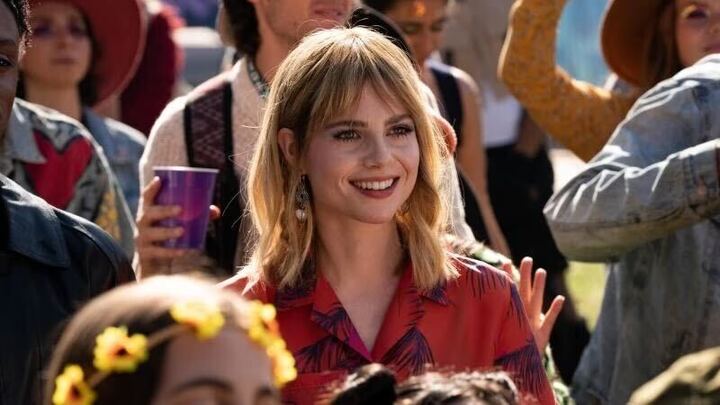
“The Greatest Hits” tells a story of loss, grief, connection and healing as it follows Harriet Gibbons (Lucy Boynton), a young woman struggling with the death of her boyfriend, Max (David Corenswet). Despite two years having passed since his death, Harriet is still struggling to move on, especially when she finds herself being literally pulled back in time whenever she hears a song that was playing during a moment in her and Max’s life together. While she wears noise-canceling headphones out in public, at nights in her apartment, she searches through assorted vinyl records for moments in time that she can change in order to prevent him from dying. One day, a man named David Park (Justin H. Min) joins the same grief support group that Harriet attends. From there, she quickly becomes caught between the past and the present, constantly revisiting her tragic lost romance while a new one begins to take shape.

Typically, movies use advanced technology or superpowers to bring characters back in time or project them forward. However, Harriet’s jumps are prompted by songs that are associated with specific memories, something that writer and director Ned Benson feels “profoundly impacted [by].”

The movie may focus on the idea of grief, but it is not  as bleak as it may sound. During a recent roundtable interview, Benson explained, “one of the solves for me during COVID was music, not only in the sense that it reminded me of the life that I had lived and brought me back to so many moments in my life, but it also reminded me to properly live again, to dance and to reengage in experience, and I think the communal aspect of the medium of music is so special because it’s something we all share.” 

This connection through music is shown repeatedly in the movie in ways that do not just link to Harriet’s grief. Her best friend Morris Martin (Austin Crute) is a small-time DJ who supports Harriet through her loss. She and David also have their first significant interaction while looking through records and later bond over karaoke. Music is something that connects Harriet to the past but it also connects her to her present. Benson says, “Harriet is someone who’s trying to figure out how to engage with life again and how to live again and embrace experience again. And I think music is…this double edged sword of it [that] holds her back, but it also reminds her to live.”

While the pacing drags at some points, “The Greatest Hits” is an innovative take on the time travel narrative, with deep themes of connection through loss, music, and the importance of finding meaning. Boynton and Min do a great job of bringing their characters to life, portraying the different ways that people experience, and heal from, loss.

The post The Greatest Hits’ provides a new take on time travel appeared first on Technique.

Posted in UncategorizedComments Off on The Greatest Hits’ provides a new take on time travel

Beyoncé blurs lines in ‘COWBOY CARTER’

Beyoncé may have released her newest album three days before April Fool’s Day, but “COWBOY CARTER” is no joke. 

The world-renowned “Queen Bey” returns to her Texan roots with the 27-track country album filled with genre-blending tracks, impressive features and no shortage of the talented vocals that make her one of the best-selling music artists of all time. On the day of its release, “COWBOY CARTER” became the most-streamed album in a single day so far this year. 

Despite the clearly white-dominated audience and artist pool, Black musicians have been central to the country music genre from the very beginning, from instrumentals to vocal techniques. 

In the early 17th century, the instrument that would later become the modern banjo was brought to America from West Africa by slaves. Eventually, the first white banjo player learned from slaves before standardizing the instrument’s design, and the banjo became a key feature in minstrel shows. 

The music of the country genre  was originally based on things like slave spirituals and field songs (often with a call-and-response format), as well as the swelling sounds of Black gospel music before white musicians adopted the styles and quickly took over the genre in later years. 

To this day, country music is dominated by white musicians, with the 20 years between 2000 and 2020 showing that only 29% of radio country music was created by Black artists, and of that 29%,only 0.01% were women. With “COWBOY CARTER,” Beyoncé adds her name to the genre in a lengthy yet stylistically expansive collection of songs. 

The album opens with “AMERIICAN REQUIEM,” a five-minute track that begins with soulful harmonies and a backing organ that immediately creates a gospel feeling. Throughout the song, psychedelic rock-sounding guitar riffs combine with the vocal stylings of country and soul to create a clear “introduction” reminiscent of the late artist Prince. 

From there, she moves into the first of several covers on the album, a rendition of the Beatles’ “Blackbird” (which is called “BLACKBIIRD” on the album). The song overlays the original Beatles’ instrumental track and features four Black female country artists: Tanner Adell, Brittney Spencer, Tiera Kennedy and Reyna Roberts. 

She then moves back into original songs, with “16 CARRIAGES” exploring Beyoncé’s journey in the music industry. The next feature on the album appears several tracks later in “PROTECTOR,” which features an introduction by Rumi Carter, the singer’s six-year-old daughter. As a whole, the album is full of cameos by country legends like Willie Nelson, Dolly Parton and Linda Martell, and modern artists like Miley Cyrus and Post Malone. 

As the 10th song, Beyoncé debuts her own reimagined version of Dolly Parton’s “Jolene,” which takes a bit of a different approach to the potential adulteress. While Parton’s original version pleads with the famed Jolene not to steal “her man,” Beyoncé’s rendition warns her to stay away, defending the strength of her relationship and almost daring the other woman to see what will happen if she tries to get in between them. 

Immediately following the cover, Beyoncé reminds listeners that, under everything, she is still a classically trained singer by featuring the beloved Italian
aria “Caro Mio Ben.” 

This song has been carried through generations of classical singers with the deep emotions of devotion and anguish for a lover. Beyoncé sings the song in its original opera smoothly, hitting all of the operatic notes seemingly with ease. It is easily one of the most unexpected yet impressive vocal displays of the album. 

Anyone relatively versed in music can hear the influence of various artists throughout the album, from Stevie Nicks to the Beach Boys to Tina Turner to Chuck Berry, as well as some outright samples from songs including “These Boots Are Made For Walkin’” and “Good Vibrations.” 

Beyoncé’s determination to muddy the lines between clear-cut genres is also constant as she blends the country base with funk baselines, house beats, violin melodies and R&B vocals. 

She also peppers little “interludes” every few songs, with Willie Nelson DJing the fictional “KNTRY radio” station. These 30 to 50-second interval tracks act as transitions between some of the songs, tying them all together.

The album’s closing song, “AMEN,” brings some elements of “AMERIICAN REQUIEM” back from the very beginning, solidifying the track as a smart closer and creating a sense of finality, neatly wrapping the album up.

Alongside the album’s  release, Beyoncé confidently asserted that it “ain’t a country album, [it’s] a Beyoncé album,” a claim that might truly be the
only way to describe it. Over the span of 27 songs, the iconic artist once again shows not only her vocal prowess but also her attention to detail,  creating something that surpasses one singular genre. “COWBOY CARTER” is available to stream on Apple Music and Spotify.

The post Beyoncé blurs lines in ‘COWBOY CARTER’ appeared first on Technique.

Posted in UncategorizedComments Off on Beyoncé blurs lines in ‘COWBOY CARTER’

Waterparks plays an electric show in Atlanta

When people think about going to concerts, most seem less willing to consider going to a show on a Monday night. However, that was not the case for fans of pop rock band Waterparks. More than three hours before the doors of the Tabernacle opened that evening, there was already a line wrapped all the way around the building. Hundreds of people braved the windy Atlanta afternoon to get a good spot for the show. 

Waterparks was originally formed in 2011 in Houston, Texas. Since its start, the band has released five studio albums, with their most recent album, “Intellectual Property,” having come out nearly a year ago. Currently, the group consists of Geoff Wigington (backing vocals and lead guitar), Otto Wood (backing vocals and drums) and Awsten Knight (lead vocals and rhythm guitar). Though Knight is the only founding member of Waterparks remaining, the other two joined only a year later. 

The Tabernacle venue is located directly behind SkyView Atlanta in a converted church building, which is ironic considering the name of Waterparks’s current tour: “the Sneaking out of Heaven Tour.” At 6 p.m., the doors opened, and fans began to fill both the ground floor and upper balcony levels excitedly. 

The first band took the stage around an hour afterward. One of two openers, “bubble grunge” group Pollyanna immediately brought the room’s energy up, putting on a show that was the perfect match for Waterparks fans with their dynamic stage presence and lead singer’s glowing green hair and equally vibrant outfit. 

Following Pollyanna was the pop-punk duo Loveless, featuring vocalist and producer Julian Comeau and “multi-instrumentalist” Dylan Tirapelli-Jamail. The group went viral several years ago by posting “What if ______ was pop punk” videos — reimagined covers of popular songs — on TikTok. Later, they moved on to posting original music, which was met with the same love. During their set, they performed an unreleased song, “I Love It When It Rains,” as well as a short mashup of their most well-known covers (which, before this tour, had not been performed live).

In between Loveless and Waterparks, the stage crew worked to quickly flip the stage, setting up new instruments and revealing a large “house” set, complete with three doors and multiple windows, as well as stair-like platforms. Minutes after all the preparations were finished, the house lights darkened, eliciting deafening cheers from the audience as the time they had all been waiting for finally arrived. The onstage “house” lit up as flames were projected onto the windows. Over the speakers, a snippet of the song “Watch What Happens Next” played, and one by one, the doors opened, and the band members walked out, first Wood, then Wigington and finally, Knight.

Knight is known for having a creative and eccentric personality both on and off stage, highlighted by his habit of dying his hair a different color for every album “era,” his interaction with fans on social media (almost always in all caps) and his ever-present sense of humor. During tours, he often paints different shapes over his eyes, such as stars and neon upside-down crosses that many fans will also sport at the concerts (something that the frontman says he loves to see). 

Throughout their 22-song setlist, Waterparks jumped between different albums, interacting with each other, the set and the audience. At one point in the middle of the show, the band left the stage, much to the crowd’s confusion. A sheet dropped in front of the stage, creating a makeshift projector screen, onto which was projected a shadow scene of Knight sitting on a stool while introspective music played, and a woman’s voice slowly read a piece about overcoming religious trauma. The sheet dropped and was collected by a crew member. That segment was immediately followed by the song “Sneaking Out of Heaven,” the tour’s namesake. 

Another notable moment involved a fan holding up a stack of cowboy hats with fuzzy rims. Upon seeing the fan, Knight began talking with her, asking if she wanted them to wear the hats, which she confirmed. At this, Knight asked if they’d been checked for lice — a joke referring to one of their earlier shows on the tour where there was an unfortunate lice outbreak afterward. Upon her assurance, however, Knight took the hats, distributing them amongst the band members. 

“Do any of you have parents who exclusively listen to country music?,” he asked the crowd. “You should send them a picture of us with these hats on like, ‘Yeah, you should check them out, they’re exactly like Kenny Chesney.’” The audience laughed.

For the entire night, the crowd never seemed to get tired. They constantly sang along loudly, jumped around and crowd-surfed (sometimes even when the lights were off between songs, which Knight also commented on, saying, “Atlanta trusts Atlanta”). 

Waterparks fans have a fierce love and dedication for the band, a love that the group clearly reciprocates, making sure to give their all when performing onstage. In an Instagram story following the show, Knight posted, “favorite Atlanta show ever!!!!!! i appreciate that energy so much.” 

The post Waterparks plays an electric show in Atlanta appeared first on Technique.

Posted in UncategorizedComments Off on Waterparks plays an electric show in Atlanta