Author Archives | Sloan Salinas

Catch Your Breath sells out the Masquerade

For a band, selling out Heaven at the Masquerade means playing in front of 1,450 people, and that is exactly what the bands on Catch Your Breath’s “Broken Souls Tour” got to do this past Friday. The sun hadn’t even risen before people started arriving, with a line forming outside the venue as early as 6 a.m.. With temperatures dropping below freezing during the day, these fans demonstrated the epitome of dedication. 

Hailing from Austin, Texas, Catch Your Breath is still relatively new to the alternative rock scene. Despite officially forming in 2017, the band’s big “breakthrough” came in 2022 through singles “Shame on Me” and “Dial Tone,” the latter landing them a spot on three different rock music charts. Their success was the perfect set-up for their debut album in 2023. 

This tour is the band’s first headliner, and its success has been palpable, with venues selling out daily. When their Atlanta show was first announced, it was set to be in the Hell, the Masquerade’s second-largest stage with a capacity of around 550. However, after the clear demand for tickets, the show was upgraded to Heaven, more than doubling the audience size. 

Fans were in for a long show, too;, doors opened at 5:30 p.m., and three opening bands were on the lineup before Catch Your Breath even started. 

The first up was If Not For Me. The Pennsylvania-based metalcore band started the night off by immediately turning up the energy. Despite also being newer to the scene — their second album was released just last year — many fans in the crowd seemed familiar with them, excited to sing along with frontman Patrick (Patty) Glover, whose vocals sounded like they had been pulled straight from the album. 

Following them was Archers, a four-piece rock band that maintains an independent status, meaning they are not under a music label. Lead singer Nathanael Pulley’s soulful voice blends naturally with bassist Oscar Porter’s metal vocals, adding a clear musical depth to their already lyrically vulnerable songs. Porter was a crowd favorite; at one point, he asked the crowd if they wanted to say “hi” to his dad, and, after being met with eager cheers, he held out his phone for everyone to yell their hellos. 

The final opener of the night was Atlanta-based band, The Funeral Portrait. Because it was their hometown show, there was definitely a portion of fans there specifically to see the group. ; tThey also had an exclusive shirt at their merch table for the night. In a particularly emotional moment, the band played one of their newer songs, “Hearse for Two,” which is about the passing of lead singer Lee Jennings’s grandmother, for the first time in front of Jennings’s mother,, who was in attendance. Characterized by high-energy and theatrical performances, The Funeral Portrait was the perfect choice to immediately precede the headliners. 

The headlining act began at 9 p.m., the entrance of their set being marked with the iconic THX intro sound, the stage lights shining a bright blue before dimming back down in anticipation of the band’s entrance.

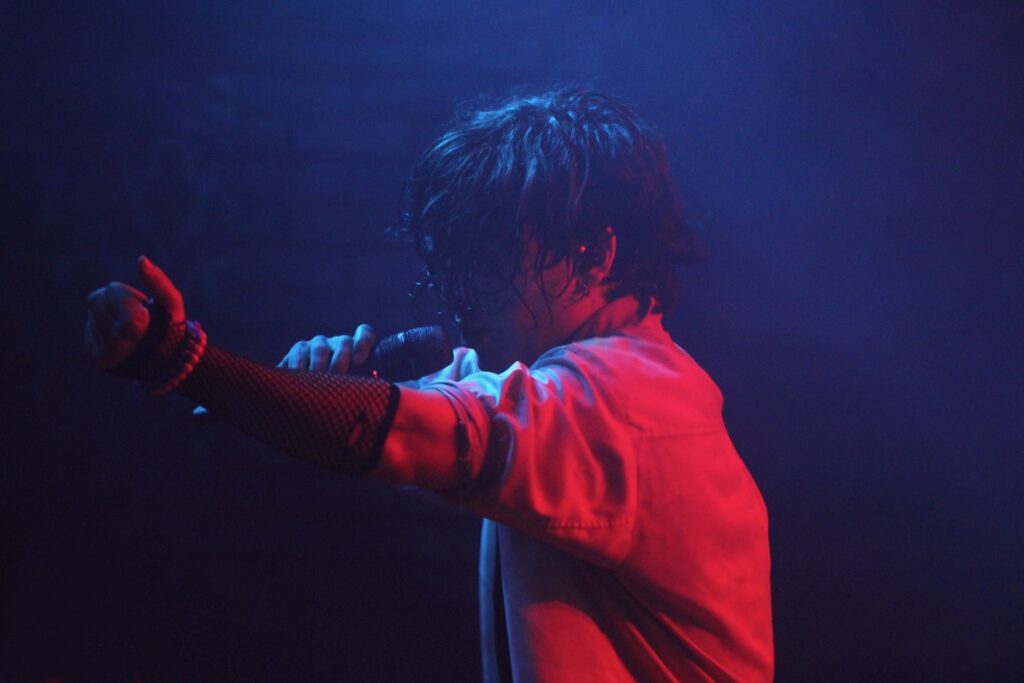
Lead singer Josh Mowery took to the stage first, strolling on in a reflective white coat to a crescendo of cheers from the crowd. The other band members were soon to follow, and they launched into their first — and newest — song, “Ghost Inside The Shell,” from the Deluxe version of their album “Shame on Me.” As Catch Your Breath’s first and only full-length album, all but one song on the setlist came from that record. 

The contents of the setlist re-emphasizes how impressive the show’s turnout truly was. For a band to sell out Heaven is already a significant achievement on its own accord. To secure a sold-out show as a band so new that the setlist only has one album’s worth of songs is a step above. 

The band did not have any kind of flashy lighting, set or outfits, but they kept the crowd engaged throughout their entire set with just their music. They had barely walked offstage before the crowd was chanting for one more song. Mowery walked back onstage, lifting one side of the beanie covering his ears to humorously show the crowd he was trying to listen to them. 

After the audience chanted again, he called the rest of the band back onstage, “Guys, they want one more song!” 

While the band might just be getting started, a nearly 1,500-person audience is no small feat for their first headlining tour. 

Catch Your Breath’s “The Broken Souls Tour” will continue across the U.S. and Canada through the beginning of March before heading to Europe and the U.K. to start “The Savages Tour.”

The post Catch Your Breath sells out the Masquerade appeared first on Technique.

Posted in UncategorizedComments Off on Catch Your Breath sells out the Masquerade

Ghøstkid on their genre-bending style and music

Music has the power to connect people across languages, cultures and countries. No matter where you are from or where you go, there will always be a community within the music you love. Ghøstkid proved this on Friday, Feb. 7, when they played at Altar at the Masquerade. 

Coming from Germany on their first headlining U.S. tour, the band is the solo project of former Electric Callboy (EC) member Sebastian Biesler, who goes by “Sushi.” The group includes Steve Joakim on drums, “Jappo” Heinz and Chris Kisseler on guitars and “Stani” Czywil on bass. Kisseler has so far been unable to join the band on their United States tour dates. 

Before their show, while the line outside the Altar doors grew longer, The Technique met up with Sushi to talk about undertaking a solo project after leaving EC and reflecting before what would be the last date of the “Ghøstkid: Live in the US” tour.

How’ve you guys been liking your first headliner in the United States? 

I mean, it’s not the first time that we are here. We’ve been on tour with Black Veil Brides last year in May. But it’s a lot of fun so far. Of course, if you’re on your own, you have a lot more responsibility, but shows are great. Hawk and Crucifixion are absolutely lovely. So it’s a really great tour. It’s a lot of fun.

And you guys [played] Shiprocked before this, right? How was that? 

It was amazing … With my old band, we played some cruises as well, but that was definitely a different thing. People were in a great mood; I had a sunstroke [and] that was probably the only downer. But it was a lot of fun for sure. 

Did you know you wanted to make music [for international audiences] when you started?

Absolutely … I try to include as many people as possible, so that’s the reason why I had started [playing internationally]. I try to keep everything in English as much as possible, even if I have German interviews … I used to translate them and I always try, at least, to tell the people what’s going on. 

What made you decide to start making music?

I would just say I was always looking for my thing … and so music was the only thing I really stuck to. Because you just have it in your own hands, how good you want to be and how far you want to go or come. So, you have so many options and opportunities that [have] just something to do with yourself. For me, in the first place, I just wanted to have a place I could call home. And music was the only thing that was always there for me.

Did you have any inspirations that you remember looking up to when deciding to go into music? 

I would say probably everything started because of my dad. He used to record old rock concerts on the TV. So when I started playing guitar, he always [recorded shows] on a regular TV. And for me, that was something magical — to see bands like Korn and Slipknot … back in the days just performing live, I said, “I want to be there on that stage.” So I would say this is how everything started. And, of course, I grew up in the nu-metal era. So yeah, there have been a lot of bands and artists I looked up to. 

So if you could tour with anyone, who would you want it to be? 

I would love to tour with Bring Me The Horizon because they’re my favorite band. But I’m more interested in characters, like with bands that I like. So I wouldn’t mind, even if I’m not that much into the music, I would say, if it’s worth it — if it’s a good band — I would love to tour with them. But Bring Me would be great.

When you say “character,” do you mean who the people are versus the band? 

Yeah. [I’ve] met a bunch of people since I started to do music, and it’s always interesting. [You] … hear all those rumors sometimes about the artist … and if you meet them, it’s like a completely different person. It’s super interesting … You meet so many different characters. 

A lot [of artists’] stage presence is very different than their offstage presence. Would you say you’re more introverted or extroverted? 

Sometimes, I can transfer [the onstage energy] to my private life, but on stage, you know what [you’re doing]. It’s like it’s a switch. But I would say, in general, I’m more introverted but just when it comes down to strangers. In my regular space though, if I know people, I’m not introverted. 

I know you said that Ghøstkid came from wanting to do solo stuff, so how did you meet the other guys?

Everybody who’s in the band [I’ve known] for years. For example, my bass player, Stani, [I’ve known] this guy since we were 15 years old. So we played in the band a long time ago, and he’s one of my closest friends. Same with Jappo, for example. He used to be the guitar check in my old band, [and that’s] how we met for the first time, and we always stayed in touch. So [when forming Ghøstkid], it was like, “Okay, these are the right guys to start a band with.”…  That doesn’t mean that we don’t fight a lot, but it is what it is. I would consider them more family than just “regular musicians.” 

What would you say is your favorite part of being on tour? 

I would say that it feels like time stands still for a moment because you’re just in your bubble. [Because] you know what to do. You see some nice places and so on. You meet interesting people …  I love the United States, so I’m just happy to be here; the vibe is so different. 

What do you want your music to mean to people?

I think, for me, the biggest validation… is always if people just find the meaning, and if it helps people just to make it through tough times, that’s the reason why I’m doing music. And if it resonates with people and it helps them to overcome hard times … that’s the most important thing that I can share, this part of my story. I always used to say music, in general, is like a big family because everybody sticks together because of the same reason.

What is your writing process like?

It always depends. Usually, I just record voice messages. Every time I feel inspired by something, I just lay down a little voice message. And most of the time, I start with the vocals, so I’m just mumbling, and then I try to build lyrics out of that, and then I just add the instrumentals and just play guitar and see if it works or not. This is how I work, usually. I’m just waiting for this moment [when] something comes into my mind that I need to express. So usually, when I feel bad, I’m a lot more productive.

When you were a kid, did you see yourself where you are now?

I tried a lot of different things. I started with music pretty late, even though my parents always used to sing in church choirs. My dad used to play the flute, [and he’s] still doing that, so music was always around. But not [in a way that] I had a connection. Even in school, I was so bad in music [class]; I always had the worst rating, but at some point, I just got attracted to it, and I realized that, through music, you can discover the whole world. 

To be honest, for me, music is like unlimited power. So maybe that’s the reason why I stuck to it because you can change the whole world in your bedroom. This is what music is … if you just do what you love, eventually you’re gonna speak to a lot of people. And now it’s, I don’t know, twenty, twenty-five years later and I’ve seen the whole world through something that started as an idea or a dream as a child.

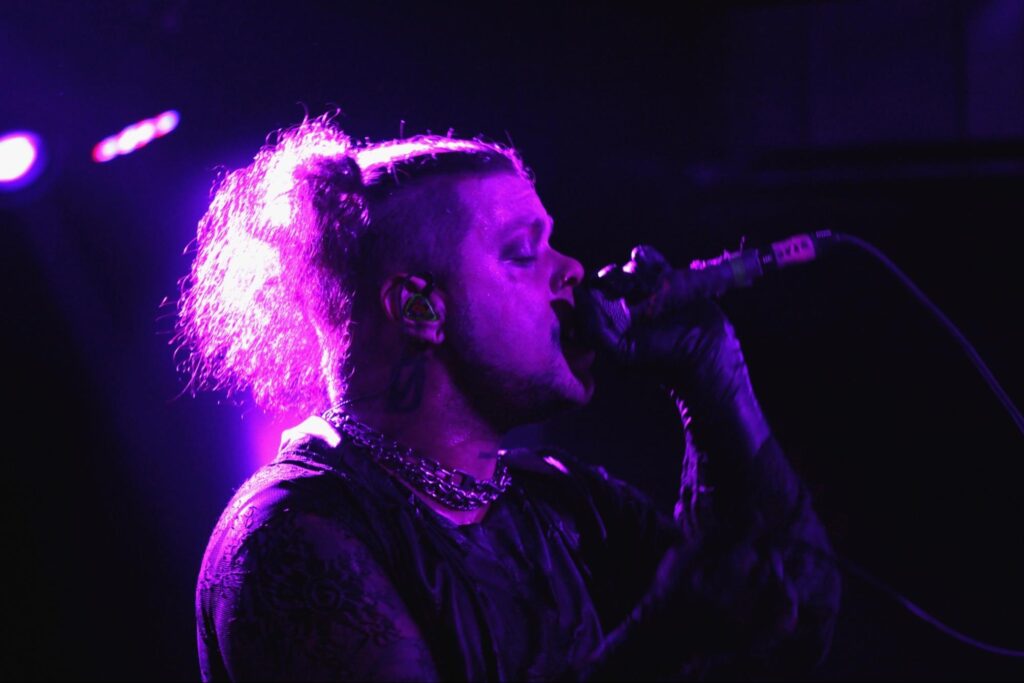
Ghøstkid’s live shows are fantastic, especially for a comparatively “newer” band — forming in 2020. Both Sushi’s vocals and the band’s appearance are distinct, and they often wear facepaint, unnatural-looking contacts and outfits unique to each member but cohesive in their aesthetic. 

Sushi covers both vocal styles characteristic of the metal genre, doing each one with incredible prowess. His screams hold levels of emotion that add extra depth to the songs, and his clean vocals are uniquely textured, containing subtle flashes of his accent. 

Each of the other members brings individuality to the shows, with Joakim’s tangible drumming passion standing out. When fans watch him in particular, they will notice his habit of spinning and flipping his drumsticks in a way that looks so second-nature that it doesn’t seem like he is “showing off.” Even to those who have never seen him play before, it would look unnatural to see him drumming without the sticks leaving his hands.

Both the band and the crowd seemed to have a blast at the high-energy show, with people screaming and singing along close to the stage while a moshpit remained open the whole night. 

Though the tour is now over, make sure to keep an eye out for whatever Ghøstkid does next. For fans of heavier music, they are the group to watch.

The post Ghøstkid on their genre-bending style and music appeared first on Technique.

Posted in UncategorizedComments Off on Ghøstkid on their genre-bending style and music

“Captain America: Brave New World” takes flight

Click here to watch the Technique’s full interview with Anthony Mackie!

Sam Wilson picks up the iconic Captain America shield in the first Marvel movie of 2025: “Captain America: Brave New World.” After appearing in the Disney+ series, “The Falcon and The Winter Soldier,” the new Captain America makes his highly anticipated big screen debut.

The film follows Sam (Anthony Mackie) as he faces his first international incident in the role of Captain America. Alongside him fights Air Force First Lieutenant Joaquin Torres (Danny Ramirez), who was first introduced in “The Falcon and The Winter Soldier.” Toward the end of the series, Sam gave him the Falcon wing pack, effectively passing along his former mantle as he accepts his new hero responsibilities. 

The movie gives Sam the chance to truly step back into the Marvel Cinematic Universe (MCU) with his new identity and gives Joaquin the chance to make his first entrance into the MCU. 

On the other hand, the reappearance of Thaddeus Ross as president of the United States feels a bit confusing, as most fans will remember him most as the superhero-hating general in “Captain America: Civil War.” 

While the plot’s main focus is on the threats that Sam and Joaquin have to face, the “hero” aspect of superheroes is emphasized over the “super.” During an interview with the Technique, Mackie explained the intentionality behind that perspective. “The Captain America mantle has always been in more of a grounded reality. It’s steeped more in a political type of compounded-reality thriller,.” said Mackie., “What we wanted to do with this movie is show that the dignity and the humanity of Captain America is what matters.” 

While the film is not as gritty and thought-provoking as movies like “Captain America: The Winter Soldier,” it earns points for attempting the same tone. Themes of exploitation, imperialism and self-determination are woven into the movie’s plot, but had they been explored further, their impact would have been greater. 

The inability to delve further into the underlying themes may have been partially due to the slightly less than two-hour run-time. While some Marvel movies have been criticized for being too long, this one could have benefitted from more time. Some parts of the film, such as certain exposition scenes and scenes toward the second half, felt like they moved a bit too quickly, something that could have also been helped by some extra minutes. 

As far as production goes, award-winning director of photography Kramer Morgenthau’s cinematography is impressive. Intentional camera angles and movement, dynamic composition and rich color and lighting design help to create depth and build moments of tension.

In terms of the movie in general, however, after Marvel’s recent string of fantastical superhero flicks, including “Thor: Love and Thunder,” “Ant-Man and the Wasp: Quantum Mania” and “Doctor Strange: Multiverse of Madness,” “Captain America: Brave New World” feels like a refreshing step back into something that more closely resembles a reality nearer to our own. Julius Onah (“The Cloverfield Paradox”), a newbie in the Marvel scene, directed the film. 

Fans who have been begging for less CGI-laden movies will also be satisfied by “Captain America: Brave New World,” at least to some degree. While there are moments where the effects fall noticeably short, it feels like the studio at least attempted to hold back on the excessive use of poorly done CGI that has been plaguing recent Marvel films. 

Instead of fight scenes filled with characters holding out a hand and allowing computer-generated repulsor blasts and wispy magic to take out the bad guys, there are multiple beautifully choreographed segments of hand-to-hand combat, with many adversaries carrying regular, real-world guns, with no alien, AI or otherworldly technological advantages.

Speaking of the lack of enhanced advantages, the movie’s plot explores the pressure that Sam faces in filling Steve Rogers’ super-sized shoes as a non-enhanced individual. While some may argue that Steve’s super-serum-derived enhancements are central to the character of Captain America, Mackie would argue otherwise. 

“When we first met Sam, he was a counselor,” the actor says, “He was a veteran; he was a humanitarian. And I think those characteristics only come with a certain type of humbleness and humanity, and that’s what this Captain America — that’s what Sam Wilson — represents… he’s every man’s Captain America. He’s the Captain America we can look at and say, ‘That can be me.’” 

Sam Wilson is no Steve Rogers, but perhaps that is the whole point. He gives people, both in-universe and in-audience, a role model who exudes qualities that are not just admirable but achievable. 

The movie combines the thriller genre with the action of a superhero movie in order to open new doors for a well-loved character, which is something that had an impact on even Mackie himself. 

“That’s something that was really important to me, to capture what it is today, to not only be a Black man but to be a human being in a place and a time where humanity and compassion is so needed,” he said. 

While “Captain America: Brave New World” might not be the perfect return to the golden age of Marvel movies that some fans were hoping for, it is still clearly a move in the right direction for the studio. 

Despite recent Marvel movies shoving flashy CGI powers into action sequences to fill their overdone multiverse plots, this particular one does not. Instead, “Captain America: Brave New World” brings its heroes back into Earth’s atmosphere and attempts to emphasize plot and characterization, earning the release a spot on the list of better recent Marvel movies.

The post “Captain America: Brave New World” takes flight appeared first on Technique.

Posted in UncategorizedComments Off on “Captain America: Brave New World” takes flight

Artist spotlight: TX2

When stepping into the cutthroat world of the music industry, some artists prefer to play it safe, writing with radio listeners in mind and politely promoting their work on their social pages, while others choose a bolder, more explosive tactic. And if anyone has built themselves a permanent residence within the latter category, it is emo-punk group TX2. 

The brain-child of Colorado native Evan Thomas, TX2 has become a standout among the crowd of modern alt-rock bands through the use of raw — sometimes controversial — lyrics, a style that blends emo sound and punk ideas with elements of hip-hop and a social media presence akin to tongue-in-cheek rage bait. 

Their success is reflected in the still-growing list of sold-out shows on their ongoing tour, the Cruel World Tour, a list that Atlanta joined this past Sunday in Purgatory at the Masquerade. Prior to getting onstage at the packed show, Thomas sat down with the Technique to talk about the band’s journey, goals and life as a musician in today’s political climate. 

To start off, what made you start to make music?

I started on the drums when I was five years old, and I loved emo music; one of the first albums I got was “The Black Parade.” [F]rom there, I started diving into emo music and…playing in different bands. In middle school, I was in an Asking Alexandria cover band, and I just played a bunch of different bands, even a country band. But I just hated being in bands because there was always some sort of ego thing. And … I had a few bands that had really messy fallouts, and I was like, “I don’t ever want to be in a band again.” And I was like 15 [and thought], “I want to be a rapper” because rapping is like drumming with words. It’s like the same rhythm, but with wordplay, because I couldn’t sing and I didn’t want to have to load in my drums anymore. 

So then I started rapping in high school, and I thought that would make me cool and people would like me, but it turned [out] the exact opposite. Things got even worse, and I got bullied even more. And then I moved out at 18, and I dealt with so much bullying, I was like, “All right, I make sure every [person] knows the name TX2 [and] It’s on billboards one day. “And then when I moved out, I started finding myself, dressing how I wanted, and then being like, “Okay, wait; actually, I can be emo.” So around 18-19, I started the emo arc return.

Where does the name “TX2” come from? 

I was 15, [and] I liked “Eminem,” which is Marshall Mathers. So I was like, TX2 is like “Timothy Thomas,” which is my legal name. I thought it was cool, but it sounds like a microwave. [But],  it’s like three syllables, I’m stuck with it now.

What’s it like being a band in the age of having everything on social media? 

It is horrible because I have no time to breathe, sleep or have a social life. At all times of the day, I’m doing something, planning something. I have to work this; I have to work that … [T]he cool thing is I get to build a social life through people that I work with. … but the con is I don’t feel like I have a normal human life at all. I’m always on the road, filming, etc, working.

What’s your favorite part of touring? 

I get to be with my family on the road and every single day, I’m surrounded by my favorite people. 

So, Cam [Rostami] is my roommate — my best friend — and now I’m on the road with him. 

Corky, who I wish lived with me. Now I get my chance to live with her, in a van. 

And then Ethan [Vaillancourt], who I wish I saw more. But now, he’s stuck with me, in a van. 

So all of our friends, and Church, our new drummer — everybody — it feels like one family on the road. And just a new city every night. 

I’ve noticed, especially more recently, [you’ve been] talking about issues that there have been, historically speaking, within the emo or punk scene. What made you start explicitly acknowledging [those problems]?

Through therapy, I recognized that … things that happened to me have happened to people in the scene, and I have become very empathetic towards it. And I also was innocent, and I grew up liking emo music and thinking that “this is cool; I love the music and the culture.” And then as I grew up, I learned the horrible history of people in the scene that, like, ruined it for me, and to the point where it hit me one day when I was telling some friends that I was an emo artist, and they had to ask me weird questions [and] I was like, “so just because I make emo music…there’s [a negative] association?” Like, that’s disgusting [and] it feels bad, and it makes me want to rebrand the scene. 

And I just hate that you can’t listen to pop, rock, hardcore, post-hardcore riffs and wear eyeliner without it having a bad association because of something stupid people did in the past. I would like to reclaim that. 

How do you want to continue with [that effort]?

Awareness is the most important thing. So by talking about it as much as [I can] and every time I get a chance to, and … you’ll see tonight, I talk to everyone about how “you guys need to make friends if we’re gonna build a scene, we need every single one of you here.”

And over time, I know that this is the best-selling tour we’ve done, and it’s almost doubled from the last one. [T]he] next time we tour, hopefully, it doubles again.

I’m playing the long game: five [to] ten years from now, I hope that TX2 is a household name and that we could bring on other artists and build out our own scene that focuses on these important issues and awareness, … aAnd by promoting this type of energy, I think other people will follow.

How have you taken criticism [on social media] in stride, and have you used it? 

[The intense criticism on social media], what looks like a huge problem with [TX2], is actually our superpower. Our engagement on posts is higher than most other musicians because everyone needs to comment, “You’re a poser.” Anytime we collaborate or work with someone, everyone’s always like, “Can’t believe you would do this,” but what they don’t know is they’re spiking the engagement. 

And thus, whenever we do something, it performs well and, honestly, better whenever we work with more people because everyone has to engage. So, we skyrocket our engagement; algorithmically, that helps us. 

And I feel like we’re pissing off the right people: all I talk about is, “If you’re homophobic, f***— you. If you’re creepy towards girls [or] if you’re DMing minors in any way, f****— you. Anything like that, that’s dangerous, f***— you.” And people who have a problem with that are outing themselves by having a problem. So we stand for something that we’re very, very bold about, but to me, it’s so clearly the right side.

With that mindset that you have and the things that are currently going on with the country, does that impact the way you’re viewing your music and the energy that you’re putting into it?

It’s definitely impacted our music. I grew up a huge fan of Black Flag and The Clash, … and those bands are known, specifically Joe Strummer from The Clash, for saying that “punk rock is the news.” So, anytime there [are] events happening in the world, this is our chance to write a song about it, which feels pretty cool. We wrote about the death of the healthcare CEO … I felt like it was our job to write a song about it, and I think we’re gonna continue to do so whenever we see important issues happen. 

How was playing the stadium shows [on your last tour]?

That was life-changing. The fact that we could play to 6,000 people a night feels unreal. The crowds were very receptive. And it was like, “Dude, we’re doing it.” You know? This is what I dreamed of always doing, the crowd I dreamed of playing [in front of]. And I’m very lucky that Ice Nine Kills believed in us and gave us a chance. 

And you recently did [“M.A.D’] with [the lead singer of Ice Nine Kills]…where did the idea for that song come from? 

I wrote the song for [TX2’s guitarist] Cam. Cam’s like my partner in crime on everything. And I wanted to write a song using the metaphor of a story [about] two people who were outnumbered by cops, and on their final showdown, they get gunned down together. And it feels like it’s Cam and [me] against the world sometimes where there’s so many people out to talk [bad] about us. But Cam’s like the secret switchblade at my side. That’s a lyric in the song. It’s all a big metaphor for him.

How long have you two known each other?

Just two years, which is crazy, I know… [but] I don’t think there’s been a single day I haven’t seen him.

How did you guys meet?

Tinder, actually. No, I’m kidding, I’m kidding, I’m kidding. 

I was looking for a guitarist, and he slid up on my story. And then we were arranging a band practice for me to test out if he was the right person, and it turns out he’s my neighbor. We were like, “All right, well, band practice at this address” [and] it’s in my neighborhood. You know what I’m saying? What are the odds? The universe wanted that to happen.

You gave a generalized [goal] of wanting to be this household name. But if there are any more specifics, what is your goal for [at least] this year?

This year, we … might be playing Warped Tour. And I just want to kill the [negative] Warped Tour reputation. … I want to build something new. The overall goal is to rebrand “emo” in a safer way and, like what I always thought the scene should have been.

But, in the short term, the goal is to just get TX2 one year closer to making that huge change happen. 

If you’re talking to someone who hasn’t heard your music and doesn’t know who you are, and you can give them one reason why they should be listening to your band, what would you say? 

I can’t force anyone to like my music, but I write for my heart. There’s nothing else I feel like I have to live for, at this point, besides this music. And if you are interested in hearing what I have to say as someone who has nothing to live for besides this dream, you could listen to the music. Music’s subjective. … Some people will like it; some people won’t.


Following the interview and openers, Flat Out and tiLLie, it was time for TX2 to put on the intense, high-energy performances they’re so known for. In a sold-out room, the front rows lined with younger fans looking up — both literally and figuratively — to the band, Thomas put his all into the lyrics, holding hands, waving pride flags and being joined onstage by members of the audience at two different points in the show.

There were several times throughout the night where the frontman proved just how much he meant the things he said during the interview, constantly reminding the crowd, “You are not f—ing alone. And I’m here to tell you this every f—ing night. This is a community we are building and every single one of you is just as important.” 

TX2 has such a passion for not just the music he makes and the fans who listen to it but for the mission of learning from the toxic past that mars the emo scene, with the sole intention of replacing it with a future that emphasizes safety, positivity and belonging for everyone who wants to be a part of it. 

It’s something so palpable that it does not just make fans believe that change is possible, it shows them that it is inevitable. 

The post Artist spotlight: TX2 appeared first on Technique.

Posted in UncategorizedComments Off on Artist spotlight: TX2

“& Juliet” puts a modern spin on the beloved classic

Anyone who has taken a high school English class knows the story of William Shakespeare’s “Romeo and Juliet,” the tragic young lovers who defy their feuding families to get married and ultimately meet their untimely ends in a mutual suicide. 

In Shakespeare’s original play, one of the literary world’s most unfortunate miscommunications leads Romeo to kill himself upon finding Juliet “dead,” not realizing that she has only taken a sleeping potion. When Juliet wakes up and sees Romeo dead, she then truly kills herself using his dagger. 

Romeo and Juliet are in their mid-to-early teens during the story, leading the story’s more mature readers to pause and ask themselves, “Now, why did she have to go and do that?” 

The Broadway show “& Juliet” rewrites this iconic tragedy by asking, “What if she never did?” 

In this play-inside-a-play, Shakespeare is interrupted by his wife, Anne Hathaway, before he can stage the version of “Romeo and Juliet” that the audience knows. Instead, Anne convinces him to let her help rewrite the story so that, rather than killing herself, Juliet decides to move on with her life. 

“& Juliet” is what is known as a “jukebox musical,” meaning that the soundtrack is composed of pre-existing songs — sometimes all by the same artist and sometimes by an assortment of artists — rather than ones written for the specific purpose of a particular musical. These musicals have seen mixed reviews from the general public over the years, with some more negative feedback being attributed to unusual song choices and awkward transitions. 

Any pre-existing skepticism that audience members may have had, however, melts away with each minute of the show. The tracklist includes songs from artists ranging from The Backstreet Boys, Bon Jovi, Brittany Spears, Demi Lovato, Ke$ha and Katy Perry. Some of them have been re-composed to fit both the Broadway stage and the storyline, while others sound closer to their original iterations, but all of them felt very well-selected and well-placed within their particular scenes. 

Juliet’s first onstage appearance is paired with a power-ballad version of Brittany Spears’s “…Baby One More Time,” sung by the incredibly talented Rachel Simone Webb, who is a standout from her first song. Not only does she introduce this brand new version of Juliet, a spunky, confident and newly single young woman (in her twenties, instead of her teens), but she showcases a beautifully powerful voice in every song she was a part of. 

In order to avoid being sent to a nunnery by her parents, Juliet, her two newly-written best friends May and April and her Nurse run away from Verona to Paris, France. There, the audience is introduced to François DuBoise, an awkward young man grappling with the choice that his overbearing father is forcing onto him of either getting married or joining the army. François meets Juliet and her friends, and both of them are whisked away on a journey of finding confidence, independence and identity. 

Not only does “& Juliet” allow Juliet to take back her destiny as a strong female character, it also includes other powerful LGBTQ+ themes such as a closeted person’s internal struggle between happiness and expectation, and finding love as someone who identifies outside of the gender binary. 

The show and its soundtrack craft a harmonious balance between fun, carefree scenes and emotionally vulnerable moments that undoubtedly resonate with audiences from all demographics, from younger viewers who have fought for the chance at love to older viewers who have wanted a chance to find renewed passion. 

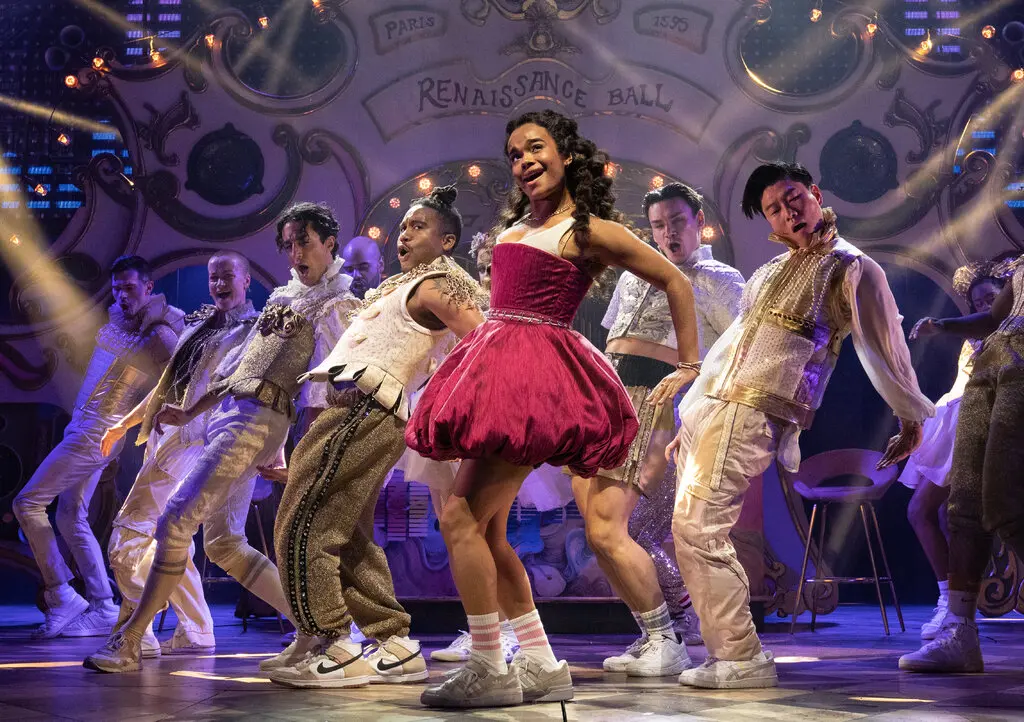
The costumes combine modern and medieval designs, from fashionable corsets to airbrushed jackets, symbolizing both past and present elements of the story. 

The ensemble, referred to in the show as “the Players,” tackle impressive choreography in every number while contributing harmonies that add depth to the songs. Despite the fact that many audience members may recognize the songs on the soundtrack, they have never heard them quite like this. 

The jokes, while sometimes corny, are timed and delivered in such a way that earns laughs each time. Every scene has a feeling of vibrancy within it and not just because of the bright lights and jewel-toned colors. While the show itself was clearly written with care, intention and foresight, the North American touring cast gives it a feeling of true liveliness, love and passion. Cast aside any doubts or expectations and experience the celebration of love, individuality and diversity that is “& Juliet.”

“& Juliet” will be performing at the Fox Theatre from Jan. 7 to Jan. 12.

The post “& Juliet” puts a modern spin on the beloved classic appeared first on Technique.

Posted in UncategorizedComments Off on “& Juliet” puts a modern spin on the beloved classic

“Mufasa: The Lion King” is a roaring prequel

Disney’s “The Lion King” (1994) was a staple of an entire generation’s childhood, creating a whole new world of beloved characters that spanned several movies, short films, television series, video games, a Tony-Award-winning musical and a live-action remake — starting from the original’s release in 1994 to 2019.   

This December, five years after the release of the live-action remake, a new live-action prequel has made its way into theaters. Disney’s “Mufasa: The Lion King” follows Simba’s father, Mufasa, before he was king of Pride Rock.

The whole movie is set as a flashback/visualized story, as Rafikki, with interjections by Timon and Pumba, tells Nala and Simba’s young daughter the story of how her grandfather, Mufasa, became the king that audiences saw in the original movie.

As a cub, Mufasa is separated from his parents and eventually found by another cub named Taka (Theo Somolu), who excitedly takes Mufasa in as his brother, despite his father (Lennie James) — the king — being vehemently against any lion who is not from within their pride. 

When a vicious pride of white lions, led by the ruthless Kiros (Mads Mikkelsen) attacks, Mufasa and Taka are forced to go out on their own to find a new home: “Milele,” a place that many of the animals think is nothing but a myth. 

The movie is directed by Barry Jenkins (“Moonlight”) and features fun new songs written by Lin Manuel Miranda (“Hamilton”) and a sweeping score composed by Dave Metzger. But the film stands out because of its animation.

Moving from cartoon animals to CGI-ed realistic animals is already a risky jump for many audience members, one that Disney has been attempting to push within the past few years. While any human-like characteristics of an animal are going to be seriously hindered when using the images of real animals versus stylized cartoon versions, the characters in “Mufasa” do have a bit more range in visible expressions than their 2019 predecessors. This gives the animals back some of the personality that live-action remakes seem to take from sentient non-human characters.

The performances by various vocal actors within the film’s cast also help to bring these characters, both the new ones and old ones, to life. When the audience first meets Mufasa, he is a young cub voiced by budding actor and Atlanta resident Braelyn Rankins (“Doom Patrol”). 

Rankins comes from a family that has been embedded in the film industry for as long as he can remember, and the young man is no stranger to “The Lion King” franchise. During a recent roundtable interview with the Technique, Rankins talked about playing Young Simba in a stage production of “The Lion King” when he was little. He said, “I’ve always liked ‘The Lion King,’ [and] that was a performance art school, so that’s really where I got most of my inspiration for acting [and] to join the industry in the first place. So the fact that… one of the first acting experiences I had [was] ‘The Lion King,’ and now I get to be in ‘The Lion King’ the film, is a great call back.”

Despite being quite different from the character that has already been established and loved for years, Rankins’ portrayal of a young and playful Mufasa adds another layer to the future (or past) king. When asked what it was like to try and channel a character that had already been done several times over, he replied, “It was like creating a whole new thing since we’re seeing Mufasa from such a different perspective. There wasn’t a whole lot to go off of, as far as the original ‘The Lion King,’ because at that point, he’s fully evolved and he’s Simba’s dad…. So, playing him as a young cub [when] he’s so scared and getting separated from his family and [is] first introduced to Taka and everything. So it was kind of like creating a new version of the character.” 

The movie truly did show a different side of Mufasa than older audience members are used to: one filled with youthful energy and ambition as opposed to the regal maturity he showed in “The Lion King.” 

Though much of Rankins’ time as the titular character is characterized by childlike wonder, he said that his favorite part of working on the film was “definitely the more intense scenes…It was kind of awkward for me, to be honest, at first, just because acting like you’re in a place behind a microphone by yourself while hundreds of people are watching you on the Zoom camera is kind of awkward, but it was really fun. And I think when I saw the scenes play out on the screen, I was really, really proud.”

After seeing “Mufasa” in theaters, audiences are bound to understand that pride, as Rankins’ performance as the young Mufasa portrays a wide range of emotions that people have yet to see from the character. The final product is a film that may not have been the most anticipated film of the year but certainly is one of Disney’s better live-action continuations in a long time.

The post “Mufasa: The Lion King” is a roaring prequel appeared first on Technique.

Posted in UncategorizedComments Off on “Mufasa: The Lion King” is a roaring prequel

“’Twas the Night Before” by Cirque du Soleil rings in the holiday season

When most people think of the internationally acclaimed performing group Cirque du Soleil, they think of a towering circus, complete with a big-top tent that, in past years, could be seen in Atlantic Station from the highway. This year, however, Atlanta theater-goers got to experience something a little different.

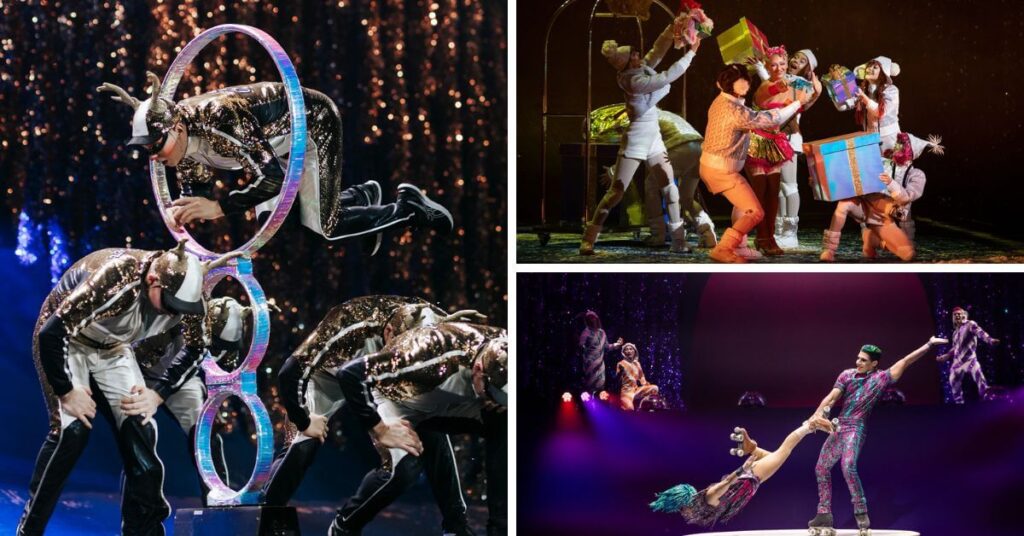
“’Twas the Night Before” was Cirque du Soleil unlike many have seen before: on the comparatively smaller, more intimate stage of the Fox Theatre. The show is also slightly shorter than a typical Cirque du Soleil production, with no intermission in the middle, but is still every bit as lively and awe-inspiring. The cast is jam-packed with only the best talent, and the set, music and costumes exude creativity. 

The Technique got the chance to sit down with people from several departments that help to make the magic that is “‘Twas the Night Before” and talk about their experiences with the show and Cirque du Soleil. 

James Hadley had an impressive history in the entertainment industry prior to becoming the stage director and writer for “‘Twas the Night Before.” He started as a performer on Broadway for “many, many years” before moving to “dance captaining and assisting” and then to resident director before being contacted by Cirque du Soleil with an offer to become the artistic director of one of their Vegas shows. 

Hadley’s passion for live entertainment was clear throughout the interview as he spoke of the initial creation of the show back in 2019. “Our goal was to really open [Cirque] up to maybe an audience that didn’t usually get to see [their usual kind of show] … some cities, they’re just not able to have a big top come through,” he said. “So with the theatrical show, it gives us a lot more opportunities … Here, I wanted to have a more intimate feel … a more theatrical feel and a little bit more of a narrative, more of a storyline.” 

The show, inspired by the classic Christmas poem “A Visit From St. Nicholas,” follows a young girl as she relearns the magic of Christmas and repairs her strained relationship with her father along the way. A mischievous group of dancers leads her along as she meets various quirky and colorful characters who all have something to show her. 

This is the company’s first Christmas show, as well as “the first show that they’ve ever recreated,” Hadley shares. “Usually there’s only just one version of all the shows, but because it’s such a limited time, they want to be able to share it with as many people as they could.” This means that, unlike any other Cirque du Soleil, there were four full casts of “‘Twas the Night Before” touring at one time. 

While the show has multiple concurrent iterations, there is something unique about each of them. When asked about the differences, Hadley told the Technique, “We have a different artistic director on each show, and they really guide the staging of the show, and they have a huge impact also on the acrobatic acts. Because the acts are the same in the different shows, but people’s skills and tricks that they do are different, what they really focus on is how do we highlight some of the great tricks that they can do that will be different from show to show, as opposed to trying to make everyone do the exact same thing.”

Hadley assured that even though the show was themed around a Christmas story for children, “‘Twas the Night Before” was still a show for all demographics. “[When] we first created this show, the goal was to create a family show. It was a show that was really going to be for families to come with their kids. And in my mind, I thought, yes, that’s important, and that’s got to be part of it, but I wanted to make sure it was a show that anybody would come and enjoy. So even though it’s a Christmas show, and even though it’s a children’s story [or] a poem that people read to their children, I do think that no matter who you are, what your background is, you’re gonna enjoy the show.”

Because of the overall smaller scale of “‘Twas the Night Before,” the show requires significantly fewer people. With a total of forty-three members of the cast and crew, twenty-six of them are performers. Within this cohort is twenty-six-year-old Ron Oppenheimer, who plays the role of the father. 

Doing dance and gymnastics growing up before moving to circus arts when he was eight years old, Oppenheimer began his career with Cirque du Soleil when he was just twenty-one. This is his second year in “‘Twas the Night Before,” and he returned to the same role. He told the Technique, “I’d say my favorite part of the role of playing the father and having the act is, [especially] compared to other shows I’ve done, this show is very lively and heartfelt and warm and fun to play. So, for me, that’s really fun to get to have a character that’s a little bit more comedic and gets to just be like a ditzy dad in a way….and then to contrast it, when I get to my actual acrobatic act, it’s a really heartfelt, emotional, sad piece.” 

Since he has been part of big-top Cirque du Soleil shows in addition to this one, he spoke on the differences between the two as Hadley did, but from a performer’s perspective, saying, “Whenever we move to a new city, we have to integrate into a new theater and find where everything is. They’re not always the same size, so slight adjustments and finding ourselves in the space, whereas the big top tent is just like you pick up the tent and move.” 

Audiences who are familiar with Cirque du Soleil’s big-top shows are also familiar with the colosseum-like seating that is typically characteristic of those tents. However, in the Fox Theatre — and any other theater — the audience is only in front of the stage. This can create a different relationship between the crowd and the artists, who sometimes interact with and acknowledge the crowd as part of their acts. Despite the different atmosphere of the stage, all the performers appeared to adapt to the different setting without a second thought. 

When asked about whether he felt any different about the show due to its Christmas-centered themes, Oppenheimer said, “[It’s a really fun Christmas story, but] it’s also just a holiday story. So it’s really for anyone. I didn’t celebrate Christmas growing up, and I have loved being on this show, so it doesn’t feel like you’re being shoved like ‘Christmas!’ but it’s like ‘holidays,’ and it’s just fun to come and just have a great time for everyone.” 

And the cast is correct about the show’s quality — the finished production confirms how fantastic it truly is. While the show centers around a Christmas poem and features a soundtrack full of re-invented Christmas songs, it truly feels like a holiday show more than anything else. Underneath all the tinsel and wrapping paper are themes of reconnecting with loved ones and embracing the playfulness of childhood, something that everyone can relate to, regardless of what they celebrate come December. 

The post “’Twas the Night Before” by Cirque du Soleil rings in the holiday season appeared first on Technique.

Posted in UncategorizedComments Off on “’Twas the Night Before” by Cirque du Soleil rings in the holiday season

“The Lion King” brings the magic of Broadway to Fox Theatre

Over the years, there have been many musical adaptations of popular movies. But from films that already had music — like “The Little Mermaid” or “Newsies” — to those that did not — like “Mean Girls” or “Heathers” — none of these shows can compare to “The Lion King.” 

First taking the stage in 1997, the beloved Disney masterpiece is the third longest-running Broadway musical. The first U.S. tour of the musical launched in 2002 and since then, it has gone on to win 70 major awards, including six Tony Awards — best choreography, lighting design, scenic design, costume design, direction and best musical overall — and a Grammy for “Best Musical Show Album.” Now, twenty-two years since its first trip around the United States, the touring cast is back in Atlanta to perform at the Fox Theatre through late October. 

The show opened on Oct. 2, and despite it being a weekday, the theater was still packed with people. Those who had already seen the show were eager to see it again, and some were seeing it for the first time. Parents were bringing their children for their first ever musical, and couples held hands as they found their seats for date night. 

When seeing “The Lion King,” it does not matter that audiences are sitting in a Georgia theater rather than a New York one because they are still in for a breathtaking Broadway experience. The two-and-a-half-hour show features all the songs from the 1994 film, plus songs solely found within the musical. Many of these additional songs feature more emphasis on African languages. 

Throughout the show, a total of six Indigenous African languages are spoken and sung: Swahili, Zulu, Xhosa, Sotho, Tswana and Congolese. In addition, musicians  playing various traditional instruments can be seen on both sides of the stage. The incorporation of musical and linguistic elements of African culture adds a richness and beauty to the original content of the story and sometimes even strengthens the impact of certain emotional scenes, as most in the audience cannot understand what is being said but can still hear enough raw emotion in the words and harmonies to give them chills. Songs like “Shadowland” and “He Lives In You (Reprise)” deliver particularly moving scenes that were not in the original movie, and they add something to the story that audience members do not even realize is missing until it has been filled. 

One of the things that “The Lion King” is arguably most known for is the show’s costuming. From layered, patterned earth-toned textiles to the elaborate headdresses, the costumes are created to give actors Darnell Abraham (Mufasa), Jennifer Theriot (Sarabi), Peter Hargrave (Scar), Erick D. Patrick (Simba) and Thembelihle Cele (Nala) the ability to bring the leading lions to life. 

The brilliance of the costumes is not just limited to the main group of actors, however. Other performers during the show represent multiple communities of the planet, from the animals to even the various plants. When the costumes were being designed before the show opened in the late 90s, substantial effort was put into researching natural (or natural-looking) materials and tribal styles and patterns to give each and every costume the feel of coming from the grasslands of Africa. It is very easy to see how much care was put into the costume design in order to not simply recreate the animated characters but also carry the cultural representation throughout every element of the show. 

The rest of the pridelands are brought to the stage through the use of 232 puppets of varying kinds. These puppets are engineered to show not only the animal they are meant to be but also the actors that maneuver them. Being able to see both the animal and the actor allows viewers to see the beauty in the costume design as well as the grace and skillful artistry of the actor.

The puppets range from being movable via poles to being fully worn by the ensemble. From fourteen foot giraffe costumes that require stilts, to twenty-five pound wearable zebras and an elephant that requires four actors to maneuver, each animal has incredible detailing, regardless of if they are onstage for one song or five. 

Seeing “The Lion King” live is truly an immersive experience, with actors coming down the aisles at several parts throughout the show, pop cultural references peppered into the script and several characters (namely Rafiki) even talking directly to the crowd. People laughed, cried, held their breaths in anticipation and, of course, finished the night with an exuberant standing ovation. 

At the heart of every musical, however, is its cast. Through them, the characters become real, subtly evolving to each specific actor, the same, yet different — but always awe-inspiring. The traveling cast of “The Lion King” is jam-packed with talent from the leading actors to the ensemble and understudies. 

Perfect for all ages, this unforgettable show is considered to be the most successful musical worldwide and before the opening song ends, audiences will be able to explain why. “The Lion King” will be running at the Fox Theatre until Oct. 20 and tickets can be found at https://lionking.com/tour/.

The post “The Lion King” brings the magic of Broadway to Fox Theatre appeared first on Technique.

Posted in UncategorizedComments Off on “The Lion King” brings the magic of Broadway to Fox Theatre

Breaking Barriers: The Need for Asexual Representation in Media

LGBTQIA+ representation in the media has been steadily increasing over the years, bringing queer people to the forefront of movies and television shows less as token characters and stereotypes and more as the complex people they are. While at face value this is great news, there are still many flaws when you look closer, including the lack of queer characters of color and characters that fall within certain LGBTQIA+ orientations.

One such demographic in the latter category is asexuality, otherwise known as the “A” in LGBTQIA+. Such an underrepresented community is asexuality that many people incorrectly believe that the “A” stands for “ally.” Given that we still do not see as many spaces for real asexual people within queer communities, it is no surprise that there’s a shortage of fictional people who identify under the asexual “umbrella.”

According to a report put together by the Gay & Lesbian Alliance Against Defamation (GLAAD), in 2021-2022, there were a grand total of two “unique asexual characters across broadcast, cable and streaming services.” In their 2022-2023 report, that number had increased to eight. While it is exciting to see the number of asexual characters growing, the fact that the number is still in the single digits as of last year is not something to ignore. 

There are plenty of people who would argue that there are simply too many identities to demand for equal representation in media— especially representation for one that just means one does not want to have sex.

While I cannot speak on behalf of the entire asexual community, I can speak as someone who did not understand a lot about asexuality until their late teen years (and did not begin to identify with the term until several years into college). Having asexual representation within both queer and mainstream media is important for the same reasons that having gay or lesbian representation is important: to bring awareness and acceptance to the community and to give asexual people a chance to see ourselves reflected within a movie or television show. 

The most recent and mainstream development in asexual representation in media is in Netflix’s “Heartstopper,” in which one of the main characters, Isaac, begins to explore and accept his own asexual identity in season two. During this arc, he experiences confusion, uncertainty and even anger as he tries to figure out why he does not experience the same feelings that his friends do. Suddenly, hundreds of asexual people, especially young people, could see our own experiences reflected in a way that is respectful and relatable. 

Even with these strides in representation, there is still an extreme emphasis on physical attraction as one of the most important things in a relationship— sometimes, a piece of media can make it seem like sex is the only thing that matters in the relationship entirely. This not only leaves asexual people out of the relationship dynamic, but it also pushes asexuality further from the minds of other people outside of the community.

From saying that asexuality means that something is “broken” or “wrong” to simply denying its existence, asexual people still experience ostracization from not only straight people but also other queer people because the idea of not experiencing sexual attraction is not one they can comprehend, even hypothetically. Having representation within different forms of media not only normalizes asexuality for the general public but also shows asexual people that their identity is real and valid, just like everyone else’s.

The post Breaking Barriers: The Need for Asexual Representation in Media appeared first on Technique.

Posted in UncategorizedComments Off on Breaking Barriers: The Need for Asexual Representation in Media

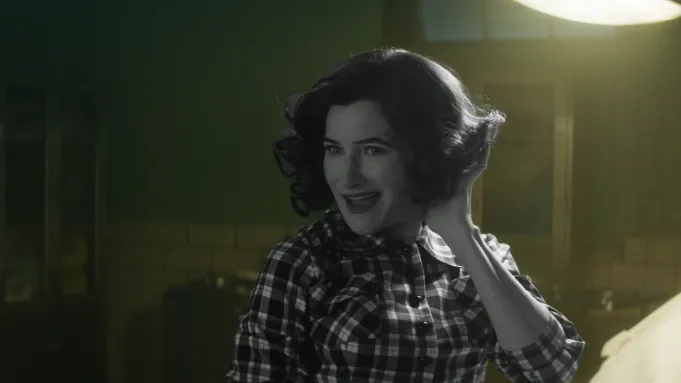
“Agatha All Along” redeems Marvel’s TV shows

In the years following “Avengers: Endgame,” the market has been oversaturated with Marvel movies and TV shows released at a rapid rate — often trading quality for quantity and resulting in lackluster CGI and character development. The studio’s newest series, “Agatha All Along,” released its first two episodes on Wednesday, Sept. 18.

The show’s titular character, Agatha Harkness (Kathryn Hahn), is one of the most powerful witches from Salem and was first introduced in the series “WandaVision.” Despite being Wanda Maximoff/Scarlet Witch’s teacher in the comics, Agatha was brought into the Marvel Cinematic Universe (MCU) as an adversary to the Scarlet Witch. After a dramatic face-off at the end of “WandaVision,” Agatha was stripped of her powers and left trapped inside a false reality in which she lives as an average citizen in the city of Westview. 

Arriving just in time for Halloween, “Agatha All Along” follows Agatha as she is freed from the Scarlet Witch’s spell and embarks on a journey to regain the powers that were stolen from her by walking a mystical trail called The Witches Road, which is said to grant someone’s greatest desire, should they live to reach the end. 

Believed by many to be nothing but a legend, Agatha must assemble a coven of witches to access the road, resulting in a main cast that is nothing less than stellar. Sasheer Zamata (“Home Economics”) is Jennifer Kale, Aubrey Plaza (“Parks and Recreation”) is Rio Vidal, Ali Ahn (“Supernatural”) is Alice Wu-Gulliver and Patti LuPone (“American Horror Story”) is Lillia Calderu. While all of them have some disdain for Agatha, they prove that characters do not have to like each other to have promising chemistry as a group. 

As for Agatha herself, Hahn throws herself headfirst into the role, playing a character you cannot tell if you love or hate, but know that you cannot wait to see grow as the series progresses.

Another standout performance right out of the gate is Joe Locke (“Heartstopper”) as the enigmatic and unidentified teenage sidekick to Agatha, known only as “Teen.” Despite traveling along the road with the group, he is not technically part of the official coven, but balances Agatha’s more abrasive, self-serving personality extremely well.

In terms of production, the fears that the show would fall among Marvel’s many failures of CGI and overall production value appear to have been assuaged, at least for the time being. Having relied primarily on practical effects over CGI for the sets and stunts, the quality of the show is noticeably better than many of the studio’s recent works. The first two episodes also featured artful camera work and color palettes that further elevated the viewing experience. 

Tonally, Agatha All Along has a fun mix of humor and intrigue with elements of mild horror that creates something that keeps the show from feeling like a typical “superhero/supervillain” show. While Agatha herself may be considered a “second-tier villain,” her character and endeavors are shaping up to be a refreshing improvement to the Marvel productions of recent years. 

While they saw mixed feedback throughout the marketing campaign, with some saying the show was unnecessary and unwanted, the first two episodes saw impressive success, gaining a score of 80% on Rotten Tomatoes and 6.7/10 on IMDb upon their release.

Stream new episodes of Agatha All Along stream on Disney+ every Wednesday.

The post “Agatha All Along” redeems Marvel’s TV shows appeared first on Technique.

Posted in UncategorizedComments Off on “Agatha All Along” redeems Marvel’s TV shows