Author Archives | Robert Zaller

America, Democracy, and the Sixth Great Extinction

Photograph courtesy of Capri23auto at Pixabay.

Is the fate of the planet — that is, of our fate on it — tied to the fate of democracy? I think there are grounds for suggesting it.

You could make a negative case for the proposition. Democracy, an experiment in the ancient world in the Roman Republic and the city-state of Athens, revived in modern times with the United States, which adopted the Roman model of republican government but tied it to a democratic ethos through the principle of popular sovereignty. It faced much resistance but gradually overcame its competitors and challengers, including communism and fascism, and with the collapse of the Soviet Union in 1991, seemed to its supporters to have decisively defeated them. The appeal of democracy rested partly on ideological grounds but also on its hospitality to the free market system called capitalism that proved an unprecedented vehicle of economic growth and technological expansion.

Much ink has been spilled over the question of the relationship between democracy and capitalism, and the question remains open to what degree or even whether they are compatible in the long run. What appears indisputable to most commentators is that, to this point, they have seemingly advanced together, which brings us to the paradox of the present moment. Capitalism has triumphed as a global system, though hardly in the form of free and open markets. It has also, through the hitherto unchecked burning of fossil fuels that powered the Industrial Revolution and the ravaging of land and ocean environments for “development,” brought us to a crisis of climate change and species destruction, popularly called the Sixth Extinction — an accelerating loss of biomass and diversity that scientists believe could create the greatest extermination of life in 65 million years, possibly including our own.

At the same time, capitalism’s supposed handmaiden, democracy, seems to many observers on the brink of an extinction themselves. Any number of recent books have charted and sought to explain its alarming decline in the Americas (the United States, Venezuela, Brazil), Europe (Italy, Poland, Estonia, Hungary) and Asia from Turkey to the Philippines. Even where pseudo-populist or quasi-fascist regimes have not come to power, political insurgencies have weakened established democracies in many places where it seemed secure, including Britain, France and Germany. Authoritarian regimes have correspondingly increased their power and control.

There is a common feature in all these stories and around the world in general. That is the growth of radical inequality in wealth between economic elites and the mass of populations, and a corresponding decline in state policies that, beginning in the late 19th century, had sought to mitigate the tendency to produce such a result — the tendency, across the board, of monopoly capital itself. Variously called welfarism or social democracy, these policies had produced unemployment and health insurance and guaranteed pensions, free public education, progressive taxation and environmental controls. What they relied upon was governmental intervention to, if not level the playing field, at least keep it from tilting too dangerously.

The problem was that government itself was in elite hands, and that the party system tended to inhibit true structural reforms. Authoritarian regimes could, in some cases, mitigate inequality better than democracies. Soviet Russia replaced private with state capitalism, but the state, with its monopoly of both economic and political power, could and did place a floor of basic social services under the general population on which its legitimacy ultimately depended. When the USSR fell, these services collapsed or were in some cases privatized, with appalling results. The quasi-fascist regime of Juan Peron in Argentina maintained price stability through public subsidies, a policy continued for decades by his successors; the austerity introduced by the present incumbent has cut living standards catastrophically. The point is that wherever unregulated or inadequately regulated capitalism prevails, socially destabilizing inequality results. Modern democracy has, in the long run, failed to deal with this. My conclusion is that, whatever the factors that historically joined it to capitalism, it must now decouple itself from it if it is to meaningfully function.

Why, though, is this critical to the crisis of climate change? Homo sapiens have survived extreme climate change before; civilized humanity has not, and humans as such have never faced a worldwide ecological crisis caused by themselves and which they alone can hope to address. To do this will require a global effort never envisioned before. That, in turn, will need a perception of humanity as a fundamentally collaborative enterprise in which the fate of one is the fate of all, and the value of each is also the value of all. Great religions have provided this sense, but religion itself is divided , and political mechanisms are needed to translate values and commitments into action. Our modern sense of human rights and global community evolved from democratic principle. Without adherence to it now, we can have little hope of forging the consensus we will need to make some of the most difficult choices we have ever faced. And democracy, with all its inherent flaws, is the only political system that, working through transnational institutions, is capable of undertaking such a task. Autocracy, which by definition reflects the will of self-interested elites or even single individuals, cannot.

Donald Trump is a case in point. His overriding slogan is “America First,” and he has consistently denigrated the idea of international cooperation, most notably in his withdrawal from the Paris Climate Accords. The Paris Accords are a mere promissory note, binding on no one. It is easy to deride them as toothless, but they were the first global recognition of the climate crisis, and as such, a model of the collective action it will require. Trump’s withdrawal from them was, accordingly, the most backward step any world leader could take. It is also a prime example of what autocrats do. “America First” means “Me First.” And that, in this crisis, is a recipe for disaster.

Democracy alone, of course, won’t save us. Nor does it seem likely to become a universal model of governance in the foreseeable future, as some assured us only a generation ago. But it seems to me an indispensable tool. With it, nothing is guaranteed. Without it, though, our prospects are significantly bleaker.
Posted in UncategorizedComments Off on America, Democracy, and the Sixth Great Extinction

America, Democracy, and the Sixth Great Extinction

Photograph courtesy of Capri23auto at Pixabay.

Is the fate of the planet — that is, of our fate on it — tied to the fate of democracy? I think there are grounds for suggesting it.

You could make a negative case for the proposition. Democracy, an experiment in the ancient world in the Roman Republic and the city-state of Athens, revived in modern times with the United States, which adopted the Roman model of republican government but tied it to a democratic ethos through the principle of popular sovereignty. It faced much resistance but gradually overcame its competitors and challengers, including communism and fascism, and with the collapse of the Soviet Union in 1991, seemed to its supporters to have decisively defeated them. The appeal of democracy rested partly on ideological grounds but also on its hospitality to the free market system called capitalism that proved an unprecedented vehicle of economic growth and technological expansion.

Much ink has been spilled over the question of the relationship between democracy and capitalism, and the question remains open to what degree or even whether they are compatible in the long run. What appears indisputable to most commentators is that, to this point, they have seemingly advanced together, which brings us to the paradox of the present moment. Capitalism has triumphed as a global system, though hardly in the form of free and open markets. It has also, through the hitherto unchecked burning of fossil fuels that powered the Industrial Revolution and the ravaging of land and ocean environments for “development,” brought us to a crisis of climate change and species destruction, popularly called the Sixth Extinction — an accelerating loss of biomass and diversity that scientists believe could create the greatest extermination of life in 65 million years, possibly including our own.

At the same time, capitalism’s supposed handmaiden, democracy, seems to many observers on the brink of an extinction themselves. Any number of recent books have charted and sought to explain its alarming decline in the Americas (the United States, Venezuela, Brazil), Europe (Italy, Poland, Estonia, Hungary) and Asia from Turkey to the Philippines. Even where pseudo-populist or quasi-fascist regimes have not come to power, political insurgencies have weakened established democracies in many places where it seemed secure, including Britain, France and Germany. Authoritarian regimes have correspondingly increased their power and control.

There is a common feature in all these stories and around the world in general. That is the growth of radical inequality in wealth between economic elites and the mass of populations, and a corresponding decline in state policies that, beginning in the late 19th century, had sought to mitigate the tendency to produce such a result — the tendency, across the board, of monopoly capital itself. Variously called welfarism or social democracy, these policies had produced unemployment and health insurance and guaranteed pensions, free public education, progressive taxation and environmental controls. What they relied upon was governmental intervention to, if not level the playing field, at least keep it from tilting too dangerously.

The problem was that government itself was in elite hands, and that the party system tended to inhibit true structural reforms. Authoritarian regimes could, in some cases, mitigate inequality better than democracies. Soviet Russia replaced private with state capitalism, but the state, with its monopoly of both economic and political power, could and did place a floor of basic social services under the general population on which its legitimacy ultimately depended. When the USSR fell, these services collapsed or were in some cases privatized, with appalling results. The quasi-fascist regime of Juan Peron in Argentina maintained price stability through public subsidies, a policy continued for decades by his successors; the austerity introduced by the present incumbent has cut living standards catastrophically. The point is that wherever unregulated or inadequately regulated capitalism prevails, socially destabilizing inequality results. Modern democracy has, in the long run, failed to deal with this. My conclusion is that, whatever the factors that historically joined it to capitalism, it must now decouple itself from it if it is to meaningfully function.

Why, though, is this critical to the crisis of climate change? Homo sapiens have survived extreme climate change before; civilized humanity has not, and humans as such have never faced a worldwide ecological crisis caused by themselves and which they alone can hope to address. To do this will require a global effort never envisioned before. That, in turn, will need a perception of humanity as a fundamentally collaborative enterprise in which the fate of one is the fate of all, and the value of each is also the value of all. Great religions have provided this sense, but religion itself is divided , and political mechanisms are needed to translate values and commitments into action. Our modern sense of human rights and global community evolved from democratic principle. Without adherence to it now, we can have little hope of forging the consensus we will need to make some of the most difficult choices we have ever faced. And democracy, with all its inherent flaws, is the only political system that, working through transnational institutions, is capable of undertaking such a task. Autocracy, which by definition reflects the will of self-interested elites or even single individuals, cannot.

Donald Trump is a case in point. His overriding slogan is “America First,” and he has consistently denigrated the idea of international cooperation, most notably in his withdrawal from the Paris Climate Accords. The Paris Accords are a mere promissory note, binding on no one. It is easy to deride them as toothless, but they were the first global recognition of the climate crisis, and as such, a model of the collective action it will require. Trump’s withdrawal from them was, accordingly, the most backward step any world leader could take. It is also a prime example of what autocrats do. “America First” means “Me First.” And that, in this crisis, is a recipe for disaster.

Democracy alone, of course, won’t save us. Nor does it seem likely to become a universal model of governance in the foreseeable future, as some assured us only a generation ago. But it seems to me an indispensable tool. With it, nothing is guaranteed. Without it, though, our prospects are significantly bleaker.
Posted in UncategorizedComments Off on America, Democracy, and the Sixth Great Extinction

America, Democracy, and the Sixth Great Extinction

Photograph courtesy of Capri23auto at Pixabay.

Is the fate of the planet — that is, of our fate on it — tied to the fate of democracy? I think there are grounds for suggesting it.

You could make a negative case for the proposition. Democracy, an experiment in the ancient world in the Roman Republic and the city-state of Athens, revived in modern times with the United States, which adopted the Roman model of republican government but tied it to a democratic ethos through the principle of popular sovereignty. It faced much resistance but gradually overcame its competitors and challengers, including communism and fascism, and with the collapse of the Soviet Union in 1991, seemed to its supporters to have decisively defeated them. The appeal of democracy rested partly on ideological grounds but also on its hospitality to the free market system called capitalism that proved an unprecedented vehicle of economic growth and technological expansion.

Much ink has been spilled over the question of the relationship between democracy and capitalism, and the question remains open to what degree or even whether they are compatible in the long run. What appears indisputable to most commentators is that, to this point, they have seemingly advanced together, which brings us to the paradox of the present moment. Capitalism has triumphed as a global system, though hardly in the form of free and open markets. It has also, through the hitherto unchecked burning of fossil fuels that powered the Industrial Revolution and the ravaging of land and ocean environments for “development,” brought us to a crisis of climate change and species destruction, popularly called the Sixth Extinction — an accelerating loss of biomass and diversity that scientists believe could create the greatest extermination of life in 65 million years, possibly including our own.

At the same time, capitalism’s supposed handmaiden, democracy, seems to many observers on the brink of an extinction themselves. Any number of recent books have charted and sought to explain its alarming decline in the Americas (the United States, Venezuela, Brazil), Europe (Italy, Poland, Estonia, Hungary) and Asia from Turkey to the Philippines. Even where pseudo-populist or quasi-fascist regimes have not come to power, political insurgencies have weakened established democracies in many places where it seemed secure, including Britain, France and Germany. Authoritarian regimes have correspondingly increased their power and control.

There is a common feature in all these stories and around the world in general. That is the growth of radical inequality in wealth between economic elites and the mass of populations, and a corresponding decline in state policies that, beginning in the late 19th century, had sought to mitigate the tendency to produce such a result — the tendency, across the board, of monopoly capital itself. Variously called welfarism or social democracy, these policies had produced unemployment and health insurance and guaranteed pensions, free public education, progressive taxation and environmental controls. What they relied upon was governmental intervention to, if not level the playing field, at least keep it from tilting too dangerously.

The problem was that government itself was in elite hands, and that the party system tended to inhibit true structural reforms. Authoritarian regimes could, in some cases, mitigate inequality better than democracies. Soviet Russia replaced private with state capitalism, but the state, with its monopoly of both economic and political power, could and did place a floor of basic social services under the general population on which its legitimacy ultimately depended. When the USSR fell, these services collapsed or were in some cases privatized, with appalling results. The quasi-fascist regime of Juan Peron in Argentina maintained price stability through public subsidies, a policy continued for decades by his successors; the austerity introduced by the present incumbent has cut living standards catastrophically. The point is that wherever unregulated or inadequately regulated capitalism prevails, socially destabilizing inequality results. Modern democracy has, in the long run, failed to deal with this. My conclusion is that, whatever the factors that historically joined it to capitalism, it must now decouple itself from it if it is to meaningfully function.

Why, though, is this critical to the crisis of climate change? Homo sapiens have survived extreme climate change before; civilized humanity has not, and humans as such have never faced a worldwide ecological crisis caused by themselves and which they alone can hope to address. To do this will require a global effort never envisioned before. That, in turn, will need a perception of humanity as a fundamentally collaborative enterprise in which the fate of one is the fate of all, and the value of each is also the value of all. Great religions have provided this sense, but religion itself is divided , and political mechanisms are needed to translate values and commitments into action. Our modern sense of human rights and global community evolved from democratic principle. Without adherence to it now, we can have little hope of forging the consensus we will need to make some of the most difficult choices we have ever faced. And democracy, with all its inherent flaws, is the only political system that, working through transnational institutions, is capable of undertaking such a task. Autocracy, which by definition reflects the will of self-interested elites or even single individuals, cannot.

Donald Trump is a case in point. His overriding slogan is “America First,” and he has consistently denigrated the idea of international cooperation, most notably in his withdrawal from the Paris Climate Accords. The Paris Accords are a mere promissory note, binding on no one. It is easy to deride them as toothless, but they were the first global recognition of the climate crisis, and as such, a model of the collective action it will require. Trump’s withdrawal from them was, accordingly, the most backward step any world leader could take. It is also a prime example of what autocrats do. “America First” means “Me First.” And that, in this crisis, is a recipe for disaster.

Democracy alone, of course, won’t save us. Nor does it seem likely to become a universal model of governance in the foreseeable future, as some assured us only a generation ago. But it seems to me an indispensable tool. With it, nothing is guaranteed. Without it, though, our prospects are significantly bleaker.

Posted in UncategorizedComments Off on America, Democracy, and the Sixth Great Extinction

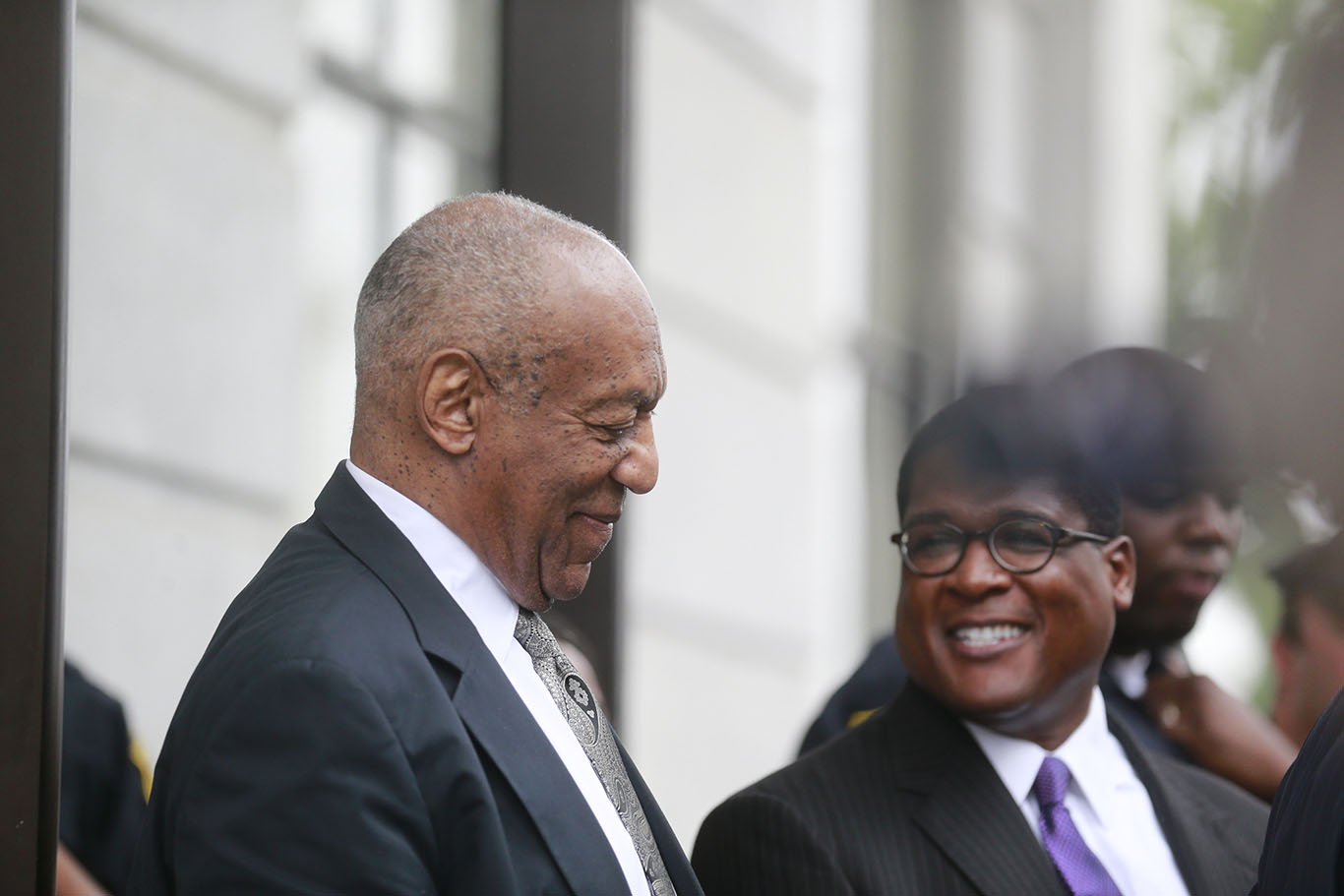
What can we do to finally get a fair trial in our courts?

Photograph courtesy of David Swanson at Tribune News Service.

What do Bill Cosby, Charlie Rose, Matt Lauer, Leslie Moonves, Kevin Spacey, Woody Allen, Dustin Hoffman, James Levine, Charles Dutoit, Peter Martins, John Conyers and Al Franken all have in common?

They are all prominent males whose careers in art, entertainment, politics and the media have been damaged or ended by accusations of sexual harassment, abuse and/or predation. In Bill Cosby’s case, the end result of three trials has been the imprisonment of a legally blind octogenarian. In that of Peter Martins, the director of the New York City Ballet, an internal investigation cleared him of misconduct, but only after the accusations against him had forced him to resign. Please don’t mistake me. Demanding sex for favors, employment and protection is no doubt older than civilization, and will probably last our species out. That doesn’t make it any more acceptable, and, where misconduct violates statutes or causes civil harm, any less legally accountable. The problem is that, in a highly charged public atmosphere, accusation can become tantamount to guilt, and the law itself distorted.

The Cosby trials illustrate some of the problem. In 2004, Andrea Constand, a former Temple University employee, accused Cosby of having sexually molested her after drugging her drink. The District Attorney of the time declined to prosecute on the grounds of insufficient evidence. Constand filed a civil suit and was awarded a $3.4 million judgment. As part of the settlement, Cosby filed a sealed deposition as to the facts of the matter. Case closed — until Constand, at the urging of a new D.A., Kevin Steele, filed a criminal complaint just before the statute of limitations ran out. When a mistrial resulted, Steele charged Cosby again. At the second trial, Judge Steven O’Neill permitted five other women who had accused Cosby of prior assaults to testify against him, a procedure permitted under Pennsylvania law but clearly prejudiced against any defendant since it presented no contestable evidence material to the case in hand. With that, Cosby was convicted. America is probably no safer with an ailing 81-year-old in prison. American jurisprudence is definitely no better with a sealed deposition from a settled civil case opened in a criminal one, and mere accusation offered as proof.

Which brings us to the latest chapter of our story. Harvey Weinstein, a successful film producer and formerly one of the most powerful men in Hollywood, has, like Cosby, been accused of multiple sexual offenses. Two of them, an allegation of forced oral sex from 2006 and of rape from 2013, will go to trial later this year. Weinstein, even more than Cosby, has been reviled as the poster boy of the Hollywood couch. The problem this time, though, isn’t the man accused, but one of those defending him. Ronald S. Sullivan, Jr. joined Weinstein’s legal team in January of this year. An immediate uproar ensued.

Sullivan isn’t your usual lawyer for a sleazebag. He is the director of the Harvard University Criminal Justice Center, and has been faculty dean of Winthrop House, one of Harvard’s twelve residential colleges, alongside his wife for the past 10 years. He is also the first black dean to serve in such a capacity at Harvard. Sullivan has had a distinguished career. He defended the family of Michael Brown, the black youngster who was killed by a cop in Ferguson, Missouri, which sparked riots, national demonstrations and a debate on race relations that reached the White House. In a justice system that has locked up more people per capita than any other country on earth, he has secured the freedom of some 6,000 wrongfully incarcerated prisoners. No single individual in America has even come close to freeing that many of the innocent. When the news of Sullivan being hired by Weinstein broke, there was an immediate furor at Harvard. How could an American legal hero defend one of the most despised men in the country?

Sullivan responded that it was particularly important that those stigmatized as “guilty, unpopular, vile or undesirable” receive the same due process as any other accused person, and perhaps even more so, since the rush to judgment could deprive them of a fair trial. Nor was this the first time he had defended a controversial client; he had also represented Aaron Hernandez, the NFL star accused of murder. Sullivan additionally pointed out that most of the due process rights developed over the past 200 years in America are derived from cases involving people condemned in advance by the court of public opinion, and often involved heinous crimes.

There’s no more famous case than that of Nathan Leopold and Richard Loeb, tried in 1924 for the murder of 14-year-old Bobby Franks, whom they had kidnapped and killed to demonstrate that they could commit the perfect crime. There wasn’t any doubt of Leopold’s and Loeb’s guilt, nor, in the public mind, of the capital punishment they deserved. Their defense was undertaken by the most famous attorney of the time, Clarence Darrow. Darrow’s purpose, as a fervent opponent of the death penalty, was to convince a jury to spare their lives. Against what seemed insuperable odds, he succeeded. Loeb was killed 12 years later in prison. Leopold lived out his life as a model prisoner who volunteered for hazardous medical experiments. He proved Darrow’s point: that even the seemingly worst of men could find redemption and offer service. Darrow was threatened.

Both Sullivan and his wife have now been punished: Harvard has announced that their deanships will not be renewed after the current academic year. The reason given was that the atmosphere at Winthrop House has been ‘disturbed’ since Sullivan took on Weinstein’s case. “Pusillanimous” would be an apt description of this decision; “cowardly,” a more deserved one. It might be added that Stephanie Robinson, a woman of color, is a collateral victim of it as well. One of the student organizers against Sullivan, Remedy H. Ryan, has greeted the decision to sack him as “proof that collective organizing against rape culture can do a lot.”

Say what? Defending an accused client in a New York court will create “a rape culture” in a dormitory in Massachusetts? Harvard had a teachable moment here.

The rule of law in America itself is under assault by the man vested by the Constitution with the responsibility of protecting and enforcing it. Much of its legal system is deeply flawed and in urgent need of reform. Its bedrock assumption, though, remains that anyone accused of a crime is innocent until proven guilty, and the corollary of that is that any such person is entitled to the best legal defense available. If Harvard students can’t understand this, and Harvard administrators can’t or won’t explain it to them, then so much the worse for all of us. We’ll see what Sullivan’s colleagues have to say.

Posted in UncategorizedComments Off on What can we do to finally get a fair trial in our courts?

Will the United States of America have an election in 2020?

Photo credits courtesy of Olivier Douliery/Abaca Press/TNS at Tribune News Service.

In 2000, Vice President Al Gore conceded a disputed presidential election to George W. Bush after the U.S. Supreme Court effectively ended his legal challenge to the Florida vote by the Republican State Secretary who had certified it.  As was widely recognized at the time, the Court’s cutoff of the recount of the vote ordered by Florida’s Supreme Court preempted that body’s sovereign jurisdiction.

Gore himself could have appealed to the U.S. House of Representatives, the final arbiter in presidential elections.  In the Republican-controlled House, which had only two years earlier voted to impeach Bill Clinton, his chances of prevailing were doubtless zero to none.  There was still an argument to be made, however, for taking this last step. The Supreme Court itself had voted on strictly ideological lines in reaching its decision, with five conservative justices ruling in favor of Bush’s suit against the recount and the four liberal ones in favor of proceeding with it.  Among the majority was Sandra Day O’Connor, who said in advance of the Court’s hearing that Gore’s election would be a disaster that had to be blocked at all costs.

In other words, Sandra Day O’Connor got to proclaim George W. Bush as the 43rd president of the United States.  The votes of 105 million Americans were thereby annulled.  Only O’Connor’s vote counted.

Gore’s stated reason for not requesting a determination from the House of Representatives was that it would create a crisis of authority in the country, with ripple effects around the world.  It was better to accept a legal ruling, however dubious, than to demand a political one.  

I thought Gore was wrong at the time.  It seemed to me worse to accept an election by nine justices who should never have been sitting in judgment on it than to require the House of Representatives to perform its constitutional duty, which was to ensure that the president actually elected by the people took office.  At the same time, I recognized that Gore had what he took to be the higher interest of the country at stake in avoiding a rancorous debate that would have divided the country. He gave up an office he had clearly won on the basis of the national popular vote. Four years later, John Kerry similarly refused to challenge a vote outcome in Ohio that many thought had been stolen from him, and, twelve years after that, Hillary Clinton accepted defeat in an election in which she had nearly three million more popular votes than her rival, and in which both foreign interference and suppressed voting had factored in critical states.  

Even Richard Nixon had accepted defeat in 1960 on the basis of a dubious vote count in Illinois.  That’s democracy, folks. It’s a blood sport in which the loser is expected to take his licking, fairly or not.

At least it’s been that way up till now.

In 2016, Donald J. Trump was asked an odd question as the presidential election approached:  Would he be willing to accept the result? Trump’s reply was that he would accept it if he won, and that if he didn’t, he would see.  It was the answer a dictator would give.

Trump did win the election, or at least his victory was not contested.  But that alone didn’t satisfy him. He insisted that he had won not only a majority of the Electoral College, but the popular vote as well, and not by a handful but by the exact margin, three million, that Clinton had above his own.  He appointed a commission to find the stolen or fraudulent votes. It found nothing. Trump quietly disbanded the commission. He did not abandon his claim to have won the popular vote. Nor has he done so to date.

This should be remembered as the 2020 election approaches.  Most observers laughed Trump off when he ran for president. Most dismissed his comment that he would not necessarily concede defeat if he lost.  Few thought he was serious about winning to begin with. Certainly, he could not imagine himself capable of governing. And that presumption was correct, at least if one defined governance as the exercise of the presidential office within a democratic system.  What Trump has grasped, however, is the exercise of power in its crudest sense. It is the source of his admiration for tyrants abroad. Tyrants enjoy power, and don’t give it up voluntarily. They certainly don’t allow themselves to be voted out of office. Why should we assume that Trump would do so?

Some commentators have begun to address this question, rather gingerly so far.  Now, Speaker of the House Nancy Pelosi, herself third in line for the presidency, has put it directly on the table.  In an interview last week, she stated baldly that the country must prepare itself for the possibility that, in the event of a close election, Trump might challenge defeat and refuse to yield office.  

Pelosi’s solution to this problem is to produce a Democratic majority so large that Trump could not credibly contest it.  Her game plan is to capture the center-left of the electorate, including Independent voters. That entails eschewing impeachment, which in her view would only arouse Trump’s base and alienate a significant number of Independents.

Pelosi is a serious thinker and strategist.  Her views deserve consideration and respect. There are two problems with her plan, however.  The first is that Joe Biden, the presidential candidate implied by her argument, is anathema to a good part of the Democratic base himself.  The second is that Trump could reject not only a small margin of defeat, but a large one too. The Electoral College would not meet for several weeks after the election to cast the votes that formally elect the president, assuming it was permitted to meet.  Trump would continue to hold all the powers of his office for several weeks after that, including control of the military and the Justice Department. He could tie up the courts in various suits, as he has in concealing his business and tax records and refusing to comply with Congressional subpoenas.  He could declare a national emergency, and indeed create one. He would still have a Republican Senate, at least for two months. He would also have the Supreme Court, which thwarted the will of the people in Bush v. Gore.

When it comes to it, who would actually remove a president who refused to leave office?  The House Sergeant-at-Arms? The Capitol Police? The cavalry?

Suppose, too, that Trump, running far behind in the polls, wouldn’t wait for an election to declare a national emergency?  Suppose that emergency, as defined by him, was so grave as to require that the election be indefinitely postponed? Who would do what then?

We have let Trump get away with so much already that these scenarios are not fantasies but real possibilities to be faced.  And we can’t wait until they are upon us.


Posted in UncategorizedComments Off on Will the United States of America have an election in 2020?

The tale of the Reimann and Sackler families in America

The Reimann family is not a familiar name in America, but it ought to be: among the products it markets are Krispy Kreme doughnuts, Lysol and Calvin Klein perfume. The company it owns began as a chemical firm that morphed into a worldwide conglomerate, JAB, making the Reimanns the second-wealthiest family in Germany.

That wealth is based not only on business acumen, but on one of what (until now) has been one of Germany’s most carefully kept secrets. It is well known that many of Germany’s largest companies exploited slave labor during World War II. The Reimann firm was among them. But the Reimanns were unique. Female workers were forced to stand at attention in the nude in their factory barracks. They were used, and abused, in the Reimanns’ own home. Both Albert Reimann and his son, Albert Jr., personally tortured and assaulted their slave labor. Both, too, were among Hitler’s most vocally enthusiastic supporters.

Siemens, Daimler, Volkswagen and Deutsche Bank — Donald Trump’s personal banker — are among the German giants who have been required to fund compensation for Nazi slave laborers. The Reimanns have kept their secret until now. Their descendants, however, decided to investigate the family past five years ago. What they discovered — the story is still incomplete — turned them, in the words of a family spokesman, “white as a wall.”

Thus far, the Reimanns have announced that they will donate $11.3 million to charity as a token of their regret, a derisory amount in a family fortune estimated at nearly $40 billion. Call it the Chump Change Fund. But at least they admitted the truth before it was pried from them.

How, though, were the Reimanns able to escape detection until now? France, some of whose POWs were among their laborers, scouted them out after the war. But the American occupation authority overruled the French, and Albert Sr. and Jr. went right back to business. German assets were too useful in the Cold War to be wasted.

American businesses too often have a lot of mud, and sometimes more than a little blood on their hands. They exploit convict labor, and what amounts to little more than slave labor abroad. Until now, however, they have managed to avoid the direct charge of selling death itself. But no longer.

The Sackler family has also specialized in chemical manufacture, specifically pharmaceuticals. Unlike the Reimanns, it hasn’t been hiding its light under a bushel. Specializing in subsidies for the arts, the Sacklers have plastered their name not only over museums, universities and art programs but staircases, walkways and even a stained glass window at Westminster Abbey. You’ll find Sackler wings and Sackler institutes in the Metropolitan Museum of Art and the Guggenheim in New York; the Smithsonian and the Freer collections in Washington, D.C.; the British Museum, the National Gallery of Art and the Tate Museum in London and the Louvre in Paris. They’re at Harvard, at Cambridge and at Oxford.

The name “Sackler” was supposed to mean art and learning. Now, it means OxyContin.

The Sacklers got into the drug business when they acquired a struggling company, Purdue Pharma, in 1952. They quickly developed the business model that would make America the most drug-dependent country in the world. By the early 1960s, a U.S. Senate Committee reported that the “Sackler empire” to be “a completely integrated operation.” By that, it meant that the Sacklers had developed a vertical monopoly that developed drugs, ran the clinical programs that tested them and wrote the reports that won Food and Drug Administration approval and then marketed them in the journals they controlled and the physicians they bribed, building a steamroller effect. Among their earliest successes were with Terramycin and Valium, the latter being the product that built Pfizer.

Then they developed Oxycontin, the opioid that ensnared a generation of Americans and has led to the deaths of over 200,000 users in the past twenty years. OxyContin was a pain medicine designed primarily for cancer patients; the Sacklers marketed it with unparalleled aggressiveness for all kinds and levels of pain, making it the best-selling opioid in the country by 2004. At the same time, they falsely claimed that it was safe and non-addictive; although in some places, up to 75 percent of new patients in methadone clinics were hooked on it. To this, Richard Sackler responded by saying that his victims had willfully abused his drug “with full, criminal intent.” In contrast to this, an internal Sackler document, stating that pain treatment and addiction were “naturally related,” proposed to develop a new line of overdose-reversing drugs. The best-known among those is Naloxone, which public-spirited citizens are encouraged to carry to treat addicts in street emergencies. Money was thus to be made at both ends of the addiction cycle.

A $634 million judgment against Purdue Pharma in 2007 did not deter the Sacklers; sales were briskly ahead of fines. Recently, the State of Oklahoma won a $270 million settlement against Purdue Pharma, a model for several other states and several hundred counties that have also filed suit. In addition, some 1600 federal cases are currently pending against the Sacklers. Nonetheless, Richard Sackler received a patent for a new overdose-reversing drug last year, and only this March the FDA fast-tracked approval for an injectable overdose drug. Whatever their legal troubles, the Sacklers’ marketing plan is working just fine.

What do the stories of these two families, the Reimanns and the Sacklers, have to tell us? The Reimanns were unrepentant Nazis who were perfectly prepared to profit by the death of those who worked for them. The Sacklers are immigrants who prospered in America and were — are — equally prepared to profit by the death (or, indifferently, the recovery) of those they have knowingly victimized. The Reimanns were working in concert with the German state; the Sacklers have worked with the knowledge and consent of critical agencies of our government. The Reimanns are doing better than ever; the Sacklers, who are spreading their risks in spin-off corporations, fully intend to. The Reimanns have admitted their shame, but as a write-off item. The Sacklers have bought respectability, and although some of the institutions which have received their gifts and endowments say they will accept no more, none have proposed to return them.

If you’re big enough and bad enough for long enough, murder is exactly what you often do get away with.     

Posted in UncategorizedComments Off on The tale of the Reimann and Sackler families in America

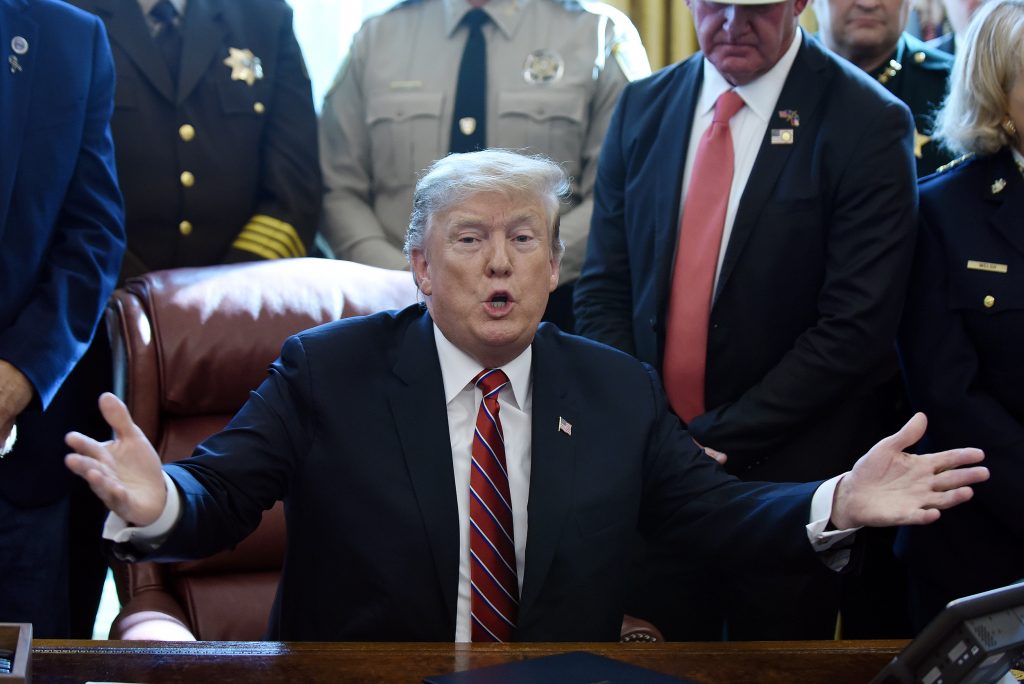
Making a call for the impeachment of President Trump

Photograph courtesy of Olivier Douliery at Tribune News Service.

The Mueller Report has arrived, or as much of it as we have been permitted to see rather. As damning as its evidentiary detail is, it pulls its punches on its critical conclusions and, at one point, offers Donald Trump an escape hatch for his misconduct. The report sweepingly clears the Trump campaign of any collusion or conspiracy with Russia to benefit from its attempts to swing the 2016 election on Trump’s behalf. That’s absurd on the face of it given the myriad interactions between the campaign and the Russians. Still stranger is the fact that, as Above the Law reporter Elie Mystal has pointed out, neither Trump nor any member of his family — including Donald Jr. and Jared Kushner, the principals at the infamous Trump Tower meeting of June 9, 2016 that was designed to get “dirt” on Hillary Clinton from Russian sources — was interviewed in person about it. Where there’s smoke, folks, there’s generally fire; when the whole forest is covered in it, you can bank on a blaze.

As to the second major area of the report’s investigation, obstruction of justice, the rollout of Trump’s attempts to scotch the investigation of Russia’s meddling in the campaign is a deafening litany. Even here, Mueller found no adequate grounds to make a call, saying merely that he could not “exonerate” Trump (in any case, not his function). And he provided Trump with the excuse he was looking for, namely that the President apparently believed that the Special Counsel investigations were an attempt by enemies to destroy him. Did Mueller believe that he or his predecessor, James Comey, had actually given cause for such a belief? Or does he think that paranoia was a reasonable excuse to derail a lawful investigation? I’ll be curious to hear more about this when Mueller testifies to Congress.

Although conspiracy with a foreign power or willful obstruction of justice are certainly grounds for presidential impeachment, I’d like to offer a more fundamental basis for it in Trump’s case. Put simply, he has violated the two most critical constitutional provisions for the exercise of his office. They are both stipulated in Article 2, Section 3. The first is the oath of office itself, which requires each incoming president to “preserve, protect and defend” the Constitution itself, with its enumerated powers, responsibilities and liberties. The second is the so-called Take Care Clause, which requires that the president “take care that the laws be faithfully executed.”   

Trump has not only violated these requirements, repeatedly and egregiously, but has also shown himself to lack the most elementary comprehension of them. Simply put, he has demonstrated on a nearly daily basis that he neither knows nor cares what the Constitution says and is thus incapable of fulfilling his oath of office. He is equally unfit to faithfully execute the laws, since, in the words of New York Times columnist Roger Cohen, he “holds the law and truth in utter contempt” — insofar, I might add, as he understands either.

Cohen’s comment links law and truth for a simple reason: they are inseparably connected. You cannot conceive of law if you do not comprehend truth. It is not merely that Trump lies; in psychiatric terms, he fabulates, which means that he not only makes statements without regard for facts, but that he constructs the world in terms of stories agreeable to him. Two early examples became famous: he falsely claimed to have had the largest inaugural crowd in history, and to have won the popular vote in his election by the amount that he actually lost it. When this latter claim was disputed, he appointed a commission to prove it. When it failed to do so, he disbanded it without abandoning the claim. To Trump, truth was the story that best suited him.

There is another term for fabulation, as journalists Benjamin Wittes and Quinta Jurecic point out: bullsh—ing. Bullsh—ing, in Harry Frankfurt’s formulation, is telling a story without regard for its truth or falsity. And bullsh-t, as Wittes and Jurecic point out, “is a kind of opposite of law,” since law is at the bottom of the application of rules to factually established conditions. Trump himself understands bullsh—ing, but only as applied to others; thus, while he at first described the Mueller Report as fully exonerating him, he characterized it as “bulls–t” the moment it actually appeared.

It doesn’t really matter whether Trump’s bullsh—ing is a psychiatric condition or cynical tale-spinning whose only object is self-interest. Probably, both descriptions apply. Either way, they disable Trump from upholding the law, and therefore from holding his office.  

The consequences of this have been predictably dire. Trump has been trying to destroy Obamacare since his first day in office. Having failed to remove it by act of Congress, he undermined it by withholding proper access and funding for it — meaning he did everything in his power not to uphold it. He has issued executive orders, such as the one notoriously aimed at barring all Muslims from entering the country that the courts have repeatedly rejected. He has perverted the statutory mandates of federal agencies, seeking to bend them to his own will. He improperly declared a national emergency in defiance of Congress, denying asylum seekers their rights under both American and international law. While attempting to usurp Congress’ power of the purse, he shut down critical sections of the government, thereby blocking much of the executive branch from exercising its own legal functions. Far from simply failing to uphold the law, he has deliberately stymied it.

One could multiply these examples manyfold; what they amount to is arbitrary government by a would-be tyrant who regards his will alone as law. That isn’t protecting the Constitution; it’s demolishing it. That isn’t upholding the law; it’s mocking it. As professor of economics Jeffrey Sachs has put it, “Each day [Trump] remains in power is a day closer to the collapse of the rule of law”. And the Constitution itself clearly dictates what we owe it, ourselves and the country’s future. Any excuse for delay is a dereliction of duty. Any attempt to punt the reckoning forward, and to leave to voters the remedy their representatives are charged with and their own oath of office demands of them, is an abdication that joins them to this president’s infamy. If you see the law being broken and do nothing about it, you break the law yourself. If you merely gather evidence and fail to act, the lawbreaker’s crime is also your own. It’s as simple as that.

Article one of the impeachment of Donald J. Trump: he has willfully violated his oath of office to preserve, protect and defend the Constitution of the United States and to take care that its laws be faithfully executed.  

Posted in UncategorizedComments Off on Making a call for the impeachment of President Trump

Israel’s prime minister Netanyahu crosses the red line

Photograph courtesy of Oliver Weiken at Tribune News Service.

Benjamin Netanyahu has won his fifth term as Israel’s prime minister, and this summer he will surpass its founder, David Ben-Gurion, as its longest-serving chief of state. For some time, he has tried to represent himself as the country’s indispensable man. For someone who has never seemed particularly popular and has been actively despised by some and whose tenure has been dogged by various scandals that will follow him into his new term, it has been a remarkable run and, I suppose one must say, an extraordinary political achievement.

Netanyahu’s claim to power is that he is a realist. Some countries can afford a dollop of policy that speaks to matters of common values abroad; for example, human rights and the promotion of democracy. These are generally honored in the breach rather than the observance—the United States would be Exhibit A in that category—but Israel can afford no such luxury. With the exception of the U.S., it has no ally in the world and has been regularly reviled by international bodies that question its right to exist. It is surrounded by regional enemies that, for most of its existence, have called for its destruction, and three times—in 1948, 196, and 1973—have seriously attempted it. It lies within easy striking distance of a power 10 times its size, Iran, that continues to vow it doom. No other nation in the world has lived in such a climate of hostility and threat. One would have to go back to the Dutch Republic of the 16th and 17th centuries, whose destruction was pursued for nearly a century by the Spanish Empire and France, to find a comparable example. However, the Dutch state did not come into existence after a genocide that had destroyed a third of its founding population.

In consequence, Israel has often found its friends in unsavory places, such as apartheid South Africa. Today, it has forged an unofficial alliance of convenience against Iran with two of the world’s more repellent dictatorships, Egypt and Saudi Arabia. It is certainly to Israel’s credit that it has maintained a democratic form of government of its own and that it holds its officials and its military relatively accountable for their conduct—more accountable, by present standards, than we do ours. But Israel has long maintained a policy of “no comment” on the affairs of other states. People who live in the particular glass house that is Israel do not throw diplomatic stones. At the same time, it reserves itself the right to take whatever steps in deems necessary to protect its own security.

Israel’s most intransigent problem is what is delicately referred to as the Palestinian question. For more than eighty years, attempts have been made to divide the sliver of land between the Mediterranean Sea and the Jordan River—about the size of Maryland—between its Jewish and Palestinian communities. These attempts have all failed, but the proposed solution remains the same: two independent states, roughly based on the pre-1967 borders of the State of Israel, with practical adjustments and guarantees for security. However, this solution has come to seem less and less viable to many on both sides, and Netanyahu has declared it dead for all intents and purposes. What he hasn’t done, at least until now, is state what the alternative might be.

The closeness of his most recent race impelled him to make such a statement. In the closing days of the campaign, he told a television interviewer that he would not only annex Israeli settlement blocs in the territory still notionally reserved for a future Palestinian state, but also any future settlements there. In effect, he placed a lien on the whole of the territory between Israel’s current border and the West Bank of the Jordan River, where most of a future Palestinian state would be and where 2.8 million Palestinians currently live. Up to this point, Israel has referred to this territory as “disputed”—that is, without legally recognized resolution. With Netanyahu’s new statement, he has declared the piecemeal annexation of the West Bank as national policy, based only on the pace of future settlement.

Some commentators have suggested that Netanyahu has left himself enough room to slow-walk such settlements, which have placed some 400,000 settlers in the West Bank since the 1970s, into the indefinite future. But his statement will greatly increase pressure from settlement advocates to push his government and its attendant judiciary for new sites. And such advocates have made their view clear: that the entirety of the West Bank belongs to modern Israel by historic right. In effect, Netanyahu has aligned himself with this view, not to say embraced it.

Where does that leave the Palestinians of the West Bank? The Israeli Right has spoken vaguely of Palestinian “autonomy” within a shrinking domain, but the logical outcome of the process Netanyahu has just blessed can only be the creation of a single state that, if it is to remain under Jewish control, must either incorporate the West Bank Palestinians as a politically subordinate entity or compel their emigration. That is simply a formula for an apartheid state, and for new war.

Netanyahu would never have made his pronouncement, and certainly not in a television interview, had he not been able to rely on the support of Donald Trump. But Trump, as Netanyahu well knows, won’t be around forever, and no future American administration is likely to indulge a policy that will risk a new war in the Middle East.

What is the actual policy alternative? It is the one that Netanyahu had been pursuing until political desperation, including fears of personal indictment, led him to make his 11th hour appeal to the nationalist Far Right. Settlement approval had been a slow process. The Palestinian Authority, which continues to govern the day-to-day activity of West Bank Palestinians, would pursue its own interest, which was survival on whatever ground it might be left with. The status quo, in short, would be propped up as long as possible. Unsustainable in the long run, it was working well for Israel in the present, and Netanyahu, keeping the most extreme settler demands at bay, was administering it with some dexterity. By capitulating to those demands, he raises pressure now for a stampede. He has won his election. What place he will be left with in history is quite another matter.

Posted in UncategorizedComments Off on Israel’s prime minister Netanyahu crosses the red line

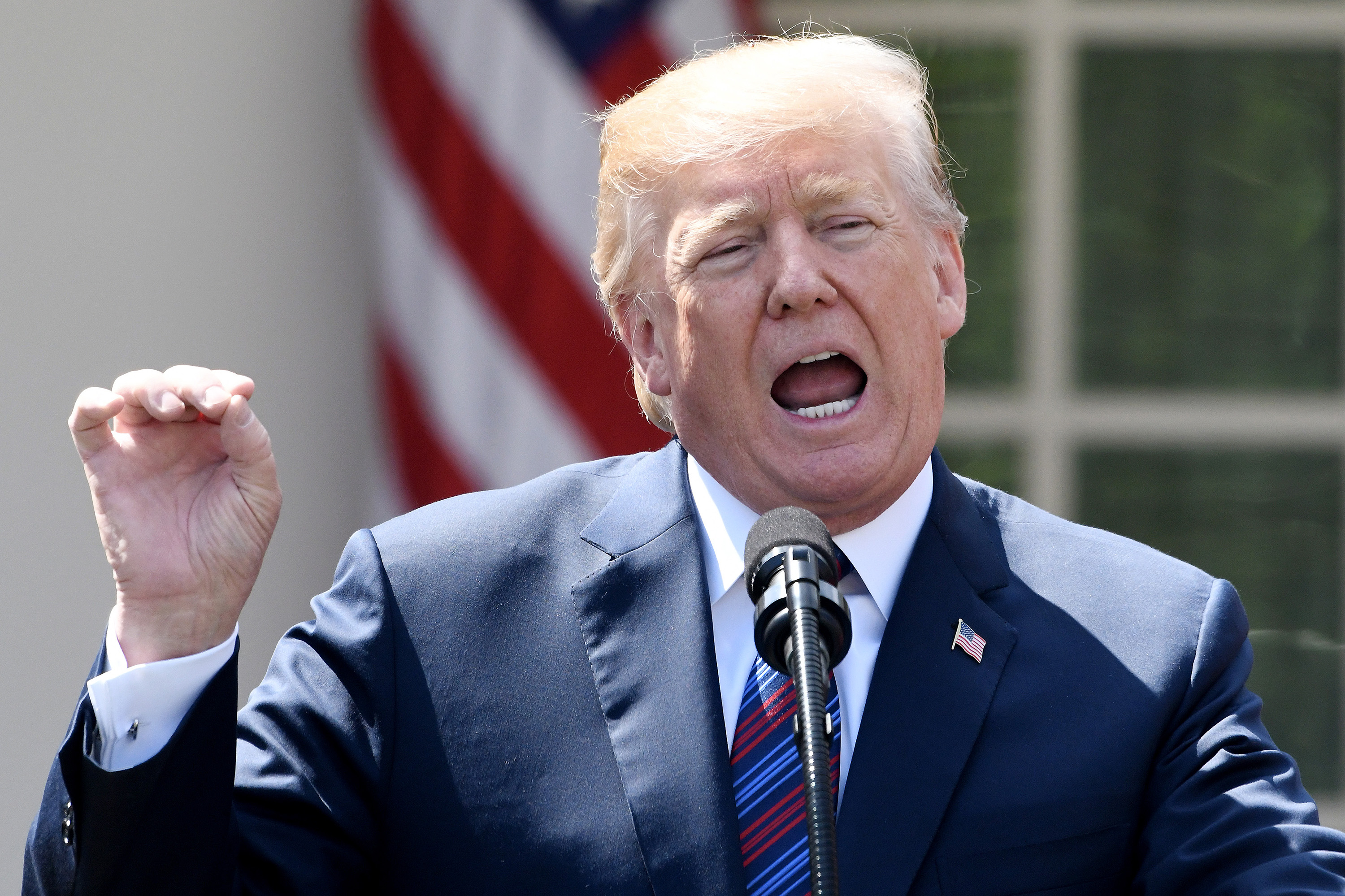
Now is the time to start considering an impeachment

Photograph courtesy of Olivier Douliery at Tribune News Service.

The long-awaited Mueller Report, 675 days in the making, has now landed with a thud of disappointment.  Although we do not have the text but only a four-page summary, Robert Mueller himself has not challenged its declaration that no collaboration existed between President Donald Trump or his campaign operatives and Russian attempts to influence the 2016 elections, and that no charge of obstruction of justice should be recommended against the President for attempting to impede the investigation of these and related matters carried out by the Justice Department.


We will see what the actual report tells us, or as much of it as we can see, and within what restraints and assumptions Mueller and his staff have performed their tasks.  It’s time now to move beyond its confines, and for Congress to act on its constitutional duty to determine whether we have a president fit for office as such. It’s time, in short, to consider impeachment.


It couldn’t be clearer, of course, that Trump is not only unfit for the presidency but for any position of responsibility and trust whatever.  The saga of his business career over more than four decades is one long, sordid story of illegality, fraud, racial discrimination and serial bankruptcy, and not merely as a matter of past history but present litigation.  Even before assuming office, and daily since, he has exploited the presidency on behalf of his family financial interests in brazen violation of the Emoluments Clause of the Constitution. He has violated his oath to uphold the law of the land, most conspicuously in his long campaign to undermine the Affordable Care Act on which twenty million Americans rely for basic health care; at the same time, he has attempted to impose rules and regulations specifically rejected in Congressional legislation.  He has abused his executive authority to impose tariffs without due cause, and likewise to declare states of national emergency. He has demeaned and defamed both Congress and the courts, accused agencies and members of the executive branch itself of treason, and willfully distorted the functions and operations of agencies as defined by statute.


I will be interested to see how Mr. Mueller reached his conclusion that neither Trump nor anyone associated with his presidential campaign collaborated, even implicitly, with Russian attempts to influence its outcome.  It is certainly absurd to suggest that he did not willfully obstruct justice in the firing of James Comey over Comey’s investigation of Russian influence, since the admission of it came publicly from his own mouth. A similar act of obstruction was the salient article of impeachment voted against Richard Nixon by the Judiciary Committee of the House of Representatives in 1974, which asserted that Nixon, “knowingly misused the executive power by interfering with agencies of the executive branch.”  Then as now, those agencies included the Justice Department and the FBI.


The Founding Fathers gave the Congress wide latitude in determining impeachable offenses — “Treason, Bribery, or other high Crimes and Misdemeanors,” in the words of the Constitution — but they also raised a high bar in separating the process of impeachment into indictment by the House of Representatives and conviction and removal by two-thirds of the Senate.  The question, then, is at what point the impeachment of a sitting president is required to preserve the integrity and authority of the law itself. I state the case narrowly. A president who lies habitually, provokes or condones racial and religious hatred or dismisses natural disasters as the fault of those who suffer them, may justly be held to account under the broad rubric of “misdemeanors.”  Guilt in this regard, however, is a more subjective judgment. Abuse of power is the surest ground to proceed on, and also the one most evidently requiring action.


But why has the time for action come now?  For two years, both houses of Congress were in the hands of Republicans. Their responsibility to act was no less great than anyone else’s, but they chose, with few exceptions, to condone and support Trump’s most egregious abuses.  The courts, at least some of them, have done what they could to curb those abuses. The Mueller investigation was meanwhile the only avenue to pursue potentially impeachable offenses. It looks now like a dud, and even if its full report offers ground for finding such offenses, it is the House of Representatives, now with a Democratic majority, that must make a definitive determination of them. In my view, it is obligated to do so.


Nancy Pelosi, speaker of the House and leader of the Democratic Caucus, doesn’t agree.  In the phrase she will probably be best remembered for, she has said Trump isn’t worth impeaching.  Wrong, Nancy. It isn’t whether Trump is worth it. It’s whether the Constitution is worth it. It’s whether the rule of law is worth it.  And, right now, the arm of that law is the House you lead. You’re the cop on the beat, and Trump’s high crimes are on daily display. If you ignore them at the point of infamy they’ve reached, then you become part of them and the House of Representatives itself becomes their most critical victim.  


That’s not my opinion alone.  Elizabeth Holtzman, who served during Nixon’s impeachment proceedings, says the Trump White House and its supporters are just trying to create a new kind of monarchy in the United States with a president who’s above the law.  Others from the Watergate era agree. Simply put, leaving a president in office who is free to break the law is an abdication of responsibility by those entrusted to preserve it. A failure to pursue impeachment will be a failure to govern.


The opposing argument is that sending a bill of impeachment to almost certain defeat in the still Republican-controlled Senate would be politically inexpedient.  But Pelosi’s strategy of building a case against Trump short of impeachment will even more likely backfire as his supporters dismiss it as a mere propaganda exercise. A firm statement of the law, and of Trump’s repeated violations of it, is the vital step to take.  Leaving the electorate for him to wreak more havoc on between now and Nov. 3, 2020 is a Constitutional copout. The Senate can wait, Nancy. But no games now. It’s time to stand up for the Republic.

Posted in UncategorizedComments Off on Now is the time to start considering an impeachment

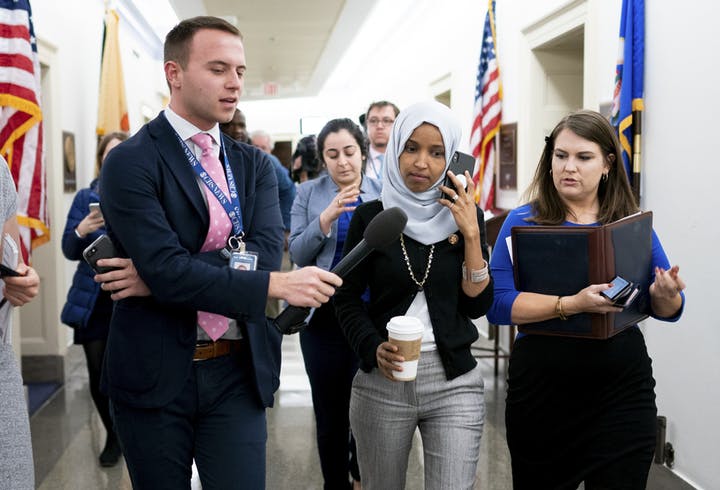
The Left needs to deal with the anti-Semitism coming from its people

Photograph by Erin Schaff/The New York Times)

I have a few words of advice for Representative Ilhan Omar, the newly elected Muslim Congresswoman from Minnesota who has openly injected anti-Semitism into the Democratic Party. If you want to criticize any country in the part of the world you hail from, you can start with plenty of places before you get to Israel. You might begin with Saudi Arabia, which oppresses women more openly than perhaps any country on the planet and which, after having provided fifteen of the twenty suicide bombers involved in the attack on your adopted country on 9/11 as well as its mastermind, Osama bin Laden, is now pursuing a genocidal war in Yemen that is generally recognized as the greatest humanitarian crisis in the world today. Or you could try Egypt, which has imposed a regime of oppression on its citizens, murder and torture included, which would have embarrassed even its previous tyrant, Hosni Mubarak. Or maybe Iran, which has reduced much of its population to penury, hangs its citizens in public, supports terrorists directly and indirectly throughout the Middle East and is a principal actor in the Syrian civil war that has cost an estimated 500,000 lives.

Come to think of it, you could start with the apparently principal object of your concern, the territories on the West Bank of the Jordan River and the Gaza Strip that would like to become the State of Palestine, known to Israeli authorities as the Disputed Territories and to most of the international communities as the Occupied ones. Of course, these territories cannot be judged as states would be. They are not sovereign; they do not control their own borders and many of their vital services; they are subject to Israeli incursion and blockade. Nonetheless, their day-to-day administration, including policing, education, public services and justice, are in the hands, respectively, of the Palestinian Authority established under the Oslo Accords, and of Hamas, the political-party-cum-terrorist-group elected by the Palestinians of the Gaza Strip in 2005.

The Palestinian Authority has been corrupt, repressive and incompetent since its inception. Many billions of dollars in foreign aid have passed through its hands without responsible accounting or demonstrable public benefit. No recognized political parties exist except for the PA’s political wing, Fattah. The likelihood of the West Bank achieving a democratic, multiparty statehood under its current management is zero.

Hamas is a terrorist entity whose goal is the violent destruction of Israel, and which maintains iron control over a million and a half Palestinians through tactics such as public street executions. On coming to power, it drove Fattah out of the Gaza Strip in a bloody civil war — one that would clearly resume if either of the Palestinian territories achieved statehood.

Israel, with the flaws endemic to most democratic societies and a few of its own, would not seem to merit your special attention, let alone the suggestion that support of it entails placing allegiance to a “foreign power” above loyalty to America.  Such an accusation is a classic anti-Semitic trope, as is your accompanying one that Jewish interests and organizations are trying to buy such allegiance. Coming, moreover, barely four months after the massacre of eleven Jews at worship in the Tree of Life Synagogue in Pittsburgh and amid a rising tide of anti-Semitic incidents both in Europe and America, your remarks are an incitement to further hatred and violence. They also divide your party at a moment when its full energies ought to be devoted to dealing with the Constitutional crisis represented by Donald Trump. To all Americans, that is the severest disservice your behavior has done.

At the same time, you are the symptom of a more general problem. Anti-Semitism, long the particular (though never the exclusive) province of the Right, has very publicly migrated to the Left in recent years. The Boycott, Divest and Sanction movement against Israel has gained almost its entire traction on the Left, including campaigns in professional academic organizations to reject collaboration and exchange with Israeli scholars en masse. Israel has been variously accused by voices on the Left of Apartheid, fascism and even genocide. Calls have been raised for its conduct to be monitored and penalized by international bodies specifically authorized for such purposes.

The American Left has been particularly exercised over the close relationship between Donald Trump and Israeli Prime Minister Benjamin Netanyahu. Trump’s Israeli policy is of course framed by his desire to court favor among American Evangelicals, a group that envisions the final conversion of the Jews prior to the Second Coming of Christ, and the end of all nations in the Rapture. Netanyahu, whatever his alignment with Trump on specific issues and notwithstanding his own cynical cultivation of Evangelical leaders, assuredly has no interest in the renunciation of Judaism as the climax of human history. As Trump himself might put it, their relationship is transactional, and it is equally cynical, or willfully obtuse, to see it otherwise. It is certainly no excuse for the Left to demonize Israel as such.  

Britain has had its own troubles, too. Leader of the Labour Party, Jeremy Corbyn, has repeatedly crossed the line that separates criticism of Israel from hostility to its existence and the embrace of its enemies, for example holding a wreath on behalf of two of the Black September terrorists who massacred Israeli athletes at the 1972 Munich Olympic Games, praising Hamas and Hezbollah, both groups dedicated to destroying Israel, as “our friends,” and defending an Anglican cleric who accused Israel of fomenting the 9/11 attacks. To be sure, there is no dearth of anti-Semitism masquerading as criticism of Israel among conservatives and enough of it pure and simple from Republican Congressional leaders such as Kevin McCarthy and Jim Jordan. But one doesn’t expect much from the sponsors of the soul-killing austerity program espoused by Theresa May’s Tories in Britain, or Donald Trump’s enablers in the GOP. For those on either side of the Atlantic who hope for at least modest progressive reform, however, it is a bitter mouthful to take anti-Semitism from self-proclaimed liberal champions, and some would rather spit than swallow. For my own part, and as someone who feels free to criticize Israel whenever necessary, I will not have truck with anyone who embraces the world’s oldest hatred on behalf of any cause, including those I hold most dear.

Posted in UncategorizedComments Off on The Left needs to deal with the anti-Semitism coming from its people