Author Archives | Robert Zaller

The U.S. Senate Fiddles While the Planet Burns

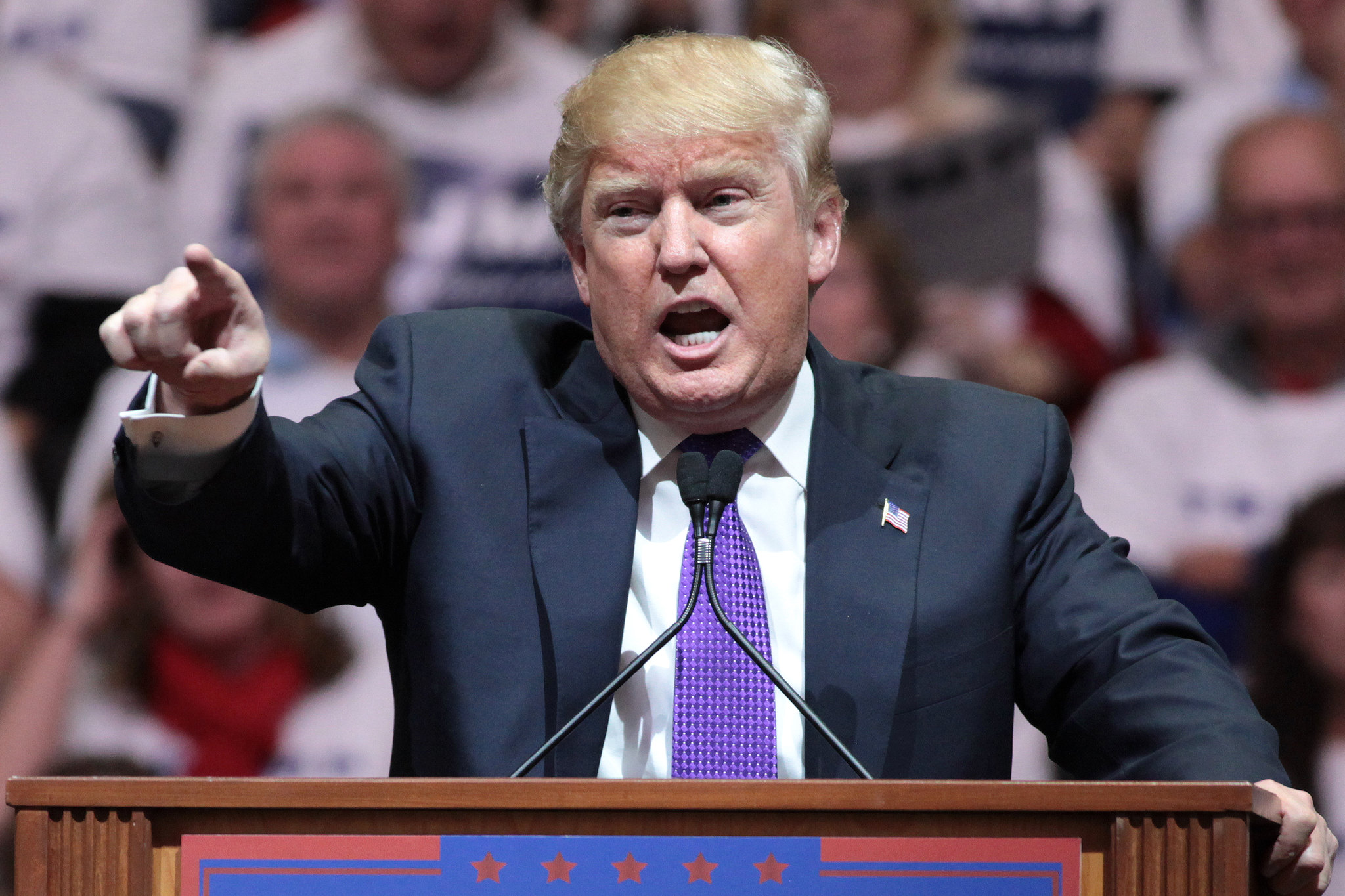
Photograph courtesy of Kirk McKoy at Tribune News Service.

Donald Trump’s impeachment trial now begins, with a travesty cast of lawyers including Kenneth Starr, whose conduct during the Clinton impeachment led to the abolition of the Office of Special Counsel, and Alan Dershowitz, a once-respected figure who now claims there’s no such thing as a president abusing his powers.

It’s a script whose ending has already been written and which polls say will give the majority of the public the opposite of what it wants and certainly what the occasion demands of. It will be, at least primarily, a diversion for the country as it waits for the Superbowl, and secondarily, a chance to see whether the party of Abraham Lincoln will finally expire in the arms of a racist demagogue.

Personally, I’ve felt that every president we’ve had going back to John F. Kennedy gave grounds for impeachment, Clinton included and Gerald Ford and Jimmy Carter alone excluded. Only Clinton and Nixon (almost) got it, and not particularly for the most important reasons. Richard Nixon unleashed a lawless war on Cambodia whose ultimate consequence was the extermination of over a quarter of its population, but when that came to a vote as an item before the Judiciary Committee of the House of Representatives, it was defeated 12-26. I didn’t have to look the number up because I’ve never forgotten it.

A majority of those voting apparently thought it was okay, or at least not impeachable, to rain hell on a small country that would suffer a genocide per capita that would ultimately almost rival that of the Holocaust. Nixon was instead forced from office by what he — not inaccurately — described as a third-rate burglary that appears not even to have been ordered by him. No one ever said impeachment was a perfect process.

Donald Trump faces impeachment now on two counts: trying to coerce Ukraine’s president into making a bogus announcement of an investigation into a political opponent, Joe Biden, and obstructing Congress’ own investigation of that act.

Trump’s offenses — both of them — are impeachable enough, and he is certainly guilty of both of them. But putting the screws on a hapless foreign leader to smear a rival, like covering up an attempt to swipe some Democratic Party files, isn’t the worst offense I can think of. How about Ronald Reagan making a private deal to release the American hostages seized by Iran behind Jimmy Carter’s back, upending American foreign policy? Or George W. Bush lying us into a war with Iraq where, 17 years later, Americans are still being killed?

No, I can think of worse things Trump has done. Such acts include tearing children from their parents’ arms and locking them up in cages, some to die; or denying life-saving relief to hurricane victims and then lying about the needless loss of life (among 15,000 other lies duly chronicled by The Washington Post); or arming Saudi Arabia to indiscriminately kill civilians in Yemen; or willfully costing lives at home by hamstringing Obamacare and scuttling controls over lethal pollution. I could go merrily on, but you get the idea.

Some of these things may not fit the Founders’ idea of an impeachable offense, but then none of them, surely, imagined someone like Donald Trump becoming president, and they did try to imagine the worst they could. Trump’s ultimate crime as the world’s most powerful and influential man, however, has been not only to deny but to ridicule the greatest disaster that human civilization has ever faced, climate change. Trump would have done incalculable damage even in the best of times, but he is the worst of all possible men at the worst of all possible moments.

The news of the world, right now, is not what is going on in Washington, D.C., but what has been going on for weeks now, half a world away. The fires in Australia, burning out of control and combined by raging winds and so-called weather bombs, have consumed an area the size of Romania. So far, 26 people have been killed, far fewer than the 87 who perished in the Paradise fire in California two years ago. But it is estimated that between half a billion and a billion animals have also died in the blazes. We can add to that figure the recent calculation of nearly a million seabirds who perished in a giant heat blob that formed in the northeast Pacific not long ago to realize that we are in the midst of great extinctions, many of them unrecorded, with unreckonable effects on food chains and other natural balances.

Donald Trump has not caused these events, of course. But he does his best daily to minimize, distort and misrepresent them, to egg on the fossil-fuel consumption that aggravates them with a frightening multiplier effect and to reject every effort to meet climate disaster before it overwhelms us. No single individual has ever behaved so destructively on a planetary scale in the face of such unparalleled crisis. It is true that you can’t impeach someone for arrogance, ignorance, stupidity and bloviating narcissism, but it is beyond appalling to think of a man blocking four if not more of the preciously few years we have to rally the world community to at least try to mitigate the effects of what it is now sure we will have to endure.

Sixty years ago, a film called “On the Beach” came out, which depicted the aftermath of an unintentional but fatal nuclear war — the apocalypse we feared then, and which almost came to pass shortly after in the Cuban Missile Crisis.

In the film, Australia is untouched by the direct destruction of the bombing, but the worldwide atomic fallout is headed inexorably toward it, and human extinction is certain. The government hands out suicide pills to the population so that it can avoid the horror of death by radiation, with instructions for how and when to take them. Australians being stoic, at least in the movies, there is no mass panic or violence. At the end of the film, a tattered banner appears on the screen reading, “There Is Still Time.”

The message is obviously for us, and Australia is now not the last but one of the first frontiers on which disaster has appeared. We can still, of course, incinerate ourselves by nuclear war, and the wars that climate crisis will spawn may make that more likely. But right now, on the floor of the United States Senate, the best thing we can do for human survival is to get rid of Donald Trump, even if his bill of impeachment makes no mention of it.

Posted in UncategorizedComments Off on The U.S. Senate Fiddles While the Planet Burns

A blood-soaked tale 40 years in the making

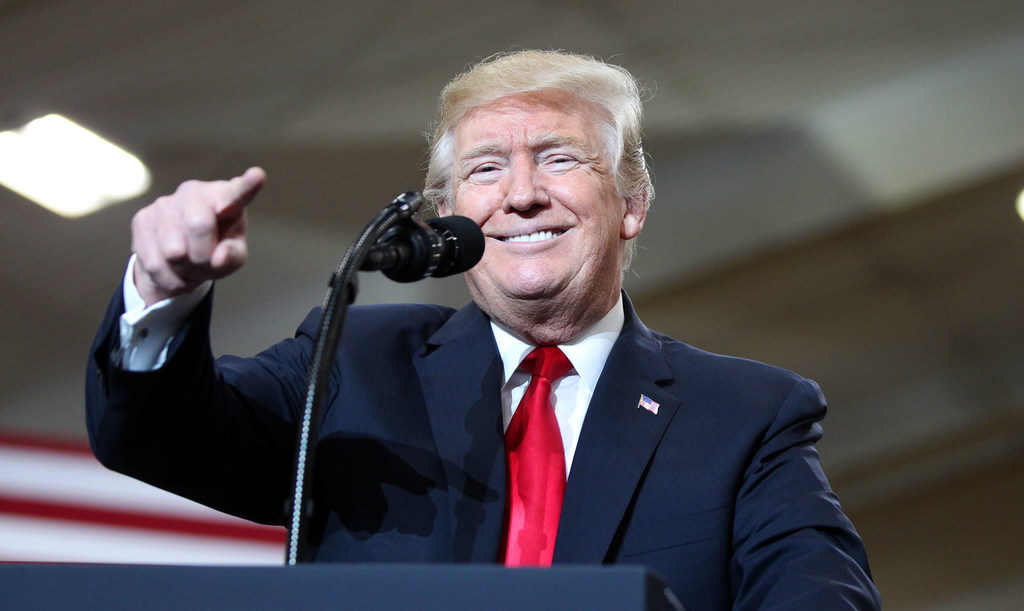
Photograph courtesy of Pete Marovich at Tribune News Service.

There are two rules of the road for any president: Don’t crash the economy, and don’t start a war. If Donald Trump needed any reminder of this, the presidency of George W. Bush is more than sufficient. Bush started two wars, both based on lies, and lost both. And he left office with the economy in free-fall as America entered its worst depression since the 1930s.

Bush managed to win reelection in 2004, arguably through ballot fraud in Ohio. When the economy tanked, he was nearing the end of his second term, and we could do little but bid him good riddance. It was commonly believed that he left office as the worst president we’d ever had.

Trump, his successor to that title, has played with the economy like his private toy, illegally wielding tariffs that have cost jobs, raised prices and nearly bankrupt the agricultural sector of the Upper Midwest. He has juiced the stock market with tax cuts for the rich and bullied the Federal Reserve into artificially low interest rates to prop it up. The price will be paid, but probably not until after November.

Trump has also played with war, threatening to blast the People’s Republic of North Korea off the face of the planet before finding a kindred spirit in its dictator, Kim Jong-un. He still might find himself in a showdown with a nuclear-armed country that could blow up the South Pacific. Meanwhile, he has brought us, in a seven-day spasm of bellicosity, into an actual war with a major regional power that (thanks to him) will — absent heroic countermeasures — almost certainly possess nuclear capability in the near future.

There are countries you can mess with. Iran isn’t one of them.

Iran was once an “ally” — that is, a client state ruled by an unpopular monarchy we’d imposed on it way back in 1941 — and bailed out 12 years later when we swatted away a popular reformer who threatened the Pahlavi Dynasty. Unrest smoldered for a generation after that until an exiled religious leader, the Ayatollah Khomeini, staged a revolution that caught the Jimmy Carter administration with its pants down. Khomeini established a theocratic regime that gave us our first serious adversary in the Middle East since Egypt’s Gamal Abdel Nasser. America’s embassy in Tehran was seized, and its staff was held hostages for 444 days — an insult that cost Carter his job and began the on-again-off-again conflict with Iran that has now lasted over 40 years.

When is a conflict a war? The Cold War, a 45 year struggle between the United States and the Soviet Union, involved proxy wars on numerous fronts and periods of open confrontation. The most notable of these was the Cuban Missile Crisis that brought the world to the brink of nuclear disaster. It also marked the advent of asymmetric warfare, in which colonies won their independence and small powers resisted large ones by means of guerilla tactics. With the end of World War II and the spread of atomic weapons, direct massed fighting between more or less equally matched armies in the field became, with few exceptions, a thing of the past.

One of those field wars, largely ignored in the Western press, occurred between 1980 and 1988 between Iran and its neighbor, Iraq. The war was started by Iraqi dictator Saddam Hussein, who was then an American ally who calculated that it would meet with favor in Washington. Hoping to counter this, the Iranians released the hostages as a gesture to the newly-elected Ronald Reagan. Reagan pocketed the political windfall, but encouraged, armed and supported Saddam through a war that blunted potential Iranian adventurism for nearly a decade and cost a million lives. Three years later, Saddam’s army was destroyed when he ran afoul of American interests, and, a dozen years after, America occupied Iraq outright, putting U.S. forces along Baghdad’s 900-mile frontier with Iran.

The war Iran braced for did not materialize, as ethnic and religious antagonisms bogged America down in Iraq, and the Iranians, making common cause with their co-religionists, coopted the Shi’ite majority government that America had blunderingly installed in Baghdad. That led to civil war in Iraq and the effective reduction of most of it to an Iranian satellite. In turn, this opened the prospect of an Iranian-dominated Middle East from Tehran to the Mediterranean, with proxy militias in Iraq itself, Syria, Yemen and Lebanon. America, having paved this road, now stood as its sole impediment.

Barack Obama began his administration by launching a cyberattack on Iran’s nascent nuclear weapons program in collaboration with Israel in 2009. It was an effective blow, but not a conclusive one. Obama changed course in his second term, negotiating a multinational agreement to pause the Iranian program in return for lifting trade sanctions. It was not, strategically, a very favorable deal for the U.S. because it left Iran otherwise free to pursue its dreams of regional hegemony with little hindrance. However, it did at least offer an olive branch to Tehran after 40 years of unrelieved conflict.

Donald Trump walked out on the agreement as part of his scorched earth policy of undoing Obama’s legacy in its entirety without so much as a by-your-leave to the agreement’s European co-signatories. He reimposed the Obama sanctions and added his own. He left no path but hostility, and military incidents began to accumulate in the Persian Gulf. Then, on Dec. 27, an American military contractor was killed in an Iranian strike on an American base in Iraq. Trump reacted massively, killing more than 25 Iraqi personnel and wounding more than 50.

This response might be contrasted with the protracted peace negotiations underway shortly before with our Taliban adversaries in Afghanistan, which had culminated in an invitation to visit Camp David. The Taliban had continued to target and kill Americans during the negotiations and, only in these past days, killed two more without even notice from Washington.

Trump wanted no escalation in Afghanistan. But he did want war with Iraq. The Iraqis responded to the American attacks by demonstrating outside the American embassy in Baghdad. There were no casualties, and forces were withdrawn on command. Trump reacted to this by assassinating Qasem Soleimani, Iran’s senior military commander and an iconic hero to his countrymen. Nine others were killed with him, and a further attack on a senior figure narrowly failed. Iran made a symbolic response, targeting American bases but again inflicting no casualties.

Trump stopped the escalation at that point, at least for the present. He had achieved his immediate political purpose: to distract attention from his pending impeachment trial. But dozens more had died in a stampede in Iran at Soleimani’s funeral and 176 more in an inadvertent shootdown of a Ukrainian airliner in Tehran, including 82 Iranians. These deaths, and above all Soleimani’s, will be remembered, and all observers now expect a sustained campaign of Iranian retaliation. It’s war now, and it won’t go away soon. And Iran, with its nuclear program restarted, will soon be in a position to destabilize the Middle East as never before.

Donald Trump has merely waged war on the Constitution until now. At this point, he’s a menace to the world.

Posted in UncategorizedComments Off on A blood-soaked tale 40 years in the making

Party Faction and the Politics of Impeachment

Photograph courtesy of Joshua Gunter at Tribune News Service.

A party is a political grouping that supports the interests of one or more constituencies on behalf of what is believed to be the public interest as a whole. A faction is a group that represents its own interests over and against all others. Party can be seen as a good thing, functioning as an organizing principle of popular government. Faction is always seen as a bad one.

In early modern England, parties did not exist because the public interest, at least in royalist ideology, was always vested in the monarch. Any public grouping not sanctioned by him or her was illicit; any that opposed the royal will was treasonous. Faction, especially in a Parliament, was the worst and most dangerous thing that could be.

Party devolved from faction when, in the 17th century, two English kings were deposed by revolution, and Parliament, not the monarch, emerged as the sovereign power in the nation. This was the state of England the Thirteen Colonies rebelled against.

When the Constitution was devised, political parties had not yet developed in America. The Founding Fathers did not contemplate them but imagined a harmony emerging from the balance of power they attempted to create in the institutions of government — the presidency, Congress and the courts. Any other interest was dismissed as faction, as it had been in pre-revolutionary England. In this sense, what the Fathers created was a very backward-looking document, and, in the context of what had already developed in England, an unrealistic one.

Sure enough, political parties developed almost immediately in the newly minted United States, largely around the question of federalism but in short order including sectionalism, industry and commerce and, above all, slavery. This two-party system has defined our government ever since.

The Founding Fathers did contemplate irresolvable conflict emerging in the form of treason or corruption, and they instituted a method derived from England for dealing with it: the removal of public officers, including the president, through bicameral action in Congress.

This is popularly called impeachment, although strictly speaking the term refers to a bill of indictment handed down in the House of Representatives, to then be tried in the Senate. The House, however, has thus far declined to deliver its current bill against Donald Trump to the Senate, pending approval of protocols for a trial that will include the calling of witnesses and the providing of documents — items the President refused the House itself despite a subpoena.

So, here we stand as the new year begins. Trump’s defiance of the House, and, by extension, the full Congress, has become an item of impeachment in itself.

The Republican-dominated Senate has thus far refused to call witnesses or documents for its own proceeding. If they do not, they will undermine the subpoena powers of Congress as a whole, for to fail to vindicate them in the Upper House would eviscerate them in both chambers. And since the first article of the House impeachment charges in part that Trump improperly impounded funds voted for the defense of Ukraine, the other most critical power of Congress, that of the purse, is likewise in play.

Whether those funds were a good idea — whether we should help protract a war in Ukraine that has killed more people than any but one on European soil in the past 75 years — is a matter on which opinion may differ, and mine certainly does. But that they could not be withheld by unilateral presidential action, both as a matter of federal statute and fundamental constitutional principle, is indisputable as law. A failure to defend the subpoena and spending powers of Congress would make it a mere rubber stamp of the Executive branch. Senate Republicans destroy the very institution in which they serve.

Apparently, Senate Republicans are fully prepared to do just that, as were their colleagues who voted unanimously last month against impeachment in the House. Republicans of both the House and Senate, at least to this point, have thus shown themselves willing to destroy the very institution in which they serve. In so doing, they appear willing to renounce all claim to represent a public interest. That would leave them no longer a party, but, as we have defined it, a faction.

To be sure, political parties are messy and imperfect bodies, and what they represent as the public interest is essentially that of governing elites — the rich and powerful. This is so obviously the case that the late Gore Vidal denied that two parties existed in the United States in any meaningful sense at all, but only a single entity that he dubbed the “Demoblicans.” If this was an exaggeration, it was not a great one. But it is not an exaggeration to say that only one party, flawed though it be, remains in our politics today. That party is the Democratic one.

The story of how the Republicans devolved into a faction is a long one. Republicans have of course long been the warriors of Wall Street. But they claimed, even recently, to represent Main Street as well. They allegedly stood too for certain virtues and principles: hard work and self-reliance; limited government and balanced budgets; self-sufficiency at home and neutrality abroad. They also stood once, in fact as well as theory, for the abolition of slavery and the equal protection of the laws for all. They even impeached a president of their own party who stood in the way of achieving these last goals.

Nothing of these principles has remained for a long time, except for the right of employers to extract as much hard work as possible from their workers at the lowest possible wage. And the constituencies Republicans supposedly represented had, by 2016, come to understand this.

That is how Donald Trump secured the Republican nomination for president and was able to win the presidency itself. He ran, far harder than Hillary Clinton did, against the Republican Party itself. Its former constituencies belong personally to him now, and Republican office-holders serve him on plain of political extinction. They are the camp-followers of a would-be tyrant, and perhaps it is too much to even call them a faction.

Donald Trump won’t be removed from office by impeachment short of anything but divine intervention or his own limitless capacity for blunder. The Democrats can only refuse to surrender to a sham trial in the Senate that would make a travesty of the Constitution. Where that will leave the Constitution itself is another matter.

Posted in UncategorizedComments Off on Party Faction and the Politics of Impeachment

The downfall of the Republicans: No longer grand

Photograph courtesy of James Robinson at Tribune News Service.

A recently posted comment by CNN analyst Stephen Collinson seemed to me to sum up our current state of affairs:

“At a time of tribal politics and during a presidency that has evolved into a constant assault on the truth, a President shored up by a loyal party may enjoy impunity no matter how significant the evidence.”

To be fair, there was much news in the House Intelligence Committee’s televised impeachment hearing, testimonies and the witnesses themselves proving to be significant. This was the civil service in revolt — the real, day-to-day deep state that makes the federal government function, and that, in virtually every branch, has been thwarted, stymied and assailed over the past three years.

We heard, essentially, from only one branch, the State Department, whose witnesses defied White House orders to ignore Congressional subpoenas and whose collective testimony not only nailed Donald Trump on the issue at hand — the attempt to extort a baseless investigation from Ukrainian President Volodymyr Zelensky against Trump’s then-chief political opponent, Joe Biden — but also made clear the complicity of Trump’s immediate boss, Secretary of State Mike  Pompeo, in the affair.

The suppressed anger and sense of betrayal of Washington’s ambassadors, attaches and policy experts, however, could easily have been replicated throughout the bureaucracy, from an Environmental Protection Agency suddenly charged with endangering rather than protecting the environment, to a Commerce Department whiplashed by arbitrary tariffs and injunctions on an almost daily basis, to a military compelled to abandon allies in the field and, most recently, challenged on the administration of justice in which its honor and discipline depend.

What the Intelligence Committee heard was less than the tip of an iceberg that reaches down into virtually every agency of government. Not since Joe McCarthy’s reign of terror in the 1950s have our most critical public institutions — including not only the executive branch but Congress and the courts as well — been subject to such attack and abuse.

Even with the enormously bloated powers of an imperial presidency that has over more than 200 years effectively evolved into the monarchy feared by the Founding Fathers, Donald Trump couldn’t have gotten away with the mayhem and misery he has inflicted without the collaboration of the Republican Party, or whatever one should now call the gaggle of politicians now at his beck and call.

The Republicans began as the party of anti-slavery. Eventually, they became the party of enslavement for American workers and the servants of what one of their own, Teddy Roosevelt, called malefactors of great wealth. Their unpopularity, even within the ranks of their own voters, was such that they fell all but unresistingly into the arms of a preposterous agitator who promised the moon and boasted (in jest, of course) that he could kill with impunity. Their deal with him has been that they will tolerate anything in return for the payoffs — tax gifts to the already super-rich; regulatory rollbacks for polluters and fraudsters, ideologues for the courts groomed by the Federalist Society — demanded by the corporate masters who own them.

If America has its first fascist president in Donald Trump — a suggestion that went viral on Fox News when I made it a year and a half ago — does that, then, qualify Republican legislators, officials and their committed supporters as a fascist party? Hitler and Mussolini created the parties they led, which were, from the beginning, identified with them. The Republican Party has been around since 1854; its roots lay in opposition to what was the greatest evil this country has produced, and its first leader remains the most admired American in our history.

The party decline has been as protracted as its moral eclipse complete. Its fall, too, is unique, for no established political party in a democratic society has ever willingly embraced a leader so openly contemptuous of democracy and the rule of law as such, insofar as he comprehends either idea. Government, Abraham Lincoln thought, ought to be of, by and for the people. Donald Trump is, in every respect, the living repudiation of that principle.

Republican legislators, many of them lawyers, understand this as well as anyone else.  That makes them worse than Trump himself, who seems constitutionally incapable, if you’ll pardon the pun, of comprehending anything beyond his own interest. Forgive them not, for they know exactly what they do. They know that every day of the Trump presidency there has been an impeachable offense, beginning with his violation of the Emoluments Clause of the Constitution against personally profiting from his office on day one. They know he has fostered violence and racism; they know he has obstructed justice; they know he has broken American and international law; they know he has weakened critical institutions; they know he has defamed and vilified everyone from political opponents to victims of hurricanes in terms  no responsible head of state has ever employed — none of it directed at Republicans themselves.

They put up with this. In fact they protect, abet and screechingly defend it because their voting base has now become Trump’s base, and they dare not offend it, much less seek to reclaim it. They have lost their honor, and if American conservatism is to have an honest voice, it needs a new party. Ask William Kristol or George Will.

The mess we’re in has many makers, and Democrats must take their share of the blame. Right now, though, they’re all we have got to hold Trump and his minions accountable for the gravest crisis of law this country has faced in many years, if not since its very inception. They must press on with impeachment, not limiting themselves to the single matter of Ukraine but creating a fully encompassing bill of indictment.

The Republicans will reject it in the Senate, but the case must be made, and the battle for the country’s future joined. Imperfect as all political systems are, that future will be better when we have two political parties that serve some constituency beyond an ever-more rapacious plutocracy, and — who knows? — perhaps, some distant day, even the common welfare.

Posted in UncategorizedComments Off on The downfall of the Republicans: No longer grand

The ever imploding Presidency of Donald Trump

Photograph courtesy of Bruce R. Bennet at Tribune News Service.

Donald Trump has been telling us about the “Deep State” for the past three years. It’s not a new idea. The Deep State, some say, was behind the assassination of John F. Kennedy, or at least enabled or covered it up. Trump claims the Deep State is behind this and that scandal and coup, essentially every sort of governmental mischief which may or may not ever see the light of day. The Right puts credence in it; so does the Left.

The Deep State is, in short, a persistent myth — but one reason why the myth persists is that it stands for a certain kind of reality. Our government is vast and vastly powerful; it is penetrated by interests that seek to shape its activities and prefer to work behind the scenes. Sometimes these interests — within government or without — wish to change things, but mostly they work to preserve the status quo. In this, they may seem indistinguishable from the function of any bureaucracy, whose first imperatives are continuity and self-preservation. Whether this is good or bad in any given case depends, of course, on what is being preserved and to whose profit.

Donald Trump campaigned against the Deep State in 2016, which he called the “Swamp.” Every presidential campaigner does so to a certain extent, because almost every candidate wants to present him or herself as an outsider who will clean things up and give people more of what they want. One of the things that doomed Hillary Clinton, in 2008 no less than 2016, was being stuck with the obvious fact that she represented the Establishment; the first case being that of her husband’s administration and the second being Barack Obama’s, in political seasons of extreme electoral dissatisfaction.

The irony in Trump’s case is that he has governed not as the Swamp’s opponent but its veritable embodiment. Special interests have paraded up to the White House and openly walked away with teeming Christmas baskets of tax cuts, special favors and regulatory rollbacks. The president himself has led the way, shamelessly promoting his own business and financial interests in defiance of the Constitution.

None of this has seemed to bother Trump’s supporters unduly, if at all. They appear happy to accept his toothless jawboning of corporate honchos every now and then as fulfilling his promise to bring back manufacturing jobs in dead industries (or at least as attempting to). They accept the most corrupt and lawless presidency in American history as long as its reality show host gives them fresh targets to vent on — Congress, the courts, the press — and, in some quarters, to hate — immigrants, Muslims, Jews.

As it turns out, however, Trump has reckoned without one opponent. Call it the Deep State if you will, or call it simply the federal bureaucracy. If the executive, the legislature and the judiciary are the three estates of government, and a free press recognized by the Constitution is a fourth check to the other three. Then it appears there is a Fifth Estate too, and Trump has finally galvanized it.

It has passed with only episodic notice, but Trump has attacked no institution more than the executive branch of government he heads, and upon which he depends to do anything more than put on his socks. He has whipsawed the military, threatening on a daily basis to pull out troops here or redeploy there and, most recently, humiliating it by abandoning our Kurdish allies in Syria in such haste that withdrawing forces not evacuating by air were pelted with rocks and garbage. He has mocked his generals and fired or driven from office the ones imprudent enough to serve in the White House. He has turned various agencies upside down, from the Environmental Protection Agency to the National Weather Service. He has attacked the Justice Department, the FBI and the Federal Reserve Board, whose head he accused of treason. He has rejected the findings of all 17 branches of the Intelligence Service in favor of his preferred agent, Vladimir Putin. But above all, he’s put the blocks to the State Department, slashing its budget, leaving key ambassadorships and other critical posts unfilled and undercutting diplomacy with free-booting, trash-burning buccaneers like Jared Kushner and Rudy Giuliani. In Ukraine, it finally caught up to him.

Foggy Bottom is the last place you would ever look to for pushback. Most presidents regard foreign policy as their personal prerogative and expect their secretaries of state to carry out their marching orders. No president has more cavalierly jettisoned long-standing agreements and alliances than Donald Trump; none have turned the oft-stated premises of American foreign policy — the promotion of human rights, democratic governance and the rule of law — more on their head. Of course, such values have long been honored more in the breach than the observance. But morale, so far, has depended in good part on their ritual invocation now and then.

This brings us to the spectacle of the past week’s public testimony on impeachment in the House Intelligence Committee. The special mandate of our diplomats in Ukraine was to encourage its “young democracy” to root out endemic corruption. Trump’s objective was to jump-start a phony investigation of his then-chief political rival, Joe Biden. This was corruption by definition, as well as the subornation of interference by a foreign state in American electoral politics. That Trump had Ukraine itself under Justice Department investigation for just such interference in the presidential election of 2016 made the sauce all the richer.

All of this might never have come to light but for the CIA whistleblower who outed Trump, who, incredibly enough, had not only demanded Biden’s investigation directly by phone to Ukrainian President Volodymyr Zelensky but voluntarily released a transcript of the call. Richard Nixon must have turned over in his grave at such suicidal stupidity, which gave an immensely reluctant Nancy Pelosi no choice but to initiate the impeachment process.

Trump ordered his minions to refuse Congressional subpoenas to testify, but at last, ranks broke. Three Foreign Service professionals came forward: former Ukrainian ambassadors William Taylor, Jr. and Marie Yovanovitch, dismissed from her post in the dead of night and George Kent, the head of the State Department’s Ukraine desk. All gave devastating testimony, and all appeared as models of service and integrity. If this was the Deep State, the country was grateful to see it at last.

And yet, what was disturbing about these fine diplomats is the policy they were charged to serve. Ukraine does not belong to us one way or another, and it is cardinal folly — even wickedness — to make it bear the brunt of keeping Russian influence out of Eastern Europe, as we have been attempting to do over the past five administrations. We did not promote democracy there; we planned and abetted a coup that overthrew an elected government and led to the all-too-predictable Russian intervention that has cost 13,000 Ukrainian lives.

Our military aid will not give Ukraine back its lost territory and population nor enable it to live realistically with the Russian behemoth that surrounds it on three sides. Nor will it promote a wider peace, either in Europe, the Middle East or anywhere else our bellicosity challenges Russia to respond. The Trump presidency seems to me a dying one, and that is all for the better. The Cold War our dedicated civil servants continue to pursue is not.

Posted in UncategorizedComments Off on The ever imploding Presidency of Donald Trump

Here Comes the Joker, but the Joke’s on Us

Photograph courtesy of Warner Bros. at Tribune News Service.

Recently, I saw Todd Phillips’ new film, “Joker,” based on DC comic strips. The Joker is well known as one of the antagonists of the Batman comics, which has inspired a number of films based on Gotham’s socialite savior, most notably those directed by Christopher Nolan. In the original comic book version, the Joker is simply a villain whose task and pleasure is to sow chaos, rather like the Mayhem character in the recent Allstate commercial ads. There’s no backstory to him, let alone character. He makes the mess, and Batman cleans it up.

In “Joker,” Batman never appears and is mentioned only once. As for his civilian alter ego, Bruce Wayne, he is introduced only as a child, a disconnect that suggests that Batman himself is illusory. It’s the Joker who’s the whole story, and Phillips attempts to show how he comes to symbolize a world that has become disillusioned with society.

We meet the Joker as Arthur Fleck, a vulnerable, barely functional character who lives with his elderly mother in a decrepit apartment. Arthur makes his living as a clown and is often the victim of random street attacks and is himself afflicted with a neurological condition that produces uncontrollable fits of laughter and crying.

When he is finally pushed over the edge, he lashes out at those who abuse him, and eventually, against even those closest to him — a Batman in reverse who, with an equally concealed identity, dispenses a vigilante justice gone wild. At the same time, his own purgatory mirrors Gotham’s descent into class warfare and anarchy until he emerges as a popular hero of disorder.

“Joker” is a brutal, ultimately nihilistic film given eerie credibility by Joaquin Phoenix’s chameleon-like performance in the title role, and I left the theater disturbed by it. After walking it off for a couple of blocks though, I was stopped cold by a thought: “Wait a minute. Did you think that was a bad scene? Well, bite on this — You live in a country governed by Donald Trump.” That’s when I realized, not of course for the first time, but in a way I’d never done before, just what we have come to.

Arthur Fleck is lethal and deranged; his violence is contagious and uncontainable. He is a man to be stopped, all the more so because nothing seems capable of stopping him. But he is also pathetic and intensely suffering, and in his suffering, he speaks a kind of truth: that the world itself lacks justice, empathy, and even common decency.

This is also what Donald Trump teaches us, not because he suffers it but because he himself causes it. I don’t mean, of course, that Trump is the source of our world’s evils; rather, he is a product of them — of our radically inegalitarian society, our corrupt plutocracy, our contempt for the other and our despair of the self.

Trump is the epitome of all this, and at the moment, is the driving force behind it. He sows hatred and he spews lies — more than 13,000 of them according to The Washington Post’s daily count, which must be the most tedious fact-checking job in the world and certainly the most dismaying. By now, though, the litany of Trump’s crimes and abuses is so familiar that their recital superfluous, except for the purposes of impeachment. We waste time, energy and spirit in trying to account for them, or to understand the personality behind them, as did the psychologists who attempted a diagnosis of him two years ago in The Dangerous Case of Donald Trump.

Suffice it to say that he undermines, corrupts and destroys everything he touches. That means the laws, institutions, rules and norms that define and maintain democratic government and whose maintenance is the core of the presidential oath to preserve, protect and defend the Constitution. I mentioned evil above, and that is perhaps the one enigma of Donald Trump that requires further comment. Evil is willful, focused and intelligent. It means harm, and it knows it.

Donald Trump is too shallow, ignorant and distracted to intend evil, but it courses through him nonetheless; he is its vehicle, he attracts and enables its agents, he recruits its apologists. He is a carrier, and when such vapidity of character, such stupidity, such human insult finds itself elevated to great power, its capacity for harm is virtually limitless. It can even lock infants and small children in cages and tell us that our welfare and security as a nation depend on it. What explanation other than evil can finally suffice to explain such a thing?

We must also ask ourselves, at this point, what conditions us to accept such a state of affairs. Most of us, of course, do not — Trump horrifies and appalls us. But there is a very powerful minority of the electorate that continues to support him. He has cultivated this minority assiduously; we call it his base. It would be a mistake to consider it a monolithic entity. It ranges from Wall Streeters to down-and-outers; it includes every racial, ethnic and religious group; it lives everywhere, perhaps next door to you. It consists of those who have cynically benefited from Trump’s policies and those ruined by them. It has only one encompassing characteristic, at least at this moment of moral and political breakdown. It either does not understand what democracy means, or does not care. Democracy is a difficult pursuit. Fear and hunger can lead people to abandon it. Democracy promises us some version of justice, and when it does not produce it for a sufficient number, it can lose its legitimacy. That’s what put Trump in office to begin with.

If we merely condemn those who voted for Trump, we cannot hope to win them back. Personally, I do not believe that modern capitalism is compatible with democracy — that is, as I see it, with a political system that at least aspires to what we still call liberty and justice for all. If we rid ourselves of Trump but do nothing about what made him possible, his next incarnation will only be worse. Democracy as an empty form is a recipe for tyranny. We’re having our taste of it right now.

Posted in UncategorizedComments Off on Here Comes the Joker, but the Joke’s on Us

The Bases the two-party system and the 2020 election

Photograph courtesy of Gage Skidmore at Flickr.

It’s still really 2016. We had an election that year that produced an unprecedented event: We elected a demagogue. We’re still stuck with him, and there’s no guarantee that we’ll be rid of him anytime soon. There are still people who can’t understand how that happened, including the putative leaders of both major political parties. So maybe we should take another look at what took place in both parties, if we can still speak of such entities.

To begin, the political system we had three years ago doesn’t exist anymore. Donald Trump has created a new one, in which only one figure truly exists — the leader — and only one mass movement — the base. True, there is still an opposition party, the Democrats, and they are now attempting the lengthy exercise of an impeachment. Absent unforeseen events, it will fail in the U.S. Senate. Donald Trump will then all but certainly serve out the remainder of his term, and (if Moody’s is to be believed) win a second one.

Even if Trump wins, there is no guarantee that he will not seek an extension of his presidency beyond two terms and not necessarily by election. He has often hinted that a life presidency is on his mind, which would obviate the need for further elections and opposition parties. Even if he loses, there is good reason to suspect that he would not leave office willingly, and no procedure exists to remove him in that case. In short, we could well be confronted a year from now with dictatorship.

If such a scenario seems unlikely, we must remember to whom it would appear so. For people who play by the rules, when you lose an election, you concede defeat. Al Gore even conceded defeat in the 2000 presidential election when it was by no means clear that he actually had lost, because the Supreme Court, issuing a ruling it had no right to make, said that the country had run out of time to conduct a recount. That’s really agreeing to play by the rules.

Donald Trump, the man who said he would accept the result of the 2016 election only if he won, doesn’t play by any rules. I wouldn’t expect him to behave any differently next year.

One of our biggest rules, or norms if you like, is that elections are a contest between two big parties, each of which selects a slate of candidates from municipal offices to the presidency. It doesn’t say so explicitly anywhere, although our electoral rules have come to be predicated on it. But to have the rule, you need to have two parties. And that’s what was no longer the case in 2016. The Republicans didn’t run a candidate named Donald Trump against one named Hillary Clinton in 2016, even though they technically nominated him. Donald Trump ran an election that year against both the party that nominated him and the one that opposed him. He beat them both.

The Republican Party did not want Trump as its candidate three years ago. Any number of its leaders denounced him as unfit and worse, and in the end, they made desperate efforts to prevent his nomination. Even after these failed, many said they would refuse to support him in the general election, until they turned around and did so.

What had happened? Trump not only captured the Republican nomination but the Republican electorate and a decisive smattering of independents and disaffected Democrats. This was a new kind of affiliation, conjured up by one man and belonging to that man alone. Commentators called it “the Base.” Its characteristic was not an adherence to principles or a preference for policies, but loyalty to a leader.

Trump may not have realized he was creating such a tumor on the body politic, but he nurtured it as it emerged. He fed it dreams and he fed it lies; above all, he focused it on himself. In this he exercised his one natural gift, which was to make the world about him. That quality — narcissism — is normally among the least attractive humankind produces. But when the times are ripe for a demagogue, there is none more appealing, especially when it is dressed up as concern for others. Trump presented himself as a man supremely confident in himself to those who had lost all confidence in themselves: those without jobs at a livable wage or jobs at all; without hope for a better future; without pensions for a modicum of dignity in old age. He offered himself as the winner who could lift up all the losers he privately despised and appealed subliminally to them as one who, for all his wealth and swagger, was at bottom as insecure as they were and so as fearful and resentful.

Trump thus bonded with his base in a reciprocal fiction. The preposterous ostentation of his private life — his towers, his estates, his golf courses, his harems — gratified his base, which lived its fantasies through him and accepted his promises as those achieved for himself. At the same time, he had only to put on his baseball cap to become what he himself most needed to be: the man adored by a throng.

On a practical level, what Trump has created is a movement faithful to himself that has replaced a Republican Party whose cynicism, honed over decades by its embrace of an unholy trinity of racism, ethnic and religious bigotry, and Wall Street corruption made it finally vulnerable to someone who could outbid it on all fronts. Of course, Trump knows deep down that it’s all all a colossal con, for what else does success consist of in his world? He can afford that much truth, if he is willing to indulge it. But his followers, at least so far, can’t.

There was another politician who took on a political establishment ripe for challenge in 2016. Bernie Sanders sought the nomination of a party he refused to join and came uncomfortably close to winning it. He, too, has a base still deeply loyal to him this time around. Needless to say, Sanders is a man of principle whom one can respect even when one disagrees with him (as I sometimes do); that is to say, he is the very opposite of Donald Trump. But they both represent an at least partly overlapping phenomenon, as men in considerable degrees against the parties they wish to lead. Both, too, could take the vast majority of their supporters with them if they chose to run on their own.

If the two-party system is in trouble, it’s because it’s failed too many people for too long. Why that is so is a long story for another day, but established parties are fracturing now throughout the democratic world. Donald Trump is only a sample of what you can get as a result.

Posted in UncategorizedComments Off on The Bases the two-party system and the 2020 election

It’s Time to Retire the American Empire

When the Thirteen Colonies rebelled against George III in 1775, Great Britain was the world’s most powerful empire, although China had not yet heard of it. The French, Spanish and Dutch empires were also substantial, and by the end of the nineteenth century, European empires ruled the world. Their competition for imperial supremacy led to two suicidal world wars in the first half of the twentieth century, and to the complete collapse of European hegemony only twenty years later.

There’s a moral in we ought to look into. It’s one that at least some of the Founding Fathers gave thought to. George Washington, in his farewell address to the presidency, warned our new country against what he called “entangling alliances”—in plain English, other people’s wars. A generation later, John Quincy Adams, the son of Washington’s successor who would later become president himself, said that America should not go abroad in search of “monsters to destroy.”

It was already too late. America had embarked on a continent-wide expansion, and would soon proclaim dominion over the Western Hemisphere through the Monroe Doctrine. Less than 40 later, the Republic was nearly destroyed by a civil war that, in geopolitical terms, was a competition between it’s North and South for hemispheric control. The victorious North had already turned itself toward domination of the Pacific Ocean as well, which led to war with Japan eighty years later. Not long after came war with China in the Korean War.

By that time, we had already embarked on a worldwide conflict with the then-Soviet Union, whose immediate target was Europe. This was the Cold War, which held the world hostage to the threat of nuclear destruction.

Empires are dangerous things to play with.

We are now more entangled abroad than ever before, with 200,000 troops spread over more than 100 bases and flotillas around the world. Some 80,000 soldiers are based in the Middle East and the Horn of Africa, where we are fighting wars or protracted military engagements in more than half a dozen countries. None of these wars, indeed no war we have fought since World War II, has been declared by Congress as mandated by the Constitution. In short, they have been lawless,  despite Congress’ efforts to hide the abdication of its power.

No state has declared war on us since the Axis powers did in December 1941. In short, no one has been entangling us. It is we who have imposed ourselves on others, whether by military interventions or through elaborate “alliances”. In short, as the phrase goes, we have met the enemy, and it is us.

America has justified its empire on various grounds. We claim to be defending our legitimate interests or protecting free trade. We claim to be promoting democracy and affirming human rights. We say we are defending others who would impose their will or rule on others by force, conveniently forgetting that we reserve the unqualified right to do so ourselves.

The result of this is that the United States has either initiated or been part of almost every major war since World War II. Millions have died as a consequence. The world is neither a better nor a safer place for these wars, nor are we.

We cannot credibly assert to be defending ourselves. With an annual military budget the size of the next seven world powers combined, we are hardly at risk of attack except by the terrorists our own wars have spawned. We promote democratic rule when it aligns with our interests. We quash it, as in Guatemala, Brazil, and Chile, where it does not. We do not promote human rights by attacking wedding parties and funerals with drone attacks. Nor do we do so by bragging when our military operations have killed children.

After World War II, we took it upon ourselves to save the world from the evils of Communism. The policy we devised for this was called “containment,” and the result of it was the Cold War. When that war ended with the collapse of the Soviet Union, we spoke of retrenchment, and of a peace created by reducing our forces abroad. Instead, we expanded our presence around the world exponentially. We aren’t just the world’s policemen now. We aspire to be its lawgiver as well. No country has ever sought such a role for itself. No country, as we are bound to learn, can achieve it.

As the powers of the American presidency have expanded, our presidents have increasingly come to resemble not merely kings, but emperors. Oddly enough, though, we have one now in Donald Trump. He has promised to end what he calls our “endless wars” and to unilaterally pull out of conflicts we are entangled in, whether it is to our advantage or not. As Peter Baker noted in a New York Times article last week, in Trump’s view, “decades of overseas military adventurism has [sic] only cost the country enormous blood and treasure, and waiting for deals would prolong a national disaster.”

Hey, sounds like my kind of guy.

The problem with Trump is that he only understands how to dig new holes, not get out of old ones. He wants to denuclearize North Korea, a worthy diplomatic goal, but threatens to blow it off the map if it doesn’t do so. He wants to get out of Afghanistan, but suggests he could win the war by killing half the country’s population. He pulls troops from one place to put them in another with little more sense of what he’s doing than a kid playing with food in his high chair.

The Romans had a plan for an empire based on conquest plotted over generations. They also had a system of government designed to keep any single individual or group from exercising unaccountable power. Their constitution failed, and power consolidated itself in the hands of one man. Such men, soon enough, proved deranged or incompetent.

We seem to have arrived at that point, rather suddenly. Where we go from here is anybody’s guess. However, we could start by coming home and, once we’ve put our own house in order, reengaging with the world in a way that helps a true global community emerge. If that sounds like a fantasy, perhaps it is. But we have only one planet to come home to, and if we don’t stop trashing it soon neither empires nor anything else will much matter.

Posted in UncategorizedComments Off on It’s Time to Retire the American Empire

Dumping the Kurds, or Donald Trump’s Midas Touch

America has lost three wars in the Middle East in this century ⁠— not counting the one with our most persistent foe, Iran.

We lost the war in Afghanistan we embarked on eighteen years ago in the wake of 9/11. Our enemy there, the Taliban, are stronger than ever. The day we leave (if we ever do), they’ll take the country back. Until that day comes, they still run more of it than they actually did when they were in power.

We lost the war in Iraq, which, in toppling Saddam Hussein, we handed over to Iran as a puppet state and a corridor to its power and influence in Syria and Lebanon.

We encouraged a rebellion against Bashar al-Assad in Syria that turned much of Syria, and a good part of Iraq as well, into a terrorist “caliphate.” This plunged its captives into a medieval horror and cost 500,000 lives in Syria alone. Assad aligned himself with Russia, which was happy to reassert itself in the Middle East after 40 years of exclusion, and with Iran, which was able to project military bases up to the borders of Israel. He is still in power, or at least the symbol of a Russian asset.

Oh, and yes, Iran’s advances helped provoke a shooting war with our ally Saudi Arabia in which the Saudis have clearly been getting the worst of it, as well as a proxy war in Yemen that has virtually destroyed that country.

You couldn’t do worse, could you? Probably not, until Donald Trump came along.

Like a stopped clock, Trump is right twice a day. He was right that China’s trade policies were eating our lunch. He challenged that by embarking on a tariff war that has only damaged both sides. He said that we were wasting blood and treasure in the Middle East for no good reason. Then, after lurching between withdrawal and recommitment, handed our one fighting ally over to slaughter after forcing it to disarm. Call it the reverse Midas touch: Trump can’t touch anything in the world without making it worse.

Abandoning the Kurds is the oldest story in the Middle East. A distinct community with their own language and culture, the Kurds were promised statehood at the end of World War I, only to be left high and dry in the postwar political settlement. Their problem, thus far an insoluble one, is that their population is spread out over five different countries, from Turkey to Iran, none of which wants to cede territory to a Kurdish state. The best bet is the territory in northern Iraq known as Kurdistan, where the Kurds have de facto control over a compact region within a weak Iraqi state. The Kurds there fought against Al Qaeda and ISIS, in their interest as well as ours. They have received nothing diplomatically for their efforts.

The Syrian uprising against Assad offered another opportunity. The Kurds live south of the Turkish border, just below the large Kurdish population in southeastern Turkey. A low-grade conflict has been going on between the Turkish Kurds, and the government in Ankara since the founding of the modern Turkish state, which regards the Kurds’ leadership in their territory as terrorists (a designation we formally accept). The Syrian Kurds, seeing opportunity to create a buffer zone of their own between Syria and Turkey, did heavy lifting for us by fighting to destroy the remnants of the ISIS caliphate in northeastern Syria, gaining control of a sizable, though narrow, territory. This cost them an estimated 11,000 casualties, although the precise number is unclear. From our point of view, that was a very big favor. From Turkey’s, it was an alarming security threat. A large Kurdish army would be just to its south, in close contact with Kurdish separatist leaders in Turkey itself.

The Turks had another and scarcely less pressing problem, namely the presence of more than three million refugees, the spillover of our failed wars in Afghanistan, Iraq, and Syria. Europe paid the Turks to keep them, but there was no permanent solution in that, particularly for the defeated Arab militia fighters among them who were a security threat of their own.

For Turkey, the best way to kill two birds with one stone was to use these fighters, backed by Turkish air power and artillery, to destroy Kurdish military forces in their Syrian base, ethically cleanse the Kurdish civilian population and create an enclave for refugee resettlement. All that stood in its way were a hundred or so American Special Forces advisors attached to the Kurds. All it needed was their withdrawal to greenlight an invasion. That is what Donald Trump gave them.

The result has been what is politely referred to as a humanitarian disaster. Our military, blindsided as usual by Trump’s precipitate order — reported as an impulsive response to a phone call with Turkey’s dictator, Recep Tayipp Erdogan — has had to rescue American forces by air. Some commentators, searching for an explanation, have pointed to Trump’s large commercial investments in Turkey. That’s always a factor with him, as is his indifference to tactical planning, but there’s a more comprehensive explanation. Turkey, a well-armed country of 80 million and a host to American bases that include nuclear weapons, is a critical ally; the Kurds are disposable mercenaries who, having served their purpose, can be left to their fate.

No one should be surprised at this outcome, and no one really is. The Kurds always get the short end of the stick, and, without the state no one wants them to have, they always will. They got it in 1974 when Henry Kissinger dropped them with the comment that American policy was not a missionary crusade. They were left to be gassed and shot after being encouraged to rise against Saddam Hussein during the Gulf War in 1991. They received nothing for aiding in the recapture of Mosul, Iraq’s second largest city, from ISIS in 2017. You had to see this one coming too, with the Kurds’ entrenchment of themselves across a broad band of northern Syria being a clear provocation to Turkey. As Donald Trump put it with his usual flair, they were “no angels” — meaning, they had their own interests but overplayed their hand.

Still, Trump has managed as usual to do the morally repugnant thing — dump an ally who bled for us in a war we didn’t want to fight on our own — in the most blatantly and ineptly offensive way possible. He claimed the war the Kurds had won as a personal triumph for himself; likened the invasion he had unleashed on them to a schoolyard brawl in which he had no part; driven the Kurds into the arms of Assad and the Russians, hitherto their sworn enemies and dishonored our own military by forcing it to cut and run like a defeated army. Mitt Romney has called this a bloody stain on American history. And that is true — but not nearly as bloody as the three wars of the Bush clan, all waged under false pretenses, that have led to the dark night of the present-day Middle East. Call Trump the foul-mouthed, would-be tyrant he is, by all means. But let’s remember who and what made him possible.

Posted in UncategorizedComments Off on Dumping the Kurds, or Donald Trump’s Midas Touch

The Ukranian double-edged sword: how we got here

Photograph courtesy of Pete Marovich/Pool via CNP at Tribune News Service.

Donald Trump is going to be impeached.

It is as certain as the sunrise now. Only three months ago, though, the odds on it were exceedingly, perhaps vanishingly small.

It wasn’t that the subject hadn’t been in the air; it was discussed even before Trump took his oath of office. His unfitness to serve was evident to the party that nominated him. It was clear enough to too many who voted for him, precisely because he was unfit.

Trump’s base had had enough presidents who were fit enough to have transferred trillions of dollars in wealth from the have-nots to the haves in the past several decades.  That base wanted to throw a brick through the West Wing windows. Trump advertised himself as such. It would prove enough.

Within a month of his presidency (I’m being generous here), Trump had delivered a boatload of offenses, some obviously impeachable and some so unprecedented they were sheerly jaw-dropping.

From day one, he violated the emoluments clause of the Constitution by harnessing the government to his own personal fortune. He lied, preposterously, about the size of his inauguration crowd and offered doctored photographs, easily rebutted, to “prove” his claims. He claimed to have won the popular electoral vote that he’d lost by nearly three million and set up a laughably sham commission to prove that too, at taxpayer expense.

On top of all that, Trump had to fire his National Security Advisor, Mike Flynn, for lying about his contacts with Russian agents and for failing to register as a foreign lobbyist.  He tried to bribe the man charged with the FBI’s investigation of Russian interference in the election. Claiming that he could revamp the American medical system in a week, he began a systematic campaign to undermine the Affordable Care Act, a law that he was charged to enforce.

It was all downhill after that.

The Founding Fathers provided a remedy for a demagogue in office, though they called such an individual a tyrant then. They didn’t want it to be lightly applied, though, and so they made the impeachment process a cumbersome one. They also didn’t anticipate a two-party system in which at least partial consent of a president’s own party would be required to remove him from power. So it has taken time to get to the present point. But, why has it taken Ukraine to get us here?

The absurdity over Ukraine is familiar now. On July 25, Trump made a phone call to Ukraine’s newly installed president, a former comedian named Volodymr Zelensky, who is undoubtedly wishing he could get back to his former profession now. Trump asked him to dig up dirt on his presidential rival, Joe Biden. This ask was implied as more of an order, since Ukraine’s regime, installed in 2014 by an American-backed coup, is utterly dependent on Washington for its survival.

This wouldn’t have been a particularly big deal by Trump’s standards. He had openly called on Russia in 2016 to hack into confidential e-mails to undermine his then-opponent, Hillary Clinton. As president, he had only in the previous month stated publicly that he would accept foreign help in the upcoming election. Why, then, shouldn’t he solicit it as he had three years earlier?

Trump felt so sure of his ground that he made his call on an open wire with plenty of his minions listening in and recording. Once a whistleblower turned him in, he saw no harm in obliging Congress with a rough transcript of the call. Asking a friend for a favor he couldn’t refuse — after all, wasn’t this the way business was always done, at least in Mafia-land?

Trump wasn’t the only person who didn’t see impeachment coming. Neither did Nancy Pelosi, who had held off her increasingly rebellious caucus in the Democratically-controlled House of Representatives.

Robert Mueller’s testimony on Russian electoral interference had laid a bomb the day before the Zelensky call, and Congress was headed toward summer recess. When it returned, there would be no impetus for impeachment, and the 2020 political campaign, already in full sway, would swamp any effort at it. As for the whistleblower, his or her allegations could be discredited when the time came. Where was the proof?

And then Trump, clueless about the gun he was putting to his own head, provided it.

Nancy Pelosi, at this point, didn’t have a choice. The front-running presidential campaign favorite of her party, and probably her own one too, was about to be slimed. The foreign policy of the United States was being sold, precisely for $391 million, the amount of military aid Congress had appropriated to Ukraine but which Trump was now sitting on in anticipation of Zelensky’s payoff. To head a stampede in her caucus, she finally consented to an “inquiry” over impeachment in the House.

There was another factor, too, of prime importance. Joe Biden stank to high heaven over Ukraine already. More bad news in that department was the last thing he, and the Democrats themselves, needed.

Ukraine is, to put it politely, a client state of the United States. Nominally independent since the breakup of the Soviet Union in 1991, it was the prime target of European Union and NATO expansion in Eastern Europe.

At the same time, surrounded on three sides by the Russian Federation and with a sizable Russian population, it dared not alienate Moscow. Ukraine, in short, walked a tightrope. When its president, Viktor Yanukovych, tilted a little too far toward Russia for American tastes, we engineered his overthrow. He was succeeded by a toy manufacturer, the guy before the comedian.

Joe Biden, as Barack Obama’s Vice President, was given Ukraine as a portfolio. His son, Hunter, whose talent for tracking his dad’s placemats would have done a Trump heir proud, joined the board of Ukraine’s natural gas company, Burisma, run by an oligarch with many murky dealings. Hunter had no knowledge of Ukraine or of the natural gas business. He was paid $50,000 a month for his nonservices.

As the media tirelessly reiterates, there is no evidence of legal wrongdoing in the Bidens’ family windfall, or of improper influence exerted by Joe on behalf of Hunter. Does there have to be? It’s a classic sweetheart deal that involved America’s point man in a critical area of American, um, interest. In fact, it was just about the kind of arrangement the Trumps make every day.  And Trump didn’t really need any extra dirt. Merely the suggestion that the Bidens were being “investigated” by Ukrainian prosecutors would have hung the ringer around Joe’s neck.

Donald Trump’s impeachment was long overdue, but it had to happen to contain a scandal of the Democrats’ own.  Ah, democracy.

Posted in UncategorizedComments Off on The Ukranian double-edged sword: how we got here