Author Archives | Robert Zaller

The two plagues that are upon us

As I write this, the official American death count from the COVID-19 pandemic has exceeded 40,000; by the time you read it, it may well have spiked to 50,000. There is no way to know what the real toll is since different states, counties and facilities have their own protocols for assigning cause of death. There is no standardized method. There is also no way to know how many cases of the coronavirus there are, since at least 25 percent of them appear to be asymptomatic, and testing for the virus remains grossly inadequate.  

None of this had to happen. China, where the virus first appeared, suppressed the news for weeks. It is not certain, but it is possible that prompt Chinese action could have confined the virus to China itself. Draconian quarantine procedures stemmed it, but only after it was already spreading across the globe.  

Once the virus had traveled the Silk Road China paved for it, few nations reacted promptly or effectively. It wasn’t as if the world hadn’t been warned. Serious viral outbreaks have escalated in the 21st century, partly as a result of population growth and interaction. We know too that viruses are typically spread by animal carriers, and that the destruction of animal habitats by humans and climate change gives novel diseases a free ride. We’ve done virtually nothing about these problems except make them worse.  

And then there is the problem of Donald Trump. 

It’s true that China kept the news of COVID-19 under wraps. But the U.S. had intelligence about the outbreak almost from the beginning. The news should have set off alarm bells at every level of the federal government and led to urgent consultation with other nations and our own states.

No such thing happened. Attempts to flag the leader’s attention failed until, after China admitted an emergency shutdown that had quarantined nearly 800 billion people, Trump suspended flights from China. By that time, an estimated 430,000 potential carriers from China had landed in the U.S. This was not only too little too late, but also porous: 40,000 more passengers arrived through loopholes in the weeks that followed. The consequence was obvious. By the time the first infected person was reported here, the country was fully seeded with the fastest-spreading virus since the Spanish Influenza of 1918. That virus killed between 50 and 100 million people worldwide, or what would have been 200 to 400 million at today’s population levels.

The Spanish Flu cost 675,000 American lives, relatively low by world standards. Today, we have lost more people to COVID-19 than any other country. That distinction may not last as poorer and more populous countries feel the full impact of the virus, but we won’t lose it any time soon if Donald Trump is in charge of dealing with it. He is not just an enabler of the virus —  he has now become its cheerleader as well.

There are two things you cannot afford in a pandemic. One is sheer ignorance. The other is the deliberate exploitation of a disaster for other purposes. Trump has exhibited both from day one — or what should have been day one if anyone in the most dysfunctional government in American history had sounded the necessary alarm. What made it dysfunctional was that, for Trump, its only essential function was to promote the power and glory he believes to be his due and which he feeds on as voraciously as the virus does on its human hosts. Trump’s host is the American body politic. 

This is not news. Trump has infested us since his first day in office, attacking truth wherever it appears, from the free press to science labs. Truth, for him, is only what he wants to hear, and what he wants to hear is the praise that feeds his pathological narcissism. All else is fake news, whether it is a bad poll or a burning planet or a spreading pandemic.

The best way to deal with news you don’t want to hear is to tune it out. If you can’t do that, the next thing is to reject or distort it. When that doesn’t work, you simply suppress it.

Donald Trump actually works the other way around. Egged on by a cabal formerly known as the Republican Party, he hollowed out vital government agencies, replaced competent officials with groveling sycophants and silenced all voices that did not amplify his own. The result was that the country that should have responded first to COVID-19 was among the last and most laggard. Our front-line defenses, including the Center for Disease Control and the Food and Drug Administration, failed catastrophically. When Trump finally spoke, misspoke and lied about the crisis already overwhelming us, there was no one in his entourage to challenge him. There still isn’t, and there won’t be. Ask Anthony Fauci, a decent and responsible physician now co-opted as a frontman for Trump’s daily roadshow.

When Trump announced the first case of COVID-19 in the U.S., no one pointed out that a single reported case meant thousands of unreported or incubating ones. When he said the number was only fifteen and surely headed to zero, no one corrected him that the exact opposite was true, and that if unchecked the virus would increase exponentially and kill millions. The absence of a federal alarm bell sowed confusion, slowed reaction at the state level and left local authorities without vital medical equipment — equipment that is still lacking, despite Trump’s power to command their production.

As Trump’s ego waxes and wanes at any given moment, so do the fluxions of his sense of power. One day, his powers are “total.” The next, it’s up to 50 state governors to fend for themselves; the next, he foments rebellion against them. The word for this is tyranny, for the characteristic of the tyrant is not that he orders people to do whatever he wants but that he has no control over himself. Thus, the only truth Trump ever speaks is when he denies responsibility for anything. 

Donald Trump has been laying waste to our body politic for more than three years now. The result has been the steady erosion of democracy. Now, what’s at stake is literally life and death. Writing recently in The New York Times, two respected epidemiologists calculated that Trump’s actions, and inactions, have been responsible for 90 percent of Coronavirus deaths in the country. He will surely cause many more.  

We are fighting not one plague now, but two. We need a vaccine for the first. We have one for the second already, even after the failure of impeachment. It’s called the 25th Amendment. Those who serve us should invoke it.        
Posted in UncategorizedComments Off on The two plagues that are upon us

Breadline America the Unmaking of a Nation

There are two images coming from what remains of the free press, the only institution formally enshrined in our federal Constitution that remains minimally operative, that should shake everyone who wants to save this country awake.

The first is that of thousands of cars snaking around food distribution points in our major cities, carrying people with still enough money for gas in their tank but not enough money for food in the bank. This is a sight replicated nowhere else in the world.

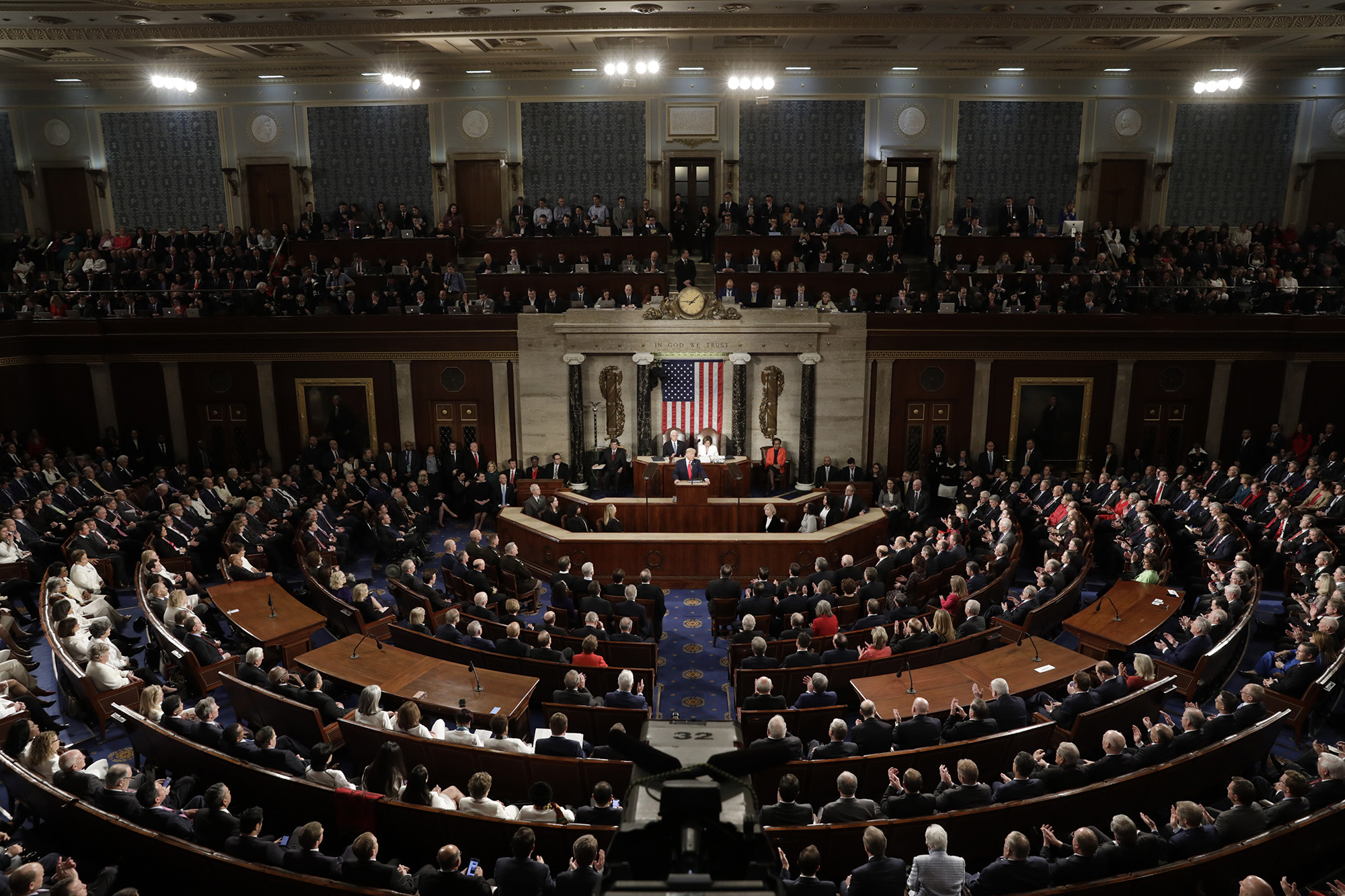
The second is that of voters in Wisconsin, forced to spend hours waiting in line to cast ballots in a primary election that will determine, not principally the candidates for president, but the composition of the state’s Supreme Court. The election, like those in every other state where an April primary was due, had been postponed for public health reasons in the COVID-19 pandemic by the state’s Democratic governor, Tony Evers. The governor was overruled by the state’s Republican-dominated legislature, backed up by the state’s Republican-dominated Supreme Court and seconded by the Republican-dominated U.S. Supreme Court. The election proceeded.

In the state’s largest city, Milwaukee, five of 180 polling stations were open. Suppose you gave an election and no one showed up to take your ballot? We’ve just seen one.

Let’s take a second look at our images and what they mean.

The reason why millions of Americans are publicly begging for bread is that roughly half the country lives from paycheck to paycheck, and those checks have stopped coming as mass firings by businesses that can’t open their doors have ramped up unemployment levels to Great Depression levels in a matter of weeks. Officially, 17 million Americans have lost their jobs, and with it not only their livelihood but the healthcare benefits attached to them as well. No one believes this number to be accurate, but the true count rises daily. Projections are that one-third of the country could be unemployed within a few months. That would exceed the worst levels of the Great Depression, which produced Franklin D. Roosevelt in America but Adolf Hitler in Germany.

And our Hitler stand-in is already in office, whose Attorney General wants virtually unlimited spying on the public and the right to imprison without charge.

Why aren’t there breadlines in Europe, several of whose countries — Italy, Spain, Britain and now France — have been hit as hard by the coronavirus as we have?

In those countries, beginning with France, the central governments have been paying workers their wages to keep them employed. Their jobs, in short, are frozen in place, so that they can return to them as public health conditions permit.

That makes obvious sense. Except in America. The relief package cobbled together here provides for direct payments to Americans on a sliding scale of income, but no help for them to go back to the jobs they’ve been laid off from. It is the difference between keeping idle machinery oiled and in place, and throwing it out to start all over — if there’s anyone left, with 30 million small businesses at risk, to do the starting.

Needless to say, the checks are not in the mail and may take months to arrive. People must figure out how to eat in the meantime, which means joining the breadline. Small business loans are similarly bogged down in government agencies that can’t begin to handle the application load.

We are not just recreating the Great Depression by government fiat. We are creating the mother of all depressions, which will reduce large sections of the world’s biggest economy to poverty. Not to worry, though: China stands ready to replace us.

You might say that we are committing national suicide. Except that not everyone is planning to die.

Before the coronavirus struck, the United States had a level of income inequality exceeded by only a handful of countries in the world. And with many of the world’s best medical laboratories and biggest hospitals, we stood 175th in access to healthcare. The logical trajectory for a country such as ours is a subject population reduced to pauperism and dependent on the sufferance of elites that extract such labor as they require in return for the terms of survival.

We’ve been having this conversation for some time, with the focus on the interests of the superwealthy 1 percent pitted against those of the 99 percent that began with the Occupy Movement nearly a decade ago. This distinction was essentially a political one, since a sizable middle class still existed, with about one-fifth of the population believing itself more or less comfortable and secure. The financial crash of 2008 showed how vulnerable that security might be, and with its government-sponsored transfer of trillions of dollars to corporate America, it accelerated the country’s already surging economic disparity. The coronavirus is that crash on steroids.

In theory, a democratic electorate could reverse all this, or at least moderate it. In practice, our two-party system has never, except in times of extreme crisis, diverged from service to economic elites, and even then only to rescue those elites from themselves. The Democratic Party is now about to nominate for the second presidential cycle in a row its worst and weakest candidate, having strong-armed Bernie Sanders out of the race. Voter suppression, which arguably brought Donald Trump to power four years ago, is poised to do so again, especially with the movement against mail balloting in the midst of the pandemic. Americans were able to put Franklin Roosevelt in the White House in 1932. The one candidate who might have emulated him is now no longer actively running. Whether there will actually be an election in November, one worthy of the name, is up in the air.

COVID-19, unless it is permitted to get completely out of control, is not our central problem. Its economic and political effects almost certainly will be. Other countries have shown how to mitigate these. We have not followed suit. It ought to beggar the mind that tens of millions of our fellow citizens will soon find themselves without the means to afford food or medical care in the midst of the greatest health crisis in a century. It appears to be only our imagination that is beggared instead.

Posted in UncategorizedComments Off on Breadline America the Unmaking of a Nation

On War Leaders: Stalin, Hitler, and Trump

How do you wage war? How do you define it? War is usually described as an organized struggle between human populations, but over the past half-century the term has been extended to cover a variety of exercises. Lyndon Johnson declared a War on Poverty in the 1960s. Richard Nixon declared his own War on Drugs a decade later. Now we have Donald Trump, who, after assuring us for weeks that COVID-19 was just another flu and nothing much to worry about, showed up on March 18 to declare himself a war president.

A war president has to have a war, but Trump’s crusade doesn’t have a name. His Surgeon General, however, has likened the situation to Pearl Harbor, a conflict indelibly impressed on us by the image of eight sinking battleships. It seems a bit awkward to declare war on a virus, an organism a hundredth the width of a human hair and visible only under a microscopic. How do you beat what you can’t see, especially when you have no weapons?

Nonetheless, no one seems to dispute Trump’s claim that we are indeed at war, a war that could potentially cost us more lives than all the ones we’ve ever fought on conventional battlefields. More exactly, what Trump proclaimed — since anything that happens is always about him — was that he was a war president, the implication being that our country is at war. So, I’d like to take him at his word, and evaluate his performance against two major players in history’s greatest war to date.

In invoking Hitler and Stalin, who fought each other for the majority of World War II, I do not mean to put Donald Trump in their class. Hitler conquered most of Europe and was responsible for the deaths of tens of millions. Stalin, with millions of deaths on his own hands, defeated him. I am sure Donald Trump does not want anyone to die. But his response to the COVID-19 crisis has already cost lives, and will cost more still. Mine or yours could be among them. Hence, I feel the comparisons are useful.

Joseph Stalin, unlike Trump, was a prescient man. He lived through World War I, in which millions of Russian lives were lost in a conflict with Germany that ended in a humiliating peace which took years of postwar struggle to undo. Stalin believed that a new war with Germany was inevitable, and that without an all-out effort to industrialize Russia it would be helpless in that war, and the Soviet Union would be destroyed. He undertook an effort to create an infrastructure capable of sustaining a modern army within a decade, whatever the human cost. He succeeded in this, and the cost was terrible. But he thought to gain more time through a non-aggression pact with Hitler, and perhaps to divide Eastern Europe with him as Tsar Alexander I had hoped to do a century before with Napoleon. This was an illusion. Ignoring intelligence pressed on him by Britain and the United States, he was caught unprepared for Hitler’s assault in June 1941. Although the Red Army held after severe initial losses, Russia lost millions of military and civilian lives as a result.

Stalin learned his lesson. Although he kept strategic control of the war, he left operational decisions to his commanders. And he won.

Hitler was discharged from his military service in World War I as a corporal. He believed himself destined for greatness, and his early successes confirmed to him his conviction. He gained control of Germany, the most powerful nation in Europe; annexed Austria and Czechoslovakia through sheer bluster; and, when Poland defied him, conquered virtually all of continental Europe in a matter of months. He had done so with daring and thought himself invincible. Thus he overruled the generals who begged him to withdraw his forces from the doomed siege of Stalingrad. He lost 600,000 men, and, with it, the war.

Donald Trump has to this point made the catastrophic mistakes of both Stalin and Hitler in his “war,” and more. Stalin was caught off guard by Hitler’s attack, his borders unsecured and his army dispersed. He had, though, his “stockpile,” an industrial infrastructure built virtually from scratch and capable of competing with the best of German technology — his tanks were actually better. This capacity, and Russia’s vast spaces, enabled the Red Army to withstand its first shocks and to slowly regain the offensive.

America has no offensive weapons against the novel pathogen COVID-19 and it can only hope to develop effective vaccines as quickly as possible. But its defensive stockpile, from masks and testing kits to ventilators, was woefully inadequate, and precious weeks have been lost to producing and distributing supplies. There is still no effective coordination for this, with state governors left to compete with each other for life-saving necessities on unregulated “markets.” There is no national policy on social distancing; only a president who suggests we all celebrate Easter Sunday in crowded churches, who touts unproven remedies that, wrongly taken, can potentially kill, who undercuts competent scientific authority daily and boasts he knows as much about medicine as anyone, who devotes his time to checking his Facebook ratings and settling political scores. Hitler never screwed up the Eastern front more. The only thing lacking in the chaotic court at the White House is an astrologer, and that is only because Trump knows more about astrology than anyone else, too.

We will survive COVID-19. We will perhaps begin to realize that viral outbreaks and pandemics are going to be more frequent in our crowded and interconnected world, and that only a prepared and coordinated global response can cope with them. We will need a similar response to climate change if we want anything resembling a civilization to survive the next century or two.

First, though, we need to survive Donald Trump.

Posted in UncategorizedComments Off on On War Leaders: Stalin, Hitler, and Trump

Resurrection Games: The Second Coming of Joe Biden

Photograph courtesy of Robert Gauthier/Los Angeles Times/TNS.

Stranger and stranger. The 2020 political season has already been bizarre, and the surprises keep coming. At the same time, some things have been as predictable as the sun rising.

It was no surprise that Donald Trump would finger Joe Biden for his likeliest Democrat opponent for president and work to smear his name as vigorously as possible. It was a surprise that he would do so by putting pressure on a foreign leader to get dirt on him over the telephonic equivalent of an open mic, forcing Nancy Pelosi to do the last thing she wanted and institute impeachment proceedings against him. That ate up most of the political oxygen for several months before coming to its inevitable end with Trump’s acquittal in the Senate on a party-line vote. And Pelosi hates to lose on anything.

Mind you, I thought the impeachment was essential. Trump’s entire presidency has been a walking advertisement for impeachment. Crimes in plain sight need to be prosecuted, and a presidency that has been one long crime demanded it. Still, it was a lose-lose proposition under the circumstances. Not to impeach would have meant that the constitution would be a dead letter in the face of a despot. Not to convict would have meant that the political system was unable to make it work, the good guys notwithstanding. Choose your poison, but drink you must.

Bernie Sanders running for president again was also a foregone conclusion. Sanders was reportedly willing to defer to a run by Elizabeth Warren against Hillary Clinton in 2016. However, having won twenty-two primary contests and shaped the first reform movement in American politics in thirty years, he was going to go for broke this time around. Sanders built a formidable political organization in the interim and raised far more money from small donors than his rivals did from the billionaire class.

Then came his heart attack in November. Many, myself included, thought this would be a fatal blow for a 78-year-old candidate who looked every one of his years. But Sanders had the bit between his teeth and was not about to let go. Remarkably, he came back. He won the popular vote in the first three primary contests and buried Joe Biden with fourth- and fifth-place finishes in Iowa and New Hampshire, with a distant second in Nevada. Suddenly, he was not only a frontrunner but also an odds-on favorite. There were still other candidates in the race, including Warren, but Bernie’s army seemed an unstoppable juggernaut.

Then came South Carolina.

South Carolina was, as Joe Biden said, his “firewall”: a rural conservative state in the Deep South with a black population that wouldn’t hold it against him that he called the segregationist Senator James Eastland a political mentor and happily rubbed elbows with Strom Thurmond, an avowed racist. He’d been Barack Obama’s vice president, and that (along with a timely endorsement by the state’s most important political figure, Congressman James  Clyburn) was all he needed. Sanders had been close to him in the state polls, but Clyburn made the difference. To be black in the South, the descendent of slaves and Jim Crow-era tenant farmers, meant not to expect much out of the American Dream. Sanders might promise you free college tuition and college debt forgiveness, but you hadn’t gone to college and your kids weren’t going there either. Biden had been with Barack. He might not help you much — Obama hadn’t done that either — but he wouldn’t hurt you more either. You got the high sign from the one black politician in the South with national clout, and you were in.

Biden pulled away and won South Carolina. He didn’t win by a bigger margin than Sanders had in Nevada with Latino votes, but it was enough to galvanize the national Democratic establishment behind him. The overwhelming objective was to stop Sanders. There were no illusions about Biden. He had been the presumed frontrunner the previous summer and tanked badly. Despite his decades of devoted fealty to Wall Street interests, his fundraising lagged badly behind his competitors. His ground organization was so inept that even Clyburn, in endorsing him, chided him on it, as did Terry McAuliffe of Virginia in throwing in his own endorsement. Here was a guy who’d been in politics for nearly 50 years, being told how to play the game like a rookie.

Biden had actually done no better at winning the black vote in South Carolina than Sanders had in winning the Latino one in Nevada, and Latinos are a larger portion of the Democrats’ national base, especially in electorally competitive states. But the establishment message was that the black vote was more critical, and it sold. The Super Tuesday primaries that went a few days later gave Biden an overall delegate edge, albeit a small one. Then the second chain was yanked. Two other presidential contenders, Pete Buttigieg and Amy Klobuchar, dropped out of the race after South Carolina, endorsing Biden as their campaigns ended. Mike Bloomberg followed suit the day after Super Tuesday, also endorsing Biden and promising him his big checkbook. Warren quit her race just after that. And Kamala Harris, who’d dropped out of the race months previously, put her dime on Joe, too.

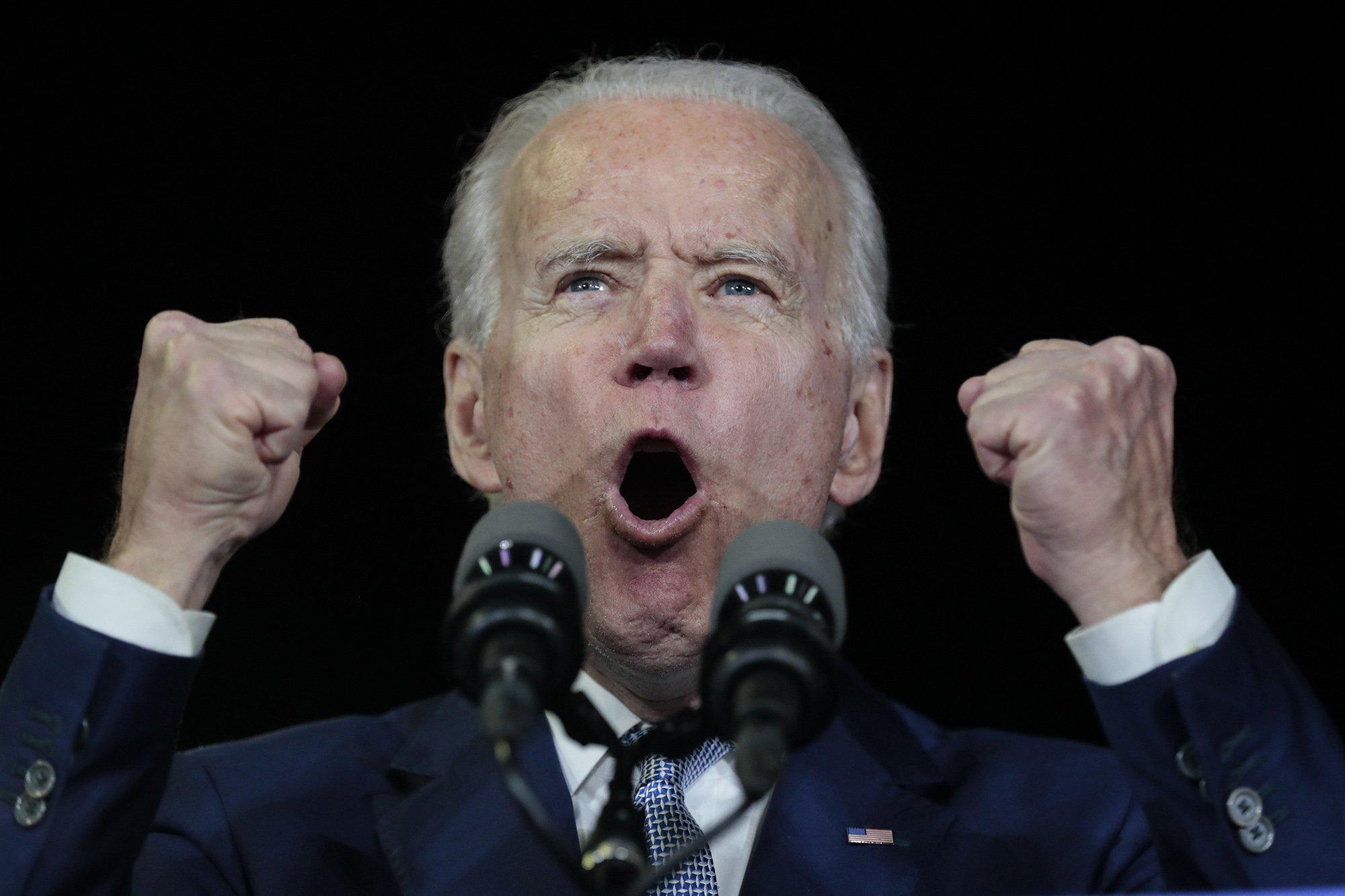
Biden appeared on his victory stage with the look of Lazarus, the only man previously raised from the dead. Biden was so dazed that he momentarily confused his wife and sister, who stood to either side of him.

All of this seemed all of a sudden, yet how could it have been otherwise? No other so-called centrist candidate had emerged with enough consistent support to clear the field. Warren, left of center, had scuttled herself over health care taxes. Biden was the familiar brand. Sanders was the firebrand, to be stopped at all costs. All Joe needed — or all the party elders needed to throw him the rope — was a win somewhere, somehow. The place where the confederacy was born gave him, after three presidential runs dating back to 1988, the first primary win of his career.

No one should place bets on how all this will turn out, but the center seems to be holding for the Democrats. Sanders has been running, a second time, for the presidential nomination of a party he refuses to join as a member. That makes him, for all the pleasantries he exchanges on the debate stage or in Democratic caucuses, not only an outsider but also a subversive. He wants to remake the Democratic Party as a genuinely progressive one, unbeholden to corporate interests and ready to seriously address climate change and economic inequality. Although he has nudged his rivals to the left, his programs are genuinely transformative and entail a fundamental reshaping of American politics. That’s why he calls his campaign a movement and his movement revolutionary. It is. And Democratic Party bosses want none of it, because it would mean the end of their reign.

That’s why Joe Biden is back.

Posted in UncategorizedComments Off on Resurrection Games: The Second Coming of Joe Biden

Can the Coronavirus put a stop to President Trump?

Photograph courtesy of Irfan Khan/Los Angeles Times.

Shortly after World War II, a film called “The War of the Worlds” depicted the invasion of Earth by space aliens fleeing their dying planet to conquer ours. It became a cult classic and even survived a Tom Cruise remake.

The aliens were far more technologically advanced than we were, and it soon became clear that human extinction was their first order of business. Resistance was futile; our most powerful weapons were easily deflected. Just when all seemed hopeless, however, the aliens themselves began to die off in their spaceships. They hadn’t counted on the tiniest of opponents, something far more potent than humans: a virus to which we ourselves had developed immunity, but the aliens  hadn’t expected. They perished. Earth was saved.

Could the fantasy come true in 2020? Could a mere virus stop Donald Trump?

I don’t want to suggest that Trump is a space alien, although he is certainly alien to the life form known as democracy. He had a simple plan for conquest, or if you prefer the term, reelection. He gathered a loyal following and took over a political party as its host. It wasn’t a majority, but then majorities often don’t elect. You get and keep a base large enough, and attract enough other voters who don’t really care who runs the country as long as their 401(k) plans look good. Throw in a few Russian bots, polling stations in minority districts that close early and a quaint system called the Electoral College which, uniquely on planet Earth, awards victory to the loser of the popular vote, and you have the Trump formula. Add a political opposition bent on denying its own most popular candidate a presidential nomination, and the formula looks like a winner.

All you have to do is keep the economy going until Nov. 3.

Trump had been doing this by goosing the stock market with tax cuts for the rich and pressuring the Federal Reserve to keep interest rates low. True, the world economy had begun to slow down. But, absent unforeseen disaster, Trump had enough tricks in his toolkit to keep the stock market afloat till Election Day.

Then came the unforeseen disaster: Coronavirus.

Unforeseen, but not unforeseeable. We’ve had a rolling series of pandemics or near-pandemics in the past couple of decades: SARS, MERS, Ebola and more. They are a predictable consequence of globalization, with its frenetic worldwide travel and commerce and its chaotic lack of product and medical regulation. Coronavirus is actually a class of viruses, with the new current strain apparently the product of an open-air Chinese market in the city of Wuhan, which, with rotting animal species hung side by side, was a perfect laboratory for viral mutation and infection. China is not the only place with such markets. They are common, and the general overcrowding, untreated waste and overall toxicity of the cities in developing countries, compounded by the floodwaters of climate change, make more pandemics inevitable. If we wanted to turn the world over to the viruses, we couldn’t be doing a much better job.

The Coronavirus strain we have on hand now, COVID-19, is relatively mild so far if reported mortality rates are to be trusted (coming mostly from China, they aren’t). But a few dozen cases in America at the time of writing, with a single announced fatality to date, was enough to send the Wall Street market into its biggest tumble last week since the crash of 2008. The massive worldwide disruption of production, transportation, and marketing already underway is bound to produce a major recession, at least until a vaccine is developed and (another matter entirely) effectively distributed.

It’s terrible news, in short, and general panic makes it worse. But there may be at least one silver lining. It could rid us of Donald John Trump. If our own economy falters enough, it might very well tip the tide against him in the November elections. Apart from souring the electorate, Trump will find himself with few of the ordinary means of dealing with a recession: a further tax cut (he’s already promised one) or a cut in interest rates, which are already low, while the federal budget is saddled with a trillion-dollar deficit.

How much slack the American public will cut Trump depends on how he deals with COVID-19. His normal response to bad news is (a) denial, and (b) lying. With half of China on lockdown, he called the virus no big deal. It wouldn’t come to America, or, if it did, it would be a minor nuisance. If it were something more than that, it would go away with the normal flu season in spring. If that didn’t happen — and you can’t make this up — maybe a “miracle” would make it go away.

As we know, the Donald doesn’t believe in science, so perhaps a miracle was the best thing he could think of. Miracles are a form of hope; they are also a mode of denial. When that option didn’t fly, Trump next tried to muzzle the scientists, requiring them to clear all public comments about the virus with the White House. This did not help credibility, so Trump decided to low-ball the numbers. At a time when there were sixty-seven known COVID-19 cases in the U.S., he declared the actual number to be twenty-two. Of course, many more will undoubtedly come. But Trump decided to lie off the bat. Or maybe an earlier number got stuck in his head, and he didn’t bother to get the update. Either way, it’s not a confidence-builder.

Next after fear, Americans are likely to feel empty wallets. That’s compound injury. And if a not-quite living thing can defeat space aliens, at least on the screen, it might just topple a single buffoon the size of a dirigible, and similarly puffed up with hot air.

We shouldn’t need such drastic means to rid ourselves of Donald Trump. But since the Constitution hasn’t done its job, it may fall to Mother Nature to help us out. The remedy, to be sure, is likely to be very expensive. Nor is it a certain one, with the Democratic Party our alternative. If nothing else works and things go on as they are, we may need another planet ourselves. This time, though, the aliens will be waiting for us.

Posted in UncategorizedComments Off on Can the Coronavirus put a stop to President Trump?

Sanders, Trump and the Two-Party System

Photograph courtesy of Kareem Elgazzar/The Cincinnati Enquirer.

Three months ago, the smart money wouldn’t have bet a nickel on Bernie Sanders becoming the Democratic Party’s nominee for president in 2020. Yes, he had a base of committed supporters, but seemingly little beyond it. He had a serious rival on the left in Elizabeth Warren, who seemed to be successfully courting the women’s vote. He was anathema to the Party establishment, which had thwarted his bid for the presidency in 2016 and was, if anything, even more determined to do so this time around. That establishment included not only Obama and Clinton loyalists (many of whom blamed Sanders for Hillary Clinton’s defeat in 2016 and for the four nightmare years of Donald Trump that have followed), but the mainstream media as well. No one had a good word for Bernie. Plus, he was the oldest candidate ever to run seriously for president, and he’d just had a heart attack.

Now, after just a single primary vote and two caucuses as I write, Sanders is the frontrunner for the Democratic nomination, and suddenly on course to take a plurality if not a majority of pledged delegates into the Party convention. A brokered convention denying him the nomination is certainly a possibility, but it would split the Party, likely costing Democrats the November election. Of course, there’s a long way to go until summer. But the fact that things have gotten to where they are now seems to cry out for explanation.

Part of that explanation lies in Sanders’ competition. Elizabeth Warren’s campaign began its collapse when she stumbled over how she would pay for Medicare for All when confronted with scare cost estimates that should have been easily batted aside. Plus, she is a woman, and not only did 51 percent of potential male voters admit they would have reservations about electing a female candidate, but 41 percent of women voters as well. Like it or not, that’s the truth of our present political life.

As for the male opponents who remain: Joe Biden is a walking corpse, Pete Buttigieg is weak-faced, evasive and untested,  Michael Bloomberg, the billionaire carpetbagger, has run into a buzz saw of opposition from his fellow candidates.

That still leaves us with the question of how Sanders has gotten so far. Part of the reason is, self-evidently, that he is not a Democrat. Sanders began his political career some 40 years ago as an Independent. He is still one. He has caucused for years with Congressional Democrats but never taken the blood oath. In this, he is a unique figure, at least among modern political figures with any degree of prominence. We have a two-party system, designed to remain such. Sanders won’t join the party whose presidential nomination he seeks, even to win the world’s most powerful office.

Well, why won’t he? It’s understandable that a maverick seeking a career on his own terms and satisfied with becoming a senator or governor might choose to be an Independent. But Sanders is not simply that; he is a self-professed democratic socialist. No other figure on the national stage in generations has described himself as such. No one, in fact, even knows what a socialist is nowadays, except that it is so dirty a word that Warren, competing with Sanders on the left, describes herself as a capitalist to the bone. But Sanders, somehow, has gotten away with using it, and it did him no apparent harm in running for the Democratic nomination four years ago. Maybe it would do so in a general election, but Sanders is apparently determined to stick to his label, come what may. In this, he is not merely stubborn. He is serving notice that he means to remake the Democratic Party, or at least return it to an updated version of its New Deal self — not democratic socialism, but social democracy more or less as envisioned by the Henry Wallace wing of the Party in the 1940s and practiced generally in Western Europe today.

That is why he resists advice to moderate his policy positions to woo conservative Democrats or swing voters. He is indeed a revolutionary, not on the general political spectrum — in Europe he would be a centrist — but in terms of the Republican Lite party  that the Democrats have become since the 1960s. That party, as Sanders sees it, was repudiated at the polls in 2016. The Republicans don’t deserve to win elections, but neither, he thinks, do Democrats as they stand as a whole. Yes: He has said he will support whomever the Democratic nominee is in the effort to unseat Trump this fall. But if he is that nominee, he will, unless I have thoroughly misjudged him, stick to his guns.

If one regards the present two-party system as one in crisis — as it certainly is, if one considers climate disaster, the debacle of American health care, housing and higher education and the plutocratic oligarchy that runs both parties — then both Sanders and Trump represent a phenomenon that now characterizes our time. Trump, an outsider who became a courtesy Republican to run for president, was able to seize control of a party, whose establishment regarded him with horror and disgust, and bend it to his will.

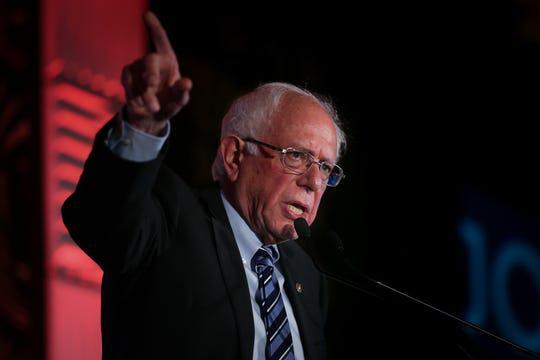
Sanders, not quite as loathed but certainly feared, is trying to do something of the same with the Democrats. The difference, of course, is that Trump is a demagogue with the instincts of a tyrant, and Sanders is a man of integrity, the most remarkable political figure to have emerged in America in decades. There’s another difference, too. Trump is wholly uninterested in his party except as a personal vehicle; his goal is to transform the presidency into an institution above the law and use it for his private interest. Sanders wants to transform the Democratic Party in the interests of what he perceives as social justice and planetary survival. To do so, if he gets the chance, he would have to bend not only the Democratic Party, but perhaps the presidency as well. The hardest part of Bernie Sanders’ democratic socialism might be not the “socialist” part, but the “democratic” one.

Posted in UncategorizedComments Off on Sanders, Trump and the Two-Party System

Michael Bloomberg’s buying of the 2020 presidency

Photograph courtesy of Tom Gralish at Tribune News Service.

It’s come to this: the worst threat to the Republic isn’t Donald J. Trump. It’s Michael Bloomberg.

Bloomberg is the billionaire flyover candidate who knows the American presidency is now officially for sale. As the ninth richest man on the planet, he intends to buy it. And the way to do it, courtesy of the Supreme Court’s infamous “Citizens United” ruling that opened the floodgates to corporation-funded elections, is to swamp the airwaves and the internet with countless ads beckoning us to the inevitable coming of the Leader.

“Mike Will Get the Job Done.” That’s the tag line of the messaging. What job? Whose job? And for whom?

No need to ask. There the guy is, ubiquitous as Big Brother could only dream of being, not only in your face, but in your dreams, too. The perfect plutocratic authoritarian, telling us what we all know by now: that we all have our price, and only Michael is rich enough to pay it.

And when you get Michael, you can be sure he’ll stick around. Donald Trump has mused about extending his presidential term indefinitely, as dictators do. Bloomberg is the only politician who has actually done so. Faced with a two-term limit, he extended his New York mayoralty to a third term by ramming a revision of the city charter through and buying his way back in. And when he was ready to leave, he reinstated the limit so that no wise-guy could follow in his footsteps.

Divine right, dollar by dollar.

Bloomberg’s strategy in the presidential race — like Trump, his eye has always been on that prize — was to skip the first four contests in our ridiculous primary system, with its absurdly meager haul of delegates, and swoop down on the Super Tuesday bonanza in March. Let the yokels slug it out for prime time exposure on the endless circuit of demeaning debates, spending their bucks to collect pennies in delegates and spook each other in the process. Mike is right there day and night, with a stage all to himself. Say, Mister Mayor, aren’t you the one who sent Rudy Giuliani’s ugly stop-and-frisk policy into overdrive and slammed 685,724 black and Latino residents up against the wall in a single year for the crime of being outdoors until the courts finally slowed you down? Aren’t you the multibillionaire who opposed raising the $7.25 minimum wage? And the one who’s had charges of sexual harassment running back decades?

Questions, questions. They do get asked, sort of, but not on any stage where Mike might have to give answers.

Democracy’s obituary was supposed to have been written with “Citizens United.” Politicians took note —  instead of rushing to pass legislation overriding the Supreme Court decision, they flocked to the donors who would line their pockets. But, in a plot-line no one could write, a hitherto obscure Senator with floppy arms and wild hair decided to run for president four years ago on small donations only and nearly won the nomination of a party he didn’t even belong to.

Bernie Sanders has thus far repeated the feat in 2020, has a committed base and is the Democratic front-runner — for the moment. But Bloomberg has figured out the way to silence him and his fellow competitors as well. All Democrats are united, at least publicly, on the need to vote Donald Trump out of office. All of them, thus far, have taken the pledge to support whoever wins their party’s presidential nomination. Bloomberg has taken this pledge too, but with a twist: he has promised to contribute a billion dollars to elect whoever becomes the nominee.

Does anybody want to turn that loot down? Does anybody want to take a real swipe at Bloomberg on a debate stage? I guess Sanders would. I can guarantee you no one else will. And so Michael Bloomberg can’t lose: if he’s not the candidate, he will be the kingmaker. No one debates a billion bucks. Could even Bernie turn that down? And could he stop it being spent if he did?

I’m not going to say that Michael Bloomberg is evil incarnate. He has spent some of his money on causes such as climate change and gun control, though always with an eye to his own political bottom line. But every Democratic candidate is going to do something about these things if they win the presidency.

After the climate crisis, the most critical challenge facing the country will be the vast gap in wealth between its elites and the population at large, a gap that has distorted every aspect of our society and all but swallowed our politics. Michael Bloomberg is the poster boy for this issue. Whatever he would do in office, he would do incalculable damage merely by occupying it. So far, we have had presidents of a republic, Donald Trump’s best efforts to the contrary notwithstanding.

With Michael Bloomberg, we would have the first president of a plutocracy, because he would have bought the White House. To put it more directly, we would have our first king. A king, in the old-fashioned sense of the term, is someone elevated above the political process and public institutions.

Donald Trump would be a king if he could, but he is a smasher rather than a master of institutions. Tyranny, not monarchy, is the most he can aspire to. Bloomberg is his own bank; he has his own media empire; he has already bought the silence — and submission — of many who might have opposed him, including the Democratic National Committee. He’d be less crude than Trump; he’d throw no public tantrums. He’d just own us as the biggest hedge fund property in the world.

Democracies can die in many ways, but this would be a helluva way to go.

Posted in UncategorizedComments Off on Michael Bloomberg’s buying of the 2020 presidency

President Trump’s risks have kept him ahead of his competition

Photograph courtesy of Yuri Gripas at Tribune News Service.

It has now been almost five years since Donald Trump came down his escalator (which he misremembers as an elevator) to announce himself as America’s savior. Sometimes, Trump forgets; sometimes, he lies. By accident, he might even bump into the truth. The only important thing for us to remember is that whatever he says is reality — until he says something else.

How did we get into such a pickle?

At first, people thought that Trump would be stopped by himself. A bankrupt builder, he was shored up by crooked banks. A serial adulterer, he shacked up with a porn star while his wife was nursing a baby, and then violated federal law by covering up hush-money payments. On television, he was a goon whose weekly punch line was “You’re fired!”, delivered to an audience laid low by depression-level unemployment. He was a joke to late-night comedians stretching back to Johnny Carson. His political experience consisted of playing golf with Bill Clinton, back before he was urging that Clinton’s wife be locked up. He had never read the U.S. Constitution. He had never, apparently, read anything at all, including the dozen or so books he put his name to.

Well, a pizza guy had run for president in the previous election cycle. It seemed that at least one clown act had been baked into the roadshow called “running for president.” Trump would fold before he ever got off the escalator.

When that didn’t happen, the Republican Party would stop Trump. It put up 16 other candidates. There were senators and governors on the list, including one from a family dynasty that had elected two presidents already. Trump gave them all unfunny nicknames and rode right past them to the party’s nomination.

Then it was the turn of Hillary Clinton, memorably described as “the most qualified person in the country to be president,” even though no one could name a single thing she had ever accomplished. Hillary won the election; she got nearly three million more votes than Trump. Anywhere else in the world, that would have made her president. But something called the Electoral College said otherwise, and Trump was made president instead.

Trump ran for president as a populist, essentially co-opting much of what would have been Bernie Sanders’ platform and opposing almost every bullet point of Republican politics. He would cut taxes for the middle class and bring back manufacturing jobs shipped overseas. He would rein in drug prices and replace Obamacare with a vastly better plan for all (to be announced). He would end the Forever War in the Middle East and bring the troops home.

Exactly the reverse happened. Once in office, Trump hit the default button and let Mitch McConnell write the agenda — tax cuts for the rich, troglodytes for the federal courts, job growth for Amazon warehouse packagers, soaring drug prices, Obamacare gutted but not replaced, more war in the Middle East and a military more bloated than ever. Take away the clown act, and Trump was prepared to be Ted Cruz.

The clown act, though, was still important; it was what kept Trump’s electoral base entertained.

Demagogues need enemies, preferably helpless ones, and Trump had his own pre-selected: migrants, legal or otherwise. The problem was that, when he took office, illegal immigration was at its lowest level since the Nixon administration. But you create a crisis by announcing it and demanding that it be acted upon. In this case, Trump fell back on a variant of the biblical verse about Noah adapted for the movie “Field of Dreams”: “If you build it, they will come.” The “it” in the Bible was an ark; the one in the movie was a cornfield diamond that would bring back dead ballplayers. Trump’s version was a border wall, and the objective was to turn a trickle of hapless refugees into a flood.

The strategy worked even without a new wall, only a mile of which was actually built. It worked far better than anyone except perhaps Trump himself could have anticipated, in stoking xenophobic fear of “others” in general: Muslims and Jews; blacks and Latinos; gays and lesbians. Trump’s base included everyone from disaffected workers to hard-core Evangelicals. But its basic constituency, for him, was the Aryan Nation. Hatred was his message, and white supremacists were his target audience. If they could be mobilized (as they were at Charlottesville), then hatred, fear and division would spread. And Donald Trump, Prince of Chaos, could alone still the winds, as he alone had stirred them.

Trump has only one principle of operation: outrage. He stokes outrage among his supporters against the demonized other. He creates it among his opponents towards himself. Either way, he must be the center of attention. Power is not particularly what he wants, in the sense of the ability to accomplish things for good or ill; it is attention. He is not a political creature at all, shrewd as he can be at manipulating politics. He is a nihilist, a bottomless ego waiting to be fed to keep the tapeworm in his gut at bay. He is an emptiness that only an entire world can fill.

Trump will take risks that no one else would dare to because the dare is his only maneuver. To shoot down his political rival, Joe Biden, he not only risked but dared impeachment, knowing a Republican Senate would never take the dare of going against him. And he succeeded. He did shoot Joe Biden down and left fuming Democrats with no better response than to tear up some paper. They know he will come after any other candidate they put up against him in the same way. There’s no one more desperate than a clown on a highwire, and desperation is the final advantage, in business, in politics and in life, as long as you don’t lose your nerve. Donald Trump is desperate enough to take the whole world down with him.

Don’t think he won’t try if he thinks he has to.

Posted in UncategorizedComments Off on President Trump’s risks have kept him ahead of his competition

We’re mad as hell, but does it truly matter at this rate?

Photographs courtesy of Andrew Harnik at Tribune News Service and Gage Skidmore at Wikimedia Commons

All you really need to know about the current state of American politics, and America itself, was laid out more than 40 ago in a movie called “Network.” The movie begins with Howard Beale, a fictional TV anchor on the verge of being fired for poor ratings, announcing suicide on his farewell broadcast.

Instead of calling for a white jacket, however, his network exploits his breakdown and rebrands him as a mad prophet, denouncing the evils of society and urging his audience to vent its own anger in what becomes his signature line, “I’m mad as hell, and I’m not going to take this anymore.” The line touches a popular nerve, and the film shows people opening their windows in real time to yell it into the night with him.

The “this” Beale’s followers won’t take is undefined. It’s a sense of general grievance compounded of fear, alienation and powerlessness in a world run by unseen fiscal and commercial monopolies that have fixed everything to their advantage and reduced democracy to a cynical charade.

Sound familiar?

After World War II, America enjoyed geopolitical dominance, having restructured international capitalism and spanned the globe with “alliances” designed to ensure its hegemony. With the Vietnam War and the civil rights revolution testing the foundations of the country’s own institutions, the country entered the 1970s, a period notoriously characterized by Jimmy Carter as one of “malaise.” The problems were real enough — other economies had begun to challenge America’s, while Arab states acquired a stranglehold on industry by jacking up the cost of oil. What had been a rising standard of living suddenly fell, while the ripple effect of oil prices pushed inflation. The general effect acquired a name: stagflation. Wages fell, unions crumbled and Americans feared for their future as they hadn’t since the Great Depression.

Fast forward to 2020: inflation has been “controlled” at the expense of job and wage growth, unless you happen to need insulin, education or affordable housing. Politicians have sold the country a bill of slogans, from Ronald Reagan’s “It’s morning in America” to Barack Obama’s “Change you can believe in.” Meanwhile, living standards have continued a decades-long descent for most, climaxing in the financial crash of 2008. Poverty has risen, the middle class — a brief phenomenon in American life — has been hollowed out, and even life expectancy has fallen. At the same time, wealth has accumulated at obscene levels at the top. Under both Democratic and Republican administrations, the one constant has been a rising gap between the haves and have-nots, with half the population having negative assets and nearly four out of five going without the resources to meet an emergency of only a few hundred dollars.

You thought “Network”’s yokels were mad as hell? Welcome to 2020.

The dystopia painted in “Network” had three salient features. First, the modern economy had only one line, the bottom one. Capitalism was a completely amoral system that sorted out only winners and losers, with the arbiters — those who controlled capital — holding all the cards. That meant that the rich would get richer, and the poor poorer: case closed.

Second, the losers would get more and more frustrated, raising social tensions until they threatened to boil over.

Third, these losers — the general public — having been infantilized by television, had lost the capacity to understand the true nature of their plight, and hence to challenge it. Television fed them their reality, and whoever controlled its content could manipulate what they saw and therefore thought.

Has anything changed from then till now? No, except that “Network”’s predictions have all been borne out in an increasingly polarized society. Social media is far more ubiquitous now, but in even fewer hands as giant monopolies control content and distribution. Ideology is less important because cynicism is more rampant, and platforms such as Facebook are happy to peddle lies for profit since the distinction between truth and falsity no longer matters: They are just commodities that fetch a price.

Which brings us to Donald Trump, the man of the hour.

Trump doesn’t know much. He thinks George Washington won our war of Independence with the help of an air force. He had no idea what had happened at Pearl Harbor when he visited it as president. But he does know one thing — being an angry man himself, he senses anger when he sees it. And that has served him both as a campaign strategy and a governing philosophy: Keep the yokels mad, and make yourself the battery that stokes their rage.

Trump both is and isn’t a threat to the status quo. He doesn’t lead a movement because he has absolutely no interest in his followers. They’re losers by definition, and Trump cares only for winners. He says so, in one way or another, just about daily.

Other demagogues have had contempt for their followers, but they seem to be aware that they must at least feed them scraps from time to time. Trump’s tariff wars have hurt the Midwestern farmers who voted for him. His cuts to food stamps have left the most vulnerable parts of his base hungry. His phantom job promises have produced nothing for coal miners.

All of this doesn’t faze Trump himself. Losers are losers; it’s the law of nature. Trump enjoys his Nuremberg-style rallies. They feed both his ego and his anger, while his followers find their own anger recharged and their egos vicariously gratified in his. The exchange is symbolic but psychologically real. The base may be broke, but it feels woke.

Across the political spectrum, there is only one figure who remotely resembles Trump. The Democratic establishment just managed to fend off the insurgent outsider Bernie Sanders in 2016, as Republicans were unable to do with Trump. Sanders too has a tenaciously loyal base, one that has grown not only at the expense of the centrist candidate, Joe Biden, but of Elizabeth Warren, his progressive rival. Of course, Sanders is a deeply principled man and as morally and intellectually different from Trump as possible.

They do, however, share one characteristic. Both are angry men, and in both anger is a palpable, politically communicative quality. Needless to say, Trump’s anger springs from a personality disorder that spills over into his politics but is essentially divorced from it, while Sanders’, whatever basis it may have in character, clearly reflects the life course of a progressive navigating an era of reaction.

What does this mean for the politics of the moment? The received wisdom of the establishment that beat Sanders back four years ago is that only a centrist candidate can defeat Trump and that what the electorate wants after four years of him is temperance and civility, not radical innovation. But the populist rage that made Trump president has not subsided; it is, if anything, more intense than ever. The antidote to his vindictive anger may be a righteous one that focuses on objectively urgent needs that can only be met by tackling entrenched interests: universal health care; a living wage; an all-hands-on-deck approach to the climate crisis.

After all, if we were mad as hell 40 years ago, how mad do we need to be now?

Posted in UncategorizedComments Off on We’re mad as hell, but does it truly matter at this rate?

The most murderous century in human history

Photograph courtesy of John Englart at Flickr

While the impeachment proceedings in the U. S. Senate began last week, President Trump, like Richard Nixon under fire before him, betook himself to foreign parts to advertise the majesty of his office and to change as far as possible the subject. Nixon, in July 1974, visited a friendly Egypt, presumably to consult with the pharaohs. Trump went to Davos, Switzerland for the annual self-congratulation of the plutocrats who rule the world’s economy.

The one exercise was as unproductive as the other. For Trump, there was the added cynosure of our resident Joan of Arc, Greta Thunberg, the Swedish teenager who put in an appearance to remind the world’s misleaders that the planet was burning around them at an ever-accelerating rate and that capitalism was not going to save but consume it. Replying for the world’s only head of state to deny the reality of climate change, Trump’s inept and thuggish Commerce Secretary, Steve Mnuchin, sneered at Thunberg, suggesting that she wait to go to college before lecturing humanity’s gravediggers on the global crisis.

To fully appreciate where we stand at this juncture of the human story, we might do well to look back on the century recently ended. The first observation we might make is that it was by several magnitudes the most murderous one we have ever had. Some 230 million people were killed in interstate and civil wars and their accompanying genocides. Hundreds of millions, if not billions, more might have died had nuclear wars broken out in the wake of the atomic bomb, a prospect widely expected and even planned for by Dr. Strangeloves on both sides of the superpower divide.

Such wars were narrowly averted on several occasions, notably the Cuban Missile Crisis. They remain on order today, or on any tomorrow where political conflicts get out of hand with fools reckless or desperate enough to pull the trigger. So far, we have been lucky — far luckier than we may realize — in having escaped nuclear war. Does anyone want to bet on the next hundred years? The next five hundred?

Of course, we have a new apocalypse on the horizon (or, more accurately, in progress): the climate crisis. Here, the mechanism is unchecked population growth and the demand for a world economy that not only keeps pace with it but exceeds it to provide a so-called higher standard of living. In the past 50 years, the human population has more than doubled, from 3.5 to 7.6 billion. In the same period, economic productivity has increased more than fivefold.

It is true, population growth in the developed world has leveled off and, particularly in Western Europe, begun to shrink. But we also have existing populations living longer and still growing rapidly in parts of Asia, Latin America and particularly Africa. We are consuming more resources, even as they approach exhaustion, and we are generating more pollution, even as our toxic skies, soil, rivers and oceans wreak havoc on complex and vulnerable food chains, species balances and climate effects we have barely begun to comprehend. Nuclear war may or may not come in this century or the next. But resource wars and vast population migrations certainly will. Oceans will rise, islands sink and coastal regions disappear; yet, in fifty years, we may find water more valuable than gold. And we will kill to have it.

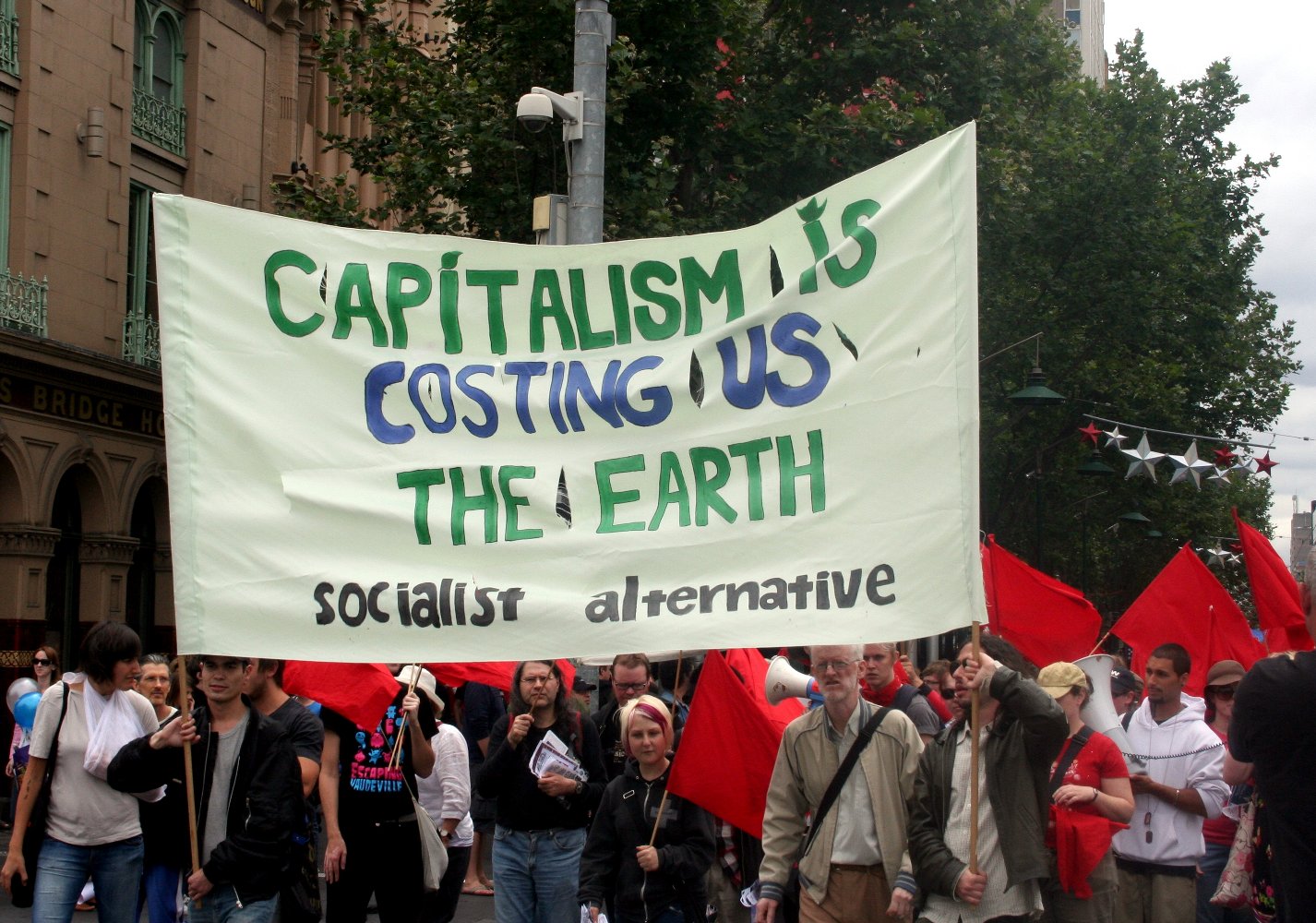
The single engine that drives this crisis is capitalism and the globalization of the world economy it has produced. Capitalism entails the systemic maximization of a single yardstick, profit and a single value, money. It has inevitably brought about globalization in turn, and globalization, as both Adam Smith and Karl Marx foresaw, has made capitalism a universal world system, each propelling the other.

Marx believed that this would lead to disaster, and disaster to revolution. The first part of his prediction is likely to come true. We have a world as economically integrated as it is politically splintered. That is, we are making our climate and resource crises more and more exigent, even as we make the cooperative global approach we need in dealing with them less and less likely.  Imperialism gave us the two world wars that made the 20th century the deadliest in history. International anarchy, fueled by unchecked private interests, threaten us with new and intractable conflicts that may make the wars of the past look like skirmishes of pikes and muskets. And this time, we will ultimately be fighting an opponent we cannot defeat: Mother Nature.

Is all this inevitable? No; nothing is. We can’t let ourselves off with fatalism. Each day offers us a choice. Our choices, it is true, will narrow: we have run out of time to waste. And we must disabuse ourselves of the lies we are told and tell ourselves that limitless growth, demographic and economic, is sustainable; that social justice is yesterday’s folly rather than a prerequisite for civilized survival and that technology divorced from value will rescue us in the end. Somehow, we will have to learn how to govern ourselves globally, since we now live in a very small world. Somehow, we will have to learn how to distribute the goods among us equitably. Somehow, too, we will need to accommodate freedom and diversity within whatever structures we build. We will not be saved by a monolith.

The human race, you might say, is one of evolution’s experiments. Its result, barring an asteroid strike or a wobble of Earth’s axis, is up to us. But there’s a simple truth we must start from. The planet does not need us. It is we who need the planet.

Posted in UncategorizedComments Off on The most murderous century in human history