
Author Archives | Alan Zamora

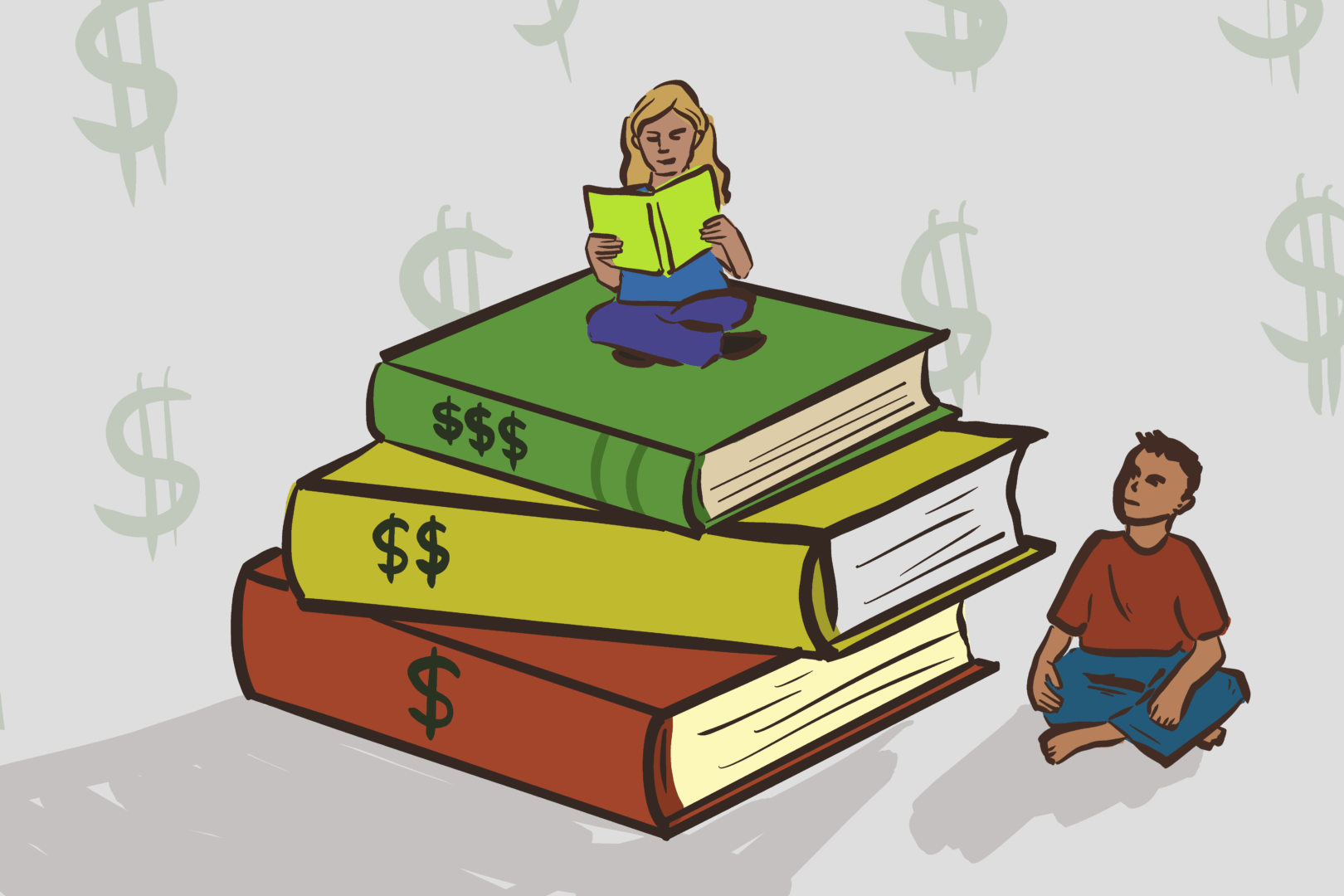
The price tag on quality education

Lily Huynh/The Cougar

The school board meeting was unusually crowded. A hot-button education issue was afoot. A typically empty seating area now brimmed with parents talking over one another; the silence that signals contentment was nowhere to be found.

The school district had devised a redistricting plan that would send their children to a different, worse school, rendering years of careful planning about where to live seemingly meaningless.

School redistricting is just one of the many obstacles parents face in their ongoing effort to provide their child with a good education.

They had cast aside family supper for a cause of the utmost importance. Bound by something stronger than agreement or familiarity, they were united by concern for their children.

Failing to provide a good education for their children is one of the greatest fears parents face. This fear comes from the enormous advantage a good education provides and, in contrast, the lifelong disadvantage a poor one creates. A quality education should not depend on whether parents can afford thousands of dollars in tuition or on the particular area where a family lives.

Education Inequality

Many Americans today are aware of wealth inequality, but few notice the substantial educational imbalance. School ratings and funding are closely correlated with housing prices and tuition, creating an educational barrier for children from low-income households. 

Public school funding, to a large extent, is funded by local property taxes. This funding structure means that public schools in low-property-value areas receive less funding.

These areas are often poorer, which puts their schools at a significant disadvantage. Adequate funding is necessary for teacher retention and for classroom resources; without it, school quality suffers. 

Public school quality not only shapes housing prices but also increases the property values of households zoned to higher-performing schools. This dynamic further excludes lower-income families from living near strong public schools. 

For example, Carroll Independent School District in Dallas has an average school rating of 9, and housing prices in the area reflect this quality. The median home price is $1.7 million, which is 391% higher than in surrounding metropolitan areas.

Private school and the class divide

Private schools provide an alternative for higher-income families when their household is not zoned to a strong public school. Lower-income households don’t have the same luxury since the average cost of K-12 private schools in America is $12,970/Year. Private schools often provide lower class size, more funding per student and have substantially better teacher retention. 

In the U.S., wealthy families have the privilege of choosing their children’s education, as the cost of undereducation carries far fewer consequences for them than any tuition price. Underprivileged families, on the other hand, must juggle housing, tuition and school quality, all while the risk of their child being placed at a disadvantage looms over them.

Class and occupation are largely determined by a person’s education and socioeconomic status. When we structurally divide lower-income families to lower-performing schools, we are, in essence, solidifying people in the class they were born into.

A Step Backwards

Recently, in the U.S., we have implemented measures defunding public education and educational grants under the guise of freedom of choice and unnecessary bloat. 

School vouchers have become a mainstay in many states, such as Florida and Arizona, with advocates arguing they offer expanded school choice and an opportunity for low-income students to attain a higher-quality education. 

This is a policy that could have its merits if it weren’t shown to be largely ineffective and a ruse to cut public education funding, while funding private, often religious institutions. 

A substantial number of people who make use of school voucher funds are not low-income and are already attending private schools.  In Florida, 69% of applicants to the voucher program were already enrolled in private schools beforehand. Furthermore, even when states impose income caps like Iowa, the wealthier classes still benefit largely over poorer communities. 

In Texas, state vouchers would provide $10,800 per child, but that falls short of the average Texas private school tuition of $14,906, cutting off many lower-income families. This shows that the main benefactors of school vouchers are mostly middle-income families or people already enrolled in private schools. Lower-income children who are in the most dire need of tuition funds do not benefit at a high enough rate to justify school vouchers. 

School vouchers, in addition to being ineffective for lower-income families, also defund public schools by lowering public school enrollment and increasing educational spending without any funds going to public schools. 

Building a fairer education system

It is a much better policy to shift the funding of public schools away from local property taxes and make it more reliant on state and federal funding, reducing educational inequality. In addition, expanding magnet school programs provides more school choice options for students regardless of income.

Education is not simply an issue that affects children; it influences every corner of American society, from higher civic engagement to lower poverty and crime rates. A child’s educational quality should not be limited by their family income, only by their desire to attain academic excellence. The educational policies and politicians we support today shape America’s future prosperity.

Opinion@thedailycougar.com

—
“The price tag on quality education” was originally posted on The Cougar

Posted in UncategorizedComments Off on The price tag on quality education

Why one bad semester doesn’t define you

Nina To/The Cougar

The end of the semester has a climactic feel. It evokes the same feelings as the anticipation of asteroids hitting the dinosaurs or James Bond running to disarm a bomb. Time is running out. 

Time to fix your grade, time to meet and hang out with friends, time to figure out your future. Everything feels like it is slipping out of your reach. It’s even worse as the next semester starts, and you try to avoid the same mistakes you made. 

Anxiety and distress encapsulate your mind as you wonder where the once-long semester went. The resolution of these feelings is the introduction of joy or sorrow that follows you around when the semester officially ends. 

Whatever those feelings may be, satisfaction or disappointment, it is important to realize that life does not end here. The trials and tribulations of life are much longer than one semester.

Failure, regret and the weight of “what if”

The feelings that surround a student at the end of the semester are often ones people hope to forget. The anguish of failing a class, the regret of things done and not done and the unease of your future are common feelings. 

It would be easy to sing you the melodies of Hakuna Matata or to naively tell you that your mistakes this semester are a one-time thing and that it will get better next semester. That would be ignoring reality, that would be ignoring your problems. 

It is a much more mature approach to realize that everything matters, big or small and that those things compound your life. This one semester could snowball into continued disappointment or it can be cleanly resolved. People are often quick to excuse a bad semester, pointing to a string of bad luck or carelessness; you must not fall into that trap. 

Our own agency is truly the only thing we can trust in this wacky and nonsensical world. That may sound harrowing, but it brings clarity and ease to know that trying your best is the only correct thing you can do. 

If you try your best to reach the upper echelons of success, even if you fall short, you are much more likely to land on solid ground.

At whatever point of failure you are in school, there is not an ounce of impossibility in achieving success. Even in the gloomy fields of a one-time F or the depths of possibly dropping out, success is still within reach. This rings true especially when it comes to achieving success in college, a significant step down from the impossible. 

College is meant to push you, not break you

That withdrawal or F may hit like a sucker punch, but it is just as much a friendly wake-up call that you must change something. Many people, especially freshmen, feel horrified at the sight of failure and believe they aren’t cut out for college.

That feeling of worry is unwelcome, but it is often unavoidable for many people. 

That worry is often a nonsensical response and a falsehood unless you make it true. The least successful students are not those who deem themselves inadequate; they are those who give up or stop trying.

College may seem like it is designed to weed out or fail you, but in actuality, the sole purpose is to challenge you so you can succeed. The resources they provide, with free tutoring, workshops and assignment help, show the school wants your success more than you do. 

Life, and by extension, college, is a series of problems, and that fact leads people to moan and feel gloomy. Instead, people should seek to rise above that typical cynicism and view each challenge as a chance to lead a better life.

The end of the semester is not the end of the world; it is a time to reflect and move on. What may seem like a gigantic distress in the moment is often just a familiar and solvable obstacle. If James Bond can disarm that bomb, save his love interest and still make it to evening tea, then you will be fine.

opinion@thedailycougar.com

—
“Why one bad semester doesn’t define you” was originally posted on The Cougar

Posted in UncategorizedComments Off on Why one bad semester doesn’t define you

The ad wars: a broken social contract between companies and consumers

As soon as an ad takes over our screen, the immediate reaction is irritation. We’ve all had this implicit response to a pop-up or a minute-long ad when we innocently click on a video or a link. It is impossible in this day and age to avoid them. They have crept into even the most sacred places in our lives: theaters, cars and even our own homes. 

Ads have gone beyond being a simple marketing tool we tolerate for a company’s benefit and have become fatiguing to consumers. Endless, intrusive and harmful ads have ruined public trust in advertising and weakened its impact. 

Attack of the ads

Ads, particularly online ads, have gone beyond their initial role as a marketing tool and become a weaponized force of misinformation, scams and fraud. In the digital age, advertising was once a mutually beneficial arrangement between consumers and companies.

The social contract was simple: a platform provides content and information to a user, and in exchange, the user grudgingly accepts ads to help the platform earn revenue. This was the social contract we all accepted as we entered the internet age, where most news and content were free to access. 

This has gone terribly wrong since that basic agreement was made and companies have crossed the bounds of peaceful usage and declared war. 

Major companies such as Facebook and YouTube have been running malware-ridden, counterfactual and fraudulent advertising on their websites. 

Initially, consumers agreed to support websites through advertising, under the impression that it would be a safe and minor inconvenience for users. They foolishly struck a devil’s bargain.

Many companies make fortunes from advertising, such as Google, which generates annual revenue of more than $200 billion. Though they still fail to spend or screen adequately to protect consumers. 

When users become victims of malicious, malware-ridden ads, they are left helpless with no support from the “user-friendly” companies that host these ads and claim to offer a safe environment. 

Many companies selfishly include specific clauses in their terms of agreement, making them not liable for damages caused by advertisers they allow on their site.

The failure of these companies to protect consumers from numerous instances of harmful ads has disrupted the peaceful coexistence of digital marketing and advertising. 

Revenge of the consumer

In response to major companies’ unwillingness to properly vet their advertisers and to the nonstop, perpetual marketing, consumers have fought back. They now push back by using ad blockers and ignoring advertising.

Ad blockers have become a staple on many people’s personal phones and computers; almost a third of internet users use them as of 2024. In 2012, only 44 million people used ad blockers; that number has increased rapidly to 900 million today, in response to the large pool of hostile ads that swarm the internet. 

The increasing prevalence of ad blockers and cracked software that block malicious ads has a secondary consequence: harming companies that rely on ad revenue to earn profits. This affects many small companies and news sites that have no other primary revenue source besides advertising. 

In 2024, publishers lost $54.9 billion in potential revenue due to ad blockers, a figure that will continue to increase as ad-block users rise.

Consumers have also rebelled against the growing prevalence of intrusive and malicious ads by simply ignoring them. About 67 percent of consumers admit to “banner blindness,” intentionally ignoring ads completely.

The consumer’s retaliation is well-intentioned, aimed at avoiding malicious and intrusive ads. Still, it is a net negative for society as it results in revenue losses for many blameless companies and individuals. 

The advertisers strike back

The war between advertisers and consumers is ongoing, with many companies firing back using ammunition such as ad blocker detection and takedowns of cracked software, furthering the perpetual battle. 

Tools that block ad-blocker users and take down ad-filtering software do little to resolve the ongoing stalemate in advertising. Ad-blocking software is unstoppable with its increasing usage and the multiple methods of ad-blocking. 

Continuing this crusade will result in an endless game of cat and mouse that holds no winners. If companies don’t take the necessary measures to prevent harmful ads on their sites, consumers will continue to respond by using ad blockers or by ignoring ads.

On the flip side, consumers need to make informed choices, such as using ad blockers only on malicious sites and encouraging responsible advertising practices. If they fail, they will prevent many companies, creators and employees from earning sufficient revenue. 

The arms race for control of ads is harmful to both companies and consumers; it is insufficient at protecting consumers and supporting businesses and people. The enemy in this conflict should be those who deliberately or out of ignorance seek to harm consumers and, consequently, affect businesses. 

The only way to achieve this is by making a united front, both consumer and company, towards better practices. Companies should refrain from overwhelming consumers with intrusive ads, and consumers, in turn, should be intentional about when they rely on ad blockers. Ultimately, victory for both parties will only be achieved when they come together and stand for a better tomorrow.

opinion@thedailycougar.com

—
“The ad wars: a broken social contract between companies and consumers” was originally posted on The Cougar

Posted in UncategorizedComments Off on The ad wars: a broken social contract between companies and consumers