
Author Archives | Alan Zamora

The ad wars: a broken social contract between companies and consumers

As soon as an ad takes over our screen, the immediate reaction is irritation. We’ve all had this implicit response to a pop-up or a minute-long ad when we innocently click on a video or a link. It is impossible in this day and age to avoid them. They have crept into even the most sacred places in our lives: theaters, cars and even our own homes. 

Ads have gone beyond being a simple marketing tool we tolerate for a company’s benefit and have become fatiguing to consumers. Endless, intrusive and harmful ads have ruined public trust in advertising and weakened its impact. 

Attack of the ads

Ads, particularly online ads, have gone beyond their initial role as a marketing tool and become a weaponized force of misinformation, scams and fraud. In the digital age, advertising was once a mutually beneficial arrangement between consumers and companies.

The social contract was simple: a platform provides content and information to a user, and in exchange, the user grudgingly accepts ads to help the platform earn revenue. This was the social contract we all accepted as we entered the internet age, where most news and content were free to access. 

This has gone terribly wrong since that basic agreement was made and companies have crossed the bounds of peaceful usage and declared war. 

Major companies such as Facebook and YouTube have been running malware-ridden, counterfactual and fraudulent advertising on their websites. 

Initially, consumers agreed to support websites through advertising, under the impression that it would be a safe and minor inconvenience for users. They foolishly struck a devil’s bargain.

Many companies make fortunes from advertising, such as Google, which generates annual revenue of more than $200 billion. Though they still fail to spend or screen adequately to protect consumers. 

When users become victims of malicious, malware-ridden ads, they are left helpless with no support from the “user-friendly” companies that host these ads and claim to offer a safe environment. 

Many companies selfishly include specific clauses in their terms of agreement, making them not liable for damages caused by advertisers they allow on their site.

The failure of these companies to protect consumers from numerous instances of harmful ads has disrupted the peaceful coexistence of digital marketing and advertising. 

Revenge of the consumer

In response to major companies’ unwillingness to properly vet their advertisers and to the nonstop, perpetual marketing, consumers have fought back. They now push back by using ad blockers and ignoring advertising.

Ad blockers have become a staple on many people’s personal phones and computers; almost a third of internet users use them as of 2024. In 2012, only 44 million people used ad blockers; that number has increased rapidly to 900 million today, in response to the large pool of hostile ads that swarm the internet. 

The increasing prevalence of ad blockers and cracked software that block malicious ads has a secondary consequence: harming companies that rely on ad revenue to earn profits. This affects many small companies and news sites that have no other primary revenue source besides advertising. 

In 2024, publishers lost $54.9 billion in potential revenue due to ad blockers, a figure that will continue to increase as ad-block users rise.

Consumers have also rebelled against the growing prevalence of intrusive and malicious ads by simply ignoring them. About 67 percent of consumers admit to “banner blindness,” intentionally ignoring ads completely.

The consumer’s retaliation is well-intentioned, aimed at avoiding malicious and intrusive ads. Still, it is a net negative for society as it results in revenue losses for many blameless companies and individuals. 

The advertisers strike back

The war between advertisers and consumers is ongoing, with many companies firing back using ammunition such as ad blocker detection and takedowns of cracked software, furthering the perpetual battle. 

Tools that block ad-blocker users and take down ad-filtering software do little to resolve the ongoing stalemate in advertising. Ad-blocking software is unstoppable with its increasing usage and the multiple methods of ad-blocking. 

Continuing this crusade will result in an endless game of cat and mouse that holds no winners. If companies don’t take the necessary measures to prevent harmful ads on their sites, consumers will continue to respond by using ad blockers or by ignoring ads.

On the flip side, consumers need to make informed choices, such as using ad blockers only on malicious sites and encouraging responsible advertising practices. If they fail, they will prevent many companies, creators and employees from earning sufficient revenue. 

The arms race for control of ads is harmful to both companies and consumers; it is insufficient at protecting consumers and supporting businesses and people. The enemy in this conflict should be those who deliberately or out of ignorance seek to harm consumers and, consequently, affect businesses. 

The only way to achieve this is by making a united front, both consumer and company, towards better practices. Companies should refrain from overwhelming consumers with intrusive ads, and consumers, in turn, should be intentional about when they rely on ad blockers. Ultimately, victory for both parties will only be achieved when they come together and stand for a better tomorrow.

opinion@thedailycougar.com

—
“The ad wars: a broken social contract between companies and consumers” was originally posted on The Cougar
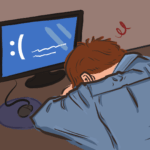
Posted in UncategorizedComments Off on The ad wars: a broken social contract between companies and consumers

The ad wars: a broken social contract between companies and consumers

As soon as an ad takes over our screen, the immediate reaction is irritation. We’ve all had this implicit response to a pop-up or a minute-long ad when we innocently click on a video or a link. It is impossible in this day and age to avoid them. They have crept into even the most sacred places in our lives: theaters, cars and even our own homes. 

Ads have gone beyond being a simple marketing tool we tolerate for a company’s benefit and have become fatiguing to consumers. Endless, intrusive and harmful ads have ruined public trust in advertising and weakened its impact. 

Attack of the ads

Ads, particularly online ads, have gone beyond their initial role as a marketing tool and become a weaponized force of misinformation, scams and fraud. In the digital age, advertising was once a mutually beneficial arrangement between consumers and companies.

The social contract was simple: a platform provides content and information to a user, and in exchange, the user grudgingly accepts ads to help the platform earn revenue. This was the social contract we all accepted as we entered the internet age, where most news and content were free to access. 

This has gone terribly wrong since that basic agreement was made and companies have crossed the bounds of peaceful usage and declared war. 

Major companies such as Facebook and YouTube have been running malware-ridden, counterfactual and fraudulent advertising on their websites. 

Initially, consumers agreed to support websites through advertising, under the impression that it would be a safe and minor inconvenience for users. They foolishly struck a devil’s bargain.

Many companies make fortunes from advertising, such as Google, which generates annual revenue of more than $200 billion. Though they still fail to spend or screen adequately to protect consumers. 

When users become victims of malicious, malware-ridden ads, they are left helpless with no support from the “user-friendly” companies that host these ads and claim to offer a safe environment. 

Many companies selfishly include specific clauses in their terms of agreement, making them not liable for damages caused by advertisers they allow on their site.

The failure of these companies to protect consumers from numerous instances of harmful ads has disrupted the peaceful coexistence of digital marketing and advertising. 

Revenge of the consumer

In response to major companies’ unwillingness to properly vet their advertisers and to the nonstop, perpetual marketing, consumers have fought back. They now push back by using ad blockers and ignoring advertising.

Ad blockers have become a staple on many people’s personal phones and computers; almost a third of internet users use them as of 2024. In 2012, only 44 million people used ad blockers; that number has increased rapidly to 900 million today, in response to the large pool of hostile ads that swarm the internet. 

The increasing prevalence of ad blockers and cracked software that block malicious ads has a secondary consequence: harming companies that rely on ad revenue to earn profits. This affects many small companies and news sites that have no other primary revenue source besides advertising. 

In 2024, publishers lost $54.9 billion in potential revenue due to ad blockers, a figure that will continue to increase as ad-block users rise.

Consumers have also rebelled against the growing prevalence of intrusive and malicious ads by simply ignoring them. About 67 percent of consumers admit to “banner blindness,” intentionally ignoring ads completely.

The consumer’s retaliation is well-intentioned, aimed at avoiding malicious and intrusive ads. Still, it is a net negative for society as it results in revenue losses for many blameless companies and individuals. 

The advertisers strike back

The war between advertisers and consumers is ongoing, with many companies firing back using ammunition such as ad blocker detection and takedowns of cracked software, furthering the perpetual battle. 

Tools that block ad-blocker users and take down ad-filtering software do little to resolve the ongoing stalemate in advertising. Ad-blocking software is unstoppable with its increasing usage and the multiple methods of ad-blocking. 

Continuing this crusade will result in an endless game of cat and mouse that holds no winners. If companies don’t take the necessary measures to prevent harmful ads on their sites, consumers will continue to respond by using ad blockers or by ignoring ads.

On the flip side, consumers need to make informed choices, such as using ad blockers only on malicious sites and encouraging responsible advertising practices. If they fail, they will prevent many companies, creators and employees from earning sufficient revenue. 

The arms race for control of ads is harmful to both companies and consumers; it is insufficient at protecting consumers and supporting businesses and people. The enemy in this conflict should be those who deliberately or out of ignorance seek to harm consumers and, consequently, affect businesses. 

The only way to achieve this is by making a united front, both consumer and company, towards better practices. Companies should refrain from overwhelming consumers with intrusive ads, and consumers, in turn, should be intentional about when they rely on ad blockers. Ultimately, victory for both parties will only be achieved when they come together and stand for a better tomorrow.

opinion@thedailycougar.com

—
“The ad wars: a broken social contract between companies and consumers” was originally posted on The Cougar

Posted in UncategorizedComments Off on The ad wars: a broken social contract between companies and consumers

UH’s computer science program needs to adapt

Lily Huynh/ The Cougar

Earlier this August, the New York Federal Reserve Bank reported that Computer Science majors faced a 6.1% unemployment rate upon graduation. This is the 7th-highest among all majors reported, and above fields that many would consider “dead,” such as journalism and philosophy. 

To combat this weariness, the University of Houston must adapt its program to the shifting job market and set current and future students up for success.

Days Past

Computer Science was, for a period, the “it” major for incoming college students; it was a must for any college student seeking a high salary and lucrative benefits. The phrase “learn to code” was the catchphrase for thousands of career advisors. Those days are a forgone memory.

Many blame the expansion of AI tools for the decrease in opportunities and jobs available, but that is nothing more than a red herring for a larger issue. In reality, employment for software developers is projected to grow by more than 17% by 2033, according to the Bureau of Labor Statistics.

What matters more is the enormous growth of CS degrees, which increased by 4.9% annually from 2019 to 2024, while Big Tech entry-level employment rates dropped 50%  from pre-pandemic levels in 2019. 

Furthermore, only 40% of computing instructors say their graduates are sufficiently prepared to enter the workforce. 

Oversaturation and lower hiring rates make one thing clear: the program needs to change. UH needs to better prepare students and transform the course catalog to meet industry demands across various subfields of Computer Science. 

In addition, there is a need for greater availability of high-demand classes such as artificial intelligence programming and security analytics.

Adapting to the times

The computer science curriculum and course catalog have remained largely untouched since the early 2010s, a contrast to the ever-changing field of computer science. Classes like operating systems, data structures and database systems will remain pillars of the science forever. 

Having said that, it is also important to consider the employment landscape when deciding to add or remove courses from the course catalog.

Artificial intelligence, for example, is a field experiencing astounding growth, with a 25.2% from 2024 to 2025. The computer science program currently offers a Fundamentals of Artificial Intelligence course, but for the upcoming spring semester, there is only one class available that many upperclassmen are scrambling to get into. 

Cybersecurity is another booming field facing the same dilemma, with only one class available this spring. Cloud computing is another ever-growing subfield for which the department fails to provide adequate courses. 

The field is expected to grow by 25% over the next decade; UH would be doing a disservice to its students by not offering a cloud computing course or other thriving areas in computer science.

An emphasis on specialization and tracks within the program would also benefit students’ employability by enabling them to have a deeper understanding of a CS subfield.

Building pathways for the future

Currently, the computer science degree plan requires students to take nine core computer science courses totaling 30 hours, plus 15 credits of electives. A decrease in the number of required base classes, along with an increase in elective hours available, would allow students to build stronger expertise. 

The capstone system, while intended to fulfill that function, is too limited in senior sequences to serve that purpose fully. Many universities in direct competition with UH, such as UTSA, have computer science programs with multiple tracks and a deep course catalog for each pathway. 

Meanwhile, the number of available capstone paths at UH has increasingly become slim, with the recent elimination of the cybersecurity capstone. An easy way to expand the elective course catalog is to add courses from other majors closely related to computer science. Remote sensing and Introduction to Data Science and Machine Learning are two such courses closely connected to the field.

The field of computer science is facing an uncharacteristic rough patch in its otherwise rich existence. The department, students and professors must work together to transform the program to match the inherently shifting demands the field is advancing towards. In times of great change, those who fail to adapt are left unrewarded. We must meet the moment.

opinion@thedailycougar.com

—
“UH’s computer science program needs to adapt” was originally posted on The Cougar

Posted in UncategorizedComments Off on UH’s computer science program needs to adapt