Author Archives | Zoie Konneker

Discussing “Nostalgic Futures”

The Tech Graphics, Visualization and Usability (GVU) Center hosted an exhibit celebrating twenty-five years of research. This exhibit, “Nostalgic Futures: 25 Years of Reimagining the Future,” was on display in the third floor Winsett Gallery of the Clough Undergraduate Learning Commons from November 2018 through January 2019.

The exhibit contained video interviews with members of the GVU Center, such as James D. Foley, Stephen Flemings Chair in the School of Interactive Computing, Keith Edwards, the GVU Center Director, and Elizabeth Mynatt, the executive director of the Institute for People and Technology and former director of the GVU Center at Tech.

“When GVU first got started, its mission was really about improving the human experience through technology,” Edwards said in the exhibit. “We thought about putting pretty pictures on the screen and how to visualize data sets on the screen and how to use this fairly new invention called the mouse to make user interfaces better.”

Since its creation, the GVU Center has taken an interdisciplinary approach to technology, one of the first groups of its kind to do so. 

“There was this interest of bringing together the world of graphics and the world of how things looked on the screen with the world of interaction. And to do that well, we needed expertise in design and psychology and computing, and GVU was the first effort on campus to bring all of those people to the same table,” Mynatt said during the exhibit.

Last Thursday, two Nostalgic Futures curators, Laura Levy and Clint Zeagler, held a discussion about their exhibit in the retroTECH Lab, along with Library Exhibits Manager Kirk Henderson.

The retroTECH Lab is located in the Data Visualization Lab on the third floor of the Main Library. It displays a number of decades-old computer games and technology, each previously owned by a member of the Tech community. The mission of retroTECH is to inspire technological discovery based on past technology.

“Today’s program is just a further iteration of our effort to … preserve the aspects of Georgia Tech’s research and its contribution to the digital and educational culture,” Henderson said. This event is also the beginning of a continued collaboration between the Library and the GVU Center.

Laura Levy works as a human factors psychologist in Tech Interactive Media Technology Center, and she takes a behavioral approach to understanding technology. 

“Good technology should just be seamlessly integrated in our lives, it shouldn’t be something we struggle with, but I still use a lot of the same techniques and methods that I was using as a biologist,” Levy said.

Clint Zeagler is a research scientist for the Interactive Media Technology Center and an instructor in the School of Industrial Design. Zeagler teaches courses on wearable product design.

“In the beginning, [GVU] started with user interface and graphics, [and] the point was how do people interact with the computer in a way that they should, or is easiest for them, and for me, to do that, you have to reach out beyond just having great computer scientists, you have to have people with human factors, and psychology, so it’s this umbrella of people … that work together in groups. And it still does that. That’s how I got involved,” Zeagler said.

One focus of the GVU Center has been working on toolkits for creating video-user interfaces.

“I developed something called the User Interface Design Environment, which was a set of tools which were designed to make it easier to build [user interfaces],” Foley said. “The system would do some reasoning based on back-chaining and show by moving the mouse around on the screen and also speaking what I should do to carry out the goal I had in mind.”

“The one thing that I think consistently the GVU Center did correctly throughout the years was create ways for other people to design and work together,” Zeagler said, reflecting on the UI toolkits that the GVU Center created. “They were trying to create mechanisms, toolkits and ways for other people to get together who might be smarter in the human factors and the psychology of why something should happen.”

One GVU Center project that the Nostalgic Futures exhibit highlighted was the Aware Home. It opened up in May 2000 and received lots of industry support and large grants from the NSF. The aim of the project was to create a comfortable home setting for the aging population by using technology to tap into the infrastructure of the house.

“We will all experience some disability over our lifespan, whether that is losing our vision, or hearing, or mobility. As we age, these pieces of tech with sensors help us be empowered in our own homes,” Levy said.

The exhibit also touches on the future of the GVU Center, and what their research might look like in the next 25 years.

“Fundamentally, GVU’s overall mission is still the same, it’s to improve the human experience through technology, but the ways we do that now are much more broad-reaching than they ever were in the past,” Edwards said in the exhibit.

For more information about the Nostalgic Futures exhibit and the GVU Center, visit their website gvu.gatech.edu.

Posted in UncategorizedComments Off on Discussing “Nostalgic Futures”

McCann draws national attention for play

Georgia native Kyle McCann, the catcher for the Jackets baseball team, is playing phenomenally this season as one of the country’s best college players. According to D1Baseball.com’s power rankings, he is currently the second best catcher in the NCAA. McCann earned All-ACC Third Team honors last season, so his success this season is not without precedent. Still, his improvement and performance thus far in 2019 has captured the attention of not only Tech fans, but major league teams as well.

McCann’s batting ability stands out as the defining aspect of his game. Currently boasting a slashline of .346/.507/.779, he has drastically improved from his already impressive .300/.423/.600 line of last year. McCann leads the team in total bases (81), doubles (9), and home runs (12), recording twice the amount of home runs as the next highest player on the team — in a potent Tech offense, McCann’s offensive prowess stands out. McCann also leads Tech in runs batted in (37) and games played/started (29). Making big plays is important, but dependably hitting the ball, avoiding outs and earning runs for the team is perhaps even more important. McCann’s rare combination of consistency and power makes him a top-tier batter and an invaluable asset to the Jackets.

On the flip side, McCann’s position as catcher means he has a direct relationship with each pitcher on the roster. Although not directly apparent to spectators during the game, his role as catcher is very important to the team’s defensive success. The catcher manages the game, keeping track of strengths and weaknesses of whichever pitcher is on the mound and recommending pitches accordingly to get the current batter out. With six different pitchers having started at least one game this season, the amount of work and skill that McCann needs to excel at the position is impressive. The fact that he is able to balance the demands of being a catcher with his focus on batting, though, is even more impressive. 

McCann’s exceptional play this season is one of many contributors to the Jacket’s success as a whole. Coming off a resounding victory against No. 15 Auburn, Tech has now amassed five wins against top-15 teams and sits at the number two spot in the ACC Coastal behind NC State, their next match up this coming weekend. The team has clearly shown potential for competing at the highest level with its triumphs over top-ranked teams such as Georgia. Kyle McCann’s continued excellence on the field is necessary for the Jackets to realize that potential down the stretch and into the ACC Championship in late May. 

McCann’s torrid pace at the plate has not only drawn attention for the impact it might have on Tech’s ACC standing, however — as a junior, McCann is eligible to be drafted by a major league team this June, and his stock has skyrocketed thanks to his performance. Multiple MLB scouts were in attendance at Tech’s midweek game against UGA late  last month, and while McCann only went 0-2 with two walks against the Bulldogs, his stock has remained strong. FanGraphs.com rates McCann as the 96th overall prospect for the 2019 June Amateur draft, noting his “big power bat” but also cautioning that “most scouts thing he’s a first baseman long term”. 

Still, if McCann can stick behind the plate, it could make him the latest in a long line of Tech catchers to find success on draft day. Tech has graduated All-Star catchers like Jason Varitek and Matt Wieters, and McCann’s predecessor at his position, Joey Bart, was taken No. 2 overall in last year’s draft by the San Francisco Giants. McCann’s sterling performance has carried on the legacy of some of Tech baseball’s legends.

But the focus for McCann still lies on the field, not on draft day. Despite Tech’s exemplary performance to date, in the crowded and talented ACC field, anything can happen. For McCann, the cornerstone of Tech’s lineup, to help his team to the postseason means he must keep on keeping on.

Posted in UncategorizedComments Off on McCann draws national attention for play

Baseball keeps rolling against top competition

A remix of Ray Charles’ “Hit the Road Jack” pipes in over the loudspeaker. Spilling over the fence separating the wall and the dugout, players lean over, bobbing their heads along. The beat builds, builds, builds and drops. The players leap up, pumping fists in time. Starter Xzavion Curry takes it a step further, jumping the fence and boogie-ing down on the field to the tunes, as Tech baseball celebrates knocking yet another starting pitcher out of the game. It’s a good time to be a Jacket. 

Indeed, Tech has had much to celebrate these past few weeks. In what appeared to be their roughest stretch of schedule, with a road series against No. 14 Louisville and back-to-back midweek games against No. 11 Georgia and No. 17 Auburn, Tech has instead solidified their tournament resume, going 4-1 in those games. Embarrassing Georgia 11-2 in a rain-shortened affair after going winless against the Bulldogs for two years couldn’t hurt morale either.

After dropping their ACC-opening road series against Miami 1-2, Tech has not lost an ACC series, winning a close three game set at home against Virginia, coming within one out of sweeping Louisville on the road — just missing out on being the first team to sweep the Cardinals in a three game road-series since 2005 — and handling the Notre Dame  Fighting Irish this past weekend.

Tech is still in search of its first conference sweep — hence its relatively weak conference record of 7-5 — but Tech has still looked like every bit the ACC powerhouse preseason evaluators predicted it to be. Tech might have just easily been 9-3 if the Jackets had avoided some late-game bullpen breakdowns, but there’s no changing the past — and Tech is charging forward at full steam.

Surprisingly, Tech has not been buoyed over their most recent stretch by Kyle McCann, who has cooled off after opening the season as the East Coast’s best hitter — rather, Tech’s superb starting pitching has carried them through this stretch. Curry thoroughly dismantled the Cardinals’ offense in Tech’s first game of the series, limiting Louisville to just one hit and one earned run on eight innings of work. Not to be outdone, stellar southpaw Connor Thomas hurled a complete game shutout in the following game. The Jackets held Louisville, averaging 6.2 runs per game, to just five runs total over the series.

Indeed, Tech’s starting pitchers are turning heads everywhere. After being named D1Baseball.com’s best draft eligible pitcher entering the season, Thomas was named ACC pitcher of the week following his performance against Louisville, and Sunday starter Brant Huerter was highlighted by FanGraphs.com as a pitcher whose draft stock is steadily rising. While McCann has been the obvious attraction for the Jackets, Thomas and Curry — both draft eligible this year — might yet find some attention from MLB teams on draft day, as may other Tech juniors. Indeed, at last week’s midweek game against UGA, numerous MLB scouts were in attendance despite the rainy weather.

Tech’s position players have also contributed through this stretch as well — OF Baron Radcliffe, who struggled last year to the tune of a .180/.229/.348 line, has been heating up, hitting three home runs during Tech’s gauntlet against top-25 teams, and DH Michael Guldberg is hitting at an incredible .467 clip for Tech.

Tech’s journey to the postseason still has a way to go — after all, Tech still has road and neutral-site games against Georgia on the docket, and an entire half of ACC baseball play to go. Still on the docket? ACC powerhouses like UNC and Clemson.

Still, Tech can look on their most difficult stretch of baseball in the rearview mirror and know that they rose to the challenge and excelled. With top-25 wins notched in their belt, Tech can step up to the plate each game with a bit more swagger — they’ve been through the gauntlet already. Opposing teams, take your best shot — at your own risk.

Posted in UncategorizedComments Off on Baseball keeps rolling against top competition

Collins gives reporters glimpse behind the scenes

It is a few minutes before 7 a.m. on a Tuesday morning, but the Edge Center, home to Tech football’s offices, is buzzing. 

Seated in a conference room, the thumping of loud hip-hop music from a nearby room is audible. Around the long table are reporters. At one end, Tech brand manager Santino “Morpheus” Stancato is hard at work capturing photos and video. On the screen is the schedule for the day’s practice, listing various drills and workouts. The group of reporters I am sitting with are reminded that we cannot share it publicly — although given the Byzantine language in which it is written, it seems hard to believe that anyone outside of the Tech coaching staff could understand it, let alone use it to their advantage. 

At the head of the table is new head coach Geoff Collins. To his right is a plastic foam cup of coffee from Waffle House, a brand he has promoted since his first day on campus. To his left is a stuffed possum, perhaps emblematic of Tech football’s dormancy in recent years, approaching a streak of nearly four years without a single AP Top 25 weekly ranking. In front of him is a book whose title aptly describes the urgency of his job — Recruit or Die.

It is a few minutes after 7 a.m. now, but Tech’s Media All-Access Day has just begun. Collins explains that a similar event he hosted at Temple last season was a success, so he decided to bring it to Atlanta. The goal was to give the journalists who cover the team a chance to experience its inner working, if only for a single day nearly six months removed from the start of the season. At the moment, it’s mission accomplished.

At 7:04, Collins’ introductory meeting ends and the journalists file into a large auditorium for an offensive meeting. Collins noted that day that he dislikes walking into quiet rooms so directs his staff to play loud music minutes before meetings are schedule to begin. That explains the thumping. The offense launches into a rowdy sing-along to Young Jeezy’s “Put On”, and as it concludes, the meeting begins. Leading the session is offensive coordinator Dave Patenaude, who followed Collins from Temple. Patenaude’s loud, distinctly Northeastern voice and aggressive pacing across the floor make him a magnetic force. 

After discussing important game situations and speculating on what defensive coordinator Nate Thacker might have prepared for the day’s practice, Patenaude breaks the offense into their position groups and sends them to various meeting rooms. Like most of the writers, I follow the quarterbacks, eager to see early signs of their transition from a triple-option offense to a more conventional attack. It is a meticulous, academic affair. Patenaude diagrams plays on the board and emphasizes the importance of communication, occasionally asking the quarterbacks questions to test their understanding of the playbook. Lucas Johnson, considered by some to be the odds-on favorite to start next season, responds with a few questions of his own. Soon, it is time for the first full-team meeting of the day, and players, staff and journalists alike congregate to stream back into the team’s auditorium.

Music is once again blaring and a student assistant dances energetically at the front of the room. It is not yet 8 a.m., but two sing-alongs have already broken out this morning. This time, it is Collins who calls the meeting to order. He moves briskly through a presentation, mixing footage of the previous practice, housekeeping items and inspirational quotes. With the media present, Collins emphasizes the importance of his athletes developing good relationships with journalists and mentions that he is in the process of acquiring copies of Jeremy Darlow’s book ‘Athletes are Brands Too’. A key element of Collins’ brand becomes clear midway through the meeting when three students holding “$ Down” signs run to the center of the room and shout, “Money down!” repeatedly upon his request. A mainstay of Collins-coached teams, enthusiastic aides who signal that it is a defensive third down will make appearances in practices and eventually real, live games. 

After a few minutes, the meeting ends and the players, already donning their jerseys, begin walking towards the practice field. Over the course of just a few hours, I had sat in four meetings led by three different coaches. It is far too early to know how smooth the adjustment will be from Paul Johnson to Geoff Collins, particularly given that the team is overhauling both its offensive and defensive schemes in the process. And kicking off the season against defending national champion Clemson means that unlike in most recent seasons, the Jackets will not walk to an easy victory Week One. But if spring practice is any indication, Collins and his staff are well on their way to instill a new, loud, energetic culture.

Posted in UncategorizedComments Off on Collins gives reporters glimpse behind the scenes

Finding my place at Georgia Tech

Students at Tech seem to have widely varying opinions on the Institute, but a common theme seems to be their struggle. Whether it’s a struggle that leads to triumph or failure it usually decides their outlook on Tech, but like anywhere, there are positive and negative aspects. My personal story at Tech started poorly and got worse.

In August 2014, I moved into a four person room at Harrison Residence Hall. I was cheerfully greeted by my peer leader Nagela who later went on to become president of SGA. I was surrounded by excited and spirited students, but as an only child living in a packed room I was overwhelmed. I was used to silence and my immune system was not prepared for communal living. 

I was sick within a week and later caught mono which made me tired constantly, but with my living situation it was difficult to sleep during the day. I made some friends freshman year but never felt like I found a group I fit in with. My difficulty with friends and my living situation continued for four years at Tech, which then combined with stressful classes to wear on my mental health. 

Late in my sophomore year at Tech I was diagnosed with severe anxiety and depression that gave me constant nausea and impacted my grades. For years I struggled in classes and my personal life trying to feel like I belonged at Tech. Everyone seemed smarter and more driven than I did. I had moved to University House which helped the housing situation because I liked my roommates, but they were much closer to each other than they were to me.

During the second semester of my third year I was hired as the photography editor of the Technique. While I’ve enjoyed my time with the paper, everyone knows that when you start getting paid for a hobby it becomes a chore. The majority of my job has been scheduling which ranges from tedious to frustrating, but I’ve also had the incredible opportunity to photograph Music Midtown, Tech athletics and events all over Atlanta. Being photography editor was rewarding, but after stepping down I feel like a huge weight has been lifted off of me.

In my fourth year I got new roommates who I plainly did not get along with. They talked about me behind my back in the living room and I avoided the common areas of the apartment because I was intimidated. I was in a terrible place mentally and physically but I pushed on with classes and eventually entered my fifth and final year at Tech.

My fifth year in the chemical engineering program here has somehow proved to be my best. I’m not sure why this is but the best explanation I can come up with is that I found my place on the women’s water polo team. One of my only close friends at Tech convinced me to join and goes out of her way to drive me to practice. Not only have I made great and like-minded friends on the team; they also hold me accountable for my workouts which helps my mood. 

Another improvement this year has been my living situation. I moved into a two bedroom apartment with a random roommate who is incredibly nice and shares a cleanliness philosophy with me (I’ll clean it after my test). She has encouraged me to play sand volleyball with her, something I’ve wanted to do since I toured Tech, and she makes sure the apartment always smells like lavender. 

While reflecting on my time at Tech I have a lot of advice. Some of it is small and specific like buying rain boots and an umbrella before you need them and not skipping class — unless it’s really pointless — but I’d like to leave you with something more significant.                                                                                                           

Don’t get bogged down with negativity; you have enough stress from classes here, so don’t let anything else weigh on you. Do the things you’re passionate about unapologetically, which will hopefully lead you to great friends. To quote Dr. Seuss, find the people “whose weirdness is compatible with [yours]”. Finally, college is a time to develop your personality and mind, so be yourself and don’t stifle your personal growth for the sake of fitting in. 

It took years but I found my place at Tech and I hope you find yours. 

Posted in UncategorizedComments Off on Finding my place at Georgia Tech

One small word may save your sanity

Maybe it’s just me, but I have discovered that finding a way to utter that simple, one-syllable, two-letter word has been shockingly difficult, particularly in the past year. Somehow, when I try to say the word “no,” I get nervous and shaky — I begin to fear that look of disappointment on the person’s face opposite me and I scramble to think of how I’d possibly fit this new obligation into a time block on my already-packed schedule. 

It shouldn’t be so hard; It’s quite literally one of the easiest words to say, but the thought of having to tell someone no when I’m asked to help them with something or complete a task seems almost unimaginable. As I’ve gotten older, and as I’ve gotten more acquainted to Tech, it has become increasingly difficult to say it. 

I think that’s one of my greatest issues with the culture here at Tech, though I know it isn’t exclusive to our campus. The fact that there is this invisible weight, an unspoken expectation, to constantly be doing something. Because of that, my “break” times lead to a feeling of guilt and me searching for ways to fill it, and when I’m faced with the question “Can you do this,” my automatic response is “yes.” A response I regret later when I feel like I’m drowning in the work I told myself I needed to do. 

What my inability to say “no” leads to is me splitting my time and attention in so many different areas, and across so many different responsibilities, that I can no longer realistically do those things well. Grades begin to slip and meetings are missed, and I spent more time feeling overwhelmed with it all than I did feeling calm. 

I end up saying yes to so many things that those things lose their value; I cannot really give the things that matter the attention they deserve. 

Perhaps more importantly, I cannot really give myself the time I need, the time to be still and to take a break — something that is necessary if we want to do anything effectively. 

Either because I’m terrified of letting people, including myself, down or because I just feel this pressure to constantly be busy, I got to a point earlier this semester where I realized it just wasn’t feasible for me to try to do everything I had been doing. Between a full class load, a part time job and various campus involvements, I felt like I was drowning in the things that once kept me afloat here at Tech.  

We already work so hard as students. We have tons of responsibilities and obligations already before adding jobs, extracurriculars and social involvements on top of those things. These things are so necessary to making our college years enjoyable, and my student experience is only enriched by campus involvements and having interests outside of our school work. But, there is a balance to all of it. 

I’m currently in the process of learning that priorities are very, very important aspects of our lives. 

I remember growing up, my parents would always lecture me on priorities. I would tune them out, thinking I knew everything or thinking I could do everything. 

We don’t have to do everything. Actually, doing less allows us to really invest in those things we are doing. Something I’ve heard a lot is to “invest deeper not wider”, and I think that’s a piece of advice we could all use.

I also think that this is a lesson we all have to learn for ourselves. It can be hard to know just how much you can manage unless you take on too much. Sometimes, I think we all need to learn that taking on less isn’t a bad thing.

What’s worse, in my opinion, is staying in those unhealthy environments where life revolves around work, where everything feels planned and stressful. 

It is okay to step away from those responsibilities and to take time for the things you enjoy. I think once we do that, the things that we do prioritize can become more valuable parts of our lives. 

It’s important to realize that saying no is necessary and good. Since learning how to say that ironically simple word, I have found myself enjoying this semester again and actually feeling excited about the few things I have on my less-busy schedule. 

Posted in UncategorizedComments Off on One small word may save your sanity

Social media and the death of thoughtful discourse

Discussing problems with social media will always, 100 percent of the time, without fail, lead to someone stating that “Comparing yourself to others isn’t healthy.” That sentiment, ignoring the slew of data security concerns, makes up the bulk of discourse regarding problematic social media usage. Not only is this a heinous oversimplification of the issue, but it also completely ignores the deeper implications of a culture built around sharing. Social media is the most dangerous force in our society right now, and it has nothing to do with feeling inferior to people that we see on Instagram.

When I was a kid, going online meant withstanding a barrage of strange beeps and a slew of on-screen technical terms that I was too young to understand. America OnLine was connecting my parents’ computer to the world. As I matured, the web matured with me. By the time I was using computers regularly they were able to maintain a constant connection to the internet, putting the entire world onto a bulky white monitor in the Georgia suburbs.

As that massive screen grew smaller, the number of tasks it could accomplish doubled every day. MySpace hit the scene when I was just 12 years old, allowing me to transition from a consumer to a producer of digital information. I had previously only contacted friends when I had reason to, and the exchange happened directly over the phone, through email or, most often, through AOL Instant Messenger. With social media, I was able to share my day-to-day life with an ever-growing network of passive participants. Details that were once mundane had taken on a new significance. 

By the time Facebook rolled around, I had become accustomed to sharing simply for the sake of sharing. The paradigm of online communication had shifted and allowed us to remain tethered to the virtual world at all times. I didn’t have to wait until I got home to check my profile; The iPhone had allowed my digital presence to rest snugly at the hip of my physical one.

The small group of classmates that made up my digital network had ballooned into a list that included teammates, teachers and family members. Strangers and friends alike were able to access the content I shared, content that hadn’t adapted to an evolving audience. The internet was for sharing, to everyone and no one simultaneously.

All the while, we were becoming more and more accustomed to being fed information at, quite literally, lightspeed. Research was no longer constrained to library trips, and the news was no longer reserved to a particular television timeslot. People had the ability to become experts in things they would have otherwise never had a reason to think twice about. 

As consuming information moved from an active task to a passive one, we subconsciously yearned for a way to make use of it. The invention of the telegraph was followed closely by the invention of the crossword puzzle; when faced with an increase in useless information, we don’t discard it. We simply find ways make it useful.

News outlets took this overload of information and continually created new ways to tell us how we should feel about it. With more material to work with than ever — coupled with an unprecedented access to our attention — digital news outlets have become our de-facto guide to navigating this new landscape. Retirees in the Midwest were able to form opinions about immigration. College students could get outraged over corporate tax rates. Aspects of American society that had never interacted with one another were now next-door neighbors.

Immigration policy, the most complex geopolitical issue facing our country, can be summed up in a hashtag. A subset of Americans can be labeled Nazis by another subset that has never even interacted with them. Strangers debate the efficacy of Donald Trump’s trade policies, furiously typing out the talking points that their respective outlet of choice had served to the top of their news feed. The unending torrent of information, processed and synthesized by clickhungry news outlets, has effectively divided our country into two extremes.

When Facebook began, you had to navigate to the ‘About’ section of someone’s profile to see their political views, nestled somewhere between their birthday and their favorite band. Today, you rarely have to search at all.

People blaming this split on Donald Trump do so because they have fallen into this exact trap. It’s more convenient to blame the other side than it is to admit that you don’t know as much as you think you do. The population has been split into two teams and forced to play an imaginary game where the media and the government make the rules at our expense.

Americans have become more opinionated than ever before. Our sharing-based online culture has created a feedback loop, telling us that those who agree with us are good and that those who don’t are bad. We haven’t even begun to understand the digital landscape that has fostered this rift, but I can say one thing with certainty: social media damages a lot more than just our self-image.

Posted in UncategorizedComments Off on Social media and the death of thoughtful discourse

Examining mental health records

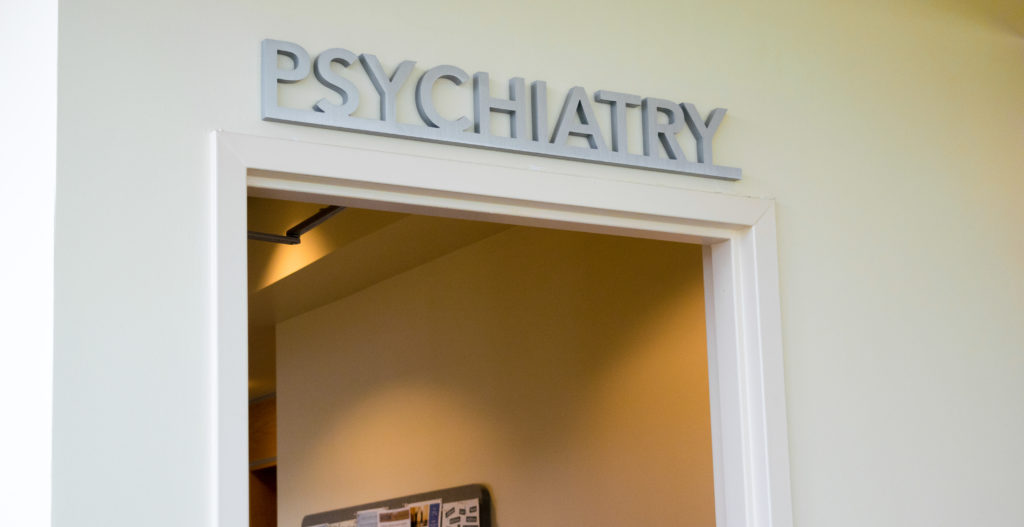
In the span of twelve months, Tech’s mental health resources sent at least nineteen students to receive involuntary mental health evaluations off-campus. 

The Technique requested and examined Georgia Tech Police Department (GTPD) records for all “involuntary transports” between Feb. 1, 2018 and Feb. 28, 2019. In total, there were nineteen such cases in which a student was deemed to be in need of urgent mental health assistance. Those students ranged in age from 18 to 26. A slight majority were females and a slight majority were minorities. 

The students who were involuntarily transported primarily went to the Ridgeview Institute, located in Smyrna, GA; over the course of the year, Georgia Tech Counseling sent eight students to Ridgeview and Stamps Psychiatry sent seven. 

Source: GTPD Non-Crime logs, Feb. 2018. Design by Lauren Douglas

There were four Tech students involuntarily transported to locations other than Ridgeview during the same timeframe; three were sent to Atlanta Medical Center and one to Cobb Behavioral Health Crisis Center.

In Georgia, the signing of a form 1013 allows licensed mental health professionals to mandate that a patient be examined by another specialist. The requisites for doing so are twofold in that a patient must be both “mentally ill” by Georgia’s legal definition, and they must also be in imminent danger of causing harm to themselves or others — or, in some cases, unable to care for their own safety. The state designates only certain mental hospitals as “emergency receiving facilities,” or ERFs, that can evaluate 1013 cases. Those ERFs could also provide inpatient care; the Ridgeview Institute, for example, serves both functions. 

A 1013 form is a transport document that allows law enforcement to bring a patient before another professional for further evaluation within 48 hours of signing the document. It does not commit, imprison or otherwise forcibly administer treatment to a patient. A patient can be involuntarily transported under a 1013 and still be cooperative, and hypothetically they could be assessed at the ERF and found to not need treatment.

Director of GT Counseling Dr. Carla Bradley said in a statement to the Technique that the counseling center assesses all possible options in determining what to do with a student in crisis. 

“A counseling session can frequently facilitate a substantive reduction in the level of risk,” Bradley said. “Optimally there can be enough reduction of risk through developing a very solid treatment and support plan — such as staying with family and receiving focused mental health treatment for a period of time — so that better functioning can be restored.

“If the identified interventions are not sufficient to support the student’s safety, then we will begin to discuss the need for more intense support and treatment. This can include the recommendation that the student seek assessment at a hospital. Students are encouraged to voluntarily seek this next level of assessment. If a student remains at immediate risk of harm to self or others, the Counseling Center may complete a 1013 form, which is a means of ensuring safe transport to a hospital. Once the student is transported to a hospital, they will be assessed by staff at that location to determine what level of care is needed.” 

Dr. Shannon Croft, lead psychiatrist at Stamps Psychiatry, echoed those sentiments in an interview. “We would not be 1013-ing somebody if they did not say there is a chance they are going to kill themselves.” Croft said. “If you need help, we will get you help … Usually, we try to send someone to a hospital we know their insurance will cover. If they do not have insurance we have been using Atlanta Medical Center.”

While the 1013 form does allow GTPD to take patients into custody more forcefully, this was seldom the case from Feb. 2018 through Feb. 2019. Only two transports necessitated the use of handcuffs, according to the GTPD logs. In one of these, three GTPD officers assembled outside a counselor’s office in which the student was speaking to a counselor, who eventually opened the door so that officers could, according to the supplementing officer’s report, “[grab] the males [sic] arms so that I could place handcuffs on them.” The student in question had tweeted that he planned to harm himself in a suicidal manner after having lost a friend to suicide earlier that week.

Data Limitations

It should be noted that this set of records is known to be incomplete; GTPD changed their labeling protocols for these reports in June 2018 in such a way that there have certainly been more transports than labeled as such on the non-crime logs. The “Mental Health Issue or Concern” label was implemented as a means to more clearly track mental health incidents on campus, which previously might have been labeled more generally — i.e., “sick person” or “involuntary transport.” According to Institute Director of Media Relations Lance Wallace the department now prefers that all such reports use the “Mental Health Issue or Concern” label. According to Wallace, reports still labeled “involuntary transport,” like those the Technique requested, are “a function of the reporting officer choosing to describe it that way despite the availability of and the department’s preference for the new label.”

The Technique is aware of two involuntary transports from the past year involving a 1013 form but labeled as “Mental Health Issue or Concern” and has included those transports in this analysis. There were 12 other “Mental Health Issue or Concern” records filed from Stamps Psychiatry or the Flag Building from June 2018 through Feb. 2019 that could conceivably have involved mental health transports.

Additionally, the Technique is aware of at least two GTPD logs from the past year labeled “involuntary transport” in which there is no reference to a 1013 form. Both students were sent to Ridgeview, and both reporting officers had also written other reports in which 1013s were mentioned in the same timeframe.

Furthermore, the Technique is aware of at least one case in which a student was sent from Counseling to the Ridgeview Institute without the use of a 1013 form, via taxi. Said student says counseling gave her a voucher for the taxi and strongly recommended that she take a few nights off from school. These “voluntary commitments” are currently impossible to track on the public level. 

Peer institutions

Peer institutions’ records of 1013 transports are similarly opaque. 

The University of Georgia has a single entity called Counseling and Psychiatric Services (CAPS) to provide mental health services and crisis intervention. Leadership there could not provide the number of involuntary hospitalizations they order, but said they average one hospitalization a week — emphasizing that not all were involuntary. 

The UGA Police Department  maintains similar online records to GTPD. An examination of those records over the past academic year (Aug. 2018 through Feb. 2019) found six records of students being transported involuntarily for mental health reasons, all of which were handled by EMS. In the same span, UGAPD provided voluntary transportation to the campus medical center to 15 students and conducted at least 45 welfare checks.

Kennesaw State University (KSU) logs far fewer mental health calls in their law enforcement records. Officials with KSUPD indicated to the Technique that any 1013 transports would be categorized as an “escort” in their records, which are currently migrating to a new host. 

 Josh Gunn, Assistant Dean and Executive Director of Counseling and Psychological Services at KSU, said his office only captures data for students who meet with counselors as they return to campus from psychiatric hospitalizations. By his count, 28 students have followed up with his office over the past academic year due to hospitalization, eight of whom were sent on a 1013. Gunn said that KSU counseling used 1013 forms to send four students to ERFs in the fall 2018 semester. 

For a deep dive into our methodology for examining the GTPD reports, click here.

Posted in UncategorizedComments Off on Examining mental health records

Many Tech 1013s brought to controversial Ridgeview

If admitted to the Ridgeview Institute, students claim to encounter poor sanitary conditions and lackluster  communication. 

Ridgeview was formerly a nonprofit facility but was bought out by a facility management corporation called US HealthVest in January 2017. 

Students have discussed Ridgeview on the r/gatech subreddit. Following the two student deaths at the end of the fall 2018 semester, students commiserated: “… Tech needs to invest in a support structure that RARELY hurts students by just dumping them off,” wrote u/toomuchsalt247. “I’m speaking from experience and from talking to other students who were wrongfully sent to Ridgeview as that process is very traumatic.” 

“I have a friend who was placed in Ridgeview involuntarily, and it made her very reluctant to get help for her depression and suicidal thoughts afterwards,” u/lvhq said in response. 

Another thread from the same time, titled “Regarding Ridgeview,” posted excerpts from six critical reviews of the institute on Yelp. Others commented in agreement; “Please find somewhere else,” commented u/nyx_67. “Avoid this place if at all possible.”   

The Technique sat down with a student who went to Ridgeview voluntarily in March 2019 as she adjusted to a new medication, and spoke about the institutional dysfunction there. “[When I was being checked in] they told me three to five days, and once I got into the unit the nurses told me five to seven, and then once I finally saw a doctor she told me ten [days]. “I will say they had group sessions twice a day… I actually found those to be helpful.

“I got assigned two psychiatrists, neither of whom saw me because they both thought I belonged to the other person. So you’re supposed to be seen within 24 hours [of being admitted] … I got seen at hour 23.

“And then I take an allergy medicine every day… They would not give it to me, even though I brought it from home, and finally when I saw the psychiatrist and I told her I needed this she [gave] me the wrong medication.”

Source: GTPD Non-Crime logs, Feb. 2018. Design by Lauren Douglas

Ridgeview is currently the subject of at least two ongoing lawsuits in the state of Georgia: Alice Thomas v. Ridgeview Institute, Inc. et al and Madeline Horton et al v. Ridgeview Institute, Inc. et al. The former alleges malpractice. In Horton v. Ridgeview, (filed Mar. 2018), the plaintiff — a minor — alleges that personnel told her to walk down a tile hallway after a blood draw. She fell, fractured her jaw in three places, and alleges that Ridgeview personnel did not facilitate medical treatment for more than an hour.  

Dean of Student Life John Stein, says his office takes student feedback into account when dealing with hospitals. “Any time a student is transported or visits a hospital for any reason, we ask the student about their experience to continuously assess the quality of care our students are receiving,” Stein said in a statement. “There have been times when conversations have been facilitated between Institute staff and hospitals to improve the student experience.

Student Life’s Director of Communications Sara Warner further clarified: “We cannot specifically speak to our students’ experiences at one hospital. We receive feedback from students on all hospital experiences … Any time we receive negative feedback and Institute staff member has a conversation with the facility to improve the student experience.” 

The Ridgeview Institute could not be reached for comment. 

Posted in UncategorizedComments Off on Many Tech 1013s brought to controversial Ridgeview

Campus Spotlight: Tech alumna Lorraine Green

An engineer, an entrepreneur and a mother — Lorraine Green exemplifies what it means to be a woman leading in science, technology, engineering and mathematics (STEM). From her unique background in her education to founding her own environmental consulting firm, Green’s lucrative yet unconventional career path has ultimately led to her success in the Energy Industry and to her position as the first female president of Pond & Company, an architecture, engineering, planning and construction firm. What nontraditional route did this woman in STEM take to become a pioneer in her profession?

Green’s story begins with her undergraduate studies at Tech where she received a bachelor’s degree in Chemical Engineering in 1984. Although manufacturing, pharmaceuticals and paper make up a majority of the chemical engineering industry, Green has over 30 years of experience in the energy sector. 

After graduation, she found her passion for the energy industry after accepting her first full-time position at an environmental engineering firm and has never looked back since. At this company, Green learned the ropes of both field and design work within the scopes of multiple energy related projects. 

“I felt that my engineering degree was less of a measure of my chemical engineering knowledge, but more as an affirmation of my own competency,” Green explained. “With a rigorous academic background from Georgia Tech, I was able to prove to my employers that I could think critically, and problem solve — skills that are invaluable to any job position … Given the tools that Georgia Tech provides, you can achieve anything.”

The next chapter of Green’s story begins after gaining six years of experience at the environmental engineering firm. After getting her hands dirty in the field and applying this knowledge in the design phase, Green had built up enough expertise to start her own environmental firm. In 1990, Green divulged her inner entrepreneurship and started her own environmental corrosion engineering company called Green Environmental & Corrosion, Inc. For almost two decades, Green served as the president and chief engineer of her own firm, all while raising two children. Much like the way she loved and cared for her sons, Green was equally committed to nourishing and growing her company. Owning her own company allowed her to do what she loved, all while refining her technical expertise as well as catapulting her business judgement.

The next defining feature of Green’s career is her continued education in the technical field. Even though she had a background in chemical engineering, Green saw environmental engineering as an avenue of improving the world around her. She wanted to continue to develop her expertise in this field and decided to pursue a Master’s degree in Environmental Engineering at Georgia Tech. “Although the seemingly intuitive next step was to pursue a Master of Business Administration degree, I felt that I had sufficient business knowledge from owning my own business, so I decided to further my own technical expertise to advance my career,” Green said. 

Currently, Green uses her business and technical experience as she serves as the President of Pond & Company, where she is responsible for the operational aspects of the organization, program development and staff development and overseeing sales and technical output of the company. 

Green has been featured in multiple media outlets and recognized as an industry leader and expert. In a 2018 issue of Engineering Georgia, Lorraine Green was named one of Georgia’s “Most Influential Women to Know.” 

What students can take away from Green’s story is that being open-minded, passionate and dedicated is a recipe for a successful career. 

Posted in UncategorizedComments Off on Campus Spotlight: Tech alumna Lorraine Green