Author Archives | Zoie Konneker

‘Fosse/Verdon’ brings fascinating couple to life

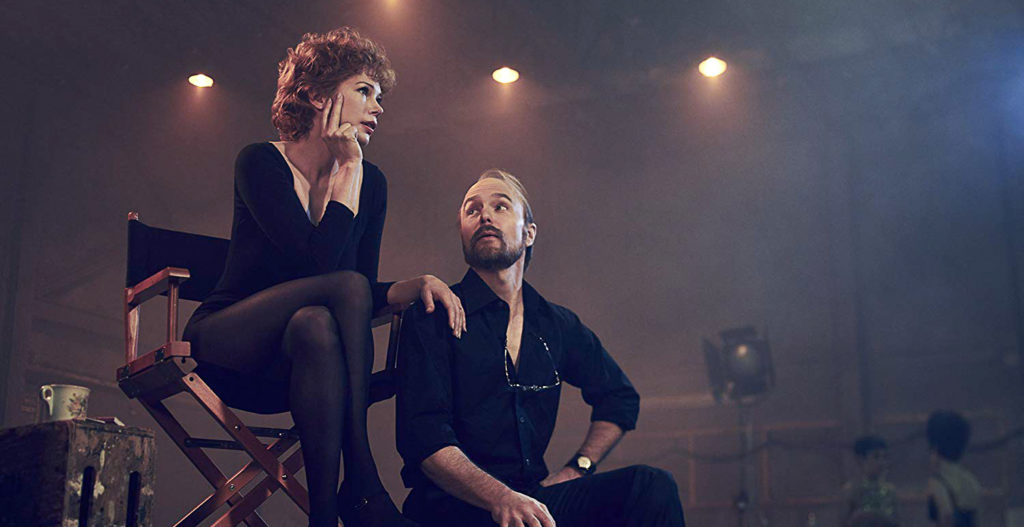
On Tuesday, FX released the first episode of its new biographical drama show “Fosse/Verdon,” which profiles the unique creative, personal and romantic relationship between Bob Fosse and Gwen Verdon.

Fosse, portrayed in the series by Sam Rockwell (“Three Billboards Outside Ebbing, Missouri”), was a dancer, choreographer and filmmaker in the mid-20th century who would go on to be remembered as one of the greatest and most versatile directors of all time.

Verdon, portrayed by Michelle Williams (“Manchester by the Sea”), was one of the most acclaimed Broa  dway performers of the 20th century. She married Fosse in 1960 and quickly became his muse and artistic partner, helping him choreograph his plays and films and accelerating his
creative process. 

The pilot episode features the aspects of the central relationship which made it such a compelling and productive partnership, as well as the factors which ensured that it was doomed to fail from the beginning.

There are moments of tangible love and devotion between Fosse and Verdon. In these scenes, one cannot help but be touched by what one sees on the screen. There are also, however, dreadful moments which remind the viewer of just how complicated the story of this artistic duo is. In these moments, the viewer feels a deep, personal frustration with the characters on screen. 

The pilot episode’s greatest strength is its emotional effectiveness; at every turn, the viewer feels exactly what the writers want one to, and one feels it intensely. 

Still, not every aspect of the show is handled tactfully. The writers go a little too far in trying to demonstrate how dependent Fosse is on Verdon in his work. The second half of the pilot is dedicated to the beginning of Fosse’s work on the 1972 musical film “Cabaret.” 

Fosse travels to Munich to film the movie, and at first leaves Verdon at home to pursue her own work and to care for their daughter. The filming process quickly stalls, however, and the writers make it very obvious that the issue is Verdon’s absense from the set. Fosse asks Verdon to come to Germany to help him, and suddenly all is well again. The whole narrative is a little too obvious.

Still, it does the job, and one can understand why the writers went to such great lengths to make their point clear — as Fosse’s professional dependence on Verdon is essential to his character
development. 

Fosse’s character is fantastically written and performed. The writers strike a perfect balance between making Fosse sympathetic and highlighting his more despicable qualities. In the pilot, Fosse struggles to deal with past trauma while also suffering under a lack of professional identity independent of his wife. In his darkest moments, he is plagued by visions of his difficult childhood, and he struggles to remain faithful
to Verdon. 

Throughout most of the pilot, he is also struggling to prove himself as a film director and to escape the shadow of his wife. Early in the episode, several characters suggest that Fosse can only be successful with the help of his wife, a notion which he seems determined to disprove. 

While Fosse’s dependence on Verdon is based on historical fact — Fosse did achieve most of his artistic success while working with Verdon — the character’s insecurity about his professional dependence on his wife feels like a choice made by the writers in an effort to comment on masculinity and the expectation that men be strong and independent.

The series proves less progressive in its development of Verdon as a character. While Verdon is portrayed as powerful, effective and independent — in contrast to Fosse’s dependence on her — she feels a little one-dimensional. The viewer never really ponders what she is thinking or why she does what she is doing, because her motives and feelings are portrayed as less complicated than Fosse’s. 

To be fair to the writers, the pilot episode ends on what could be a major junction in Verdon’s character development. It is therefore possible that the writers are saving all of her development for the coming episodes, but if they do not improve on their effort in the pilot, it will be a shameful missed opportunity to bring an extremely complicated real-life character to the screen.

“Fosse/Verdon” is an emotionally intelligent, visually striking drama with fascinating characters and excellent writing. Though the pilot does have some holes that the writers will need to plug in future episodes, the series is positioned well to be one of the best new shows of 2019, and it is well worth following.

Posted in UncategorizedComments Off on ‘Fosse/Verdon’ brings fascinating couple to life

‘The Code’ accomplishes what it is meant to do

CBS released the first episode of its new drama series “The Code” on Tuesday. The show follows a group of Judge Advocates — essentially military lawyers — in the Marine Corps as they investigate and litigate cases.

The central character in the series is Captain John “Abe” Abraham, portrayed by Luke Mitchell (“Agents of S.H.I.E.L.D.”). Abraham is a former grunt who became a Judge Advocate after suffering an injury which barred him from holding combat roles. Abraham is passionate and principled, a believer in justice who has pride in the Marine Corps, even if he is cynical about some of its
institutions.

Abraham cares about doing his job well, but he is skeptical of authority figures and does not always feel the need to follow the chain of command. The character is a simple cliche, the classic “maverick” figure, but “The Code” is a show that is clearly not interested in challenging cliches. The series is entertainment, not art, and there is nothing wrong with that.

To its credit, the pilot certainly is enjoyable. The plot is interesting and fast-moving, and the show does a great job of grabbing the viewer’s attention and holding on for dear life. 

Critics will point out that the acting is sometimes subpar, but the cast does its job. Some will also point to the fact that the show, from its writing and set-up to its characters, is just a — slightly diminished — carbon copy of 1992’s “A Few Good Men.” This is true, but “A Few Good Men” is a great film, and it is hard to argue that having more content like it is a bad thing.

“The Code” is not a show that is going to win awards. It is also not going to challenge anyone’s world view. It was never designed to do those things. “The Code” is meant to be consumed, not analyized, and there is absolutely nothing wrong with that.

Posted in UncategorizedComments Off on ‘The Code’ accomplishes what it is meant to do

Campus Center and other summer construction begin

This week, preparatory construction will begin for the Campus Center Project, impacting traffic on Ferst Drive, sidewalk availability and parking near the Student Center. The section of Ferst Drive between Regents Drive and the CRC will be limited to one lane during business hours. Flaggers will direct traffic in this area between the hours of 8:00 a.m. and 4:00 p.m. daily. 

Additionally, parking will be unavailable in the southern corners of the W02 parking deck as construction commences to create a new entrance and exit from the lot. Construction work will also begin in the area 3 visitor parking and W03 lot in order to inspect utility lines, resulting in limited availability for parking spaces in some areas of these lots. 

The construction is not expected to impact final exams or commencement activities, and construction crews have been notified to keep noise to a minimum during exam periods. All of these initial preparatory tasks for the larger Campus Center Project are expected to be completed by the end of April. 

In other construction news, the Weber I building reroofing recently started and is expected to continue through July. The main entrance stairs to the building will be closed throughout the reroofing. Pedestrians will be rerouted to enter through the alternate entrance at the west end of the building. There is no anticipated impact to vehicular traffic other than a closure in a portion of the service parking lot.

Furthermore, a natural gas improvement project on Cherry Street began earlier this month and will continue until May 3. Some sidewalk closures are anticipated, and parallel parking on the east side of the street will be closed during the project. Vehicular traffic will otherwise be unaffected. 

Additional updates for the Campus Center project and other summer construction news and obstructions will be posted on the Facilities webpage at facilities.gatech.edu/construction-notices as they become available. 

Posted in UncategorizedComments Off on Campus Center and other summer construction begin

Tipping and the issue of an uncertain paycheck

One of the most common complaints I hear on campus is about an uncertainty in grades for classes with heavy curves, but what many of the same students forget is that such is the reality for employees in the service industry.

With over 2.5 million employed as of May 2018, the service industry is one of the most populated in America according to the Bureau of Labor Statistics. Historically, serving and waitressing has been one of the most popular part-time jobs for students paying their way through college. Unfortunately, it’s also one of the only jobs where the tips you give them are how they pay their bills. 

Under federal law, employers can take a “tip credit” by paying tipped workers as low as $2.13 per hour, and while some states pay more than others, Georgia is among 18 other states that prefer the bare minimum. The assumption is that tips acquired throughout the day will bring the hourly wage up to the mandated minimum wage, but there are six states that either do not have minimum wage laws or have legislature that does not apply to tipped employees. Georgia is the latter. 

As a reference, think about the last class you had where the test average was lower than a “D.” The uncertainty in the extent of the curve is scary, even for the average student in the class. There’s an inherent stress because a final grade in the class is less based on a student’s knowledge of the subject and more based on a relativity to other students, or even subjectivity, altogether. Now imagine if your salary was determined the same way. You would hope that students might band together with empathy for the situation, but in reality, those hopes would be in vain.

“When young, college-age people come into a restaurant,” one server said, “servers are crossing their fingers that students aren’t put into their section. You know they’re going to try to be as cheap as possible and then leave a dollar at most.” 

While college students live a stereotype of tight budgets, being short on cash should not be an excuse for being a bad person. Tips are as much a metric of quality as they are a majority of a server’s salary. Tipping less than 15% on a bill would mean that you needed to talk to a manager about poor service. A 20% tip is considered standard for service received, and leaving any more than a 25% tip is translated as five-star service. Money talks, and servers remember what customers say with it. 

Student apathy is a subject repeatedly brought up in the Technique, and it extends well-beyond the college bubble surrounding campus. Whether its issues as large as mental health provisions or problems as small as tipping servers, students should actively think beyond themselves and leave a positive impact on the world around them. Sure, most student budgets are tight, but put it towards an individual rather than the pockets of Amazon with that next, possibly needless, purchase.  

Because tipping in America is so often an unspoken rule, a lot of ambiguity complicates a fundamental concept: treat others the way you want to be treated. So, at your next sub-standard restaurant experience, consider the option that a long wait for food or drinks isn’t the server’s fault, but is rather a problem in the kitchen or from the bartender. Use your own judgement, but don’t make someone suffer for someone else’s mistakes. And most of all, remember that servers are people, too.

Posted in UncategorizedComments Off on Tipping and the issue of an uncertain paycheck

The manipulation of online media

I could very easily talk about my time at Tech. While I do want to impart all that I have learned over the past five years, I would refer you to my piece in the 2018 Freshman Survival Guide that was more of a “swan song” than this will be. It’s some pretty solid advice, albeit without the lessons gained from this long and arduous journey of being editor of the Technique. 

To sum it up: get out of your comfort zone, take advantage of the opportunities that you have here and do not let who you are now hinder your progress to becoming the best version of yourself. 

Now that we have that short reflection out of the way, I want to bring up something that I feel I have a moral obligation, as current editor of the newspaper, to discuss. 

I have been on the newspaper for five years now. I have seen the internal operations, I have seen the external operations and I would like to think that I have a good sense of the various perspectives from which the newspaper is viewed. 

I want to bring up an issue that has been plaguing the Technique for years and I’m going to try to bring it up as diplomatically as possible. I want to talk about the importance of print media and the manipulation of online media. 

Within Tech, this concept is lost on people, especially members of the Student Government Association (SGA), to whom I’ve written multiple letters, drafted aesthetically pleasing graphics for the sake of easy mental digestion, sent multiple e-mails and possibly dedicated more time to ensuring our ability to print than to what actually goes in the newspaper. 

After SGA hounded us about pick up rates, we went through the lengthy process of collecting them (we had done significantly better than the previous year). After sending the data, we were met with silence on the topic. In the next budget session our efforts to satisfy SGA with regards with the data was not brought up — instead, their members decided to pick on an entirely different issue. 

It’s almost as if SGA likes to pick on the Technique just for the sake of doing so — which is interesting because we are the one organization that actually calls SGA out when they do something questionable. Now, SGA’s latest demand has been to digitize the Technique. 

While the Technique has specific reasons to disagree with this demand, the importance of print media in the larger scope of society is not really something that is brought up during our budget sessions and bills because it is far too complex of a subject to expect student senators and representatives to listen to  — which is a sad and unfortunate fact, only corroborated by the fact that it is hard to get their attention, even with our letters and statistics.

And perhaps it is simply an issue with the fact that with every year there is a turnover in the house and senate, and new members must learn the ropes all over again, but that does not warrant inattentiveness and callousness especially when dealing with a responsibility such as budgets. 

This brings me to the crux of this editorial. Why do we print? While our main answer is generally 1) the Technique is a tradition that has been around longer than SGA, 2) we need to print to compete in the various awards that we consistently bring back for our school and 3) the newspaper is a creative outlet in a technical-based environment, there a is bigger reason that extends far past the scope of student government, the Technique and Georgia Tech. 

It’s true that print media is quickly becoming digitized. And while digital media has its upsides, it also has its downfalls in that it can be very easily manipulated. 

Digital media has a role as a great supplement to print media. It allows readers and viewers to engage with content and it promotes discussion, which is what the Technique strives to do. However, print media captures and documents moments and events so that they are permanently on record. Journalists are held accountable for their actions. There is a source of truth in print newspapers that is difficult to find in online media, especially in multimedia forms. There is a responsiblity and need for comprehensiveness that falls upon the reporter in print media that is sometimes missing in online media. This is not to say that all online media is superficial and cursory, but the barrier to entry in order to generate online content is much lower than that of print. 

There is also a sense of credibility that accompanies print media. As the only consistent student news source on campus, the Technique tries hard to accurately portray the voice of the student body in a holistic way, which is sometimes difficult given the apathy that is unfortunately present in our community. Keeping print media alive allows student journalists to convey important information to the community, holds them accountable for their work and fosters a sense of connectedness that is lost through digital media, where we are often coaxed into clicking one article after another, the content of which can be less credible and from a less reliable source than in print. 

In this era, there is a strong drive for change. And often, change is good. We are becoming more progressive and accepting. However, this does not mean that old harmless traditions should die out, especially when these traditions preserve a sense of accountability, credibility and journalistic integrity that is sometimes lacking in online media due to the low barrier to entry. Print media holds reporters to a higher standard, and while digital media is certainly the future, that does not mean that print media is dead. 

Posted in UncategorizedComments Off on The manipulation of online media

Why I came to Tech doesn’t matter

At my FASET in July 2015, there was a point at which some admin was standing on the Ferst Center stage and celebrating our accomplishments as a freshman class. Congratulating us, he whooped: “I want you to stand up if Georgia Tech was your dream school.” 

My sweaty body curled deeper into my chair, wishing I could actually sink into it and through the floor. Of course, all of the yellow lanyards I could see stood up and were applauded by the parents scattered throughout the theater. I did not and, on realizing I could just have stood anyway, was then frozen with embarrassment when I locked eyes with a stern dad in my row. Shame on you. You know how lucky you are. 

The end of high school and beginning of college was a difficult time for me. Exhausted and ego-bruised by grueling standardized testing and application season, I had been rejected by my stretch schools for policy studies and writing. I had been wait-listed at schools that I thought were sure bets. I had been accepted to one school, and the financial aid package I would be on was frankly amazing, but it felt diametrically opposed to what I wanted to study. I worried that liberal arts would be an afterthought and that I was not smart enough to handle STEM stuff. I hated the south. But I got in, so I gave it a chance.

I have no doubt that I would have been able to do well at other schools. It is very possible that I might have left other schools with better networks, better writing skills, better knowledge of something or other. I have come to understand that, save for “rocks for jocks” and that one mandatory R class, what I have learned academically at Tech is nothing I could not have learned elsewhere — which makes the “why are you at Tech” question that liberal arts majors often face in interviews a really difficult thing to answer.

What I think is less ubiquitous is the learning experiences outside of the classroom. Lots of schools have a student newspaper, but very few have one staffed mostly by engineers who teach each other without the support of a journalism program. Lots of schools help their students get internships, but not as many are located blocks from a top-ten NPR station. Lots of schools are in cities, but few are in cities so livable as Atlanta.

Moreso than even those experiences, the people I have added to my life because of Tech are irreplaceable. They have literally and figuratively propped me up. They walked home with me to West Campus after 2a.m. deadlines, musing about what it would be like to be seniors who knew what they were doing. They texted me for math help that I could not provide, but we would both laugh about it. They reminded me I was capable, not just academically or professionally, but personally; that I was worthy of ride-or-die friendship and could give it in return. 

Tech gave me them, and I know nowhere else could have because it turns out many of us are here for the same reasons: circumstance — or the lack thereof —and money — or the lack thereof. So many of my friends are here because of a unique combination of Zell Miller and other plans not coming through, and I could not be happier that our eighteen-year-old selves were so disappointed. 

Even those for whom Tech was the dream, I have to assume, have all questioned whether this was the right choice. Such is the nature of making choices. 

It is extraordinarily easy to reinterpret hindsight being 20/20 into meaning that the correct choice could never be the one we made. I wonder what we could accomplish as a human race if we spent less time considering why we did what we did and what we might have done differently — if instead we focused more on the fact that we are here, and where we could go. Certainly, I wish I had spent less time wishing I was not at Tech — however justified my reasons — and more time working hard to bloom where I had been planted. 

I hope that in a few short weeks when I am no longer a Tech student, I will stop being asked why I came here. I truly, now more than ever in the past four years, believe that it does not matter. I came here, and I was here and I am leaving here. Intentions mean nothing in the face of real, tangible experiences that took place during my four years here. The question of “why” matters far less when compared to my gratitude that it happened at all.

Posted in UncategorizedComments Off on Why I came to Tech doesn’t matter

Updates arrive on Joseph, LaBarrie situations

Tech athletics have made plenty of headlines in the past few months — not always for good reasons. The results of two investigations into Tech athletics were released last month, one regarding recent NCAA violations and the other regarding Tech’s findings about coach MaChelle Joseph. Here’s what the NCAA investigation found as well as additional allegations that have emerged in light of Joseph’s firing.

Labarrie and Carter Jr.

The NCAA informed Tech earlier last month that it had found multiple violations in its men’s basketball program. Some of the violations stemmed from head coach Josh Pastner’s long-standing legal feud with his former friend, Ron Bell, but two of the violations were regarding former assistant coach Darryl LaBarrie, who left the program last year following an NCAA investigation.

The NCAA alleges that LaBarrie took a top high school recruit on an official visit at Tech to an Atlanta strip club, where a representative of Tech athletics gave both the recruit and a Tech player who had served as the recruit’s host $300 for use at the strip club. It was later revealed that the recruit in question was one of the top prospects in the country, current NBA rookie and Chicago Bull Wendell Carter, Jr. 

Carter, Jr. wasn’t the only big name involved in the violation — Tech Hall of Famer Jarret Jack was reportedly the representative of Tech athletics who funded the visit to the strip club. The player who allegedly accompanied Carter Jr., Justin Moore, is also no stranger to Tech fans; Moore saw limited minutes with the Jackets from 2016-2018 before transferring out after LaBarrie’s departure.

The NCAA further alleged that during its investigation of LaBarrie, LaBarrie attempted to cover up his involvement in the violation, lying to NCAA investigators and coercing Moore to do the same. According to the NCAA, both violations constituted Level I violations, the most severe level of NCAA violations. In an interview with the Atlanta Journal-Constitution last week, LaBarrie admitted that he had taken the players to the strip club and that he lied to the NCAA. However, he denied any knowledge of the money given to Carter Jr. or Moore, and further denied that he had coerced Moore to lie to investigators. The latter was one of the most serious charges levied against LaBarrie, particularly compared to the relatively meager amounts allegedly spent on Carter, Jr.’s recruiting visit. Since then, LaBarrie has apparently taken to private coaching, and even sought work as an NBA scout, courtesy of AJC.com.

Joseph and harrassment

The fallout from MaChelle Joseph’s messy break-up with Tech athletics has continued, with further allegations brought up from former student athletes in addition to messages of support for the coach from her old players. A bombshell accusation dropped earlier this month, however, as former Jacket Niesha Butler accused Joseph of sexual harassment in addition to emotional and physical abuse. 

In a statement released to CBS46.com, Butler claimed that Joseph had harassed and abused her in her time as a student athlete. In one incident, Butler says, Joseph invited Butler into her room during a road-trip and began touching Butler’s thigh and buttocks in a manner that Butler described as “inappropriate”. However, upon rebuffing Joseph’s advances, Butler was told by Joseph that her “career was over, and that [she] would never play basketball at Georgia Tech again.” Butler would leave the program in January 2002.

 In a statement from Joseph’s attorney, Joseph denied the allegations of sexual harassment. Joseph also previously denied similar allegations, claiming that the complaints against her are instead a part of a campaign of harassment in return for her fight against sexism within the Georgia Tech Athletic Association.

Posted in UncategorizedComments Off on Updates arrive on Joseph, LaBarrie situations

Welcome to Tech

Let me start off by saying that whatever mental image you have of the next four — or five — years is not even close to the reality of what it will be. The only thing certain about your time at Tech is that it is almost impossible to picture exactly who you will be at the end of it. 

You might envision your future four years as taking
classes, getting your degree and then graduating as the same person you are now. 

You won’t. 

If by some miracle you have not changed in any way, then you have not pushed yourself hard enough. Your college experience is what you make of it. Right now is the time to jump into opportunities and have new experiences.

While the academic experience might be rigorous, the people you meet, as well as the experiences you have, are what really shape your time at Tech.

It is easier to begin college without expectations. 

You are starting off fresh, so reinvent yourself to be the person you want to be, whether it means being unabashedly yourself or stepping out of your comfort zone. Be confident — you got into Tech, which means that you’ve got something going for you. 

If you are independent to your own detriment, ask someone for help, whether through the tutoring center or your roommate. 

When you get to a point where you think you have pushed yourself far enough, push yourself even further. Run for a leadership position. Learn to cook. Move off campus.

Take advantage of your small and uncomfortable living situation by spending the least amount of time in it. Grab your roommate and explore the city that we are so lucky to be in the heart of. Walk the 185-acre Piedmont Park. Stroll the BeltLine.Take MARTA to Buford Highway or experience art and culture through the Woodruff Arts Center. 

As part of the newspaper, I also have an obligation to emphasize the importance of communication. You might be an engineering major or you might be LMC — regardless of your major, communication is key. What good is an idea if you cannot convey it to the public? What good is an instruction manual if it is so difficult to follow that the user has a harder time reading it than assembling a part?

In the STEM fields especially, we pride ourselves on our
technical and analytical abilities, but those are worth little without solid communication skills. This does not only pertain to writing but to verbal communication and design language as well.

College prepares you for the real world and I cannot emphasize enough the importance of learning versus memorizing. 

While there are some courses with material that you will never have to look at after your last final, when it comes to classes that pertain to your major, focus on learning the material and the good grades will follow. 

You will soon notice that people are smarter than you. You will meet people that have more of a passion for your field than you do. View these people not as discouraging competition but as a resources from which to learn and motivation to push yourself even harder. 

On graduation day, you will reflect on your college experience not by the grades you received but by the friends you made, experiences you had and the development of your character. Don’t waste time envying your classmates — push yourself to be better because you want to be better. 

Posted in UncategorizedComments Off on Welcome to Tech

‘Twilight Zone’ strays from strengths of original

On April 1, CBS debuted its reboot of the classic sci-fi anthology series, “The Twilight Zone.” The show, which is hosted by Jordan Peele (“Get Out,” “Keanu”), will be released weekly on CBS’s subscription streaming service, CBS All Access. The pilot episode, however, is available for free on Youtube.

While the new series shares its anthology format with the original, it differs drastically from Rod Serling’s series in its style and production quality. Whereas the original series aired in a half-hour time slot, episodes of Peele’s version fill a full hour long slot. The longer time slot is accompanied by a much larger production budget and more elaborate cinematography and effects.

These changes might seem inevitable; television has come a long way since 1959, and film-like production qualities are the norm today. Still, there’s no reason why the new series could not retain the original half-hour format, and fans of the original might be disappointed that the new series didn’t keep things simpler.

The good news for fans of Serling’s masterpiece is that the reboot does not wander too far from the original in tone. The pilot has the same darkness which first made the series famous. 

The pilot episode, titled “The Comedian,” follows a comic portrayed by Kumail Nanjiani (“The Big Sick”) as he achieves success on the standup stage after receiving advice — and a warning — from an older comedian whom he admires. The set-up of the episode is classic “Twilight Zone” — a mysterious, supernatural figure leads the main character down a path to his ruin.

As the episode progresses, the comedian discovers that he has much more success with jokes which are about him and his life personally, and he begins to make personal jokes rather than the political ones around which he used to structure his routine.

The twist comes when Nanjiani discovers that everything he jokes about — from his dog, to his nephew, to his fellow comedians — disappear from existance when he uses them for a joke. 

If the pilot is any indication of things to come, the new show has all the thematic consciousness that made the original great. In addition to simply being a cool story, “The Comedian” has a universal truth at its core. 

Where the new show differs from the original is in the depth with which it covers a topic. The original series, with the exception of a few episodes, was essentially a set of morality tales set to a sci-fi background. Episodes of the new series, however, explore individual concepts for a full hour. The result is that episodes are more thematically deep, but in focusing so much time on one subject, episodes also lose some of their broad appeal. 

“The Comedian” is a great example of this. On its surface, the pilot episode is a Faustian tale of a comedian who gives up everything he holds close in exchange for success on the stage. This is exactly the point at which the original series would have stopped, but a closer examination of the details of the hour-long episode reveal a deeper and more complex message about the nature of comedy, fame and art as a whole.

The episode sees the comedian isolate himself from everything which was actually important in his life on his way to attaining fame, commenting on the side effects of celebrity. 

While this is an interesting development, it requires more effort of the viewer than an episode of the original series would have, and some might argue that the episode over-explores its concept, leading the viewer in too many directions at once.

The pilot does not stop there, either. Observant viewers might notice that the jokes which the comedian tells are not actually particularly funny, despite the laughs they get from their on-screen audience. This is not due to poor writing; rather, it is an intentional choice which the writers use to make their point about comedy. 

The episode argues that comedians do not succeed by telling funny jokes, but rather by exposing their personal lives to the world. Comedy which is not personal will never succeed, because a joke is made first and foremost by its sincerity.

Additionally, the episode seems to be commenting broadly on how artists in general damage their lives by exploring the human condition through the lens of personal experiences. Just as the comedian loses the things in his life about which he jokes, an artist loses his personal identity by exposing it to the world. 

Of course, there’s nothing inherently wrong with a show commenting on art, comedy or other aspects of the human condition. The problem with “The Comedian” is that it tries to do all of these things at once, all the while working in a format which was once all about simplicity and clarity. The episode ends with none of the finality and certainty which each and every episode of the original series ended with.

The new series also departs from Serling’s show stylistically. The fancy cinematography, the high production values and the dramatic acting, while powerful and immersive, are somehow disappointing when held up next to the style of the original series. Gone is the comfortable simplicity of a show which didn’t lean on camera tricks and loud sound effects to hide flaws in its storytelling. The original series’ greatest strength — at least from the perspective of the modern viewer — was that there was simply no where for the writers to hide. Every episode had to be excellent in every way, because there was nothing with which to distract the viewer. 

Compared to the original, the new series is downright disorienting, distracting the viewer with over-the-top camera effects and taking away from the beauty of the writing and the narrative.

Fans of the original series are probably going to approach Jordan Peele’s take on “The Twilight Zone” with some caution ­— reboots rarely live up to the quality of the original — and that is a good thing. While the new series is objectively better than the original in practically every way, those who fell in love with the original for its beautiful simplicity will most likely hate the reboot for all of the things which on the surface make it better.

Posted in UncategorizedComments Off on ‘Twilight Zone’ strays from strengths of original

Take Back the Night supports and educates

The atmosphere at the Campanile was solemn but filled with hope at the annual Take Back The Night event at Tech on April 1. As the outset of Sexual Assault Awareness Month, Take Back The Night serves to educate the Tech community about sexual violence and to support survivors. 

Following opening remarks by Meghan Dietrich, one of the event’s student coordinators, graduate and undergraduate students spoke at the podium and read stories from sexual assault survivors in turn. Some students chose to introduce themselves as survivors of sexual assault and share their own experiences, while others wanted to remain anonymous and have their stories read by a volunteer. 

The event concluded with a candlelight vigil and a moving performance of “Til It Happens To You” by the campus a cappella group Infinite Harmony.

“I am comfortable talking about my story, and I feel that talking about my experience empowers other survivors to come forward and seek help for what they’ve gone through. I found that the #MeToo movement was really powerful for me, and I want other survivors to feel that as well,” said first-year ME Morgan Biagioni, who spoke at the event.

This year marked the 25th anniversary of Take Back The Night at Tech. Supporting survivors and creating a space to allow them to share their stories is a priority for the campus community, and students are eager to see the movement continue to flourish on campus. 

“I’ve gone to [Take Back The Night] three times in my Tech career. This event serves to remind me that, no matter what, if a sexual assault survivor tells you their story, you have to believe them and support their decision on how to move forward. It’s always a bit somber, and I get emotional and inspired by the strength the survivors have by telling their story and their journey of healing,” said fourth-year BMED Aileen Suarez. 

The event was organized by the Women’s Resource Center and VOICE, Health Initiatives’ sexual and relationship violence prevention and response initiative. 

VOICE provides support and resources to victims of sexual assault, as well as to those supporting survivors, and educates the Tech community about healthy relationships and sexual violence. VOICE advocates were present at the event to speak intermittently to attendees about the work of VOICE and to provide support to speakers and attendees who were affected by the vulnerable, often distressing nature of the experiences that students recounted. 

Students who are passionate about ending sexual violence on campus can apply to be VOICE peer educators or request a VOICE presentation for their residence halls, chapters or student organizations on topics ranging from healthy relationships to bystander intervention by visiting healthinitiatives.gatech.edu. 

In addition to VOICE, student organizations such as People Against Unwanted Sexual Experiences (PAUSE) and SGA’s Sexual Violence Advisory Board (SVAB) are dedicated to preventing sexual violence and raising awareness of this issue on campus. 

“I grew up in a community that almost normalized the concept of sexual violence because everyone thought it was too taboo to discuss or disclose. I’d constantly hear stories of suffering being justified by religion, socialization, politics and occupation. But sexual violence isn’t a political issue; it’s a human rights issue. It’s our job as people, and mine specifically as a peer educator, to ensure everyone’s security and maintain a level of respect in all of our relationships,” said first-year ECON and VOICE peer educator Rupkatha Banerjee. Beyond student organizations, the campus community can have a role in supporting survivors and being part of the solution to end sexual violence. 

“If someone tells you about an experience of sexual abuse or assault, just listen to them. Let them cry on your shoulder. Tell them it’s okay, and you believe them. If you hear rumors about what people do sexually, don’t spread them, and tell off the person who spreads them to you. Slut-shaming is never okay, and you never know what someone is going through or whether the rumors are even true. The ones about me certainly weren’t, but they made a horrible situation even worse,” Biagioni said at the event.

Posted in UncategorizedComments Off on Take Back the Night supports and educates