Author Archives | Truitt Clark

Tech loses big lead, falls by 2 to VT

Photo courtesy of Trevor White

The men’s basketball team traveled up to Blacksburg, Va., Monday to take on ACC rival Virginia Tech. The Jackets have been struggling against ACC foes, so this was an important game to  win against a weaker ACC team.

After playing a hard-fought game, the Jackets fell short and lost a 10 point lead with three minutes left. The Hokies hit a late three pointer, and missed free throws and opportunities plagued Tech as they fell 65-63 to VT.

Forward Charles Mitchell came off the bench for the Jackets and led the team with 17 points and eight rebounds. Mitchell has played a key roll in scoring for the Jackets and has done so all season. He provided a spark off the bench that the team needed during this tough road test.

Marcus Georges-Hunt played a solid game for Tech, adding 11 points and five rebounds of
his own.

Tech’s shooting woes continued in this game. The Jackets shot 37.7 percent from the field, below their already subpar 41.5 percent on the season. Their three point shots were off again in this game with the Jackets just four of 19 shots behind the arch. For a team that has not shot the three ball well all season, 19 shots were a lot to take.

The Jackets were able to out-rebound the Hokies, 39-27. But it still would not be enough to get them past VT.

Tech found themselves down early in the game thanks to some turnovers. After the first five minutes of the game, the Jackets were  in a 14-2 hole.

However, their luck would change in the next five minutes. The Jackets went on a key 9-0 to bring the score within one halfway through the first half. Tech would go into halftime up 31-26 due to some great defense down the stretch.

After multiple attempts to pull away, VT stayed within arms reach of the Jackets. Tech managed to build a seven point lead midway through the second half, only to see it erased after the Hokies came back from a timeout.

It appeared that the Jackets were ready to put this game away late as Tadric Jackson sunk a huge three to put Tech up by ten with only five minutes left in the game. However, the Hokies would not go away easily, though. VT made multiple crucial baskets down
the stretch.

With only 20 seconds left in the game, VT’s Malik Muller nailed a go-ahead and, ultimately, game-winning three pointer to put the Hokies up by 1 and give them their first lead of the half.

After a great defensive first half, the Jackets fell apart in the second. That did not go unnoticed by head coach Brian Gregory.

“Our defense was awful in the second half. We didn’t guard the dribble well. We took away their three, which was a big part of the game, but they got to the free throw line. They didn’t make a ton of them, but we had some missed coverages.” Gregory said after the game courtesy of
ramblinwreck.com.

“We wanted to take the ball to the basket. It’s a tough, bitter pill to swallow. But we wanted the ball in Marcus [Georges-Hunt]’s hands. He’s our go-to guy. That’s who’s going to win the game for us in the end.” Gregory said.

The Jackets would fall to 11-13 on the season and 2-10 in ACC play. Tech hosts the Florida State Seminoles this Saturday at McCamish Pavilion, followed by Clemson on Monday night.

Posted in UncategorizedComments Off on Tech loses big lead, falls by 2 to VT

DramaTech prepares for upcoming comedy

Photo by Brenda Lin

DramaTech continues to wow audiences with its newest production, “Cartoon.” The play supersedes expectations, experimenting with new theatrical styles, such as Commedia del’Arte, to transport audiences to an alternate universe of animation filled with social commentary. With actors literally jumping off stage, “Cartoon” separates itself from all other past productions.

“Cartoon” features elaborate set designs, actors’ convincing portrayals of eccentric characters and interwoven plot twists. DramaTech’s adaptation of “Cartoon” treats audiences to an experience like no other with performances from Feb. 13 – 21.

The Technique got the chance to speak with Melissa Foulger, the director of “Cartoon,” about how DramaTech creates such unique elements within each of its shows, and what audiences should look for in this latest production.

Technique: What makes “Cartoon” different from other DramaTech productions?

Foulger: “Cartoon” is more cinematic in nature than other shows that DramaTech has done. It is also very stylized because each character is based off of a different cartoon trope. I also think that “Cartoon” has some surprises that the audience might not be expecting. These surprises will leave the audience talking for a while.

Technique: What should viewers look out for while watching “Cartoon?”

Foulger: Look for (and enjoy) all of the different cartoon tropes that appear. We tried to stay true to some really comedic cartoonin the production. More importantly, enjoy how we break them.

Technique: What’s been the most challenging aspect in preparing for opening night?

Foulger: This show is very stylized and very technically intricate, so only having five days to incorporate all of the technical elements into the production was probably the most challenging. Between several feeds of video, countless sound cues and a few surprise special effects, we had some real work ahead of us to have everything work together symbiotically.

Technique: What is something about your experience directing “Cartoon” that surprised you?

Foulger: I was surprised that even though I have directed several shows by playwright Steve Yockey over the years, I always am surprised by his clarity of language and the way in which he is able to dissect the human condition down to its basest level. He is able to surprise the audience in such a way that they have no idea what’s coming until they are three steps past it and then they can’t stop it.

Technique: What’s the most important aspect of a performance’s delivery to an audience?

Foulger: For this show, what’s most important about a performance’s delivery to an audience is a commitment to the style. If the actor or elements of the production seem out of step with the style, it has the potential to pull the audience out of the production.

Technique: What do you hope audiences take away after watching the performance?

Foulger: I hope the audience is able to question their relationship with the media and with violence. I hope they will understand the importance of the word “citizen,” question their role in our society and explore how and when they are able to make change.

Posted in UncategorizedComments Off on DramaTech prepares for upcoming comedy

Campus Spotlight: Carli Walker

Photo by Carli Walker

The Technique sat down with Carli Walker, President of SAA and a South Carolina native, whose first choice college was Tech. A member of Alpha Gamma Delta sorority, Walker is an active presence on campus.

Technique: Where did you first find out about SAA, and why did you decide to join?

Walker: Where I found out is right over at the Campanile. When we have our fall kickoff, we usually have five big locations all around campus. My freshman year, … I saw the Chick-fil-A tent and wanted to get some free food. The Marketing Chair for SAA at the time said, “Let me describe our organization then you can get … all the stuff we have out.” I thought it sounded really cool. I started coming to his marketing planning meetings. I was lucky enough to have an advisor, Catie Miller, who saw that I was involved and liked being on the committee. So I applied for chair. I was Marketing Chair (the position of the guy who talked to me at the Campanile), and then I was VP Membership, then President.

Technique: What are your responsibilities as president, and what does the role mean to you?

Walker: It’s a huge honor. We’re the largest student organization on campus; we just hit our goal of 4500 people. We have over 100 events in the year which is crazy. I’ve been president for 3 semesters now, and to be at such a prestigious institute and to be president of the largest organization is amazing. I get to meet with the Board of Trustees for the Alumni Assn. when they have their meetings which are open to some select students like me and the president of SGA, and we can give input on our organizations. We need to respond to them saying, “These were our goals, here’s what we hit, you’re giving us money, and we’re using it for these things.” I’m the face and contact for when other Tech organizations want to partner up with us. We get to do huge events like the Gift to Tech that’s coming up. It’s a lot of pressure, I guess, but it’s a lot of fun.

Technique: What are some challenges you’ve seen or things you’ve improved upon within the organization?

Walker: The very first one was coming in the middle of another president’s term. I felt a strong need to establish myself or be respected. I think I was a little strict at first because I didn’t know what to do with myself, but the team was very supportive. When we started back in the Fall, I sat in on interviews to help our advisors pick new team. The new team is amazing, and they’re a really young team. To us, their age doesn’t matter, if they’re involved and want to do the work, that’s important to us. For our executive team, we do require you to have been on leadership, but that’s the only qualification. We were worried about how young they were, that it might be difficult to train all of these people at one time, so we transitioned our older students—fourth- and fifth-years—and put them into an advisory position. They do have official executive roles, but they’re paired with a younger member on leadership. My personal challenge was I wanted to be able know all the alumni who walk around the house by name like our Board of Trustees, the President/CEO. We have a lot of alumni who are recurring and sitting in on committees and interact with the Board. I really wanted to know their names. I really wanted to develop the team, and I think that’s worked out a lot because they are some of the most mature people and they’re like 19-20 years old.

Technique: Of Tech’s entire campus, 4500 members is a huge portion of that.

Walker: There are just over 4500 members, and that’s students and graduate students. Our actual alumni base is about 145,000. When you look at the breakdown, we have it by college and by year. We look at these numbers to see where we fall off. Typically, sophomores are our hardest retention. That’s what Tech calls the “sophomore slump”; I suppose they get overwhelmed with classes. We did focus groups and market research, but if we can hit our freshmen hard enough, then when they become sophomores, our retention numbers will be better. Instead of trying to target the sophomores who aren’t in it right now, if we get the freshmen, we won’t have that problem next year. It means way more to us if we have 3000 members last year and 4500 this year if 3000 of this year are the 3000 from last year. That means we did something right.

Technique: SAA members can be matched up with an alumni mentor. Did you have a mentor in your first few years at Tech?

Walker: My current mentor is Liz Raisig, a VP for BBC Network. I want to go into marketing and business, and I want to do entertainment and media—I love music, TV and film—so finding someone who is a VP of BBC … she’s so awesome. She’ll take time to call me when she’s in manhattan. The year before, it was Angela Mitchell, who is a prominent tech alum. She and her husband, Jimmy, do a lot of work with the Alumni Assn. The year before that was Nicole Holubar, and she now works at the Alumni Assn. My father went to Clemson but did not graduate. No one else in my immediate family went to college, so I’ll be the first one to graduate. That was a big thing for me that I was happy about, but that means I don’t have any precedence: when I came here, I didn’t know what to get involved in. We have a strong tradition at Tech that your parents went here, you go here, your kids will go here, but I didn’t have that. I needed someone to help me understand how many classes I have to take or what I should get involved in. Nicole stressed that SAA was something I really cared about. It wasn’t the first club I thought of joining when I came here either. Angela was great in helping me start to consider which sort of internship or job opportunities there were for me. I have specific aspirations­—entertainment and media aren’t a normal thing … in the business school. She really helped me figure out my passion.

Technique: Do you have any final words for the Tech community, SAA members, and alumni?

Walker: For Tech and for the Tech students, I would say thank you for the best four years of my life. I didn’t know if I was going to be able to go to this school, and now I’m getting to be involved in my favorite organization on campus and be president of it. That’s the biggest honor ever. To the students, even if it’s not SAA—though I encourage every student to be involved in SAA—do something fun. SAA is a professional organization, but we also have so much fun. We do all kinds of spirit days and all kinds of events that really are to help Tech students loosen up. To the alumni, we can never say thank you enough. [I hope] that one day I can be like them, that Tech students will give back to Tech and appreciate the feeling and the tradition of giving back to the school, even if while they were here, they thought it was difficult. It will mold us to be better people.

Posted in UncategorizedComments Off on Campus Spotlight: Carli Walker

VentureLab creates startup culture

Photo by Tyler Meuter

With 303 startups launched, $1.1 billion in outside capital, and a No. 2 ranking for incubators in the United States, VentureLab at Tech boasts some quite impressive statistics. Even with those remarkable figures and the startup center’s location in the fourth floor of the Centergy building, VentureLab seems unassuming.

The Director has outlawed meetings for the staff, walk-in appointments are always welcomed and couches and chairs are scattered across the breakout room. Ultimately, the startup center caters to any Tech student or staff member with an idea. VentureLab, then, aims to make that idea a reality.

“Our focus is to help Tech students, faculty and staff create companies and take their imagination out into the world,” said Dr. Keith McGreggor, the Director of VentureLab.

By following the motto “educate, curate and create,” the VentureLab assists Tech students and staff members in setting up the foundation for their startups.

“On the ‘create’ side, we help Tech students, staff and faculty create companies. We see a new invention here about twice a day. To curate, we go over on campus and walk the halls, and we go into the laboratories. We actively curate the campus,” McGregor said. “On the ‘educate’ side, our colleagues actively triage – decide if a project is a ‘winner’ or a ‘loser.’ We used to do that at VentureLab, but we do not anymore. We learned how to flip the problem around.”

VentureLab understands that most people can create neat inventions, but the center hopes to ground students by making them go out into the real world and ask the important question: “What makes people want to buy
inventions?”

The staff hopes to help individuals refine that creative invention or abstract idea by following a “listen to the world; don’t tell the world” mentality.

“Often you make something, and nobody wants it quite the way you make it. We will actually say to students, ‘That sounds great, but who cares?’ We want to get in the time machine and go forward,” McGreggor said.

Besides offering sessions and maintaining an open-door policy at VentureLab, the center now offers a Startup Lab pilot class for those students interested in learning more about the subject.

Last year, the class was offered to exactly thirty students, but because three hundred students attempted to sign up for the class, the class this semester has expanded and now has room for
120 students.

The class is composed of a Tuesday lecture or guest speaker and a Thursday lab where “students simulate a start-up.” Some projects created in class develop into actual startups.

“I think that an essential skill for someone graduating for Tech is to make your own job. Or make jobs for other people. We want to show you what it takes to do it early,” McGreggor said.

McGreggor continues to be excited about the novel startup culture spreading throughout Tech’s campus. Next semester, the VentureLab will be offering Startup GT1000 for freshmen students along with a ThinkBig Startup block for students interested in entrepreneurship.

Posted in UncategorizedComments Off on VentureLab creates startup culture

Football signs 27 on National Signing Day

Photo by John Nakano

Tech had 27 high school football players commit to play for the Yellow Jackets Wednesday morning, Feb. 4, making this the largest (and possibly best) recruiting class yet under Coach Paul Johnson.

“I felt like we got a really good class.” said head coach Paul Johnson. “We were able to hit a lot of key positions and get our numbers balanced to a point where I feel good about each position. I couldn’t be happier about how it went”

This year’s class is composed of 14 offensive players and 13 defensive players, with 3 four-star and 24 three-star recruits. Four players were named State Player of the Year in their respective states and classifications (Georgia, Tennessee, Florida and Louisiana) and several players chose Tech over powerhouse ACC, SEC, Big 10 and Pac 12 schools.

17 players came from Georgia, five from Florida, two from North Carolina, two from Tennessee and one from Louisiana.

Four of the 27 enrolled early for the spring semester including top rated offensive guard Will Bryan.

The impressive in-state results represent a different focus from last year, when less than half the class came from the Peach State.

“Each year, we’re going to make sure we do a good job in-state.” commented Johnson. “We like to have in-state kids. There are a lot of good football players in the state of Georgia and it was a good year in-state for players overall.”

The success on the recruiting trail provides a nice cherry on top of the fantastic season Tech had in the fall.

The Jackets finished 11-3, beat rivals Virginia Tech, Miami, Clemson and UGA, won the ACC Coastal Divison, barely lost to the then defending national champions Florida State in the ACC Championship Game. They finished the year by running all over formerly No. 1 ranked Mississippi  State to claim its first Orange Bowl victory in 63 years.

“I think if anything, [the season] probably helped keep the class together,” responded Johnson when asked about how in-season success translated to recruiting, “We didn’t have all the negativity and talking about flipping and all that stuff. Anytime there’s a positive environment going on and a positive attitude going around the program, it’s going to help. Winning the in-state game helped, we haven’t won that game a lot and it helped.”

Stability in the coaching staff was also key to this assembling this class, according to Johnson, who cited building “relationships that aren’t built overnight” as a major factor in recruiting.

Highlights of this recruiting class include two-way player A.J. Gray from Washington County High School (Sandersville, GA), who played both safety and quarterback on his way to receiving a whopping 17 different Player of the Year awards from the media.

Florida native Christian Philpott is Tech’s highest rated wide receiver who also returned kicks and was named the 2014 Class 2A Player of the Year in Florida.

Defensive end Anree Saint-Amour from North Gwinett High School is Tech’s top rated defensive lineman.

Victor Alexander is a hard-hitting linebacker from Jacksonville, FL who flipped to Tech from UCLA just days before National Signing Day.

Four-star Jaylend Ratliffe is an electric quarterback from North Carolina. Ratliffe sustained serious head injuries from an unfortunate ATV accident before his senior year, but Coach Johnson says that his rehab is going “amazingly well” and he is expected to enroll at Tech in Jan. 2016. According to Johnson, even if his recovery is delayed, he will “at least make him an assistant quarterbacks coach”, quipped Johnson.

Overall, this class is extremely athletic and provides crucial flexibility when it comes to who can play what position; there are defenders who could find themselves on the offensive side of the ball and vice versa.

Tech’s class is ranked 39th nationally by Rivals which is the highest class Tech has had under Johnson.

Despite the internal optimism about the recruits, Tech’s class is only ranked the seventh best in the ACC.

Rankings mean nothing to Johnson however, who feels very strongly that the ranking system is flawed and biased towards the more nationally-recognized programs.

The numbers, in fact, do back his theory up. An article written by fivethiryeight.com, a top data-analysis blog, revealed that in 2014, Tech was the best program in the nation at outperforming recruiting-based expectations.

On top of that, the Jackets are currently the  5th best in the country at outperforming such expectations since 2005.

Despite losing many crucial players to graduation, the Jackets have retooled their roster in a very convincing manner. The class has 11 potential running backs and wide receivers.

It will be very interesting to see who, if anyone, out of the incoming class can win a starting job for the fall. Even if none are able to, there are sure to be several players out of this class who become important contributors and emerge as leaders both on and off the field.

Posted in UncategorizedComments Off on Football signs 27 on National Signing Day

Tech receives EU focus award

Design by Lanah Marie Jose and Claire Labanz

This past November, the European Commission awarded Tech a Jean Monnet Centre of Excellence award. This award is a three-year award of $125,000. Tech was one of the fourteen schools worldwide and the only university in the United States to be presented with the award.

Assistant Professor Alasdair Young, a recipient of his own Jean Monnet award, is the director of the award at Tech.

“Jean Monnet is one of the founding fathers of the European Union,” Young said, describing the history of the award. “The EU established a program for funding academic excellence on the study of different aspects of European integration, and they named them after Jean Monnet.”

At a school that is primarily focused on engineering and science, Young addressed the question of how this award would affect the school. Firstly, the award highlights the quality of the faculty that Tech’s School of International Affairs is comprised of.

“It is recognition by the European Union of quality of the depth and breadth of the expertise we have on European Affairs at Tech,” Young said. “It also enables us to do a number of activities that raise the profile of Tech, both locally and internationally in terms of doing cutting edge research to do with pressing issues in European and Transatlantic relations.”

He also mentioned how the award would benefit students by saying the award “is also helping us to do some consolidation of better promotion of opportunities for students to study issues to do with the European Union here
at Tech.”

Some of the opportunities involve being able to research with fellow professors in the Nunn School of International Affairs. Young mentioned how there are currently two students working closely with professors to publish a paper. Another opportunity that the award helps provide is the school re-offering a certificate in European Studies.

While the program offers many opportunities for Tech to grow, this university was selected for this “exclusive and prestigious award” out of many schools that had applied. In addition to having an elite faculty well-versed in European Affairs, Professor Young mentioned other factors that made Tech a viable candidate for the award. For example, Tech is incredibly engaged with the local community.

“We have very good ties with the European Consulate here in Atlanta. We’ve done a number of events with them and involving them. That local impact and outreach is important,” Young said.

Besides location, Tech also has excellent resources to keep such an award. As part of the program, Tech must host events and symposiums to help increase awareness of European Affairs and
their impact.

The program is focusing on three major areas of study including Triangular Diplomacy with Russia, the EU and United States; The Transatlantic Trade; and Protection of Personal Data.

These events are open to the public and will take place all throughout the duration of the program. The first event is in a joint program with Emory where Timothy Crane, a professor from Yale, will be speaking about the Ukraine crisis.

While the program is in its early stages, Professor Young believes that the program will have positive impacts on the Tech community as a whole, and hopes students will benefit from the various European Union Tech-held events in the near future.

Posted in UncategorizedComments Off on Tech receives EU focus award

Dugatkin discusses altruistic behaviors

Photo by John Nakano

As part of the Frontiers in Science Lecture Series, Dr. Lee Dugatkin spoke to Tech students, faculty and members of the Atlanta community last Thursday about “The Evolution of Goodness, Empathy and Justice.” Dr. Dugatkin teaches at the University of Louisville in the Department of Biology.

He has spoken at over 100 universities around the world and has published over 150 scientific articles. A self-described “evolutionary biologist, behavioral ecologist and historian of science,” Dr. Dugatkin’s primary area of interest is the evolution of social behaviors.

Dr. Dugatkin began by discussing Darwin’s famous On the Origin of Species, which details Darwin’s theories of evolution as well as his critiques of his own theories. One of Darwin’s biggest problems with his own ideas was the occurrence of altruism in non-human species, which seems to contradict the concepts of competition and natural selection.

Dr. Dugatkin defines altruism as helping others at a cost to oneself. For example, when ground squirrels sense a predator in the area, one ground squirrel will stand on its hind legs and give a loud, repetitive alarm call to warn fellow ground squirrels to get
to safety.

This obviously draws greater attention to the squirrel in question – so why increase the risk of being eaten just to help others when Darwin’s theories suggest that it should be “every man for himself”?

“This is really mysterious,” Dr. Dugatkin says. “It’s exactly the opposite of what we expect to see in nature.”

Certain species of bees demonstrate a similar phenomenon, in that when the bee stings a threat to the hive, the stinger is ripped from its body, and the bee dies. One possible explanation for acts of altruism in nature has to do with kinship – even though the ground squirrels and bees are endangering themselves, doing so gives their family and relatives a greater chance of survival. This ensures that their genes will still be passed down the genetic pool, which is in line with the theory of natural selection.

W. D. Hamilton, who developed the modern-day theory of altruism, created a formula to predict how likely animals are to risk their lives for others. Dr. Dugatkin summarizes the formula by stating that the “indirect benefit altruists accrue by helping their relatives” must outweigh the cost of performing the altruistic act.

A second theory exists to explain acts of goodness in nature, that of reciprocity. For instance, vampire bats must have a blood meal every forty-eight hours or they die. A bat who was unable to find food will often ask a second bat to regurgitate some of its meal so they can share.

A bat is far more likely to share if the bat asking has shared a meal too, suggesting that the bats keep track of acts of goodness in a “tit-for-tat” fashion.

The evolution of social behaviors in nature has further repercussions for empathy and justice, as well. One experiment in social behavior tested for empathy in rats by observing the lengths a rat would go to in order to rescue a fellow rat from an uncomfortable situation. Dr. Dugatkin’s most amusing experiment involved the sense of justice in capuchins.

The monkeys were trained to do the same task but received unequal rewards upon completion.  The monkey with the less desirable treat pitched a fit at the perceived injustice, throwing his “reward” back at the researcher.

Dr. Dugatkin would like to see more research into empathy and justice in non-humans in the coming years.

“We are fundamentally interested in why some people are nice and why some people are rotten,” Dr. Dugatkin says. “We can get some insight into that by studying other species.”

Posted in UncategorizedComments Off on Dugatkin discusses altruistic behaviors

Young Adult novels are literature too

Kara_Online_Edit

I fully believe that every piece of literature is a piece of art whether it is written by Dr. Seuss or Tolstoy. Every book is a treasure, but no one can expect every book to be treasured by every person. People need to stop stereotyping books and judging them literally by their cover or genre.

I have a friend who is obsessed with the classics and does not see the point of continuing to read Young Adult (YA) literature. I spend hundreds on books every year and though I am a college student now, most of those purchases are still YA novels. I believe one person’s taste should never take precedent over your own, and I am not the only one who agrees. In a recent study conducted by Publishers Weekly, “55 percent of YA books are bought by adults.”

So in response to all that may disapprove of my reading habits, here are a few reasons why I believe YA is so compelling.

Let’s face it; I spend most of my time learning. When I read, I want the tight, fast pace of a YA story. These are the books that I can devour in a single sitting. If a book can capture and hold the attention of young adults who are constantly drawn to technology, then they will hold the attention of adults.

YA stories are plot driven, which means they do not need to be analyzed (though I know some college professors have assigned Hunger Games for in-depth evaluation). They are just intriguing stories written to be enjoyed. Where adult literature has you wading through chapters to get to plot, YA grabs you from the first paragraph and propels you through the journey of the characters.

Although easy to read, YA novels are often very intelligently written. On the surface, YA can be read for the simple enjoyment of reading a well-written story. Underneath, the stories often deal with issues our youth has to face every day, both personally and globally like death, suicide, racism, sexuality, war and starvation.

YA literature is written about teenagers at a time in their lives when they are establishing their identities, becoming aware of their sexuality, dealing with parents, peer pressure etc. The list seems almost endless, but one thing you can always rely on is that they are passionate. The characters are more candid and honest, intelligent and witty. The author lets you know what their motivations and personalities are from the beginning.

It’s not a just a single genre, either. Adult books are classified as Drama, Fantasy or Mystery. YA literature does not limit itself to a genre. Much of the time, the stories are combinations of several categories. It is not unusual to have a romance brewing in the middle of a war against supernatural beings while trying to solve the mystery of the location of paradise.

Moreover, no one in YA novels questions the world in which boys and girls can conquer their deepest fears and come out, in the end, a winner. Characters are allowed to be flawed, but their determination and optimism makes you want to root for them. Conveyed with real emotions, the stories end with the reader weeping or cheering.

Even more, who doesn’t love young love? It is sweet and innocent. I like the experience of two characters finding each other and working through what it means to be in a relationship. Everything is just more intense.

I think I have made my point clear, and I will no longer feel shame for hanging out in the YA section at the book store. Now all there is to do is enjoy reading whatever you are passionate about. I may even have to try venturing elsewhere as well.

Posted in UncategorizedComments Off on Young Adult novels are literature too

Dramatic films score big at Campus Movie Fest

Photo by Monica Jamison

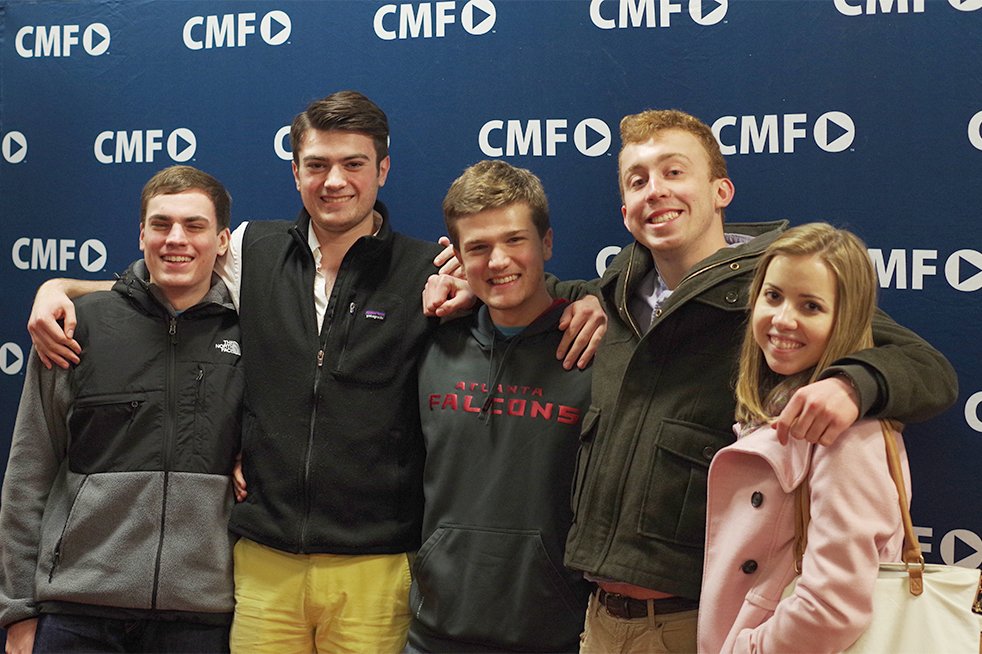
Fifteen years ago, students at Emory University endeavored to spread the joy of filmmaking. In 2004, Tech was introduced to their creation in the form of Campus MovieFest, or CMF for short. Eleven years later, this event has grown to include many universities, and Tech’s participation has reached 142 teams.

Campus MovieFest is a weeklong project where teams sign up to receive filmmaking equipment and create five-minute-long short films. At the end of the week, the teams’ finished shorts are compiled and judged, with the top sixteen films being selected for showing at Tech’s CMF Finale, which took place last Monday, Feb. 2. Of these sixteen, four win Jury Awards, which leads to their shorts being shown in Hollywood alongside the finalists from other colleges during the next round of Campus MovieFest’s competition.

Last Monday, the Student Center Theatre was not packed, but at least it was mostly full of students eager to see their films, or their friends’ films, shown in public for the first time. Of course, as is common at Tech, passersby saw the large conglomeration of well-dressed people, inquired what was happening and became part of the audience.

Promptly at 7:37, the overly enthusiastic Directors of Marketing and Operations, Nishant Gogna and J.R. Hardman respectively, came onstage and announced the commencement of the screenings. After each showing of four films, these two energetic announcers returned to thank sponsors, give background information, draw raffle tickets and generally attempt to make the CMF Finale a success.

Their efforts, while appreciated, were not entirely necessary, merely an added bonus, as the sixteen films were entertainment enough. Although all submissions are posted on Campus MovieFest’s website, it is quite an experience to see the films on a big screen where viewers can truly feel the reactions of the rest of the audience.

The stories presented covered most genres of films, ranging from the ludicrously high body count of Crisis, to addressing social issues in Stigma, to the post-apocalyptic Dust. There was a film for all tastes, but it is worth noting that most were quite morbid and dark. Even so, the audience thoroughly enjoyed the feats of cinematography shown on Monday. Considering each team had but a week in which to make their videos, the effects, stories and quality of the shown films were quite phenomenal.

Though each film was entertaining or thought provoking as the case may be (it would be misleading and rather improper to call something that draws attention to suicide as Tracks does entertaining), one stood out among the rest as far as garnering support from the audience. This distinction went to the film by Clappity Productions, Getting to Ten, which depicted two friends (Paul Jackson and Duane Stanford) arguing about a hand clapping game. It was probably best summarized by director Stanford himself when accepting his well-earned Best Actor award, “Things that we do are meaningless, but friendships, they mean something.”

After showing all sixteen finalists, the two directors came on stage for the moment every participant had been waiting for, announcing the winners. In addition to the four Jury Awards, there were several Silver Tripod Awards going to the entries with the Best Story, Best Production Design, Best Actress and so forth. Each award announcement was met with a nigh endless round of applause and the recipient was allowed to give a speech, if they so chose.

For the most part, these consisted of a flustered thank you and the obvious desire to get off the stage. The audience obligingly pretended not to notice and supported the winners with more applause; the atmosphere was quite jovial and welcoming.

At long last, the time came for announcing the overall Jury Award recipients. The combined expectation and nervousness of the audience increased drastically, allowing for the directors to have some fun in jokingly announcing that the winners would be notified via email the following day. Play aside, the audience was ecstatic to learn that the winners were Stigma, Dust, Lil’ Bun, and, predictably, Getting to Ten.

Posted in UncategorizedComments Off on Dramatic films score big at Campus Movie Fest

SGA survey on an increased transportation fee

Photo by Brenda Lin

A recent survey conducted by the Student Government Association (SGA) indicated that Tech undergraduates, at a rate of 59.98 percent, supported a $3 increase in the transportation fee in order to preserve the current level of service. Additionally, 63 percent of undergraduate respondents to the survey would support an additional $2 increase on top of the previous $3 increase that would allow Parking and Transportation Services (PTS) to establish an “express route”, which would travel back and forth between Clough Commons and Tech Square.

“What we’re looking for is that $3 to help maintain that level of service that we’ve heard students want,” said Lance Lunsway, Tech’s Director of Parking and Transportation services. “We were authorized to dip into some reserve funds last year, and I will tell you those are extremely low, and at some point there won’t be any more money to dip into.”

David Williamson, the Associate Director of Parking and Transportation services also made additional comments regarding the infeasibility of keeping the fee at its current rate.

“The mandatory fee funds a significant part of Transportation’s budget, close to 85%,” Williamson explained. “We’ve held that [fee] constant for the past three years. Clearly, it’s not sustainable to keep that up.”

The request for a fee hike comes after Groom Transportation, the third party company contracted by PTS to organize the Stinger and Tech Trolley services, sought raises for its employees including bus and trolley drivers following the end of the Great Recession and the recent beginning of an economic upswing. According to the contract between PTS and Groom, the amount paid annually to Groom to contract services and equipment including vehicles should increase by a percentage each year. This process has been stalled for a few years, primarily due to what Lunsway described as “lean years.”

“It’s interesting, because when you look at the overall trends in the economy you think, ‘Oh gas prices and going down, transportation costs are going down, we should pay less,’ but the reality is Groom is increasing their contract with Georgia Tech,” explained Dillon Roseen, the Undergraduate Student Body President for SGA. Roseen further said, “They are encouraging salary increases for their salary and their staff, which they haven’t done in many years.”

Both PTS and SGA have stated that the quality of the Tech Trolley and Stinger services will indeed drop if the $3 fee increase is not instituted. According to Roseen, times between buses will increase and the vehicles themselves will become more crowded as fewer buses are deployed on the roads.

“If you’re unhappy with transportation now, it’s going to get worse if they don’t get this $3 fee increase,” said Roseen.

“Most people are frustrated to pay more for the same service,” said Macie Whatley, SGA’s Vice President of Communications, in regards to the fact that a significant portion of the survey’s respondents indicated that they would not support such a fee increase. Whatley further explained, “It’s hard to understand how that is possible if you don’t sit on these meetings and hear from the departments.”

However, Roseen also stated that students who do not use transportation have a legitimate reason not to support the $3 fee increase.

In regards to the proposed express route between Tech Square and Clough Commons, PTS proposed the addition in order to provide an improvement in service to accompany the fee increase. While the new route would cost an additional $2, it would likely benefit students who choose to rent housing in the currently in-development Square On Fifth  and University House apartments.

Posted in UncategorizedComments Off on SGA survey on an increased transportation fee