Author Archives | Truitt Clark

Startups engineered in Crecine apartments

Photo courtesy of Georgia Tech Communications

The fifth floor of Crecine apartments on West Campus is brimming with makers and hackers participating in the 2014-15 Startup House. Startup House is a ThinkBig project, where sophomores and upperclassmen occupy a floor of an on-campus apartment to explore a topic of interest.

The focus of Crecine’s fifth floor is entrepreneurship and the lean startup methodology, a philosophy describing how to get a product to customers faster.

The 40-odd students are required to take part in both fall and spring semesters, so the current students and faculty have a semester of experience with the program that began its first year in August.

“All of these students are smart and hard-working, and in the rest of the world, they would be successful,” says Brandy Stanfield-Nagel, Marketing and Program Manager of VentureLab. “But here, they have to learn to deal with failure quickly and be successful next time.”

The program is an offshoot of VentureLab, the No. 2 business incubator in the country which has launched 303 startups to date. To aid the students’ startups, several guest speakers give talks titled “How I F***** Up My Startup.” These talks provide insight from the startup community of Atlanta including starting an idea, market research, and investments
and money.

Additionally, the faculty advisors meet regularly with the students to discuss different aspects of starting a company or bringing an idea to life.

“I meet with the students every week … talking to them one-on-one,” Stanfield-Nagel says. “We talk about technical risks, forming a team, and recruiting. We talk money a lot, and, more importantly, the risk of taking a product to market.”

At the moment, two of the groups are revenue-positive in their startups, although these groups existed and had developed ideas before the Startup
House began.

One such project is FIXD, a diagnostic tool for cars that sends detailed information to a phone app to be displayed. This project was successfully Kickstarted in September after receiving over $30,000. The newer groups are in their ideation and market
research phases.

“We got pretty lucky that we caught traction when we did,” says John Gattuso, Founder of FIXD. “I can only imagine how big it could have been if we had prepared more before launching; there are things I would have done differently for the Kickstarter [after Startup House].”

To further aid in more specific topics, events and workshops, usually hosted by the Invention Studio, are highlighted for the students to attend such as a vacuum forming workshop and a tutorial on making apps for Google Glass. Tours of the Invention Studio as a whole are also on the calendar.

The program has been so popular among students that in Fall 2015, the Startup House will move to Center Street apartments, which have bigger common areas to accommodate the increased number of interested students.

Posted in UncategorizedComments Off on Startups engineered in Crecine apartments

North Korea’s growing “entrepreneurialism”

Photo by Brenda Lin

On Feb. 16, Justin V. Hastings, a Senior Lecturer in International Relations and Comparative Politics at the University of Sydney, visited Tech to discuss North Korea’s surprising entrepreneurship.

He began the lecture by posing an intriguing question: “If North Korea is so isolated, then why must we stop the country from doing business with other countries?”

His research actually led him to believe that “North Korea is a paranoid Stalinist, state but very enterprising.” North Korea actually “has a fairly vibrant private economy” with middle-hybrid entities finding a niche in the economic environment.

Citing North Korea’s state-owned restaurant chain, drug trafficking industries and sanctions-busting efforts as examples of entrepreneurship, Hastings delves into the business side of the intriguing nation-state.

The country’s personal state-owned restaurant chain actually holds locations outside North Korea to earn profit. The country profits from its isolated status by allowing restaurant-goers to briefly experience North Korean cuisine. For drug trafficking, the country “had its owned state-run drug companies” which Hastings rightly deemed “fairly unusual.” North Korea now specializes in the crystal meth drug trade.

With regards to sanctions-busting, Hastings refers to North Korea’s expertise in using its isolated situation to its advantage. Since excessive sanctions from outside nations limit North Korea’s trading abilities, the country relies on the black-market to receive sanctioned goods.

If a North Korean buyer wants sanctioned goods, the broker will go to a Chinese trading company who will then go to the main supplier and find a way to deliver the goods across the border into North Korea. T

oday, though, the North Koreans are using their entrepreneurial abilities to essentially cut out the middleman; moreover, they are cutting the Chinese trading companies out of the equation by getting the sanctioned goods across the borders themselves.

Hastings also showed the audience two vivid pictures: one featuring Dandong, China, and the other featuring Sinuiju, North Korea—two cities located directly across from each other. The Dandong picture revealed a developed city with a thriving economy, while the Sinuiju photo showed an undeveloped city with barren land. Although the disparities in wealth between the two cities were evident, Hastings revealed a shocking insight: “Dandong, China, got rich on doing business with North Korea.”

The North Korea-China relationship is unique. Moreover, “China has profited from North Korea’s strangeness” as evidenced by the Chinese turning locations close to North Korea into lavish tourist-heavy resorts.

Additionally, Hastings’ research led him to a surprising conclusion with major implications for U.S. foreign policy: “North Korea gets better at operating the more hostile you are to them.”

With an ideology emphasizing the “do anything to survive” mentality, North Korea does not respond to threats lightly with regards to the business realm. He proposed that instead of imposing blanket sanctions, countries should impose more specific sanctions to limit North Korea’s creative, sanction-busting efforts.

Posted in UncategorizedComments Off on North Korea’s growing “entrepreneurialism”

Guilty before innocent: Serial lawyer speaks out

Photo by Monica Jamison

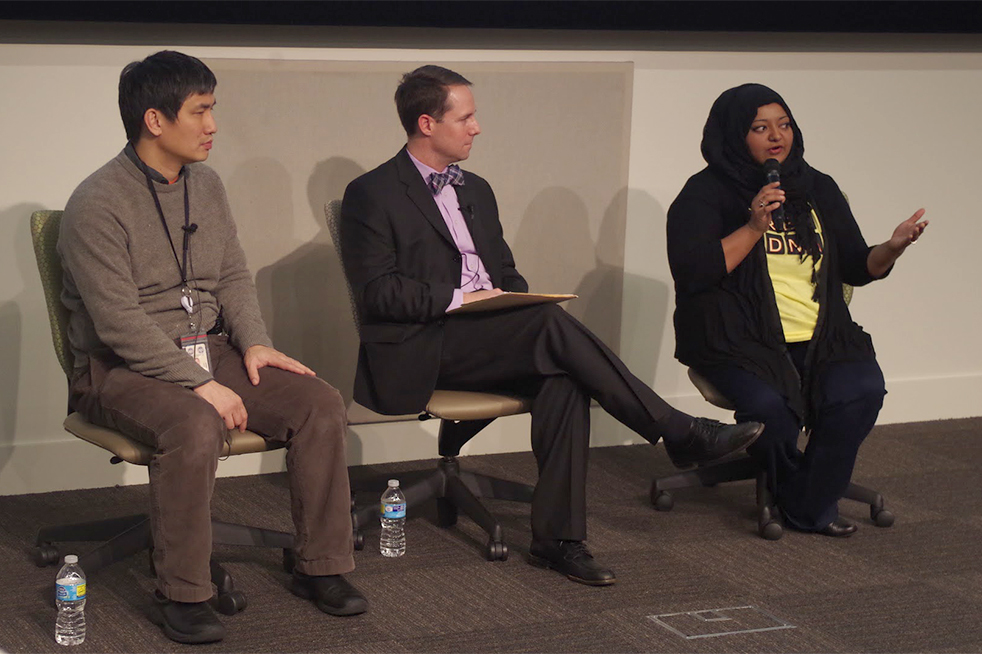
On Feb. 9, Rabia Chaudry, the lawyer involved in the influential Serial case, visited Tech to give students, faculty and visitors a general overview and an update on the current case’s status. Hosted by the Muslim Student Association, Sameera Omar, president of the MSA, felt the event was much needed to showcase the importance of a “fair and just trial” while helping students acknowledge their “duty to speak out against injustice and seek to understand others.”  With tickets selling out in less than a week and over 100 people on the event’s waiting list, the Serial update event proved to be a hit among the Tech and Atlanta community.

Holding the current No. 1 spot on iTunes, Serial is a spinoff of the popular NPR podcast This American Life.  With the producer of the podcast, Sarah Koeng, dubbing Serial as “about the basics: love and death and justice and truth,” the podcast seeks to investigate the death of Hae Min Lee, an 18-year-old girl.

With her body discovered on Feb. 9, 1999, Lee’s death was immediately ruled a homicide. Consequently, her ex-boyfriend, Adnan Masud Syed, was sentenced to life for her murder even with Syed declaring himself innocent. The podcast, ultimately, hopes to shed light on the murder case while questioning the legitimacy’s of Adnan’s trial.

The event started with a moderator-led session followed by a student question and answer portion. Immediately, Chaudry addressed the gathered crowd with the ultimate question: “who here has listened to the Serial podcast?” As expected, every person in the room raised their hands with the exception of two students whom she jokingly asked to be “escorted out” of the talk.

Since most of the attendees were avid listeners of Serial, Chaudry instantly jumped into the case’s current status. Possibly stemming from the podcast’s success, Adnan was recently granted a chance at filing an appeal, so he may be given a chance at a post-conviction hearing. The appeal, however, “can be denied if the court finds [the Defense Attorney, Gutierrez,] was effective with the case.”

She also addressed a variety of issues touched upon in the podcast. She felt the “prosecution [was] relying on stereotypes of Muslim men.” The prosecution felt Adnan believed that “in [his] culture, it’s okay to kill a girl who besmirched [his] honor.” An uncommon question, she addressed the prejudice associated with marijuana use. Even though Adnan smoked frequently during his high school years, Chaudry still believed the stigma associated with marijuana was not present throughout the trial.

Chaudry also discussed the sociology of innocence. According to Chaudry, the innocent before proven guilty “presumption is not reality.” Citing Adnan as a prime example, she believed that the justice system did “not treat [Adnan] like an innocent person,” as he was jailed almost a year before trial. She also feels “if Gutierrez had done her job ethically, then [Adnan] would not have been convicted.”

Posted in UncategorizedComments Off on Guilty before innocent: Serial lawyer speaks out

My failed experience with an all-nighter

David_Online_Edit

I am not afraid to admit to having stayed awake all night to study for an exam the following day. Some of those occasions were not far in the past. However, these attempts at salvaging my titanic-like situation have seldom ended in a savory fashion.

For this reason, I must discourage any effort to prolong waking hours for the purpose of raising one’s grade on a test.

Let me drop some hypotheticals on you real quick. Imagine a guy named Eric. He usually has his life together, but for some reason this past week didn’t quite turn out so well. Now it is Sunday, and Eric is feeling desperate. An all-nighter seems inevitable, but would it actually help? The answer is scientifically proven to be a resounding no.

“But wait,” you ask, dumbfounded. “How else could I possibly do better on an exam that I don’t know the material for?”

While it might seem logical during the evening prior, come morning you will feel the deepest regret, which is known only to those who have acted upon the poorest of instincts. Your eyes will ache and your bones may break (but probably not). Those are only a few of the innumerable grievances you will unequivocally desire to lend voice to.

“I do not particularly want to be in unimaginable agony during my midterm,” says your conscience. “So what should I do instead?”

Well, if you do fancy (or desperately need) a decent grade on the exam but also do not have aspirations of misery, I would genuinely suggest inventing or locating and buying a machine capable of time travel. What, did you really expect me to have a magical solution which I would reveal only to readers so steadfast that they have made it this far into this rambling editorial? Unfortunately for any individuals reading this who find themselves in a position in need of a quick fix, one doesn’t exist.

This is not to say you are completely done for; there are indeed some avenues which will undoubtedly factor more positively into your personal well-being as well as that of your GPA. If you ever find yourself seriously considering staying awake through the night for the sole reason of learning a significant portion of upcoming exam material, do yourself a favor and go to sleep instead.

A number of studies, including one done by Dr. Philip Alapat at the Baylor College of Medicine, have conclusively found sleeping before an examination to produce consistently better results than those achieved through all-nighters.

Why should you trust this random study? Well, if you came into this article looking for validation of the opposite viewpoint than the one I just made, then I confess you have no reason to believe any of what I am wrote. On the other hand, one could simply choose to accept a credible scientific study for nothing less than what it is, and re-evaluate their test-taking strategy accordingly.

Posted in UncategorizedComments Off on My failed experience with an all-nighter

Is Tech Prepared for Ebola?

Photo by Brenda Lin

Roughly one year ago, a student at Tech suffered a case of meningitis.

All of the occupants of the residence of the afflicted individual were notified of the situation immediately. Stamps Health Center was able to stay open into the night in order to provide treatment for those residents who were at risk for infection.

If, however, an outbreak on a significantly larger scale were to take place, Tech is in a position to take action. However, the comprehensiveness of the response depends on the type of disease and other specifics.

Dr. Gregory Moore is the Senior Director at Stamps Health Services as well as a Clinical Professor in the School of Applied Physiology. Moore provided insight on how students would be alerted to a potential disease outbreak.

“The fastest notification would be on the Stamps website and through social media,” said Moore. “We have both Facebook and Twitter accounts. Students who follow us will hear about disease threats first.”

Moore went on to explain how Institute Communications would also be able to contribute resources to the effort. These might include screen ads, posters or Daily Digest notices. During the Mycoplasma outbreak at Tech, which occurred approximately two years ago, individual emails were sent to all students in order to ensure the information was as widely circulated as was possible.

Other resources and medical procedures were also mentioned by Moore in regards to Tech’s planned response to specific disease outbreaks. Ebola is just one example.

“As far as Ebola goes, we don’t have the ability to treat those patients, but we have full personal protective equipment so that Stamps staff can briefly care for a patient as they are being prepared for transfer to Emory,” Moore said.

Stamps also has in its possession what Moore described as “full personal protective equipment,” which would allow the staff to avoid a lapse in care to a specific patient during the time that he or she is awaiting transportation to Emory.

“We also have a negative pressure room at Stamps to isolate a student with a suspected airborne infectious disease while making a diagnosis and preparing for transfer,” said Moore regarding potential containment methods for individual infections.

Tech’s immunization requirements for students, faculty and staff were instituted with the goal of avoiding large scale disease transmission. But if an outbreak on a greater scale were to occur, it would likely be handled by authorities at either the local or state level, either of which could possibly include involvement by public health officials at the nearby Center for Disease Control (CDC).

If a quarantine or modifications to Tech’s academic calendar were deemed necessary due to the scope of the outbreak, an overall decision would be reached by Tech administration in conjunction with public health officials.

“As always, we advocate good hygiene, hand washing, sneezing into the inner elbow and staying away from others when sick as the first, and most important, measure to prevent disease transmission,” Moore said.

These measures, in addition to vaccination, have proven to be sufficient to prevent large scale outbreak at Tech in the past, but only time will tell whether they will continue their track record of successful prevention.

Posted in UncategorizedComments Off on Is Tech Prepared for Ebola?

Robot prepares to sweep future Grammys

Photo courtesy of Mason Bretan

Students at Tech are well-known for their innovation in the areas of engineering and computer science; however, there are some who choose to do the impossible and bring liberal arts into the mix as well. Enter Mason Bretan, a Ph.D. student at the Center for Music Technology here on campus.

Bretan specializes in a brand of artificial intelligence that seeks to harness the mysteries of music through the medium of robotics. The robots he works with, nicknamed Shimon and Shimi, are currently coded to create music via improvisation and interaction with their surroundings; the Technique was recently able to pose a few questions to Bretan regarding his past experience, his current work and his hopes for the future of music technology.

Technique: What made you interested in combining music and technology in the first place? Is there someone or something that was a big influence on you and kind of led you to do research in the subject?

Bretan: Growing up I loved music and I loved science, but they were always separate and I had never really given much thought about combining the two fields until I started my undergrad at UC San Diego. There is a large music department at UCSD with a heavy emphasis on music technology; in fact it’s home to many notable names in the field.

I would attend performances and see these great musicians using computers to create systems that could automatically respond to them resulting in sounds and timbres I had never heard before. This completely changed my perspective on music and it really opened my eyes to the aesthetic possibilities that science and technology can provide to music.

So I started to explore this domain and as I began to become more familiar with higher level computer science, signal processing and acoustics concepts I decided that there was still so much to learn and explore within music technology, so I applied to grad school. And now I’m here at the Center for Music Technology at Tech, and I’ve enjoyed every moment of it!

Technique: What ideas led to the creation of Shimon and your other robots?

Bretan: Robotic musicianship in general combines two ideas, namely musical mechatronics which focuses on construction of sound producing mechanics, and machine musicianship which focuses on developing algorithms and cognitive models representative of various aspects of music perception, composition and theory.

By creating robots capable of understanding and generating music we hope to supplement and enrich the musical experience for humans in a way that would not be possible from only human-human musical interactions. Computers and robots are capable of doing things humans aren’t and I and other researchers in the field believe there is artistic potential in these non-human characteristics.

Technique: What kinds of things are you currently working on? Is there still more progress you hope to make with Shimon?

Bretan: There’s still plenty to do with Shimon, Shimi and in the field of robotic musicianship in general. Recently I’ve been working on a generative system for robot musicians that allow them to “think” about their embodiment and physical constraints when making musical decisions. I call it “musical path planning” and it works by jointly optimizing for the robot’s physicality and its musical knowledge and goals. Actually, part of the reason I made my video was to demonstrate my implementation of this idea in action.

Recently our group has also been focusing on wearable robotics and how we might be able to augment human ability with additional limbs and learn how the augmentations can influence the music.

There are plenty of challenges in this and our first prototype was built for an amputee drummer. We had some success and some nice musical results and now we want to go a step further and see if an additional “drumming arm” can be useful for an able-bodied drummer.

Technique: What aspirations do you have for the things you’re doing here at Tech — what do you hope will result from your work?

Bretan: I want to show the world that robots and machines can be used for applications other than merely computation or completing tasks. I think they can also be artistic, creative, and perhaps even emotional. Often my research is met with some resistance from “purists” who believe that music making and art is a uniquely human activity and could never be replicated by a cold, calculating, soul-less machine.

In my opinion, robots have the potential to expand artistic creation just as other technologies such as turn tables, the electric guitar or digital audio workstations have influenced musical culture. Technology is a good thing and creative people always find ways of using it to enhance artistic expression.

Technique: What kinds of real world applications do you see for your research?

Bretan: I think music is a real world application, but the research can also impact other fields. Extracting meaningful information from an audio signal to create an algorithm enabling improvisation encompasses everything from signal processing, to machine learning, to cognitive science.

Music is also an extremely time-demanding task, so a lot of effort is made to make things efficient and run in real-time. Beyond the science that goes into developing our robots, music is also a domain that is shared and enjoyed by billions of people, and such ubiquity can be leveraged to encourage people to engage with robots.

I think we will be seeing social robots become more integrated into everyday life and robots that demonstrate an understanding and even enjoyment of something that is so familiar to people can help to establish trust and confidence in the new technology.

Technique: After you receive your Ph.D, what do you plan on doing?

Bretan: I don’t know yet! Music technology and robots are both big and growing fields right now so hopefully there will be lots of opportunity when I graduate.

Posted in UncategorizedComments Off on Robot prepares to sweep future Grammys

Google Fiber is good for you

Photo by Brenda Lin

Last month, Google announced that it will be expanding its Google Fiber network, which is capable of delivering gigabit Internet connection speeds, into Atlanta.

Areas which will be receiving the connections include Atlanta, Smyrna, Sandy Springs, Brookhaven, Decatur, Avondale Estates, East Point, College Park, and Hapeville. These locations were selected since there was a higher demand for Google Fiber in these neighborhoods.

“Another possibility is that K–12 schools will be able to participate and benefit from this event,” said Dr. Ron Hutchins, Associate Vice Provost for Research and Technology and Chief Technology Officer.

“Now, students who are living around Atlanta rather than in dormitories will have the same capabilities as students living on campus,” Hutchins said. “This is a major benefit since now students living off campus will not have to come on campus every time they wish to do something that requires a high speed Internet connection. As a result, students might be drawn to live in these specific areas of Atlanta.”

In the Atlanta Journal Constitution, Hutchins explains some of the benefits of having faster Internet speeds available to the population. These benefits include seamless working from home, opportunities to launch businesses from home and also, for example, the ability for elderly patients to have convenient minor check-ins with doctors through high-speed, high-quality video connections.

Students on campus have stated that higher Internet speeds enable them to work more easily and perform a variety of activities without suffering from bottlenecks in their connections.

“Our network will not be changing since we have already had a gigabit connection for a while now,” Hutchins said.

One example would be the possibility for having location based services on campus and around Midtown. Students could simply leave messages based on their location and then anyone walking by would be able to see their message. This could also be useful to inform people of things such as a road being closed, hazards or areas with high traffic.

In general, this ubiquitous high speed connectivity will boost the productivity of people living around Atlanta and make daily life and work easier.

Hutchins also proposes the opportunities that students will have to take this infrastructure presented to them and build something useful and innovative off of it that people on campus and around the city can benefit from.

“We are probably 2 or 3 years out from this project being completed,” Hutchins said. “Google is currently in the design process for this undertaking.”

The mayor of Atlanta has been a big proponent of Fiber coming to Atlanta and has done a lot of work to make it happen, according to Hutchins.

Posted in UncategorizedComments Off on Google Fiber is good for you

My mom is more high-tech than I

Truitt_Online_Edit

When my mom got a Fitbit, I knew wearable technology had finally made its way to the masses.

Over the past several years, wearables have transitioned from being just a plaything for tech geeks to something normal people actually want to own. Fitness trackers, smartwatches and even smart glasses have become mainstream.

Despite speculation that it won’t be much good, the release of the Apple Watch will surely further this trend. I have yet to be convinced that I need any of this.

The smartphone was an easy sell to consumers. It was a new device that could replace your old cellphone, calculator, notepad, camera and even some aspects of your computer. The key to the success of the smartphone was that it allowed people to carry around less stuff. It minimized the number of devices a person needed to have with them, but allowed them to have access to the functions of many devices at any given time.

Now, smartphones have become somewhat stagnant. Each new Galaxy or iPhone or Lumia (to avoid alienating you Windows Phone people) which gets released feels more evolutionary than revolutionary.

Our phones are so packed with features that little can be added. What is already there just gets upgraded. Plus, apart from Nokia’s crazy colors most smartphones look exactly the same.

Rather than sticking to the idea that your smartphone should do everything, tech companies now want us to add a second device to supplement the functionality of our phones. To me, most of these devices suffer from some fatal flaws: almost every smartwatch on the market today requires a paired phone in order to do anything, and what they can do is basically an extension of the functionality I already have.

I am also not a big fan of the high price of smartwatches. Carrier subsidies allow you to buy a smartphone for cheap (sometimes even free), and yet you will be paying hundreds of dollars for a watch to go  with it.

I realize some people out there are willing to pay plenty of money for a regular dumb watch. I’m just not one of those people, nor do I think those people would trade the quality and craftsmanship of an expensive watch for a plastic watch with a color screen.

At first glance, fitness trackers seem like a better proposition. They are cheaper than smartwatches, and can also tell you really incredible things about yourself, such as how many steps you took that day or if you slept well (since apparently you can’t figure that one out on your own). Unfortunately for fitness tracker manufacturers, a new study released by the University of Pennsylvania says that built-in fitness tracking in smartphones is actually more accurate than wearable fitness tracking. It turns out that our smartphones are already replacing fitness tech that we just decided we needed.

Maybe I am just lazy, but I would rather not have to charge multiple devices every day. I already charge my phone every single night, so I am far less likely to use a second device if it also needs to be charged daily.

I almost bought a Pebble smartwatch during a Black Friday sale solely because of the price cuts, but for me, the current state of wearables is just not developed enough to be worth the purchase.

Posted in UncategorizedComments Off on My mom is more high-tech than I

Students to vote on $35K donation

Photo courtesy of Klemis Kitchens

Keeping campus in the spirit of giving, the Student Alumni Association (SAA) has opened voting to the student body for the Gift to Tech. The Gift is an annual donation by SAA consisting of SAA membership dues and alumni donations.

Last year’s Gift was $31,000 to fund Klemis Kitchens, a resource for students who are facing financial hardships and cannot afford their own meals. With over 4500 SAA members and the donation of $10,000 by alumni Ken and Tyler Townsend (ME ‘64, IE ‘98), this year’s Gift is currently at $35,000 and growing.

With Tech’s status as the No. 1 public university in alumni giving, SAA believes that it is important to instill a culture of giving back to Tech early on. Students can help add to this fund by joining SAA and paying the $10 signup fee, $5 of which goes to the Gift to Tech with the other $5 going towards the Student Foundation’s Roll Call for the betterment of Tech.

Students and organizations can recommend projects, and SAA pares these down to eight projects to be voted on by the Tech community via SAA’s website. After community voting ends on March 13, the top three projects are put through another round of voting by SAA members, and the top project after that is announced on April 21.

Posed by the Center for Assistive Technology and Environmental Access (CATEA) and the Office of Institute Diversity, the GT ALIGN Campus Accessibility app aims to make Tech’s campus more inclusive to students, faculty, visitors and staff who have difficulty maneuvering campus. The app would visualize up-to-date information such as sidewalk condition and locations of accessible entrances.

The Georgia Tech Police Department’s Campus Safety – Bike Bait Program is designed to help catch bicycle thieves on campus. The Gift would fund different model bicycles with GPS tracking units to be placed in areas that thieves typically target to catch criminals.

The Enhancements to Harrison Square and Cherry Street aim to improve the heart of Tech’s Historic Hill District and New Steelcase media: scape furniture and technology in Clough Commons would tackle the desire for students to collaborate more effectively. The technology in these stations allows students to connect their laptops and share information among other connected devices.

The SAA Free Concert Series is a plan to schedule four outdoor concerts in the outdoor Amphitheater next to the Ferst Center for the Arts. With two in the Fall and Spring, the concerts would be free to all of campus and feature professional performers. Providing electricity to students looking to relax outdoors, Solar-Powered Electricity Stands would provide a green way to relax and study. Using minimal space, the stands would provide a communal gathering spot for groups to work around or an emergency stop for a dying phone battery. The stands would be placed in Tech Green for open space for all.

With a Student Emergency Fund in place, students facing financial difficulty would be able to purchase something out of reach, like a suit or airfare for an interview. Managed by the Office of Financial Aid, a student-to-student support system would help out fellow students, especially when unexpected expenses arise.

Funding Student Mental Health would allow the Counseling Center to make enhancements to its program, as recommended by the 2014 President’s Task Force on Student Mental Health. The Gift would benefit the Center’s individualized psychological services, professional education and campus programs to empower students to reach academic and personal success.

In SAA’s five years on campus, the organization and the Gift to Tech have matured to where they can be more selective in the initial eight choices.

“We were mindful of who we let be in the top eight this year,” says fourth-year BA Carli Walker, President of SAA. “Hopefully in the future, it can be something that people apply for and give a pitch for, but we’re not at that point yet.”

Additionally, SAA is increasing visibility of the Gift to Tech in their presence on campus and in their choices of Gifts that appeal to the entire Tech community.

“The people who really know about the Gift are huge organizations who have a foot in the Gift,” Walker says. “We don’t want it to be just the Band or the Ramblin’ Reck Club. We want it to be everyone on campus who might not have any personal investment in any of the 8 projects voting on what they think is the best.”

Posted in UncategorizedComments Off on Students to vote on $35K donation

Tragic love story sets the mood for Valentine’s

Photo courtesy of The Atlanta Shakespeare Company

Since the year 2000, The New American Shakespeare Tavern has shown the ever-popular Shakespearean play “Romeo and Juliet” every February. This is only logical, since people tend to enjoy seeing the tragic story of two senseless teenagers around Valentine’s Day. Of course, this dedication to the star-crossed lovers creates the problem of doing a play altogether too often.

Before some plays, the audience is asked if they are return patrons or if this is their first time going to the tavern. For many plays, the returners far outweigh the newcomers. For “Romeo and Juliet,” however, the audience is about half and half between the two groups, occasionally favoring the newcomers.

Doing the same thing for the sixteenth year in a row tends to bore, even taking into account the occasionally varying actors in each role. This year’s rendition of the timeless tale of doomed love saw the return of most of the 2014 cast, including the leading actors Nick Arapoglou and Annie York Hester.

As is the case of any production worth its salt, the players involved are most certainly worth mentioning. From enamored to depressed, hopeless and suicidal, Hester does a fantastic job portraying the range of Juliet’s emotions. In Addition, Arapoglou complements Hester’s performance, and the two depict their character’s ill-thought-out love as though it were true. However, while the two are fine actors and played their parts with gusto, their rendition of the two woefully tragic characters was not as entertaining as it could have been.

Since it has been shown so often at the Shakespeare Tavern and is one of the Bard’s most well-known plays, it is difficult to find someone who does not know how “Romeo and Juliet” ends. Much of the fun of plays, and of stories in general, is following the action or lack thereof that leads to a surprising, or at the very least unknown, conclusion. Since the entertainment value of an unknown ending has been taken away from this particular play by time, it is left with the talent of the actors and little else to make it an enjoyable and worthwhile experience. Sadly, as good as the actors are, they are not so good as to be able to make “Romeo and Juliet” entertaining for those seeing it for the third or fourth time.

Perhaps if there were fewer points in the plot where the viewer can see how to avoid the disastrous end watching “Romeo and Juliet” again would be more pleasant. Pointing out these alternate paths could be entertaining in itself, but after exhausting the options and knowing the play will not change its centuries-old ending, the viewers are left with yet another rendition of a senseless couple’s downfall.

For those who managed to graduate high school without reading “Romeo and Juliet” and have not been curious enough to learn the story on their own, this is perhaps one of the better places to see the play for the first time. This is mostly due to the Tavern’s adherence to original practice: they use the unmodified script from Shakespeare’s time and the actors do not acknowledge the fourth wall’s existence, reacting to the audience if the fancy strikes them.

There are, however, plenty of other plays to see, both at the Shakespeare Tavern and elsewhere, so it is probably best to stay away from the overdone classic, “Romeo and Juliet,” which will be performed until Mar. 1. Starting Mar. 5, the Shakespeare Tavern plans to perform “The Winter’s Tale,” a little-known work by the Bard which should be a nice reprieve from the familiar “Romeo and Juliet.”

Also, later this year, the Tavern has plans for performing “Taming of the Shrew,” “Merchant of Venice” and “Coriolanus,” as well as the non-Shakespearean play “Our Town,” by Thornton Wilder; such a lineup will surely attract a wide range of viewers.

Our Take: 3/5

Posted in UncategorizedComments Off on Tragic love story sets the mood for Valentine’s