Niccolò Machiavelli, a philosopher during the Renaissance period, once wrote, “Men are driven by two principal impulses, either by love or by fear,” in one of his most notable pieces,“The Prince.” Though penned in the 16th century, this insight remains strikingly relevant today. You see it in politicians delivering speeches, influencers curating their social media posts, advertisers crafting campaigns and even in people you see everyday – it is all designed to evoke an emotional response. The goal is simple: to convince you to believe in their message. Yet, the line between genuine inspiration and calculated manipulation often blurs, leaving us questioning the true intent behind their words. So if fear could be used as a manipulation tactic, how about something as pure and understanding as empathy? These are the questions we must ask ourselves when navigating a world concentrated in various types of emotional appeals.
Though fictional, the popular Disney movie “Frozen” perfectly illustrates how a character can use empathy to manipulate others for personal gain. Prince Hans preys on Anna’s feelings of loneliness to get closer to her, appearing vulnerable, despite having no genuine interest in her beyond securing his path to the throne. Anna, blinded by his feigned kindness and understanding, trusts his words and eventually falls for him. By the time she realizes she has been manipulated, her perception of him changes completely -– but by then, it is far too late.
These examples do not only occur in fictional works. As mentioned earlier, manipulation through pity and empathy has been employed for centuries -– ranging from political figures leveraging these tactics to gain supporters, to an average person guilt-tripping a friend into going skydiving. A striking real-life example is the Salem Witch Trials, where community leaders exploited empathy to manipulate others and advance their hidden, often absurd agendas.
The Salem Witch Trials of 1692-1693 in Massachusetts manipulated local civilians into believing that witches, often women, lived among them. Community leaders encouraged people to empathize with the so-called “victims” of witchcraft, despite there being no evidence of such practices. The root causes of these fears were complex, often stemming from personal grudges, with accusations of witchcraft serving as a weapon against those who were disliked. Many argue that the trials were deeply rooted in misogynistic beliefs, reflecting societal fears of women wielding power -– any deviation from traditional roles was seen as otherworldly or dangerous during this period.
Fast forward to today, we see similar tactics being used in politics, often fueling public division and debate. Religion, which many turn to for moral guidance and the comfort of unity, is weaponized to advance political agendas all over the world, including the United States. Leaders often exploit empathy by attempting to share religious values and using these connections to push policies that may not even completely align with the faith itself. Modern political expression often hides greed behind a veil of moral or religious legitimacy, something we saw in the Salem Witch Trials. These tactics highlight the importance of being critical and unbiased when evaluating someone’s arguments or ideas, ensuring we question their true intentions and determine whether their words align with their actions, so we can avoid being manipulated for their gain.
Posted in UncategorizedComments Off on The subtle line between manipulation and influence
After the 2024 presidential election results were announced, Matt Walsh tweeted, “Now that the election is over I think we can finally say that yeah actually Project 2025 is the agenda.” Matt Walsh is a conservative political commentator who has had a leading role in the development of Project 2025.
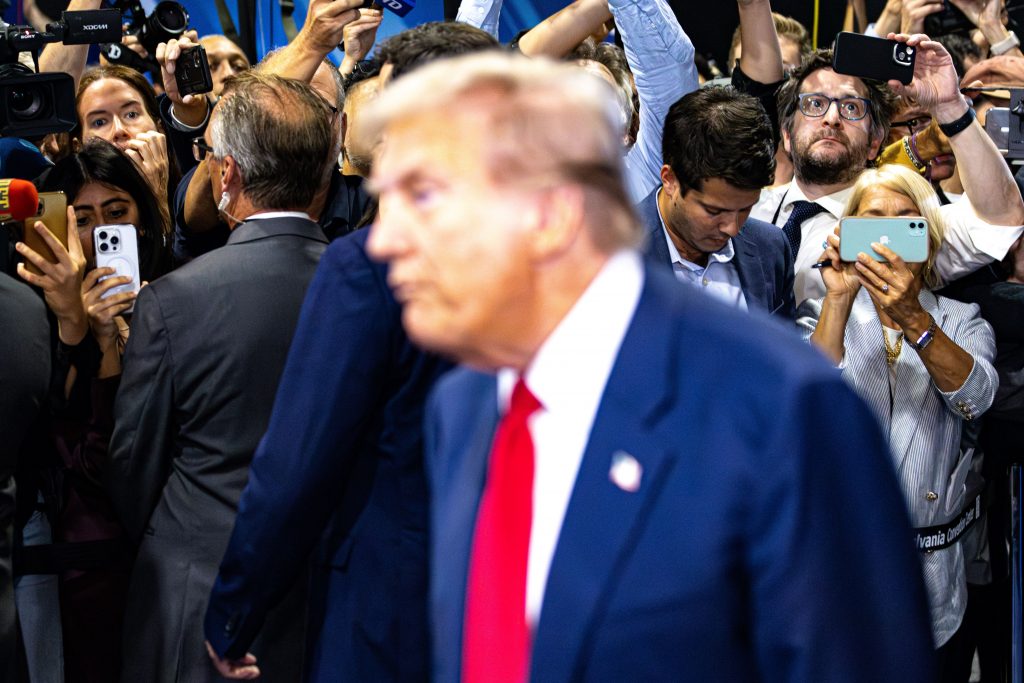
With Republicans set to gain control of both chambers of Congress, put Donald Trump in the White House without having to worry about re-election and be backed by a friendly Supreme Court, they may get their wish in Project 2025. Project 2025 contains a series of radical changes that threaten the basic functions of government for college students.
Project 2025 calls for the Department of Education to be disbanded with necessary component offices being consolidated under other departments or, in the case of the Office of Federal Student Aid, privatize it.
Project 2025 takes the position that students should borrow responsibly, and taxpayers should not be subsidizing a college education. To accomplish this, Project 2025 makes the following proposals: phase out all income-driven repayment plans with income exemptions equal to the poverty line, abolish loan forgiveness and interest rate subsidies, including annual and aggregate limits on borrowing, eliminate graduate and parent loans and privatize student loans because according to the authors, the government is incapable of making sound decisions.
Not only does this make a college education unaffordable, but it also completely defeats the purpose of having the government issue loans because the government is in a unique position to issue loans for the purpose of educating society rather than the purpose of making as much profit as possible. Should these proposals pass, many college students will likely be in debt for most of their lifetimes as interest rates would increase as high as the market can bear, income driven repayment would require much higher payments and loan forgiveness for making 25 years (10 if working in public service) of payments would cease to exist. Project 2025 also wants to eliminate loan discharges if a school closes. All of these actions would make college, at the very least, a much riskier financial move, or more likely, a financially impossible decision, which may discourage students from attending college altogether. At a time when many universities, including Drexel, already face financial difficulties, such a move may lead to more school closures which reduces access to higher education overall.
Luckily, some of these programs are written in statute which means Congress will have to act to amend the law. Although changes to terms of federal loans can most likely be done through budget reconciliation to avoid a filibuster, Congress will still have to spend valuable time that it will probably not have as it focuses on higher priority issues like renewing Trump’s tax cuts, working on appropriations for this fiscal year and the next and repealing parts of the Inflation Reduction Act. Unluckily, other changes, such as abolishing income driven repayment plans, can be pursued unilaterally by the president. Still, these changes must go through the federal rulemaking process under the Administrative Procedure Act which will most likely take about two to three years to complete.
Project 2025 also wants to severely limit Title VI and Title IX, the two prominent civil rights laws that apply to universities. Under Project 2025, the government would interpret Title VI to allow policies with disparate impact and policies that seem neutral on its face that disproportionately impact certain protected classes without a legitimate reason to continue, which allows universities to try targeting groups where minority students are concentrated. In addition, Project 2025 wants to reverse the Biden Administration’s actions that consider sex as nonbinary by redefining “sex” under Title IX to mean “only biological sex recognized at birth.” These changes severely narrow what constitutes illegal discrimination in the eyes of the federal government, so students would be unable to petition the federal government to enforce their rights. The changes can be made administratively which bypasses Congress. Even if officially changing federal rules takes years, the Department of Education under Trump can effectively change them immediately by refusing to enforce violations that rely on more expansive definitions.
International students have additional difficulties. In his last administration, Trump attempted to rescind the two year extension of Optional Practical Training for STEM students instituted under Obama and make H-1B visas so difficult to obtain by drastically increasing the minimum salary of an H-1B worker–sometimes doubling the minimum in certain fields–and application costs such that it would be impractical for any company to employ H-1B workers. Project 2025 complains that immigrant workers depress American jobs even though companies are required to prove that American jobs are not affected, and the economy benefits from immigrants filling in jobs that Americans do not. Because the H-1B visa is the main temporary visa an international student can use while waiting for a green card, a Trump administration could make it impossible for an international student to continue to stay in the United States.
The incoming Trump presidency is a huge threat to college students and college education as a whole. As stated many times during campaign season, Project 2025 is a radical threat that erodes the bank accounts and rights that Americans have come to rely on. For the sake of higher education and the country, Project 2025 must not come to fruition.
Posted in UncategorizedComments Off on Proceed with Caution: Donald Trump is a Danger to College Students
When asked to pick something, we tend to experience our choice as an affirmation. In our two-party election system, we must shed that view and realize American elections are a choice between the lesser of two evils.
Simple math shows that voting for the lesser of two evils speaks twice as loud as not voting for either of the major party candidates. Suppose Candidate D and Candidate R both have 50 votes. Either candidate would need just one more vote to pull ahead. However, if I vote for one of them, the other candidate would need two more votes to pull ahead, making it that much harder for the worse choice to run the country. This math is especially crucial in the large swing state of Pennsylvania, which has voted for the winning presidential candidate 77.4 percent of the time, almost four out of five elections, since 1900.
While some may accuse me of creating a false dichotomy, voters must understand that there is no realistic chance for a third party to win national office, and voting for such is effectively the same as not voting. The argument that threatening to vote uncommitted or third party pressures politicians to not ignore them falls short to the same math as before: if taking a certain position alienates one voter who votes third-party but embraces another voter who votes for the candidate, that is still a net gain of votes compared to the other candidate. Voting third-party or not voting at all is akin to declaring that the two major parties are equally bad, which is never the case.
This presidential election is unique because it presents the country with a choice between two people with White House administration histories to judge. A comparison between Kamala Harris and Donald Trump shows that Trump is less capable of performing presidential duties than Harris.
National Security
As commander-in-chief, the president must have the competency to decide crucial matters of national security. While Kamala Harris demonstrates responsibility, Donald Trump retained classified documents, including nuclear secrets, hid them in unsecured locations in his private home, including a shower and a bathroom and refused to turn over the documents to the government. This goes beyond a simple mistake in the process of moving out of the White House and demonstrates, at best, a basic lack of understanding of the national security apparatus.
Trump has commented in the past that Putin is “genius” and “savvy” for his role in the Ukraine war while Harris understands the importance of defending democracy in Ukraine, supporting NATO allies and the opportunity this presents to degrade Russia’s economy and military to advance American national security goals.
War must also be conducted in a humanitarian manner. While the Biden-Harris administration has not been as strict with Israel’s use of American weapons as progressives would like, it has still pushed for restraint and worked tirelessly behind the scenes to negotiate a ceasefire agreement between Israel and Hamas. Meanwhile, Trump as recently as Oct. 25 was reported to have called Israeli Prime Minister Netanyahu and expressed support for Israel’s brutal bombing campaigns, saying, “do what you have to do.”
In addition, Trump has made impulsive foreign policy decisions of massive consequence, such as pulling out of the Iran nuclear deal, which previously limited Iran’s uranium enrichment to levels below that necessary to produce a nuclear weapon; the Paris Climate Accords, which commits the country to limiting global warming to 1.5 degrees Celsius above pre-industrial levels; and the Intermediate-Range Nuclear Forces Treaty, which limited the possession of certain weapons by the United States and Russia.
The next president will be inheriting a foreign policy mess with wars in Ukraine and the Middle East. More foreign threats may arise in the next four years. The country must elect someone who shows they are capable of defending the United States from foreign enemies and is responsible enough to not carelessly handle our national secrets.
Legislative Priorities
Because the president has veto power and is seen as the leader of their party, the president can use the bully pulpit to push Congress to prioritize issues that are important to them.
Kamala Harris in her role as President of the Senate made history by casting the most tie-breaking votes in the Senate, reflecting a closely divided Senate. Passing by a 51-50 vote, with Vice President Harris casting the tie-breaker, the Inflation Reduction Act represents the Biden-Harris administration’s biggest legislative accomplishment.
This law imposes comprehensive reforms across the government including a 15 percent minimum tax on corporations making over $1 billion in profit, a mandate for the Internal Revenue Service to develop a free direct e-file tax return system, a $35 monthly cap on insulin costs for Medicare Part D beneficiaries, the power for the government to directly negotiate prescription drug prices with drug manufacturers, extensive tax credits to stimulate clean energy investments and funding throughout the government to carry out its normal operations. The extensive provisions of a law passed on such razor-thin margins reflects the political acumen of the party leadership to navigate legislative challenges and the prioritization of major issues like the environment and healthcare costs that are important to America’s sustainability as a country.
Donald Trump’s major legislative accomplishment is the Tax Cuts and Jobs Act which majorly overhauled the tax code to reduce taxes for businesses, shareholders and individuals. While most of its corporate tax deductions and the lower corporate tax rate are permanent, most of its reductions in individual taxes are set to expire next year. While the Biden-Harris administration prioritized the middle class and sustainability, the Trump-Pence administration prioritized corporations, such as the Trump Organization, and their profits.
Working for the Benefit of All Americans
At the end of the day, the president must work for the benefit of the country as a whole, not just for those who elected them. The president must uphold the basic principles of American democracy, such as equal protection under the law, preserving the public’s faith in public institutions and prioritizing the country over party. On these fundamental grounds, Donald Trump becomes the greater evil.
Trump’s rhetoric is often one based on marginalizing minority groups for immutable characteristics. He has attempted to implement a Muslim travel ban, defended white nationalist protesters in Charlottesville as “very fine people” and has been held liable for sexual assault. A president who seeks to divide cannot be a president who enforces the law on all Americans equally.
The president should also not use their office for personal or corrupt purposes. Trump profited off his position from business transactions by accepting at least $7.8 million from officials and governments of 20 countries. Government officials, including Trump, also stayed at Trump’s hotels. During his time in office, he did not put his businesses in a blind trust, as is customary, which would confer the administration of the business to an independent third party.
Trump also weaponized the Department of Justice for political purposes by investigating political opponents, threatening careers of those who opposed him and pardoning political allies. Meanwhile, the Biden-Harris administration has allowed the attorney general to have independence, and the current DOJ has appointed fair special counsels to investigate both Trump and President Biden’s son’s. Project 2025’s plans for the DOJ include prosecuting recipients of abortion medication by mail and preventing states from allowing voters to cast ballots, which would divide the country into those who support Trump and those who do not.
Furthermore, Trump has shown that he would rather gain political points over helping the country. Recently, he single-handedly prevented immigration reforms that he supported from passing Congress by calling Republican representatives and urging them to vote against the bill because immigration reform would help his opponent. And let us not forget that when the COVID-19 pandemic started at the end of his administration, he constantly contradicted Dr. Fauci, the actual expert on infectious diseases and tried to sweep the pandemic under the rug because a national crisis might make him look bad. Countless deaths could have been avoided had Trump encouraged people to wear masks and get vaccinated, and not suggested they inject bleach or chloroform.
Clearly, Donald Trump is the greater evil of this election.
Posted in UncategorizedComments Off on Vote for the lesser of two evils
It is week four of the 2024 Fall term: if you squint through the green mesh tarp covering the metal chain link fences surrounding the property that used to be Myers Hall, you will see a lovely little park forming in the space where, not too long ago, a large mound of dirt sat. Not too long before that, it was the site of the Myers Hall demolition, which to most students living nearby, was just another development project on campus, with all of the noise and walkway obstruction that typically come with it.
This project is not another large building inaccessible to students, nor is it one that blocks views of the city skyline or the sidewalks alongside busy roads. The soon-to-be park on the Myers Hall lot is the perfect example of campus development with real benefits for everyone– students, community members and even native wildlife.
Due to its location being slightly away from the heart of campus, the anticipation and excitement around the completion of this project may not be felt by most students.ut it definitely should be. According to Drexel, the approximate 40,000 square feet of turf will be outfitted with “native plants, stormwater management and outdoor outlets on lamps and benches.” It also features LED lighting for reduced light pollution, horticultural soils designed to increase water infiltration to ease burdens on the city sewer system and a plaza with seating. Assuming it lives up to all it has promised, the new greenspace will be an incredible asset to students and residents of University City. The demolition of Myers Hall likely had fewer consequences than demolitions of its kind may have had, and such a project would typically be incredibly wasteful, the waste was reduced by donating the excess furniture from Myers to charities and student apartments.
This is what true student-focused, community-enhancing campus development looks like. These are the kinds of projects that inspire students to feel both proud of their school and as if their wellness is valued. It might just be another park, but the developers truly could have demolished Myers and laid turf down in the vacant space. Instead, a conscious decision was made to provide something that offers no benefit to the school other than enhancing the lives of students. While this should be an obvious motivation for a university to build a park, there has been an unprecedented construction boom on campus in recent years that affects the commutes, sleep schedules and patience of students. A development project such as this one with so few negative impacts is a desperately needed step in the right direction.
Posted in UncategorizedComments Off on Can campus greenspaces mitigate negative effects of recent construction?
As college students, we are the future doctors, lawyers, politicians and leaders across a variety of fields. It is easy to dismiss politics and not give it a second thought if it is irrelevant to your major. However, as the new generation, it is our civic duty to participate and engage in elections by using our right to vote.
Your one vote may seem miniscule in the grand scheme of things, but that could not be farther from the truth. Many elections, such as the upcoming presidential election, can be a close race, coming down to the last couple of votes determining the outcome. Your vote could be the deciding factor. Issues such as abortion rights, foreign policy, immigration, climate change and economic policies impact us directly. It is your right to have a say and vote for someone who aligns with your beliefs. These policies shape not only our present but the future we will live in, which involves matters such as student loans, accessible healthcare, scholarship opportunities and more!
Registering to vote is the first step to ensuring your voice is heard and you have a role in choosing your leaders. For many students, this process can seem intimidating or overwhelming, but it is a critical step in the voting process and is relatively simple. If you happen to pass by someone asking you, “Are you registered to vote?”, and you are not, consider stopping for a couple of minutes to register. Pennsylvania offers voter registration online, by mail, and in-person, so there are a variety of options. The deadline to register, October 21, is rapidly approaching, so make sure to register before then!
After you register, I strongly advise all students to seek their political knowledge from reputable sources and not to solely rely on social media platforms, which are prone to misinformation, for their education. It is crucial to be informed and up-to-date on news and policies when deciding who to vote for. A couple of the go-to news organizations I consistently check are Al Jazeera, The Washington Post, and The New York Times. I recommend exploring your options, browsing other websites and choosing the media outlet that works best for you.
Although not every aspect of politics sounds enticing or important, there are many issues, such as human rights, that need to be addressed. The decisions made by politicians today are influenced by what you advocate for by registering to vote.
The question is not why you should register to vote. Why would you not?Having the ability to vote on issues that directly impact us is a privilege that others around the world do not have, and if you have the opportunity to make your voice heard, take it.
Make sure to register so you can vote on election day, November 5, 2024.
Information on registering to vote in Pennsylvania:
When it comes to holiday celebrations, few events on U.S. college campuses are embraced with as much enthusiasm as Halloween — infamously known as Halloweekend. For students, this is not just a holiday; it is a coming-of-age celebration. Streets decked out in orange and black, these campuses transform into playgrounds for turbulent get-togethers, sugary cavities and creative costumes.
October 31st landing on a weekend is every college student’s dream — an uninterrupted block of time to indulge in the spooky spirit. But what happens when Halloween falls midweek? Suddenly, both weekends are locked in a tug-of-war, each in rivalry for the title of “official” Halloweekend. Do you celebrate Halloweekend on only one of these weekends… or maybe both? It is a predicament that throws the college party calendar into chaos, leaving students scrambling to decide when the true festivities should kick off.
Celebrating Halloweekend just once during October makes a lot of sense for college students, especially when you consider the costs associated with the holiday. Halloween can quickly become an expensive endeavor, as students often find themselves navigating a range of expenses—from costumes to decorations and parties. According to Hiranmayi Srinivasan, an Associate Editor for Investopedia, the average shopper is expected to spend around $36.84 on a Halloween costume this year, marking a 9.2% increase from 2022. With many students opting to purchase multiple Halloween costumes to wear throughout the week, the money being spent on just one singular weekend only increases more. Doing this for not one, but two weekends would be a pretty hefty investment unless the costumes from the weekend prior are going to be recycled for the weekend after.
That being said, limiting Halloween celebrations to a short two to three day period can stifle the joy of creating lasting memories and meeting new people, which are integral to the college experience. Embracing a balance between academic responsibilities and social activities allows students to engage fully in the festivities, enriching their narratives with stories they will cherish for years.
Another key point to consider is that spreading Halloweekend across two weekends gives students the flexibility to choose the best time for themselves. With a packed schedule of activities and events, students can decide which weekend aligns better with their academic workload and personal commitments.
Halloweekend is more than just another holiday for college students; it is a chance to celebrate, connect and create long-lasting memories. Whether it is packed into one weekend or spread out over two, the excitement of Halloween brings everyone together in a fun and lively atmosphere. By allowing students to choose when to celebrate, they can balance their studies and still enjoy all the festivities. So, as Halloween approaches, let us embrace the spooky spirit and make the most of this special time in college—it is an experience that will be remembered long after graduation.
Posted in UncategorizedComments Off on Should Halloweekend be more than one weekend?
The arrival of a new set of college rankings for the academic year marks a new round of colleges jockeying to claim increases in their rankings and prospective students studying the rankings for changes. But such students, and society as a whole, should be cautioned against outsourcing their due diligence research of colleges to the rankings industry, as the industry relies on many metrics that have nothing to do with the quality of education provided or what a university can offer students for specific circumstances.
High-ranking prestigious universities disproportionately favor rich students more than any other factor. It has long been known that students from richer backgrounds tend to get higher standardized test scores, receive academic coaching and end up applying at all. A large study by Opportunity Insights using tax returns and anonymized admissions data from many universities found that, as a result, children of the richest families were much more likely to be admitted even after taking all the advantages of privilege into account. This makes being rich a qualification of its own. This research demonstrates that students attending highly selective colleges are not the hardest workers or the winners of a meritocratic system but were rather the winners of a luck-based system, which begs the question of whether these institutions actually provide a substantially superior education to other institutions.
The same study compared data from waitlisted students (students who had the potential to be accepted but the school did not have enough space for) who were later accepted and those who ultimately attended other institutions. On average, the study found that attending a top public flagship instead of an Ivy did not significantly increase income, but an Ivy does increase a student’s chance of earning in the top 1%, further showing that the most prestigious colleges are more indicative of privilege than merit.
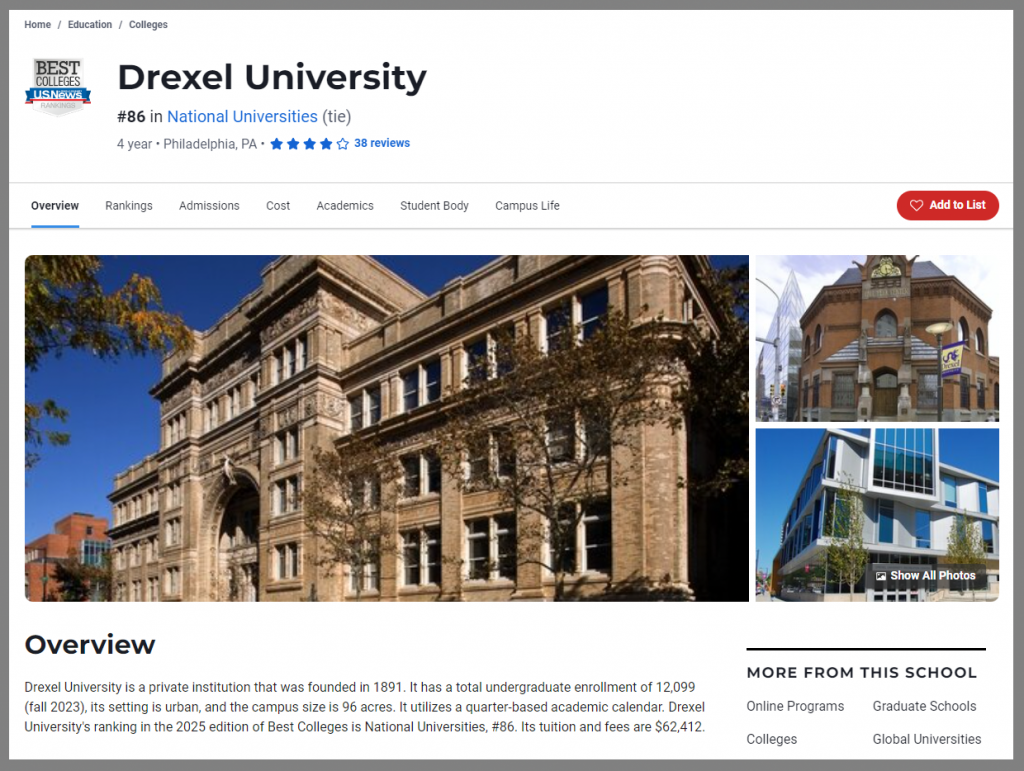
Although the rankings try to sell themselves as authoritative on the value different universities provide, closer examination reveals that the numbers behind their methodology are quite meaningless. As the former dean of Yale Undergraduate Admissions explains, picking a university to attend is a much more subjective and expensive decision than picking another consumer product like a vacuum cleaner. Because vacuums are commodities while colleges vary much more widely, students cannot expect the college rankings to reflect their experience with the product like a ranking of vacuum cleaners might. But as long as students continue to be deceived by the rankings, universities become incentivized to do what is best for their ranking, not the student. This is certainly proven by the methodology of U.S. News and World Report, the largest system of college rankings. For example, financial resources per student, which is the amount of money a school spends per student, is weighted at 8% In other words, 8% of rankings are determined by the size of a school’s endowment, which is more of a measurement of the influence of a few rich donors than the quality of the faculty. To improve its standing in the rankings, a college would be incentivized to increase its tuition, admit richer students who do not need financial support and make students delay admission until the spring term (U.S. News only uses fall matriculation data), all of which are contrary to pedagogical goals of education. This factor does not even precisely predict an undergraduate student’s experience at that school because “financial resources are measured by comparing an institution’s total expenditures on instruction, research, public service, academic support, student services and institutional support against its total fall full-time equivalent student enrollment.” Expenditures on activities like public service, graduate student training and study abroad may be taking away funds for other activities that are of interest to individual undergraduates. On the other hand, other students interested in public service, research or study abroad may want to attend an institution that spends lavishly in those areas. Furthermore, institutions like Drexel are hurt because students on co-op are considered to be enrolled despite not being in classes. This depresses Drexel’s financial resources per student metric even though co-op is a valuable opportunity. In another example, full-time faculty salary is weighted at 6%, and proportion of full-time faculty is weighted at 3%. The focus on full-time faculty incentivizes universities to avoid utilizing adjunct faculty with extensive industry experience which would increase faculty diversity and can be especially valuable for students entering certain experience-oriented fields, such as dance. Clearly, the rankings cannot and do not accurately reflect the subjective needs of every student nor are they indicative of merit.
The illusion of prestige portrayed by the rankings brings real harm to students. Columbia University, Claremont McKenna College, Emory University, Iona College and Temple University have all been accused of attempting to deceive U.S. News and World Report with manipulated data. In Operation Varsity Blues, probably the largest college admissions scandal in US history, rich, but not ultra-rich, parents paid a college consultant to find a “side door.” He arranged for proctors to help students cheat on the SAT/ACT and bribed coaches to designate students as recruited athletes despite them not playing that sport.
Competition for prestige is fierce not just at the elite levels but also for ordinary students. Two-thirds of high school students are “often or always worried” about getting into their dream college, and the crisis has become so severe that students at high-achieving schools have been designated as a high-risk group for depression. Seeking external validation through the rankings, high schoolers lose opportunities for connection with others and their community–which the COVID pandemic demonstrated is essential for mental health–and justify many unhealthy behaviors with the belief that the benefit of prestige will be worth the sacrifices. The suffering does not end when students finally get to college. Anxiety about graduate school or future employment will follow. The consequences of the rankings system for prospective students are severe and enduring.
The zero-sum game of admissions guarantees that the college rankings cannot exist as a neutral player. Even the richest schools have finite resources and cannot accept every qualified student. They must therefore cap their class sizes. If a student is admitted, a seat at that institution has now become unavailable for all other applicants. This incentivizes fierce competition and cheating. Lower-ranked but quite qualified universities end up picking up the scraps. All universities are incentivized to cheat the rankings by deferring admission to later terms, admitting more students who can pay full sticker price or even manipulating data submitted to ranking sites. Prestigious universities fail to be the engines of social mobility if they are simply the product of cycles of privilege. The consequences of the rankings are devastating, permanent, unsustainable and filled with deception all around. Society ought to reject the rankings system and encourage students to attend a college they “fit” in, not a college with a lot of money. Success ought not be defined by U.S. News and World Report.
Posted in UncategorizedComments Off on U.S. News rankings are overrated
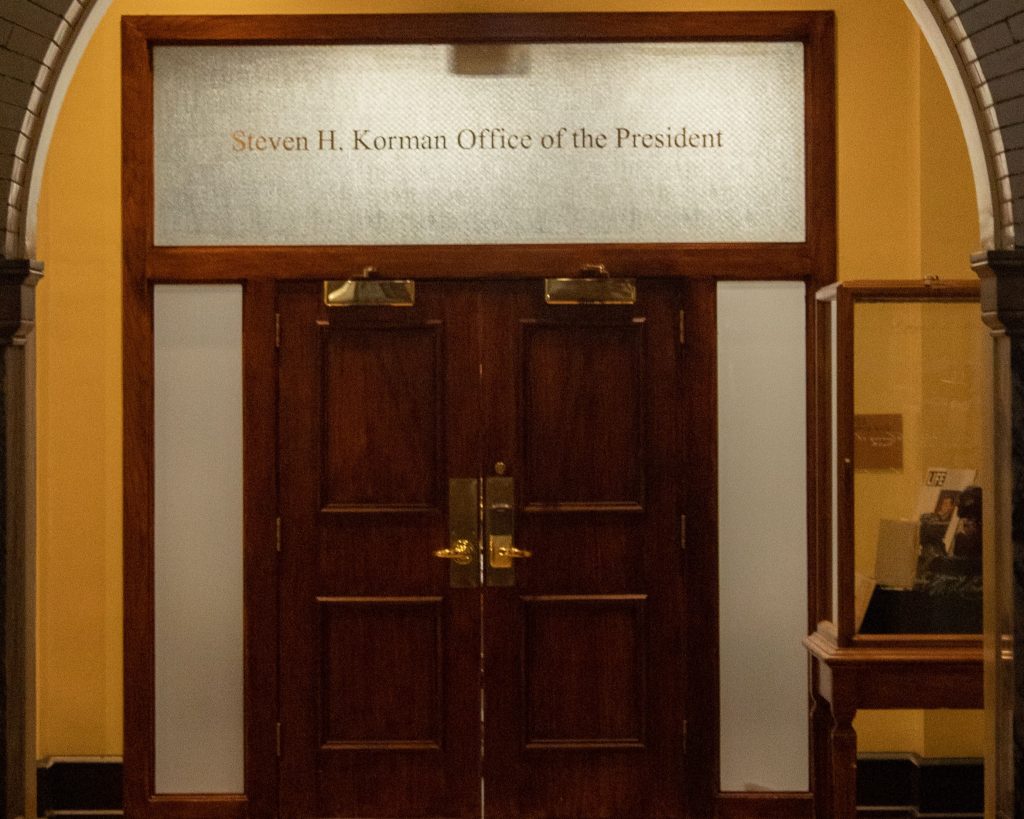
After President John Fry announced his departure to Temple University, Drexel University’s Board of Trustees named Denis O’Brien as Interim President. It is concerning that out of all people, the Board put its trust in a Big Oil executive who chaired the Energy Association of Pennsylvania and served on the Board of Directors for Independence Blue Cross, American Gas Association, Energy Association of Pennsylvania, Pennsylvania Business Council and Pennsylvania Economy League.
When choosing a permanent replacement for President Fry, the Search Committee should remember that running a nonprofit R1 academic institution that conducts groundbreaking research and educates the next generation is nothing like running a for-profit oil or health insurance company that puts profit before all else. As a primarily academic institution, Drexel requires the leadership of an academic.
President Fry was a businessman at heart. He received an MBA degree from New York University’s Stern School of Business and made a career out of management consulting. It is through this role that he became the Executive Vice President of the University of Pennsylvania before coming to Drexel.
Just this past year, Drexel generated over $1 million in graduate net tuition revenue, had $40.5 million in excess of budget, received $27.7 million in additional funding from the Commonwealth and exceeded grant and contract expectations by $3.9 million.
Meanwhile, tuition has not gone down, professors have lost their roles, Resident Assistants have been pushed to unionize and doctoral students get paid pennies. At the same time, President Fry became the 10th highest paid private US college president. As a reminder, this is supposed to be a not-for-profit organization.
While it is clear that Drexel’s finances are doing well, the same cannot be said for the people that make up the Drexel community. In the past year, the Triangle has reported on multiple signs of distress with the lack of helpful care for deep-seated diseases at the Counseling Center, Drexel’s controversial response to the pro-Palestine encampment, low summer quarter class options, mandatory payments to complete homework, unsanitary dining halls and residence halls and limitations on food in Mario’s Pantry. Anecdotally among students, I hear about co-ops getting more difficult to obtain, costs being too high, Drexel underpaying workers and jokes like “tuition can’t wait.” Drexel is also currently involved in a lawsuit with a former vice president and Chief Compliance and Privacy Officer, who is the attorney responsible for ensuring compliance with employment law at the University, for allegations of civil rights violations.
It is clear that Drexel’s main concern today is not with our finances but rather with how we think about the role of the University in student and employee activities. That is why the next president should not be someone with a business background but rather an academic who is familiar with how universities serve students and faculty. A professor who has spent their entire adult life in universities would best understand how various university departments and policies come to affect core parts of a university’s mission to help students learn, both inside and outside the classroom, and support faculty, graduate students, undergraduate students and staff in conducting important research that advances society.
Faculty members often rise to administrative positions like department chair or dean. They even hold high level executive positions like provost. There is no reason to believe that academics are any less qualified than businesspeople. In fact, they are likely to be more qualified due to their intricate understanding of university systems and respect for shared faculty governance that the University Charter mandates.
It has not escaped my notice that the Search Committee consists of a singular student, two deans (one of which is the dean of the LeBow College of Business), the chair of the Faculty Senate, the interim president (who served as a trustee) and a bunch of trustees, most of whom come from business backgrounds. Search Committee Chair Mike Lawrie is the CEO of a private consulting firm and manages a private equity fund. The Search Committee will likely be heavily biased in favor of applicants with strong corporate backgrounds, and I sincerely hope that the committee members can look past their bias to arrive at the best candidate possible because it is time to have top leadership involved in improving Drexel’s academics.
Posted in UncategorizedComments Off on Who Should the Drexel Next President Be?
Nearly 14 years after the start of his term in 2010, President John Fry terminated his term last month to assume the same role at another Philadelphia university, Temple University. This came as a shock to many students who had become accustomed to the occasional updates from the president announcing a new strategic plan or industrial endeavor. Fry, appointed as the 14th president of the University took on the role after the late Constantine Papadakis, who was infamous for the progress that the University made under his leadership. Prior to assuming leadership of Drexel, Fry was the President of Franklin and Marshall College from 2002 to 2010, was the Executive Vice President of Drexel’s neighbor, the University of Pennsylvania and engaged in management consulting roles as well. All this experience theoretically should have primed Fry for taking on the task of University President after Papadakis, but his term may have been a little less ideal than he may have hoped.
Many students will likely agree on the controversiality of Fry’s term. In more recent years, he has received backlash for his handling of the encampment that occurred on Drexel’s campus this past May and for the removal of many green spaces and student activity spots in favor of buildings for corporations like Brandywine, Spark Therapeutics, Gattuso Development Partners and Wexford Science and Technology among others. Many students have been vocal about this rapid development, arguing that it overshadows the more pressing focus of the university: education and research. More recently, Fry gained criticism for the $3.1M deal that was brokered between SEPTA and the university for temporary naming rights of the SEPTA subway station at 30th Street. Notably, on the medical side of the University, many medical students and vulnerable patients were left hanging in 2018 when the primary teaching hospital of the College of Medicine, Hahnemann Hospital, was suddenly sold to a private equity firm, forcing health students to scramble for their clinical rotations and opportunities. Surprise staff layoffs in the past year also surprised many students as their beloved teachers were asked to leave with seemingly no explanation or consideration, especially given the University’s supposed “secure financial status.”
However, as critical as students tend to be, it is important to also recognize the accomplishments and advancements that the university has made over the last 14 years. First, under Fry’s leadership, Drexel recently established the Dornsife Center for Neighborhood partnerships and Lindy Center for Civic engagement. Additionally, through his innovations in the Schuylkill Yards and partnerships with many corporations, Fry has provided a variety of new co-op opportunities for students interested in a variety of fields. In 2018, Drexel was also awarded the “R1 Doctoral University: Very High Research Activity,” which foreshadowed a renewed focus on research and innovation. Groundbreaking research in the fields of AI and medicine have also taken place during his tenure, further positioning Drexel as a leader in healthcare and research moving forward.
President John Fry’s legacy is certainly very complex and multifaceted. While also establishing partnerships with corporations and surrounding neighborhoods with his vision for innovation and experiential learning, Fry’s term was also riddled with challenges and criticisms. Drexel’s future will undoubtedly be shaped by Fry’s accomplishments and actions during his tenure.
Posted in UncategorizedComments Off on A balanced perspective on John Fry’s legacy
If you own a Dragon Card, then you probably know that the school that you go to requires you to toil in the scorching heat every summer after your gracious freshman year. All upperclassmen either grind through their classes or acquire hands-on exposure to the industry at their co-ops.
“What is it like being in school during summer?” – Hold on, that is what I am here to answer. As someone who has now experienced two consecutive summers at Drexel, I could lend some observations for you to ponder..
Silent. Deserted. Shadows of trees stretch lazily through the good old Lancaster walk, in the relentless heat of the midday sun.
According to The Inquirer, Philadelphia experienced the fourth-warmest June to date this year. Drexel’s campus was sweltering as the City of Philadelphia declared a heat health emergency. In this searing heat, the campus felt paused, awaiting cooler days and the return of its vibrant, bustling life. The University campus is usually very lively right before and after the summer break, i.e. during the spring and fall. The fact that there are only a handful of students populating the campus in these three months, creates an eerie air of emptiness. Additionally, only a few student organizations hold events during the summer, like Dragon Jedi and Engineers Without Borders, which continue to conduct events for the students still on campus. I really wish all student organizations stayed involved during the summer because of the numerous social enrichment opportunities for those still on campus.
Drexel affiliated organizations, like the Student Center for Diversity and Inclusion and the Drexel University Counseling Center, continued to function and hosted events to rejuvenate in the blazing summer heat. The DUCC set up mocktails at the Daskalakis Athletic Center a few times to keep busy students hydrated on the go.
Outside of the college campus, there were indeed fun things to do throughout the city. The Philadelphia Chinese Lantern Festival, for example, is a rain-or-shine event that began on June 20, 2024 and is running until August 18, 2024. You still have a few days to check out the authentic food and festivities of the season at the Franklin Square for some fun and frolic as the summer nears its end for this year.
The three months of summer, even in the same city and college campus, can feel different for everyone. Some went through summer seasonal depression; others had the most worthwhile Pinterest-approved beach days. Some of us also had our perfect ‘brat’ summer, while buying overpriced lattes to beat the heat. If you’re like me, you were mostly doing your college coursework and looking for co-op jobs for the fall, as days blended into each other and you lost sense of time. It is not as boring as it sounds – reading by the Schuylkill riverbank in a sundress can feel quite relaxing to escape the chaos and commotion.
As summer at Drexel winds down, it is safe to say that these hot months offer a whole new experience on campus. Whether you were knee-deep in assignments, hunting for the perfect co-op or soaking up Philly’s awesome culture, summer here is anything but boring. Yeah, the heat was brutal, but it also gave us a chance to slow down and appreciate the quieter side of college life. I consider this the quiet and reflective period, which precedes the fresh start that lies with the beginning of fall in the form of the new academic year.
Posted in UncategorizedComments Off on Surviving the Philadelphia Heat Wave as a Drexel Student