Author Archives | Sarah Fiedorek

Films to start off your fall season

Photo by Kasey Shamis | The Triangle

Whether it be the warm, candle-lit scenes, the back-to-school energy or the general coziness felt when watching these movies, all of them would be perfect to add to your watchlist this fall.

  1. “Little Women”

“Little Women” follows the March sisters as they transition from girlhood to adulthood. Louisa May Alcott’s classic has been adapted into numerous movies, TV shows and plays. Not only does the New England charm put you into the fall mood, but the coming-of-age themes are perfect as you are settling back into college. Whether your favorite is Greta Gerwig’s 2019 version, the 1994 movie with Winona Ryder or the anime adaptation, Little Women is a must-watch this fall. 

  1. “Dead Poets Society”

“Dead Poets Society” follows Robin Williams as a new English teacher, Mr. Keating, at an all-boys preparatory school. Set in 1959, It’s a heartwarming film for back-to-school time. You get to know the boys as if you are a member of their group, joining in on their daring and devious adventures. Mr. Keating is different from any other teacher at school, giving them more to think about than homework and endless textbook pages. As you watch them navigate love, friendship, extracurriculars and academics, you catch yourself wondering how you want to present yourself in this new chapter of life.

  1. “Knives Out”

“Knives Out” deconstructs the mystery movie and gives a rollercoaster of time to viewers. The story follows detective Benoit Blanc (Daniel Craig) as he tries to uncover the death of Harlan Thrombey (Christopher Plummer), mystery novelist and patriarch. In a play on the classic who-dun-it genre, the audience quickly discovers the perpetrator. The fun is in watching Blanc dissect, in a thick Georgian drawl, the complicated relationships among the Thrombey family members, played by a fabulous ensemble cast including Chris Evans, Jamie Lee Curtis and Toni Colette. Ana de Armas, in the role that made her a household name, is brilliant as Marta Cabrera, Harlan’s personal nurse with an inability to lie. It is the perfect fall watch for one reason: Chris Evan’s sweaters.

  1. “When Harry Met Sally”

Rom-coms are not just for Valentine’s Day. “When Harry Met Sally” follows the title characters (Billy Crystal, Meg Ryan) as they meet multiple times over the course of 12 years. The movie was an early writing credit for Nora Ephron, now considered a master of the romance genre. Harry and Sally share a charming, whimsical banter, leaving the viewer rooting for the pair to succeed and to find each other. A warm, fuzzy and cozy film, it is perfect to watch while having a cup of hot chocolate. Afterward, take a weekend trip to New York City and visit Katz’s Delicatessen, the real-life Manhattan deli featured as Harry and Sally’s first meeting place.

  1. “Heathers”

In this campy cult classic, Winona Ryder plays Veronica, a member of the most popular clique at Westerburg High School. After falling for bad boy J.D. (Christian Slater), Veronica winds up involved in the death of queen bee Heather Chandler (Kim Walker). As bodies pile up, the film maintains its dry comedic tone, making for a sharp back-to-school satire sure to bring laughs this autumn.

  1. “It’s the Great Pumpkin, Charlie Brown”

A perennial rewatch for fans of the Peanuts gang, this short animated film follows Charlie Brown and friends as they prepare for Halloween – having parties, trick-or-treating and waiting to see the mythical Great Pumpkin. The opening notes of Vince Guaraldi’s “Linus and Lucy” are enough to put you in a festive mood. The cartoon is deeply nostalgic and, at only 25 minutes in run time, is perfect for squeezing some fall fun into a busy schedule.

Check out these movie recommendations on the official Letterboxd of The Triangle.

Posted in UncategorizedComments Off on Films to start off your fall season

Harris-Walz brings calls for freedom to Philadelphia

Photo by Samuell Gregg | The Triangle

Current U.S. Vice President and Democratic Party presidential nominee Kamala Harris held her first rally with her vice presidential running mate Minnesota Governor Tim Walz on Tuesday, Aug. 6 at Temple University’s Liacouras Center in Philadelphia. 

The campaign duo were preceded by several elected officials who announced their support. Philadelphia Mayor Cherelle Parker addressed the crowd shortly after the rally began, speaking to Harris’ impact on the city directly: 

“As VP she has continued to deliver time and time again for the City of Philadelphia and I’ve only been here for seven months,” said Parker. 

This was in reference to Harris’ first campaign visit to Philadelphia where she talked to women “about the power of unity and addressing issues extremely important to those in our nation,” as well as $638 million that was sent from D.C. to Philadelphia for water infrastructure, mass transit and environmental remediation.   

U.S. Senators John Fetterman and Bob Casey also endorsed Harris and Walz, along with Pennsylvania Governor Josh Shapiro who referred to Harris and Walz as his friends and stated his support for Walz as the vice presidential pick, calling him an “outstanding man, governor, teacher, patriot.” He also highlighted the Harris-Walz campaign focus of “real freedom.” 

As Harris and Walz walked on the stage, the crowd was energetic, holding up campaign signs and waving dressed in Harris shirts. 

“This campaign is not just a fight against Donald Trump. This campaign is a fight for the future,” said Harris. 

Harris stated that her and Walz’s values of freedom are the “freedom to vote, freedom to be safe from gun violence, the freedom to love who you love openly and with pride, the freedom of a woman to make decisions about her body.” 

She listed Walz’s many attributes, capitalizing on his former identity as a football coach that led Mankato West High School to its first-ever state championship. 

“In 91 days, the nation will know Coach Walz by another name: Vice President of the United States,” stated Harris. 

As Governor, Walz has developed an everyman persona, considered relatable for his rural roots and long career as a high school teacher before entering politics. “I think Tim Walz is great. I think that he’s like a regular guy. And he’s somebody that can talk to regular people -– in Michigan, in Pennsylvania, in Wisconsin. Democrats need that. Sometimes Democrats are thought of as too elite. They need to talk to regular people,” said former Republican Congressman and current member of Republicans for Harris, Joe Walsh. 

Harris and Walz also discussed the fragile state of the Affordable Care Act and their determination to keep it in place. 

“If Donald Trump gets a chance, he will end the Affordable Care Act,” said Walz. He continued, “Healthcare is a right, not just a privilege.” 

Aside from healthcare, the Harris-Walz campaign also has a large focus on union workers and strengthening the middle-class. 

“When our middle-class is strong, America is strong … strengthening our middle-class will be the defining goal of my campaign,” said Harris. 

Members from the Actors’ Equity Association — defined as “the national union of professional actors and stage managers in the U.S” — were present at the rally. When asked why they chose to support Harris for president, their answers reflected her campaign’s support for unions. 

“Our union is the direct intersection between arts and labor, so we see both sides of the coin always…we know how both drive each other… So we love that this administration now, and Kamala later on when she’s elected, will continue the trajectory of pro-union, pro-arts so that funding towards the arts goes to where it needs for our members and then for everyone else because we know that arts funds so many things in so many cities,” said Actors’ Equity Association member Rashaan James II. 

Harris also highlighted her dedication to a woman’s right to choose. She referenced former U.S. President Donald Trump’s claim that he wanted to “punish women” and further pushed her belief that women should be allowed to choose what happens to their bodies. 

In response, the crowd chanted, “We’re not going back” — a key slogan of the Harris Walz campaign, to drive her point that under a Harris presidency, America will not be returning to a time where it placed restrictions on women or other individuals, promising to restore reproductive freedom in her tenure as president. 

Other goals of the Harris presidential campaign include: reasonable gun safety including universal background checks, pure water and safe communities. 

Walz called out his opponents on their transparency. “Don’t believe [Trump] when he plays dumb. He knows exactly what Project 2025 would do…These guys are creepy and yes, just weird as Hell.”

At the end of the rally, Harris promised that she and Walz’s campaign “will reach out to everyone.” She finished her speech with her campaign tagline – “When we fight, we win.” 

The Harris campaign emphasized the importance of the youth vote, especially for college students.

“If university students care about this democracy — we’re now 248 years old — they should do everything they can to make sure Trump doesn’t get back in there cause he would destroy our democracy, so that should be enough motivation. But then, get excited about these two. Our first female president. Our first female president, a woman of color. This is cool stuff,” said Walsh. 

Rashaan James II also chimed in with, “Vote with your heart for the person who’s going to make the most sense. And I think that person is gonna be the person who thinks about humans and there’s only one.” 

Viewers can watch the rally here. For more information on voter registration, click here. The 2024 General Election will take place on Nov. 5.

Posted in UncategorizedComments Off on Harris-Walz brings calls for freedom to Philadelphia

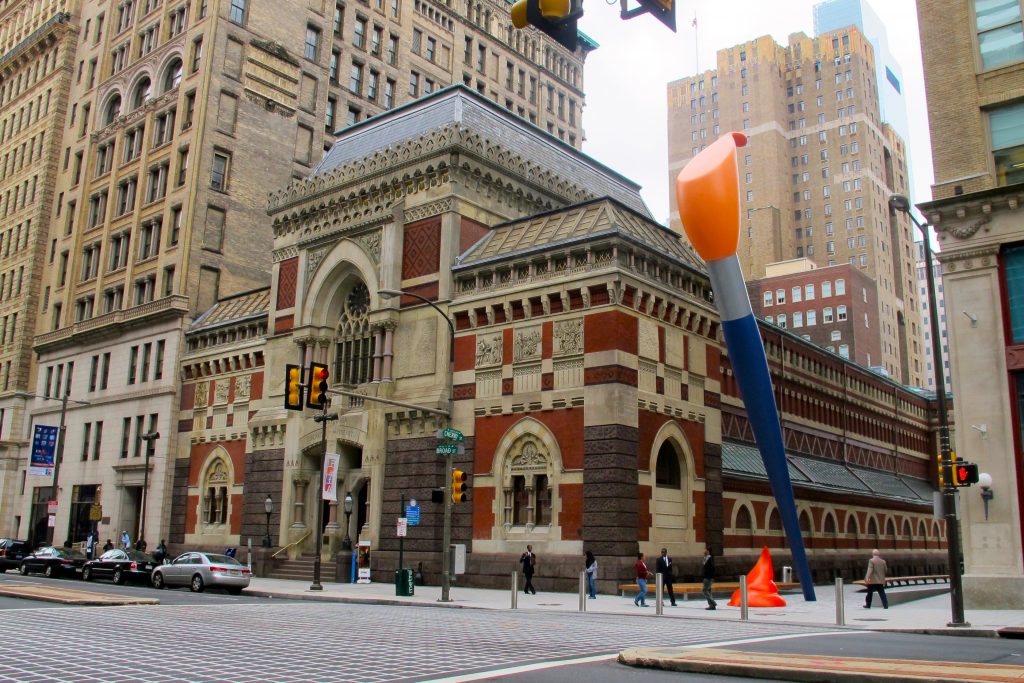
New PAFA exhibition shows off Drexel owned Atwater Kent Collection

Photo courtesy of PlanPhilly | Flickr

A new exhibit drawing on 300 years of artifacts from Drexel University’s Atwater Kent Collection made its debut at the Pennsylvania Academy of the Fine Arts on Wednesday, July 18.

“Philadelphia Revealed” presents a selection of the myriad local artifacts housed within the eclectic Atwater Kent Collection, as well as unique opportunities to hear their stories and add your own. Described as “Philadelphia’s attic”, the AKC represents eight decades of accumulated local artifacts and ephemera sourced from museums, the city archives, residents, defunct manufacturers, curbsides and dumpsters. 

The over 600 artifacts on physical display tap equally into the city’s legacy as a “workshop of the world,” birthplace of American independence, home for civics and the arts, and sports town, not to mention its unique personalities and urban history. Highlights on display include handcuffs reputed to have held abolitionist John Brown before his execution, the original 1886 model for the William Penn statue atop City Hall, a Phillies 2008 World Series ring, a hat worn by Abraham Lincoln and a turnstile from Veterans Stadium. Equally striking are a draft bowl used during both world wars for the military draft lottery; an unknown Black soldier’s photo album, rescued from the trash, featuring photos of V-E Day in France; and countless local artworks, many by outsiders, ranging in style from the Ashcan school to abstract.

Accompanying the exhibit is a podcast series, “The Philadelphia Revealed Podcast,” produced by WHYY and Rowhome Productions with storytelling by FirstPersonArts, showcasing the history of the artifacts with personal narratives. The exhibit itself also features interactive virtual projects developed by Digital Media students from the Westphal College of Arts and Design to further bring the artifacts to life.

The AKC was originally owned by the Philadelphia History Museum. Established in 1938, its namesake and founding donor was A. Atwater Kent, a Philadelphia radio pioneer who sought to satisfy demands for a city-owned museum. Formerly housed in Old City, Kent donated the museum’s original 7th Street location (once home to the Franklin Institute) to the city. A variety of collections from the city archives and the public soon came together to fill it. However, the museum struggled in recent decades to manage and present its eclectic inventory, and by 2018, years of financial shortfalls, lack of city funding and failed efforts to find an institutional partner led to its closure.   

In 2021, Drexel assumed responsibility for the AKC after a Philadelphia Orphans’ Court judge controversially ruled that the shuttered museum’s publicly-owned collection could be given to a new, private trustee. The complex transfer agreement was orchestrated by outgoing university president John Fry, who cited the process as a reason to extend his tenure at Drexel.

Its 130,000 artifacts had been left in storage after the closure, some in concerning conditions. Under Drexel curators’ oversight, the items were inventoried and made their way in 101 truckloads to climate-controlled storage at PAFA. There are no plans for another physical museum, nor does the agreement call for one. Instead, part of Drexel’s responsibility is creating a “museum without walls” by improving access through the digitization of the disorganized collection, which is for the first time accessible online. 
“Philadelphia Revealed: Unpacking the Attic” is on view from July 18 to Dec. 1 at the PAFA Samuel M.V. Hamilton Building at 118-128 North Broad Street. Admission is free for Drexel students with ID, no reserve tickets required. Free admission days for the general public take place on Thursday, Sept. 26 and Friday, Sept. 27; Sunday, Oct. 6, and Sunday, Nov. 24. Opening hours and further ticket information can be found online.

Posted in UncategorizedComments Off on New PAFA exhibition shows off Drexel owned Atwater Kent Collection

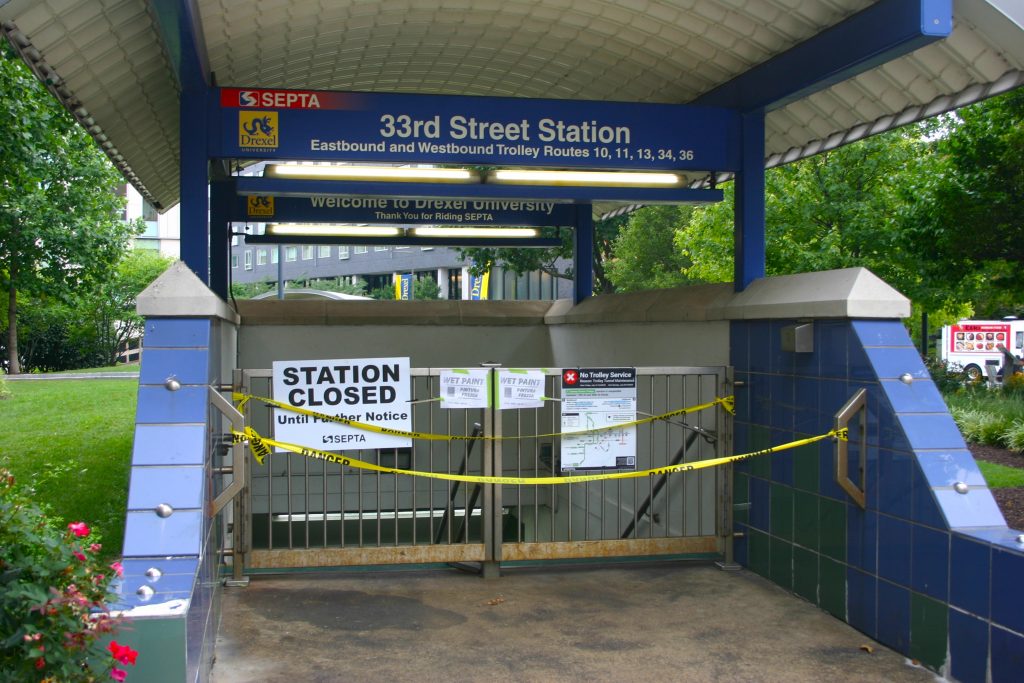
SEPTA responds to FTA inspection with corrective plan

Photo by Lucas Tusinean | The Triangle

On Monday, July 15, the Southeastern Pennsylvania Transit Authority publicly responded to the results of the Federal Transit Administration’s latest Safety Management Inspection which took place from August 2023 to January 2024.

Following the inspections, interviews and the evaluation of SEPTA documents that took place during the SMI, the FTA released several Special Directives that report their findings of concern. These documents comment on three distinct categories: “Transit Worker Safety,” the “Capacity of SEPTA’s System Safety Division and Control Center to Ensure Safe Operations” and “Bus and Rail Transit Safety Issues Contributing to Safety Events.” In each category, the FTA provides several findings and required actions, including further FTA enforcement if SEPTA fails to follow.

SEPTA has confirmed they will enact several corrective action plans in response to the SMI. The primary focus of SEPTA’s efforts in response to the FTA’s evaluations will be on expanding the safety and staffing of the transportation system. Prior to the release of the SMIs, there had already been an elevated effort to combat the issues of insufficient staffing and on-board crime, seen in expansions such as the addition of audio recording in bus operator surveillance videos and staff in the System Safety Division. SEPTA has already experienced a 37 percent decrease in crime in their systems within the first half of 2024 when compared to the first half of 2023.

This announcement comes amidst one of SEPTA’s consistent safety procedures: the annual SEPTA Trolley Blitz, which began on July 12. During this time, SEPTA’s Trolley Tunnel remains closed so that workers may clean and provide maintenance in areas that would otherwise be dangerous to maneuver around during operation hours. Procedures include track replacements and overhead contact wire replacements. Regular operation will resume on Monday, July 29.

As they continue to respond to the FTA’s evaluation, SEPTA’s monthly plenary meeting, hosted by the Citizen Advisory Committee, is planned for 5:30 p.m. on Tuesday, July 30. The organization plans to gather in person, but the meeting is open to the public via WebEx.

Posted in UncategorizedComments Off on SEPTA responds to FTA inspection with corrective plan

TBT returns to the DAC: Drexel alum to compete

Photo by Lucas Tusinean | The Triangle

For the second consecutive year, The Basketball Tournament will host its semi-finals and final in the Daskalakis Athletic Center on Aug. 2 and Aug. 4. TBT is an annual tournament in which 64 teams compete for a grand prize of $1 million. The return of a high profile basketball event returning to Drexel’s campus can be viewed as the realization of Drexel Athletic Director Maisha Kelly’s “goal to utilize the DAC as a hub of entertainment and basketball in Philadelphia.” Kelly also stated that, “Partnerships like this allow us to achieve them and to illuminate Drexel’s brand on a national stage.”

Each team is put together by a General Manager and a Coach. These teams usually center around some form of a theme, such as Alumni of a specific university, players who grew up in the same area or charities that the players are working to raise awareness for. This year’s tournament features teams that represent Universities such as Purdue and University of Connecticut, charities such as Sideline Cancer, which raises funds and awareness for Pancreatic Cancer, and the Purple Hearts, who are raising funds to donate towards community organizations who work to eliminate gun violence within inner cities. 

With the final being held in the DAC, it is only right that there be at least one Drexel alumni in the tournament. Samme Givens, a Philadelphia native, was a Dragon from 2008-2012. At his time on 33rd and Market, Givens averaged 9.6 points per game and was named to multiple all conference teams throughout his career. Since leaving Drexel, Givens has spent the last decade enjoying a professional basketball career overseas, with stops in France, Italy, the Netherlands, Israel, Argentina and currently, Finland.

Givens is also not a stranger to TBT, a tournament that he has starred in three times before. In 2017, Givens played for the Broad Street Brawlers, averaging nearly 15 points per game before his squad lost. This year, Givens will be a member of Brotherly Love Pro Am, a team that 

“works to create equity, opportunity and lasting camaraderie by cultivating a network of professional athletes, centering both fitness and wellness to improve the physical, financial and mental health of communities in Philadelphia.”

Givens will face an uphill battle to make it back to the DAC, however, as his team is the sixth seed and will have to stage a series of upsets to make it to the semi-finals.

Posted in UncategorizedComments Off on TBT returns to the DAC: Drexel alum to compete

Drexel-Salus merger moving forward

Photo by Lucas Tusinean | The Triangle

The Middle States Commission on Higher Education officially approved the merger of Drexel and Salus Universities on Monday, July 1. The commission’s approval has been anticipated by students and faculty of both schools for over a year. 

This marks the beginning of the official “first step” in the merging process. When the Department of Education approves the merger, which is expected before the end of 2024, Salus University will no longer be a separate, degree-granting institution. 

Salus will be known as Salus at Drexel University, Elkins Park and the majority of its programs will be operated under the Drexel College of Nursing and Health Professions. Salus’s school of optometry, which is the oldest of its kind in the country, will continue to operate separately from Drexel for accreditation reasons. 

The merger’s finalization came days before Drexel’s President, John Fry, announced his upcoming move to Temple University. Fry, who has been instrumental in the merger and has been co-chairing the Drexel-Salus integration council since mid-2023, may leave for Temple before seeing it through to the end.

Salus University is a small, private, graduate university located in Elkins Park, Pennsylvania. They specialize in degrees for students wishing to become healthcare professionals, such as speech language pathologists and blindness and low vision specialists. 

Drexel and Salus officials have been clear in reassuring stakeholders that this merger will have little effect on the day-to-day operation of the university. In statements, they assured students that they would “continue to receive the same education” and donors that past and future “donations and existing endowments to specific programs will be honored.”

Following this merge, Salus university students and faculty will have access to Drexel’s research facilities and to partnerships with Drexel’s faculty members. In an interview in January, Salus University president Michael H. Mittelman described the merger as a “golden key” and imagines that it will lead to countless innovations in the healthcare field. 

This is one of several steps Drexel has recently made to expand their educational offerings in the medical sector. In 2021, Drexel completed construction on an additional campus for medical students: the Drexel University College of Medicine at Tower Health.

Drexel is also currently partnering with Gattuso Development Partners to build a large life sciences building at the former site of the Buckley Recreational Field. The building has been controversial among students due to its large footprint and the fact that it will, for the most part, be leased to private companies. 

The Salus-Drexel merger is one in a nationwide wave of mergers and acquisitions in the realm of higher education, many of which are driven by financial hardship in a post-Covid world. Merging into a larger institution is frequently a last resort for a school struggling to survive on its own, although President Mittleman claimed that Salus had other options and chose to merge with Drexel because of the opportunities it would create for collaboration.
More information and updates about the Drexel-Salus merger will be posted on the merger website, https://drexel.edu/about/salus. There will be a celebratory flag raising ceremony at the Elkins Park campus later in the summer.

Posted in UncategorizedComments Off on Drexel-Salus merger moving forward

Asian American students keep cultural heritage alive

Photo by Ty Wong | The Triangle

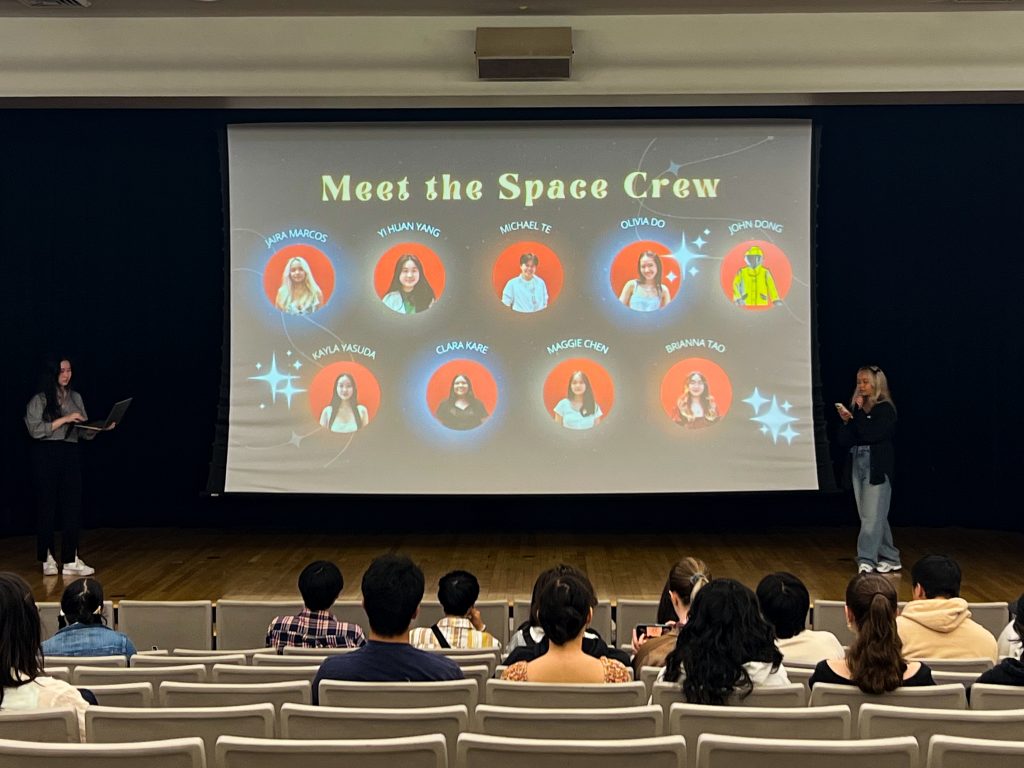
The Drexel University Asian Students Association hosted its third in-person Asian American Philadelphia Advocacy Conference in Nesbitt Hall on May 25.

This year the ASA executive board elected several first- and second-year general body members to serve as chair members to plan this conference. 

“We had a theme for our conference, which is ‘tradition through a modern lens,’” said Olivia Do, a second-year software engineering major and AAPAC’s event programming chair. 

“A lot of it was about how can we honor our ancestors and traditions while also acknowledging that with changing times these traditions may change to meet the evolving society norms.”

AAPAC hosted several Drexel student organizations and Philadelphia-based non-profit organizations that support Asian communities to give presentations about retaining cultural history.

According to Do, “We brought in FISDU [Filipino Intercultural Society of Drexel University], we brought in Viet Lead, Make Us Visible PA, we had Mango Tree Counseling and the Persian Students Association.”

Activities offered by external organizations included a documentary screening presented by Viet Lead about Southeast Asian refugee hate in the 1980s and 90s. Drexel student organizations also offered programming, like the Persian Students Association, who hosted a dance workshop to symbolize performance art preservation as Persian dance is not allowed to be practiced in Iran.

The AAPAC committee specifically chose these organizations as they all specialize in providing resources to Asian Americans and immigrants on navigating the modern world while providing outlets to preserve and celebrate their culture after settling. 

“We kind of decided as a whole team [as we] brainstormed a bunch of different topics at the beginning, but we boiled it down to tradition through a modern lens,” said Do.

“It is important to celebrate the more traditional sides of our culture, but it’s also discussing how those things change throughout the years.”

In terms of deciding what programming the guests would do, the AAPAC committee spoke highly about wanting to balance cultural appropriation versus traditional preservation when organizing the workshops of the conference.

“Our theme was especially good, because of the popularity of Asian cultures in the recent years,” said Brianna Tao, a first-year cybersecurity major and AAPAC’s finance chair. 

“There’s like a disconnect and it’s hard to tell with like cultural appropriation and what’s really traditional so we focused on that more.”

AAPAC has once again exposed students to new ideas of advocating for cultural appreciation not just at Drexel, but in their own communities. 

The AAPAC committee expresses a lot of pride in organizing the conference to spotlight the theme and help students see why it is not just important to remember their culture but take it upon themselves to preserve it.

“I’m really proud of our committee for putting this together [as] we have been working since fall term, and we bonded, really grew close as a team, and there’s been a lot of hardships, but we persevered and made it through,” said Tao.

“I’m really satisfied just to celebrate the diversity of what it means to be Asian American because it encompasses so much, and we were able to bring all of it into one conference,” said Do.

This article is part of a column dedicated to supporting underrepresented Asian student organizations on Drexel University’s campus.

Posted in UncategorizedComments Off on Asian American students keep cultural heritage alive

Seniors present engineering tech inventions

Photo by Lucas Tusinean | The Triangle

On May 29, Engineering Technology seniors presented their Senior Design projects. Over the course of their senior year, students worked in teams to engineer a solution to a specific problem. Projects covered multiple industries, including manufacturing, health, education and combating carbon emissions. 

The Engineering Technology program began with presenting Haas-sponsored scholarships to five students, selected based on essays submitted about their interest in pursuing a career in manufacturing. 

Seniors then stood next to their projects and poster boards. Attendees and faculty walked around to learn about each project and hear how they designed their solution. Seniors then gave presentations detailing their design process and answered questions. 

“Senior design mimics a product development process and incorporates experiential aspects of our program, which is more applied and hands on,” shared Dr. Ertekin, the associate director of engineering technology. “Students at the end produce a working prototype while applying theoretical knowledge and learn from their mistakes what not to do in actual industrial settings.  They also develop soft skills like project management, communication and teamwork skills.”

One group partnered with IFM Electronic to build a machine-vision system to minimize errors in assembly processes. IFM is a global company that specializes in manufacturing and sensors, aiming to improve efficiency and reliability. Through the partnership, IFM sponsored the student project, covering the $30,000 cost. 

Their project incorporates two 3D-sensing cameras along with RFID detection for managing the assembly process. Attendees tried out the system and were intuitively able to follow the instructions on screen to assemble a pen. The cameras and RFID detection work together to ensure the operator follows the correct assembly steps to complete the assembly process without mistakes. 

“I feel accomplished to a degree because I was working with professionals and I got first hand experience” Yahya Abdulrasool, one of the team members, shared. “Communication is key, especially when working with people you’ve never worked with before.” In total he estimates that it took two and a half months of work on the prototype after nine months of research.

Another group shared that they didn’t know what they should do for their project at first. “We asked people in other industries what issues they had that we could solve. Since many of my friends are nurses, we looked towards the health industry,” shared Pitchapa Inroon. They found that many hospitals are short staffed, especially in the wake of the Covid-19 pandemic, and some tasks are suffering because of it. According to their executive summary, their project is designed to address a “labor-intensive aspect of frequent repositioning of bed-bound patients to prevent complications like bed sores… our project focuses on developing a bed system utilizing individually inflatable air cells with pressure-sensing capabilities.” 

Currently, repositioning requires two nurses to use a trendelenburg bed to tilt the bed downward, then slide the patient down. The team shared that this process is both time consuming and dangerous as patients may hit their head on the headboard. Their design automates the patient repositioning process and allows for pressure management. 

Another senior project focused on making robotic education more accessible to schools. “Modern manufacturing and iteration tools are large and expensive, so they can be cost prohibitive for schools,” shared Aaron Kane. “We wanted to build an open source project that can teach the same manufacturing and coding concepts at an affordable price.” 

Kane and his team built an ‘Educational Automated Manufacturing Workcell’ for students to experiment with robotics programming, and use the hands-on work cell to learn key concepts. “I’m glad to have been part of a team taking the initiative to help make automation training more accessible to Engineering Students around the world,” said Kane. 

“The students start with a dream, and we [advisors and I] help them scope the dream to become reality without clipping their wings. They dream big and they should do so every day,” shared Dr. Irina Ciobanescu Husanu, associate clinical professor, engineering technology program director and senior design coordinator. “It is not an easy task, I wouldn’t trade it for another course. I can’t wait to see what’s in store for next year.”

Posted in UncategorizedComments Off on Seniors present engineering tech inventions

New dean of public health offers fresh perspectives

Photo by Alex Everett | The Triangle

Dr. Gina Lovasi, the newly appointed Dean of Drexel University’s Dornsife School of Public Health, brings a compelling vision for the future of public health education and research at Drexel. Having served as Interim Dean since last September, she led the school through a period of transition, with a particular focus on communications and community-building, as highlighted by President John Fry. In a recent interview, she shared insights into her journey in public health, her academic experiences and what she hopes to build upon at Drexel.

Dr. Lovasi’s interest in public health stemmed from her undergraduate years at the University of California Los Angeles, where an epidemiology class sparked her curiosity. This led her to pursue graduate studies at the University of Washington, where she obtained her Master’s in Public Health and a Ph.D. 

“I had been interested in math and science,” she explained. She wanted to find a meaningful application for these skills, and public health offered “tools to prevent disease and to help whole populations be healthier.”

Her time at the University of Washington also marked the beginning of her interdisciplinary approach to public health. She collaborated with experts in urban planning and medical geography, exploring how the environment affects physical activity and cardiovascular health. This led her to investigate the impact of neighborhood design on a range of health outcomes. “I’ve looked at things like trees and local stores like supermarkets, whether those have been fairly distributed, whether those have a positive effect on health. And then I’ve also brought that into my teaching,” she noted.

One of Dr. Lovasi’s current projects involves analyzing longitudinal data on retail environments and their impact on aging. She and her team have compiled data on 58 million retail establishments across the U.S. to study how changes in access to healthy foods, physical activity opportunities and medical facilities affect healthy aging. They are also exploring residents’ perceptions of these changes and their concerns about issues such as gentrification.

“We wanted to understand not just those things that we could measure in how the environment is changing, but also what people are reacting to and how they’re feeling about those changes,” she said. “Our goal is to make change that benefits the lost-term residents and avoid the problems that get raised in research on gentrification.”

As the Dean of Drexel’s School of Public Health, Dr. Lovasi is excited about the future and the opportunities to enhance public health education and research. Her primary goals are to increase student involvement in research and to improve science communication. With the school’s research output having increased, she sees a chance to engage students in telling the story of their work through various formats, including podcasts, short videos and infographics. She believes it is essential for everyone to be able to understand “what affects our lives, our ability to thrive, and our ability to keep hardship and disease from blocking human potential.”

“To me, that’s a reason we’re all in this together: to understand decisions that we should make with health consequences in mind,” Dr. Lovasi emphasized. She hopes to ensure that the research being done reaches the communities it aims to help.

For students interested in public health, especially undergraduates eager to get involved in research, Dr. Lovasi offered several pieces of advice. She encourages taking advantage of opportunities to connect with faculty through courses, student organizations and events. She also recommended using platforms like Forager One to find research projects that match their interests.

“Public health is a field that impacts everyone,” she stated. “It’s important for students to understand the broader context of their work and to see how systematic, collaborative approaches can make a difference.”

In closing, Dr. Lovasi expressed her enthusiasm for student engagement and innovation in public health education. She invited students to share their ideas and to get involved in shaping the future of the School of Public Health at Drexel.

“Our school is not only a place for students to learn, but we’re trying to learn as well,” she said. “I’m eager as the Dean to hear ideas for how we can serve our students better and have more opportunities for student engagement. Those are some of the things that bring the most joy to my life and the most meaning to our work, and it’s going to be so important to the future of the field.”

Posted in UncategorizedComments Off on New dean of public health offers fresh perspectives

Jewish students express concerns in response to encampment demands

Photo by Sam Gregg | The Triangle

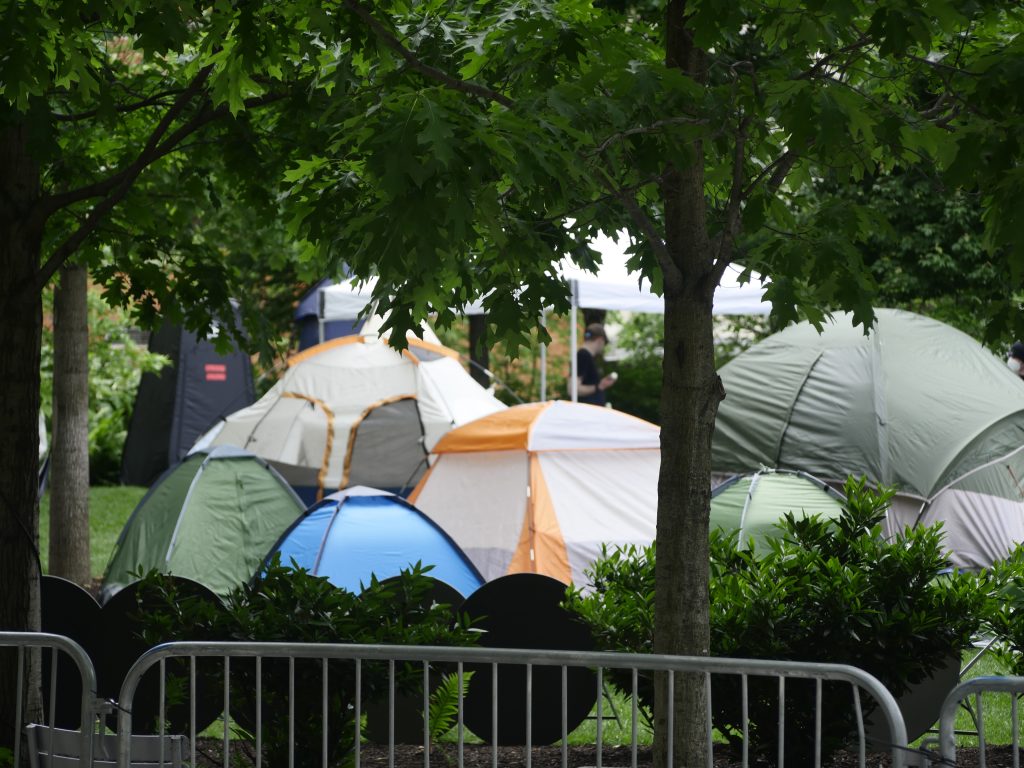
Following the start of the Gaza Solidarity Encampment, which was established just after a documentary screening discussing the events of Oct. 7, Jewish students expressed concerns over the rhetoric used by protestors and demands by the Drexel Palestine Coalition to disband Jewish organizations on campus, including Hillel and Chabad.

Among the encampment’s many demands include terminating both Jewish organizations on Drexel campus, Hillel and Chabad. The coalition claims Hillel’s primary purpose is to “facilitate birthright trips to Occupied Palestine” and claim Chabad should be banned for “welcoming an ex-IOF soldier into the Drexel Community.”

The Jewish Studies Department hosted a screening of the documentary “Supernova” on Thursday, May 16. The documentary includes footage of and testimonies about the Nova Festival Massacre on Oct. 7, when 1200 Israelis were killed and over 240 hostages taken. The screening was followed by a discussion with Hannie Ricardo, whose daughter Oriya Ricardo was a victim of the massacre. Around 30 students, faculty and friends of the university attended the event at Drexel University’s Hillel Chapter.

Two days after the “Supernova” event, the Gaza Solidarity Encampment formed. Signs and chants at the encampment, which reportedly included “resistance is justified,” “globalize the intifada (revolution)” and “long live the student intifada,” caused some Jewish students to fear for their safety. 

When asked about the protest, product design major Adam Simler, a Jewish-Israeli student said, “After watching the Supernova documentary and speaking with the mother of a girl who was murdered, I was horrified to see signs stating ‘resistance is justified’ My family members were brutally murdered on Oct. 7 and my 8-year-old relative Emily Hand was taken hostage by Hamas. Signs like these make me fear every day for my safety as an Israeli and a Jew.”

Drexel student and president of Students Supporting Israel, Sammy Shiff shared, “The encampment in my opinion is outrageous and illegal. Keeping students from going to class and calling for an intifada—which is a call for dead Jews— is not only violent and not peaceful, but full on antisemitic.” 

Drexel Palestine Coalition did not get back to The Triangle for comment on the demand to terminate Hillel and Chabad. They responded to The Triangle via email with an updated “Communique” of the encampment’s disbandment. 

“Early in the morning of Thursday, May 23rd 2024, the Gaza Solidarity Encampment at Drexel University launched a strategic retreat from campus,” the Communique stated. 

“Many Jewish and non-Jewish students alike are scared and confused to see both student peers and non-student trespassers demanding for the termination of Hillel and Chabad, the only spaces where we feel safe to practice our religions and identities. I completely encourage free speech and peaceful protesting, but hate and intimidation cannot be tolerated,” shared Dan Soslowsky, student president of Drexel Hillel. 

In an email statement to the university community on Monday, May 20, President Fry wrote “encampment protesters have created a hostile, confrontational environment by subjecting passersby to antisemitic speech and by issuing several ‘demands’ that have unacceptably targeted individual members of our faculty and professional staff, a member of our Real Estate Advisory Committee, and two Jewish campus organizations (Chabad and Hillel).”

According to Drexel Hillel, their mission is to provide a “welcoming, inclusive Jewish community for students at Drexel” with the values of inclusion, respect, pluralism, integrity, and community.” 

The soldier with “horrific war crimes and human rights violations” referenced by the demands, refers to an ex-Israeli Defense Force soldier who visited campus on March 14 to share her story of how she survived the Nova festival massacre. She attended the festival after finishing her army service as a yoga instructor for soldiers. 

At both of the Oct. 7 memorial events, the attendees recited a prayer for safety and peace. 

Shiff shared that “the Jewish community wants there to be peace. We do not want the fighting.”

Soslowsky similarly shared “above all else, I want there to be peace… It’s just a matter of how to achieve that peace.”

Posted in UncategorizedComments Off on Jewish students express concerns in response to encampment demands