Author Archives | opiniondesk

The Octogenarian: mainstream journalism not what it used to be

hillary clinton

I am mad as hell.

My anger is directed at members of a profession that I love and admire, the news gatherer and reporter.

Some 20 years back, a very brave delegation of American women, led by then Secretary of State Madeleine Albright, went to China for a world conference on women and women’s issues. Among the delegates was Hillary Clinton, First Lady at the time, who was to make a speech on the world stage.

There were three major groups who feared that speech, and none of the three knew in advance what the First Lady would say.

One group was the government of China. They even harassed delegates, including our secretary of state, to make it difficult for these women to attend.

The second group was the U.S. Congress. This was a Republican Congress, and many of you readers are too young to understand that Republicans were pretty moderate back then. But, the First Lady was a Clinton, and conservatives even back then considered anything Clinton as relish and sauce for their hate appetites.

The third was the executive branch, and I don’t know if even President Bill Clinton knew what Hillary was going to say. I happen to believe that one of the strongest pieces of cloth ever invented is the marriage pillow, so I know what I believe.

Much in the image of the great Eleanor Roosevelt, Hillary Clinton tucked her purse under her arm, thumbed her nose at the powers that be and went off to do her own thing.

Of course the major difference is that Hillary on her own was surrounded by Secret Service, whereas when Eleanor went off on her own, she was on her own with just a lady friend.

I know this because that’s actually how I met Mrs. Roosevelt in Annapolis, Md. in 1933.

Hillary gave her speech, and it was a kick-ass masterpiece that called on governments worldwide, especially China and even the U.S., to work towards ending  the mistreatment of women.

As the father of six daughters, after reading her speech a few days later and hearing excerpts from it, this diminutive female grew to giant estimation as a human in my mind.

Since that time, I have seen the Clintons accused of every crime imaginable, short of nailing Jesus to the cross, with only one conviction: lying about his pants being unzipped.

I have observed that in cases where a man gets caught playing around, he lies first and foremost to protect the wife and children he loves.

Lower the noise, I’ll argue and prove this later.

This past Friday, I spent the first four hours of the day in a little building called VISOR at the VA Hospital. The common name for the clinic is “The Blind Clinic.”

While the staff were performing their latest exciting unexpected acts of a miraculous nature on my blind old eyes. At home, I was recording Andrea Mitchell who was interviewing Hillary Clinton, now a presidential front-runner, one on one.

It was a great interview followed by the usual critique. That’s when I got angry.

Rachel Maddow, a reporter who, up until last week I respected for her reporting, caused me to constantly refer back to the interview to see if we had watched the same interview.

That evening, I watched Rachel’s show and realized that she was misreporting the interview and was in reality reporting more on Andrea Mitchell — her obvious hero — rather than the truth of what Hillary said.

It was obvious when the many self-proclaimed reporters unveiled the fact that, though their tongues were wagging, they hadn’t bothered to watch it. Few networks reported accurately, but they were in the minority.

I grew up in the days when you needed three reliable sources before you put your words on paper.  Today, sadly, supposition and innuendo are considered reporting and the public is hurt by this.

Opinion Columnist Ken Levin is a political science senior and may be reached at opinion@thedailycougar.com

—
“The Octogenarian: mainstream journalism not what it used to be” was originally posted on The Daily Cougar

Posted in UncategorizedComments Off on The Octogenarian: mainstream journalism not what it used to be

Laws affecting homeless people do not reflect well on society

WEB-Pablo-Milanese-DSC_8464

WEB-Pablo-Milanese-DSC_8464

The U.S. poverty rate rose to 13.2 percent of the population, increasing the number of homeless people out on the streets. | Pablo Milanese/The Cougar

Those who are homeless have had struggles most of us cannot even begin to comprehend. Some governments in the United States, however, have made the misguided decision to pass laws making their lives even harder.

Last month, the United States Department of Justice released a statement of interest on a case where seven homeless people in Boise, Idaho, sued the city to overturn a ban on camping and sleeping because they’ve been punished under the local ordinances.

“Making it a crime for people who are homeless to sleep in public places when there’s insufficient shelter space in a city really is a violation of the Eighth Amendment’s prohibition of cruel and unusual punishment,” said Vanita Gupta, leader of the civil rights unit of the DOJ.

According to a national student campaign, the U.S. poverty rate rose to 13.2 percent of the population. In addition, 3.5 million people were forced to sleep in parks, under bridges, in shelters or cars.

City leaders feel more pressure to do something about homelessness when they are more visible in their communities.

This is a huge issue that we have even seen had its repercussions in many cities across the U.S., including Houston.

In 2004, Houston approved a “civility ordinance,” expanding the area in which it is prohibited to lie, sit or place personal belongings on the sidewalk to include the Midtown area.

If they aren’t hurting anyone, this law seems like nothing but a means to clear homeless simply for being eye sores.

“Homeless people really don’t bother me too much, but I’ve seen people be really quick to judge,” said chemical engineering junior Jose Mora. “You never really know what they’ve been through, and it’s awful when policies are making it harder for them, rather than help out.”

In 2012, Houston City Council passed an outrageous law making it illegal to feed homeless people anywhere on private property.

Mayor Annise Parker has been great for this city, but this is one area where her merits should come into question.

After the 2012 law was passed, Mayor Parker said on KUHF radio’s “Houston Matters” show that “making it easier for someone to stay on the streets is not humane” and that groups who give free food to the hungry “keep them on the street longer, which is what happens when you feed them.”

But when people are deprived of life-sustaining acts such as eating or sleeping, it should be considered unethical and inhumane, no matter what their situation is.

By not feeding a person that needs to be fed, we cannot secure that person will be able to find a job and pay for his food the following day. Humans cannot go weeks without having any form of nourishment.

“Because of the regression, all cities including Houston should be extending an arm to help those that are in need,” said Mora.

Policies and laws that go against that makes us look unsympathetic and just cause negative backlash by many, but it looks like our city is starting to steer towards the right direction.

Parker announced earlier this summer that Houston has effectively ended veteran homelessness.  Over 35 local agencies collaborated to build a nationally-recognized response system that has housed over 3,650 homeless veterans in just over 3 years, and it has the resources to house every homeless veteran (or those at risk) in Harris and Fort Bend Counties.

Some of us may forget to think of the homeless because of our personal feelings towards them, but we need to remember their humanity.

Opinion columnist Rebekah Barquero is a print journalism junior and may be reached at opinion@thedailycougar.com

—
“Laws affecting homeless people do not reflect well on society” was originally posted on The Daily Cougar

Posted in UncategorizedComments Off on Laws affecting homeless people do not reflect well on society

The Palin-patented American-English language has pros

477338845

477338845

Courtesy of Getty Images

A couple of weeks ago, Sarah Palin insisted on the much needed-cleansing of the American tongues.

Trump previously said, “[Jeb Bush] should really set the example by speaking English while in the United States.”

A CNN interviewer asked Palin, “Donald Trump said ‘Jeb Bush should speak English, and not Spanish, when he’s campaigning in the U.S..’ Jeb Bush’s response was that Trump doesn’t value tolerance. What do you think of that?”

“It’s a benefit of Jeb Bush to be able to be so fluent in Spanish…” said Palin, but “I think we can send a message and say, you want to be in America…you’d better be here legally, or you’re out of here… [And] when you’re here, let’s speak American. Speak English.”

Her ‘message’ can be interpreted as this: Speak only the default language of English, American-English (not to be confused with British-English) in America.

Also, don’t confuse it with the original tongue of the Native Americans before the Americans evicted them of their homes. Don’t confuse ‘American’ with the abundance of dialectic diversity—Spanish, French, Chinese, Arabic, etc.

Palin inadvertently reminded us to resurrect the “English Language Unity Act” bill, which proposes, “To declare English as the official language of the United States, to establish a uniform English language rule for naturalization, and to avoid misconstructions of the English language texts.”

It would save people the chore of learning to be bilingual.

There needs to be classes for this “American” language, which would include terminologies such as “refudiate,” coined by Palin. Completing those credit hours for languages requirements are all for naught.

Who needs a translator to bridge the communication gap between the Spanish-speaker and the American-speaker? The pros of exclusively speaking American-English outweighs the pros of learning Spanish.

“(The) kind of a unifying aspect of a nation is the language that is understood by all,” said Palin.

Sí.

The immigrants who don’t understand American don’t understand how to live in America. We are unified by speaking the same precise vocabulary. If they speak their archaic tongues, they’re aliens. We refuse to understand them if they make it harder on us.

We’re unified not by the co-existence of the multiplicity of culture and language—that would only divide the nation—but by having as much in common as possible.

Carol Cao is a creative writing and media production senior and may be reached at opinion@thedailycougar.com

—
“The Palin-patented American-English language has pros” was originally posted on The Daily Cougar

Posted in UncategorizedComments Off on The Palin-patented American-English language has pros

Cruz puts religious agenda over women’s liberties

Sen. Ted Cruz had a lot to say about the Affordable Care Act this week.
Wikimedia Commons  |  The Daily Cougar

Sen. Ted Cruz had a lot to say about the Affordable Care Act this week. Wikimedia Commons | The Daily Cougar

File photo/The Cougar

Apparently, there’s no room in the Texas budget for basic women’s healthcare.

Recently, Republican leaders in Texas, due to their lack of decision-making skills, have come to the conclusion that funding cervical and breast cancer screenings by Planned Parenthood are deemed an unnecessary expense.

If we think we live in a progressive era, we should consider the notable changes that have recently proven otherwise.

Ted Cruz assumes his religious convictions are “American values,” but why should his opinion be the only one that matters?

It’s obvious that the fight for pushing Planned Parenthood out of Texas is not only a morality issue, but also the ultimate goal on Cruz’s agenda.

Last month he even emailed and invited over 100,000 pastors for an “all-out assault on Planned Parenthood.” His intention was loud and clear. America should defund the organization completely.

“I am urging you to confront this evil in our nation by praying and preaching with an unbridled passion until funding for Planned Parenthood ends and this barbaric practice is purged from the land,” Cruz said.

“The battle we face is not political. It is spiritual. To enter this arena in a prayer-less condition invites failure.”

Cruz likes to play on emotion as well as dramatics. He hones in on the opportunity that religious institutions can do his PR work for him. It becomes less of an issue of women’s health as it becomes a race for the public’s approval, after falsified videos were leaked a few months ago.

According to Bloomberg Politics, this advancement in Cruz’s campaign against the organization has many states following suit such as Louisiana, which plans to cut its Medicaid assistance to Planned Parenthood on Monday.

Last Wednesday, congressional meetings were held focusing their attention on abortion and the issue of the circulated videos.  Planned Parenthood representatives were not invited to attend and defend themselves.

What a shocker.

Alyssa Quesada, 25, is a single mother who works as a medical assistant for home health with Planned Parenthood.

“(The) first time I came to their clinic, I was quickly seen and given information pertaining to safe sex and guidance on the different methods of birth control that were offered. They were kind and informative,” Quesada said.

“Ted Cruz’s cult followers are the first in line to judge about what is and isn’t right and how this organization ‘defies God’ But they will also be the quickest to turn their backs on the young women of America who really need help and government assistance,” she said.

It has become a back-breaking struggle to find other outlets for affordable women’s healthcare with the new restricted laws.  Planned Parenthood offers thousands of women birth control for as low as $9 without insurance.

The government of Texas needs to look past conservative virtues and give women that are seeking support a better alternative before they revoke what we do have.

Cruz, we as women, take note that you are trying to compensate in your deficiency of leadership skills with religious authoritarianism. But please refrain from abusing your power and limiting ours.

CORRECTION: The word ‘delusion’ was originally misspelled in the SEO headline.

Opinion columnist Phylicia Sneed is an English senior and may be reached at opinion@thedailycougar.com.

—
“Cruz puts religious agenda over women’s liberties” was originally posted on The Daily Cougar

Posted in UncategorizedComments Off on Cruz puts religious agenda over women’s liberties

The danger of Hillary Clinton’s hawkish nature

Hillary clinton

Hillary clinton

Illustration by Tamor Khan/The Cougar

Hillary Clinton is too ambitious to be president.

As a career politician, Clinton has become an expert in the art of saying one thing, but doing the other. Just this week, she spoke at the Brookings Institution where she shared her feelings about the Iran deal.

“I will not hesitate to take military action if Iran attempts to obtain a nuclear weapon,” she said.

Clinton voted for the Iraq War as a senator back in 2002 and said that it was a mistake, but is still willing to use military force in an unstable region.

It has become her trademark to appear strong and decisive in order to appeal to a broader spectrum of voters.

“She’s wants to be seen as that ‘no one is gonna walk over me’ kind of thing,” said associate political science professor Jason Casellas. “She’s always had that reputation of being hawkish.”

A hawkish president is not what this country needs.

The last time we had a hawkish president, the U.S. spent nearly $2 trillion and destabilized an entire region. Some say the conflict also resulted in the creation of ISIS, arguably one of the most dangerous terrorist groups in modern history.

This is not to say that Iran is to be trusted entirely with the dismantlement of their own nuclear program. But outright threatening to use military force means she will now have to live up to her promise should she become president.

Using military force means more government spending and putting American soldiers’ lives at risk.

As Bernie Sanders said, “If you can’t afford to take care of your veterans, then don’t go to war.”

This country is ready for a female president, but gender should not be a qualifying factor for being president. Someone who is eager to wage war in another country is not someone looking out for the best interest of everyone.

Clinton can’t continue to speak this way. We live in a period where most Americans are very reluctant to engage in any kind of military conflict if it means putting our troops’ lives in danger.

With the horrible effects of the Iraq War, Clinton should have learned her lesson by now.

Apparently she hasn’t.

Opinion editor Anthony Torres is a political science junior and may be reached at opinion@thedailycougar.com


—
“The danger of Hillary Clinton’s hawkish nature” was originally posted on The Daily Cougar

Posted in UncategorizedComments Off on The danger of Hillary Clinton’s hawkish nature

Letter to the editor: A personal 9/11 experience

opinion_guest

EDITOR’S NOTE: Mark Wiltshire is the father of history junior Matthew Wiltshire and was within 100 yards of the North Tower when it was hit on 9/11. Mark spoke at the 9/11 memorial service held Friday morning at the Student Center. These are his remarks.

I have been asked to speak to the school as one who was at the World Trade Center during the attack on 9/11. I want to remind you of those events and to say a few words about what, in my view, would be a respectful way of remembering those who died on that day.

When I think back, I see that 9/11 began for me at 12:17 p.m. on February 26, 1993. At that time, I sat at my desk on the 59th floor of the World Trade Center’s North Tower, men who were motivated by the same terrorist ideology as those who attacked us on 9/11 tried to kill me and others by exploding a bomb along the south foundation of the North Tower.

The terrorists’ intent was to collapse the North Tower to the south, so as to bring down the South Tower as well. The ultimate objective was to kill the approximately 50,000 occupants of the towers and thousands of others who would have died in the field of debris. Although it failed in its intent, this first attack killed six people and injured more than 1,000.

On the morning of September 11th, as I disembarked from a small ferry that ran from Hoboken to the World Trade Center, I stood perhaps 100 yards from the North Tower, and watched flames billowing from its upper floors.

The tower had been hit by an airplane as I crossed the Hudson River. As I now watched, I thought of the more than 400 friends and colleagues who I knew would be attempting to escape from the middle floors of that building. I thought of my own two-hour decent, eight years before — when I had made my way through acrid black smoke that had at times blocked out all light, made breathing painful and swallowing impossible, when I had retreated back up flights of stairs and had helped others break through doors in search of breathable air and a safe passage down, and when, having found a working telephone, I called my wife to say “goodbye.”
As I thought about that, I also observed the people around me. The crowd was largely silent. The silence was interrupted in my memories only by the sounds of weeping, as people looked up and contemplated what must be happening on those floors so high in the sky.

Then the silence was further interrupted by what would become the defining auditory memory that I carry from that day. A high-pitched sound that at first I heard only half consciously as I continued to focus on what was happening before me. But at some point, the sound became sufficiently intrusive so as to wholly interrupt my focus on the tower. I had not heard the sound before that day, and have not heard it since.

When I try to describe it, I produce the sound of the vowel that we call the “long e”. At first, I whisper it softly, increasing the volume to a loud, high-pitched scream. The scream was at its loudest and almost at its end when it forced my thoughts away from the tower, and I turned to see the large jet with its engines open at full throttle barely above my head and just off my right shoulder. There was perhaps five seconds separating the turning of my head and the ghastly explosion of fire and debris and families that blew out the tower’s other side.
Over the years, I have said that, at that moment, I observed at first hand the profound change that occurred across America on that day. I have described the change as follows: before the second plane flew over our heads, people were silently contemplating or crying over a tragedy that was playing out before them. They had all probably done this in some fashion before when confronted by a great tragedy here or there in the world. The tragedy before them now was distinguished mostly by its immediacy, which focuses the mind.

However, within seconds of this second plane’s hitting its target, no one remained sitting, everyone was in some kind of either purposeful or merely reactive motion. Most were running. Many were yelling, most of which I don’t recall what.

But I will always remember the faces of people looking about, frantically searching the skies and the water around them, in deep, personal fear and screaming: “They’re attacking us!” Not “them.” Not “The World Trade Center”. But: “us!” People now understood that they were no longer observing a tragedy that invited silent weeping for others. People now understood that they — individually, personally, their friends, their families —stood at the center and as an object of the attack, and they scanned the world around them to see what else might be coming, and whether they, too, would die that day.
My own response after the second plane hit was to step behind a stone wall to gain protection from the crowd that was now rushing to escape northward, away from the attack and up the river. As the crowd thinned, I began my own walk north, a walk that was interrupted again and again by street crowds looking to the south and yelling “Look! Look!” In curiosity, I did look. But only once. One really doesn’t need to look more than once in one’s life at humans leaping to their deaths from 100 floors. But I was one of the lucky survivors I had colleagues who in their escape had walked through and over these same bodies, and their lives were changed that day.

The “profound change” that I say swept across America on the morning of Sept. 11 would have little lasting impact. We have largely returned to what some will call “normal.” For myself, I am glad that the intensity of the fears and the unfocused anger of that day have receded, that motion have abated. My nine year old daughter, having directly observed the smoke and debris rising from the fallen tower in which she knew her father to work and in which she assumed he had perished, was severely traumatized and would undergo a long period of counseling before, in her young words at the time, she would fulfill her wish to become “happy again, like I used to be.”
We should be thankful for the healing that has occurred for many people who were
injured physically, emotionally and spiritually that day.

Nevertheless, and this is the point that I want to leave you with, it is  important that we learn from our experiences, that we glean truths that (unlike many of our emotions) do not fade with the passing days.

Following the events of 9/11, I finally asked myself “Who are these people who are so willing to sacrifice their own lives in the cause of the slaughter of innocents? What is their motivation?” Almost to the last man, the terrorists themselves are open and articulate in describing a shared, violent ideology.
I believe that there are two principle things that we can now do to show respect for those who have died, and for those who most surely will die in the future, at the hands of men motivated by that ideology. First, we need to seriously study and understand the motivations of their killers. This means that we need to understand the ideology that unites them. You cannot fight ideas that you have not taken the time to understand them. Second, while we rightly embrace people of all cultures and all religions who accept our friendship, we need to remain firm in our commitment to values that are under attack by this ideology, including freedom of speech, freedom of religion and
the separation between civil law and religious authority.

We need to remain firm in our commitment to such values, and stand ready to defend against those who wish to do us harm.

opinion@thedailycougar.com

—
“Letter to the editor: A personal 9/11 experience” was originally posted on The Daily Cougar

Posted in UncategorizedComments Off on Letter to the editor: A personal 9/11 experience

Kim Davis is not a hero

Kimdavis


Kimdavis

Courtesy of Wikimedia Commons

Kim Davis is not a saint.

She’s not a warrior, she’s not brave and she’s definitely not a martyr.

The Kentucky clerk was arrested last week for denying gay couples marriage licenses. She was released from jail  this week and was lauded by devoted Christians who welcomed her like Pope Francis had just made his last appearance.

Indeed, it looks like the leader of the Catholic world can make progressive changes to religion, but Kentucky can not.

A woman who has been married four times, cheated on her first husband and had twins out of wedlock thinks she has the right to define what “traditional marriage” is.

Kim Davis is no hero, and she comes prepared with an army of non-heroes to back her up.

Our dearest Texas Sen. Ted Cruz thought he should make it clear that he was an avid Davis supporter. According to a CNN report released Tuesday, Cruz said on his Facebook page that “it was an outrage that she was imprisoned for six days for living according to her Christian faith.”

At least we know this isn’t the worst we’ve heard from him.

Organized religion should serve the purpose of self-knowledge and spiritual fulfillment, but never to overrule government policy, especially when it comes to constitutional rights.

When same sex marriage became legal in the United States in June, more than 9 million Americans were granted a right that was long awaited. In Houston alone, over 700,000 people celebrated such recognition as a victory for the LGBT community.

It is offensive and humiliating to a vast portion of the population of this country to deny members of the LGBT community an important right such as marriage equality.

It is time people stop praising her attitude as if she were the new messiah. Her arrogance devalues the LGBT movement, which just like any other minority group still suffers from society’s backlash and rejection.

As she left jail, Davis gave an emotional speech thanking her supporters for the love. Republican presidential candidate Mike Huckabee confirmed that the speech wouldn’t end without an old school Christian touch to it.

He even volunteered to go to jail because of the “tyranny” of “people who believe they can take our freedom and conscience away.”

The only thing Huckabee forgot to mention was that we do not live in a tyranny and same sex marriage is now just as much of a constitutional right as freedom of religion.

We’ll make sure to tell him next time.

Opinion Columnist Luiza Braga is a print journalism senior and may be reached at opinion@thedailycougar.com

—
“Kim Davis is not a hero” was originally posted on The Daily Cougar

Posted in UncategorizedComments Off on Kim Davis is not a hero

Monogamy’s faults in today’s society

monogamy art

monogamy art

The idea of cheating has been highlighted by the Ashley Madison scandal, making monogamy part of a broken relationship system. | Illustration by Kevin Lemus

Let’s face it: our relationship system is broken.

As our society becomes more accepting in recognizing human rights, one subject resides in the hands of conservatism: sex. Not only has sex remained taboo over the years, but we continue to condemn cheating as the unforgivable sin.

Why not condemn monogamy instead?

Anthropologist Helen Fisher found that “monogamy is only part of the human reproductive strategy.” This means that unless it comes to reproduction, sticking to one sexual partner is merely a social norm.

The idea of cheating can be considered a social construct.

Recently, the act of cheating has been highlighted by the hacking of Ashley Madison, a dating website designed to help married couples cheat. Adultery, especially by those who considered themselves happily married, was proven higher than most people might have thought.

According to The New York Times, cheating rates are rising, most prominently among young couples and older men.

Apart from the many reasons why people in relationships cheat, one thing is certain — our society views infidelity as terrible.

But why is it seen that way?

In 2008, Psychology Today ran a controversial article that explained how even the husband of the world’s most attractive super model will eventually lose sexual drive over time.

If Brad Pitt is allowed to lose interest in Angelina Jolie, so can the rest of us.

Take a moment to consider the idea of Free Love, a social movement with its roots in late 18th century feminism. Free Love argues against marriage and suggests that the government should stay out of sexual matters such as marriage and birth control.

Guided by these ideas, people would feel more empowered and secure when making decisions regarding their sexual behavior.

Because we are still sexually traditional, today’s society rejects the idea of having multiple sexual partners. Society labels it as immoral while imposing marriage as a natural necessity.

The same social construct oppresses men and women with gender stereotypes: while men are required to put on their best macho costume and provide for their family; women should stay monogamous.

While there are many arguments as to whether monogamy is ideal or not, one thing should be indisputable — your sexual choices belong to you, and no one should be able to touch that.

Opinion columnist Luiza Braga is a print journalism senior and may be reached at opinion@thedailycougar.com

—
“Monogamy’s faults in today’s society” was originally posted on The Daily Cougar

Posted in UncategorizedComments Off on Monogamy’s faults in today’s society

Campus sexual assault: a bigger problem than you think

WEB-Justin-Tijerina-IMG_9787

WEB-Justin-Tijerina-IMG_9787

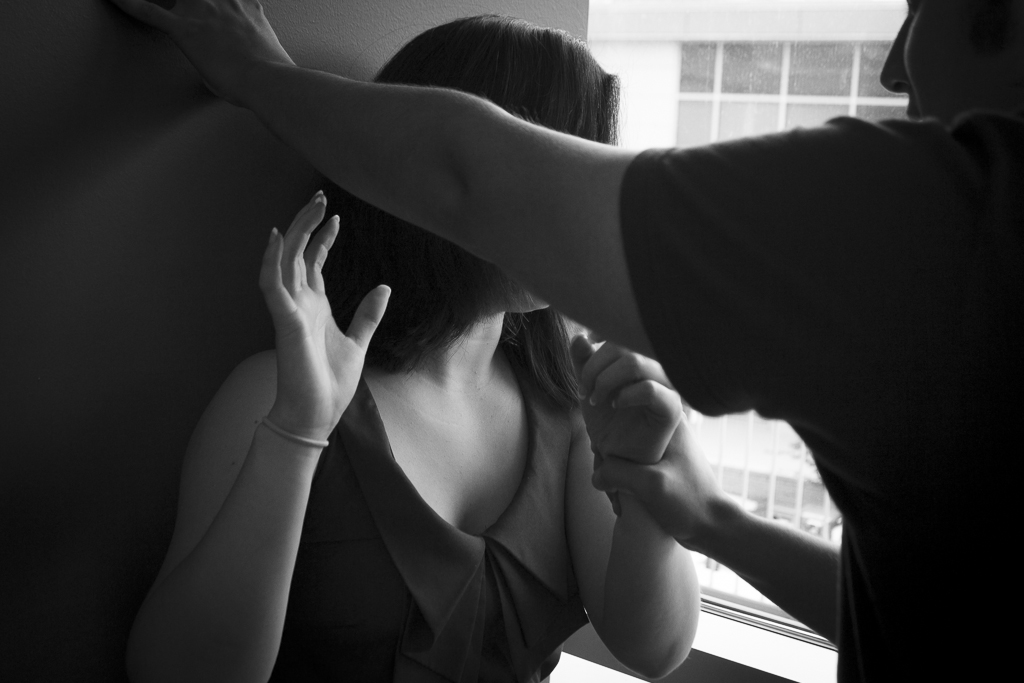
| Photo illustration by Justin Tijerina/The Cougar

According to the White House Task Force to Protect Students from Sexual Assault, one in five college students experiences sexual assault during their college career.

They also estimate that 95 percent of U.S. campus rapes go unreported. The problem of under-reporting reflects an extreme need for increased campus prevention and support systems.

This is one of the most important issues at any college campus, yet we still hear stories about someone getting assaulted on an almost weekly basis.

This is a problem that becomes relevant before college, but many young adults still lack the knowledge regarding this matter.

“I wasn’t expecting this to happen to me. I just didn’t see it coming,” said a victim who wishes to be anonymous. “I was raped two years ago, and the feeling of being a victim still haunts me.”

This victim was sexually assaulted by a friend and has been seeing a psychologist for one year due to anxiety as well as other mental health issues.

“You don’t really know who to trust nowadays. You always have to be careful, and be aware that it can happen to you at any time,” said the victim. “I think knowing how to cope with it afterwards is the hardest part. I still have flashbacks that wake me up at night, and it’s just something that I have learned to deal with.”


UH actually has a webpage that informs students about sexual abuse.

Recognizing high-risk emotional and physical abuse is one of the first key factors in a problematic relationship. Violence, threats and controlling statements are just some things to look for.

“I think colleges make it seem like it will always happen at a party, or in an unusual circumstance like the robbery,” said public relations sophomore Holly Benson. “A lot of abuse can happen from within a relationship, and that’s when it’s a real danger because no one says anything.”

According to the Centers for Disease Control and Prevention, few programs to date have prevented the perpetration of sexual violence, and those listed on the website are actually targeted for middle school and high school students.


Training bystanders to intervene and addressing social norms among influential voices are two aspects that need to be addressed on college campuses. Simply telling students that this can happen and to be careful isn’t enough.

According to research by the task force to protect students from sexual assault, “Brief, one-session educational programs focused on increasing awareness and changing beliefs and attitudes are not effective at changing behavior in the long-term.”

These approaches may be useful as one component of a comprehensive strategy. However, they are not likely to have any impact on rates of violence if implemented as a stand-alone strategy, or as a primary component of a prevention plan.

Students should also educate themselves on different types of sexual violence and learn to be cautious of their surroundings, even in the most comfortable situations.

This can happen to anyone, and preventive actions need to be taken by both the school and individuals.

Opinion columnist Rebekah Barquero is a print journalism junior and may be reached at opinion@thedailycougar.com

—
“Campus sexual assault: a bigger problem than you think” was originally posted on The Daily Cougar

Posted in UncategorizedComments Off on Campus sexual assault: a bigger problem than you think

The Octogenarian: Hi, I’m Ken

John Ministries Photo

John Ministries Photo

John (bottom left) was a member of the UH Campus Ministries during his time at UH. | Houstonian 1982

Octogenarian is the name given to someone who has lived into their ninth decade. In fact, at age 84, I believe that I am the oldest full-time undergraduate student on campus.

If I’m wrong please let me know, because this is a lonesome position.

If you do see me running around campus on my little red scooter, don’t hesitate to approach. I will see you but not well — mostly because I am legally blind and profoundly deaf, but if you communicate so will I.

I start my tale in early 1962. I lived with my family in a middle-class residential neighborhood in southwest Houston off of Stella Link Road.

Across the street lived a family and, when the mother became pregnant, her husband, who was working in Germany, secured her a new wonder drug to aid with morning sickness called Thalidomide.

Because of the drug, their son was born with no normal limbs.

The boy was named John and he was born with a strong mind, will and was blessed with a magnificent woman for a mother. I watched John play with the neighborhood children and when the other kids started running, John started rolling around.

We moved away and I lost touch, but 20 years later a young woman on this campus named Judy Bluestein created a television piece called “Barrier Free.”

She took a TV crew and followed John as he tried to circumvent the University of Houston campus.

UH back then was loaded with barriers to wheelchair-bound students. There were no electronic, button-controlled doors and many were extra hard to open for the chair bound.

There were many doors that a chair couldn’t fit through and John didn’t have to worry about non-handicapped students using handicapped bathroom stalls because such stalls were almost non-existent.

He had to be carried into and out of most buildings and sometimes had to use freight elevators. Most sidewalks ended with curbs and there were no ramps to allow wheelchair access.

Building signage and bathroom sinks and mirrors were out of sight and reach. John had a live-in attendant and could not circumvent the campus without his assistance.

Individually, many educators tried to help. One instructor even moved his class from the second floor of a building to the first to accommodate John.

Look at our campus now. It is hard to find a sidewalk that does not end in a ramp and lots of strategic ramps in between. Numerous ramps for buildings, electronic doors for building access and plenty of elevator service.

I know firsthand that the handicap stalls in the restrooms are available. I am attending this University and I do have a couple of minor handicaps.

I hate that word: handicap. It belongs in horse racing, not the human experience.

I am on this campus full-time needing a chair for mobility.

On our campus today there are only two noticeable hazards to those with mobility problems. One is bike riders locking their bikes to the inside railings of ramps that are not marked by signs to not do this. The other day, I rammed my knee up against a bike.

But the biggest problem is the cracks in most of our sidewalks. Some of these hazards would have slowed down General George Patton’s famous tank corps in World War II. In fact, since the beginning of this semester, I have taken to driving in the street to avoid crevices in the sidewalks.

Most importantly, the Center for Students with Disabilities is staffed by a team of caring, knowledgeable, compassionate people who try to eliminate these blockades and hazards. I consider their little building on campus a “House Of Heroes!”

And remember Judy, who produced that video about John? Well, nine years after she did that story, I was already slowing down in my 60s and she ran me to ground.

We were married and our son — now in his early 20s — and I are attending classes together.

Opinion columnist Ken Levin is a political science senior and may be reached at opinion@thedailycougar.com

—
“The Octogenarian: Hi, I’m Ken” was originally posted on The Daily Cougar

Posted in UncategorizedComments Off on The Octogenarian: Hi, I’m Ken