
Author Archives | opiniondesk

The fallout from catastrophic Iran deal is in Obama’s hands

Courtesy of Wikimedia Commons

Courtesy of Wikimedia Commons

Courtesy of Wikimedia Commons

President Barack “Insane” Obama recently made the U.S. the largest financier of global terrorism, committed treason and set the stage for World War III.

Last week Congress, once again, failed to do their job and allowed the Iranian nuclear deal to pass. The deal includes lifting sanctions on Iran’s nuclear program and provides Iran with immediate access to “frozen” assets valued at $150 billion.

In return, Iran has agreed to reduce their uranium enrichment program, comply with nuclear inspections, not blow up Israel and only use enriched uranium and plutonium for peaceful purposes.

I joined the United States Marine Corps after 9/11 because I wanted to do my part in the war against terror. I left a baseball scholarship at Dallas Baptist University to join the fight against Al-Qaeda and terrorist groups like Hezbollah or Hamas. I served in Iraq in 2006-2007 and was one of the first responders when Al-Qaeda blew up a mosque in Habbaniyah, killing over 40 women, children and babies.

When I hear of our president providing $150 billion to a terrorist regime like Iran, it pisses me off. It’s a slap in the face to all veterans who served in the war against terror and an absolute disgrace to our country.

We are talking about the same Iran that has vowed to destroy their enemies with a nuclear bomb. This is the same Iran that publicly declares to “wipe Israel off the map.” These are the guys we hear about chanting “death to America” at political rallies and destroying replica U.S. warships during military training drills.

To sum all this up, Iran is our enemy.

Iran’s entire GDP is only $300 to $400 billion. Giving Iran $150 billion is like someone giving the United States $8 trillion dollars.

It’s in the Constitution that “treason against the United States, shall consist only in levying War against them, or in adhering to their Enemies, giving them Aid and Comfort.”

If Iran is a sworn enemy who publicly vows to destroy the United States and its ally Israel, and we give them $150 billion, would this be considered giving them aid and comfort?  If aid and comfort is the act of committing treason according to the U.S. constitution, then did Obama commit treason?

It makes no difference if Obama grabs a checkbook from the first lady’s purse and writes the Ayatollah a personal check or if he lifts economic sanctions. Any way that you look at it, Barack Obama has given aid and comfort to a regime that supports and funds terrorist groups like Al-Qaeda, Hezbollah and Hamas.

I don’t care that nuclear energy can be used for peaceful purposes such as fertilizer, medicine or energy. I don’t care if there is an energy shortage in Pakistan. I care about Iran funding terrorist groups that I have personally witnessed murdering women, children and babies. I care that the Iranian regime has even so much as dared to threaten my country, my life, my family or the life and future of my 5-year-old son.

Our president has dishonored and betrayed our veterans, country, citizens and our children by becoming the world’s largest financier of global terrorism.

Barack Obama should be immediately removed from office, tried and committed for treason and exiled to Iran.

Opinion columnist Cory Simpson is a media productions junior and may be reached at opinion@thedailycougar.com

—
“The fallout from catastrophic Iran deal is in Obama’s hands” was originally posted on The Daily Cougar

Posted in UncategorizedComments Off on The fallout from catastrophic Iran deal is in Obama’s hands

How my history brought me to favor the Iran deal

12033702_944324668943796_1003143086_n

12033702_944324668943796_1003143086_n

Ken Levin served for four years and reached the rank of Staff Sergent. | Courtesy of Ken Levin


Way back in 1942, my mother volunteered to be an Air Raid warden in northwest Baltimore, where we lived at the time. We lied about my age so I could volunteer to be a Civil Defense Air Raid Messenger.

This meant that we had to be able to identify the silhouettes of all of the Japanese, German and Allied aircraft.  My job would have been easily unnecessary if somebody had invented cell phones.

My job was to carry messages between the Air Raid warden, fire departments, police and any local military. My mother patrolled the streets, followed closely by our gray alley cat, Salla.

I can say with the utmost pride and confidence that because of the due diligence of my mother and I, not an enemy bomb fell on our part of Baltimore during the entire war.

A few years after World War II, the United States found itself in a “police action” war in Korea and in 1951, President Harry Truman asked me if I could help out, so I enlisted.

Thus, began my four years in uniform, involving everything from humor to fear, resulting in four courts-martial, four promotions and a lot of war stories for this old man.

Of course, that war still hasn’t technically ended, but since then we have found ourselves as a nation involved in some ridiculous conflicts.

Because of that, my former wife served four tours in Iraq and two in Afghanistan, my fourth daughter served one tour in Iraq and three tours in Afghanistan, my fifth daughter served five tours in Iraq and an ex-son-in-law served two tours in Afghanistan.

One of my grandsons is presently serving in the Army.

Now, things have changed a little. We finally have a president who is ridiculous enough to think that negotiation is better than war. How ridiculous can you be? Here we have a deal with a country that we cannot trust, but we have made lots of deals with countries we cannot trust.

Here we have a situation that says they cannot have a weapon of mass destruction and a system for verifying that. If they try to cheat, we still have all of the options, including military.

We also have the ability to blast them to kingdom come, and their negotiators know this.

Our Congress, made up of a large number of Republicans, is against this deal for only one reason: their hatred of President Barack Obama.

We are being inundated with misinformation and outright lies about why this is a bad deal. But any deal that prevents the Iranian government and their terrorist sub groups from obtaining an atomic weapon is a good deal, and this plan does just that.

But now, we get to my point.

The opposition to the deal with Iran is led by neoconservatives, such as Dick Cheney and Texas Sen. Ted Cruz. These are people who have never met an American whose pound of flesh or pint of blood they were not willing to sacrifice in a foreign war.

How do I feel about that? Well, I’m too old to go. My wives and most of my daughters are too old to go.

But, my son and most of the students who read this paper are the right age, and I say to the war mongers of today, “YOU CAN’T HAVE MY SON!”

How strongly do I feel that? I will do anything possible and maybe some things impossible to prevent you from going back to the daily casualty reports of the past fifty years.
If that makes me unpatriotic, then I guess I suddenly, after 70 years of service to my nation, accept that. But keep your grubby, bloody, war-mongering hands off my son and his generation.

Opinion Columnist Ken Levin is a political science senior and may be reached at opinion@thedailycougar.com

—
“How my history brought me to favor the Iran deal” was originally posted on The Daily Cougar

Posted in UncategorizedComments Off on How my history brought me to favor the Iran deal

Do what you love: why your major matters

career


career

Students often have to choose in between a major that can provide them a stable future versus majoring in something that they are actually passionate in. | Pablo Milanese/The Cougar

Tarun Jakkaraju thought he was on a path to the medical field, but then he took an aptitude test and decided a degree in business and fashion design suited him more.

“Doctor was the last thing on the list that I would have been suited for, while the fields I felt I should have switched to dominated my recommended fields,” Jakkaraju said.

Jakkaraju is among many of us who have struggled while making career choices. Whether it is about how much money they will make, what their parents want for them or where we see themselves in 10 years, choosing a degree should not reflect anything buttrue passion.

The U.S. Department of Labor released an article in January about early degree planning, saying that it should begin long before it’s time to start a career. The article suggested that high schools should allow students to explore their abilities early-on so that they will be prepared when the time comes to choose a degree.

But how many students know what we truly want as 17-year-olds? And how many others make such a life-changing decision based on what other people want?

Jakkaraju said he was highly motivated by financial stability and was constantly pressured by his family to pursue what they called a ‘steady paycheck’.

When he decided to take a leap of faith into a more suitable but less secure journey, the outcome showed nothing but positive results.

“I came to a point where I just wasn’t happy,” Jakkaraju said. “I would take all of these science-related classes and I simply hated every minute of them. I realized that my potential was meant for something else.”

With a liberal arts degree comes the question of what to do once you graduate. As if that question wasn’t bothering students enough, other people will insist on asking: what can you do with that?

Senior Valentina Olarte is no longer bothered by these questions. After four years as an acting major, she has learned to put the judgments aside.

“In a different way, it is about working every day to find the right connections, and in that sense I don’t think it is a career that is too different from engineering,” Olarte said. “It might be harder to get hired, but it is my life style. It is about what you value in life, what your priorities are.”

In his blog SamAntics, business developer Sam McRobert explained the process of hiring someone. Trust him, you need more than just a degree that feels good saying out loud.

“The truth is that proficiency is more important than the amount of time spent studying, or the method by which that proficiency was gained,” McRoberts said. “For a company to choose someone with that quality of education over someone with practical, current experience is just plain wrong.”

Judging someone’s abilities from their career choice is not the way to go, so you might as well choose something you love.

Opinion Columnist Luiza Braga is a print journalism senior and may be reached at opinion@thedailycougar.com

—
“Do what you love: why your major matters” was originally posted on The Daily Cougar

Posted in UncategorizedComments Off on Do what you love: why your major matters

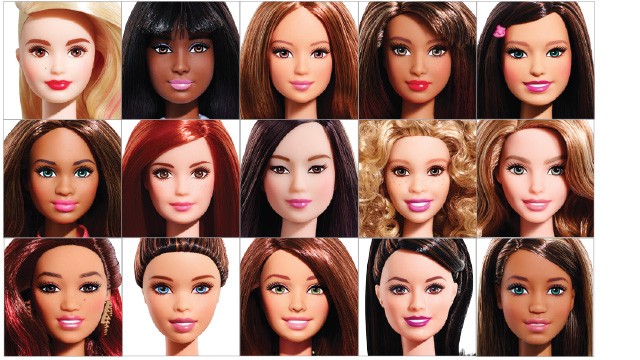
New Barbie takes away children’s imagination

Barbie_Fashionista

Barbie_Fashionista

Courtesy of Wikimedia Commons

Growing up with Santa, fairy tales and a huge imagination, anything is possible as a child. Playing “pretend” is typical for most kids, and one of my favorite things to do when I was a kid, was to play with Barbie dolls.

Every birthday and every Christmas, one of the toys that I asked for most was the newest Barbie to play with and to add to my collection. My play time with dolls are some of the most irreplaceable memories of my childhood.

This November, Mattel will release their first ever interactive doll with the capability to have a two way conversation, Hello Barbie.

Pressing a button on her belt prompts the toy to ask a question, and then record the response with an embedded microphone. The response transmits to cloud servers. This has been made possible by Wi-Fi and speech recognition technology.

According to the New York Times, “Hello Barbie is by far the most advanced to date in a new generation of (artificial intelligence) toys whose makers share the aspiration of Geppetto: to persuade children that their toys are alive — or, at any rate, are something more than inanimate.”

My sister and I would play with dolls for hours, and never experienced any problems pretending that our toys were alive. The key of being a child with imagination is to create that dialogue for your doll, and engage with others to do so.

Because Hello Barbie can have full conversations with a child, it seems imagination is being discouraged for future generations.

For psychologists who study the imaginative play of children, the primary concern is that a conversational doll might prevent children, who typically personify toys without technology, from imagining wildly enough.

‘‘Imaginary companions aren’t constrained,” psychology professor at Wellesley College Tracy Gleason said. “They often do all kinds of things like switching age, gender, priorities and interests.”

Mattel, rather than kids, ultimately controls what she can say.

‘‘She is who she is,’’ Gleason said. ‘‘That might be a lot of fun, but it is definitely less imaginative, child-generated and truly interactive than someone with whom you can imagine whatever you want.’’

It is expected that a toy that can befriend a child is likely to be a commercially successful one. A child will be able to consider this doll a friend rather than a toy.

This could potentially incline children to socialize less because they already have a friend to talk to at home. We have no idea what this can do to a child’s mental health and how it can affect them in the long run as teenagers and young adults.

“Well that’s great, maybe just a tiny bit more work, maybe we can squeeze the very last drop of creativity out of childhood, and allow the adults and corporations to direct every second of it,” political science sophomore Sarah Maler said. “I loved playing with my dolls and being their voice for them; it really shouldn’t be the other way around.”

Because of the advances of the technology that we have had over the past decade, I expected for toys to advance as well. But, I feel an acute nostalgia and wish that future children will have the chance to truly expand their minds with playtime like I did.

The future is daunting and unpredictable, as technology has consumed our society. Hello Barbie is coming, and there is no stopping it.

Opinion columnist Rebekah Barquero is a print journalism junior and may be reached at opinion@thedailycougar.com

—
“New Barbie takes away children’s imagination” was originally posted on The Daily Cougar

Posted in UncategorizedComments Off on New Barbie takes away children’s imagination

GMO bans hurt research and humanity

GMO_Full_Disclosure_Advocate

GMO_Full_Disclosure_Advocate

Courtesy of Wikimedia Commons

Every year, 3.1 million children under the age of 5 die as a result of malnutrition. 100 million more suffer from being underweight.

We all agree that world hunger is tragic, however, we are divided about the easiest way to solve the problem: genetically modified organisms.

Genetically Modified Organisms (GMOs) are organisms whose genomes have been engineered in order to increase the production of desired biological products.

On average, genetically modified crops have been found to increase yield by 22 percent, reduce pesticide usage by 37 percent and increase farmer profits by 68 percent. In poorer areas, the effect is even higher.

In terms of economics, the solution is a lot simpler; as the supply increases, the price drops, allowing poorer populations to purchase the food they need to survive.

Yet, even with overwhelming evidence in favor of GMO usage, 60 countries around the world heavily restrict or even outright ban the practice.

So what’s the problem with countries making the choice to ban technology they deem unsafe?

The answer is research.

Restriction of genetically modified crops leads to a setback in future funding for scientific research in the field. Recently, Scotland imposed a blanket ban on growing genetically modified crops might leave Scotland without access to agricultural innovations and threaten the country’s contributions to scientific research.

Beyond Scotland, these bans on genetically modified crops can negatively affect research in other sectors of the GMO market.

“Bans on (genetically modified) crops can lead to seriously hurting research into using modified bacteria to clean up oil spills,” petroleum engineering sophomore Anthony Nowak said.

“It can end up causing us to not have the tools to handle certain problems that can happen in the upstream sector of the oil and gas industry.”

Perhaps a more harmful side effect to bans is the stigma it reinforces about GMO technology. Anti-GMO activists employ scare tactics with alarming headlines designed to make the average person afraid of something he or she might not entirely understand.

In developed countries, the effect is relatively minor, but in the poorest of countries, the effect is more severe.

In 2012, after a 12 year wait, scientists were able to plant a genetically modified strain of rice in Southeast Asia, which was cost effective, easy to cultivate and packed with vitamin A. During this 12 year wait, eight million children died as a result of a Vitamin A deficiency with another 250,000 going permanently blind every year.

Why did it take so long to implement?

The answer is the organization known as Greenpeace who fought the implementation of genetically modified crops. The unfortunate fact is that studies show that the interference of anti-GMO activists, such as Greenpeace, has caused either complete implementation failures or the further plague of hunger to those who need this technology the most.

Our activism against a problem that we are not plagued with takes away our ability to be sympathetic. We agree that world hunger is a problem, but believe the starvation of nearly 795 million humans is not compared to the detriments of GMO research and application.

Somewhere in the process of worrying about the far fetched negatives of continuing GMO research, we lost our humanity.

It’s part of our responsibility as developed nations to raise the quality of life of every person on the planet because of one single fact: human starvation is unacceptable.

In the immortal words of Dr. Norman Borlaug, who is the father of genetically modified crops and credited with saving more human lives than any human in history, “You can’t build a peaceful world on empty stomachs and human misery.”

Opinion columnist Austin Turman is a political science junior and may be reached at opinion@thedailycougar.com

—
“GMO bans hurt research and humanity” was originally posted on The Daily Cougar
Posted in UncategorizedComments Off on GMO bans hurt research and humanity

Trendspotting: The Asian vote leaves Republican Party

asian vote

asian vote

Courtesy of Getty Images


The Asian vote is up for grabs as Asians begin to slowly lean toward the Democratic Party.

This is interesting news, considering Asians have typically voted for Republican candidates. But the question is, does this shift matter?

Forty-seven percent of Asian voters consider themselves Independent, which suggests almost half of Asian voters are already willing to change directions.

“I can’t speak for most Asians,” accounting senior Dana Nguyen said, “but I don’t think that people fall into any particular party, rather we take parts from each one.”

Asians are the only demographic to have undergone dramatic changes in voting patterns in the last few decades.

According to NPR, “in 2012, nearly three-quarters of Asian-American voters went for President Obama. But, rewind — 20 years prior — and you’ll find fewer than a third voted Democrat.”

But how significant is this change in elections?

After all, Asians make up less of the electorate than, for example, Hispanic voters.

According to the Pew Research Center, “with an estimated 9 million eligible voters in 2014, the Asian-American electorate for…midterm elections make up four percent of all eligible voters. By contrast, Hispanics—the largest minority groups…make up 11.3 percent of all eligible voters.”

Moreover, they have a much lower turnout – at least in midterm elections.

A Pew Research Center analysis reveals that “about three-in-ten Asian-American eligible voters have cast ballots in midterm elections since 1998, a much lower turnout rate than that of whites and blacks…”

Statistically, Asians do not vote  because as Nguyen said, “I don’t vote because I don’t have the time.”

This response is not limited to Asians, but it does underline a major issue in Texas: the astonishing low voter turnout.

Nevertheless, the Asian vote does matter.

Asians are expected to vote more in the upcoming election. Asian-Americans recently passed Hispanics as the largest group of new immigrants to the United States. While it may not become apparent until they are able to receive citizenship, the fight for the vote of these new citizens will likely become a new battleground for future elections.

If the Republican Party plans to reclaim these voters, they must stop alienating these potential voters.

“It doesn’t help when a Republican presidential candidate like former Florida Gov. Jeb Bush attempts to clarify his use of the term ‘anchor babies’ — which many Latinos find offensive by redirecting the conversation to Asians,” said Christine Chen, director of Asian-Pacific American Islander Vote.

Whether or not Asians will become what the Hispanic vote today is unclear, but what is clear is that political divides are far from permanent.

Opinion assistant editor Sarah Kim is a political science major senior and may be reached at opinionassist@thedailycougar.com 

—
“Trendspotting: The Asian vote leaves Republican Party” was originally posted on The Daily Cougar

Posted in UncategorizedComments Off on Trendspotting: The Asian vote leaves Republican Party

We stand with Ahmed

IRVING, TX - SEPTEMBER 16: Attorney Linda Moreno, left, speaks about her client 14-year-old Muslim boy Ahmed Ahmed Mohamed, right, who was detained after a high school teacher falsely concluded that a homemade clock he brought to class might be a bomb, as he stands near his father Mohamed Elhassan Mohamed during a news conference about the issue hosted by the North Texas chapter of the Council on American-Islamic Relations, on September 16, 2015 outside Mohamed family home in Irving, Texas. (Photo by Ben Torres/Getty Images)

IRVING, TX - SEPTEMBER 16: Attorney Linda Moreno, left, speaks about her client 14-year-old Muslim boy Ahmed Ahmed Mohamed, right, who was detained after a high school teacher falsely concluded that a homemade clock he brought to class might be a bomb, as he stands near his father Mohamed Elhassan Mohamed during a news conference about the issue hosted by the North Texas chapter of the Council on American-Islamic Relations, on September 16, 2015 outside Mohamed family home in Irving, Texas. (Photo by Ben Torres/Getty Images)

Ahmed Mohamed speaks out after being arrested for bringing a homemade clock to school.  | Courtesy of Getty Images

If he had another name, religion or belonged to another ethnic group, would 14-year-old Ahmed Mohamed have been suspended and later arrested on Monday in Dallas for bringing a clock he built to school?

The issue at hand has become immediately evident.

Ahmed is Muslim, with a name that suggests as much. Because Ahmed is from the African nation of Sudan, it is likely that he was racially profiled.

Men, women and children like him have been detained at airports and faced other forms of ethnic profiling for similar reasons.

Nevertheless, he is just a 14-year-old American boy who wanted to make his MacArthur High School teacher proud by revealing a clock he built at home.

But we are not blind to the underlying issue in America today.

Ahmed’s case has been another instance of police violating the rights of a citizen. According to the Texas Family Code Section 52.025, “A child may not be left unattended in a juvenile processing office and is entitled to be accompanied by the child’s parent, guardian, or other custodian or by the child’s attorney.”

He was repeatedly denied the right to see his parents, and he was not able to meet with them until he was released from a juvenile detention center.

Perhaps this issue is largely important because last week all of America remembered the travesties that occurred on 9/11.

Perhaps this issue is important because, although the tragic Boston Marathon bombing was two years ago, it is still fresh in our minds — especially since Dzhokhar Tsarnaev was sentenced earlier this year.

Perhaps this issue is important because, although the U.S. government does not track religious affiliation, the Muslim population in the U.S. has seen significant growth and is projected to greatly increase in the following years. (The Muslim population will likely surpass Christians as the world’s largest religion in the second half of this century.)

Whatever the reason, we see law enforcement failing to recognize the civil rights of one of its young citizens.

We have seen that, because of the actions of a few extremists, there are many people in America who seem to have hastily generalized millions of others who have done us no harm.

Many of us support the positive outcomes that have come from this otherwise awful event. As a result of this incident, Ahmed has received an invitation from President Barack Obama to visit the White House and support from Hillary Clinton, Facebook’s Mark Zuckerberg, MIT and NASA.


We stand with Ahmed and for a tolerant America that honors the freedom promised to its entire people since the founding of the nation.

opinion@thedailycougar.com

—
“We stand with Ahmed” was originally posted on The Daily Cougar

Posted in UncategorizedComments Off on We stand with Ahmed

Satire: Penny boards are a menace to society

pennyboard

pennyboard

Photo Illustration by Brittaney Penney/The Cougar

The days when people simply walked to class are dead.

Everywhere you go, everywhere you look, you see someone with a damn Penny board, skating around campus acting as if what they’re doing isn’t a nuisance to this school.

These skater kids need to man up and start walking like the rest of us.

A recent Pew Research study showed that people who use Penny skateboards are 400 percent more likely to end up leaving college with liberal arts degrees and not find jobs after graduation.

These are the facts.

Penny boards, for those who don’t know, are basically smaller versions of skateboards. They are made by Australian company Penny, who then forced these pseudo-skateboards into college culture.

Penny even created a clothing line so you can enhance your “Penny lifestyle” and be a true Penny board menace.

“The other day I was walking, and my ankle got clipped by someone going too fast on a Penny board,” computer science senior John Robert Eliot III said. “I hate that people with Penny boards think they can just skate around campus not considering that the rest of us have to take an extra 7 minutes so we can walk to class.”

Those who live the “Penny life” need to take a quick look in the mirror and realize the harm they are doing.

According to CNN, violent crimes involving Penny boards have increased by 900 percent in the past 6 months.

In January, a student at the University of Florida was so convinced his Penny board could fly that he leaped the school library’s roof while riding the board, only to find out it, in fact, did not have aerodynamic abilities.

He was pronounced dead at the scene.

Disregarding the fact that most of these incidents occur in Florida, there is fear that similar incidents could occur right here at the University of Houston.

When will we all realize that the threat of Penny board users is too big to ignore?

Australia is most known for their dangerous animals and intense heat. No one could have foreseen that they would create a consumer product of equal danger and risk.

We need to stand up to this threat. No one should have to walk around campus with the fear that they might go home with a bruised toe caused by a Penny board coming just a little too close to them.

We need to make UH great again.

Opinion editor Anthony Torres is a political science junior and may be reached at opinion@thedailycougar.com

—
“Satire: Penny boards are a menace to society” was originally posted on The Daily Cougar

Posted in UncategorizedComments Off on Satire: Penny boards are a menace to society

Focus Friday: the second Republican debate

Generated by  IJG JPEG Library

Generated by IJG JPEG Library

The second Republican debate was heated last Wednesday, who will come out on top in the end? | Courtesy of Getty Images

The Cougar is introducing Focus Friday where the opinion page will publish our thoughts on current events or issues. This week, we discuss the second Republican debate.

What was your general reaction to the debate?

Managing editor Mónica Rojas: I planned to watch debate mostly as a means of entertainment, because, to me, it will not be a serious event until Donald Trump is out. But I was surprised to find that I actually got something out of it. Although these early debates are more about who can get a better dig at another candidate, a select few of the candidates did what they were supposed to do: talk about the issues and give the masses a glimpse at what type of leader they are. I was surprised the most by Sen. Marco Rubio because, from what I gathered, he is a more moderate candidate — something I think the next president of the United States should be. I’m not saying I’d necessarily vote for him, but I wouldn’t consider moving to Canada if he were elected.

Opinion editor Anthony Torres: I’m glad Carly Fiorina was added to the debate. Donald Trump was taking hits from all sides again, of course. The only difference was this time his responses came across as mean, not witty or creative like some of his past comments. You could even hear people oohing in disgust whenever he picked on Rand Paul. I’ll give credit to Mike Huckabee and John Kasich for taking firm stances against speaking bad about one another. Kasich even refused to comment on Hillary Clinton, which was surprising. Overall, it was a lot of unnecessary name calling and record bashing and not a lot of talk about actual issues.

Sports editor Bryce Dodds: Much like the first, the second GOP debate featured a lot of jabs between candidates without much substantial policy talk. Donald Trump, Jeb Bush and Carly Fiorina spent much of the night testing each other, with both Bush and Fiorina responding to attacks Trump made on them previously. It was disappointing to see that the debate was more of a chance for the candidates to produce the best sound bite more than to display why they would really be the best person to run as the Republican candidate.

Who won the debate?

Assistant opinion editor Sarah Kim: It’s hard to pick a clear “winner” of the debate. As politicians tend to do, each candidate addressed the popular issues and controversies that surrounded them individually as candidates rather than those plaguing America today. Fiorina and Trump talked about his comments regarding her face, while Trump’s comment distanced him from women voters. It’s not really that important for America’s next leader. However, Chris Christie made a point to say that finding solutions to improve America’s job market is what should really be what is discussed, not aesthetics.

AT: Marco Rubio really stood out to me. He showed his good understanding of foreign policy and ran circles around Trump, who even admitted he didn’t have a full understanding of who our enemies were. Rand Paul was well spoken and his stance on drug laws are fantastic, but he unfortunately wasn’t given a lot of speaking time. Carly Fiorina had her moments but didn’t dominate the debate as much as some people say she did. For me, Ted Cruz came in dead last. Every time he spoke, it sounded rehearsed, and his rhetoric is too preachy.

BD: The person who really stood out to me was Carly Fiorina. She did a good job of trying to talk policy, but unfortunately, some of it wasn’t exactly all truth. While she did a decent job in the debate of rebutting some of Trump’s previous attacks, I think Marco Rubio did a good job in the debate and will pick up some points in the polls because of it. He didn’t give in to an attack from Trump, but chose to clarify his position and responded with tact, which I think shows well to a national audience.

opinion@thdailycougar.com

—
“Focus Friday: the second Republican debate” was originally posted on The Daily Cougar

Posted in UncategorizedComments Off on Focus Friday: the second Republican debate

Media threats need to be treated more seriously

WEB-Justin-Tijerina-IMG_2550

WEB-Justin-Tijerina-IMG_2550

Justin Tijerina/The Cougar

As social media becomes more prevalent, with it comes the question of what can be done when men and women receive threats or harassment online.

The Supreme Court’s silence is concerning for the 40 percent of people who have been harassed online.


“Rape,” he said. “rape sounds good.”

I received this disturbing message earlier this week from a stranger. It was not the first time I’d ever received a message like this through social media. Friends of mine have received random revealing photos, being subjected to harassment that continues for days and more. It’s almost commonplace.

According to a 2014 Pew Research survey, women who are 18 to 24 year old are significantly more harassed.

Forty-seven percent of people responded by confronting the person, 44 percent (myself included) blocked or unfriended the person, 22 percent reported the person to the website, and five percent reported the person to the law enforcement.

Empowered and masked by anonymity, disturbing people share their crude messages. Types of harassment include physical threats, sexual harassment and stalking or harassment over a sustained period of time.

Unlike popular belief, they go beyond simple comments.

Last year, Anthony Elonis’ wife filed a restraining order against him after he posted several threats on social media. He didn’t stop.

“Fold up your protective order, and put in your pocket. Is it thick enough to stop a bullet,” he said online a week after filing the restraining order.

Victims have described their experiences that are often life-threatening.

“I was threatened and told that if I stopped communicating with this man, that he would find me and rape me,” one victim said.

One thing more disconcerting than being on the receiving end of these messages is the fact that little or nothing can be done about them.

The courts have clear standards in determining which types of actions qualify as harassment, battery, and assault. But less clearly understood are the threats and harassment found on social media. For those who use social media daily, this is an important distinction that needs to be made.

Should people be accountable for the words they post online, and if so, to what extent?

There are a few laws in place regarding social media. According to the Texas Penal Code § 33.07, it is illegal in Texas to engage in online harassment using another’s identity and soliciting from a minor. These laws, however, do not address the threats and harassment many face when using social media.

According the Pew Research Center, “At a basic level, there is no clear legal definition of what constitutes ‘online harassment.’ Traditional notions of libel, slander and threatening speech are sometimes hard to apply to the online environment.”

Essentially, it comes down to the reasonable person standard. If a reasonable person would feel sincerely threatened by an action, then an individual may be held accountable for this action in the court of law.

In June,the Supreme Court made it more difficult to prosecute threats and harassment on social media. The Supreme Court recently overturned the conviction of a Pennsylvania man who posted rap-like lyrics that suggested he intended to kill his estranged wife, federal law enforcement officers and even a kindergarten class.

But the court has avoided making a clear distinction on the legitimacy of threats on social media.

If people can make verbal threats, online threats need to be treated exactly the same.

Assistant opinion editor Sarah Kim is a political science major senior and may be reached at opinionassist@thedailycougar.com 

—
“Media threats need to be treated more seriously” was originally posted on The Daily Cougar

Posted in UncategorizedComments Off on Media threats need to be treated more seriously