
Author Archives | Nashly Ramirez

Maybe we do not need flying cars

Lily Huynh

In 1977, a local Ohio newspaper asked middle schoolers to predict what they thought would happen by the year 2000. By 2026, many of their predictions had come true: they predicted that women could become astronauts, that we would have robot assistants and that we would have flying cars. One of those predictions seemed unrealistic just a few weeks ago, but now we can’t say that we’ll start going to the gym once cars fly. 

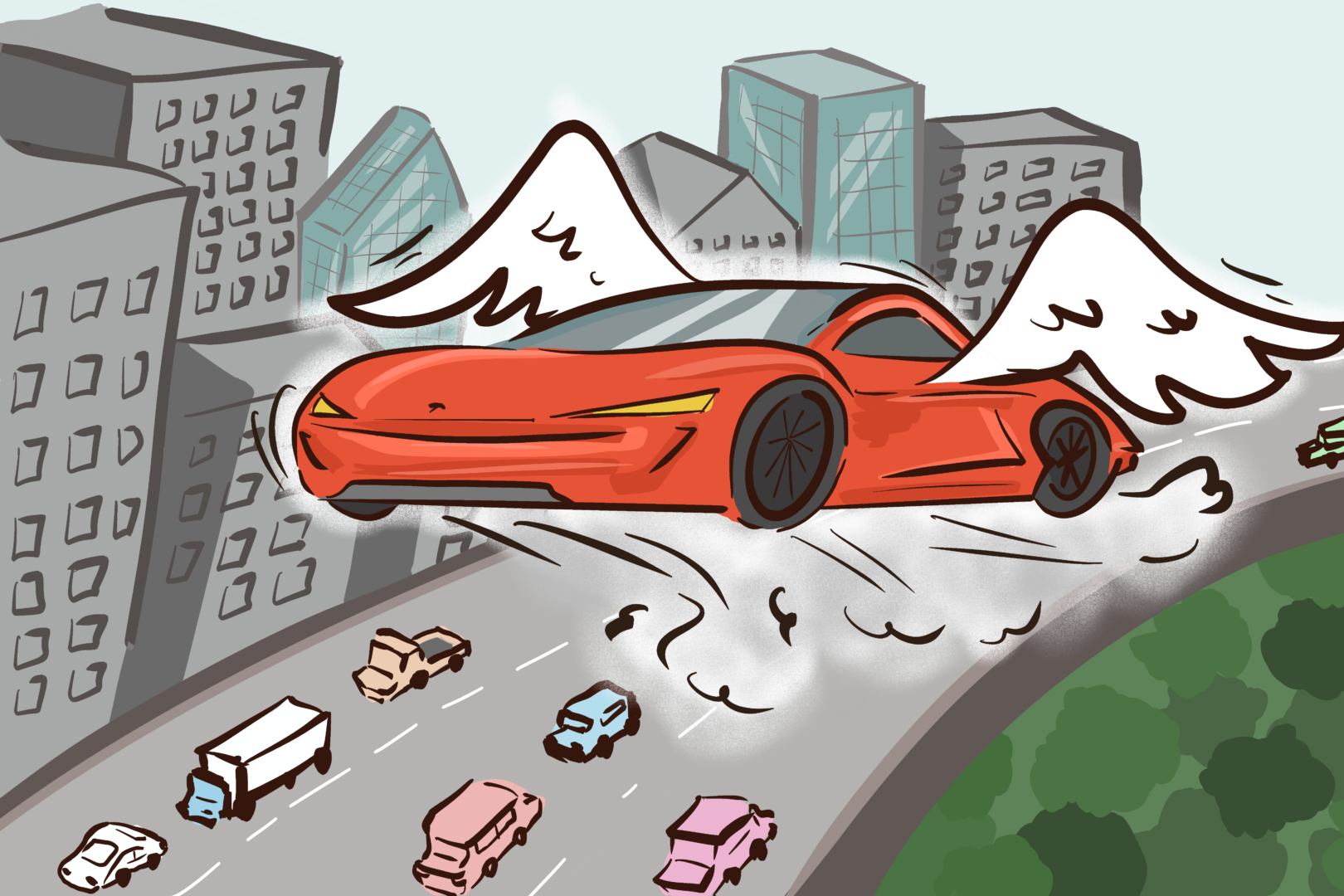
On Oct. 15 in McGregor, Texas, Tesla and SpaceX unveiled what it described as the first-ever flying car: the Tesla Roadster. But before anyone gets too excited about flying over I-10 traffic, think again. While the concept may seem exciting, flying cars should remain just that: a concept.

Flying cars may sound like the next big step in technological innovation, but just because we have the technology to make something possible doesn’t mean we should. 

Between the safety risks of putting everyday drivers in the sky, Tesla’s history of ambitious promises and whether flying cars would actually solve any of our transportation problems, this futuristic dream seems to bring more complications than benefits.

The reality of flying cars

Sitting in Houston traffic leaves plenty of time to daydream, and I would be lying if I said I hadn’t imagined how amazing it would be for my car to grow wings and fly past the seemingly endless line of cars. 

But now, instead of imagining how convenient flying cars could be, I find myself thinking about the horrifying logistics of making them a reality.

People already struggle to follow basic traffic laws. Between distracted drivers, speeding and people who seem to forget turn signals exist, it’s hard to imagine how those same behaviors would translate to the sky. 

After all, nobody would feel comfortable knowing their airplane pilot was distracted while flying, so why should we trust everyday drivers with that same responsibility?

Introducing flying cars would also mean creating an entirely new transportation system in the sky. Roads already rely on traffic lights, designated lanes, intersections and countless regulations to keep drivers safe. Bringing cars into the air would require similar systems, along with new rules to prevent midair collisions. 

And when accidents inevitably happen, what happens to the debris? One second, you could be walking to class, and the next, you’re dodging someone’s front bumper falling from the sky. If we already struggle to manage traffic on the ground, adding another layer of transportation above us could create more problems than it solves.

Tesla’s history of delays

Beyond safety concerns, another reason to question the future of flying cars is Tesla’s history of making ambitious promises.

Tesla is known for its industry-changing innovations, from popularizing electric vehicles to advancing self-driving technology. However, the company has also announced products that face years of delays or come with price tags out of reach for the average consumer.

In 2020, Tesla announced plans for an affordable electric vehicle priced at $25,000, with an expected release in 2023. However, the company eventually abandoned plans for the conventional model because, according to Elon Musk, Tesla just had too much on its plate. 

Now, Tesla is accepting reservations for its next-generation Roadster, with the Founders Series version requiring a $250,000 upfront payment. However, paying that much doesn’t guarantee customers will receive their vehicles anytime soon, if at all. 

A reservation essentially secures a place in line for a car that hasn’t entered production yet. Tesla originally announced the Roadster in 2017, with production expected in 2020. Nearly a decade later, the company still hasn’t delivered it. At what point does an impressive technological advancement become another expensive promise that consumers are expected to wait years for?

For decades, flying cars have represented the future people dreamed of, but maybe some ideas are better left in science fiction. Technological advancements are impressive, but innovation should make our lives easier, not introduce an entirely new set of problems.

As much as I would love to fly over Houston traffic, I’d rather improve the transportation systems we already have than spend years waiting for an expensive car that may never take off.

opinion@thedailycougar.com

—
“Maybe we do not need flying cars” was originally posted on The Cougar

Posted in UncategorizedComments Off on Maybe we do not need flying cars

Security without safety: UH students deserve better

UH is known for many things: one of the nation’s top entrepreneurship programs, a diverse student body and a nationally recognized basketball team. Unfortunately, being known as a safe campus isn’t one of them.

Campus safety remains a major concern for new and returning students. UHPD reported an aggravated robbery Aug. 12, just days before students were scheduled to move into campus housing. The incident followed three reported robberies during the spring semester. 

For many students, incidents like these raise the same question: If the university has invested in additional officers, cameras and patrols, why do so many still feel unsafe?

A presence without reassurance

This concern has surrounded campus for years. In a Reddit post dating back to 2024, a user who identified themselves as a UH student said they saw little change in campus security despite a string of reported crimes. The user claimed that after requesting a late-night security escort, no one arrived for 30 minutes, ultimately leaving them to walk to their car alone.

The student wrote that the experience left them questioning whether the university was doing enough to protect students and, for the first time, made them feel afraid to walk across campus at night.

That experience highlights a larger issue with campus security. Having officers, emergency call boxes and escort services available is important, but those resources mean little if students don’t feel they can rely on them when they need help.

The problem isn’t necessarily a complete lack of security. Anyone who regularly walks around campus has probably seen UHPD vehicles or security officers patrolling. 

The disconnect comes from seeing that presence every day while still receiving alerts about robberies and other crimes in the same places where students are supposed to feel protected.

Of course, no university can prevent every crime, especially on an open campus in the middle of a major city. Expecting UHPD to be everywhere at once would be unrealistic. 

But students should be able to expect a timely response when they request help and greater transparency about what is being done when the same safety concerns persist semester after semester.

Safety is a shared responsibility

While precautions like walking in groups, staying aware of one’s surroundings and using security escorts are useful, campus safety cannot fall solely on students. There is only so much someone can do to protect themselves when the environment around them doesn’t feel secure.

UH has made investments in campus security and that shouldn’t be ignored. But the continued concerns among students show that simply having security measures in place isn’t enough.

Students don’t need the impossible promise of a crime-free campus. They need security resources that respond when called, preventative measures they can actually see working and transparency about what changes after something goes wrong.

A university should be a place where students worry about getting to class on time, passing an exam or finding a parking spot, not whether they’ll make it back to their car or dorm safely.

opinion@thedailycougar.com

—
“Security without safety: UH students deserve better” was originally posted on The Cougar

Posted in UncategorizedComments Off on Security without safety: UH students deserve better

Cats Back: Kicking off the semester

The first week of classes is always one of the busiest, yet calmest, parts of the semester. Between syllabus week, adjusting to a new routine and meeting new people, those first few days set the tone for the months ahead.

Amid all the craziness, one of the most valuable things students can do is find a place to get involved. Whether that’s Greek life, a club tied to your major or an organization centered around a hobby, joining something outside the classroom can make a huge difference in college experience and future opportunities. 

Thankfully, UH has no shortage of options. With more than 600 student organizations, there’s truly something for everyone. If that sounds overwhelming, that’s exactly why Cats Back exists. 

Held during Weeks of Welcome alongside events like Cage Rage, CougarCon and RecFest, the two-day event brings hundreds of organizations together in one place, making it one of the easiest ways to discover what campus has to offer.

During Cats Back, student organizations fill the Student Center, giving students the chance to meet members, ask questions and learn about everything from academic clubs to cultural organizations and Greek life.

Finding your place at UH

While many students think of Cats Back as a freshman event, it shouldn’t be. If you’re a first-year student looking for your community or a senior looking to get more involved before graduation, it’s never too late to find an organization that matches your interests.

If you’re not sure what you’re interested in or want an idea of which orgs to look for, UH offers a quiz that students can take based on their interests, which narrows down the best-fit organizations and gives you a better idea of what to look for when attending Cats Back. 

In the day-to-day, between classes, work and other responsibilities, it’s easy for students to forget or deem being part of an organization unimportant. In reality, it’s important to be part of something bigger than yourself, to have responsibilities that give back to your community or interests and to put your skills to good use.

If you’re a commuter, an organization can give you a reason to stay on campus a little longer and get to know classmates beyond the classroom. If you live on campus, it can be the push you need to leave your dorm, try something new and take advantage of everything the university has to offer.

Organizations also offer students opportunities they might not find elsewhere. Whether that’s leading a team, planning events, volunteering, networking with alumni or simply finding people who share your interests, those experiences often become just as valuable as the classes you’re taking. They build confidence and create memories that last long after graduation.

That’s why Cats Back is one of the most important Weeks of Welcome events you can go to. Even if you don’t end up joining an organization that day, walking around, asking questions and exploring what’s available could lead you to opportunities you didn’t know existed.

opinion@thedailycougar.com

—
“Cats Back: Kicking off the semester” was originally posted on The Cougar

Posted in UncategorizedComments Off on Cats Back: Kicking off the semester