
Author Archives | Nashly Ramirez

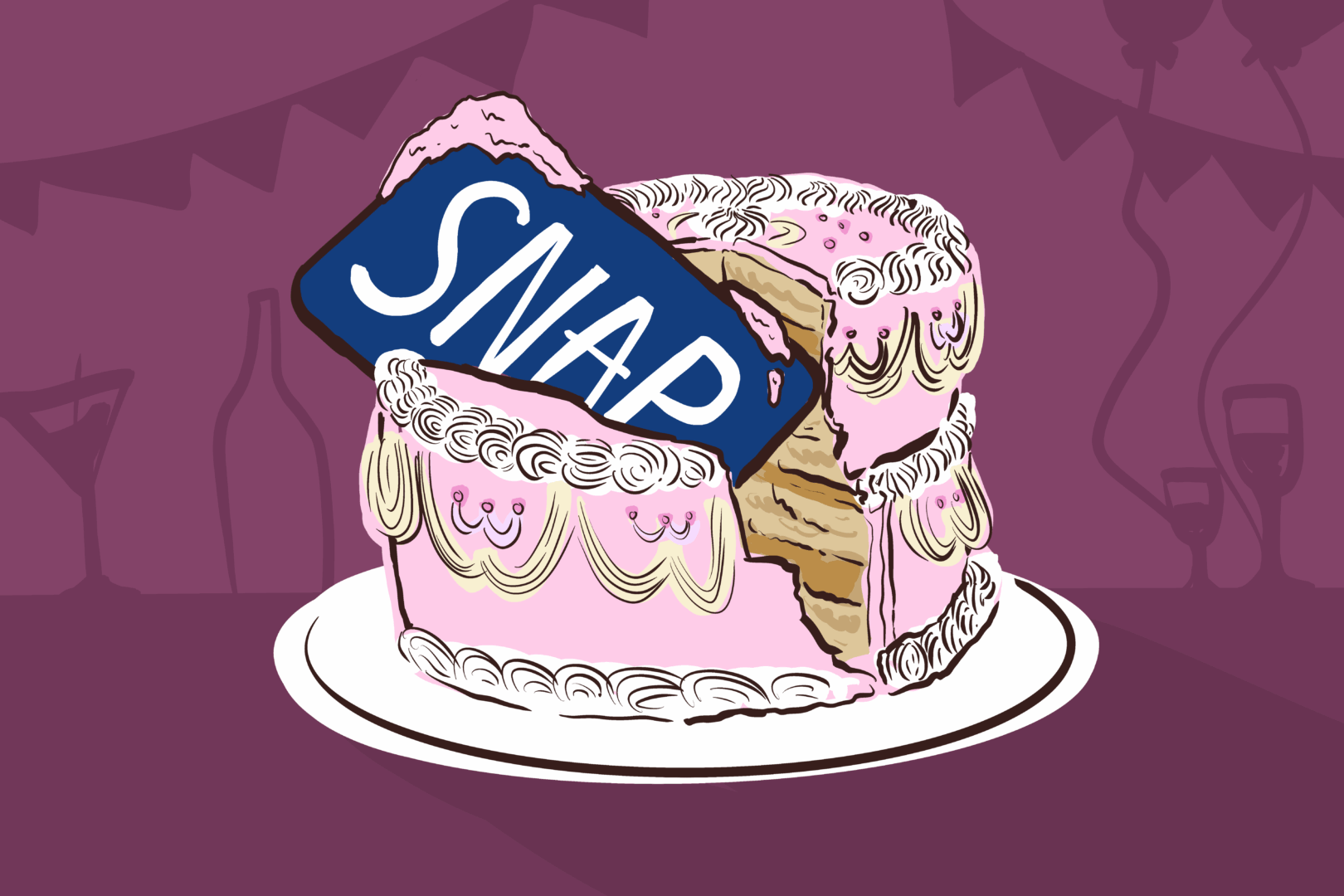
Let them eat cake: White House luxury amid SNAP crisis

Lily Hyunh/The Cougar

With the holidays approaching, many Americans are wondering how they will be able to put food on the table. The government shutdown has reached the point where federal employees are working without pay; some have even taken on second jobs on their days off just to afford groceries.

It’s time for Americans to demand accountability. Hunger and financial instability should never be bargaining chips in political games. Silence only normalizes this crisis and allows leaders to continue ignoring the nation’s most vulnerable.

The consequences of that silence are already here. On Nov. 1, Supplemental Nutrition Assistance Program recipients were informed that many states, including Texas, would no longer receive these benefits.

The Trump Administration has stated that it will not use emergency funds to extend SNAP during the shutdown. 

These benefits will only be given “when those Radical Left Democrats open up the government, which they can easily do, and not before!” Trump wrote on Truth Social.

For the 42 million Americans relying on SNAP benefits, the decision isn’t merely bureaucratic; it’s deeply personal, threatening both food security and dignity.

This leaves many Americans anxious about the days ahead. 

The political diversion 

Now, all eyes have shifted to the plans for an extravagant new ballroom to replace the East Wing of the White House. We are seeing more progress in the demolition of the White House than solutions in Congress toward ending the shutdown. 

The destruction feels like more than bad optics; it’s an act of erasure. 

The project, an estimated $200 million structure featuring gold, marble and lavish décor, stands in contrast to the reality many families face. As people struggle to make ends meet, it’s hard not to feel as though the government is telling its citizens to “let them eat cake.”

SNAP represents survival, as many of its recipients are wounded veterans, people with mental or physical disabilities and people who are just struggling to make ends meet. 

Political figures such as Chelsea Clinton and Bernie Sanders have publicly condemned the project, calling it a display of Trump’s disregard for the nation’s history and a ‘demolition’ of democracy.

And they’re right. What’s happening isn’t just the destruction of a building, it’s the destruction of what that building represents: accessibility and unity. Democracy thrives when leaders serve the people, not themselves. 

For generations, the East Wing has embodied the people’s access to the presidency. Replacing it with a ballroom shows this administration would rather entertain the powerful than feed the hungry.

A Yahoo poll of 1,700 adults found that 61% oppose the project, with a majority saying it dishonors the White House’s history. That disapproval reflects something more profound than design, frustration with a government whose priorities no longer reflect its people.

With Thanksgiving and Christmas approaching, many federal employees are no longer receiving paychecks, and food stamp benefits are set to run out in the coming days. 

Federal workers are now joining families that typically rely on SNAP. Both are turning to food banks that are already stretched thin and struggling to meet the growing demand, highlighting a shared struggle and the need for empathy.

As the holidays approach and the government shutdown shows no signs of ending, one thing is clear: a golden ballroom can’t outshine the growing struggles facing Americans today. If the White House truly wants to honor the nation it represents, it should start by feeding it, not decorating around its hunger.

opinon@thedailycougar.com

—
“Let them eat cake: White House luxury amid SNAP crisis” was originally posted on The Cougar

Posted in UncategorizedComments Off on Let them eat cake: White House luxury amid SNAP crisis

Do people even trick-or-treat anymore? We need to bring it back.

Valeria Payan Iglesias/The Cougar

Growing up, Halloween was my favorite holiday. I always planned my costume months in advance and couldn’t wait for the moment when I could put on my makeup and walk the streets in search of candy. 

I remember the anticipation, counting down the hours until the school day ended so I could rush home and get ready to trick-or-treat. The next day, my classmates and I would compare our hauls, trade chocolates and laugh about the houses that gave out raisins.

Halloween brought some of the best memories of my childhood, mainly because of trick-or-treating. From fully becoming the character I dressed as, the streets glowing with lights and skeletons and ending the night watching a scary movie with my friends, it was truly the highlight of my childhood.

Now, I take my younger cousin trick-or-treating, and the magic seems to have disappeared. The first year, I thought it was just me; I was getting older, and Halloween had shifted from trick-or-treating to parties and bars. 

But as the years went by, I noticed fewer children on the streets, fewer lights, fewer skeletons and fewer people celebrating the holiday.

So, did the magic and fun of trick-or-treating die with our generation? With COVID-19, inflation and the rise of new traditions, trick-or-treating has slowly died down from the classic walk down the street.

Unsurprisingly, the pandemic changed our lives in many ways, but I never thought it would affect how we celebrate Halloween. Since the pandemic, people have reported seeing fewer trick-or-treaters since 2023. 

Due to the new habits communities adapted to, many people chose to stay home, and this shift in behavior appears to have persisted. Instead of going door to door, more people celebrate by watching spooky movies, carving pumpkins and eating candy at home. 

This also led many people to opt for smaller, more tight-knit celebrations. Trunk or Treat is a new tradition that has become especially popular with families.

Trunk or Treat is an alternative where parents gather in a designated parking lot, often at a church or community center, and hand out candy to children from the trunks of their cars. Usually, the cars are decorated to replicate how people decorate their homes for Halloween, with spiderwebs, skeletons and pumpkins. 

This tradition gained popularity because it felt like a safer alternative to trick-or-treating, as children are in a more limited area and parents can keep a closer eye on their kids. 

Others dislike the idea, saying it kills the magic of Halloween. Arguing that the effort and excitement are lost when it’s as simple as going from car to car for candy, instead of running through neighborhoods trying to fill a pillowcase. 

While Trunk or Treat is cute, I have to agree that it takes away from the magic of Halloween. Our sense of community, especially within neighborhoods, is fading in an already online-dominant world. Halloween was one of the few times that brought us together and kept us connected with our neighbors.

Maybe that’s why losing the tradition of trick-or-treating feels so personal. It wasn’t just about the candy or the costumes, it was about knocking on doors, saying hello to neighbors and feeling like part of something bigger than yourself.

As times change, maybe Halloween will keep evolving, too. But I hope that somewhere between the parking lots and the parties, we still find ways to keep that same sense of connection alive, even if it’s just through a knock on a stranger’s door and a shared smile behind a mask.

opinion@thedailycougar.com

—
“Do people even trick-or-treat anymore? We need to bring it back.” was originally posted on The Cougar

Posted in UncategorizedComments Off on Do people even trick-or-treat anymore? We need to bring it back.

When comedy becomes a threat: Trump vs. late-night hosts

Lily Huynh/The Cougar

For centuries, comedy has reflected the truth, using laughter to expose hypocrisy and challenge authority.

This tradition continues today through late-night television. Shows like Jimmy Kimmel and Saturday Night Live use humor and commentary to reflect, and sometimes provoke, public opinion.
​
Recently, the genre has faced criticism. Some late-night shows received backlash, suspensions, or even cancellations due to jokes about people Trump administration and his supporters. Controversies have also led to speculation about outside influence on these decisions.
Silencing that voice doesn’t protect the public; it protects those in power from being challenged.

Fired by corporate squad  

Stephen Colbert and Jimmy Kimmel were two of the hosts who were affected. Colbert’s show was reportedly canceled for financial reasons, though the Writers Guild of America speculated that the decision may have been influenced by a bribe connected to the Trump administration.
​
“I absolutely love that Colbert got fired. His talent was even less than his ratings. I hear Jimmy Kimmel is next. Has even less talent than Colbert!” said Trump on a Truth Social post.
​
Evidently, Jimmy Kimmel was next. His show faced suspension following remarks he made about the death of right-wing figure Charlie Kirk. During a segment, Kimmel mocked Trump’s response to the shooting.
​
“This is not how an adult grieves the murder of someone he calls a friend. This is how a four-year-old mourns a goldfish,” said Kimmel.
​
The comments drew the attention of Brendan Carr, a Trump-appointed chair of the Federal Communications Commission, who threatened ABC and Disney with regulatory action over the segment.
​
Following Kimmel’s suspension, other late-night hosts reacted to the controversy. Jon Stewart opened his broadcast with an “administration-compliant” monologue, sarcastically praising Trump before criticizing how the First Amendment has been distorted to appease the president.
​
Stewart joked that if anyone insulted Trump, “The FCC must be notified to threaten billion-dollar network mergers, pressure affiliates to issue ultimatums or simply revoke broadcast licenses outright.”
​
Kimmel’s suspension sent a clear message to comedians, journalists and anyone with a platform: if their comments don’t align with the administration’s ideals, there will be consequences. The same pattern was seen with others who were accused of slandering Kirk’s death online.
​
Campaigns soon emerged to fire regular people, teachers, airline employees and government officials who had participated in online criticism over the incident.

Beyond the screen

When its no longer high-profile comedians being targeted but everyday employees losing their jobs for sharing opinions online, when does it stop being about business decisions and start becoming a threat to free speech?
​
What’s happening goes beyond canceled shows; it reveals a growing willingness to punish dissent. In a time of political unrest, when loyalty can dictate opportunity, creative freedom is being quietly weakened.
​
When people lose their livelihoods or are punished for expressing their opinion or joking about a situation, it creates a culture of fear where self-censorship replaces honest dialogue.
​
This is not just about punishing comedians; when ordinary people are also being targeted, it becomes a threat to free speech. The boundary between accountability and control begins to blur. The ability to speak freely, to criticize, to question, to joke, becomes something granted by power instead of protected from it.
If laughter becomes dangerous, then so does honesty. And when fear replaces humor, it’s not only the ability to joke that is lost, but the ability to think freely.
​
opinoin@thedailycougar.com
​

—
“When comedy becomes a threat: Trump vs. late-night hosts” was originally posted on The Cougar

Posted in UncategorizedComments Off on When comedy becomes a threat: Trump vs. late-night hosts