
Author Archives | Nashly Ramirez

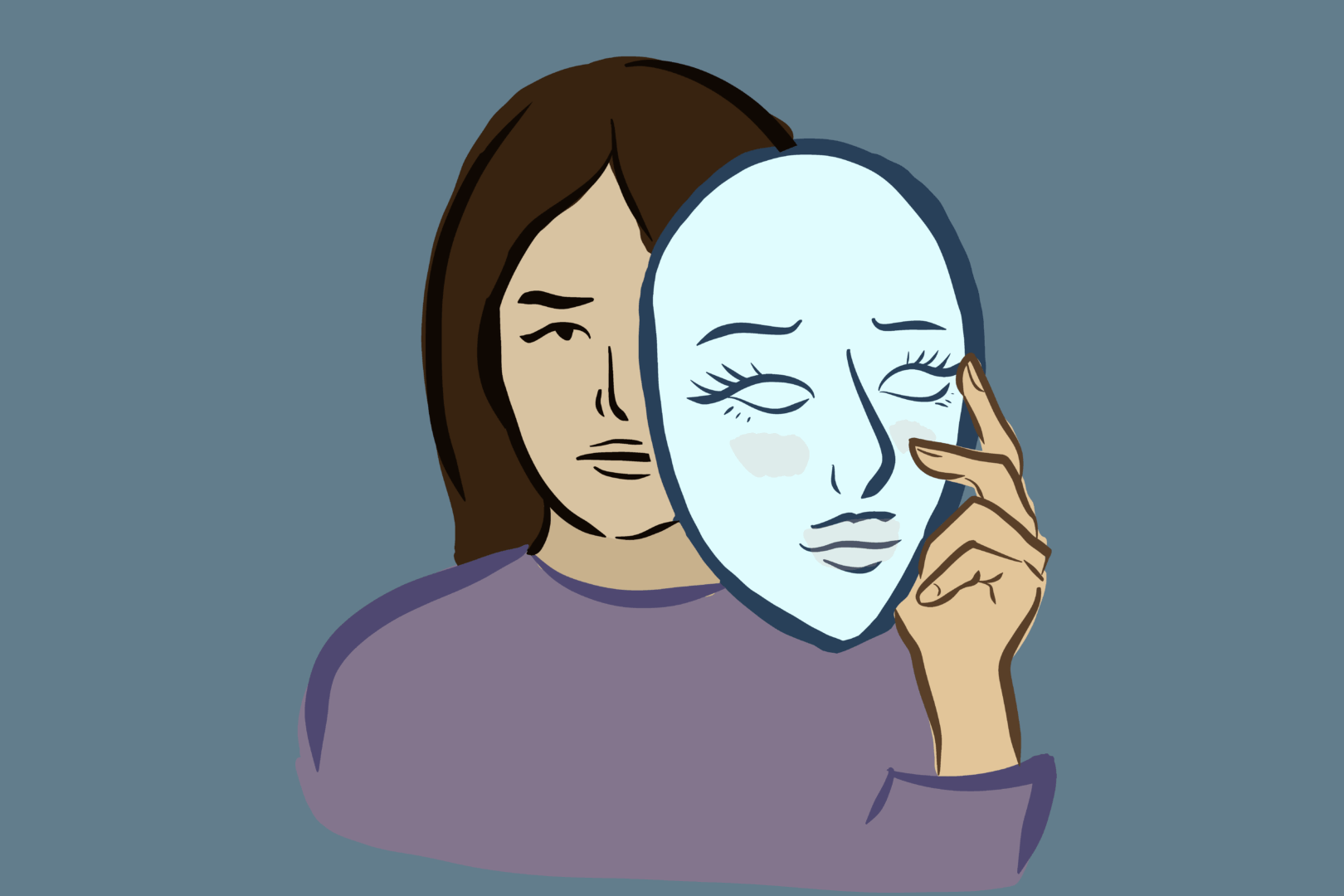
Choosing free will in a conformist culture

Lily Huynh/The Cougar

People love to say they’re independent thinkers, but most of us are just following the crowd. We buy what our friends have, mimic the latest trends and convince ourselves it’s our idea. I’m no different; I’ve caught myself giving in to consumerism or trying to fit whatever personality type is trending, like being “nonchalant.”

People love to complain that everyone looks the same now.  From cosmetic surgeries to erase “ethnic” features to those awful bubble skirts everyone wore because they were trending, individuality has started to blur. We keep chasing the next big thing, only to end up wondering why everything and everyone feels so repetitive.

The truth is, these patterns slowly chip away at our individuality, and they can dull our authentic personalities. For instance, cooking a meal without following the recipe. It may end up tasting really bad, but at least it was your choice. Or wearing something completely against the trend because you like it. 

Those little choices add up. They remind us that we don’t have to move in sync with the rest of the world to have meaning.

With constant advertisements on social media, billboards or even when trying to watch a show on Hulu, it’s hard not to feel like you don’t need to buy that $40 cup to fit in. Every scroll tells us what to buy, how to act, what’s “in” and what personality traits are trending this week. 

Free will is what makes us human; it’s what gives us quirks, humor and personality. If everyone follows the same script, then what’s left to make us interesting? 

Using your free will won’t mean rejecting everything popular or disappearing into the woods to “find yourself.” It simply means making conscious choices, doing things because you want to, not because everyone else is doing them. Those small acts of independence are what build true individuality.

Part of the problem is that thinking for yourself takes effort. It’s easier to blend in than to stand out, to let the algorithm decide what to like instead of figuring it out yourself. We crave belonging, so we trade authenticity for acceptance.

We have been so complacent in allowing influencers and companies to dictate what we should wear or how we should act. At some point, we must stop letting trends and algorithms dictate our choices for us.

Free will is simply being yourself and doing what feels right in the moment. Don’t overthink it, even when it’s not the popular thing. If we want individuality back, we have to practice it. Think for yourself a little more each day. You might be surprised by how liberating it feels to finally live on your own terms.

opinion@thedailycougar.com

—
“Choosing free will in a conformist culture” was originally posted on The Cougar

Posted in UncategorizedComments Off on Choosing free will in a conformist culture

Choosing free will in a conformist culture

Lily Huynh/The Cougar

People love to say they’re independent thinkers, but most of us are just following the crowd. We buy what our friends have, mimic the latest trends and convince ourselves it’s our idea. I’m no different; I’ve caught myself giving in to consumerism or trying to fit whatever personality type is trending, like being “nonchalant.”

People love to complain that everyone looks the same now.  From cosmetic surgeries to erase “ethnic” features to those awful bubble skirts everyone wore because they were trending, individuality has started to blur. We keep chasing the next big thing, only to end up wondering why everything and everyone feels so repetitive.

The truth is, these patterns slowly chip away at our individuality, and they can dull our authentic personalities. For instance, cooking a meal without following the recipe. It may end up tasting really bad, but at least it was your choice. Or wearing something completely against the trend because you like it. 

Those little choices add up. They remind us that we don’t have to move in sync with the rest of the world to have meaning.

With constant advertisements on social media, billboards or even when trying to watch a show on Hulu, it’s hard not to feel like you don’t need to buy that $40 cup to fit in. Every scroll tells us what to buy, how to act, what’s “in” and what personality traits are trending this week. 

Free will is what makes us human; it’s what gives us quirks, humor and personality. If everyone follows the same script, then what’s left to make us interesting? 

Using your free will won’t mean rejecting everything popular or disappearing into the woods to “find yourself.” It simply means making conscious choices, doing things because you want to, not because everyone else is doing them. Those small acts of independence are what build true individuality.

Part of the problem is that thinking for yourself takes effort. It’s easier to blend in than to stand out, to let the algorithm decide what to like instead of figuring it out yourself. We crave belonging, so we trade authenticity for acceptance.

We have been so complacent in allowing influencers and companies to dictate what we should wear or how we should act. At some point, we must stop letting trends and algorithms dictate our choices for us.

Free will is simply being yourself and doing what feels right in the moment. Don’t overthink it, even when it’s not the popular thing. If we want individuality back, we have to practice it. Think for yourself a little more each day. You might be surprised by how liberating it feels to finally live on your own terms.

opinion@thedailycougar.com

—
“Choosing free will in a conformist culture” was originally posted on The Cougar
Posted in UncategorizedComments Off on Choosing free will in a conformist culture

Choosing free will in a conformist culture

Lily Huynh/The Cougar

People love to say they’re independent thinkers, but most of us are just following the crowd. We buy what our friends have, mimic the latest trends and convince ourselves it’s our idea. I’m no different; I’ve caught myself giving in to consumerism or trying to fit whatever personality type is trending, like being “nonchalant.”

People love to complain that everyone looks the same now.  From cosmetic surgeries to erase “ethnic” features to those awful bubble skirts everyone wore because they were trending, individuality has started to blur. We keep chasing the next big thing, only to end up wondering why everything and everyone feels so repetitive.

The truth is, these patterns slowly chip away at our individuality, and they can dull our authentic personalities. For instance, cooking a meal without following the recipe. It may end up tasting really bad, but at least it was your choice. Or wearing something completely against the trend because you like it. 

Those little choices add up. They remind us that we don’t have to move in sync with the rest of the world to have meaning.

With constant advertisements on social media, billboards or even when trying to watch a show on Hulu, it’s hard not to feel like you don’t need to buy that $40 cup to fit in. Every scroll tells us what to buy, how to act, what’s “in” and what personality traits are trending this week. 

Free will is what makes us human; it’s what gives us quirks, humor and personality. If everyone follows the same script, then what’s left to make us interesting? 

Using your free will won’t mean rejecting everything popular or disappearing into the woods to “find yourself.” It simply means making conscious choices, doing things because you want to, not because everyone else is doing them. Those small acts of independence are what build true individuality.

Part of the problem is that thinking for yourself takes effort. It’s easier to blend in than to stand out, to let the algorithm decide what to like instead of figuring it out yourself. We crave belonging, so we trade authenticity for acceptance.

We have been so complacent in allowing influencers and companies to dictate what we should wear or how we should act. At some point, we must stop letting trends and algorithms dictate our choices for us.

Free will is simply being yourself and doing what feels right in the moment. Don’t overthink it, even when it’s not the popular thing. If we want individuality back, we have to practice it. Think for yourself a little more each day. You might be surprised by how liberating it feels to finally live on your own terms.

opinion@thedailycougar.com

—
“Choosing free will in a conformist culture” was originally posted on The Cougar

Posted in UncategorizedComments Off on Choosing free will in a conformist culture

The political guidance we give to celebrities

Jose Gonzalez-Campelo/The Cougar

Every time a celebrity posts a black square, changes a profile picture or gives a tearful awards speech, the world listens. Celebrities have become more than entertainers; they’ve become the voices people wait for in moments of chaos. 

What many people don’t understand is that celebrities are artists, not elected officials. Yet, society has turned them into moral spokespeople, waiting for them to post statements or pick sides before deciding how to feel. This shift made me realize how much power we’ve handed them, power that should belong to the people and their representatives.

I’ll admit, I’ve caught myself refreshing Instagram, waiting for my favorite artist to post about an issue that mattered to me. But I’ve realized that silence on social media doesn’t mean silence in real life, and that real change rarely happens in comment sections.

That’s not to say celebrities shouldn’t speak up. When they use their platforms to advocate for issues they genuinely care about, whether it’s women’s rights, climate change or racial justice, their voices can spark awareness and inspire others to take action. 

However, the problem arises when that expectation becomes constant and obligatory, as if silence automatically equates to apathy.

Sometimes, when big-name celebrities speak out, it doesn’t do much to help their cause. 

Take the 2018 Tennessee Senate election, when Taylor Swift endorsed Democratic candidate Phil Bredesen. Despite her enormous following, her support didn’t change the outcome.

Her post made headlines, but it didn’t translate into political impact. This isn’t a failure on her part; it’s a reminder that awareness and policy change are not the same thing.

When tragedy strikes or political scandals unfold, we flood comment sections asking, “Why hasn’t she said anything?” or “Where’s his statement?”

This expectation gives celebrities a level of influence and pressure they were never meant to have. And worse, it lets politicians off the hook. Instead of holding our leaders accountable, we look to pop stars to do their jobs.

When Taylor Swift speaks up about women’s rights or Beyoncé supports Black Lives Matter, they spark headlines but rarely real policy change. Awareness isn’t the same as action, and no Instagram story or tour speech can replace legislative reform.

After years of watching stars use their platforms to weigh in on elections, climate change or social justice, the real question isn’t whether their voices matter. It’s why we expect them to carry the weight of political responsibility in the first place.

I’ve realized that our tendency to wait for celebrity opinions reflects something deeper: a growing distrust of traditional leadership. Many Americans have lost faith in politicians, instead turning to celebrities for guidance. 

We no longer view politicians as reliable sources of truth or moral direction. Scandals, partisanship and a lack of transparency have eroded confidence in those elected to serve the public. 

But fame and influence shouldn’t replace accountability. Celebrities can and should use their platforms to highlight causes they care about, but it’s important that this comes from sincerity, not social pressure.

Expecting every actor, athlete or musician to comment on every issue not only sets them up for criticism but also shifts attention away from the people with actual political power, the ones we should be holding accountable.

The energy spent waiting for public figures to “speak up” would be far more effective if redirected toward civic engagement. That means calling representatives, voting in local elections or supporting organizations that work toward policy change. 

Real change doesn’t just come from celebrity statements; it comes from ordinary people showing up and remembering that democracy was never meant to be a spectator sport.

opinion@thedailycougar.com

—
“The political guidance we give to celebrities” was originally posted on The Cougar

Posted in UncategorizedComments Off on The political guidance we give to celebrities

Let them eat cake: White House luxury amid SNAP crisis

Lily Hyunh/The Cougar

With the holidays approaching, many Americans are wondering how they will be able to put food on the table. The government shutdown has reached the point where federal employees are working without pay; some have even taken on second jobs on their days off just to afford groceries.

It’s time for Americans to demand accountability. Hunger and financial instability should never be bargaining chips in political games. Silence only normalizes this crisis and allows leaders to continue ignoring the nation’s most vulnerable.

The consequences of that silence are already here. On Nov. 1, Supplemental Nutrition Assistance Program recipients were informed that many states, including Texas, would no longer receive these benefits.

The Trump Administration has stated that it will not use emergency funds to extend SNAP during the shutdown. 

These benefits will only be given “when those Radical Left Democrats open up the government, which they can easily do, and not before!” Trump wrote on Truth Social.

For the 42 million Americans relying on SNAP benefits, the decision isn’t merely bureaucratic; it’s deeply personal, threatening both food security and dignity.

This leaves many Americans anxious about the days ahead. 

The political diversion 

Now, all eyes have shifted to the plans for an extravagant new ballroom to replace the East Wing of the White House. We are seeing more progress in the demolition of the White House than solutions in Congress toward ending the shutdown. 

The destruction feels like more than bad optics; it’s an act of erasure. 

The project, an estimated $200 million structure featuring gold, marble and lavish décor, stands in contrast to the reality many families face. As people struggle to make ends meet, it’s hard not to feel as though the government is telling its citizens to “let them eat cake.”

SNAP represents survival, as many of its recipients are wounded veterans, people with mental or physical disabilities and people who are just struggling to make ends meet. 

Political figures such as Chelsea Clinton and Bernie Sanders have publicly condemned the project, calling it a display of Trump’s disregard for the nation’s history and a ‘demolition’ of democracy.

And they’re right. What’s happening isn’t just the destruction of a building, it’s the destruction of what that building represents: accessibility and unity. Democracy thrives when leaders serve the people, not themselves. 

For generations, the East Wing has embodied the people’s access to the presidency. Replacing it with a ballroom shows this administration would rather entertain the powerful than feed the hungry.

A Yahoo poll of 1,700 adults found that 61% oppose the project, with a majority saying it dishonors the White House’s history. That disapproval reflects something more profound than design, frustration with a government whose priorities no longer reflect its people.

With Thanksgiving and Christmas approaching, many federal employees are no longer receiving paychecks, and food stamp benefits are set to run out in the coming days. 

Federal workers are now joining families that typically rely on SNAP. Both are turning to food banks that are already stretched thin and struggling to meet the growing demand, highlighting a shared struggle and the need for empathy.

As the holidays approach and the government shutdown shows no signs of ending, one thing is clear: a golden ballroom can’t outshine the growing struggles facing Americans today. If the White House truly wants to honor the nation it represents, it should start by feeding it, not decorating around its hunger.

opinon@thedailycougar.com

—
“Let them eat cake: White House luxury amid SNAP crisis” was originally posted on The Cougar

Posted in UncategorizedComments Off on Let them eat cake: White House luxury amid SNAP crisis