EAT Cafe, the community restaurant located just a few blocks from the heart of Drexel University, is soon set to close.
What was opened as “a joint effort of Drexel’s Center for Hunger-Free Communities, the Vetri Community Partnership, and Drexel’s Center for Hospitality and Sports Management,” EAT Cafe was to work directly with Drexel and the surrounding community. “Everyone at The Table,” the idea behind the cafe and its name, was to serve as a moral foundation on which the eatery operated.
A little over three years ago, The Inquirer ran a story on the man behind the cafe its General Manager Donnell Jones-Craven. Craven, who had a corporate and catering background, was trying to bring a “pay-what-you-can” style of restaurant to Philadelphia. What began as an idea back in 2014 finally came to fruition in October 2016.
Craven was focusing on trying to erase the stigma of food insecurity in the city, and wanted there to be a place where the community could come together.
“Great food promotes community, and fellowship is the thing we all most desire,” Craven told The Inquirer.
This was specifically important to the City of Philadelphia at the time, because about 90 percent of the city’s food pantries reported empty shelves at least once throughout 2015. On top of that, nearly a quarter of residents lacked reliable access to enough healthy food, and EAT Cafe was going to be in a zip code where 53 percent of residents live below the poverty line.
What Craven wanted to do with EAT Cafe was to bridge socio-economic gap, and create a community experience unlike anywhere else. The goal was to have a full-fledged restaurant that appealed to students, long-time residents, and people who live in homeless shelters or transitional housing facilities nearby.
Some diners would be able to pay the bill, some diners wouldn’t and some would be able to pay more than the bill. Community cafes lose money; it’s inherently a byproduct of helping those who need it.
Having a solid enough foundation of three years’ worth of promised grants from The Leo and Peggy Pierce Foundation, EAT Cafe was able to sustain losses from the average payment of its customers. However, when Drexel did the economic math required for EAT Cafe to sustain itself, the number came out to about $15 per customer.
The ultimate model for the sustainability of EAT Cafe was to rely on community partnerships, the generosity of their better-off customers and the grants acting as a buffer.
However, the grants didn’t come through, the customers didn’t total the numbers that EAT Cafe expected and the payments didn’t come frequently enough. Even after rolling back their productivity to just Wednesdays-Fridays and even with the donations, the restaurant still met with financial problems it could not overcome.
According to a joint statement released by Drexel’s Center for Hunger-Free Communities and EAT Cafe, “rising costs of operations and a loss of funding” were what did it in. There wasn’t enough money to be properly allocated to the “three-course seated meals, four days a week” and then still be able to pay its workers.
Although EAT Cafe is closing, Drexel is not done working towards progressing nutrition in the West Philadelphia community.
“Drexel thanks the West Philadelphia community for embracing and welcoming the EAT Cafe into its vibrant community. Although the cafe is closing, the Center for Hunger-Free Communities will continue its efforts to bring everyone to the table and to end hunger in communities. The Center is currently exploring opportunities for other nutrition programming and partnerships,” Drexel CHFC said in the statement.
EAT Cafe’s final day of service will be April 19. It is located at 3820 Lancaster Ave in Powelton Village.
Posted in UncategorizedComments Off on EAT Café set to close, Drexel loses community tie
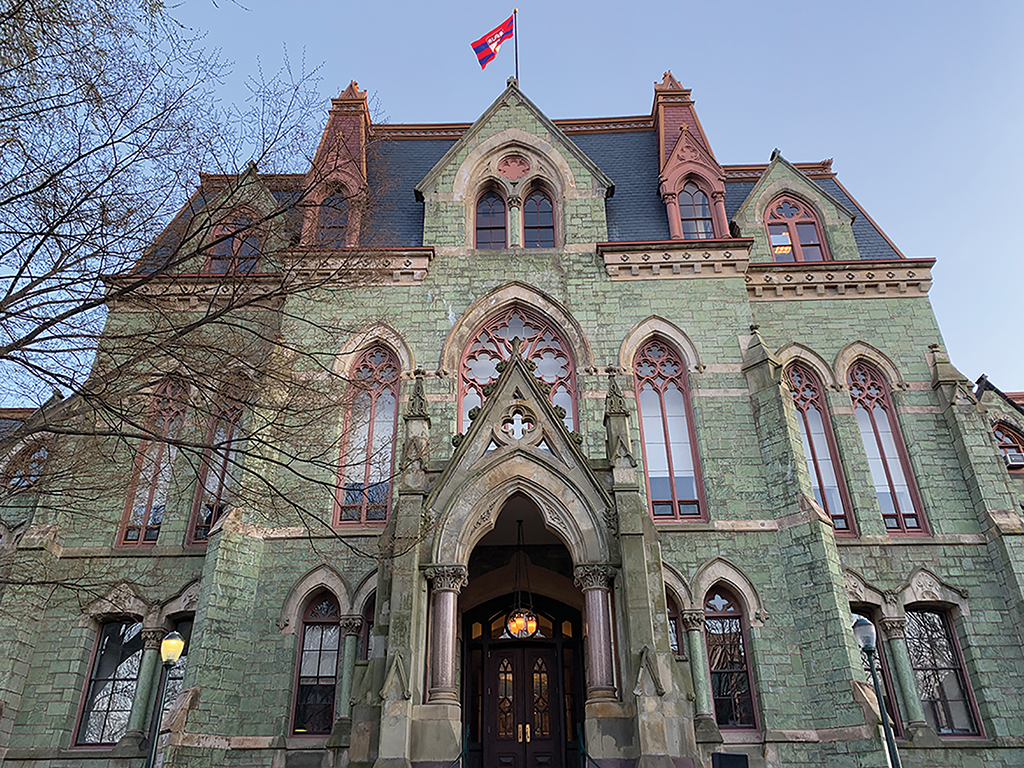
The University of Pennsylvania’s College Green laid host to more than 100 Penn and Drexel students Thursday evening outside of Houston Hall. (Photograph by Kiara Santos for The Triangle)
Over 100 students gathered around Locust Walk the night of April 4 over one thing: sexual assault. The keynote speaker, Sonalee Rashatwar , a sex therapist and award-winning social worker from Philadelphia, gave students a better idea of what being a woman is like on a college campus.
“What I specialize in within the field of therapy is … sexual trauma,” she said. “I came to that line of work because of my own experiences … I have patchy memories of a childhood experience. Due to really high stress hormones within the body that causes us to have patchy memories.”
This includes experiencing sexual assault as a child to being drugged at a college party and how it affects your mental health as an adult. She asks the crowd to expand their knowledge on sexual trauma or violence and to acknowledge that it takes many forms. An intimate relationship that causes a breakdown with another or surviving in racialized capitalistism are both examples.
She explains the gap of progressiveness around colored women, how migrant women are exploited for their labor each day and receive no credit in their field because of what they look like. Women who are black and brown must deal with racism which increases their risk of sexual assault because they are not seen as human. In fact, she says colored women are more inclined to face sexual trauma.
She uses herself as an example, how her nearly identical brother and her were both overweight kids yet she was the only child placed on a conformed diet to lose weight by her parents. She raises the question: what does this say about our society? Do we see woman as adults at a earlier age than men? She brings awareness on how we view little girls to be attractive at all times and the effect it has on them. It can lead to patchy memories, adult isolation and insecurity.
“I want us to center the conversation around those who do not have marches in their names,” Rashatwar said.
By this she was referring to exploited migrant women and women in the workplace or in an education setting. After her speech, students marched throughout the University of Pennsylvania campus chanting “No means no!” or “My body, my choice!” Although a relatively small group, there was much uproar. Students within the rally were survivors of sexual assault as well.
From the eastern side of the campus headed west, students of all backgrounds had the opportunity to march throughout the evening with a small marching band that kept the tempo of the chants. There were signs in most of the students hands that read “You are Valid” or “Your voice has power,” which were held high for all to read and for bystanders to support and cheer on.
She continues to speak on using facilities for safe spaces for women, which at the university is their Women’s center to get counseling or confide in others.
“Being a senior is a lot of trial and error of where to avoid,” Rego said.
“I found that a lot with the larger groups on campus there isn’t much change, so I kind of just stay away.” The larger groups she says, are the fraternities that lure unsuspecting women in for parties and events.
“As a freshman I know I made a lot of mistakes going to the wrong places,” she admitted.
Her advice is to know you are not alone. Talking to friends and family helps with coping and allows space for empowerment from within.
“Your pain means something,” she said. After the march, students were invited to see Rashatwar on a panel discussing the effects of sexual trauma in detail.
Posted in UncategorizedComments Off on Take Back the Night unites Drexel and Penn
Drexel University’s prime location in Philadelphia is among the best in the nation for students pursuing higher education, according to a study by College Factual published Jan. 9.
The Philadelphia area is home to some of the best colleges and universities in the state and in the country, according to College Factual. Many familiar names made the list, including Drexel, which placed fifth.
The University of Pennsylvania placed first on the list and is ranked first in the state and fourth in the nation.
Haverford College in Haverford, Pennsylvania, placed second on the list and is ranked sixth in the state and 62nd in the nation.
Villanova University, in Radnor, Pennsylvania, placed third on the list and is ranked eighth in the state and 70th in the nation.
Bryn Mawr College in Bryn Mawr, Pennsylvania, placed fourth on the list and is ranked 12th in the state and 91st in the nation.
Drexel University placed fifth on the list and is ranked 14th in the state and 159th in the nation.
The University of the Sciences in Philadelphia, placed sixth on the list and is ranked 20th in the state and 193rd in the nation.
Saint Joseph’s University in Philadelphia placed seventh on the list and is ranked 22nd in the state and 204th in the nation.
Finally, Temple University placed eighth on the list and is ranked 27th in the state and 267th in the nation.
College Factual says Philadelphia is one of the best areas for earning a college degree, largely credited to the numerous well-regarded schools throughout the area.
“You don’t have to be a local to appreciate the college opportunities in the [Philadelphia] area,” according to College Factual’s website. “Students love the city because of its proximity to high-caliber colleges and universities that offer quality academic programs.”
College Factual is an organization dedicated to helping students make informed decisions when selecting where to pursue higher education. The organization ranks schools across the United States based on different topics, including degree programs, best value, sports, religious affiliations, diversity and so on.
“Our mission is to help every student get their best fit education for less,” College Factual writes on their website. “We help students find and get great deals on the best fit colleges for them.”
More information is available online at College Factual’s website, www.collegefactual.com.
Posted in UncategorizedComments Off on Philly named among best cities for college
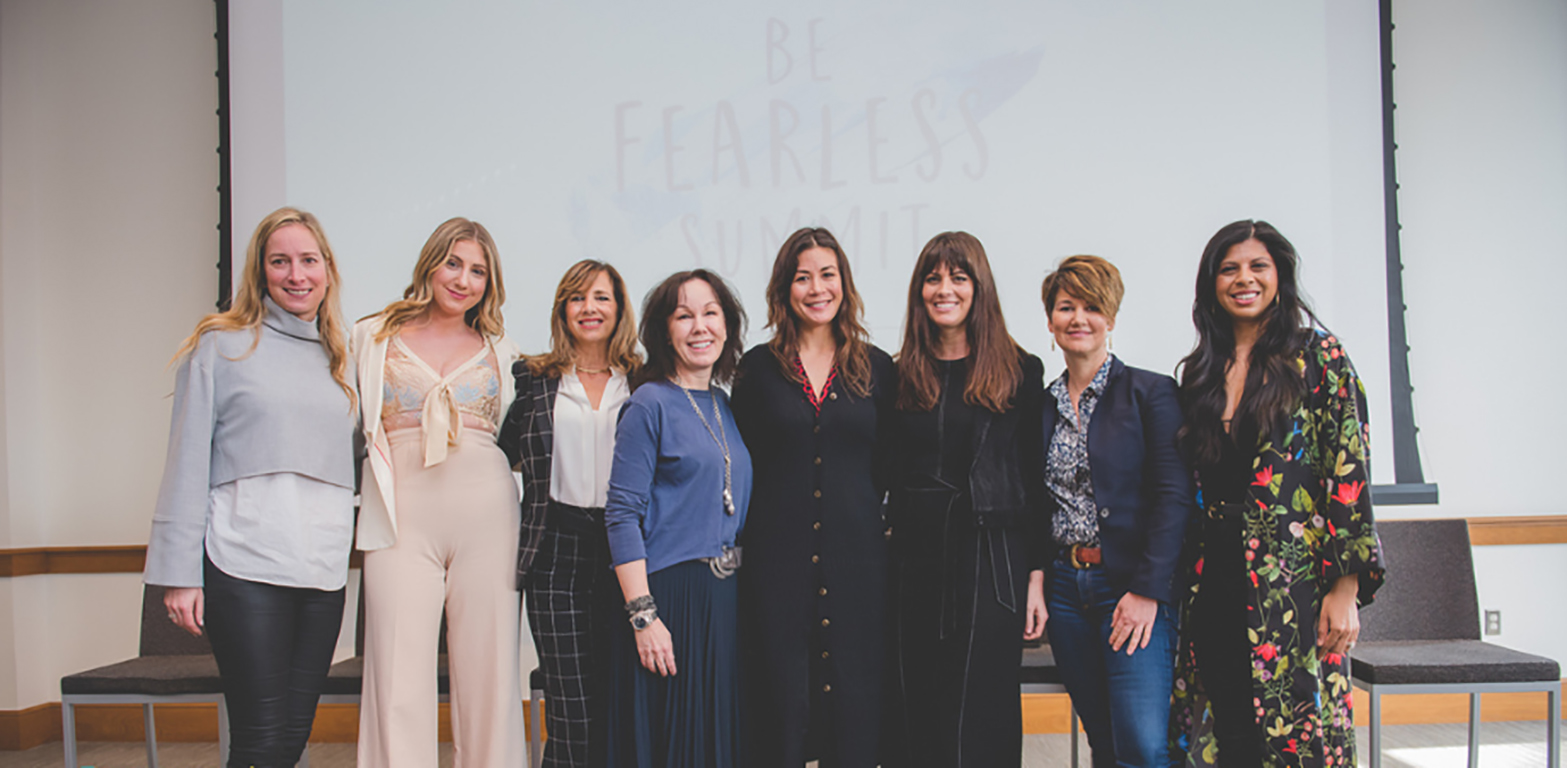
From left to right: Karen Bokram, Alexa Curtis, Diana Liberto, Christina Tancredi, Josie Brown, Amanda Rantuccio, Luci Rainey, Michelle Cordeiro Grant. (Photograph courtesy of Alexa Curtis and Beau Monde Originals)
Networking and entrepreneurship tips, as well as advice on how to expand yourself on social media without affecting your mental health, were given at the Be Fearless Summit held in Gerri C. LeBow Hall of Drexel University March 15.
The 21-year-old blogger and entrepreneur Alexa Curtis came up with the idea of creating the summit a year and a half ago to bring entrepreneurs and college students together so they could find inspiration and get the tools to leave college and land in their dream jobs.
Within the eight panels of the conference, “How To Crush It in Corporate (and Beyond): An All-Star Executive Panel Gets Real about the Real World” was one of the most highlighted. Moderated by the editor-in-chief of Girl’s Life magazine Karen Bokram, the panel filled with female entrepreneurs included Diana Liberto, CEO of the app WalkMyMind; Christina Tancredi, COO of the music programming content for cable television Music Choice; Josie Brown, director of culture and innovation for Hulu; Amanda Rantuccio, director of brand marketing for Hulu and former WW of marketing communications for Apple; Luci Rainey, senior vice president of consumer marketing and marketing technology for Comcast; and Michelle Cordeiro Grant, CEO and founder of lingerie company Lively.
When asked about what should people do when they do not really know what they want to do for the rest of their lives, Rainey suggested to find the things you like and start asking people within your family and friends’ contacts, through volunteering or internships, and you will surely find a job, as rare as it may be, involving those things you are passionate about.
“I know we are in the world of technology and Instagram but, in the end, what matters are relationships, who you know and who are you gonna meet that are going to further your track in life — may it be personally or professionally,” she added.
After that, the panel was more focused on questions about interviews and how to stand up in a job or internship.
Brown said that the best way to stand out in an interview without being gimmicky is to talk about a passion or a hobby because all resumes that get to her desk for interviews will say around the same things.
“I’m looking for something that I don’t see in anybody’s résume … because I can translate that passion into culture. I can translate that into how you will work with me and my team,” Brown said.
When asked about the most significant mistakes people make when applying or interviewing for a job, all the panelists highlighted different things.
Liberto said that during the interview process she looks for the person, not the robot; because most times people do not show themselves and how they truly are because of nervousness or because they pretend to be a perfect hirable individual that does not really exist.
Tancredi said she dislikes it when people do not ask questions about the job or the team they will be working with because she wants her future workers to have interest in getting along with everyone else in the company in order to move the team forward.
Brown agreed with Tancredi’s point and also added that she highly dislikes when people forget what they wanted to say in an interview because it is unprofessional and shows loss of focus.Rantuccio said that she really values authenticity and the lack of it could be a decisive factor when applying for a job.
“When I ask what your favorite advertisement campaign is, don’t say the ones I’ve worked on, or if your do, tell me why. I wanna see people that bring different perspectives, their own perspective. Don’t be afraid to be yourself and don’t be afraid to say that you don’t know everything. We’re looking for someone that is thirsty to learn,” Rantuccio said.
Rainey said she has a “no drama policy” in her workplace so during the application process she is looking for someone that would keep that aspect with everyone else in the team.
Furthermore, Rainey added that she likes to ask unconventional questions like “how many pizzas do you think are sold in the U.S. every year?” She is not really looking for the correct answer — she does not know it herself — she does this just to see people’s thought and creative processes. She also likes to ask emotional intelligence questions such as, “if I met someone who doesn’t like you, what would they tell me about you?” and she doesn’t like it when people answer dishonestly just to look good. For example, some people have answered her by saying that they are workaholics, but no one is going to say they do not like you because of that, she said. Rainey makes these questions because she wants to empathize and see the human level in her future workers.
Cordeiro Grant, however, said the thing she dislikes the most is when people answer with negativity, especially saying that they want to work for her company because they hated their past boss or co-workers because in Lively they have a “no negativity policy.”
Regarding the perfect way to “seal the deal,” the experts emphasized on sending a follow-up or thank you card or email. They said is important to bring something new to the table to this card by adding an article about something that was talked about in the interview, expand or something that you did not get the chance to say at the moment or to answer something that you could not during the interview; and, besides being pretty obvious, they talked about not sending the same thank you card to different interviews, especially when you have different interviews in various departments of the same company because they compare thank you cards.
Moreover, the panelists encouraged to ask for the job and show interest in getting the position because they were really surprised on how few people do that, as well as asking at the end of the interview if there was something that happened that day that would cause them not to hire that person for that position because it gives people an addressing opportunity and a suggestion for improving the next time.
Regarding negotiating the first salary, Rantuccio suggested researching the market, to know the basic salary and see if you fit into that.
“Be able to, in your mind, articulate salary versus experience because in my own career I got hung up a little when I was moving through the different ranks that I was going through,” Cordeiro Grant said. “I had opportunities where I could make a lot more money that I actually declined for experience and it actually propelled me to make more money later.”
Later on, a freshman student from the audience asked what would be an experience that was necessary to have in order for them to hire a person. Immediately, Rantuccio recommended to research or write something smart and have it published somewhere where you can talk about something that you are really passionate about and connect it to the ideals of the brand you are being interviewed for.
Another of the highlighted panels in the summit was “Mindful Matters.” Moderated by Alexa Curtis, the panel included Gabby Frost, Drexel student, founder and CEO of the suicide prevention non-profit Buddy Project; Rachel Gersten, co-founder of the therapy program Viva Wellness; Brandon Christensen, CEO of the therapy service Modern Therapy; and Daniella Mohazab, founder and CEO of the blog Happy Pill.
The panel had a primary focus on how social media may affect one’s mental health.
Frost emphasized that social media gives people resources, education and a community where they can find out that they are not the only ones going through these struggles and can find strength in like they do with Buddy Project where they pair people as buddies and raising awareness for mental health.
“I first started to know about mental health because of the internet and not in school, which is really messed up. I think kids should hear about mental health in school first and they shouldn’t have to dig up online to get the information they need,” Frost said.
Additionally, she said that it allows people to tell their stories, not only regarding mental illnesses but also other issues and that helps break the stigma around those subjects.
However, Gersten and Christensen talked about how sometimes social media can be toxic because it gives the opportunity to have access to a little part of other people’s lives — including celebrities. This makes people think that everyone they follow is living a glamorous life except them and people tend to forget that what other people post is not 100 percent what their lives are like because people only post the good things, and this perception is extremely toxic.
Consequently, Mohazab said that it is important to understand how to find a balance to use social media in a way that it could be beneficial for your mental health and inspire you without hindering your life.
Likewise, in the panel “How to Build Your Brand on Instagram” where the Head of Content and Beauty Director of Girl’s Life magazine interviewed the host of “Press Send” podcast and influencer Chinae Alexander, a similar topic was touched.
Alexander said that everyone is an influencer in a way, but there is a difference between someone who has a following and someone who has an influence. She pointed out that is important to use the power of having an influence responsibly so issues like toxic social media accounts that have a negative impact on their audience’s mental health do not keep happening, however, this is also partly a job from its public.
Posted in UncategorizedComments Off on “Be Fearless” bridges social media, mental health
The following crimes occurred on or near campus and were reported to The Triangle by the Drexel University Department of Public Safety between March 12 and 22. All information included in this report is taken from law enforcement or Division of Public Safety incident reports.
ROBBERY (1)
March 16, 2:55 p.m., 2900 Market Street
Two Drexel students reported that they were surrounded and assaulted by a group of 20 to 30 males on bicycles who also took a gold chain from one of the students. Minor injuries to both students. Males fled east on Market Street.
ASSAULT (1)
March 16, 11:52 p.m.,3300 Market Street
A non-Drexel affiliate reported that they were involved in a physical confrontation with an unknown male and were sprayed in the face with mace by the other party who fled the store. Victim received minor injury to their eyes.
THEFT (8)
March 10-22, 200 N. Broad St
A non-Drexel affiliate reported that while a patient at Hahnemann Hospital, an unknown person(s) removed a bag containing their laptop and cell phone from their room.
March 12, 6:39 a.m., 3500 Spring Garden Street
A non-Drexel affiliate reported that they observed an unknown male enter their automobile that was unlocked and took cash and clothing that was left in view. Male fled west on Spring Garden Street.
March 13-14,100 N. 34th St.
A Drexel student reported that an unknown person(s) took their bicycle that was secured to a bike rack with a cable lock.
March 14, 1:15 to 2:14 p.m., 3400 Lancaster Avenue
A non-Drexel affiliate reported that an unknown male entered the store, asked to see a phone, and left without paying for a Galaxy 7 smartphone.
March 15-18, 3300 Market Street
A Drexel student reported that an unknown person(s) took their bike that was secured to a bike rack with a U-Lock. The bike is a rental from Drexel.
March 17, 3400 Spring Garden Street
A non-Drexel affiliate reported that an unknown person(s) entered their auto by forcing a door lock and took camping equipment.
March 19-20, 3500 Market Street
A Drexel student reported that an unknown person(s) took their laptop computer that was left unattended in a common area.
March 22, 12:57 to 1:50 p.m., 3400 Baring Street
A non-Drexel affiliate reported that an unknown male took two packages that were delivered to their house and left in plain view from their porch.
VANDALISM (4)
March 15, 8:45 to 9:50 p.m., 200 N. 34th St.
A non-Drexel affiliate reported that an unknown person(s) wrote graffiti on a mirror in a common area of their property.
March 19-20,3200 Pearl Street
A Drexel student reported that the rear window of their automobile was broken in an unknown manner.
March 19-20,300 N. 31st St.
A Drexel student reported that the rear window of their automobile was broken in an unknown manner.
March 21, 3:38 p.m., 3000 Walnut Street
Drexel Police arrested a non-Drexel affiliate after he was involved in a road rage incident and cut the tire of another vehicle with a knife.
Posted in UncategorizedComments Off on Crime Report – April 5
Although it is unconfirmed, a second Drexel University student has been reported as having a case of the mumps, Vice President and Dean of Student Life Dr. Subir Sahu wrote in an email sent to Drexel students and faculty April 1.
According to the Centers for Disease Control and Prevention, mumps is a highly contagious viral disease that typically begins with symptoms of fever, headache, fatigue and loss of appetite. As the disease progresses, symptoms include swollen cheeks and jaw caused by inflammation of the salivary glands.
The CDC says symptoms of mumps typically appear anywhere from 16 to 18 days after the individual is initially infected. Further, most people who catch the disease fully recover within two weeks.
Mumps is an extremely contagious disease and spreads through direct contact with saliva or droplets from the mouth, nose or throat, according to the CDC. However, there are simple steps that can be taken to prevent the spread of mumps.
“Its spread can be minimized by individuals washing their hands frequently and refraining from sharing such items as cups or eating utensils,” Sahu said. “The most effective way to protect oneself against mumps going forward is to get two doses of the Measles, Mumps and Rubella vaccine, which is required for all Drexel students.”
Drexel’s two cases of the mumps come after a recent outbreak of the disease at Temple University where over 100 students were affected.
“At present, 18 Temple students have tested positive for mumps and 98 are listed as probable,” Mark Denys, director of Student and Employee Health Services at Temple, wrote in a statement April 1.
Preventing a similar outbreak on Drexel’s campus is possible by students making conscious decisions.
“Students who believe they may have been exposed or are having mumps-like symptoms should report to the Student Health Center for further evaluation,” Sahu said.
“If students are seen outside of Drexel, and were told they may have mumps, they should call 215-220-4700 to report. Students suspected of infection should self-isolate and limit contact with others.”
Posted in UncategorizedComments Off on Mumps scare strikes Drexel, Student Life replies
The Undergraduate Student Government Association passed several new policy updates concerning communication, representation and accountability in residence buildings Jan. 28. They established a Student Housing Committee, which will include the President of the University, Dean of Student Life and Vice President of Facilities, as well as USGA members and other students. The goal of the committee is to improve housing affordability, equity and capacity with the structure of a ten-year plan, which has yet to be established.
They also created a position for an administrator to serve as a student-facing liaison between the undergraduate student body and American Campus Communities, a partner of Drexel that facilitated the development of university-affiliated housing in an effort to preserve the traditional college living experience as students progressed in their undergraduate education. The new administration aims to improve communication between students and American Campus Communities.
Addressing Gender-Inclusive Housing, a program created in 2016 to allow individuals to share living spaces regardless of gender or related identities, the USGA required the administration to create a way for residents to submit anonymous feedback about their experience. This feedback mechanism will be available for both residence halls and university-affiliated housing.
The last — and most widespread — residence policy calls upon the university to publish facilities reports for all residence halls to its website every year. These reports will not only hold Drexel accountable for maintenance issues but will also include any future plans for those buildings.
“The mission of the Undergraduate Student Government Association is to serve as the liaison between the undergraduate student body and the administration,” states the assembly resolution. The policies enacted clearly reflect this mission and amplify the student voice in Drexel’s housing process.
Posted in UncategorizedComments Off on USGA advocates for affordable, acceptable student housing
February was Black History Month. March was Women’s History Month. Now, as the calendar has turned into April, it is Sexual Assault Awareness Month. This April, the goal of the annual campaign is outlined by the National Sexual Violence Resource Center.
“Sexual Assault Awareness Month is a campaign to raise public awareness about sexual violence and educate communities on how to prevent it. The campaign theme, I Ask, champions the message that asking for consent is a healthy, normal and necessary part of everyday interactions,” the NSVRC website said.
The Drexel Office of Equality and Diversity is planning an array of events to span across the entire 30 days.
Statistics show that college is a time where sexual assault and sexual violence is exceptionally prevalent. According to RAINN, the nation’s largest anti-sexual violence organization, all college students are at an elevated risk of sexual assault.
Female students ages 18-24 are three times more likely to be sexually assaulted compared to the general female population, and male s ages 18-24 are 78 percent more likely than non-students to experience some form of sexual assault.
When you couple those statistics with others from RAINN highlighting that 23.1 percent female undergraduate students and 5.4 percent male undergraduate students experience sexual assault, there is much to be focused on during the month of April.
There are 13 different events planned throughout the month, and Drexel OED is dedicated to making this April a time of understanding, learning and showing support on campus. There is a large emphasis on raising awareness to the different forms of sexual assault and sexual violence, while also focusing on raising up those who have dealt with these issues in their lives. The events range anywhere from discussing consent with tacos April 10, to trauma informed yoga April 19, to learning how to support a survivor of sexual assault April 29.
There will be tabling done every week called “Teal Tuesdays,” which will take place from 12 to 2 p.m. at the Dragon Statue. This will continue to further the spread of awareness with information and activities provided.
“Teal” Greek Week Events for Sexual Assault Awareness Month will be held April 11-18, and there will be a donation drive for Women Against Abuse during that week as well.
This concerted effort from Drexel OED is done with open minds and open hearts, according to Deputy Equal Opportunity/Title IX Coordinator Reema Malhotra.Malhotra and Drexel OED are focused on making these events as accessible to students as possible, so as to maximize involvement and the spread of awareness.
“All events are free, and some will feature free food and giveaways,” Malhotra said.
When it comes to the students, the goal of Drexel OED is not to simply raise awareness, but to raise involvement and participation within the Drexel community.
“Students can email me directly at rrm73@drexel.edu to get involved. This could look like assisting with tabling … assisting with the rest of our SAAM events, spreading the word via social media and word of mouth, and simply attending an event,” Malhotra explained.
If students are hesitant to begin volunteering, Malhotra and Drexel OED have guides on how to effectively table for all events, in case of any unusual interactions or questions.
While the theme of this year’s campaign deals with consent and being proactive with all kinds of situations, Drexel OED still wants survivors of sexual violence to feel like they are getting the opportunity to voice their opinions, should they so desire.
Take Back the Night, the collaborative event with the University of Pennsylvania, was held April 4, and was designed to be a march and rally, along with allocating time for survivors to speak as well. This was planned so that survivors can share their experiences in a safe space, according to Malhotra.
There will be a “Not a Bystander” Awareness Panel April 30, which will be facilitated through several Greek life organizations here at Drexel. The topics covered by the panel include Title IX, bystander intervention, and the stereotypes surrounding Greek Life and sexual violence.
“OED continues to work with organizations and departments on campus regarding sexual and interpersonal violence prevention year round,” Malhotra said.
Another event to look towards is Drexel OED and the Lindy Center hosting the quarterly I Forum. The I Forum will discuss the #BelieveSurvivors Movement, which is closely linked to sexual violence prevention and false accusations of any crime.
“[The I Forum] is a great opportunity to meet other Drexel professionals, and have thoughtful and empowering discussions,” Malhotra added.There will be information on the Drexel OED website, and the link to this year’s calendar can be found at https://drexel.edu/oed/reporting/Title-IX/SAAM/.
Posted in UncategorizedComments Off on Drexel OED mobilizes for Sexual Assault Awareness
A photography lab and several faculty offices were damaged in an accidental flood in the Academic Building during the night of March 6. Inspection and repairs to the rooms are currently underway.
According to Britt Faulstick, assistant director of media relations for the Westphal College of Media Arts & Design, the flood was caused by misplaced equipment.
A person familiar with the matter, however, expanded further saying the flood was caused by a piece of washing equipment in the lab that was left running and unattended overnight by an underclassman student. At some point, the washing equipment overflowed, flooding the lab and adjacent rooms, including a conference room below.
This person asked to remain anonymous due to their affiliation with the photography program.
The affected lab is reserved for a class typically taken only by seniors, but due to a student shortage, the underclassman was granted permission to take the class.
The photography lab is largely staffed by work-study students who are tasked with checking the rooms after individual use by photography students. Many of these work-studies are not photography students due to a shortage of work-study labor.
The source noted that these students may not be as familiar with photography lab equipment as a photography major may be, potentially causing them to miss key warning signs about equipment malfunctions.
“When people are aware, they care about what they’re doing,” the source said. “That makes a difference.”
The photography program is allegedly putting new safeguards into place to prevent future incidents.
In addition to increased security, the source told The Triangle only professional staff will be allowed to check out these labs to students. Work-studies will no longer be allowed to manage the rooms.
Faulstick told The Triangle the area has been inspected by Drexel’s Department of Environmental Health & Safety and necessary repairs are expected to be made before spring classes start.
While Faulstick could not confirm the cost of the damage at this point, he said Drexel maintains an all-risk insurance policy on all university-owned and leased buildings for events such as this. The policy, though, is subject to deductibles, sublimits and policy terms and conditions.
According to the source, the water damage is expected to have only affected drywall and flooring, but allegedly did not affect equipment or stored materials.
Paul Runyon, program director of photography, and Michael Froio, photo facilities manager, did not respond to comment prior to this article’s publication.
Posted in UncategorizedComments Off on Photography lab flood allegedly caused by student
Merck chairman and CEO Kenneth Frazier will be speaking at Drexel’s 2019 commencement ceremony. (Photograph courtesy of Wikimedia)
Merck & Co., Inc. Chairman and CEO Kenneth C. Frazier will be speaking atDrexel’s 2019 commencement ceremony at Citizens Bank Park June 14. Frazier is the first African American to lead a major biopharmaceutical company and one of the few African American CEOs on the “Fortune 500” list.
“I’m certain our graduating class will enjoy hearing from a highly successful corporate executive whose career in business, law and public service roles has given him a unique perspective, and whose personal journey stretches from North Philadelphia to Harvard Law to the corporate boardroom,” Drexel President John A. Fry said in a DrexelNow announcement.
Frazier is a native of Philadelphia and attended schools in the area before graduating at the young age of 16. He then went on to earn his B.A. degree from Penn State and eventually earned his J.D. from Harvard University at the age of 24.
Frazier was a partner at the Philadelphia law firm Drinker Biddle & Reath before joining Merck in 1992 as a lawyer. He held positions in general counsel before becoming president and eventually CEO. Frazier has focused his efforts on increasing Merck’s investment in research, launching products that benefit society, and on philanthropic endeavors.
Frazier made headlines in 2017 for resigning from President Donald Trump’s American Manufacturing Council, following the protest march by white nationalist, “alt-Right” and neo-Nazi groups in Charlottesville, Virginia, in early August 2017.
Aside from his role as CEO of Merck, Frazier is also on the boards of PhRMA, Weill Cornell Medicine, Exxon Mobil Corporationand Cornerstone Christian Academy in Philadelphia. He is also a member of the American Academy of Arts and Sciences, the American Philosophical Society, The Business Council, the Council of the American Law Institute and the American Bar Association.
Posted in UncategorizedComments Off on Drexel’s 2019 commencement speaker announced: Merck CEO Kenneth Frazier