Author Archives | Harlem Gilbert

The politics of horror

Chloe Sales/The Cougar

As summer turns to autumn, swimsuits are replaced by sweaters, apple cider makes its return and Halloween brings horror movies back into the spotlight.

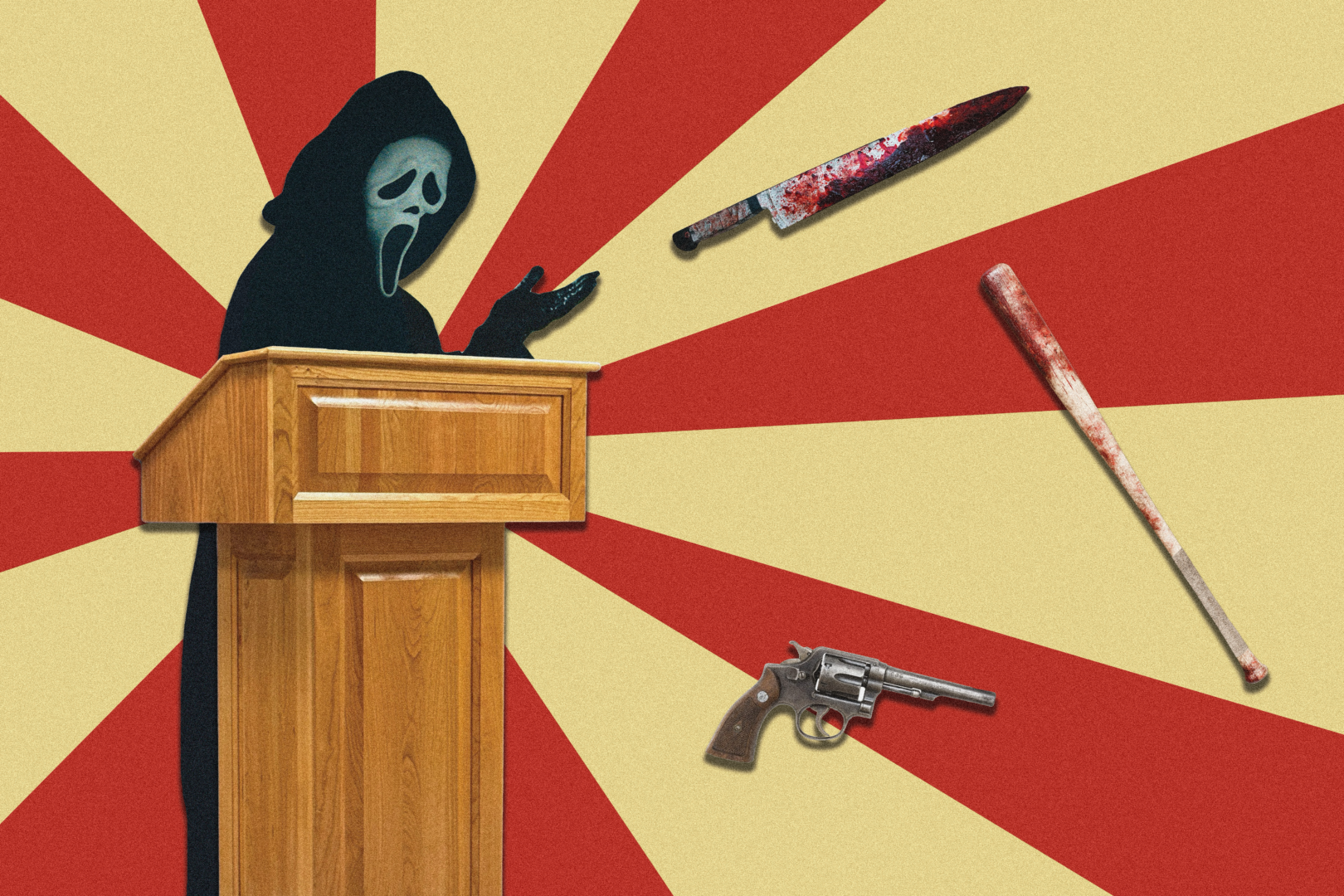
For decades, horror movies have terrified audiences with slashers, zombies and supernatural possessions. However, behind the blood and gore lies something much more unsettling: the fears and anxieties of the real world. 

From political unrest to racial inequality, horror has consistently reflected the issues troubling society, proving that the genre is more than just entertainment.

Societal reflections

Horror movies reflect the fears of the society in which they’re made. The earliest example is during the Great Depression, when some of the most notable and recognizable horror monsters came to be. Films such as “Dracula,” “Frankenstein” and “White Zombie” explore fears surrounding outsiders, with some of their portrayals reflecting the racial prejudices of their time and utilizing an “us versus them” mindset.

These films can also be interpreted as reflections of the anxieties surrounding immigration and cultural differences during this period. Americans were not supportive of immigration during the Great Depression and had strict immigration laws.

Migrants from Mexico faced prejudice and racism and were not as welcomed to the U.S. as European migrants. Mexican migrants were stereotyped as barbaric and unintelligent. Black Americans faced similar stereotypes, portrayed as brutish. These stereotypes favored the characterization of the monsters in these movies.

Victor Halperin’s “White Zombie” uses Haiti and its portrayal of Vodou as the backdrop for a story about zombies controlled by an immoral master, drawing parallels to slavery and exploitation. 

 Other historic events and decades sparked their own horror trends.

With the breakdown of traditional religion during the 1960s came an influx of occult-based horror, due to the fear around unfamiliar religions that were integrating with Western culture.  This brought movies like “The Exorcist” and “Rosemary’s Baby.”

The 1980s saw a rise in slashers with the rise of conservatism after Reagan took office in 1981. Teenagers were brutally murdered after partaking in activities that were taboo at the time: premarital sex, smoking and drinking. Slashers fell out of fashion for a brief period after the Columbine tragedy.

Post-9/11 horror focused heavily on arbitrary violence, highlighting the anxieties of Americans feeling as if another attack is imminent and death is random, shown in movies like “The Strangers.”

This era also brought back the “Us versus Them” trope, as seen in movies like “Cloverfield.” This time, it was used to represent the rise in nationalism: Americans versus everyone else.

Creators’ perspective

The messenger of these themes is equally important in context. For a long time, the types of voices and perspectives in Hollywood lacked diversity. If you look at the top horror films from the 1980s, the majority of them were created and directed by cisgender white men.

As Hollywood became more diverse, new perspectives gained visibility, including those of Black filmmakers who used horror to explore experiences of racism and inequality. 

Black horror has been around since the 1940s, but it really started to hit the mainstream with Bernard Rose’s Candyman. One of the genre’s most notable films is Jordan Peele’s “Get Out” which explores themes of the exploitation of Black Americans and appropriation of Black culture.

Similarly, Clive Barker’s “Hellraiser” is a staple in a horror subgenre known as queer horror. Hellraiser blends sexuality with pain and draws much of the antagonist’s characterization from queer subcultures he came in contact with as a young gay man. 

Jordan Peele and Clive Barker draw from their personal experiences to shape their storytelling. Their perspectives demonstrate how filmmakers can use their own fears and experiences to give horror deeper meaning.

Current state of horror

Horror movies have a recent revival. Over the past few years, the horror genre has been performing well critically and at the box office. 

Notably, “Sinners” was nominated for 16 Oscars, one of them being for Best Picture, making it one of nine total horror movies ever to be nominated. One-third of horror nominations for Best Picture took place in the last three years. 

Since the pandemic, psychological horror has gained attention, particularly stories that explore isolation and the fear of being trapped in familiar spaces. The overturning of Roe v. Wade brought an increase in horror related to women’s autonomy, like “Obsession” and “Companion.”

Horror is often dismissed as nothing more than graphic violence, but the idea that the genre has only recently become meaningful overlooks its long history of social commentary. 

This October, when you sit down to watch a horror movie, look beyond the blood and gore. The most frightening part of these stories might not be the monsters themselves, but what they reveal about the world we live in.

opinion@thedailycougar.com

—
“The politics of horror” was originally posted on The Cougar

Posted in UncategorizedComments Off on The politics of horror

Modern cinephiles diagnosed: Franchise fatigue

Amy Montanez/The Cougar

The 2020s have had a huge impact on pop culture, more specifically, movies. The beginning of this decade was a dark time for movies and life in general due to COVID-19, but eventually productions resumed. 

With this resumption, a pattern began to form: an influx of installments to already established franchises. A fall of new, original characters and stories performing well at the box office.

Sequels, prequels, spinoffs and reboots make up a large portion of this decade’s highest-grossing films. 

A decline in interest and excitement for long-tenured franchises is the result of franchise fatigue, but is franchise fatigue actually negative? Or does it light a fire under the butts of movie studios to produce new and original characters?

Fatigue on the big screens

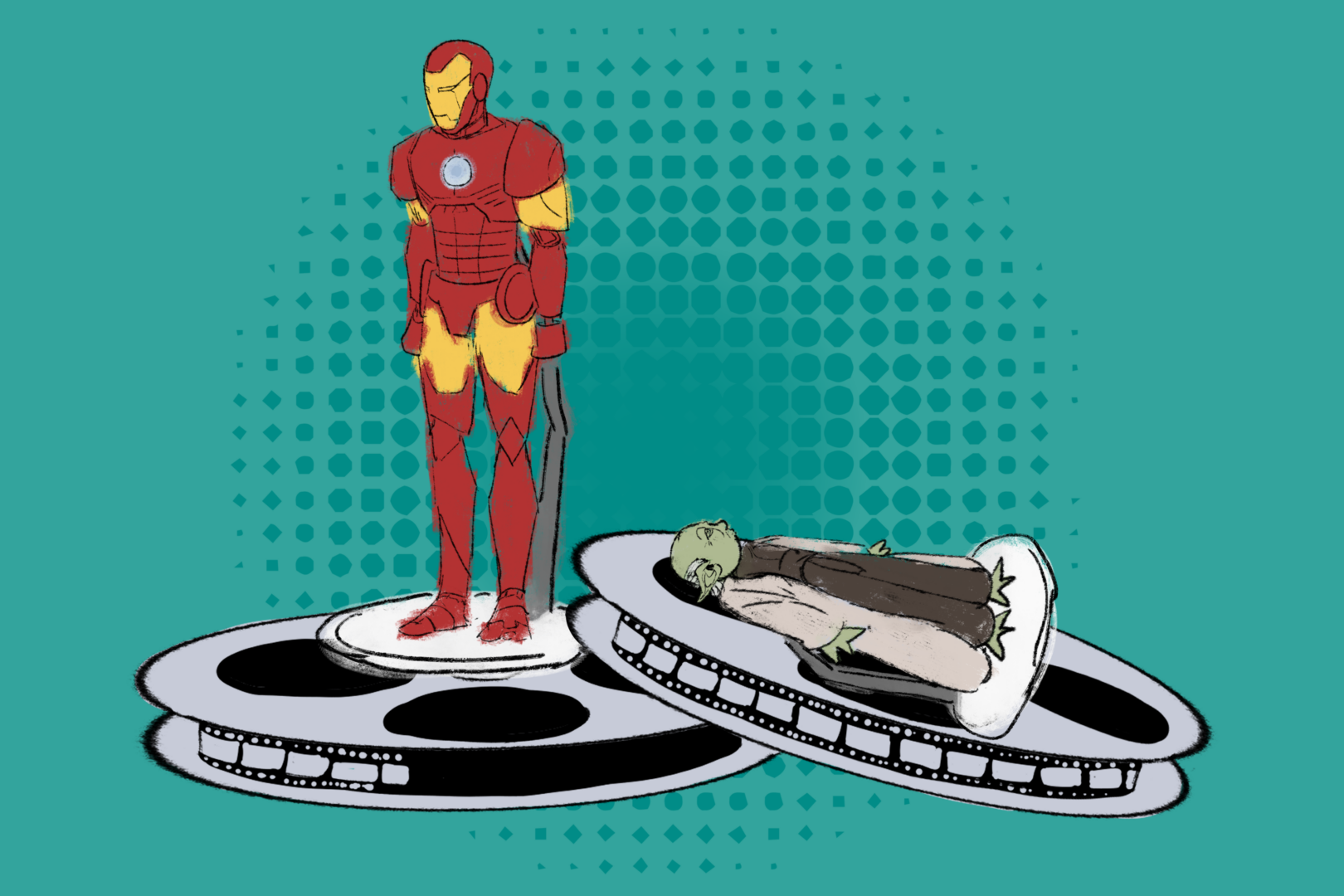
Franchise fatigue greatly affects large production companies as opposed to smaller independent ones. The Walt Disney company is one of the best examples of this. Disney owns 2 of the largest franchises in the world: Marvel and Star Wars. Marvel alone has thirty-eight movies within the Marvel Cinematic Universe (MCU), plus their mini-series and shorts. 

Star Wars falls just short of that number in movies and series but still totals a similar amount. With viewers becoming disinterested in larger, pre-established franchises, they take the brunt of the consequences. 

Despite the recent success of “Spider-Man: Brave New World”, Marvel movies are making considerably less money at the box office than before. Out of the last 6 Marvel movie releases, only 2 of them performed as highly as expected. There is a similar pattern with Star Wars: “Star Wars: The Mandalorian and Grogu”, their most recent film, is officially the lowest-grossing Star Wars film ever. 

Disney franchises aren’t the only ones suffering from this pattern: “Scream 7” received poor reviews due to its overreliance on nostalgia as opposed to a fresh story and “Joker: Folie à Deux” had critics and fans feeling it had an underwhelming conclusion and was an unnecessary installment. Both of these films performed at lower levels in the box office than their predecessors.

Growth in creativity 

Now this isn’t to say that any newly produced franchise installment is going to perform poorly. The entire reason for the incursion of franchise installments by major companies was because these movies were performing well. 

There was a point in film that recognizable IP meant a guaranteed chart topper. It was more profitable to use characters people were already familiar with and had consistent fan bases, rather than take a chance on a new character. 

But as we enter the latter part of the decade, on the heels of a new one, there’s been a shift in what audiences want to see. There have always been filmmakers making new original movies, but now we see them breaking box office records and being favored over existing IP.

This year, we’re seeing more high-grossing original movies. Out of all of the films ranked number one at the box office for this year, eight of them are of new stories audiences aren’t familiar with. This may not be significant, but compared to 2023, there were three and six in 2024; we already have more original films 9 months into the year than previous years at their conclusion. 

Looking at these numbers, it’s hard to see franchise fatigue as something negative. This year, we’ve gotten the directorial debut of Curry Barker with “Obsession” and Kane Parsons with “Backrooms” and the return of huge names Sam Raimi, Christopher Nolan and Stephen Spielberg, all of which have managed to get many people back in theaters. 

An end to the exhaust

When the conversation of franchise fatigue comes up, there is plenty of blame on Hollywood for constantly reproducing the same tired stories and franchises, but studios keep producing them because up until recently they were performing well.  If studios see that people are beginning to flock towards original stories, that’s what you’ll begin to see more of.

Hollywood follows where the money’s at. 

There is only one cure for franchise fatigue and it’s to go see something else! The demand for original stories is still high, yet so is the amount of upcoming releases drawn from existing IP. The recent success of these original stories can be taken as a small step towards seeing more perform well at the box office. 

If this pattern continues, new actors and directors will have a chance to debut, giving Gen Alpha a chance to get their own characters instead of recycled ones. 

The failure and underperformance of franchise installments can promote the importance of new, original ideas in the box office that represent unique perspectives and not the same old, same old.

opinion@thedailycougar.com

—
“Modern cinephiles diagnosed: Franchise fatigue” was originally posted on The Cougar

Posted in UncategorizedComments Off on Modern cinephiles diagnosed: Franchise fatigue