
Author Archives | Fatoumata Traore

The rise of faith as a campaign strategy

Nina To/ The Cougar

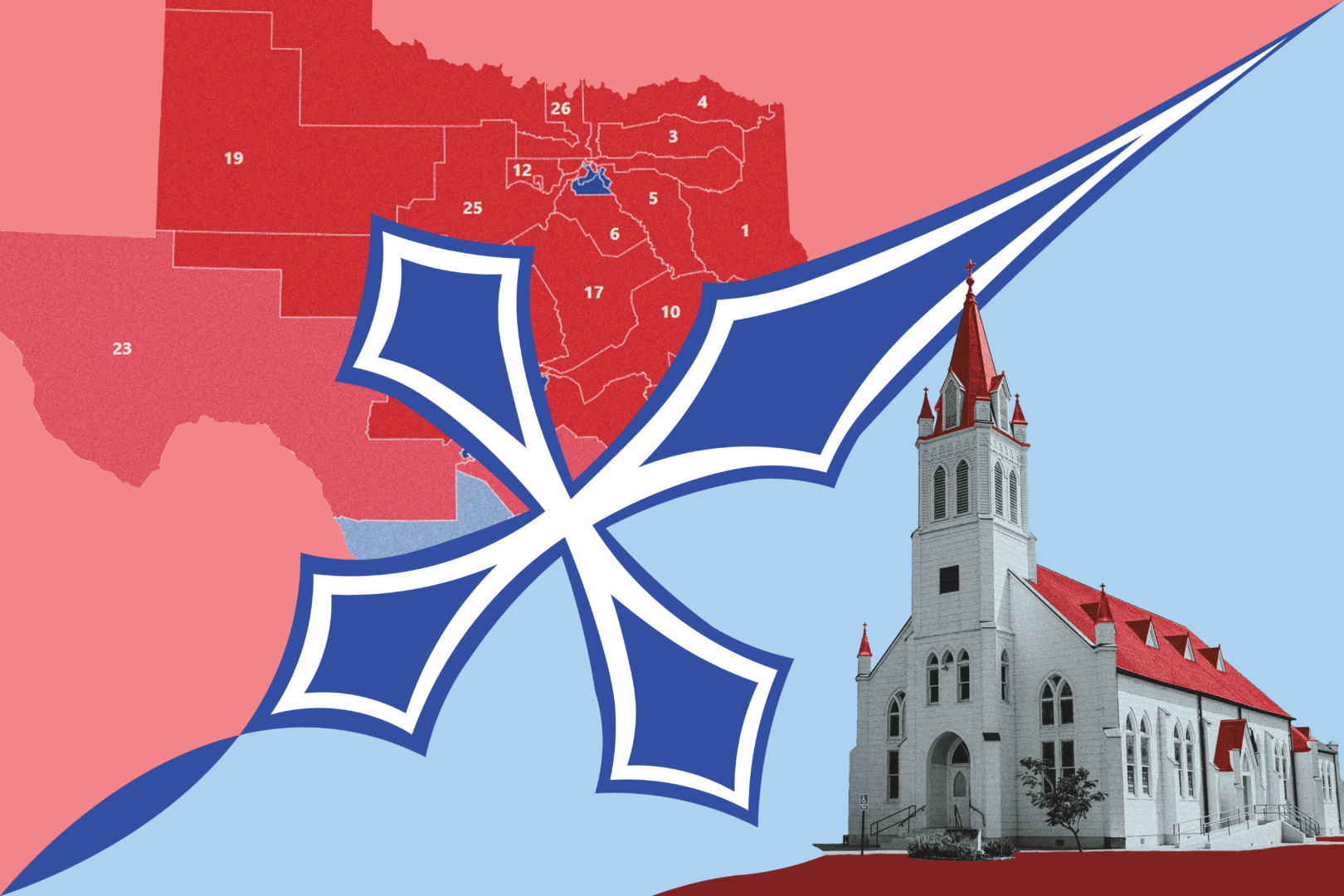
As polarization in voter turnout rises and campaign tactics become more targeted, candidates are increasingly incorporating religious language and identity into their messaging to voters.

In a recent New York Times article, James Talarico is a Christian X-Ray, opinion writer David French comments on James Talarico’s recent campaigning. 

He states, “He’s one of the most faith-forward politicians in the United States.” Talarico utilized his faith to create a forward-facing campaign for the democratic party and arguably is the first to successfully implement it. By strategically leveraging faith and identity politics, politicians are able to subvert political deliberation into group identity, challenging the ethical boundaries of modern campaigning tactics. 

Christianity in politics

We’ve seen different figures with political power deliberate Church and State, as well as ground what appear to be sound arguments into religious rhetoric.

The late Charlie Kirk delivered a rebuttal in August 2024, stating, “ You cannot say you believe in biblical principles and vote for the principles of the democratic party.” 

Nationalists like Kirk believe that the democratic party is known for being incongruent with Christian ideals, and they leverage this belief to shame Christians out of voting Democrat.

Kirk antitheses his statement by supplementing how Joe Biden spent more time on Easter Sunday talking about Trans rights instead of the resurrection of Jesus Christ.

The idea that religious holidays should be subordinated to political agendas is an indicator of where we are as a society in terms of conservatism. 

James Talarico, on the other hand, leans against Christian Nationalists, stating it’s the “Cancer of Christianity.” And even condemning the Christian Nationalists who stormed the Capitol and those who seek to trade public education for private Christian schooling.

The issue with appealing to one’s religious ideals, whether it be to leverage freedom or rule, is that it can signal that some beliefs are more legit than others. This risks marginalizing voters who are of different faiths or who are secular. 

Ethics without religion

The Talarico approach, as well as those who fell in line with the late Charlie Kirk, both ground their decisions in the moral obligations or scriptures of the Bible.

This raises the question of whether or not moral legitimacy could be claimed if political leaders identified as agnostic or atheist. If dominant religious beliefs or traditions can shape political arguments, should other minority religions be granted the same influence in political debates? 

These questions have the potential to erode the democratic principle of religious liberty because this liberty applies to members of a society, not democratic institutions and policies.

I believe that it is possible to make sound arguments and decisions for the greater good based on ethical lenses that consider all aspects of society, rather than objective moral truths that stem from religious beliefs.

By setting aside conversations over the Resurrection, the Ten Commandments and scriptural references, politics shifts from defending faith and becomes a conversation of the strongest ethical framework.

Identity politics, political campaigns 

As identity intersects with politics and enters campaign tactics, where should the line be drawn when using identity to appeal to voters? American Philosopher John Rawls, in his book Political Liberalism, makes an argument that political decisions should be justified using public reason. 

The idea of public reason is that arguments that all citizens, regardless of identity, can accept. Though if campaigns are relying heavily on religious or identity-based reasoning, they risk violating the idea of public reasoning because identity-based arguments are only available to those who identify.

I don’t believe in eradicating religious symbolism or even identification in politics, but I do believe political decisions and discussions should be held in a language that is accessible to all citizens and not just those of a certain belief. 

My argument is also not that political candidates shouldn’t appeal to identity in politics, but rather that identity should not be a mechanism to illegitimize opposing political groups. 

Conclusive remarks

Campaigning strategies are fundamental to the democratic mechanism of voting. James Talarico and the late Charlie Kirk both spoke of proverbs and religion. Talarico highlighted religious freedom and caring for thy neighbor, while Kirk preached religious conservatism. 

If political leaders were more concerned with the ethics of policy rather than the identity that the policy most aligns with, perhaps its citizens would reside in healthier communities.

I don’t doubt that religious or other aspects of identity make candidates more or less ideal, but I advise maintaining the separation of Church and State and petitioning to keep political campaigns political.

opinion@thedailycougar.com 

—
“The rise of faith as a campaign strategy” was originally posted on The Cougar

Posted in UncategorizedComments Off on The rise of faith as a campaign strategy

The rise of faith as a campaign strategy

Nina To/ The Cougar

As polarization in voter turnout rises and campaign tactics become more targeted, candidates are increasingly incorporating religious language and identity into their messaging to voters.

In a recent New York Times article, James Talarico is a Christian X-Ray, opinion writer David French comments on James Talarico’s recent campaigning. 

He states, “He’s one of the most faith-forward politicians in the United States.” Talarico utilized his faith to create a forward-facing campaign for the democratic party and arguably is the first to successfully implement it. By strategically leveraging faith and identity politics, politicians are able to subvert political deliberation into group identity, challenging the ethical boundaries of modern campaigning tactics. 

Christianity in politics

We’ve seen different figures with political power deliberate Church and State, as well as ground what appear to be sound arguments into religious rhetoric.

The late Charlie Kirk delivered a rebuttal in August 2024, stating, “ You cannot say you believe in biblical principles and vote for the principles of the democratic party.” 

Nationalists like Kirk believe that the democratic party is known for being incongruent with Christian ideals, and they leverage this belief to shame Christians out of voting Democrat.

Kirk antitheses his statement by supplementing how Joe Biden spent more time on Easter Sunday talking about Trans rights instead of the resurrection of Jesus Christ.

The idea that religious holidays should be subordinated to political agendas is an indicator of where we are as a society in terms of conservatism. 

James Talarico, on the other hand, leans against Christian Nationalists, stating it’s the “Cancer of Christianity.” And even condemning the Christian Nationalists who stormed the Capitol and those who seek to trade public education for private Christian schooling.

The issue with appealing to one’s religious ideals, whether it be to leverage freedom or rule, is that it can signal that some beliefs are more legit than others. This risks marginalizing voters who are of different faiths or who are secular. 

Ethics without religion

The Talarico approach, as well as those who fell in line with the late Charlie Kirk, both ground their decisions in the moral obligations or scriptures of the Bible.

This raises the question of whether or not moral legitimacy could be claimed if political leaders identified as agnostic or atheist. If dominant religious beliefs or traditions can shape political arguments, should other minority religions be granted the same influence in political debates? 

These questions have the potential to erode the democratic principle of religious liberty because this liberty applies to members of a society, not democratic institutions and policies.

I believe that it is possible to make sound arguments and decisions for the greater good based on ethical lenses that consider all aspects of society, rather than objective moral truths that stem from religious beliefs.

By setting aside conversations over the Resurrection, the Ten Commandments and scriptural references, politics shifts from defending faith and becomes a conversation of the strongest ethical framework.

Identity politics, political campaigns 

As identity intersects with politics and enters campaign tactics, where should the line be drawn when using identity to appeal to voters? American Philosopher John Rawls, in his book Political Liberalism, makes an argument that political decisions should be justified using public reason. 

The idea of public reason is that arguments that all citizens, regardless of identity, can accept. Though if campaigns are relying heavily on religious or identity-based reasoning, they risk violating the idea of public reasoning because identity-based arguments are only available to those who identify.

I don’t believe in eradicating religious symbolism or even identification in politics, but I do believe political decisions and discussions should be held in a language that is accessible to all citizens and not just those of a certain belief. 

My argument is also not that political candidates shouldn’t appeal to identity in politics, but rather that identity should not be a mechanism to illegitimize opposing political groups. 

Conclusive remarks

Campaigning strategies are fundamental to the democratic mechanism of voting. James Talarico and the late Charlie Kirk both spoke of proverbs and religion. Talarico highlighted religious freedom and caring for thy neighbor, while Kirk preached religious conservatism. 

If political leaders were more concerned with the ethics of policy rather than the identity that the policy most aligns with, perhaps its citizens would reside in healthier communities.

I don’t doubt that religious or other aspects of identity make candidates more or less ideal, but I advise maintaining the separation of Church and State and petitioning to keep political campaigns political.

opinion@thedailycougar.com 

—
“The rise of faith as a campaign strategy” was originally posted on The Cougar
Posted in UncategorizedComments Off on The rise of faith as a campaign strategy

The rise of faith as a campaign strategy

Nina To/ The Cougar

As polarization in voter turnout rises and campaign tactics become more targeted, candidates are increasingly incorporating religious language and identity into their messaging to voters.

In a recent New York Times article, James Talarico is a Christian X-Ray, opinion writer David French comments on James Talarico’s recent campaigning. 

He states, “He’s one of the most faith-forward politicians in the United States.” Talarico utilized his faith to create a forward-facing campaign for the democratic party and arguably is the first to successfully implement it. By strategically leveraging faith and identity politics, politicians are able to subvert political deliberation into group identity, challenging the ethical boundaries of modern campaigning tactics. 

Christianity in politics

We’ve seen different figures with political power deliberate Church and State, as well as ground what appear to be sound arguments into religious rhetoric.

The late Charlie Kirk delivered a rebuttal in August 2024, stating, “ You cannot say you believe in biblical principles and vote for the principles of the democratic party.” 

Nationalists like Kirk believe that the democratic party is known for being incongruent with Christian ideals, and they leverage this belief to shame Christians out of voting Democrat.

Kirk antitheses his statement by supplementing how Joe Biden spent more time on Easter Sunday talking about Trans rights instead of the resurrection of Jesus Christ.

The idea that religious holidays should be subordinated to political agendas is an indicator of where we are as a society in terms of conservatism. 

James Talarico, on the other hand, leans against Christian Nationalists, stating it’s the “Cancer of Christianity.” And even condemning the Christian Nationalists who stormed the Capitol and those who seek to trade public education for private Christian schooling.

The issue with appealing to one’s religious ideals, whether it be to leverage freedom or rule, is that it can signal that some beliefs are more legit than others. This risks marginalizing voters who are of different faiths or who are secular. 

Ethics without religion

The Talarico approach, as well as those who fell in line with the late Charlie Kirk, both ground their decisions in the moral obligations or scriptures of the Bible.

This raises the question of whether or not moral legitimacy could be claimed if political leaders identified as agnostic or atheist. If dominant religious beliefs or traditions can shape political arguments, should other minority religions be granted the same influence in political debates? 

These questions have the potential to erode the democratic principle of religious liberty because this liberty applies to members of a society, not democratic institutions and policies.

I believe that it is possible to make sound arguments and decisions for the greater good based on ethical lenses that consider all aspects of society, rather than objective moral truths that stem from religious beliefs.

By setting aside conversations over the Resurrection, the Ten Commandments and scriptural references, politics shifts from defending faith and becomes a conversation of the strongest ethical framework.

Identity politics, political campaigns 

As identity intersects with politics and enters campaign tactics, where should the line be drawn when using identity to appeal to voters? American Philosopher John Rawls, in his book Political Liberalism, makes an argument that political decisions should be justified using public reason. 

The idea of public reason is that arguments that all citizens, regardless of identity, can accept. Though if campaigns are relying heavily on religious or identity-based reasoning, they risk violating the idea of public reasoning because identity-based arguments are only available to those who identify.

I don’t believe in eradicating religious symbolism or even identification in politics, but I do believe political decisions and discussions should be held in a language that is accessible to all citizens and not just those of a certain belief. 

My argument is also not that political candidates shouldn’t appeal to identity in politics, but rather that identity should not be a mechanism to illegitimize opposing political groups. 

Conclusive remarks

Campaigning strategies are fundamental to the democratic mechanism of voting. James Talarico and the late Charlie Kirk both spoke of proverbs and religion. Talarico highlighted religious freedom and caring for thy neighbor, while Kirk preached religious conservatism. 

If political leaders were more concerned with the ethics of policy rather than the identity that the policy most aligns with, perhaps its citizens would reside in healthier communities.

I don’t doubt that religious or other aspects of identity make candidates more or less ideal, but I advise maintaining the separation of Church and State and petitioning to keep political campaigns political.

opinion@thedailycougar.com 

—
“The rise of faith as a campaign strategy” was originally posted on The Cougar

Posted in UncategorizedComments Off on The rise of faith as a campaign strategy

Algorithmic curation: Your recommendations choose you

Lily Huynh / The Cougar

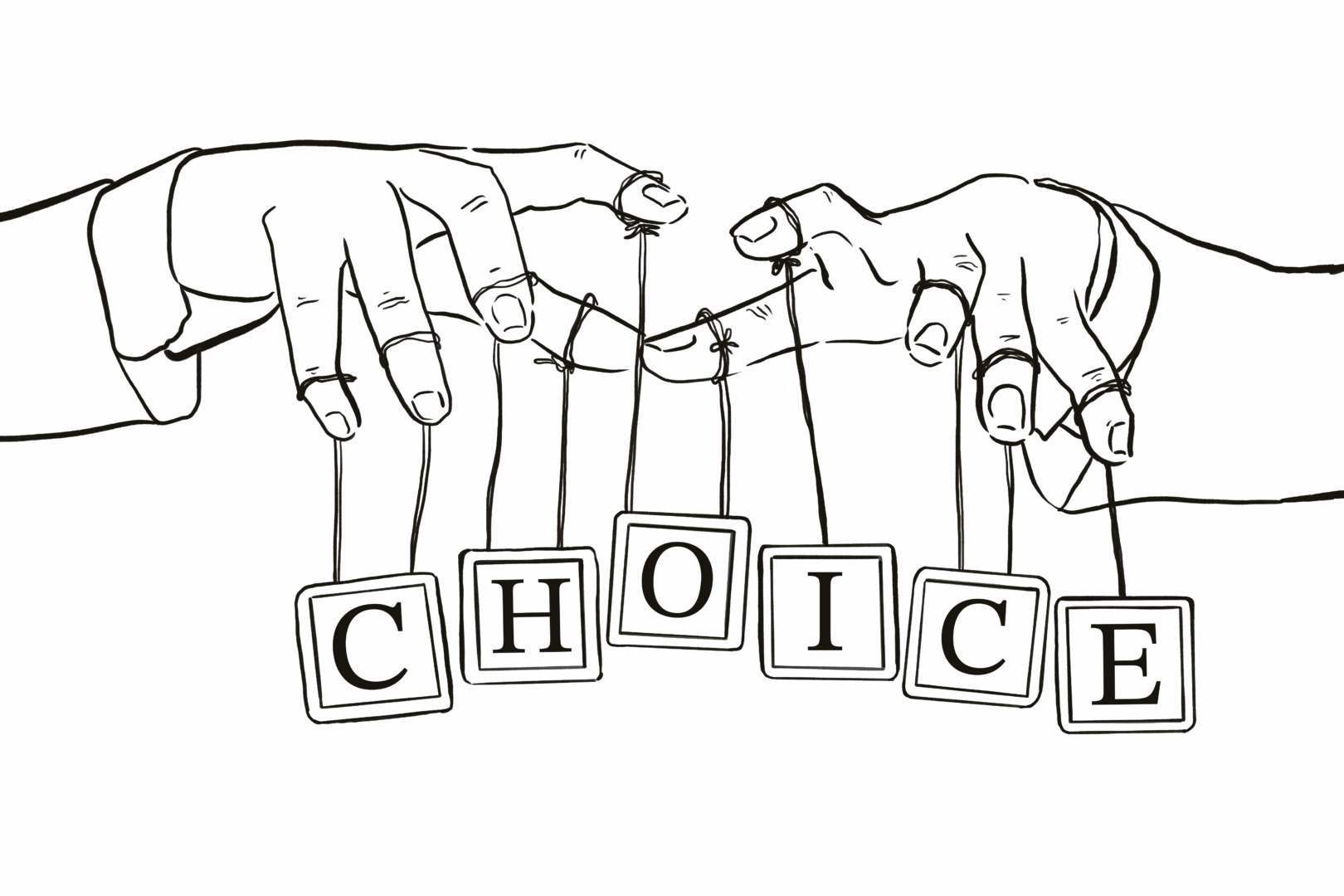
The most effective forms of control do not feel like control at all. They feel like a recommendation. On social media platforms, buttons such as “not interested” and engagement signals appear to grant users control over what content they’d like to see. Algorithms then simplify decision-making by learning what we like. 

But these systems do not merely respond to user preference; they train it, quietly shaping what users come to enjoy, value or believe, while limiting the space for reflection. 

In this way, choice becomes increasingly passive. In this context, how can we claim to be self-curating our feed when so much of what we come across is pre-determined by an algorithm? 

Feedback loops

Degenerative Feedback Loops in Recommender Systems was a 2019 case study that analyzed the feedback echo chamber and filter bubble effects on users. The phenomenon of the feedback loop is the extensive use of machine learning in recommendation systems. 

The decisions made by these systems can influence user beliefs and preferences, which in turn affect the feedback the learning system receives, thus creating a feedback loop.

Feedback loops do not simply reinforce user preference, but they also limit user encounters with opposing views and unprecedented media. On a broader spectrum, curating our feed alters the conditions to which we are naturally curious. 

For example, discovery once arose through accident, curiosity or engagement with outside ideas. Now, algorithmic curation filters the world we engage with by only presenting ideas that are likely to resonate with us. By doing so, beliefs are reinforced before they are even tested, the choice is not fully exercised, it’s shaped in advance by a machine. 

The claim here is not that users are seeing things they don’t want to see, but when choice is anticipated in advance and the chances of encountering the unexpected are designed out, users become a partial product of the algorithm. This raises a deeper question about what kind of freedom is actually being exercised in algorithmically curated environments.

Free-ish 

Political philosopher Isaiah Berlin presents the concept of freedom as unlimited options and contrasts it with the definition of freedom as self-direction. In the first sense of freedom, media platforms appear to facilitate unlimited options through endless content to engage with and the choice to disengage when you want.

Content is recommended to you, pre-filtered, so familiarity is reinforced. Some may argue that the media you consume should be tailored to your liking, and I agree that personalization definitely makes content more engaging and enjoyable. However, the personalization appeal masks how fully voluntary engagement is. 

In other words, tailoring users’ content limits self-direction. Freedom is not choosing among the options that are presented to you, but it requires the ability to encounter the unexpected options. 

Curated algorithms, by recommendations and anticipated preferences, fail to preserve these conditions. This is why feedback loops are inherently dangerous to the human mind because they are trained to suppress the desire and reflection that freedom depends on. 

Antidote to passive choices

Philosophically, freedom requires not just the availability of options but the reflection on the desires that drive those options. In our day-to-day, media-driven lives, we have little space for this type of self-reflection. Users comfortably become the media they consume and justify it on the basis of familiarity or as the product of their own engagement. 

However, when engagement is ranged by design, and curated to your “For You” page, what might have been a conscious decision to engage now becomes a passive choice.

 I encourage users, along with myself, to go on a prolonged passivity with the media, to consume without interacting. The possibility to come across ideas we’ve never thought of, hearing from communities we’ve never encountered, and being inspired by perspectives we’ve never seen would be an ideal antidote to algorithmic curation. 

opinion@thedailycougar.com

—
“Algorithmic curation: Your recommendations choose you” was originally posted on The Cougar

Posted in UncategorizedComments Off on Algorithmic curation: Your recommendations choose you

The police next door: What Ring and Flock say about our safety

Lily Huynh/ The Cougar

Amazon-owned doorbell company, Ring, and security technology company Flock Safety announced a working partnership in late 2025 to integrate a community request feature that would allow law enforcement to request video footage from Ring customers who also use the Neighbor’s app. 

Although Ring camera users would be able to opt in and opt out of these features, there is an undeniable cynicism in framing mass data extraction as voluntary “community participation,” especially when the power dynamic between residents and law enforcement is so stark.

By treating surveillance as a civic obligation, we see who bears the brunt of policing, who is trusted to report it and how these patterns institutionalize bias, particularly against Black, brown and immigrant communities.

Vigilante surveillance 

“Ring emphasized that the integration ‘simply streamlines’ how local police seek community help, but privacy researchers counter that it blurs the boundary between voluntary cooperation and crowd-sourced surveillance,” said Anthony Kimery, a biometric technology journalist.

By embedding law-enforcement requests within a privatized, community-facing app, Ring and Flock collapse the distinction between neighborly vigilance and state surveillance. This is especially a concern for communities that are disproportionately facing overpolicing. The app’s option to opt out of police surveillance seems hollow, as for black and brown communities, abstention does not dismantle their ability to be surveilled. 

As the United States Immigration and Customs Enforcement increasingly relies on third-party surveillance and data brokers, the integration would allow immigration efforts to scale up without any accountability. According to the American Civil Liberties Union, “Amazon’s deal also highlights the efforts of Flock and its competitor Axon (which already had a deal with Ring) to become police departments’ centralized ‘operating system’.” 

The significance of the phrase “operating system” is that it enables not just data collection but the integration and cross-referencing across jurisdictions and agencies. In this case, data precedes legal justification rather than the reverse, and safeguards such as warrants and proper court orders are swept behind an app’s terms of service.

First prejudice, then evidence

In a similar light, the Neighbor’s app functions less as a tool for communication and more as an infrastructure of radicalized suspicion. Posts and footage collected on the app are shaped by implicit bias; this means surveillance power is assumed long before police make a request. 

Once that biased data enters an integrated law-enforcement ecosystem, it gains institutional legitimacy because it shapes where a search effectively begins. From there, footage and reports that originally started as private prejudice are reframed as objective evidence. There is no neutral standpoint when submitting this type of footage, and the app simply being privatized does not insinuate that it’s apolitical. 

Not to mention that the individuals shared through this app have no notice that their data could be transmitted to law enforcement, which also means they aren’t allowed to contest its accuracy or context.

Safety at what cost

In the context of recent ICE escalations, the lack of notice or correction in vigilante surveillance is particularly dangerous because indirect leads through third-party data could lead to life-altering consequences. Due process is highly overlooked in the case of immigration, which is why we often see arbitrary detention. 

In final remarks, the integration creates a system where implicit bias and prejudice fester, eating at the legitimacy of marginalized communities. This feature positions minorities as inherently “suspicious”, exploiting fears that majority communities profit from too well. 

When you police the vulnerable and shield those in power,  the illusion of democracy crumbles. Now that the undocumented immigrant is detained, and the innocent Black man is criminalized, who will be left to blame? Neighborhood? Ring and Flock? Or will it be the very political surveillance infrastructure promoted by law enforcement, packaged “for public safety” and integrated into systems that shape policy and even the next election? 

So I ask once more, safety at what cost?

opinion@thedailycougar.com

—
“The police next door: What Ring and Flock say about our safety” was originally posted on The Cougar

Posted in UncategorizedComments Off on The police next door: What Ring and Flock say about our safety