

Author Archives | Cyril Burchenal, Columnist

We Must Change Social Activism on Campus

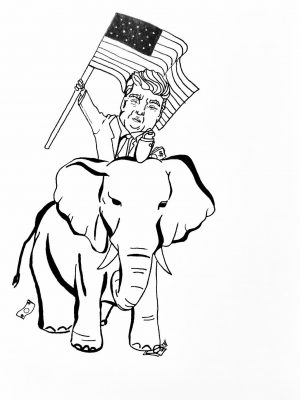
Illustration by Eric Rannestad

Whitman has a respectable tradition of social justice and activism. As Whitties, we aspire to create the most comfortable and accepting environment for our fellow students. It is that ability to change that makes our community so cohesive and empathetic. This willingness to put our opinions up for criticism is a compelling trait, but I feel it is undercut by the culture of Whitman itself.

Political activism is a valuable aspect of Whitman’s culture, certainly, but I’m not sure it belongs on campus. There is a large and powerful political consensus at Whitman. ‘The echo chamber,’ the ‘liberal bubble’–whatever you want to call it–dictates a lion’s share of the political dialogue on campus. It seems that most Whitties acknowledge the existence of the bubble, and some even seek to dismantle it. Regardless of whether this bubble is good or bad, it does affect the pragmatic nature of social activism and stunts its ability to spur change. The causes themselves that promote said activism are all beyond valid, but vocalizing those opinions and stances in an environment that shares your opinion is unproductive. And there we find the problem. In a community that is tremendously welcoming to activism but also politically uniform, said activism is unnecessary. That does not mean that the cause of the activism is invalid–it merely means you need to expand your field of view.

Whitman, in its progressive liberal political stance, is juxtaposed against the more conservative community in and around Walla Walla. It is because Walla Walla doesn’t share Whittie’s beliefs that ‘the bubble’ is a bubble. To most effectively pursue social change, it would be more productive to go into the Walla Walla community since, unlike Whitman, it is varied in its beliefs.

This is not an indictment of the social activism of Whitman students, as they truly address areas in need of change. Instead, it is an endorsement of the spirit of activism, and a recommendation of more effective measures.
Posted in UncategorizedComments Off on We Must Change Social Activism on Campus

Greek Life: Tragedy or Comedy?

American universities across the nation are experiencing new and unforeseen questions of established college norms. Among the institutions questioned is Greek Life. Many detractors would say they perpetuate unhealthy behavior and exclusive social status. I can see all of these points as reasonable sources of concern, however I would like to assert that Greek Life on campus does not perpetuate these accusations, and instead subverts them.

I feel I should preface this by stating that I am not involved in the slightest with Whitman’s Greek Life. I haven’t spent a tremendous amount of time in any of the houses. I’m a typical Whittie in the sense that many of my close friends have chosen to pledge. While I understand and respect that choice, I recognize that Greek Life is not for me. Despite this, my experience with Whitman’s numerous Greek organizations has been exclusively positive. I have felt welcomed and valued as a community member by everyone I’ve had the pleasure to meet.

The two criticisms mentioned above I believe would merit concern if they were well-founded, but I do not believe they are. Greek Life is unfairly charged with promoting unhealthy and excessive drug and alcohol use. While I can not say that there is not drug and alcohol use in Greek Life that may at times be excessive, this is not exclusive to Greek parties. Independent parties are equally excessive in their consumption, while lacking the safety precautions that Greeks have so wisely established. The presence of door workers to check IDs, bartenders to distribute drinks and sober roamers to watch out for Whitties in over their heads is not only valuable, but critical to creating a campus culture of safe partying. If Whitman is indeed committed to the Green Dot, then it should encourage and take pride in the efforts taken by its Greek Organizations.

The later criticism of Greek Life, that promotes social exclusivity, is not without merit. Yes, Greek Life benefits those within it more than those without it, but that does not mean it does not benefit the campus as a whole. Greek Organizations offer special opportunities to Whitman students that would be few and far between otherwise. The presence of large social forums through which to organize events is a resource to the college that goes often ignored. Great community events have been organized through Greek organizations. And simply because someone isn’t Greek themselves, that doesn’t mean that they can’t engage with Greek Life on their own. Many Greek organization have special titles for non pledge friends of the house.

Greek Life may be controversial, but it has its place on campus. When thinking of about this, I always remember that it was I who rejected Greek Life, not Greek Life who rejected me.

Posted in UncategorizedComments Off on Greek Life: Tragedy or Comedy?

The Presidency so Far

As of February 25 President Donald Trump has spent thirty six days in office. Enough time has now passed that the campaign promises of the president can be compared to the actions taken during his first month in office.

The Wall with Mexico is perhaps Trump’s most famous campaign promise. This promise is a microcosm of the Trump campaign as a whole: simplistic and reactionary solutions to complex issues. While the wall itself is rapidly becoming real, the fanciful claim of making “Mexico paying for it” will almost certainly remain unrealized. The White House’ Hobbesian solution to Mexico refusing to pay for the border wall is to implement a harsh import tax with Mexico. The American consumer will fund the border wall, as any free market loving Republican would deem appropriate.

The infamous Muslim Ban President Trump called for during his campaign was among the more autocratic aspects of the 2016 presidential election. Aside from the unconstitutional nature of the ban’s implementation and subsequent overhaul, it is doubtful a President married to an immigrant realized the irony of banning migrants. Executive order 13769, or simply the muslim ban, quickly drew backlash from those tasked with enforcing it. The rapid and aggressive response from those opposed to the order, in both the government and the public, is indicative of a great willingness to retaliate to other prospective actions.

Trump is apparently a great lover of philosophy, as his promise to Appoint a Special Prosecutor to Investigate Hillary Clinton would have made Machiavelli blush. The calls by his supporters to “lock her (Clinton) up” was addressed by Donald Trump during the second Presidential Debate. This drew harsh criticism, and was seen as akin to an autocrat threatening his political opponents. He did, however, redact this statement, although only after his electoral victory.

The Republican opposition to then President Obama’s effort to Fill Antonin Scalia’s Vacancy yielded President Trump a Supreme Court nominee. The nominee, Tenth Circuit Court of Appeals Judge Neil Gorsuch, fits the Conservative Supreme Court mold. Gorsuch is a constitutional originalist, and a legal textualist. The appointment of Gorsuch in impressive in this administration because it transpired rather smoothly relative to the more turbulent actions of this same administration.

Part of Trump’s appeal to Appalachia involved taking steps away from renewable resources. This focused mainly on Coal and Gas pipelines. Key issues such as the Keystone pipeline and Standing Rock pipeline have divided much of the nation. President Trump has vowed to step away from renewable energy and back towards the climate change driving energies of previous Republican administrations.

Finally, President Trump as vowed to Replace Obamacare with “something better.” This step has already been undertaken as its repeal has been initiated by an Executive Order. The inability of Congress to recognize the importance of healthcare is ironic, as their healthcare is paid for by taxpayers and provided by Bethesda Medical hospital.

Most times the largest danger regarding a presidents campaign promises is that he would not keep them. This administration is different. The greatest danger the Trump administration posses is that it will follow Trump’s campaign promises to the letter. The actions of the president thus far seem to indicate that he intends to keep his word, terrifying and shortsighted as that may be. The implications of this a far reaching, such as Trump refusing to honor article 5 of the North Atlantic Treaty.


Posted in UncategorizedComments Off on The Presidency so Far

The Bleeding Heart Question

Would you, the informed reader, say that political divide is largely a moral issue? I’d say so. In daily conversation it seems that a great deal of the conversation is based upon what any given person believes is ‘moral.’ As such, it seems that the moral high ground has become some magical platform upon which everyone may stand simultaneously.

That being said, ‘bleeding heart liberal’ is as common a pejorative term for Democrats as can be found in common parlance. The point of the insult is to denigrate liberals for their strong moral code. The term places sympathy in a negative context, and is dismissive of the idea of emotionally motivated stances. This designation always confused me. Surely basing an opinion on morals is a good thing. What else could be a substitute? The obvious answer is facts.

If our public policies are not ethical, then they must be alternatively pragmatic. If a choice is not moral, then it should at least be factual, right? I believe yes, but that leads to the impossible choice between ethics or facts. History is full of morally horrible choices that were good for the people making them. Andrew Jackson’s removal of the Cherokee was as morally reprehensible an act as the U.S. could ever undertake, but was then a smart decision. Contrarily, the passage of the 18th Amendment and prohibition was a morally good choice on the part of the U.S. government, but all the same a disaster.

Is it better to pragmatic or ethical in decision making?

In public debate on large policy topics, camps are mostly in this binary system and both major political groups are seen self-segregating. Take American foreign policy as an example of ethics versus morals. American support of Israel is largely based on principle and cultural ties between American and Israeli Jews. This relationship has proved to be a divisive one, and has historically compromised relations with Arab nations such as Iraq.

The American relationship with Saudi Arabia is, contrarily, a solely pragmatic choice. The assertion of American influence over a regional power is an important prospect in containing Iran, the U.S. regional adversary. Additionally, the U.S. gets eight percent of its oil from Saudi Arabia. The religious and monarchical nature of Saudi Arabia is directly contrary to the founding principles of the U.S., but the relationship is lucrative for the United States.

An ideal policy should be both moral and pragmatic, and is hopefully at least one of those two. This is worth noting because it seems as though ethical arguments are common, while factual arguments relatively uncommon. Ethical arguments are perhaps more common because they are easier to make, which does not invalidate them. Ethics and logic aren’t diametrically opposed, but can often clash. Conversation on politics especially must be more factual, as only pragmatic critiques can harm a morally bankrupt institution.

Posted in UncategorizedComments Off on The Bleeding Heart Question

Killing the Conservative Paradigm

In years past, both Democratic and Republican presidential candidates have closely represented the views of their respective parties. This is no such year. The campaign promises of President Donald J. Trump show just how atypical of a Republican President he will be.

Illustration by Meg Cuca

The change of the Republican party and its president throughout the election has been a remarkably bizarre transition from past party policy. The divorce of the party from the economic message of administrations before has signaled at least a temporary shift to the adoption of the blue collar democratic rhetoric reminiscent of the New Deal. President Trump’s now infamous “build a wall” promise serves as the bedrock of his “America first” economic message. President Trump has voiced opposition to such trade organization as NAFTA and the TPP. He has also vowed to heavily tax American manufacturers attempting to outsource production. This message runs counter to the very basis of Republican economic messages characterized for decades by free market, neoconservatism.

The Reagan and Bush administrations all emphasized free markets as central policy. President Trump has vowed he will not in all but explicit terms. The bizarre truth to Trump’s economics is that it is a classically Democratic position of working class first policy. By rejecting outsourcing and threatening to tax outsourced products, President Trump has broken from long held Republican policy. The most telling example of this may be Donald Trump’s well documented disdain for the North American Free Trade Agreement, or NAFTA for short. NAFTA is a prime example of the success of free trade, as well as one of President Reagan’s most successful policy ideas. President Clinton broke from Democratic tradition in 1994 and moved away from working class Democratic roots.

Changes in party policy are not unheard of in American history. In centuries past the policies of the Republican and Democratic parties have been inverted, and they may switch again. President Trump’s economic shift could be indicative of a major change in GOP economic policy.

Posted in UncategorizedComments Off on Killing the Conservative Paradigm

NAFTA: Our Favorite Scapegoat

Among the institutions and agreements President elect Donald Trump has vowed to kill in his first 100 days in office, the North American Free trade Agreement may be the most costly to get rid of. Trump’s logic behind withdrawing from NAFTA is that it’s a “job killer.” The idea that NAFTA has facilitated the loss of manufacturing jobs to Mexico is not entirely without basis, but it is a simplistic understanding of a complex issue. For the estimated 800,000 jobs lost due to NAFTA, the U.S. Chamber of Commerce says 6 million jobs depend on trade with Mexico, which is something NAFTA facilitates.

Surely of all political groups that should theoretically support a massive free trade zone, the Republican party should be at the top of the list. With so much of the contemporary conservative identity hinging on Laissez-faire economic policy, it is truly mystifying that some American conservatives have adopted what is ostensibly a Democratic approach to protecting American manufacturing. The North American Free Trade Agreement is also a largely successful example of free markets as a political success. The trade relations with Canada and Mexico are remarkably strong, forming America’s first and second largest trading partners respectively.

In addition to the size of these trade relations, the U.S. also maintains low trade deficits relative to trade relations of the same size. Canada specifically has a trade surplus with the United States comparable with South Korea, despite having a trade relationship almost six times larger. The strength of our relationship with our fellow NAFTA nations is an economic gem. We trade more with Canada than we do with China. Canada is also our largest single source of foreign oil; we get twice as much oil from the Canadians as we do from the Saudi Arabians, and Mexico supplies almost as much oil as Saudi Arabia. Why would we jeopardize free market institutions that have time and time again proven themselves to be fantastically profitable?

Republican hatred of NAFTA is bizarre to say the least, especially since the agreement was drafted under President Reagan. The true source of resentment of NAFTA may not be as an institution, but as a scapegoat. Perhaps NAFTA is used to place blame on jobs rather than admitting that the U.S. economy does not work that way anymore. Many working class people feel as though they are left out of the benefits of a global economy; many manufacturing jobs have been lost. Repealing or changing NAFTA won’t bring jobs back; the jobs lost are already gone. Endangering profitable relationships over dead industry will only succeed in harming the good that has already been done.

America’s global position as a leader is a product of its relationships. The drafting and maintenance of trade relationships lends the U.S. credibility. Serving those relationships out of fear that they may weaken us is a certain way to ensure that alternatives to the U.S. as a trade partner are found. Post-industrial America has experienced sincere growing pains as our economy shifts. Behind misconceptions about trade relationships lies genuine concerns about employment. Many Americans are unable to participate in this new economy, and it is their trials and hardships we must aspire to understand and empathize with.

Posted in UncategorizedComments Off on NAFTA: Our Favorite Scapegoat

Reexamine the Electoral College

Few would contest that the 2016 presidential election was a shake-up. This presidential race was disquieting not only in its volatility, but also in the manner in which it ended. Nearly every pollster predicted the outcome wrong. Rather than a radical opinion shift in the majority of the electorate, the 45th president was decided by an archaic government institution: the Electoral College. It is apparent now that the role of the Electoral College must be reexamined.

As of Nov. 8, 2016, there have been four elections in American history where the popular vote went to a different candidate than the electoral vote. These four elections are 1876, 1888, 2000 and 2016. Some Americans would query what the problem is with these four elections. After all, they were decided in accordance with our nation’s democratic process. Well, the United States aspires to democracy, despite being by definition a republic. The majority of Americans want one candidate, and not giving that candidate is undemocratic. There are reasons why the Electoral College is an institution, and several of them are pertinent to contemporary elections. The magnification of the voice of smaller states is important. There is a compromise though.

A compromise between the status quo and a purely popular general election is not unheard of. The abolition of ‘winner takes all’ would provide the nuance and compromise demanded for change of the status quo. The current electoral system in the United States has it that the winner of a the most electoral districts wins the entire state, rather than having each individual go to their respective candidate. As of 2016, two states have abandoned the winner takes all voting system, Maine and Nebraska. In Maine and Nebraska electoral districts can pledge to different candidates. For example, in the 2016 election three districts voted for Clinton, while one voted for Trump.

The solution of ending ‘winner-take-all’ voting is an even compromise: it allows rural states to maintain their magnified voice, but removes the restrictions on majority rule in states where one or two districts are political outliers. Every district would have their voice heard on a federal level, and no small state would have to relinquish their Electoral College advantages.

Posted in UncategorizedComments Off on Reexamine the Electoral College

2016 will be remembered by its losers, not its victor.

The 2012 presidential election was hailed at the time as the most contentious and unpleasant campaign for the electorate in history. Four years later we can look back with nostalgia at a time when the worst thing a presidential nominee did was put his dog on top of a car. The 2016 election will almost certainly be remembered more by its losers than its victors. This will almost certainly be the case in the event of a Clinton win.

The electoral success Bernie Sanders is indicative of frustration with the establishment. Sanders is still significant for a few reasons. Firstly, he has challenged several long held, but unspoken, American political laws. The most obvious of these nuances is Sanders’ self described socialism. Few words in the American lexicon are as politically toxic as socialist. Sanders went farther on a socialist platform than anyone in history. His success is representative of changing perceptions of socialism and role of government. Sanders campaign platform of being anti big money, emboldened by the perceived corruption in other presidential campaigns, shattered the notion that big money backing was necessary to win state primaries and have a shot at the party nomination.

Significant also, is the volatile response to the Sanders campaign from the party whom he was running for the nomination of. Sanders supporters were in active revolt upon the Wikileaks reveal that party officials had colluded to undermine the Sanders campaign. This revelation prompted the resignation of several high ranking party officials. There is little doubt among Sanders supporters that the democratic process was hijacked by Clinton backers inside the party. Also contested was the role of superdelegates, party officials with larger votes than regular delegates unbound by votes in primaries. Many have argued that superdelegates are undemocratic, and should be removed from the election process. These revelations will not expire with this election. The trust of many liberals and progressives in the the Democratic party has been sincerely and severely damaged. Just as I believe it will take the Republican party year to repair its image after the Trump campaign, I believe it will take the Democratic Party a long time to regain the trust of many disenfranchised voters.

Beyond Sanders, the conservative side of the isle is certainly defined by who did well during the 2016 presidential campaign for party nominee. The categoric failure of party favorites such as Kasich and Rubio to firebrand such as Cruz and Trump demonstrates both a failure of the Republican party to understand its electorate and a great deal of frustration among conservative voters.

In the case of a Clinton victory 2016 will be defined by who lost the election, not who won. While it is simplistic to say that Clinton’s first term will be the same as a third Obama term, Clinton does not appear to be a great reformer in her party.

Posted in UncategorizedComments Off on 2016 will be remembered by its losers, not its victor.

Anti-Intellectualism ruins the Republican party

Republican anti-intellectualism historically has never been a significant problem when nominating leadership because the party has always nominated intelligent men into its leadership. Eisenhower, Nixon, Reagan, Bush senior were all highly competent career politicians running on working-class common man platforms. What differentiates past conservative presidents and more contemporary Republican presidential hopefuls is that past politicians have been opposed to intellectual pursuits without being radical in their beliefs. The shift towards incompetent and ignorant candidates is driven by a hard truth for the Republican party; Moderate Republicans, even with fantastic resumes, don’t win anymore.

John McCain in 2008, Mitt Romney in 2012, John Kasich in 2016, each one of these politicians were remarkably capable, moderate, politicians who either failed to beat a moderate Democrat, or failed to win his party’s nomination. McCain was by all means a party golden boy. A bona fide war hero with an immaculate resume, McCain’s defeat signaled a political shift in the party. Shortly after the loss the Tea Party began to be more of force with American conservatism. This growth of radicalism in the form of the Tea Party emboldened more radical candidates from within the party to pursue the nomination for president in 2012.

Men like Newt Gingrich, Rick Santorum, and Rick Perry all campaigned with some success on platforms of radical nature. These candidates lost the nomination to Mitt Romney. Romney’s loss opened the floodgates for Trump. During the 2016 Republican race for the nomination a horde of party outcasts, firebrands, and nobodies not only campaigned well, but stole the election from moderates selected by party leadership to win in 2016. John Kasich and Marco Rubio were decimated at the polls, despite being the candidates backed by party elites. Scott Walker, Carly Fiorina, Rick Santorum, Mike Huckabee, Ted Cruz and Ben Carson all campaigned well. These candidates were largely radical, largely inexperienced, and almost entirely rejected by the party.

The man himself who carried the nomination away, Trump, may realistically not be the worst character that ran for the nomination in 2016. By appealing to undereducated voters and creating a party persona that rejected intellectualism the Republican party allowed Trump to take the nomination. For the first time in recent memory, the Republican party has produced a genuinely stupid candidate, and not a candidate who underplays his intelligence to be more approachable to voters.

The Republican candidate of today does not represent American conservatism. Many of America’s greatest conservative lawmakers and political commentators neither shrunk from debate nor compromised their beliefs for the party. The GOP is fractured now but will repair itself. It created a candidate who proved to be its undoing, and now it will pay for it.

Posted in UncategorizedComments Off on Anti-Intellectualism ruins the Republican party

Missed opportunities for American Libertarians

Much of the public discourse in this election suggests that Republicans have suffered the most in this election cycle. Their reputation as the “responsible” party has been vandalized both domestically and internationally will likely damage Republican election rates for years to come. But the GOP is responsible for its implosion only in a tertiary capacity. Let us not forget, no moderate conservative or party leaders wanted to nominate Trump, his nomination is as offensive to base Republicans as it is to liberals. I would contest that of all political groups in the United States it would be the Libertarians who have lost the most credibility.

Libertarianism in the US is marginalized to a bizarre degree. So much of a Libertarian thesis appeals to popular, contemporary, American notions and sensibilities, yet for some reason they are constantly forced to compromise to integrate with the GOP mainstream.

Libertarian candidates have long had to compromise their principles to appeal to the Republican party, which has long served as the host party for the movement. The most visible and respected Libertarian leaders Ron and Rand Paul have historically run for office under Republican banners.

If there was any year in which a true Libertarian, running on a Libertarian ticket, it would have been 2016. Even one month ago, a majority of Americans had an unpopular opinion of both Hillary Clinton (at 56% disapproval) and Donald Trump (at 63% disapproval) according to an August 31st Washington Post poll. The man the Libertarian party nominated was former New Mexico Governor Gary Johnson. Johnson himself had a good enough set of credentials, he was a governor, and like many Libertarians ran on a Republican ticket to be elected. Johnson had every advantage a Libertarian could have entering a general election. A large amount of Republicans were disenfranchised by the Trump nomination and looking for alternatives, while a large percentage of Bernie Sanders’ supporters refused to back an establishment candidate. Both of these groups were open to Libertarian persuasion. The Gary Johnson campaign has one problem which stops it from succeeding where other similar campaigns have failed: Gary Johnson.

Johnson is unpopular even among his base. During his time as New Mexico Governor Johnson broke the only rule which a Libertarian must not break; he spent a lot of money. New Mexico’s state budget increased from 4.4 to 7.7 billion under his governorship. Additionally, Johnson does himself no favors by simply having his own, limited, understanding of foreign policy. Foreign policy is never very high on a Libertarian platform, but Johnson is limited even by those standards. When asked what he would do about the refugee crisis in Aleppo, Syria, to which he replied “what is Aleppo?” At an MSNBC Town Hall interview Johnson was asked who his favorite world leader was and was unable to provide any answer, even when the question was changed to “just name one world leader.”

While the Trump campaign has significantly damaged Republican credentials, it is American Libertarians who have done the most damage to their party by squandering perhaps their best chance at the presidency for decades.

Posted in UncategorizedComments Off on Missed opportunities for American Libertarians