
Author Archives | Celene Boureslan

Lecture explores past, future of civil rights law

Danielle Holley speaking in the UH Black History Month lecture at the John M. O’Quinn Law Building, Tuesday, February 10, 2026, in Houston, Texas | Luis Diego Gonzalez/The Cougar

On Feb. 10, Dean Leonard Baynes and Mount Holyoke College President Danielle Holley presented their lecture titled “The Past, Present, and Future of Civil Rights Lawyering” at the UH Law Center.

The lecture commemorated Black History Month and informed attendees about the evolution of African American lawyers, both nationally and in Texas. The lecture emphasized the importance of all minorities being involved in public policy and law.

“America is full of different types of races, ethnicities and cultures, so it’s super important that we have laws and policies that cater not to just one group, but to all groups,” said political science freshman Patricia Koloko.

Baynes opened the lecture by retelling the stories of lawyers Macon B. Allen and Charlotte Ray, the first Black male and female lawyers in the U.S.

“What you find about a lot of the early African American lawyers is that they were not able to practice,” Baynes said. “Lawyers like Macon B. Allen probably only became a lawyer because they apprenticed with someone, and during the 1840s, finding someone who would apprentice Black people was incredibly hard, if not impossible.”

Holley highlighted early Black civil rights advocates, including Heman Marion Sweatt and Thurgood Marshall. In 1946, Sweatt applied to the University of Texas School of Law.

Sweatt met every academic requirement and wanted to study law. He wanted to be of benefit to his state, but was denied entry solely because of his race, Holley said.

The university attempted to build a separate law school for Sweatt to attend in Houston. In response, Sweatt, supported by Marshall and other members of the National Association for the Advancement of Colored People legal defense fund, filed a lawsuit against the university’s then-president.

The case was taken to the Supreme Court, where the justices unanimously ruled in favor of Sweatt and ordered that he be able to attend UT’s law school.

“Law school was, and it remains, the gateway to judgeships, policymaking, economic security and the idea of who gets to interpret the Constitution rather than merely live under the Constitution,” Holley said.

Students felt thankful for the work and progress of Black civil rights lawyers.

“I can only be so grateful to the lawyers and activists that came before because I’m a mixed-race person, so I probably wouldn’t even exist if we were in a certain era still,” said computer information systems senior Alisa Akaya.

Attendees agreed that civil rights lawyering is especially important today, considering the current scenarios in the real world.

“Our Constitution is based on liberty and freedom,” Koloko said. “We must fight to make sure that we’re following that pathway our Founding Fathers have for us, no matter where you come from.”

Holley discussed the current challenges aspiring Black lawyers face, including being more likely to carry student debt, be first-generation students, experience isolation and be underrepresented.

“Are Black students and graduates able to form networks, sponsorships or gets sponsors where we work? Are we able to be seen as lawyers who are identified with prestige? Do we have institutional support in the places that we work?” Holley said. “All of that can really impact the ability for us to turn people who are interested in being lawyers into law students and then turning those law students into licensed lawyers.”

Holley explained it is also difficult for Black law students to become civil rights lawyers, since racial inequality in today’s political climate is much more legally sophisticated than it was during the segregation era.

“Discrimination is often reframed as neutrality and sometimes discrimination, as we heard from the Equal Employment Opportunity Commission and the Department of Justice, is reframed as discrimination against white Americans,” Holley said.

Holley said the future of Black civil rights lawyers will require moral clarity, legal imagination, institutional courage, solidarity and stamina.

“Civil rights is not a sprint. This is a really long-term problem that we have to solve,” Holley said. “We have to figure out how the Constitution of the United States, our statutes, our regulations, our state constitutions and state regulations support a world in which we can all believe that it is made for us?”

news@thedailycougar.com

—
“Lecture explores past, future of civil rights law” was originally posted on The Cougar
Posted in UncategorizedComments Off on Lecture explores past, future of civil rights law

Blaffer Art Museum exhibitions explore identity, history

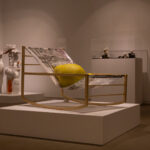
Pieces from The Uncanny In-Between on display at the Blaffer Museum on Thursday Jan. 22, in Houston, Texas. | Raphael Fernandez/The Cougar

The Kathrine G. McGovern College of the Arts launched two new exhibitions at the Blaffer Art Museum, “The Uncanny In-between” and “Mud + Corn + Stone + Blue,” running through March 14. 

The first exhibition, “The Uncanny In-Between,” showcases a range of stoneware, furniture and figurine works by five Korean ceramic artists.

Originally curated by Sso-Rha Kang, the exhibition aims to dissect the complexities of bicultural identity.

“One lesson we hope students experience after viewing the exhibition would be the merit of continued exploration, experimentation and openness,” said the museum’s director and chief curator Laura Augusta.

Students said they resonated with the themes presented in the exhibition.

“My parents are Mexican, and I was born in South Texas, I felt like I wasn’t Mexican enough for my Mexican side or American enough for my American side,” said museum tour guide and art history senior Natalia Cantu.“You don’t have to be Korean to understand the biculturality of the collection.”

Several works strive to subvert traditional and economic norms within Korean culture. One artist, Hae Won Sohn, presented “Notes,” a piece depicting four nude, unfinished molds. 

The figures offer an intentionally imperfect representation of the mold-making production process, an industry for which South Korea is widely known.

Other works focus on the artists’ bicultural upbringings.

Artist Audrey An displayed “Pear Here Pear There”, which featured an American pear and an Asian pear seated on a rocking chair. Beneath the pears is a printed silk image of the cities New York and Seoul, and the chair is supported by a ceramic frog. The piece is intended to symbolize An’s Korean American identity.

The second exhibition, “Mud + Corn + Stone + Blue,” features portraits, paintings, archival documents and video works by artists from the U.S. Corn Belt and Central America.

The exhibition was designed to weave together the history of agriculture and political intervention in Central America through the perspectives of artists and farmers, while using the four elements referenced in the title as guiding themes, Augusta said. 

“Beginning with the U.S. farm crisis of the 1970s, this exhibition traces the experiences of farming, specifically small-scale, family farms in relation to U.S. foreign policy in Central America during the 1980s,” Augusta said. “The individual elements collaboratively bind the work of individual artists into a generally cohesive voice.”

Students said the exhibition was insightful and increased their understanding of Central American history.

“Before going to the exhibition, there was a lot of historical political context in Guatemala that I wasn’t aware of, but now I’m educated about it,” Cantu said.

The element of mud is introduced immediately upon entering the exhibition. Mayan Tz’utujil artist Benvenuto Chavajay’s photograph “Man of Mud” shows Chavajay standing in front of a house while covered in mud.

The image is part of a series of performances intended to reenact passages from the Maya K’iche’ text Popol Vuh, which tells the story of gods attempting to create a man out of mud.

The exhibition also includes video works that correspond with Chavajay’s themes, including a trio of looping videos by Salvadoran artist Melissa Guevara. The videos depict hands kneading soil, touching mud and a solo shot of dirt.

“For Guevara, mud, dirt and soil hold memories, particularly of those lost during years of conflict and the El Mozote massacre in her home country of El Salvador,” Augusta said.

The remaining elements — corn, stone and blue — symbolize different facets of Central American identity and culture.

Corn, a grain native to the Americas, represents both the dietary and spiritual center of life for many Indigenous peoples. Maya blue, a pigment made from minerals and organic materials, is associated with healing properties. Stone, often used as a marker for the dead in religious traditions, also serves as a fundamental material for everyday construction, Augusta said.

Students said they were surprised by the scope and content of the exhibitions, making the experience not just education, but fascinating as well.

“As an artist, I’ve never seen artwork like the ones in these collections. It’s all so interesting,” said painting junior Gabriella Gomez.

news@thedailycougar.com

—
“Blaffer Art Museum exhibitions explore identity, history” was originally posted on The Cougar

Posted in UncategorizedComments Off on Blaffer Art Museum exhibitions explore identity, history

UH MLK exhibit highlights King’s legacy, impact on civil rights

Student Center South displays the MLK Gallery Exhibit on Friday Jan. 16, in Houston, Texas. | Raphael Fernandez/The Cougar

To honor the legacy of civil rights leader Martin Luther King Jr. on MLK Day, Jan. 19, the Center for Student Advocacy and Community organized a series of events over two weeks, including a photo exhibit highlighting King’s life, milestones and legacy.

The exhibit, located in Student Center South, features photographs intended to showcase pivotal moments in King’s leadership during the civil rights movement and the lasting impact of his work.

“The goal is to present a collection that is historically grounded and deepens awareness of aspects of the civil rights movement,” said a UH spokesperson. “We hope this collection will invite personal reflection and meaning making.”

This year’s theme for MLK celebrations is “Hope: The Foundation for Action.”

Students said they felt more enlightened after viewing the exhibit.

“I view the exhibit as a reminder of the injustices that Black and brown people had to go through,” said public policy freshman Dazani Ramirez-Gaytan.

Several photos depict King speaking and leading demonstrations, including the 1965 civil rights march in Montgomery, Alabama; the Alabama marches; a rally in Lakeview, New York; and a 1966 event in which King led African American students into Mississippi’s newly integrated public schools.

Students said the images emphasized King’s courage and leadership.

“My favorite pictures are the ones where he is leading all the protesters,” said psychology freshman Taelynn Price. “It shows how he stood up for so many people.”

Other images focus on King’s 1964 Nobel Peace Prize. One photograph shows King embracing his wife, Coretta Scott King, after learning he had won the award.

Another image features the memorial sculpture “The Embrace,” which depicts four intertwined arms symbolizing the embrace shared by King and his wife.

UH officials said the sculpture was included to highlight the personal support systems behind King’s activism.

“The sculpture is meant to give viewers a different entry point into the story — the human relationships behind public leadership,” said a UH spokesperson. “Including it supports the exhibit’s purpose of recognizing historical milestones through visuals that resonate in different ways.”

Another featured photograph is an aerial image taken Aug. 28, 1963, showing King standing at the Lincoln Memorial during the March on Washington, where he delivered his “I Have a Dream” speech advocating for civil rights and economic justice.

“We included images like this because they help viewers see Dr. King not as an abstract historical figure, but as someone whose impact came through real decisions, real risks and real persistence,” said a UH spokesperson.

Students said the exhibit serves as a reminder that King’s advocacy helped pave the way for interracial relationships today.

“I’m Black, my roommate is Mexican and my best friend is white,” Price said. “Because of MLK, we are friends and can coexist.”

news@thedailycougar.com

—
“UH MLK exhibit highlights King’s legacy, impact on civil rights” was originally posted on The Cougar

Posted in UncategorizedComments Off on UH MLK exhibit highlights King’s legacy, impact on civil rights