Author Archives | by Katrina Bailey

Red Lake Nation College opens first Minneapolis tribal college

The first tribal college in Minneapolis opened in downtown Minneapolis in June to serve Native American students who live outside reservations. Minnesota’s tribal population primarily lives outside reservations, with the Twin Cities accounting for nearly half of the population in Minnesota, according to the Minnesota Compass.

The Red Lake Nation College (RLNC), one of only a few tribal colleges in an American city, is an accredited two-year University in Red Lake, Minnesota. It has delivered remote learning class options to Minneapolis since 2021.

The seven Objiwe values — humility, truth, courage, honesty, respect, love and wisdom — are used, followed and encouraged at the school, according to its website. 

The Director of Student Success Rachel King said the school services Ojibwe students from all over Minnesota.

“Our representation here at Red Lake College in Minneapolis is so broad,” King said. “We’ve got Dakotas. We’ve got three affiliated tribal members. We’ve got Seminole students. We’ve got students from all over, from all different tribes.” 

The school incorporates Ojibwe culture into the classroom and hopes to teach Dakota and Ho-Chunk language and culture in the future, King said.

Sarah Barott, an english professor at RLNC, said bringing culture into the classroom is an important learning tool. 

“It’s one of the things that the students say is that in the past they’ve only been able to go home for funerals or sanctuaries, but this way they’re able to go home every day in that classroom,” King said. 

Students at the Minneapolis location can visit the Red Lake reservation to take classes in person and meet up with family, Barott said. 

Justin Heminger, a recent RLNC graduate, said working with the faculty was a highlight of his learning experience. 

“I like that even the instructors that are non-indigenous, they start their day off greeting us in Ojibwe,” Heminger said. “Everything that they do, it’s kind of encapsulated in the indigenous language as well as studies. All of the instructors are very understanding.” 

Heminger said he enjoyed the faculty’s attention, which he does not think he receives at his current school, Augsburg University. 

Barott said bringing in elders to teach and tell stories is important to not only students but herself. 

“I don’t try to just guess,” Barott said. “We bring in people who are experts, elders, and make sure that they have the opportunity to share their knowledge not just with the students, but with myself as well.” 

Heminger said Minnesota is Ojibwe land and learning the language and culture is important, even if you are from a different tribe. 

King said as a first-generation college student, education opened many doors for her and RLNC brings that same opportunity to its students. 

“I think that having one community that’s kind of mixing the urban and the rural, that’s important,” King said. “It’s important for us to bridge connections between city and country or city and reservation.”
Posted in UncategorizedComments Off on Red Lake Nation College opens first Minneapolis tribal college

Proposed tax would charge businesses for their carbon emissions

A proposal for Minneapolis’ 2025 city budget would charge businesses a fee based on their carbon emissions, a policy commonly known as a carbon emission tax. 

The three businesses estimated to pay the most in fees are NRG Energy Center Minneapolis, the Owens Corning – Minneapolis Plant and Hennepin County Energy Center, according to the report. 

The city will use emissions data collected by the Minnesota Pollution Control Agency (MPCA) to determine how much each company is taxed, according to the report. 

While Minneapolis already has programs to mitigate carbon emissions, activists argue taxpayers are paying for the cost of emissions.

Council Member Robin Wonsley (Ward 2) said in a statement to the Minnesota Daily that the tax fees would be used to pay for more city programs designed to reduce emissions. 

“This will help the city reach carbon emission reduction goals, in a cost-neutral way to working-class residents who are already paying for the social costs of pollution and climate change,” Wonsley said in the statement 

Under the plan, Minneapolis businesses must send an annual emissions inventory report to MPCA to track emissions of major pollutants, according to the report. The MPCA tracks harmful air pollutants and greenhouse gasses released by the companies.

The report estimates the Hennepin County Energy Center would pay over $35,0000 worth of fees for their emissions.

Dave McNary, the Hennepin County Environment and Energy assistant director, said the county is actively looking to find ways to reduce its carbon emissions. The facility generates energy for county buildings, parts of downtown Minneapolis, and a medical center through steam and chilled water after garbage is burned. 

“The biggest thing for us is what happens at the medical center as they revise their campus,” McNary said. “They’re looking at doing something in the future, maybe adding space, demolishing other space. So that would be the opportunity to really decarbonize the entire system.” 

The Facilities Director of Minneapolis College Roger Broz said in a statement to the Minnesota Daily that the college is looking to reduce emissions by implementing more energy-efficient lighting controls, lighting sensors and LED lights. 

The college is also monitoring its annual waste while implementing the smart operation of heating, ventilation and air conditioning controls to limit unnecessary energy use. 

The report suggested a cost analysis to learn which pollutants are harmful to Minneapolis and which ones require more monitoring and data.

Posted in UncategorizedComments Off on Proposed tax would charge businesses for their carbon emissions

Metro F Line construction pushed to 2028

The Metro F Line construction, planned to run from downtown Minneapolis to Blaine Transit Center, has been delayed by three years with no set opening date. 

Metro Transit Spokesperson Drew Kerr said in a statement to the Minnesota Daily that F Line construction on Central Avenue is expected to begin in 2028, though station construction on University and 53rd Avenues may begin sooner. 

Route 10 will be replaced with the F Line and will become the region’s sixth arterial bus rapid transit line, according to the Metro Transit F Line Project website. 

Daniel Buchholtz, the city administrator for Spring Lake Park, said frequent stops on Route 10 take a long time and hinder those who rely on it to get to work. The new route will have fewer stops, more frequent buses and access to connections like the Metro Green and Blue Line. 

Metro Transit is working with the Minnesota Department of Transit (MnDOT) to coordinate the F Line construction with construction on the University and Central Avenue corridor, also known as Highway 47 and 65. 

MnDOT Area Engineer Christopher Bowers said doing both projects at similar times allows communities to experience minimal disruptions and create a safer environment. 

“We’re coordinating our designs together, making sure (Metro Transit’s) station platforms line up with our roadway designs and everything comes together in a good way all at the same time,” Bowers said. “We don’t want to be in a situation where Metro Transit builds all these nice stops and then we have a road project that comes a couple years later and impacts all of them.” 

Bowers said the University and Central roadways need reconstruction, as it is a spot where previous accidents have taken the lives of community members. More than a dozen crashes resulting in serious injury and four fatal crashes have occurred between the two streets. 

“Simply resurfacing the road, you know, putting down a new layer of asphalt and calling it a day wasn’t going to solve the safety issues,” Bowers said. “The problems out here are so serious that it requires a rethink of what these roads look like.” 

Buchholtz said the area for the F Line is underserved by transit systems, and while the delay is disappointing, the product will be positive.  

Ricardo Lopez, a MnDOT communications and public engagement employee, said community engagement is important to the construction process. 

“MnDOT’s going through that stage of reaching out to the public, to businesses, to the cities, everyone along these routes to be able to get a lot of really detailed input and feedback about design, about all the changes to the roadway,” Lopez said. 

Bowers said the goal is not to delay but to move as quickly as possible while continuing to prioritize community and safety factors. 

“To do this right, which is important, it does demand that we take some time and we have a deliberate process and we do that engagement,” Bowers said. “That’s what’s driving the schedule.”

Posted in UncategorizedComments Off on Metro F Line construction pushed to 2028

Music and Movies in the Park continues through summer

Laughter filled the Minneapolis summer air as community members gathered in Bryant Square Park to hear the band Heavy for the Hawk perform on Thursday.

The lead singers, Rachel Kenney and Jon Offerdahl thank the crowd for coming out despite the constant drizzle of rain and wind. The few spectators cheer, looking forward to future music. The band plays covers ranging from Sublime to Vance Joy, along with a few original songs, filling the air with joy as it continues to rain. 

Free sandwiches and stickers are given to spectators. Dogs try to join their owners in their excitement but settle for a scrap of bread in the grass instead. 

Free events like this happen every day during the summer throughout Minneapolis. 

The Minneapolis Park and Recreation Board is hosting Music and Movies in the Park, an event series where concerts and movies are hosted at different locations around Minneapolis, according to their website. 

Aaron Briner, the community events manager for the Minneapolis Park and Recreation Board, said these events last from Memorial Day to Labor Day, the unofficial start and end of summer. While Briner said musicians are not paid for their performances, the sound technicians, sound equipment, venues and marketing are provided. 

“We show over 250 concerts throughout the summer,” Briner said. “Our program is very robust, and it is a volunteer performance, and they know that going into it when they apply for it so we’re very upfront about it.” 

So far, many scheduled performances have been canceled due to the weather. Eric Hohn, bassist of the musician group Mubbla Buggs, said the group was set to play a few weeks ago, but the weather prevented them from performing. 

Dodging Potholes’ musician Mary Strand said the weather worked to the band’s advantage and cleared just in time for the performance a week ago. 

“It was a miracle,” Strand said. “We had a great crowd considering the rainy day. So we were very pleased with who came out and how many.” 

Briner said 50 recreational centers plan specific dates to play movies and send it to the board. Movies are projected on an inflatable screen and often require specific licensing to play. 

Second Harvest Heartland, a hunger relief organization, is one of the sponsors for Music and Movies in the Park. Director of Programs Sarah Peterson said sponsoring has gotten the food bank’s name out to the community. 

“We show up even at events that have nothing to do with food,” Peterson said. “But just showing up as a good neighbor and letting folks know that we’re there.” 

The leasing agent of The Lakes Residences, Rae Galuska, said having movies and music every day is special and community members should take advantage of these opportunities. 

“I think the number of concerts that they put on is unique to this city,” Galuska said. “I don’t have an awareness of any other cities that do this on this level.” 


All events can be viewed on the Minneapolis Park and Recreation Board’s event calendar. A few events scheduled this week are as follows: 

Monday: Murphy Smith at the Water Works at Mill Ruins Park – starting at 7 p.m. 

Tuesday: Teenage Mutant Ninja Turtles: Mutant Mayhem at the Whittier Recreation Center – starting at 9 p.m. 

Wednesday: The Band That Fell to Earth at Lake Harriet Bandshell – starting at 7:30 p.m. 

Friday: Shrek at Dickman Park – starting at 9 p.m.

Posted in UncategorizedComments Off on Music and Movies in the Park continues through summer

$86 million in grant money for small businesses is up for grabs

A grant program designed to support small businesses affected by civil unrest, discrimination and an aging population is accepting applications throughout the state of Minnesota. 

Grants given by the Providing Resources and Opportunity and Maximizing Investments in Striving Entrepreneurs (PROMISE) Act can be used for bills, payroll expenses, rent and other business-related expenses, according to the Minnesota Employment and Economic Development website. More than $86 million will be awarded across the state. 

Businesses can apply for grants if they have a gross annual revenue of $750,000 or less based on 2021 taxes. The grants range from $10,000, $25,000 and $50,000, according to the website. 

Other factors in the application include receiving under $10,000 in previous state grants since 2020 and having primary business operations in Minnesota. 

The Neighborhood Development Center (NDC) administers the grant in the metro area. NDC Vice President of Business Services Shahir Ahmed said there will be four rounds of grants awarded to the metro area. The first round of applications ends in June. 

Ahmed said the NDC considers how impactful the money will be for a business’s survival as $72 million will be distributed among the 8,600 applications received in the Twin Cities metro. 

“We’re looking at how we do more because we know only 25% of those who are eligible are going to receive a grant,” Ahmed added. 

For-profit and nonprofit organizations can both apply for this grant program, according to the website.  Each organization is on a different timeline but all applications will be open until late spring 2024. 

Outside of the metro, six Minnesota initiative foundations operate in the greater Minnesota area. Michelle Ufford, the director of grantmaking at the Northland Foundation, said rural Minnesota is especially impacted by an aging population, making the region need grants like these.

“(The program) really was meant for the smaller businesses who didn’t have a lot of resources at their disposal to recover from the economic downturn back in 2021,” Ufford said. 

Elisa Pluhar, chief innovation and strategy officer at NDC, said the vision for this program was to benefit companies in need of economic relief throughout Minnesota. 

Ahmed said the grant money can help build back communities suffering from civil unrest post-COVID and George Floyd’s murder. 

“As we administer this program, these dollars help to start to change the narrative of those neighborhoods,” Ahmed said. 

The Director of Business and Economic Development for the West Central Initiative Foundation Greg Wagner said this funding is important because it helps businesses that suffered at the height of the COVID-19 pandemic and were unable to bounce back. 

“These are direct dollars that will go to help with basically working capital operating expenses for businesses so they can pay their employees, keep the lights on, and buy inventory or, you know, pay rent and mortgage,” Wagner said. “It’s really kind of just an additional lifeline for the businesses that are continuing to struggle with all the economic factors that they’re facing.”

Posted in UncategorizedComments Off on $86 million in grant money for small businesses is up for grabs

State law prohibiting book bans effective August 1

Gov. Tim Walz signed a bill prohibiting book bans in libraries on May 17 which will take effect August 1. 

The law, known as the Access to Library Materials and Rights Protection, prevents public libraries, University libraries and libraries in public and charter schools from removing reading material based on messages or opinions the book conveys, the law says. 

“Books are powerful, they open new worlds and expose us to new perspectives,” Walz said in a May 17 press release. “Protecting access to books means protecting access to the information and knowledge that our kids deserve. If you’re banning books, you’re always on the wrong side of history.” 

The statute also mandates every library have its own policy for removing books and challenged books must be reported to the Department of Education, Minnesota Library Association Legislative Co-Chair Sarah Hawkins said. 

Minnesota State Librarian Tamara Lee said book banning is different from book challenging, as challenging books or asking for a reconsideration process are still supported. Challenging a book may range from a parent asking why the book is there to removal of it from the library. 

“Everybody does have a right to be heard and communities have a right to voice their opinions and weigh in,” Lee added. 

Minnesota is one of six states that has signed anti-book ban bills across the nation, Lee said. The other five are Colorado, Illinois, Washington, Vermont and Maryland. 

Dean of the University of Minnesota Libraries Lisa German said having books with diverse representation is important and banning books can to limit that access. 

While there is a formal process for reconsidering books at the Hennepin County Library, most challenges do not pass a simple conversation, said Johannah Genett, the deputy director for support services at Hennepin County Library. 

“It’s not unusual for a patron to come to our staff and say, ‘I don’t know why you have this book on the shelf, I want to talk to somebody about it,’ and we’ve trained all of our staff to have those conversations,” Genett said. 

Genett said the most important part of the law is forbidding punishments of staff members for abiding by this legislation. 

“We have seen librarians in this country lose their jobs over this issue,” Genett said. “So having this legislation here really makes it black and white.” 

President of the Hennepin County Library Board Jessica Kraft said, as a parent herself, she has a right to help guide and limit her children but not other people’s. 

“I feel very strongly that we should have intellectual freedom in our libraries, that anybody should be able to check out different contents that they’re curious or interested in, and we shouldn’t be limiting that, that our collection should represent our diverse populations, and our diverse communities, and points of view,” Kraft said. 

Lee said libraries are one of the last free spaces and keeping them around is crucial in promoting learning and protecting intellectual freedom. 

“Minnesotans love their libraries,” Lee said. “We need to make sure they stay intact, that we maintain intellectual freedom, that we are representative of their communities. That’s why this statute is important to give a foundation to that activity. It’s important for democracy.”

Posted in UncategorizedComments Off on State law prohibiting book bans effective August 1

Minneapolis seeking community input to improve accessibility

Minneapolis is seeking responses from the community on how to improve the city’s accessibility for those with disabilities.

Over 300 survey responses from an Americans with Disabilities Act (ADA) meeting on Monday showed respondents gave the city a B grade for accessible programs and services. Of the respondents, 73% said facilities for people with disabilities are somewhat accessible and 50% said participating in city activities is challenging. 

Community members expressed concern during the meeting and in the survey over the lack of parking near city buildings and parks, white bollards blocking corners of sidewalks and a lack of language accessibility options, according to the slides. 

David Fenley, the ADA director of the Minnesota Council on Disability, said the push for a car-free society is positive, but it leaves out people who need cars to get around. 

“If you eliminate drive-thrus in the city, there are people who rely on drive-thrus because maybe they can’t get out of their car or maybe it takes them 20 minutes to get out of their car,” Fenley said. “Eliminating drive-thrus essentially tells these people, ‘All right, you don’t really matter to us anymore.’” 

The city laid out its plans to improve accessibility, which included improving building accessibility, hiring bilingual staff and creating more accessible websites and videos, according to the slides. Part of that plan also included coordinating action and transition plans by bringing in other agencies like Metro Transit.

Deputy Director for the Neighborhood and Community Relations (NCR) Department Nick Ngo said the ADA’s plan connects people with the services they need and creates services if they do not already exist. Adding closed captioning and American Sign Language to city council proceedings, updating websites and adding a public service building are a few things the plan has already done. 

Ngo said the department makes sure to involve the community every step of the way.

“We have people-based engagement, and that is our community specialists around a team of folks that work with, liaison with, build relationships with our most underrepresented and historically underserved communities, such as African American, East African, Southeast Asian, Latino, American Indian, folks that are seniors and people with disabilities as one of them as well,” Ngo said. 

A new action plan is underway, but building up a point of contact with someone in the city is an important part of work, said Guthrie Byard, the community specialist for people with disabilities in the NCR department. 

“There’s not a hard and fast deadline,” Byard said. “It’s really important that we kind of move at the speed of community and that we take the time to get the feedback from the community and that we don’t rush things.” 

Ngo said improving city accessibility will require more than just the NCR department. 

“Our relationship, partnerships and collaborations with the community and our city partners and colleagues are essential just to make sure that we make this a city more accessible and inclusive for people with disabilities,” Ngo said.

Posted in UncategorizedComments Off on Minneapolis seeking community input to improve accessibility

Juneteenth events to celebrate across Minneapolis

Laughter, music, food and learning are all on the table for the upcoming Juneteenth events around Minneapolis.

Juneteenth celebrates the day when more than 250,000 slaves were freed on June 19, 1865, according to The National Museum of African American History and Culture. President Joe Biden officially made Juneteenth National Independence Day a federal holiday in 2021. 

Alicia D. Crudup, the chair of the Juneteenth Community Committee, said Juneteenth is her day of independence and freedom. 

“It is really important to me that we recognize the history and we recognize the fact that African Americans were told that they were free in this time when it really happened so much more sooner,” Smith said. “So, it’s important to me to acknowledge the history that has come before me and the history that we attempt to make following this proclamation.”

Here are three events honoring the holiday: 

The 28th Annual Community Peace Celebration (Western Sculpture Park, June 21) 

The 28th Annual Community Peace Celebration will offer free food, music, poetry and theater performances at Western Sculpture Park in St. Paul. 

Some performances to expect at this event include Irreducible Grace, ComMUSICation, The Rondo Allstars, Dr. Sheronda Orridge and Jim Embry. 

St. Paul City Council Member Anika Bowie (Ward 1) is also joining the celebration to deliver a proclamation of peace, said Karyssa Jackson, a member of the Peace Celebration planning team. 

Jackson said the celebration is focused on disrupting cycles of oppression within the community. 

“We can empower folks in art, as we can empower them with healthy food, as we can empower folks around economic vitality in our neighborhoods,” Jackson said. “I think we are carrying the spirit and the torch of that Juneteenth promise in the work we’re doing in this celebration.” 

Kumbayah the Juneteenth Story (Northrop Auditorium, June 21)

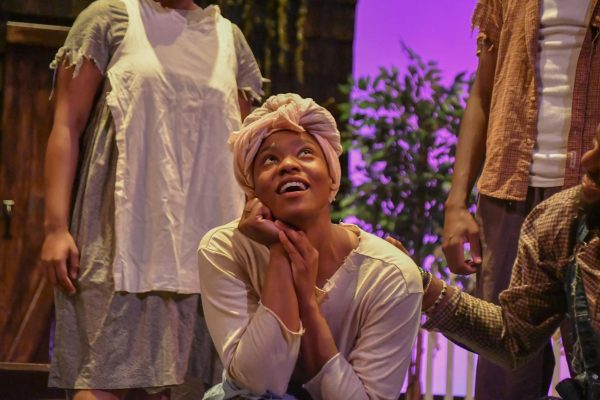
Kumbayah the Juneteenth Story. Photo Courtesy of Antonio Richardson

“Kumbayah the Juneteenth Story” tells the “tremendously uplifting” story of the news of emancipation being withheld from slaves and will be put on at the Carlson Family Stage in Northrop Auditorium, according to the Northrop website. 

The Minnesota Humanities Center is hosting a community celebration before the play at 10:30 a.m. with the opportunity to connect with community groups whose mission aligns with what Juneteenth represents. The play will begin at 11 a.m.

Kevin Lindsey, the chief executive director of the Minnesota Humanities Center, said the play is an artistic expression of Juneteenth. 

“It is an effort to talk about how the themes and the issues that were relevant back then are still relevant to today,” Lindsey said. 

Lindsey added Juneteenth is a story of America and the prejudice African Americans have faced. 

“Those lessons when we look at Juneteenth reminds us that sometimes progress is uneven, even today, and that if you’re not vigilant on the gains, they’re easily lost,” Lindsey said.

3rd Annual Juneteenth Minnesota Celebration (Minnesota State Capitol, June 22) 

The Anika Foundation will host a family Juneteenth celebration at the Minnesota State Capitol from 12 to 4 p.m. on June 22, celebrating the history of African Americans in Minnesota with food and music. The event is made possible by a partnership between the foundation, Ramsey County, the McKnight Foundation and the Minnesota Department of Health.

In 2021, Gov. Tim Walz issued a proclamation acknowledging the occasion one year after George Floyd’s murder. 

The Anika Foundation’s mission is to promote health equity, civic engagement and economic empowerment.

Lindsey said going to any Juneteenth event is important to learn more about the country’s history.

“Appreciating the fact that the conversations that we have about ethnic studies sometimes is that we think that it’s always negative but there’s also joy but then the celebration and movement forward,” Lindsey said. “Juneteenth is clearly talking about a dark past with America but also talking about joy and overcoming and moving forward, so balancing that out is really important.” 

Posted in UncategorizedComments Off on Juneteenth events to celebrate across Minneapolis

Twin Cities Pride Festival to return in June

The annual Twin Cities Pride Festival will be held at the end of Pride Month from June 28-30 at Loring Park in Minneapolis as a celebration of LGBTQ culture and life. 

This year’s festival will feature over 650 vendors consisting of different community resources, artists and businesses, according to the festival’s website.

Twin Cities Pride Festival Executive Director Andi Otto said the theme of this year’s event is Show Your Colors 365. 

“That theme is really centered around wanting to make sure our community knows that they shouldn’t have to just wait until June to be their most authentic self,” Otto said. “They should be their most authentic self 365 days a year.”

Otto said this year’s event will expand the previous year’s youth and pet zone as well as include a THC garden and a Queer Rights space dedicated to LGBTQ authors. 

“We did a book fair a couple months ago and it was really successful at Urban Growler and so we decided to bring it into the park and help uplift some of those writers, especially here in the Twin Cities,” Otto said. 

The youth zone is designed for people under 21 to celebrate in their own space. The pet zone gives people an expanded area to relax with their pets, and the THC garden supports LGBTQ people and people of color who use THC, Otto said. 

Andrew and Libby Mungovan, owners of Drew Moon Arts, a shop selling beeswax and wax play candles, said they are proud to be a part of Pride while bringing joy to customers. 

“One of the coolest experiences has been when a trans person comes up to our booth and says, ‘Oh my gosh, that’s me,’” Libby said. “They’re so excited we have products that represent them.” 

Save the Bottoms!!! founder Elliot Arsoniadis said the LGBTQ community is at greater risk so joining Pride is an important tool in educating a vulnerable group.

“The goal of Save the Bottoms is to educate gay men and transgender women, both living with or without HIV, about their increased risk for anal cancer and help them identify ways to undergo screening,” Arsoniadis said. 

Arsoniadis said at last year’s festival, he offered a private booth where people could get screened for anal cancer. Of the 101 community members who participated, 11 were positive and seven entered the clinic to undergo evaluation and treatment, Arsoniadis added. 

It Takes a Village is an organization dedicated to helping kids become entrepreneurs. Director Dyonyca Conley-Rush said she teaches graphic design and screen printing while her business partner teaches the chemistry behind making wellness products. 

Rush said as a member of the LGBTQ community, it is great to have a place like Pride where people can be openly queer.

“My favorite part of Pride is seeing everyone get together and being able to be themselves and express themselves however they may see fit without judgment,” Rush said. 

Otto said his favorite part about Pride is the sense of belonging during the festival.

“When you walk into that park, you are part of a family and it feels like it,” Otto said. “Nobody cares who you are or what you’re doing or what you’re wearing unless it’s fabulous. They just genuinely want to be happy and find community.” 

Annually, all attendees of Twin Cities Pride can use light rail and bus services to get to Pride for free by printing out the free transit pass on the Pride website, Otto said. 

For more information about specific vendors, transit routes, entertainment and a map of the festival, visit the Twin Cities Pride Website. 

The current schedule, as of April 29 for Pride is:

  • Friday: Youth Night from 5:30 p.m. to 8:30 p.m.
  • Saturday: 10 a.m. to 7 p.m.
  • Sunday: 10 a.m. to 6 p.m. with the Pride Parade beginning at 11 a.m.

Posted in UncategorizedComments Off on Twin Cities Pride Festival to return in June

Three historical African American locations named to Minneapolis National Registry

The National Park Service gave the Minneapolis Department of Community Planning Economic Development (CPED) $75,000 in grant money to address the underrepresentation of African American history among local and national listings on the national registry. 

Of the approximately 150 places listed on the National Register of Historic Places in Hennepin County, only three are dedicated to African American history — the Arthur and Edith Lee House, the Lena O. Smith House and the Hiawatha Golf Course. Out of the over 200 local landmarks and historic districts identified by the city, seven recognize African American history. 

Erin Que, a senior city planner on CPED’s historic preservation team, said funding for the Underrepresented Communities Grant will start summer of 2025, while the Legacy Grant will be used within the next year. 

“We’re going to work on the Legacy Grant for the next year to write the context study, so this will be a big narrative history of African Americans in Minneapolis,” Que said. 

Que said at least three more places associated with African American heritage will be nominated. 

The National Registry recognizes sites of significant events, people, or architectural or engineering work, Que said. 

Many sites associated with the Twin Cities African American community were destroyed by government actions, University of Minnesota design professor Greg Donofrio said. 

“When we think about the types of historic sites that might have been designated, so many were lost,” Donofrio said. “That is why it is so critical for some of the African American community to save these sites that remain.”

Arthur and Edith Lee House

The Arthur and Edith Lee House. (Image by David Stager)

The Arthur and Edith Lee House is located at 4600 Columbus Ave. in the Field Neighborhood of south Minneapolis. Arthur and Edith Lee were Black parents who moved to an all-white neighborhood with their six-year-old daughter in 1931, according to the American Association for State and Local History. 

Arthur Lee was a World War I veteran and U.S. Postal Service worker. Shortly after moving in, neighbors began to harass the family by yelling racial slurs and threats. 

The crowds outside of their house slowly began to increase as time went on, sparking one of Minnesota’s largest racially motivated protests in history. Police were sent to maintain the peace but were of little help to the Lees. Arthur Lee’s union co-workers, other World War I veterans and prominent organizations like the NAACP defended the Lee family during this time. 

Donofrio said he helped write the nomination of the Lee House to the National Registry and spoke with elders in the south Minneapolis community to understand how they wanted the community’s African American history to be reflected. 

“All communities, all identities have places that they find meaningful and significant and historic for one reason or another,” Donofrio said. “Understanding that significance through their eyes and understanding how and why they might want to see it preserved or honored has been what I’ve dedicated most of my career to, and [I’m] trying to, in an ethical way, develop that understanding with them, not for them.” 

The house was added to the National Register of Historic Places in 2014 to symbolize the effect of and resistance to housing discrimination against African Americans in Minneapolis. 

Lena O. Smith House

The Lena O. Smith House. (Image by David Stager)

The Lena Olive Smith house is located at 2905 Fifth Ave. S. in south Minneapolis. Smith lived from 1885 to 1966 and was a prominent figure in Minneapolis during the early- to mid-20th century. 

She was the first female African American lawyer in Minnesota and the first female president of the NAACP’s Minneapolis chapter. She also helped establish a local chapter of the National Urban League in Minneapolis and worked as the Lee family’s lawyer. 

Donofrio said Smith is an important figure for civil rights, given her work as both a lawyer and activist. 

“She was among the foremost civil rights advocates of the 20th century in Minneapolis,” Donofrio said. 

The Smith House joined the National Registry in 1991 due to Smith’s contributions to both Minneapolis and U.S. history. 

Hiawatha Golf Course

The Hiawatha Golf Course is the third place in south Minneapolis on the National Registry associated with African American history.

The Hiawatha Golf Course. (Image by David Stager)

Charles Birnbaum, the founder of the Cultural Landscape Foundation, said the course was one of the first integrated golf courses in the Midwest. The course was desegregated in the 1930s, while the clubhouse was not until 1952. 

“It’s pretty special that it has managed to survive as long as it has and with a very high degree of integrity,” Birnbaum said. “If you go there and you step on that green, it’s very much like it was historically.” 

In 1939, the Minnesota Negro Open Golf Tournament was founded by the honorary mayor of Bronzeville, Jimmy Slemmons, before a name change in 1954 to the Upper Midwest Bronze Amateur Open, also known as “The Bronze,” reflecting its unrestricted entry policy. 

University history professor David Chang said in a statement to The Minnesota Daily that these projects can teach Minnesotans about African American history and inspire action to face racial inequalities today. 

Birnbaum said creating places dedicated to African American history is important. 

“African American history is American history,” Birnbaum said. “It’s part of the story of who we are as a people.”

Posted in UncategorizedComments Off on Three historical African American locations named to Minneapolis National Registry