
Author Archives | by Katrina Bailey

Minnehaha Falls viewing areas under construction

Minnehaha Park and Falls, an important historic, cultural and recreational landmark for Minneapolis and Minnesota, will be undergoing repairs to fix aging infrastructure. 

The repair efforts to Minnehaha Regional Park are focused on the south slope of the Falls. The area is mostly inaccessible to the public due to the poor condition of stairs, walls, eroding slopes, and the instability of pathways and access points, according to the Minneapolis Park and Recreation Board website. 

The project aims to recreate access, rebuild viewing areas, stabilize slopes, and reflect and respect the cultural and historic significance of the space while providing safe access to all areas of the park. 

The park is working with community members to include different perspectives and consider the park’s history, according to Friends of Minnehaha Park Chair Susan Glenn. 

Glenn said community members have three options for the replacement project. The survey to give input about the concepts will close on Aug. 31. 

“They have a very thoughtful process they’re going through but my thinking is don’t base a decision on what’s cheapest,” Glenn said. “Base it on what’s going to be most durable, safe, timeless, aesthetically pleasing, low maintenance, complement the existing infrastructure and make the entire community proud.” 

Concept A would replicate the concrete infrastructure there now, Concept B would use stone and gravel to create simplified railings and longer trail conditions and Concept C would create a ramp to the upper viewing platform and steel and wood railings, Project Manager Carol HejlStone said. 

HejlStone said the final product will have a mix of what people like from each concept. The concept design will be finalized later this year and construction plans will develop as the project progresses. 

Allison Waukau, the tribal liaison and native relations coordinator for the Metropolitan Council, said she hopes Native designs can be incorporated into the repairs as Minnehaha Falls continues to be an important part of the Dakota community. 

“I think that one of the things that is most important with this park is that we are still here and we are still continuing to pray at this water,” Waukau said. “We’re still bringing our children to the water and integrating that traditional knowledge with this.” 

The word “Minnehaha” comes from the Dakota word for “waterfall.” HejlStone said it is important to acknowledge the park is on Dakota land and the culture is not currently reflected in meaningful ways at the site. 

“We’re reaching out to Dakota leadership, to Dakota tribal leadership, and doing our best, to do a better job of embedding and celebrating, amplifying and including Dakota people in this work,” HejlStone said. 

HejlStone said there is $1.2 million in funding for the project, which is enough to begin repairs on unsafe infrastructure on the slope and one or more viewing platforms. More funding will be distributed as needed while the project continues. 

The park is often used for community events, as a venue for local concerts or as the host of the Minnehaha Falls Art Fair.

Glenn said the park is a place for everyone to have fun, enjoy nature and embrace themselves. 

“When you visit the park, you’ll see every different possible ethnicity, race, background of people there all enjoying the outdoors and being awed by the power and majesty of the falls, and dipping their feet in the creek,” Glenn said. “It’s just a microcosm of our community and everyone loving the park.”
Posted in UncategorizedComments Off on Minnehaha Falls viewing areas under construction

Proposed parking changes coming to areas near UMN in fall 2024

Proposed parking changes around the University of Minnesota will change time-restricted parking to metered parking and no-parking areas to time-restricted parking. 

Critical Parking Areas (CPAs) is a resident permit parking program where parking restrictions are placed on streets. Permitted resident vehicles are exempt from the restrictions, according to the City of Minneapolis website. 

The program helps expand parking access for residents in neighborhoods with high parking demand, like colleges and universities, public parks, medical centers and commercial districts. 

Dillon Fried, mobility and curbside manager of Traffic and Parking Services said the project is split into three phases. The Minneapolis City Council approved the first phase during its meeting Thursday. 

The University is the focus of phase one, with phase two focused primarily on downtown Minneapolis. Phase three will focus on all other areas in the city not addressed by phases one or two. 

There are 31 different parking zones around Minneapolis, many of which were created in the late 20th century, Fried said. The initiative to change those parking zone designations started a few years ago, with interns going out in 2023 to evaluate land use and count permits. 

“We’ve kind of noticed that the restrictions in a lot of the zones are no longer really relevant because they were established decades ago in most cases,” Fried said. 

Many areas around the University used to be single-family residential homes or duplexes, but have been torn down and replaced, Fried said. 

Webmaster of the Prospect Park Neighborhood Association website Andy Mickel said in a statement to the Minnesota Daily that he has taken photos of double-parked cars in front of the Quad on Delaware apartment building as an effect of the city putting in metered parking spaces along the south side of Delaware Street. 

Fried said phase one of this initiative will affect parking around M Health Fairview on West Bank, East Bank’s Stadium Village and the University’s Law School. 

“Basically all of the blocks that were transitioning away from resident permit to some other type of management strategy, whether it’s metered parking or there’s one where we’re not doing any, we’re just making it free parking,” Fried said. 

Allan Klugman, principal professional engineer of Public Works, said these new parking changes will be done before the University starts in the fall. 

“We want (the changes) to reflect the current demands and characteristics of the area,” Klugman said. “As areas change, we just want to stay up to date with our parking management strategies.” 

While the modernization of CPAs is not a direct action of the City of Minneapolis’ Transportation Action Plan, a follow-up document made after the 2040 Plan, Fried said it is still an important effort. 

“We feel like this effort matches the spirit of a number of the initiatives in the Transportation Action Plan about evaluating our curb space to make sure it’s being used for our highest and best uses, and ensuring that our current curbside management strategies do align with the broader goals of the Transportation Action Plan,” Fried said. 

Fried said the initiative is intended to fit with the broader community and the city by increasing access. 

“It’s really meant to improve public access to these areas by limiting where we have the residential restriction,” Fried said. “It allows better public access to the areas and better aligns with our broader goals around curbside management.”

Posted in UncategorizedComments Off on Proposed parking changes coming to areas near UMN in fall 2024

New work group focuses on African American historic preservation

The City of Minneapolis has appointed 15 members to the new African American Historic Work Group to honor and preserve the city’s African American history.  

The work group consists of local artists, community planners and educators who select places in the city of historic importance that need preservation. 

The group will work with the Minneapolis African American Historic and Cultural Context study and select 25 places significant to the city’s Black community. Of the 25 places, three will be nominated for the National Register of Historic Places, according to the City of Minneapolis’ website. 

If accepted by the National Register, these locations will receive preservation benefits and tax incentives to help maintain or restore these historic locations.

“Minneapolis is a city of progress, but it’s crucial we also reflect on our history and learn from it,” Minneapolis Mayor Jacob Frey said in a press conference on July 11. “Minneapolis has long been home to a vibrant and resilient African American community, and this new work group will help us honor their past while also educating future generations, building understanding and promoting equity.” 

The study is currently in phase two, meaning a consultant team was hired and community engagement is ongoing for which locations residents feel are important, said Senior City Planner Erin Que. 

The workgroup members have the opportunity to bring forward ideas about sites reflecting African American history to add to the context study, Que said. 

James Curry, a new appointee to the workgroup, said he feels a civic responsibility to highlight historically underrepresented places. 

“Having this history in our heads and these oral histories and this connective tissue, and having the opportunity to share it with like-minded African American residents of Minneapolis and thread a story and have community is such a rich experience,” Curry said. 

Que said no single African American experience in Minneapolis is the same, so including different voices is something that drove the engagement process during phase one. 

“I think something remarkable about the makeup of (the workgroup) is the age diversity, as well as the diversity of lived experiences in terms of people who know they descend from their maybe fourth or fifth generation Black Minnesotans, all the way to folks who are more recent, either transplants to the state or even immigrants from an African country,” Que said. “Also understanding that there are so many layers to the African American experience in Minneapolis and the history of African Americans.” 

As the city changes, African American history tends to get lost, said Greg McMoore, a new appointee and community historian. 

“I’m excited to tell the story. I’m excited to educate,” McMoore said. “I do some mentoring at one of the local high schools, and it’s interesting that young folks know very little about the community that they live in or where they go to school or what it was all about.” 

Curry said historic preservation is a step in the right direction for Minneapolis to bring back African American history and appreciates the opportunity to do so. 

New Appointee Kendra Ellner said she hopes historic preservation becomes more normalized as African American history is an important part of both the city and state’s history. 

“It’s really important to have the connection to a sense of place when it comes to historic preservation,” Ellner said. “We can really highlight those places, people, events that African Americans existed here in Minneapolis. Just acknowledging that, those that came before us and the change and the growth of the community.”

Posted in UncategorizedComments Off on New work group focuses on African American historic preservation

Black Business Week highlights local Black entrepreneurship

Laughter and chatter filled the room in the Minneapolis Events Center on Monday as the Black Business Kickoff Event began with vendors lining the room and people networking. 

At the event, Minneapolis Mayor Jacob Frey, Council Members Elliott Payne (Ward 1) and Andrea Jenkins (Ward 2), alongside other organizations, spoke about the importance of Black Business Week. 

This event marked the beginning of Black Business Week in Minneapolis, leading up to National Black Business Month in August. This year’s events included resource fairs, networking events, panel discussions and Black business tours, according to the city’s website. 

Black Business Week started on Monday and ends on Sunday. It started in 2019 as part of Frey’s inclusive economic development agenda, said Zoe Thiel, manager of the city’s Small Business Team. 

Shortly after the meeting, Frey mingled with the guests and praised how much Black Business Week has grown over the past four years. 

“Black-owned businesses are helping ignite the fire of our economy and they have earned our support,” Frey said. “From finance to art, from manufacturing to food, Black businesses are creating something special, and every week we celebrate their work.” 

A panel discussion finished off the night providing insight on “Access to Capital,” this year’s theme. Panelists ranged from representatives in the banking, economic development, philanthropy and cannabis industry. 

Theil said the week’s events are a collaboration of community organizations, elected leaders and the community planning and economic development team. 

The West Broadway Business and Area Coalition is hosting events including a street mall on Saturday from 11 a.m. to 5 p.m. at Capri Theater. 

Shemeka Bogan, the program manager for the coalition, said the idea behind Black Business Week is to celebrate Black industry. 

“I look at (Black Business Week) as a very necessary tool for people to really just stop and pause for a minute and be intentional about where they’re spending their dollars,” Bogan said. 

K Signature Barbershop Dinkytown Founder Mohammed Kuta Aliyu said when he first moved to Dinkytown in 2020, he was the only Black-owned business. He said it filled a needed service.

Aliyu said the barbershop is a place for people to come together, talk and share their different cultures. 

“We try to create even balance between people, culture, tribe, religion,” Aliyu said. “We talk about it all and just make everybody feel comfortable.” 

Thiel said Black businesses are a vital part of creating a strong economy for everyone. 

“We don’t want to leave any untapped potential on the table,” Thiel said. “We need everybody.”

Posted in UncategorizedComments Off on Black Business Week highlights local Black entrepreneurship

Local residents continue effort to retain Dinkytown’s culture

Residents who want to see the neighborhood’s history preserved are looking to retain Dinkytown’s roots in the streetcar and post-World War II era. 

The Dinkytown Commercial Historic District design guidelines maintain the historic elements of Dinkytown and find replacements for historic features that no longer exist. 

The goal is to retain the historic characteristics of Dinkytown, but the guidelines will not be immediately followed, said Rob Skalecki, senior city planner in historic preservation. He added as projects start to come in, the guidelines will be available for use. 

Skalecki said the Minneapolis City Council designated the Dinkytown Commercial Historic District in 2015 for its streetcar era, following community engagement. 

“There’s always been passionate community members who really connect with the history of Dinkytown,” Skalecki said. 

There have been multiple initiatives to draft guidelines for this pace, but they lack adherence to federal preservation guidelines and standards, Skalecki said. 

The Preserve Historic Dinkytown group is seeking clarification on the approval of the guidelines and whether the Heritage Preservation Commission’s approval will reach the council for final approval. This will determine when the guidelines will go into effect. 

If approved, any project proposed by the buildings must adhere to the guidelines. 

The current period of designation is from 1899 to 1929, but some involved in the project want to see that deadline extended.

Skalecki said the original timeframe was from 1899 to 1972, covering the streetcar era to the post-war area. However, in 2015, a former council member proposed limiting the period of designation from 1899 to 1929. 

Kristen Eide-Tollefson, co-founder of The Book House and coordinator for Preserving Historic Dinkytown, talked with the Minneapolis City Council and their staff about extending the period of significance to 1945. This change would include buildings like the Varsity Theater as part of the historic preservation.

“(Dinkytown) was a real hub and pivot point, which meant that there was a really interesting array of people coming together in Dinkytown,” Tollefson said, as Dinkytown used to be the access point between the University of Minnesota and Minneapolis. 

Al’s Breakfast Owner Alison Kirwin said Al’s has been around since 1950 and maintaining the business diversity in Dinkytown is important.

“I think it’s important to have unique places, not just the things that you find in any strip mall or things like that, that give people a reason to go to a specific space,” Kirwin said. 

Keeping Dinkytown thriving through all the changes is key to Tony Nicklow, owner of Tony’s Diner. While it is harder for independent owners to keep up with the changes, Nicklow said maintaining the unique culture of Dinkytown is vital because of its history and proximity to the University.

“It’s always nice when you go to a college campus and you’ve got that home, home touch instead of the corporate touch,” Nicklow said.

Posted in UncategorizedComments Off on Local residents continue effort to retain Dinkytown’s culture

Transit Assistant Program offers reduced fares for low-income residents

Metro Transit has opened the Minneapolis Service Center where qualified residents can apply for a Transit Assistant Program (TAP) card.

TAP is designed to make public transit more affordable for people with lower incomes by offering discounted fare rates for those eligible. 

The program offers a discounted fare pass on a Go-To Card for a full year for those who financially qualify. Customers can travel for $1 each ride on buses or trains with a 2.5-hour transfer compared to the normal transit fare of $2 per ride and $2.50 per ride during rush hour. 

To qualify, people must have income levels at or below 50% of the local median income, be within 185% of federal poverty guidelines or be supported by an organization enrolled in the Eligible Community Organization program, according to the TAP Partners website. 

The center is located near the Government Plaza Green and Blue Line light rail station. 

Metro Transit TAP Coordinator Andrea Kiepe said community partners, like the City of Minneapolis, can verify eligibility directly through tax returns, pay stubs or other documentation listed on Metro Transit’s website.

“They can take the train downtown, they can get off at the Government Center stop, walk a block, go to the service center, show that pay stub and get taxed,” Kiepe said. “So it just makes the accessibility so much greater.” 

TAP lasts for one year on the Go-To Card and people who still qualify for the program can re-enroll up to two months before expiration, according to Metro Transit’s website. People can apply for a TAP card online or in person at the Minneapolis Service Center. 

Drew Kerr, a Metro Transit spokesperson, said Metro Transit recognizes that public transit is a lifeline for people and the cost should not be a barrier. 

“It’s what they need to get to work, to school, to a lot of different destinations and it’s our job to make sure that it’s available to them, they can access it and get where they need to go,” Kerr said.  

TAP is not the only reduced fare program Metro Transit offers, Kiepe said. 

Children under five ride for free and seniors and youth ride for $1 outside of rush hour. Unemployed residents in the Jobseekers program and eligible charitable organizations for nonprofits working with people experiencing homelessness are also offered reduced fares.

Theresa Nelson, Move Minnesota’s program director, said University of Minnesota students are automatically enrolled in the Universal Transit Pass program, which allows students to ride the Metro Transit light rail and buses for free with their U Card. This program has reduced the annual cost of transit by 74%. 

“Great public transit that is affordable and well-connected can make a huge, positive difference in people’s lives and benefits our community as a whole,” Nelson said. 

Fear None Conquer All Founder Krissy Cook said being a partner with TAP helps give people the opportunity to find transportation without worrying about gas and parking. 

“I know how finding transportation can be, or just getting around can be, from being homeless to having car troubles all the time,” Cook said. “Sometimes your best bet is public transportation and the TAP program will really help if you’re in a bind with cash or if you’re just starting to work.”

Kiepe said community organizations and businesses can offer the best services but without people having access to transportation, there is no point. 

“So that’s the piece that we’re trying, is making sure everyone is able to make the trips they need to get through life, to thrive and if we can, we want to make that as simple and easy to do as possible,” Kiepe said. 

In-person locations to apply for a TAP card include: 

  • Burnsville Transit Station – 100 Highway 13, Burnsville 
  • Minneapolis Metro Transit Service Center – 719 Marquette Avenue, Minneapolis 
  • St. Paul Metro Transit Service Center – US Bank Center Skyway 101 E. Fifth Street, St. Paul 
  • SouthWest Transit Station – 13500 Technology Drive, Eden Prairie
  • Minneapolis Public Service Center – 505 Fourth Ave. S., Minneapolis

Posted in UncategorizedComments Off on Transit Assistant Program offers reduced fares for low-income residents

Land near St. Anthony Falls to be reclaimed by Dakota Community

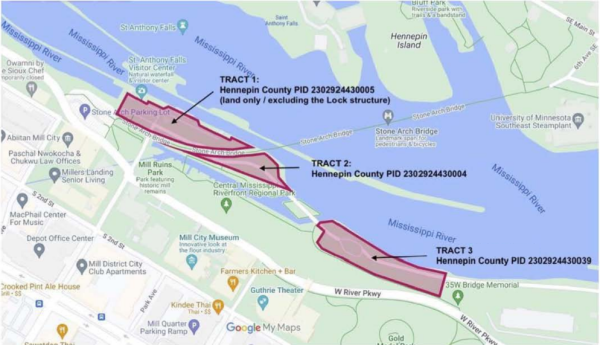
Approximately five acres of land near St. Anthony Falls in Minneapolis will go back to the Dakota community with plans to restore its significance to the area’s four tribes. 

Owámniyomni Okhódayapi (O.O.), a nonprofit organization formerly known as Friend of the Falls, has selected Seattle-based GGN to work with Dakota knowledge keepers as the lead design team guiding the land restoration process.

O.O. President Shelley Buck said the four Dakota tribes do not want to own the land right now, but support the nonprofit taking ownership. When the restoration is complete, the tribes can take over if they want to, Buck added. 

The land ownership process is still pending as the land will be transferred directly to the nonprofit as the city’s official designation. O.O. will work with the Dakota tribes to bring their vision to the site. 

“Our hopes are to bring Dakota people back to our sacred sites, teach a history that wasn’t taught and really give Dakota people a voice again and to be visible again because we have been invisible in our own homelands for many, many years,” Buck said. 

Buck said the organization recently signed a 25-year lease with the Army Corps of Engineering for site control allowing the design and engineering process to begin. The group hopes 35% of the design will be done by October or November and construction will begin either at the end of 2026 or the beginning of 2027.

Project location plan with Parcel ID numbers. Image courtesy of Owámniyomni Okhódayapi

President of the Native American Community Development Institution Robert Lilligren said they worked on the community design process during the first season of the project. The institution also worked to turn the land over to Native control. 

“I feel like this can be an important spot to authentically address some of those truths and to co-create a way of healing together,” Lilligren said. 

Buck said the design would incorporate Dakota culture. In Dakota culture, everything has a life force, Buck added. The site will include no buildings to allow for reconnection with native species and water.

“When you treat something like (a life force), you tend to treat it better,” Buck said. “I think that’s what’s missing, and I think people look at things like the water as a resource when they should be looking at her as a relative and taking care of her.” 

Key Design Leader David Malda said GGN’s role in the design process is to support, listen, amplify and connect Dakota leadership and guidance. 

“We’re still at that kind of asking and learning stage of the project.,” Malda said. “We don’t have design drawings that say every path goes here or this is exactly what plant is here. At every step, we’re also challenging ourselves to make sure that this is done in a way that’s centering the Dakota knowledge, centering the Dakota voices.”

Lilligren said this land will educate people on what was here before colonization. 

“It’s amazing how little a lot of non-Native people and some Native people, but non-Native people know about the history of this land, about the first people that were here, about Europeans and colonizers role in intentional genocide and cultural genocide here,” Lilligren said. “There’ll be an opportunity to educate every Native, non-Native, U.S. citizen, foreign traveler about the authentic history of this site.”

Corrections: A previous version of this article misspelled Shelley Buck’s name and misstated the name of the Friend of the Falls organization. 

Posted in UncategorizedComments Off on Land near St. Anthony Falls to be reclaimed by Dakota Community

New initiative to fund arts and culture, promote local communities

The Cultural Districts Arts Fund is a new city initiative to help communities tell their stories through art and increase community collaboration. 

Seven cultural districts in Minneapolis — 38th Street, Cedar Avenue South, Central Avenue, East Lake Street, Franklin Avenue East, Lowry Avenue North and West Broadway — will receive money to promote the area’s culture through art, events, festivals and more. 

The Minneapolis Arts and Cultural Affairs Department Director Ben Johnson said each district will receive about $100,000 distributed into three categories: the Cultural District Ambassador Program, the Festival and Cultural Spaces Activation Program, and the Pop-Up Art and Cultural Activations Program. 

“We’re just really trying to trust artists and residents to know what’s best for their neighborhood,” Johnson said. “So we’re leaning into that as much as possible.” 

Johnson said anyone can apply for funding and a panel of community members will choose who receives funding. Applicants have a year to use the funds. 

“We decided to design a roster of programs for all seven districts that really helped inject a bunch of, sort of, creative vibrancy into those spaces but also to help support new narratives that would happen in these parts of the city as well as to stave off any kind of cultural displacement,” Johnson said. 

Continuing to create new opportunities for community art and entertainment in Minneapolis brings people to understand why they live here, Johnson said. 

“This is what we value in Minneapolis,” Johnson said. “We’re symbolic of what it really means to be at the forefront of innovation and creativity and to do that in a way that’s not just about downtown.” 

Ali Elabbady, a food critic and writer based in Minneapolis, said cultural districts hold a special place in his heart, specifically Cedar Avenue and Central Avenue, which he wrote about for Meet Minneapolis. Both areas have diverse cultures expressing themselves through food, art and businesses. 

“Both districts, in essence, really drive home that aspect of small business,” Elabbady said. “Not only that, but people of color, as well as Black and brown people owning small businesses and making it part of the interwoven fabric of the American dream.” 

Angela Two Stars, director of All My Relations Art (AMRA), a part of the Native American Community Development Institute program, said fencing surrounds where the former Wall of Forgotten Natives used to be in 2018. She worries about people’s perspectives on the American Indian Cultural Corridor on Franklin Avenue. 

“I think that our community and our children deserve to have that same feeling of beauty that we can show and create in our neighborhood,” Two Stars said. 

Two Stars, who will apply for funding, said she is planning an event to celebrate the 25 years of AMRA to highlight local artists and the impact it had on their careers. 

Minneapolis City Council Member LaTrisha Vetaw (Ward 4) said she received multiple ideas for using the funding in Lowry Avenue, a cultural district within her ward. Those ideas include adding artistic structures into the vacant lots while keeping the lots available for other uses. 

“Community is there, but I think what this funding does is build upon the community that exists, and it brings in new forms of community also,” Vetaw said.

Posted in UncategorizedComments Off on New initiative to fund arts and culture, promote local communities

Program promotes safety through street lights

The Marcy-Holmes Neighborhood Association’s (MHNA) Leave a Light On program funds outdoor lighting to promote safety and brighten the neighborhood. 

Under the program, properties can be reimbursed up to $250 for exterior lighting improvements, including purchasing lights and timers and installing lighting strings on posts, according to the website. 

The Marcy-Holmes neighborhood stretches from Central Avenue SE to 15th Avenue SE, including Dinkytown and St. Anthony Main. 

The neighborhood association said Minneapolis street lighting is problematic for the Marcy-Holmes area due to the population density and the busyness of the sidewalks at night. 

In the 2020 census, the Dinkytown portion of Marcy-Holmes had a population of 7,783 and the highest population density in Minnesota, according to an MHNA demonstration project. It is anticipated the area will grow by 25% to over 10,000 by the end of 2024. 

MHNA Board Member Vic Thorstenson said the program started in 2019 after a series of crimes happened in the area, specifically under a street light. 

Thorstenson said the lights built by the Minneapolis Department of Public Works light up the street well but do not provide enough light to the sidewalk.

“The lights are aimed at the street, not the sidewalk,” Thorstenson said. “The little light that splashes out is blocked by cars, it’s blocked by tree branches and so we hit on the idea of shooting for more pedestrian-level lighting.” 

Fourth-year University of Minnesota student Luke Wittner said he had a bad first experience in the neighborhood and moved away due to crime. 

“You literally could not pay me to live there,” Wittner said. 

Wittner, the vice president of the Interfraternity Council, said his position often deals with student safety. He said adding more lights will make the neighborhood less intimidating.  

While the program has had some success, there is still a lack of proper lighting in the Dinkytown neighborhood between 15th Street and I-35W, Thornstenson said. 

“That’s kind of a target area for us,” Thorstenson said. “It’s also been the area of biggest concern just in terms of street safety as well.” 

He added that the Marcy-Holmes neighborhood is constantly changing and the word needs to keep getting around about this program. 

“If you live in a building that doesn’t have adequate lighting, either for its parking lot or for the area outside the building where people congregate, let your landlord know that we’ll help them get the light up, help them pay for lighting,” Thorstenson said. “There’s little excuse not to do it anymore.” 

The form to fill out for reimbursement is found on the Marcy-Holmes website. 

Having lights in the neighborhood is important, especially for women, said MHNA Board President Kim Hansen. 

Hansen said seeing Thorstenson displaying lights on the corner of 3rd Avenue and 6th Street makes her feel safer walking around the neighborhood.

“If more people would take advantage of this program that we’re offering them, I think it would really go a long way to making the area feel more welcoming,” Hansen said.

Posted in UncategorizedComments Off on Program promotes safety through street lights

Twin Cities ranked in top ten best cities to bike

Minneapolis and St. Paul were ranked in the top 10 for best cities to bike in, according to an annual rating by PeopleforBikes. Minneapolis took first and St. Paul took fourth in the large city category. 

The Twin Cities scored highly based on protected bike lanes, safe speed limits, network connections, intersection treatments and trusted data, according to the website. 

The large city category includes cities with populations of more than 300,000. Each city receives a City Ratings score from zero to 100 based on PeopleForBikes’ Bicycle Network Analysis. Minneapolis scored at 71 and St. Paul at 61. The average score for all cities in 2024 was 28. 

“Minneapolis’ rating jumped from a 17 in 2020 to a 71 in 2024 due to the city’s efforts to reduce speed limits and construct safe, comfortable places to ride like those on Bryant Avenue South,” Senior Director of Local Innovation for PeopleForBikes’ Martina Haggerty said. 

Hennepin County has different ongoing and future biking projects throughout Minneapolis, including on University Avenue and Fourth Street. 

Hennepin County Bike and Pedestrian Coordinator Jordan Kocak said making biking and walking safer and more accessible is an idea he brings to projects. One example is creating separate bike lanes on roads to make bikers feel safer.

“The more of your network that is contiguous, uninterrupted, protected bike facilities, the more usable it becomes to more types of people who might consider biking,” Kocak said. 

Switching roads from four to three lanes is another project from the past few years, Kocak said. Instead of having two lanes of traffic in each direction, a center left-turn lane with one lane in each direction and buffered bike lanes were created. 

John Mark Lucas, the transportation programs manager for the University of Minnesota, said biking is not only important to the city but to the University as well. He added the University is a place where new biking strategies can be tested out.

The League of American Bicyclists website awarded the University platinum awards in both business and university categories. 

Lucas said a new pilot program called Gopher Bikes allowed people to check out bikes through their residence halls for the past year. 

Haggerty said Minneapolis has set a new standard for large U.S. cities, showcasing the power of combining safe speeds, protected bike lanes and network connectivity to create a bike-friendly city.

Angela Olson, deputy director of Bike MN, which provides lessons on how to ride a bike, said biking is important for the environment and our health. 

“I think (biking) is a really important tool that’s really good for our bodies and for the environment,” Olson said. “It’s also less bearing on our infrastructure to last longer.” 

Kocak said biking provides an alternative and limits students’ worries while using public transportation. 

“It’s stressful enough being on campus and then having to worry about transportation is something that is unnecessary,” Kocak said. “And then, taking away the worry about transportation and giving you the health benefits as well, it’s a double win.”

Posted in UncategorizedComments Off on Twin Cities ranked in top ten best cities to bike