
Edited by Nate Wong
The post Guest Mini Crossword #1 – Live Music at the Bar appeared first on Daily Emerald.
Posted on 11 November 2026.
Edited by Nate Wong
The post Guest Mini Crossword #1 – Live Music at the Bar appeared first on Daily Emerald.
Posted in NewsComments Off on Guest Mini Crossword #1 – Live Music at the Bar
Posted on 11 November 2026.

Most DTC brands don’t have a media buying problem; they have a creative supply problem. You can’t test ten hooks when a shoot takes two weeks to produce three videos. The fastest fix is to use a text to video generator to turn each hook, angle, and offer into a prompt, then generate variants in minutes instead of booking a studio. This guide shows what to test, how to write prompts, and a two-week plan.
Pick one offer, change one variable per round, generate 5–10 variants, and put equal budget behind each.
If you sell on Shopify, you can also skip prompt writing for a first draft. Paste a product URL into Marketing Studio by Pollo AI, then test a Problem & Solution video against an Unboxing one.
Test the first 3 seconds first. The hook decides whether anyone sees the rest of the ad.
| Variable | Example variants | What you learn |
| Hook | Problem close-up vs. surprising result vs. question | What stops the scroll |
| Angle | Price, convenience, social proof | Which pain point sells |
| Format | UGC-style, demo, lifestyle, unboxing | What your audience trusts |
| CTA | “Shop now” vs. “Get 20% off today” | What earns the click |
Change one row at a time. If you change the hook and the format together, you can’t tell which one moved the result.
Name one subject, one action, the setting, the camera, and the lighting, then keep it to a single shot. Here are two examples for a fictional skincare brand:

In Pollo AI, the workflow takes three steps:
Keep the prompt focused on visuals, and add logos and price overlays afterward.
Reuse what already works instead of starting from scratch each time. Two features are useful at this stage:
The post How DTC Brands Use AI Text-to-Video Tools to Scale Ad Creative Testing appeared first on The Rocky Mountain Collegian.
Posted in NewsComments Off on How DTC Brands Use AI Text-to-Video Tools to Scale Ad Creative Testing
Posted on 11 November 2026.
#top .hr.hr-invisible.av-av_hr-3cdc9664f29087702913853352eac422{
height:10px;
}
#top .hr.hr-invisible.av-av_hr-3cdc9664f29087702913853352eac422{
height:10px;
}
#top .hr.hr-invisible.av-av_hr-3cdc9664f29087702913853352eac422{
height:10px;
}
“Talkin’ Troy” staffer Marcus Partida sits down with Daily Trojan Sports Editor Dillon Zamperin to discuss the long-running debate on who is the current Wide Receiver University, and where USC stands in the rankings.
#top .hr.hr-invisible.av-av_hr-b6c4b21a5338a2e64f386140d2cee6be{
height:20px;
}
#top .hr.hr-invisible.av-av_hr-3cdc9664f29087702913853352eac422{
height:10px;
}
.flex_cell.av-av_cell_one_fourth-158c56ad4987fbee32a30a1d6c306202{
vertical-align:top;
}
The post Is USC in the running for the title of Wide Receiver University? appeared first on Daily Trojan.
Posted in NewsComments Off on Is USC in the running for the title of Wide Receiver University?
Posted on 11 November 2026.
Bobby Durkin sank his only 3-pointer of the night as time expired to complete a late-game comeback, lifting the University of Minnesota Golden Gophers past the University of Cincinnati Bearcats following a sequence of missed free throws down the stretch.
Through halftime, the Gophers kept the game tight. Tied 30-30, the two teams battled into the second half.
Minnesota trailed 61-54 with 2:37 on the clock before mounting a 6-0 run to cut the Bearcats’ lead to one point with 14.5 seconds left. The Gophers’ comeback was fueled by layups from Jaylen Crocker-Johnson, Kyan Evans and Isaac Asuma.
Following back-to-back missed 1-and-1 free throw opportunities by both teams, Cincinnati went back to the line for another 1-and-1 attempt with 5.1 seconds left.
The Bearcats missed the free throw, allowing Asuma to rebound and quickly pass ahead to Durkin. Durkin took a single dribble before knocking down the game-winning 3-pointer as the clock ran out.
Durkin talked about the moment postgame and the environment on the road.
“Isaac hit me with a great pass,” Durkin said. “Obviously I didn’t think I was playing my best tonight, so I was just happy that I was able to pull through for the team. The crowd was awesome tonight, so to get that shot was awesome. We’re super happy about it.”
Head coach Niko Medved praised Durkin’s clutch performance following the win.
“So happy for Bobby Durkin,” Medved said. “He’s a great shooter. It wasn’t his game tonight, but he made the one that counted.”
Though Durkin made the game-winning play, the Gophers’ offense mostly came from point guard Kyan Evans. Evans scored career highs of 26 points and 10 rebounds. He also led the team with five assists.
Minnesota returns home to face Southern University on Nov. 12 at 7 p.m.
The post Bobby Durkin’s buzzer-beater downs Cincinnati Bearcats 63-61 appeared first on The Minnesota Daily.
Posted in NewsComments Off on Bobby Durkin’s buzzer-beater downs Cincinnati Bearcats 63-61
Posted on 11 November 2026.


Former United States representative Beto O’Rourke participates in the NextGen Hot Ones Event on Friday, September 11, 2026, at the University of Houston. | Gillian Wisniewski/The Cougar
With more than 500 voter registrations recorded this fall, NextGen UH is working to make political engagement more accessible to students through voter outreach, campus partnerships and interactive events.
Founded in 2025, the student-led, non-partisan organization has nearly doubled its first-year voter registration total while encouraging students to become more informed, engaged and involved in political conversations.
NextGen UH president and co-founder Olivia Rodriguez said the goal of NextGen UH goes beyond increasing voter registration. Rodriguez hopes to help students who feel disconnected from politics recognize the importance of their participation.
“There are a lot of people at UH that feel that they can’t really tap into politics,” Rodriguez said. “Because they don’t feel informed enough, and they don’t feel like their voice or their place actually matters.”
The organization’s beginnings trace back to Rodriguez’s participation in the Student Government Association’s Emerging Leaders Program during her freshman year.
Through the program, Rodriguez became involved with NextGen America, a national organization focused on encouraging political participation among young people.
As part of its student leadership program, Rodriguez learned about campus organizing and voter outreach and later collaborated with students Cameron Lanier and Donya Oufi to organize an early campus tabling event that encouraged approximately 50 students to pledge to vote.
The group subsequently partnered with UH’s Office of Sustainability for an Earth Day event, where they announced plans to establish NextGen UH.
“We have such big dreams. We’re going to do this. We’re so excited,” Rodriguez said.
The organization’s mission became making political information accessible to students while encouraging them to form their own opinions.
“The main goal of NextGen UH is to inform people,” Rodriguez said. “Inform UH students in the most simple, non-threatening way possible in a non-partisan way.” To accomplish this, the organization has incorporated entertainment and interactive activities into its outreach, including a Hot Ones-style event featuring former U.S. Rep. Beto O’Rourke.
The event combined political discussion with a hot-wing challenge, allowing students to hear firsthand from O’Rourke in a more informal setting.
Rodriguez feels that the event reflected the organization’s effort to make political conversations more approachable, particularly for students who may otherwise avoid them.
“We want to make sure that politics isn’t threatening, people don’t steer away from it,” Rodriguez said.
The organization has worked with the SGA on voter education initiatives, including a Know Your Ballet event featuring local candidates and information about elections.
Other campus organizations that NextGen UH has collaborated with include fraternities and sororities, as well as community groups such as Powered by People and Mi Familia Cota. Rodriguez believes that these partnerships help the organization reach students from different backgrounds and encourage political participation across campus.
NextGen UH has also organized themed voter registration drives to make the registration process more engaging.
One initiative, Voter Palooza, featured eight officers hosting individual registration drives with themes and gifts ranging from Christmas decorations to snow cones and Hershey’s Kisses. The three-week initiative resulted in more than 100 voter registrations, according to Rodriguez.
Now, as NextGen UH looks beyond the 2026 midterm elections, Rodriguez says that the organization remains focused on helping students engage with political issues and develop independent perspectives.
“We want them to see an issue, be aware of the issue, then create their own opinions on it and analyze it for themselves,” Rodriguez said.
news@thedailycougar.com
—
“Beyond the ballot: NextGen UH Seeks to reshape student political engagement” was originally posted on The Cougar
Posted in NewsComments Off on Beyond the ballot: NextGen UH Seeks to reshape student political engagement
Posted on 11 November 2026.
Dear readers,
There’s a difficult truth of uncertainty surrounding the future of journalism, but an easy truth remains: student journalism isn’t going anywhere.
As I write this, there are countless students across the globe who have fallen in love with the pursuit of seeking truth and championing democracy and are determined to keep this industry alive.
Those student journalists are more important now than ever.
We are more than young hopefuls waiting on a stepping stone. We are not a facsimile of a professional organization; we are a professional organization. Student journalists invest time, energy and money to be on campus as students and are constantly surrounded by the people we deeply care about and have a duty to provide accurate, fair and ethical reporting to.
The Collegian’s reporters, photographers, editors and designers are passionate truth-seekers, and we’re grateful to have the opportunity to promote the free, independent exchange of information in our community.
But it wouldn’t be possible without our audience members.
Right now, journalists around the world — no matter what stage of their career they are in — are dealing with difficult budget conversations, and The Collegian is no different.
Since our founding nearly 135 years ago, The Collegian has been a testament to the power of independent student journalism. We are the oldest continually published college paper in Colorado and one of the oldest in the entire Western United States. After joining nonprofit media organization Rocky Mountain Student Media Corporation in 2008, The Collegian became one of fewer than 100 tax-exempt, financially and editorially independent student publications in the country.
Just under 60% of our funding comes from a contractual agreement made with the Associated Students of Colorado State University — the rest comes from investment from our community.
Every bit of that investment goes right back into the student journalism we pride ourselves on. We have roughly 100 members of our staff working to put out stories daily at Collegian.com and weekly in print.
With this staff of talented student journalists, we’ve been able to cover crucially important events on Colorado State University’s campus quickly and accurately. In October alone, we were the first news outlet to break several stories, including when United States Immigrations and Customs Enforcement was spotted on CSU’s campus, when a CSU student was arrested while protesting and when an officer-involved shooting led to a student’s emergency transportation to a local hospital.
These articles are more than a section in a portfolio. These events have an impact on our everyday lives and are stories that deserve to be told with truthfulness, fairness and accountability.
For students who might feel like Colorado State University isn’t listening to them, we are.
We understand our role as watchdogs for the community, and we don’t take that responsibility lightly. For those of you who have directly shared your story with me, I want to thank you for entrusting me to tell it and for taking a chance with student journalism.
I want to highlight The Cornell Daily Sun as one of the most prominent cases in recent history of why student journalism matters. Senior Editor Cereese Qusba worked tirelessly to investigate the alleged gang rape of a Cornell University student in October 2024. After 23 months of dedicated, careful attention, Qusba published the culmination of her reporting in a detailed account of the lawsuit and Jane Doe’s allegations of the university’s mishandling of the Title IX report. Seven days later, the Daily Sun’s editorial board published “Cornell Won’t, We Will,” an editorial that named the seven men in Jane Doe’s lawsuit in order to provide a sense of transparency to the student body the university had not.
Student publications around the country, including The Collegian, work to call out the institutions that are falling behind, and we wish to give the community a place to speak.
Earlier this week, News Editor Claire VanDeventer spoke to members of the CSU community and wrote an article examining the reactions and calls for transparency following CSU President Amy Parsons’ resignation and her settlement. After the Oct. 12 officer-involved shooting, I had the opportunity to uplift the voices of several CSU students who were frustrated with CSU’s poor communication during the on-campus shooting.
In recent years, our staff has covered sensitive, important stories such as alleged use of date-rape drugs by a CSU fraternity and when ASCSU officials admitted accepting funds from a conservative organization backed by Turning Point USA. Behind every article is a student who put their schedule aside to make sure our audience knows what’s happening.
Our stands can be found in practically every building on campus, and The Collegian has never had a paywall to access our content. We believe journalism should always be accessible to each and every member of our community. This is why your support matters.
Every dollar donated to The Collegian goes back to the students trying their hardest every day to navigate a complicated, rapidly changing industry with passion and dedication. Your donation is a direct investment in keeping student journalism alive at Colorado State University.
Donations provide support for a platform dedicated to serving students by students. As noted in previous editorials, there is no place for generative artificial intelligence in our newsroom. Every article, every graphic, every photo and every page is created by students. We have a diligent team of copy editors that spends hours fact-checking and style-correcting each article after reporters and editors have curated it.
Being a student journalist is a labor of pure love, and there’s no other job I — and many of my peers — would rather have.
The work that we put out matters, and I am calling on you for support. Whether that is reposting one of our Instagram posts, purchasing our merch or making a large donation, whatever you can give, I thank you for it.
I do this job for you, reader. I do it for my staff, and I do it to uphold the high standards and legacy this paper has held for over a century.
If you’re able, please consider donating to The Collegian today. From the bottom of our hearts, we thank you for your readership and support.
Sophie Webb, Editor in Chief of The Collegian’s 136th Editorial Board
Reach Sophie Webb at letters@collegian.com or on social media @sophgwebb.
The post Student journalism matters — we need your support to keep it alive appeared first on The Rocky Mountain Collegian.
Posted in NewsComments Off on Student journalism matters — we need your support to keep it alive
Posted on 10 November 2026.
Kaeden Thomas: Welcome to the Full Extend Podcast. My name is Kaeden Thomas, and here I’m joined with Selene Campion. We are going to be talking about the rise and surge of far-right politics within Europe. Could you give me, Celine, just a brief overview of your background and how it could pertain to this issue?
Selene Campion: Sure. Thanks so much for having me. So I’m an assistant professor in the Department of Political Science here at the U, and my work is mostly focused on European politics. So I do research on domestic European politics across mostly Western Europe, looking at local government and do work on party politics. So looking at how political parties have changed and evolved over time. A lot of my research also intersects with public policy. So I’m really interested in the policy outcomes of political change.
Kaeden Thomas: Okay, thank you. Let’s sort of take a step back. Could you explain just sort of briefly what these parties are, what they look like, what do they represent, and is there a ton of unity between these parties? Because I think we group them all under, you know, the far right, far conservative. Is that is that a is that sort of a fair grouping, or are all of these kind of distinct in their own way?
Selene Campion: Yeah. So I think of far-right parties kind of as an umbrella term, but doesn’t necessarily designate a single unified movement. So I try not to kind of collapse them all into one category, but that being said, they do have kind of commonalities that are shared between them. So when we think about radical right parties specifically, they tend to use elections and representation to advocate for similar political outcomes. So they usually tend to be quite nationalistic. They usually want to restrict immigration, and they have what we would consider to be quite a majoritarian view of democracy. So less focused on minority rights and more what they consider to be the majority. We can also kind of, along with radical right parties, we also have what we call extreme right movements. So those aren’t necessarily political parties. They start off as social movements. But so if we think about the example of that, it would be Golden Dawn in Greece, which started out as a very right-wing political movement that was very openly anti-democratic, embraced authoritarianism, embraced violence, neo-Nazi tendencies, and they ended up gaining political power. So we can think about movements turning into parties, and then what those parties do once they come into office. I think the other thing to note is often these parties are called populist radical right parties because what they share across all the national variation is, or usually a commitment to some type of populism, and so by populism I think about kind of the people versus the corrupt elite. Now, who the people are and who the elite are can change based on national context, but what they see themselves as is a representative of the people and understanding the people to be quite broad.
Kaeden Thomas: So thanks for that explanation. What are some of the causes for this recent rise in popularity?
Selene Campion: Yeah, definitely. I think their popularity certainly has increased. So I think it’s helpful to think about their rise in popularity kind of as an accumulation of pressure rather than as a single response to like a single issue. So for example, if we take the economy, which is often proposed as the leading cause of the rise of the radical right in recent years, a lot of these parties are responding to broader macroeconomic issues like high housing costs, housing shortages, economic insecurity, increased levels of economic precarity and unemployment, and kind of what they want is a response by national governments, by the current governments in power, to remedy these economic insecurities. But usually, what their remedies are. Is some type of nationalist policy. So this is where we see kind of an overlap between the causes, like economic instability and migration. So migration is often proposed alongside economic inequality as one of the leading causes or reasons for the rise in popularity of the far right, but this goes hand in hand with an economic explanation. So, radical right parties might say we have really high levels of unemployment, we don’t have enough jobs, and immigrants are taking our jobs. And so the solution is to reduce immigration, to close national borders. So the National Rally, which is the far-right party in France, has for many years kind of promoted a domestic kind of protection for natives, what they see as French natives, and that French natives should get preference in social housing or public housing. They should get certain welfare benefits that are not offered to migrants or immigrants, with the idea that this is kind of a protectionist policy, so the economic and the migration explanations I think often go hand in hand. I was just going to mention kind of the role maybe more recently of recent military buildups and security reasons, which I think has become more of has come more to the fore in terms of what voters think about and care about. So, with the ongoing Russian invasion of Ukraine, we see that radical right parties have often taken a stand, not uniformly, but a stand against maybe overwhelming support for Ukraine. So, for example, example Viktor Órban, up until his recent defeat, was very much in support of of Russia, and wanted to kind of decrease aid and support to Ukraine. Then we also see someone like Georgia Maloney, the leader in Italy right now, who is part of a far right party, leading a far right party, but she tends to be more in support of European cooperation against Russia. So again, it kind of speaks to they might fall under this broader umbrella, but they each have their own domestic agendas.
Kaeden Thomas: I guess an additional question to that is: Are Trump’s isolationist policies from, you know, aiding, giving military backup to Europe is that also kind of adding to this pressure cooker where European states feel like they have to have the agency to you know, support their military and build that up rather than, you know, stuff that would be maybe more left-leaning policy.
Selene Campion
Yes, although I would say that the sentiment across most domestic governments in Europe or Western Europe particularly, whether or not they’re far right tends to be an acknowledgement that in the wake of America first, Trump’s America First rhetoric and policies, we need to work to develop our own security to protect ourselves. So this isn’t necessarily an issue that is solely claimed by the far right. I think the Macron government, for example, right now in France, has been very open that France needs to take a greater leadership role in defending against what’s going on in Ukraine and also just European security more generally. That being said, I think Trump’s rhetoric, so his isolationist rhetoric, and how he talks to voters, this direct communication style, anti-establishment rhetoric, attacks on elites. I think that certainly has had an effect on how certain political leaders of far-right parties in Europe have responded to voters. So we can see that Trump is definitely having an effect on how far-right parties in Europe are catering or trying to. Appeal to voters, even if it might not be through direct policy.
Kaeden Thomas: Okay, let’s get a little bit more specific. So when the EU Parliament is designed to prevent the extremist parties from taking over from the far left to the far right. What will be the result of the far right sort of gaining traction within that setting, winning some elections within the EU Parliament?
Selene Campion: Yeah. So I I would say I would maybe push back a little bit on the characterization of Parliament as being constructed to counter extremist tendencies. I would say that the EU generally is an institution that emerged in various forms after World War II, and so in its earliest form, what it was there for was to maybe counter the rise of extremism and authoritarianism that we saw with Nazi Germany. So the basis of the EU or its original reason for existing is rooted in kind of this peaceful global order. Since then, I would say it has various institutions within them, and they may not be explicitly anti-extremist. And so, what I mean by that is the EU Parliament, for example, that is a directly elected body, which means that citizens in different EU countries choose who they want their European members of parliament to be, and so in that way, it is a reflection to some degree, much like national elections are, of voter preferences. So whether voter preferences are radical right, radical left, more mainstream, the EU Parliament is going to reflect this, and in fact it has. So far-right parties have gained significant traction in recent years in EU parliamentary elections. I wouldn’t say they have been able to necessarily move policy, so they have kind of created these groups among themselves, like the Patriots for Europe, the European Conservatives and Reformists. So they’ve created kind of alliances among themselves, and while they haven’t necessarily been able to reshape policy, they have been able to kind of set the agenda. So, what do our voters care about when you form a coalition of various radical right members of European Parliament, you can kind of aggregate these preferences. Like our voters think that the EU cares too much about climate politics, and as a result, we shouldn’t be spending so much time, money, and effort on thinking about ways to mitigate climate change, or our voters don’t want such free movement within EU borders. They’re anti-migration, so we should be more restrictionist in our migration policy. Whether or not they actually get those measures is another question, and so far, they haven’t been super successful, but they have been successful, kind of elevating these issues to the supranational level and making other more mainstream parties have to consider them in a way that maybe they wouldn’t have otherwise.
Kaeden Thomas: So rather than pushing sort of their direct policies, they’re influencing it.
Selene Campion: I would say so, and partly that’s just because they do not yet have a majority, or maybe not yet. Maybe they never will. The far-right parties are not a majority, so it works in the sense that it’s a democratic system. So if you’re in the governing majority, you’re able, more able to shape actual policy. Right now, they’re still in the minority, so they don’t have direct access to policymaking. The more mainstream groups, the center-right European People’s Party, the Socialists and Democrats, they’re still the ones in control. They’re still the ones making policy, but these far-right coalition groups can still raise these issues, even if they know that they’re not necessarily going to get their way in policy.
Kaeden Thomas: And this question might be a bit more speculative, but. Do you think that this is just the natural pendulum swing of sort of political popularity, or are these far-right parties going to be here to stay? Is this is this surge sort of very temporal, or is that going to you know transverse through you know, into the future. If you can answer that.
Selene Campion: Yeah. You know, it’s funny. I always tell my students, like, as political scientists, we never speculate. So I feel like maybe I’m going against my own advice here. That being said, I guess it would depend on the length of time we’re looking at. So I mean, if we look across history and time and space, we can kind of see that there’s an ebb and flow in terms of movements to the right and to the left and towards authoritarianism and towards more of a neoliberal global order. So I think it would be reductionist to say that you know these parties are definitely here to stay, but I do think that there is some cyclical element to their rise. So voters, again, across time and space, we know that voters will often punish incumbents during periods of crisis, and whether or not you would consider the last decade or so to be a period of crisis might depend on your political or economic outlook. But that being said, there has been a lot of change in the last decade or so. So we have seen rising inequality. We did have the refugee crisis in 2015, and some might argue was still ongoing. We did have Brexit, so there certainly have been considerable changes for many EU citizens, and many EU citizens feel that the mainstream parties are not adequately addressing these issues, and so in that way, we can see it as maybe this is just a natural, to some degree, response that obviously not all voters are going to support or endorse, but we can understand maybe why some voters do. The other thing I’ll say, and the last thing I’ll say to this point is, I think it’s important to note as well that many of the parties that were considered to be quite radical right and extreme in the ’90s or early 2000s, such as the National Rally under its founder Jean-Marie Le Pen and then Marine Le Pen, have tried actively to make themselves appear more mainstream. So while in the past maybe they would have really embraced this anti-establishment radical right identity, they have been trying to kind of sell their voters on on a new image that portrays themselves as simply a reasonable response to all of these changes. So they themselves are kind of rebranding, and it will be interesting to see, I think, in the future whether or not there is increased buy-in from voters as these parties try to make themselves more mainstream.
Kaeden Thomas: A lot of these far-right parties are kind of anti-EU a little bit more isolationist, similar to Trump, right? Is it likely that we see more European states leaving the EU, such as you know the instance of that of Brexit? Is that going to happen again? I’m getting into the speculative side of things, but is it likely that is it likely to happen, or is that kind of is that something that’s maybe a little bit outlandish.
Selene Campion: I wouldn’t say it’s outlandish. I would say it’s again we’re speculating here. I would say as an observer, it seems unlikely that in the near future there will be a movement akin to Brexit, that could be for various reasons. I think one is that the UK has always had a kind of tense and maybe antagonistic relationship at times with the EU. So its decision to leave didn’t come out of nowhere. Under Margaret Thatcher, for example, she was quite anti-European integration. So the EU, excuse me, the UK, as a case is a bit unique. I also think that other European governments, as well as their citizens, have seen. How difficult and costly it was for the UK to leave the EU. That it wasn’t simply something that happened overnight and it was fixed, and that they got their autonomy back. But actually, there were quite significant political as well as economic costs. So I think that has kind of made both voters as well as radical right parties that might have embraced leaving the EU a little bit more cautious. I also think we want to consider what these countries are actually getting out of EU membership, and that is usually some type of financial assistance. So, for example, Hungary, which was very critical of its own involvement in the EU, never made the move to leave the EU, partly because it was receiving significant financial contributions. So there are ongoing incentives for countries to stay within the European Union framework, even when we see the rise of parties that have traditionally criticized it. So what we see now is more EU skepticism, but trying to maybe reform the EU, and this is what the national rally has been wanting to do with their representatives in European Parliament, trying to reform the EU from within rather than simply leave, simply exit.
Kaeden Thomas: Okay, and as we’re wrapping up here, I kind of wanted to touch on something that you had touched on a little bit earlier. Are we in a point of like complete sort of societal discontentment with politics, at least in Europe? And is is that sort of something that directly correlates to extremism, like we’re seeing now? Is that a fair assumption to kind of put two and two together?
Selene Campion: I would say that in Europe, and there is, of course, significant variation across countries. We are seeing, to a degree, what we see it in the United States as well, which is an increasing distrust, maybe in institutions and democratic institutions and how they govern. With the idea being that they are not living up to their promise of redistribution, for example, so they are not adequately equipped to solve issues such as growing economic inequality, and so this has led to a broader discontent, I think, among Europeans, not just the ones that are voting for the radical right, but I think among the population, especially among young Europeans, so we’re seeing in France, for example, right now mass protests against the education system. The idea that it’s not working properly, and that the institutions that set it up have not been responsive to what young people need and what voters want, so in that way we are seeing kind of a shift. Whether or not this leads to a massive increase in voting for the radical right, I think remains to be seen. But I think we can’t really argue with the fact that there is growing voter discontentment.
Kaeden Thomas: Okay, super interesting inflection point in European politics and largely global politics. I appreciate you coming on and explaining a bit of it to us today. Thank you, Celine Campion.
Selene Campion: Thank you so much.
Transcribed by otter.ai
k.thomas@dailyutahchronicle.com
The post The Full Extent: The rise of the European far-right with Selen Campion appeared first on The Daily Utah Chronicle.
Posted in NewsComments Off on The Full Extent: The rise of the European far-right with Selen Campion
Posted on 10 November 2026.
A study period at the London School of Economics and Political Science changes more than a Colorado State University student’s timetable. Moving from Fort Collins to central London means navigating an unfamiliar housing system, a different transport network and a university set within the city. Before choosing a room from photographs, it helps to establish which accommodation routes fit the course, the length of stay and the way the student wants to live.
The first housing decision begins with the LSE programme. A student spending part of a degree in London may face different accommodation arrangements from someone enrolling on a full degree or a short course. Confirming the course dates, enrolment status and accommodation eligibility with LSE makes the search more focused. It also prevents a student from treating a university residence as an option before establishing whether it is open to their particular programme.
LSE’s central campus is around Houghton Street, close to Holborn. That address is a useful starting point, but a housing search needs the student’s actual teaching locations and weekly routine, not just a pin marking the university. Classes, library time and social plans may involve different parts of the city. CSU students should also establish how their London study fits their academic requirements in Colorado before committing to accommodation dates. A booking that starts after an essential arrival event, or ends before the last required assessment, creates a problem that a convenient location cannot solve.
University halls can offer a ready-made student community. Shared kitchens and common areas make it easier to meet people, particularly for someone arriving without an established circle in London. They can also suit students who prefer accommodation arranged through university channels. The practical questions are whether the relevant residence accepts students on the particular course, what type of room is offered and whether its contract covers the whole period of study.
A private apartment offers a different arrangement. A furnished studio may appeal to a student who wants a quiet place to work and control over daily routines, while a larger apartment may suit friends who have agreed to live together. Privacy can come with more responsibility for organising a social life outside the building. Neither model has the same services everywhere: students should compare what is included in the charge, which spaces are shared, how maintenance requests are handled and what happens if arrival or departure plans change. Looking at the full terms makes the comparison more useful than judging halls and apartments by their photographs alone.

Image by Max Vakhtbovych on Pexels
Central London neighbourhoods can look close together on a map while offering noticeably different daily journeys. Holborn places a student near the Houghton Street campus and its surrounding streets. Covent Garden offers another central base, with shops and cultural venues woven into a busier visitor district. Bloomsbury has a different feel, with residential streets and academic institutions to the north of Holborn. The right choice depends on whether the student values a short walk to class, a particular kind of street life or convenient connections elsewhere in London.
For each prospective address, it is worth mapping the journey to the building where classes are held, then checking the route at the times the student is likely to travel. A walking route may be simpler than changing London Underground lines for a short cross-city trip. The return journey matters too, especially after an evening at the library or an event with classmates. Students expecting visitors should consider how easily someone unfamiliar with London could reach the property. A central postcode is useful, but the building entrance and the journey from it are what shape an ordinary weekday.
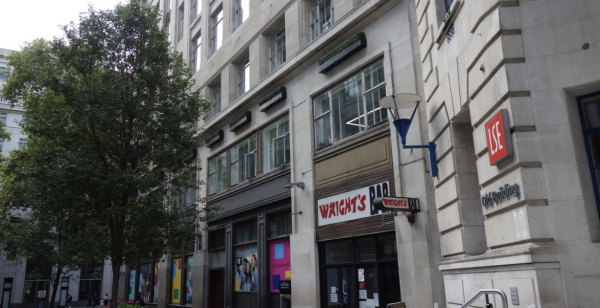
Image by mingche lee on Pexels
Serviced apartments can simplify parts of an international move by providing furniture and combining several household services in one arrangement. Student Luxe, a family-run agent that curates and books furnished serviced apartments near LSE, is one private route to consider through studentluxe.co.uk. Its apartments include bills, Wi-Fi and weekly housekeeping, and its booking route does not require a UK guarantor. The agent arranges accommodation in buildings run by others, so features such as a gym, concierge or staffed reception depend on the individual building.
The useful comparison is between the complete terms of each prospective stay. A CSU student should check whether the proposed dates cover the course, which apartment and building are being offered, what is included in the payment and how changes or cancellations are treated. A furnished property may remove the need to buy basic household items on arrival, but students still need to know which items are actually supplied. Those sharing an apartment should establish how bedrooms, communal space and payments will work before booking. Keeping the written accommodation details alongside travel documents makes it easier to resolve practical questions during the move.
Once the course and housing dates are settled, preparation becomes less about browsing and more about making the journey workable. Students should keep their LSE admission and course information accessible, confirm the address and arrival arrangements for their accommodation, and make sure the name used on bookings matches their travel documents. Anyone whose plans include travel before or after studying should account for those dates when reviewing entry requirements.
UK immigration requirements depend on the course and the traveller’s circumstances. Before departure, a student should check the current instructions from the UK government and LSE for their particular programme rather than assuming that another American student’s experience will apply. The same principle holds for any documents needed on arrival: an up-to-date personal set of instructions is more dependable than a packing list passed down from a previous trip.
Day-to-day arrangements deserve attention as well. A payment card that works abroad, access to banking without relying on a single device, and a workable mobile connection can make the first days less stressful. It helps to save the accommodation address and arrival contact details somewhere accessible offline, alongside the route from the arrival airport. Students can also think ahead about prescription medication, academic materials and the belongings they will need before they have time to shop. These small preparations leave more room to concentrate on settling into classes and meeting people.
The most useful housing comparison is one built around confirmed course dates and a realistic week in London. A student who wants shared spaces and a university-centred community may favour halls, provided their programme gives them access to a suitable residence. Someone who places greater weight on privacy and a furnished living space may prefer an apartment. In either case, the address, contract length, included services and total cost need to be considered together.
For a CSU student, the sensible next step is to make a shortlist only after checking LSE accommodation eligibility and the academic calendar. Comparing written terms for properties that cover the required dates, then tracing the journeys from each address to Houghton Street and other regular destinations, turns a distant housing search into a decision grounded in the student’s actual semester.
The post Studying at LSE from Colorado: A Practical Guide to Housing and Arrival appeared first on The Rocky Mountain Collegian.
Posted in NewsComments Off on Studying at LSE from Colorado: A Practical Guide to Housing and Arrival
Posted on 10 November 2026.
Catalyst 9200 campus access switches give education IT teams a practical middle ground between aging closet hardware and premium platforms they cannot always afford. Student device counts keep climbing, online testing leaves no room for dropped connections, and security cameras now sit on nearly every hallway. In many districts, the switches carrying that load are well past their prime.
A single classroom might host 30 laptops, a smart board, a projector, and a wireless access point. Multiply that across a campus and the load on the wired network grows fast.
Budgets rarely grow at the same pace. Most IT departments must refresh in phases, protect uptime during school hours, and support mixed buildings ranging from new science wings to decades old portable classrooms.
| Model | Best Fit on Campus | Stacking | PoE | Uplinks |
|---|---|---|---|---|
| Catalyst 9200 | Main IDF and MDF closets | StackWise-160, 8 members | PoE+, 30W | Modular, up to 40G |
| Catalyst 9200L | Classroom wing closets | StackWise-80, 8 members | PoE+, 30W | Fixed 1G, 10G, or 25G |
| Catalyst 9200CX | Labs, libraries, portables | None | PoE+, with UPOE on select models | Fixed 1G copper and 10G SFP+ |
Because the 9200CX is compact and fanless, it runs silently, which makes it a good fit for classrooms, libraries, and offices without a dedicated wiring closet.
Start with buildings that host testing, administration, and security systems. Classroom wings with light traffic can follow in the next budget cycle.
The fixed uplink 9200L costs less than the modular 9200 and still offers 10G or 25G options on select models. Save modular uplinks for core closets that serve many floors.
Standard 9200 and 9200L models deliver PoE+ at up to 30W per port, which covers most access points, VoIP phones, and cameras. Count devices per closet before paying for a larger power budget. When comparing options, the full lineup of Catalyst 9200 campus access switches shows port counts and PoE budgets side by side.
Up to eight switches in a stack are managed as one device. For small IT teams covering several buildings, that means fewer logins and faster troubleshooting.
In the United States, the FCC E-Rate program provides Category Two funding for eligible internal connections, which can include network switches. Confirm eligibility with your E-Rate consultant before ordering.
Security remains strong even at this price point. Catalyst 9200 models support MACsec encryption, with AES-128 on the 9200 and AES-256 on the 9200CX, helping protect traffic between switches. Segmentation keeps student, staff, and guest devices on separate networks.
Yes. PoE+ at 30W supports most Wi-Fi 6 APs, and PXG models add multigigabit ports.
No. It is designed as a standalone compact switch.
Yes. Each SKU ships with a perpetual Network Essentials or Network Advantage license.
Modernizing a campus network is less about spending more and more about spending in the right order. Prioritize critical buildings, size uplinks and PoE honestly, and use funding programs wherever possible. Catalyst 9200 campus access switches make that phased approach affordable. Contact Layer23-Switch for pricing, stock checks, and a free CCIE engineer review of your refresh plan..
The post How Schools and Universities Can Modernize Campus Networks Within Budget appeared first on Daily Emerald.
Posted in NewsComments Off on How Schools and Universities Can Modernize Campus Networks Within Budget
Posted on 10 November 2026.
Gov. Maura Healey on Nov. 6 blocked a petition effort put forward by a pro-life advocacy coalition to suspend the state’s late-term abortion law, forcing it to stay in effect until 2028.
The Compassionate Care Coalition, an advocacy organization formed to oppose the law and lead a 2028 ballot referendum effort to repeal it, submitted over 113,00 signatures to suspend the law.
The campaign, backed by five pro-life nonprofits, surpassed the 37,289 signatures required by the state to place the repeal question on the 2028 ballot and the 49,719 signatures needed to suspend the law in the interim.
Healey’s emergency preamble allows the abortion law to stay in effect until November 2028, when voters can choose to repeal or leave the law in place on their ballots.
“The repeal campaign can continue its work, and Massachusetts voters will have their say,” Healey wrote on her Substack Nov. 6. “If they choose to repeal the law, we will respect their decision. But families should not have to go without the care they need while that process plays out.”
Prior to the new law, an abortion could only be performed after 24 weeks if the procedure was deemed necessary by a physician to preserve the physical or mental health or life of a patient. Pregnant people were also allowed to have an abortion if the fetus had a lethal anomaly or a condition incompatible with sustained life outside of the uterus without extraordinary medical interventions.
Now, an abortion may be performed after 24 weeks in Massachusetts “by a physician based upon the professional judgment of the physician.”
Myrna Flynn, vice-chair of The Compassionate Care Coalition and president and CEO of Massachusetts Citizens for Life, said many people feel the new law is “unjust.”
“It’s too gross. I mean, it’s horrific,” Flynn said. “It’s a violation of human rights, the most fundamental human right.”
Those who signed the petition were not all republican or pro-life, she said.
“This is something that was so emotionally challenging for so many people to stomach that we had signatures from people who considered themselves pro-choice,” Flynn said.
Healey wrote on her Substack she signed the law because differing hospital and lawyer interpretations prevented physicians from providing patients the care they needed.
“It is heartbreaking for any parent to make that decision,” Healey wrote. “But when they do, they deserve compassionate, medically appropriate care close to home, from doctors they trust.”
Healey cited multiple women’s experiences under the current law, including Kate Dineen, a Reproductive Equity Now board member and supporter of the law. Healey wrote Dineen had to travel to Maryland for an abortion at 33 weeks after the fetus “had suffered a catastrophic stroke in the womb.”
Sam Miele, the chair of The Compassionate Care Coalition, told WGBH News Gov. Healey’s use of the emergency referendum is “shameful and disgraceful.”
“Why is a bill that encourages healthy, viable nine-month babies to be killed at nine months in the womb necessary for the immediate preservation of the public peace, health and safety of Massachusetts?” Miele told GBH. “You added an emergency preamble because it was your last-ditch effort to undermine the democratic process and appease the abortion lobby to which you are beholden.”
Susan, a protester outside Planned Parenthood on Commonwealth Avenue who asked that her last name be omitted because of privacy concerns, said cases involving risks to a pregnant patients’ health and fetal diagnosis are “so rare.”
Fetal anomalies complicate approximately 2% to 5% of births in the U.S., according to an October 2024 research article in the American Journal of Obstetrics & Gynecology.
“I believe any child [with a] prenatal diagnosis, they find out the child has Down syndrome or some kind of disability, that child still has a right to come into the world,” Susan said.
Boston University senior Emma Retan, president of Students for Reproductive Freedom, questioned restrictions on abortions in the later weeks of pregnancy, citing the relatively small number of people who seek the procedure.
“What is the point if you are going to hurt such a small number of people?” Retan said.“It’s one step in the wrong direction if we want to protect the women and girls of this country. This is not only a women’s health issue. This extends to everybody.”
SRF celebrated when Healey signed the law in August, Retan said. SRF’s recent efforts have included trying to make medicated abortions accessible through BU’s Student Health Services.
Retan said “there still is more that can be done” to protect reproductive rights in Massachusetts, particularly when it comes to raising awareness.
“Maybe because people assume that Massachusetts is completely open and tends to vote a certain way that they don’t really pay attention to things like this, which is totally understandable,” Retan said. “I do think that there could be more awareness.”
Posted in NewsComments Off on Gov. Maura Healey blocks effort to suspend Massachusetts abortion law, pro-life advocates push back