Over the summer,the University of Utah announced two new AI-related undergraduate programs to be offered beginning in the Fall 2026 semester.
The Artificial Intelligence major is available through the Kahlert School of Computing in the Price College of Engineering. The David Eccles School of Business offers aBusiness AI minor. While the AI major teaches students the “how” behind current AI technology, the Business AI minor is designed to help students automate business processes and make data-informeddecisions.
Creators of the Business AI minor
Chong Oh is a professor in the Information Systems department at the School of Business and director of the Master of Science in Information Systems. He helped create the Business AI minor and contributed heavily to its structure and curriculum.
During an interview with the Chronicle, Oh explained the key differences between the two new programs. “Our minor focuses on the applications of AI in the business area, and the computer science major in AI focuses more on the foundation of how AI models are built,” Oh said.
Professor Matt Pecsok works alongside Oh as the director for Undergraduate Curriculum in the department of Information Systems at the School of Business. He recently took over the role from Oh in July. “Chong championed [the program],” Pecsok said in an interview with the Chronicle. “He made it all happen; I’ve inherited it.”
AI and technologycontinue to evolveand have become impossible to ignore. When asked about the reasoning behind establishing the Business AI minor, Oh said, “AI has a huge impact on everybody and all sectors of industry. Students that graduate today and in the future need to know how to use AI in all their disciplines.”
Pecsok shared a different perspective on the benefits of AI and creating the program with regard to human connection. “[AI] actually adds personalization back to technology,” he said. “When we moved from brick and mortar stores to computerized platforms, we lost a lot of that personalization… So the irony here is that AI can actually help us get some of that personalization back when a company is working [with] millions and millions of people.”
Community concerns
AI, especially generative AI, isoften critiqued online for its environmental impact, threats to certain jobs and potential harms to human creativity. While Oh and Pecsok were creating the Business AI minor, they received pushback mainly on the grounds of ethical concerns. “As part of [our] academic curriculum, it is our responsibility to teach our students how to use AI responsibly, and also how to be accountable for the output of the AI [model],” Oh said. “People can use AI unethically, and that can create a lot of problems.”
Pecsok addressed concerns about AI replacing human employees. He said AI’s inability to recreate human emotions and creativity makes this challenging. “There’s a real demand to automate things in business,” he said. “[But] if we automate it too much and we take humans completely out of the loop, it can be very difficult to catch problems in AI processes.”
He also discussed employees’ ability to catch blips in AI responses. Pecsok said, “AI can make mistakes similar to a human, right? If you ask a human to do a task, or enough humans to do a task, they’re going to make some amount of mistakes. Recognizing that AI can make mistakes puts you in a much better position to be able to manage it.”
Following the AI boom, some have questioned thevalue of college degrees, but Oh believes in their importance. “AI does not replace foundational knowledge, critical thinking, [or] being able to problem solve [and] work with people… AI is just a tool. It’s not something that can think; it just gets directions from us… But in order for us to make [those] decisions, we must be smart… That’s why going to school and getting foundational knowledge is essential. More essential today than before. Because if you do not have that knowledge, you cannot use AI effectively.”
Before suiting up for Oregon this season, Katie Fiso is taking her game overseas, and this time, she’ll be wearing red, white and blue.
Oregon’s junior guard will be representing Team USA in Wuhan, China, after being selected to the 2026 USA 3×3 Women’s U23 National Team. She earned a spot on the four-player roster that will compete at the FIBA 3×3 U23 World Cup from Sept. 15-19.
The team will also have Arizona State’s McKinna Brackens, Georgia’s Dani Carnegie and Minnesota’s Tori McKinney.
The group had already played with one another after helping the United States win the FIBA 3×3 Nations League Americas North Conference in Chile earlier this summer.
Fiso has been adding to her international experience with USA Basketball with the addition of the World Cup. Previously, she participated in the organization’s 3×3 developmental camp in Phoenix in May before competing at the USA Basketball 3X Showcase in Mesa, Arizona.
This won’t be Fiso’s first opportunity to be a part of the World Cup. Previously, in 2023, she was part of the USA team that won the FIBA 3×3 World Cup. This opportunity gave her experience in a fast-paced environment of play before this month’s U23 tournament.
Her selection for the team comes after having a notable sophomore season with Oregon.
Fiso led the Ducks in scoring at 15.5 points per game and averaged 6.2 assists. She also had the fourth most assists in a single season in program history with 222 assists. Her performances earned her second-team All-Big Ten honors.
Fiso’s ability to create plays as an experienced ball-handler will allow for herself and her teammates to have an effective offense. She also has a 49% shooting ability from the field last season, which gives the Americans an efficient scoring option.
The 2026 FIBA 3×3 U23 World Cup will be available for fans to watch on the FIBA3x3 YouTube channel.
America is scheduled to face Japan and Slovenia on Sept. 16 before playing Kenya and Australia on Sept. 18. The top two teams from each of the tournament’s four five-team pools will advance to the quarterfinals on Sept. 19.
The tournament will take place just a few weeks before Oregon begins preparing for the 2026-27 season. Fiso will enter her junior year as one of the Ducks’ most important returning players after helping Oregon finish 23-13 last season.
Before returning to Eugene, Fiso will have one more chance to add international gold to her resume.
The Gophers are set to battle the Akron Zips at Huntington Bank Stadium for the first time in collegiate football history this Saturday. The Gophers are currently 34-4-1 all-time against teams in the Mid-American Conference.
Though the Gophers have not played Akron before, head coach P.J. Fleck is familiar with the program. Fleck coached Western Michigan to a 41-0 win over the Zips in 2016.
Gopher Spotlight
The Gophers Defense: The team’s defense scored one touchdown on a fumble recovery in the game against Mississippi State, but only forced the Bulldogs to punt once, allowing 38 points. Look out for the defensive line to get to the quarterback to create negative plays on Saturday.
WR Noah Jennings: Jennings, a transfer from the University of Cincinnati, had seven receptions for 88 yards against Mississippi State. Look for Jennings to be a part of the Gophers offense.
WR Javon Tracy: Tracy continued his strong start to the season with seven receptions for 51 yards against Mississippi State. Look for Tracy to continue to get targets against Akron.
The Opposing Lookout
QB Cibastian Broughton: Broughton threw for 227 yards and four touchdowns in the Zips’ win against Robert Morris. He also leads the team with 153 rushing yards this season.
RB Sean Patrick: Patrick leads the Zips in receiving yards with 76 and ranks second on the team with 100 rushing yards.
LB Donelius Johnson: Johnson leads the team in tackles, recently having four total tackles against Robert Morris on Sept. 12.
Minnesota is coming off a 38-13 loss to Southeastern Conference opponent Mississippi State on Sept. 13. The Bulldogs put up a total of 479 yards against the Gophers. Gophers defensive coordinator Danny Collins said during Minnesota’s pregame press conference on Wednesday that the defense simply did not execute against Mississippi State, leading to an unfortunate loss.
“I think the tempo definitely affected us in terms of it was one thing to simulate it in practice,” Collins said. “We thought we did a really good job of that in practice. Obviously, you look at it and there are things you can do better.”
Meanwhile, Akron is coming off of a week where the team got fans involved with the game. Against Robert Morris, they had a fan, Marty Whims II, serve as an honorary offensive coordinator. He led Akron’s offensive for the first drive of the game, designing a game script and working with head coach Joe Moorhead.
Akron picked up 21 yards on Whims II’s drive, but ended with a fumble recovered by Robert Morris.
“Coach Moorhead, the offensive staff does a really good job schematically with the run game of not only running zone; they’re pulling tackles, they’re getting things on the perimeter,” Collins said. “They do have a lot of tempo, just like we saw last week.”
Gophers quarterback Drake Lindsey said the loss to Mississippi State teaches them what they need to work on as a football team.
“I think [losing] is good to go through a hard time at the beginning of the season,” Lindsey said. “As much as you don’t want it to happen in the moment. You go through it as a team and digest the loss and learn. I think it’s good to learn at the beginning. Say we did win that game, maybe we don’t learn a lesson.”
Tracy, who had a standout performance against Eastern Illinois, said he wants to continue getting better and every game is a chance to show that.
“Personally, I got to be better. I had a couple drops. One wouldn’t matter [because] it was a penalty, but it’s still on me to catch the ball,” Tracy said.
Tracy and the Gophers will look for more opportunities to improve and get to 2-1 on the season on Saturday. ESPN gives the Gophers an 89% chance to win over Akron. The game will stream on Big Ten Network.
“A big thing heading into this week is response, and I feel like that carries into next week and this week,” Tracy said. “[Fleck] always says that next game is the biggest game because it’s the next game.”
Three years after suffering an 81-7 beatdown in Autzen Stadium, the Portland State University Vikings return in the opening season of a new era.
After a grueling 1-11 2025 season, Portland State decided to move on from head coach Bruce Barnum, who had spent 11 years at the helm, and turn the job over to former Central Washington head coach Chris Fisk.
Unfortunately for the Vikings, their new era has looked a lot like their last through three games, with lingering challenges like the off-campus stadium in Hillsboro and hopeless non-conference schedules that bring funds to an athletics department in need of them culminating in an 0-3 start to Fisk’s tenure.
While the Ducks look to run up the score in their get-right game following the worst loss of Dan Lanning’s tenure last weekend in Stillwater, the Vikings will dial in what they can to hit the ground running in Fisk’s first Big Sky Conference season.
Fisk has been climbing the Pacific Northwest coaching ranks since 2011, when he joined the National Association of Intercollegiate Athletics Southern Oregon University as an offensive line coach and co-offensive coordinator after coaching at the Division II University of Mary for eight years. He then found success in his first head coaching role at Division II Central Washington University, earning Great North Conference honors in 2019 and 2021, and regional Coach of the Year last season, when the Wildcats went 10-2.
The Vikings nearly began Fisk’s tenure with a home upset, leading Football Championship Subdivision No. 6 University of California, Davis 21-0 at halftime, but the Aggies dug out of the hole and put the game away with a last-minute touchdown.
The stagnant second-half offense in the opener has prompted changes in the two games since, with 2025 backup quarterback Tyrese Smith taking a back seat to junior Gabe Downing and North Eugene High School product Devon Anderson seeing fewer targets in the receiver room.
Preseason All-Big Sky second team wide receiver Terence Loville now leads the room with 221 yards on 15 targets, finally finding consistent playing time in his fifth collegiate season after battling for it in three seasons at San Jose State, then through injury in his debut season in Portland.
Loville is complemented by preseason third team wide receiver Cru Newman (19 receptions, 123 yards) and tight end Tanner Beaman (16 receptions, 157 yards). Newman, a local product from Central Catholic High School, also landed on the preseason second team as a returner, which came true in the first quarter against UC Davis when he took a punt 73 yards into the end zone.
On the ground, the Vikings have struggled to unlock preseason third team running back and former FCS Freshman All-American Delon Thompson.
Portland State’s defense is anchored by its linebackers, who should find success in Big Sky play. Junior Logan Lisherness, who followed Fisk from Central Washington, leads the defense with 22 total tackles, including 15 solo, while senior Jaxton Helmstetler has 19 total and 11 solo. Both have also found a tackle for loss and a quarterback hit.
The Vikings’ safeties have also flashed potential, with junior Isaac Redford bringing in two interceptions and 17 total tackles and redshirt freshman Lono Solomon totaling 19 tackles, 2.5 for loss and a sack.
The Ducks should handle the Vikings with ease, but Portland State has plenty of lessons to learn in Autzen Stadium ahead of a conference season in which improvement is expected.
The Allston branch of the post office is set to permanently close, according to a letter sent Sept. 4 by the United States Postal Service to Allston residents.
The USPS held a virtual community meeting Friday, in which USPS representatives discussed the study of discontinuance, a process to start the official closure of the Harvard Avenue site while collecting community feedback.
One representative said at the meeting that a new post office may open at another site in Allston if the study finds ample reason to reestablish the branch.
“I do want to emphasize that this is a study. This is not a final determination,” the representative said. “Should we determine to reopen, we would look for an alternate location.”
During the meeting’s Q&A, community members overwhelmingly opposed the permanent closure of the post office, citing concerns regarding long wait times and difficulty of transportation to other branches.
The branch’s closure officially started December 2019 after USPS suspended service at the post office’s Harvard Avenue location due to structural issues with the building.
In 2023, USPS announced it intended to reopen the post office close to its original location on Harvard Avenue. However, last April, the agency said it no longer intended to reopen the post office, despite having finalized a lease agreement.
Some Massachusetts government officials have been vocal in their opposition to the permanent closure of the post office. Sens. Ed Markey and Elizabeth Warren as well as Rep. Ayanna Pressley wrote a letter to USPS officials in June urging them to reopen a post office in Allston.
“The Allston community depends on reliable and accessible postal services, and the lack of a convenient post office location creates unnecessary barriers for residents,” the officials wrote. “The failure to reopen a post office location in Allston has gone on long enough.”
Boston City Council President Liz Breadon, who represents the Allston neighborhood, is also advocating for the reopening of the post office. Breadon said in an interview with The Daily Free Press that it’s unusual for a community the size of Allston — with a population of just under 30,000 — to not have a dedicated post office.
“When the initial closing happened, there appeared not to be a huge demand, but we were in the middle of a global pandemic, and the post office was using that data from that period to justify this approach,” Breadon said. “That’s not really a good reflection of the demand or the needs in the neighborhood.”
At Friday’s meeting, in response to concerns about the growing community in Allston, the USPS representative said its agency has seen an increase in demand for online services and doesn’t see the closure of the post office as “reducing” their customers.
The city held a hearing regarding the Allston post office last year, which Breadon said USPS representatives did not attend.
Breadon asked during the meeting if USPS leadership would agree to meet with city officials and her office to discuss alternate locations for the post office, which USPS representatives said they would consider.
There will be a City Council hearing to discuss reestablishing the location on Sept. 22, and Breadon said there will be a press conference at the previously proposed Harvard Avenue site on Oct. 5.
Some community members also expressed opposition to the post office’s permanent closure.
Sam Finston, a 28-year-old software engineer who has lived in Allston for almost seven years, said he has consistently had to wait in long lines at the Coolidge Corner post office to mail packages.
“When I learned that earlier this year construction had started on a replacement for the post office, I was very excited,” Finston said. “Of course, the second I heard that that was canceled I was very upset.”
Chandarith Moeun, a 38-year-old artist who has lived in Allston for 20 years, echoed complaints about long wait times at other branches and said it’s especially inconvenient for people who don’t own a car.
“We are a major metropolitan area,” Moeun said. “We assumed that a new post office would be built, and I don’t think that’s unreasonable.”
Both Finston and Moeun said the lack of a post office in Allston is part of a pattern of underinvestment in the neighborhood, pointing to the recent campaign for the Jackson Mann Community Center in the area that fell short of the funding advocates requested.
“What’s kind of gotten me involved in local advocacy is seeing the great things that a lot of neighboring municipalities and neighborhoods have and wondering why we don’t have them here,” Finston said.
He said the situation surrounding Jackson Mann, the neighborhood’s only city-run community center, made it “very visible” that residents “were not getting served as well as some other neighborhoods.”
“Long-term, it’s just going to stress out the other branches of the surrounding neighborhoods, both the one in Coolidge and the one in Brighton,” Moeun said. “It’s not helping anyone by not having this branch open and [not] investing resources into the neighborhood.”
Posted in NewsComments Off on USPS begins process to permanently close Allston post office
The nursing department held their 10th annual White Coat Ceremony at the Bicknell Family Center for Performing Arts on Friday, Sept. 7 at 1 p.m. Family, friends, and professors gathered to celebrate the achievements of the nursing class and cheer them on as they walked across the stage.
Barb McClaskey, PhD, APRN, RNC, and professor shared that this ceremony has evolved over time. McClaskey said that throughout history this ceremony has changed as the field does and tradition that is embedded.
“At one time, student nurses received their nursing cap to recognize the transition to the clinical setting. As the hospital setting and rules changed, caps were not worn, and a white coat ceremony indicated that transition,” McClaskey said.
She expanded on what this annual event means to the students and represents to all the faculty in the department. Unlike the name of the event states, PSU students receive a black coat instead of white.
“Now, our students wear black lab coats in clinical, therefore, during our ceremony the faculty help the students put on their black lab jackets to reflect that they believe these students are ready to go into the clinical setting and share their wisdom, skill, and compassion to improve the lives of others,” McClaskey said.
She noted that she believes that this occasion impacts and moves the faculty members as they put the jackets on their students.
“It indicates to the students what the faculty perceives students as our newest professional colleagues,” McClaskey said.
This annual event began in 2016 at PSU with the help of its initial sponsors the Arnold P. Gold Foundation and the American Association of Colleges of Nursing. This foundation led to this year’s ceremony where the department recognized 96 students that they believe are ready to go into the clinical setting. McClaskey shared that this ceremony allows students to find confidence in their professional identities.
“The faculty indicate they trust that students are ready to use their knowledge, skill, and compassion to care for patients in the hospital setting,” McClaskey said. “That demonstration of trust and mutual respect helps students build their self-confidence in the knowledge, wisdom, and sense of professionalism they have begun to develop.”
McClaskey shared that the gap begins to bridge between classroom style learning and the daily nursing workforce through this ceremony.
“The ceremony symbolizes that the assessment techniques, care skills, and the understanding of health and illness they have begun to develop has prepared these students to help provide high-quality, humanistic nursing care in the health care setting,” McClaskey stated.
McClaskey explained that there are values that she hopes the students not only walk across the stage with but also preserve and maintain through the duration of their careers in the nursing field.
“The faculty of the nursing program expect students to always strive to provide ethical care of the highest quality, to always demonstrate accountability, respect, and professional compassion for their patients, and to be the best possible representatives of the nursing profession.”
Posted in NewsComments Off on Black coats, a white coat ceremony tradition
This weekend, the Utes played two volleyball matches: one against Utah State on the 11th, and one versus UCLA on the 13th. The Utes managed to beat the Aggies on the road. Before losing at the Huntsman Center to the Bruins.
Vs Utah State 3-0 (25-17, 25-19, 25-23)
Set 1
In every win this season, Utah has swept their opponent. Set 1 started well as the Utes jumped out to a 12-8 early advantage after Senior outside hitter Kamryn Gibadlohit her fourth kill of the set. USU continued to fight, but sophomore middle blocker Katelynn Field put the Utes up 15-12 at the technical break. The Utes pushed the lead to six thanks to junior outside hitter Levani Falatea picking up a kill and an unforced error by the Aggies. Utah closed out the first set with a big kill by freshman middle blocker Princess Atamah to win the set 25-17.
Set 2
The second set stayed relatively even until the technical break, when the Utes took a slim 15-14 lead. Utah State led or was tied with Utah for the majority of this set before Utah took control. Junior opposite hitter Loryn Helgesen got in on the action against her old squad in the second set, posting a block, assist and kill before redshirt senior opposite hitter Ashley West added a kill of her own. Gibadlo set up a set point, 24-18. Atamah again finished off this set, taking the set win 25-19.
Set 3
Utah State started the third set off with a 4-1 lead, before increasing the Utes’ deficit to 10-6. Utah got back within one thanks to Gibaldo and Field, before scoring three unanswered to take a 15-14 lead into the technical break. U did not fold and retook a 19-17 lead, forcing a Utah timeout. Gibaldo continued her great play this season with back-to-back kills to tie the game, but both teams remained tied at 22 with Utah State refusing to quit. With a 24-23 lead, Utah called its final timeout and managed to get a kill from Helgesen, the former Aggie, to seal the game 25-23.
Notable Stats
The Utes outpaced the Aggies 49-30 (kills), .324-.109 (hitting percentage), 3-0(service aces), 50-37 (digs), 8-7 (blocks). Utah recorded its fifth sweep of the season and has not lost a three-set match on the year.
Field tied a career-high 8 kills (second on the team) and recorded her highest hit percentage of the season (.636) against the Aggies. Gibadlo dominated in all phases, leading the Utes in kills (16) while putting up a .424 hitting percentage, one ace, four digs, and two blocks.
Vs UCLA 1-3 (19-25, 24-26, 25-16, 17-25)
Set 1
Utah started off hot, taking a 2-0 lead off of two Loryn Helgesen kills. UCLA went on a 7-1 run after that, forcing the Utes to call a timeout. The Utes cut the deficit to 9-6 thanks to two kills from Princess Atamah and one from Ashley West. Utah kept close, but UCLA took a 15-11 lead into the technical break, before ultimately taking the set 25- 19.
Set 2
Again, the Utes came out fast, taking a 4-0 lead in the second set. A Katelynn Field kill put the Utes up 7-4, but again UCLA was able to storm back and take a 15-12 lead into the technical timeout. The Utes stayed close, tying it 3 times before finally getting it to 24-24. The Bruins managed to close out the set 26- 24 despite the fight from Utah.
Set 3
For the third time, Utah took an early 5-1 lead, with blocks from Atamah, Field and Helgesen, and this time the momentum continued in the Utes favor. Utah never trailed in this set, taking an 11-5 lead and a 15-8 lead into the technical timeout. The lead stretched as high as 20-8 before closing the set out 25-16 to force a fourth set. This set was Utah’s best during this match. They jumped out early and never let up, showing the potential of this squad.
Set 4
UCLA was able to shed off the slow starts and take a 6-4 lead, making it 15-12 through the break. The Bruins stretched the lead to 19-13, forcing a Utah timeout. The Utes kept fighting, with Gibaldo and Helgesen racking up back-to-back kills. UCLA had the momentum, however, and closed out the set and the match 25-17. Utah fought and scratched, but came up short in a few key plays that would have made a difference.
The Utes will return to action this upcoming weekend, playing in the UNC Tournament, Thursday versus Air Force, Friday vs Denver, and Saturday vs Northern Colorado.
The Daily Trojan features Classified advertising in each day’s edition. Here you can read, search, and even print out each day’s edition of the Classifieds.
Click the Classifieds icon to download the PDF of today’s Classifieds:
To place an ad, please contact an ad representative:
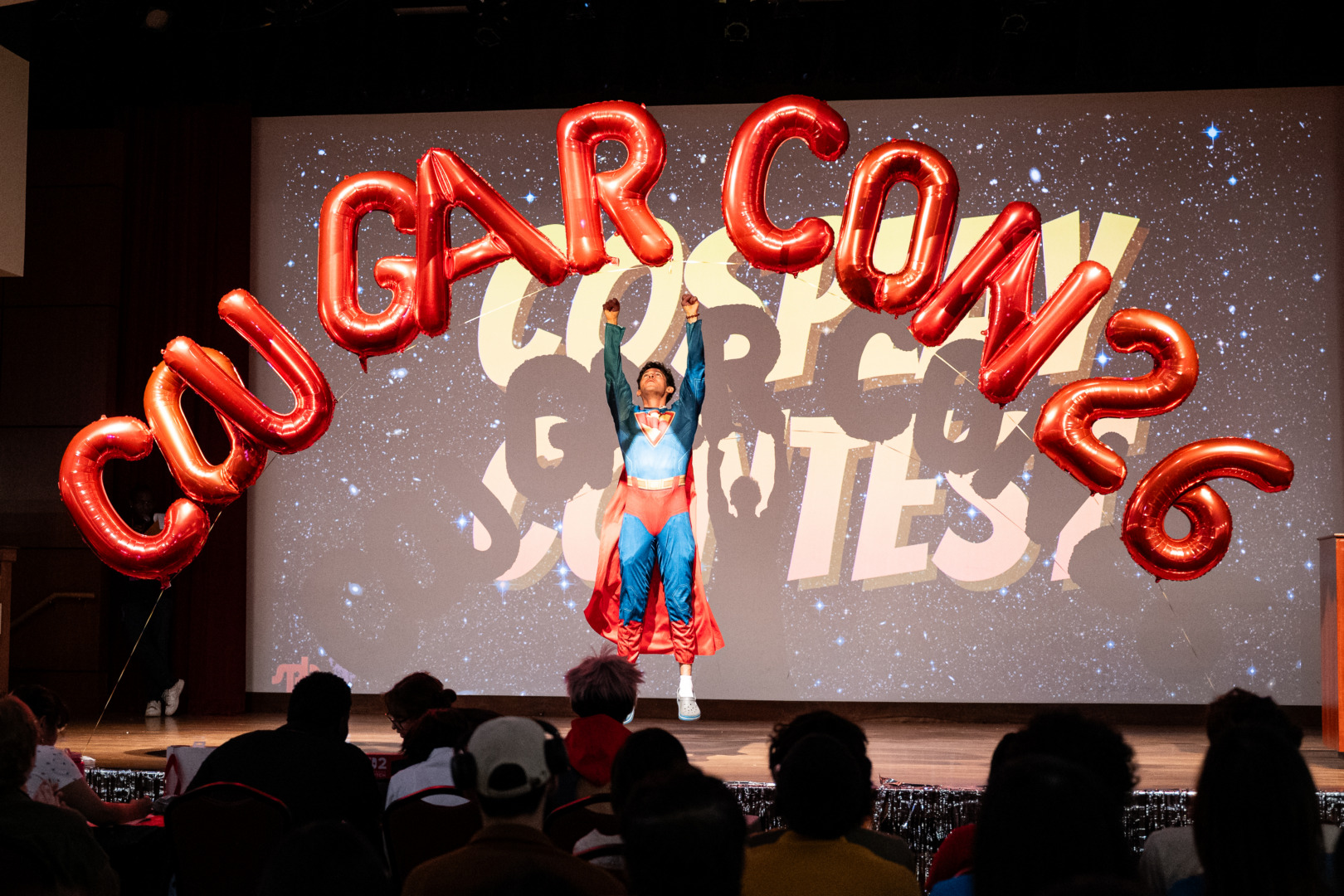
Students dress and pose during the Cosplay contest at the CougarCon convention, on Tuesday, September 1, 2026, in Houston, Texas. | Gillian Wisniewski/The Cougar
The Student Program Board and Coog Esports hosted the fourth annual CougarCon on Sept. 1 at Student Center South, uniting students from a variety of majors through their shared love for pop culture, community and art.
Students were dressed as their favorite pop culture characters and enjoyed food and drinks as they watched trivia contestants compete for prizes, making the atmosphere buzz with excitement.
“I love seeing how people have fun and build community here,” said economics senior and special events chair Eniola Elufioye.
Lining both sides of the room were rows of booths, decorated with colorful pins, stickers, keychains and handmade crafts.
The convention hosts around 500 people every year. Among them, perusing the booths, digital media freshman Vinny Villeda, dressed as an esoteric-style anime character.
“I came for the art vendors, cosplayers and the vibes,” Villeda said. “I love collecting things and I thought it’d be fun to check out the stalls.”
As one of the biggest Weeks of Welcome events, CougarCon brings together art vendors, cosplayers, anime enthusiasts and gamers to participate in a variety of activities.
“I’ve loved watching anime since 2018 and I’ve been looking forward to attending Cougar Con since I saw it on a flyer this summer,” said pre-nursing freshman Yuridia Covarrubias.
Many students like computer science and pre-nursing freshman Nana Boateng stopped by only to see other cosplayers.
Boatend herself was dressed as Megumi from Jujutsu Kaisen.
Cosplayers, roleplayers
Nutrition senior Zahra Haque, who was dressed in flowing robes and a golden sunburst circlet drew excited compliments from fellow fans.
“I’m dressed as Sunday, a character from the game ‘Honkai: Star Rail’,” Haque said. “After playing his character, I feel like many of his personality traits really resonated with me. It took me two years to finally invest in a cosplay, and I’m so glad I finally took the opportunity.”
A student sporting a monkey onesie layered with a purple cape was dressed as the wizard monkey from Balloons Tower Defense, a game from the Cool Math website.
“I’ve been coming every year ever since my first CougarCon in my freshman year, where I found my favorite clubs and met many of my friends,” said economics major James Learn.
Surrounded by students wielding large padded bats, psychology senior Wesley Stivers was instructing students to participate in live action role-play.
“This club is primarily for UA students, but also non-members can come or non-students can come in, fight whenever they want as well,” Stivers said. “The majority of what we do has been sparring with padded weapons, like short swords, spears, bows, shields, long swords.”
Gaming community
Computer information systems senior Garek Gratzer has served as the president of Coog Gaming for the past two years. He first joined the club to compete in the game Counter-Strike, where he qualified to lead as team captain. Now, he continues to bring gamers together at CougarCon.
“It’s been a lot of work for the past couple of years, but I’ve found it very rewarding,” Gratzer said. “Having a space for gamers and esports is something a campus needs, and it’s awesome that UH is embracing it. It’s also been great for finding professional opportunities I’m passionate about.”
Biology senior Ricardo Abel Rios said that after a relationship breakup, his friends convinced him to go out and play Pokémon cards, which provided him with a sense of community.
“The community is really important because it helps build a foundation for getting to know people and for making connections,” Rios said. “It’s been really important for me to join clubs and have fun with everyone.”
This article is published through theGreat Salt Lake Collaborative with funding fromLove the Lake, an initiative of the non-profit Great Salt Lake Alliance. Editorial decisions are made independently by the Collaborative and partner newsrooms. This story was written by Will Ruzanski and Jonathon Downard for the Collaborative as part of a partnership betweenAmplify Utah andThe Daily Utah Chronicle.
Iran’s “Great Salt Lake” is all but gone. After losingmore than 90% of its water volume, Lake Urmia’s ecosystem has collapsed — and the consequences for its surrounding region have prompted whatlocal Iranian media describe as “early stages of forced relocations,” salty dust storms and further environmental instability.
It’s the age-old tale of a saline lake in decline: once it begins drying up, the waterway hasnever fully recovered — and Utah’s Great Salt Lake could be on a similar trajectory. Described as “Sister Lakes” in one collaborative study, Lake Urmia and the Great Salt Lake once shared a striking resemblance to one another, having similar sizes, shapes, elevations and surrounding urban development, among other features.
Today, the Sister Lakes share a more alarming likeness: they’re declining for similar reasons. In Iran, rapid urban development, high agricultural water use and climate change, according to the Sister Lake study, have pushed Lake Urmia over a tipping point. Utah is heading down a similar path, but experts likeDr. Kevin Perry, a leading Great Salt Lake dust scientist and University of Utah professor, think the state can do what Iran hasn’t.
“The people of Utah aren’t going to let Great Salt Lake disappear like Lake Urmia,” Perry said. “It’s really challenging to save any of these salt lakes, and none of them have been solved yet, but I think that Great Salt Lake might be the first.”
But what makes Utah different? And how is the state learning from Iran’s ecological failure? The Chronicle spoke with Kevin Perry and Wayne Wurtsbaugh, a Utah State University (USU) ecology professor who co-authored the Sister Lake study, along with a state environmental official to learn more. Here’s what they think sets Utah apart.
Not repeating history
Utah is learning from Iran’s failure, but not how you’d expect. Before stepping down from his role in July, Joel Ferry, the then-executive director of Utah’s Department of Natural Resources, told The Chronicle that Lake Urmia is “a warning cry.”
(Great Salt Lake (1986) and Lake Urmia (1995) are pictured at their peak water levels | Map data Google Earth 2026)
“It’s the story that we’ve seen play out over and over again, which is, once one of these terminal lakes starts to go into decline, it’s essentially irreversible,” he said. “If we continue to just do what we’ve been doing and act the way we’ve been acting, we’ve seen what’s happened with other lakes. We’re on that same trajectory.”
But recentgovernment tensions have made collaborating with Iranian researchers difficult, Ferry said. The last major collaborative study was published in 2022, when USU’s Wayne Wurtsbaugh co-authored the Sister Lake study with an Iranian professor at Tarbiat Modares University, located in the country’s capital, Tehran.
“If nothing else, [Lake Urmia] just teaches us the story of what not to do,” Ferry said. “We read about it, and we learn from it that way. It’s a lesson we don’t want to repeat; that’s what we can learn from it, we don’t want to go that direction.”
Time and political willpower
Wurtsbaugh thinks research is just one part of the puzzle. The bigger picture, he said, involves time, political willpower and implementing material action. “We have the science, they have the science, that’s not the problem,” Wurtsbaugh said. “The real problem is the political and cultural will to get this done.”
Ferry agrees. “We have the political will,” he said. “We’re financially able to support those actions, because it’s not cheap.”
Regional instability — includingdrought, armed conflict and other factors — shifted Iran’s national priorities away from restoring Lake Urmia. “They had great plans. They were going to retrain people to go from being agriculturists to doing things in cities and things like that,” Wurtsbaugh said. “But everything shifted towards dealing with other cultural issues in the country. The government changed. The president, who had dedicated $5 billion, was voted out.”
For Perry, the tale of these Sister Lakes is shocking, but he doesn’t think Utah is heading towards the same dried-up fate. “The more I learn about Lake Urmia, I’m actually shocked at how similar it is to Great Salt Lake,” he said. “There, the catastrophes already happened. The lake is already dead, and here we put structural changes in place at the legislative level.”
Research fuels action
Both governments implemented various programs to help their diminishing saline lakes. Perry said Utah is keeping up with those initial policy changes. Iran, not so much.
In response to protests, former Iranian President Hassan Rouhani established the Urmia Lake Restoration Program (ULRP) in 2013 to revive the waterway. Their efforts have since stalled. In 2022, Utah’s legislature created the Great Salt Lake Strike Team — a group of various university researchers collaborating with government scientists — to better inform state decision-making.
“It’s up to the scientists and the members of the state government to provide [legislators] with accurate consensus information they can then act upon,” Perry said, describing Utah’s research apparatus as “absolutely crucial.”
Research-based action in practice
Multiplestudies show setting a target lake level is not enough to save a saline lake. Rather, salinity concentration is key. When it comes to Great Salt Lake, Ferry said he agrees 100%. “That’s not going to save the lake,” he said. “We’re gonna have to do things to accomplish and achieve that outcome. Just setting a broad goal alone isn’t going to do it.”
Along with Utah Governor Spencer Cox’sproclamation to reach “healthier lake levels by 2034,” Ferry said the state is managing Great Salt Lake’s salinity levels to support a balanced ecosystem, rather than focusing solely on water levels.
“We have done some significant management implementation to avoid this ecosystem collapse, which is when the salinity goes too high,” Ferry said. He emphasized that innovative state research enabled Utah’s DNR to move salt between different sections of the lake to “maintain a salinity level in a healthy range.”
“Even though the Great Salt Lake is just two feet from hitting all-time record low again, we’re nowhere near where we were in terms of salinity,” he said. “Without the research that we’ve done, without the kind of trial and error in the studies that we’ve done, we would just be still shooting in the dark.”
And with this year’s record-low snowpack — which pushed the two largest reservoirs in the United States toreach all-time record lows — Ferry views Great Salt Lake staying above new record lows as a win. “We normally would have expected to see Great Salt Lake hit a record low this year, and it didn’t,” he said. “It didn’t because our efforts are working. Now we’re not there; we need to do more, but we’ve done a significant amount.”
Some say it isn’t enough
Both governments have faced pushback. In Utah, peaceful protestsannually flow through the state’s capitol building to demand increased action. In Iran, originally peacefulprotests swept throughout Iran’s Azerbaijan region in the early 2010s after their government refused to provide financial protection for the lake. Protestors were suppressed with force, leading tohundreds of arrests after more violence was ignited.
A 2023 USU report found only 14% of Utahns believe their elected officials are doing enough to save the Great Salt Lake. For Perry — a scientist who presentshis research on harmful lakebed dust to state lawmakers — there are mixed reactions.
“When I talk to the legislators, only about 20% of them take the Great Salt Lake issues seriously, and 80% of them are mostly focused on other issues, in part because I think a lot of the legislators are actually developers,” Perry said. “The story of Great Salt Lake impacting air quality, impacting the economy, the livability of our area is not something that they want to focus on because it could theoretically discourage people from wanting to move to Utah, and our entire economy is built upon continued growth.”
For Wurtsbaugh, the state’s continued growth model is standing in the way of saving Great Salt Lake. “That brings more people… more people need water,” he said. “[Legislators] don’t see it as that serious a problem yet.”
Policy timeline
Utah began passing legislation to protect the Great Salt Lake in the late 2010s. Since then, the state has developed a robust water tracking system, invested inwater rights and worked with privateindustriesto limit their water use. In 2025, Gov. Cox created the Great Salt Lake 2034 Charter, providing$200 million in private commitments towards restoring the lake. More than$300 million total has been appropriated for the lake, and an additionalone billion dollars may come from the federal government this year.
Iran’s initial funding was much larger. In 2022, the Tehran Times reported the Iranian government earmarked over$3.5 billion for the restoration of Lake Urmia. That same year, their restoration efforts were reported at 98% complete.
Despite billions of dollars and initial signs of growth, the lake dropped back down to dangerous lows a year later. In the summer of 2026, Iran experienced anationwide drought, worsening the issue. Iranian hydrology researcher at Urmia University’s Lake Urmia Institute Kamran Zeinalzadeh latersaid efforts to keep the lake permanent year-round are no longer feasible.
Some say the ULRP’s inability to save Lake Urmia stemmed from alack of coordination between officials and citizens. Additionally, the government wasnot able to financially support wide-sweeping decisions and prevent illegal water extractions. They also overlooked how water irrigationdoes not necessarily mean water enters the lake, according to one study.
Despite accounting forjust under half the volume of all lakes worldwide,nearly all 120 major saline lakes in the world are in some state of collapse due to unsustainable water use. These waterways maintain diverse ecosystems that supportmillions of people, their animals and livelihoods. When they disappear, the consequences — including hazardousdust storms, ecosystemcollapse and economic strains — can negatively impact those living around them.
“We use so much water that we have to have 130% of normal snowpack just for the lake not to shrink, which is certainly putting significant, long-term pressure on the lake,” Perry said. “The one big thing is that we’re all in this together; we’re all water users.”
The Great Salt Lake Strike Teamfound natural and human water use, mostlyalfalfa farming, accounts for up to 73% of the Great Salt Lake’s decline. Climate warming contributes 8-11%, while natural variability between different water years contributes up to 23%, according to their report. Most of Urmia’s depletioncan also be attributed to agriculture, but somestudies suggest climate change has had a greater impact, accounting for up to60% of inflow reductions.
“The challenge that we’re seeing now is the lows are getting lower, the highs are getting lower too, and that means it’s a downward trend,” Ferry said. “I think that the debate right now is, how much more do we need to do to achieve the change that we want to see?”