
Hailey Nguyen/The Cougar
There’s an irreplaceable pride in bragging about the city that made you who you are today. Whether it nurtured you through adolescence, helped you find renewed joy in life, build a career or meet great friends, a city can hold infinite meaning.
When we think of major cities like Los Angeles, Las Vegas, New York City or Chicago, a clear image of each comes to mind. They are internationally revered geographical starlets—effervescent manifestations of the American dream.
Houston is the fourth-largest city in America, known for its advancements in space exploration and medicine, diverse population and rich history of art and culture. Yet in the tale of big-city glory, Houston is much like Cinderella before her fairy godmother’s transformation: beautiful but lost behind fleeting impressions and a lack of distinction.
Through its failure to uplift smaller neighborhoods, typical Southern car dependency and carnivorous desire for notoriety that often comes at the cost of residents’ happiness, Houston is too caught up in an identity crisis to let its full potential shine through.
Every gem shouldn’t be hidden
One of Houston’s biggest draws, especially compared to other Texas cities, is its incredible art scene. Creativity seems to ooze from Houston’s pores, whether through Montrose’s thrifting scene, performances in the Theater District or works of art displayed in museums throughout the city.
Much of this art also reflects Houston’s diverse culture, with no single community monopolizing any artistic category. The creations are just as varied as the people who make them, with each mural, memorial or mini landmark having a unique voice.
However, much of this goes overlooked because it isn’t publicized.
Smaller communities such as the Third and Fifth wards, along with surrounding cities like Sugar Land and Pearland, seem to be left out of positive conversations about Houston. Yet some of the best cafes, restaurants and bookstores can be found in these areas, often overlooked in favor of places that exemplify stereotypical big-city “coolness.”
When Houston is reduced to a glimmering downtown skyline and a few interesting districts, it becomes indistinguishable from other cities with similar attractions. It does a disservice to what the city represents, robbing it of its distinctiveness and keeping underrepresented creatives and business owners out of the limelight.
This isn’t the fault of the residents, though. After all, it’s hard to know about somewhere that is impossible to get to.
Car dependency is holding us back
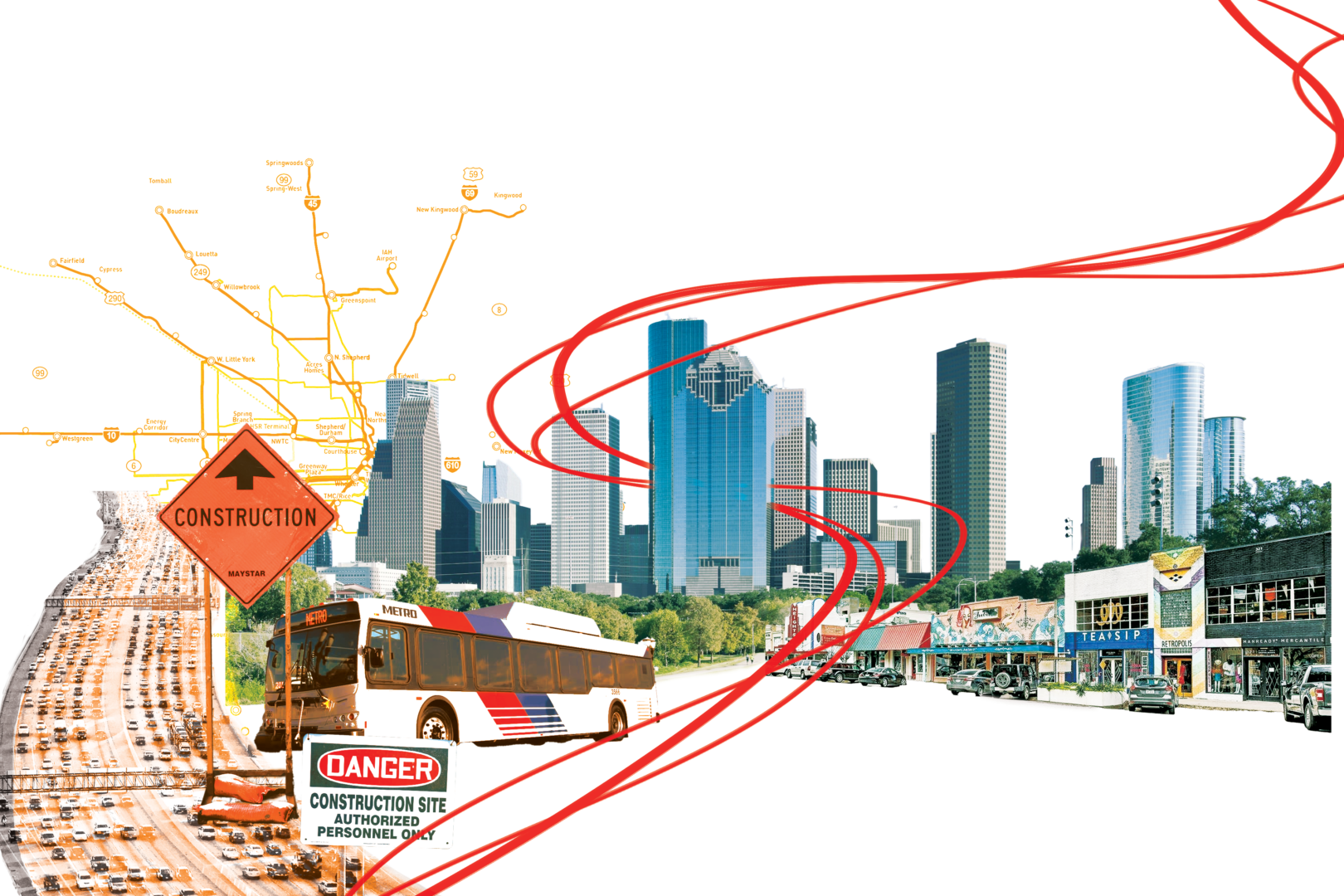
Houston, like much of the South, is car-dependent. Anyone who has tried to walk long distances on the thin, mangled sidewalks can tell you that automobile ownership is imperative to your success as a Houstonian.
While car dependency is already a challenge in Houston, the city’s lack of reliable public transit only makes the problem worse.
For those who don’t want to deal with the downsides of driving, such as poor road conditions, high parking costs or who simply cannot afford a car, the city fails to provide a viable alternative.
Though Houston does have a primary public transportation system, the intricate METRO network leaves much to be desired.
Many trips require additional walking time. Buses frequently face detours and service disruptions that aren’t reported in the METRO app or third-party navigation systems. Some stops are also in dark, secluded areas. All of these pose major safety and reliability concerns and put Houston’s public transportation rating well below the top 20.
These transportation issues make it difficult for Houstonians and visitors to enjoy what the city has to offer, especially in areas without reliable bus routes.
Always growing, never established
Houston leaves its best parts underrated and has yet to improve its walkability or public transit quality because it doesn’t know what it wants to be. Pulled between the two worlds of big-city stardom and rich rural history, Houston is in limbo.
Downtown, the Heights and many other popular areas are reminiscent of other major cities, but no single attraction seems to stand out. There’s no defining draw, even though Houston has the potential for one.
When you turn a city into an industry, hungry for wealth and recognition, you neglect the residents who are already pouring enough care, hard work and artistry into it to make it one of the top cities in the U.S.
By homing in on art and culture and reducing car dependency to give people easier access to Houston’s beauty, the city could become worthy of both international praise and hometown pride.
Like any other Cinderella story, Houston doesn’t need a new identity; it just needs to embrace its unique greatness and be given a chance to truly shine.
opinion@thedailycougar.com
—
“Houston is having an identity crisis” was originally posted on The Cougar