
On Oct. 6 at 8:36 a.m., Boston University administration sent students an alert which read: “Due to a traffic accident at Mass Ave. & Albany St. on the BU Medical Campus, traffic is significantly impacted. Boston Police are on scene.”
Just about four hours later at 12:27 p.m., students received an update, alerting students that the “police activity” had been “resolved” and the intersection had been cleared.
The University did not release any other information to students about the incident. However, The Daily Free Press and other local news outlets revealed this so-called “traffic incident” had resulted in the death of a man after he was hit by a BU shuttle bus.

After these outlets revealed this information, I asked my fellow BU students if they had heard about the tragedy. Their immediate reply? Asking me whether or not it was a student. When I told them “no,” I observed the slight relief on their face.
It turns out the victim, Alhanouf Alhazzaa, was a 40-year-old Saudi Arabian man. Would there have been a memorial for him on campus if he was a 19-year-old BU student? Probably.
However, BU labeled this man’s death as a “traffic incident” that was eventually “resolved.”
Afterward, the BU administration continued to remain silent, not even sending an email to its student body informing them of this tragedy within their community. Someone lost their life and not a sliver of acknowledgement was given to honor it.
Academy Express — BU’s vendor — owned the bus that took Alhanouf’s life, which an Academy Express employee drove. So, is BU trying to protect its reputation?
Or does this have more to do with the fact that Alhanouf is viewed by the BU administration and the Boston community as an “other”? Does Alhanouf’s lack of purpose within our school community make him undeserving of commemoration?
I thought of an incident that occurred in February 2024 at the University of Georgia, when 22-year-old nursing student Laken Riley was brutally murdered while jogging on campus.
My sister, a student at UGA, texted us the very next day about the updates that the school provided its students. Just four days after Riley’s tragic death, my sister texted me a photo of hundreds of UGA students gathered to mourn the loss.
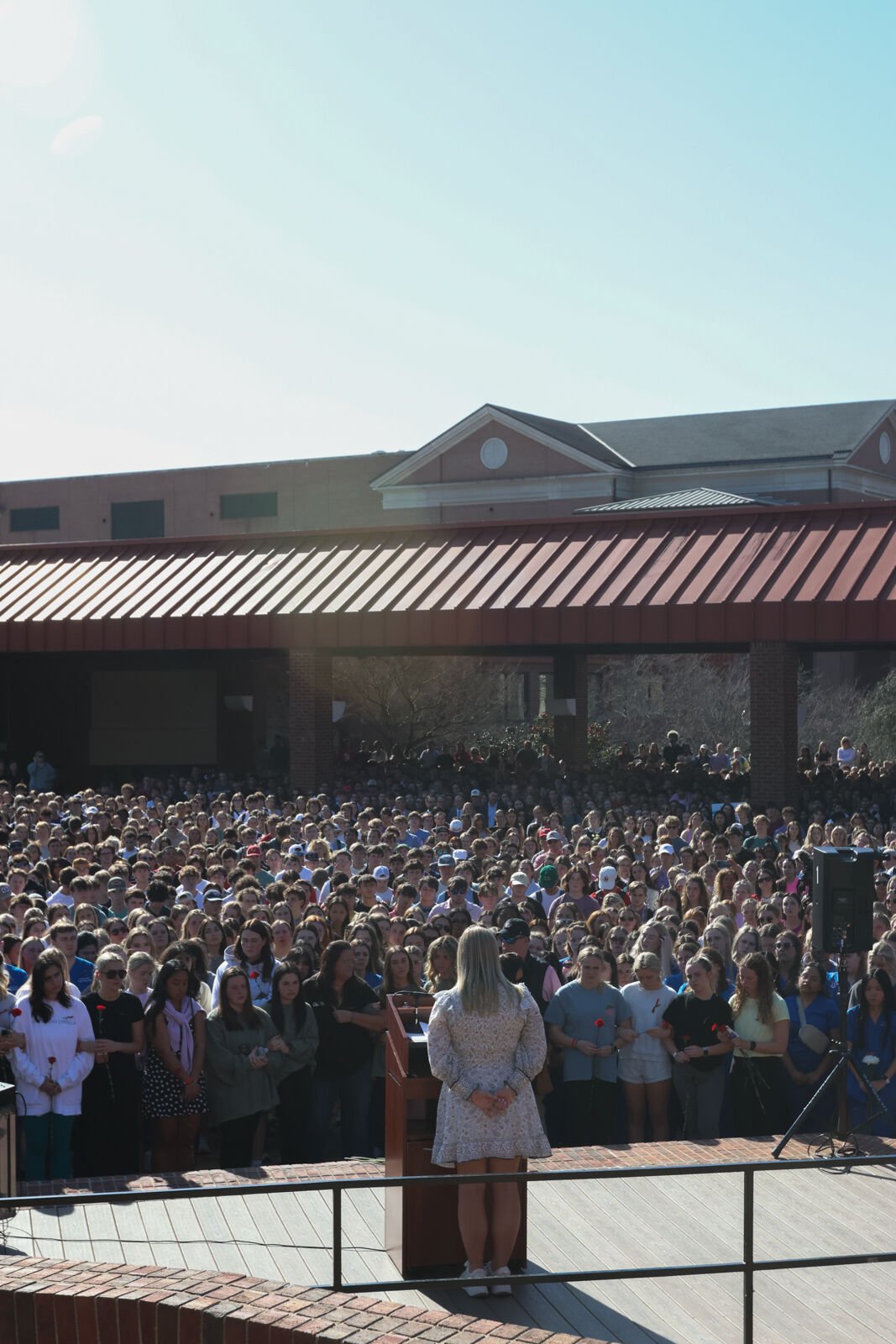
When I think about the demonstration of love and support for Riley at UGA contrasted with the way the BU community has responded to the recent loss of Alhazzaa, I am both saddened and disappointed.
Looking at the incident through the lens of ontology, the study of being and existence, we can understand the community’s apparent disinterest as an outcome of “othering,” — a process through which certain people are placed outside the ontological framework and labeled as “outsiders,” defined by stereotypes of inferiority and/or abnormality.
The BU community othered Alhanouf Alhazzaa.. Somewhere along the way, it was decided he does not count as a full human being and he does not deserve the same commemoration Laken Riley received at UGA.
What places Laken Riley within the ontological framework and Alhanouf Alhazzaa outside of it?
Over a month has now passed since this tragedy. BU students continue going to classes, buses and trains continue passing by and Alhazzaa’s death will be forgotten by Bostonians.
What factors are considered when it comes to deciding what is worthy of pausing our day for? What do we take into consideration when deciding who is “important” enough to create a memorial for when they pass away?
We must recognize the flaws of the hegemonic ideologies that are instilled in most of us from an early age. A human being is a human being — regardless of how old they are, where they are from, what language they speak or how educated they are. Alhanouf Alhazzaa deserved better.