
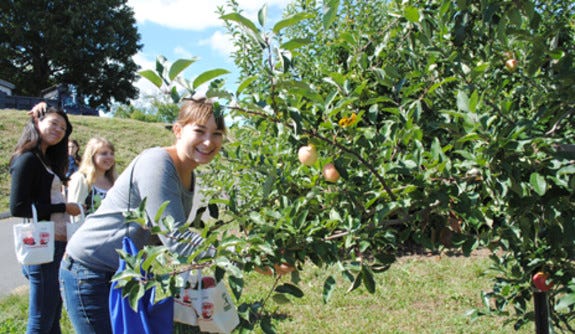
Even die-hard brunch fans may have a reason to skip their hangover-absorbent stack of dining hall pancakes this Saturday morning. The true foodies among us will be congregating at Rose’s Berry Farm for a hot breakfast cooked on-site with the vegetables, fruits, and berries that reach the peak of their growing season in late September. These meals are the main attraction of the Yale Farm Tours, a series of events coordinated through Yale Dining services allowing students to trace the food they eat on campus back to its source.
Rose’s Berry Farm is one of many local farms that supply campus dining halls with fresh produce, including berries, apples, pears, and squash. Central to its mission is the idea that stewards of agricultural land are in a unique position to foster public engagement with the natural processes underlying food production. For over a decade, spring through fall, the farm crew has been curating “Breakfast with a View” events in which they invite customers to enjoy a buffet-style meal at a wooden pavilion overlooking fields, orchards, and beds of wild flowers. Nine years ago, they extended the invitation to students from area schools including Yale, offering a version of the breakfast event that includes a hayride and a pick-your-own opportunity at one of the farm’s berry or fruit patches. This year, tours are running every Saturday beginning Sept. 15 and ending Oct. 6. The first 90 students to respond to the email from Yale Dining soliciting sign-ups are selected to attend.
I spoke to Pedro Aviles, the farm’s kitchen manager, who oversees the cooking and serving of each dish during the Yale Farm Tours, as well as the “Breakfast with a View” events. He describes the farm’s signature berry compote as a major draw, not only because it showcases Rose’s Berries’ most popular crop, but also because it can be paired with virtually any other item on the menu — piles of pan-browned pancakes and French toast, sugar-dusted pastries, tart greek yogurt. No matter what other dishes a guest chooses to ladle onto their plate, they will likely leave with a berry-stained tongue buzzing with residual sweetness.
“It’s the best meal I’ve had at Yale,” says Emmett Chen-Ran, DC ’20, who attended tours both this year and last year.
While students are savoring their breakfast, farm manager Sandi Rose holds a raffle for t-shirts and gives a short welcome presentation to acquaint them with the farm’s history and role within the community. She finishes by naming the different types of produce her guests might encounter as they explore the grounds, as if she is about to release them onto an all-organic scavenger hunt.
Rose is particularly equipped to speak about the vital position a produce farm occupies within the social and economic ecosystems of southern Connecticut. Since 1981, she has been working to establish the farm as a cultural resource for the surrounding region, inviting families to pick their own crops, purchase foodstuffs on-site, and even hold events that play on the rustic aesthetic of the property’s natural spaces. Her team of employees are equally committed to building public engagement with their line of work. Students touring the farm have the opportunity to meet many of these community-oriented minds driving the local food network that supplies Yale with healthy, sustainable meals.
After the breakfast, a caravan of tractor-drawn hay wagons pulls up to the steps of the pavilion to load passengers. The wagons then wend their way along a dirt road, cutting through hills of apple trees and at one point glancing past the shallow, weedy water of a duck pond. The final destination varies depending on the date of the tour. When apples or pears are in season, the caravan parks beside a glade of trees and students are allowed to fill a small bag with as many fruits as they can fit. If the fields of raspberries are ripe, students are handed plastic pints and released down the long rows to scavenge for the brightest and plumpest.
During my visit to the farm, I fantasized about hiding among the neatly pruned branches of the Red Delicious apple trees so as to be mistaken for a benevolent forest nymph and left behind when the bus returned my classmates to campus. However, a savvier farm tourist would note that the vigorous seasonal beauty of the fields and orchards could, in some form, be carted back to Yale along with the pick-your-own apples and berries.
By now, it is a tired observance that the frenetic pace of student life can make it difficult to tap into the full aesthetic, personal, and social potential of our meals. For those with back-to-back midday classes, “lunch” often means ten minutes of dodging elbows to reach the prepackaged cheese at the back of the Durfee’s refrigerated section. The question then becomes: what actions can we take to situate our food experiences within the broader schema of our concept of wellness?
Touring Roses’ Berry Farm, students are not only invited to eat a meal gazing out at the site of its origin, but also to roll fruit off the vine with their own fingertips. Directly interfacing with the sources of dining hall food is one way to contextualize the act of consumption, increasing a student’s ability to engage mindfully with their meals.
Like many of my favorite university-sponsored activities — the First-Year Day of Service, the Davenport College theatre trips — the Farm Tours remove students from campus, giving them a chance to reflect on Yale from a distance. Perhaps, upon returning, the raspberry-infused spa water we pour at breakfast will taste twice as sweet.
Breakfast in the Field was originally published in The Yale Herald on Medium, where people are continuing the conversation by highlighting and responding to this story.