Author Archives | Truitt Clark

Two Tech players taken in MLB Draft

Photo by Austin Foote

With the coming of the 2015 MLB draft, hundreds of players were given the opportunity to ascend to baseball’s highest level. Among those beginning their professional careers next year are two Yellow Jackets, infielder A.J. Murray and outfielder Daniel Spingola.

Murray, a senior from Westfield, New Jersey, started every game this season and led the team with 14 multi-RBI games. A versatile player, he started at catcher, in the outfield, and as designated hitter at different points throughout the season. He was drafted by the Houston Astros in the 48 round of the 2011 draft, the year he left high school. This year, he was drafted in the 14 round by the Minnesota Twins.

“It was great to get drafted out of high school but I knew then I was going to go to Georgia Tech and play college ball,” Murray said courtesy of Ramblinwreck.com. “I’d say this [year’s selection is] more rewarding just because of the work that went into Georgia Tech and all the great times I’ve had at Tech. I wouldn’t trade that for anything. The coaches and the guys I played with and playing in the ACC got me to this point. I’m very grateful for that opportunity. That’s what made this happen. It made me a better player along the way.”

Spingola, a senior from Roswell, Georgia, highlighted this year with a 12-game hitting streak and a 26-game reached-base streak, both career bests. Each of his 47 starts this season were in the outfield. Last season, he was drafted by the Cubs in the 24th round but ultimately decided to remain at Tech. This year, he was once again drafted by Chicago, this time in the 31st round.

“There was definitely a lot of stuff going on last year that made decisions a lot more stressful. I had a choice,” Spingola said, courtesy of Ramblinwreck.com. “This year there was no hesitation on my part. I always had it in my mind that I was going to hopefully play college ball for my career and go four years like, I guess, a normal student would. Obviously the year didn’t end up as I had hoped but I definitely think it was a relief to know that I did all I could at Georgia Tech and that I have an opportunity to continue playing baseball, which is what I want to do.”

Although only two of Tech’s current players were drafted, there were also five signees drafted from Tech’s eleventh ranked recruiting class. Highlighting the group is catcher Tyler Stephenson, who was the 11 overall pick this year by the Cincinnati Reds. Also selected were pitcher Jonathan Hughes by the Baltimore Orioles in the second round, catcher Joey Bart by the Tampa Bay Rays in the 27 round, shortstop Carter Hall , son of Tech Head Coach Danny Hall, by the Atlanta Braves in the 34 round, and pitcher Tristin English by the Cleveland Indians in the 39.

Stephenson and Hughes have both elected to go pro, while Bart, Hall, and English will be honoring their commitment to Tech. This is the second time in three years that Tech had a signee drafted before the second round. In 2013, the Baltimore Orioles drafted outfielder Josh Hart out of Parkview High School with the 37 overall pick.

Posted in UncategorizedComments Off on Two Tech players taken in MLB Draft

Removing Publix stop is an inconvenience

Photo by Brenda Lin

While Parking and Transportation Services is not a popular branch of Tech’s operations, they had not bothered me until the recent announcement of the reduced Publix trolley stop service. As a carless student, I prefer biking but use the Trolley for groceries. As of June 1, the trolley only stops at Publix on weekends and weekdays after 5 p.m. Students who have evening classes or prefer avoiding the crowded shopping hours will be inconvenienced by this change. While it is not a long walk to the Midtown MARTA stop, carrying a heavy load of groceries in the summer heat is definitely an inconvenience.

The change in service itself does not bother me as much as the claimed reasoning behind it: to “provide space availability to passengers at Tech Square as increased ridership is anticipated in the fall,” according to the PTS website. Where is the logic in that purported purpose? Removing the Publix stop during typical business hours will not cause people to stop using the Trolleys; it will not address the problem of increased ridership since the grocery shoppers will simply walk to the MARTA station stop.

If the purpose of this change was for the routes to run faster and thus slightly increase frequency of trolleys, then they should cut down on the time spent stalling at the Transportation Hub instead of cutting the brief stop at Publix, where there is a stop sign anyway. I may not be an engineer, but the most logical and responsible solution to increased ridership would be running more Trolleys, not reducing service to a key stop.

I believe that PTS is reducing service to this stop because it is near University House and Square on 5th. As the competitively priced, higher-than-campus-quality student apartments are located near Tech Square, I think Tech is subtly trying to make these new housing options inconvenient and drive people back on campus for future housing. By protecting their commercial self-interest, Tech is avoiding the positive, but of course more costly, way of addressing this problem: improving on-campus housing.

This preventative move of reducing service near the new independent student housing will affect every student who uses the Trolley for grocery shopping. The fall 2015 transportation fee of $81 that everyone pays has not changed from spring 2015 or fall 2014. Therefore, even if Tech cannot find a way to increase Trolley service, the service should at least be kept constant.

Tech, please do not try to counteract a minority of students choosing a new off-campus option at the expense of the majority of students, who will experience decreased service at the same cost. And if you must reduce service because better off-campus options threaten you, then at least be straightforward about it and avoid providing illogical reasons for your financially motivated action.

Posted in UncategorizedComments Off on Removing Publix stop is an inconvenience

Lack of storage space causes Smallmart to close

Photo by John Nakano

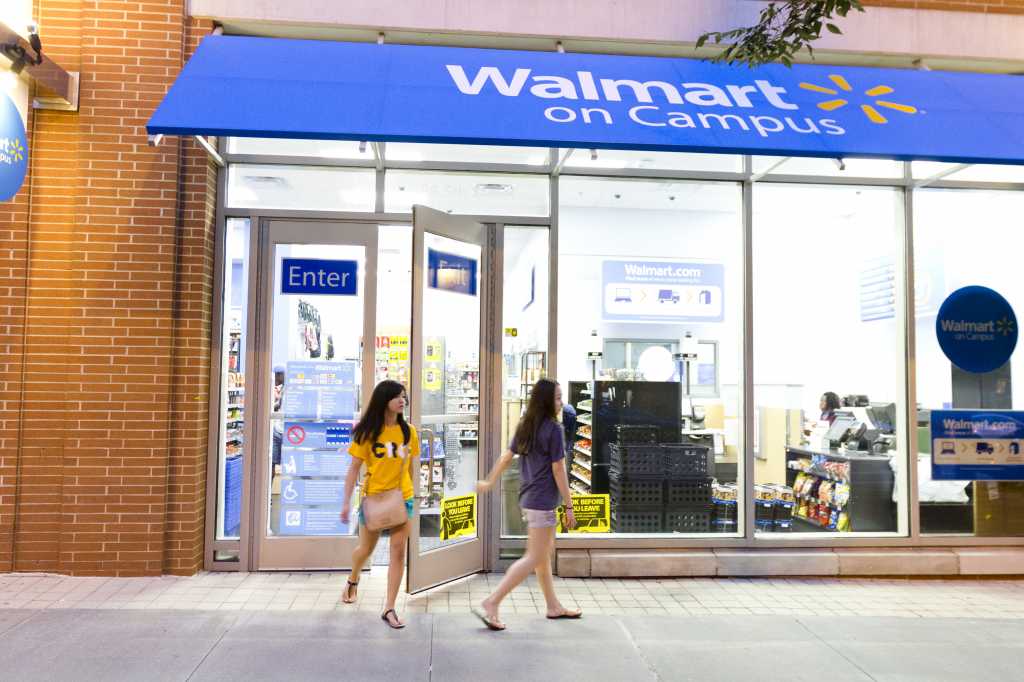
On July 3, the Walmart location in Tech Square will close.

The store, sometimes referred to as ‘Smallmart,’ opened at 86 5th Street NW on August 14, 2013 as the smallest branch in the country at the time. However, according to employees, this caused some problems in the operation of the store.

“We had no backroom storage, and there was no cooler space in the back, so we received our inventory every day from the Supercenter, and whatever we got that day was all we had to put out,” said Staff Pharmacist Carla Gillespie-Berry. “It wasn’t that we weren’t successful, and we loved being here — it was just we needed more space.”

The store closing comes shortly before the opening of University House and Square on Fifth, apartment high-rises marketed towards Tech students.

According to Gillespie-Berry, the increased number of students would exceed the capacity of the Tech Square Walmart to replenish inventory sufficiently. This was one of the reasons that the decision was made to close the store.

Tech students expressed general concern over the closing of the store.

“I think Smallmart closing will make it a lot more difficult for Tech students to get basic necessities conveniently,” said Emma Smith, a second-year INTA. “It’s so expensive to park on campus that most Tech kids don’t have cars. That means we can’t drive to Walmart and even Publix is a
far walk.”

According to Gillespie-Berry, the location in Tech Square was a prototypical new business model for Walmart, and the two years of the store’s operation had demonstrated that the logistics made the store inefficient.

“Our inventory came out of the Supercenter everyday,” Gillespie-Berry said. “We had to have vendors come every day, and the Walmart truck had to come every day. The way we received our merchandise was totally different from the way [Walmart] stores normally receive merchandise. [Walmart] told us it just wasn’t a good business model from an inventory standpoint.”

Gillespie-Berry also emphasized that all of the current employees at the Tech Square Walmart location will be reassigned to other Walmart stores, and that no one will be laid off.

In 2013, Jason Long of Shift Marketing Group noted that the Tech Square Walmart’s performance would likely be closely monitored by executives of the company in order to determine whether the smaller store business model would be viable. He added that, on the surface, campus Walmart locations make sense.

However, Walmart continues to open up stores on campuses throughout the country, the most recent example being its location at Virgina Commonwealth University (VCU), which began operation on April 29. The VCU store is 5,000 square feet in total, which is double the size of the location in Tech Square, according to the National Real Estate Investor.

The Walmart location in Tech Sqaure was only the second time that a store had been opened on campus, following the branch at the University of Arkansas in Fayetteville, which began operation in January 2013.

Initially, Tech Square was chosen as a location for Walmart due to the area’s success with other businesses and its close proximity to the high density of college students. One of the major selling points of the store was that the prices of items in the inventory would be equivalent to their price at a normal Walmart location.

The Walmart at Howell Mill Road will take over all prescriptions served by the Tech Square branch, unless the client transfers them prior to July 3.

Posted in UncategorizedComments Off on Lack of storage space causes Smallmart to close

President Bud Peterson takes annual state tour

Photo by John Nakano

On Monday, June 15, Tech President G.P. “Bud” Peterson, accompanied by his wife, Valerie “Val“ H. Peterson, kicked off his annual tour of the Georgia.

During this seventh iteration of President Peterson’s traditional state tour, he visited 30 counties as well as 13 individual towns and cities. The total length of the trip was approximately 650 miles, and it spanned four days.

“We started the Georgia Tour when I first came to the Institute from Colorado so that I could learn about the state,” Peterson said in a news release. “My initial thought was that we would do it for a year or two. But we’ve continued it every year because it’s such a great opportunity to meet the citizens of Georgia, current and prospective students and people whose businesses Georgia Tech has helped to improve.”

According to Laura Diamond, Media Relations representative, the annual Georgia Tour is intended to provide President Peterson with an opportunity to interact with parents, alumni, and others connected to the Tech network. He discussed Tech’s statewide impact and fielded questions regarding the institution from a variety of members of the community, including business people, lawmakers, alumni, donors and regents. This year’s tour centered around locations in west and north Georgia.

“These tours illustrate that Georgia Tech serves the entire state,” Diamond said. “This year’s stops included visits to companies that have improved efficiencies thanks to technical assistance and expertise provided through Tech’s Enterprise Innovation Institute.”

Although President Peterson did not visit any USG institutions during the state tour, he was able to make a stop at Young Harris College to observe a tribute to former Georgia Governor Zell Miller and First Lady Shirley Miller and tour the college campus.

President Peterson was also able to visit the former governor to thank him for the beneficial impact of the HOPE and Zell Miller scholarship programs for undergraduate students. He noted, especially, how many Tech students are helped by the program, and that many Georgia inhabitants are able to attend Tech because of the scholarship.

During the four days of the trip, President Peterson was able to make stops at Fayetteville, Newnan, LaGrange, Carrolton, Cartersvillem Ringgold, Dalton, Big Canoe, Young Harris, Blue Ridge, and Dahlonega. According to Diamond, this year will mark the first time that President Peterson will have visited the city of Ringgold.

“During the course of the previous six Georgia Tours, the president traveled more than 4,500 miles, stopped in nearly 40 cities and traveled through almost every one of Georgia’s 159 counties,” said Diamond. “If we add this year’s 650 miles, the state tours have covered more than 5,000 miles.”

Tech released videos for each day of President Peterson’s tour. Each video covers President Peterson’s interactions with members of the community in the towns or counties he visited that day.

A map of the route President Peterson took in this year’s Georgia Tour is available online on the Georgia Tech News Center. Each day’s travelling is color-coded in order to easily present the areas that President Peterson and his wife visited during that time.

Posted in UncategorizedComments Off on President Bud Peterson takes annual state tour

GTPD works on new initiatives with USG

Photo by David Raji

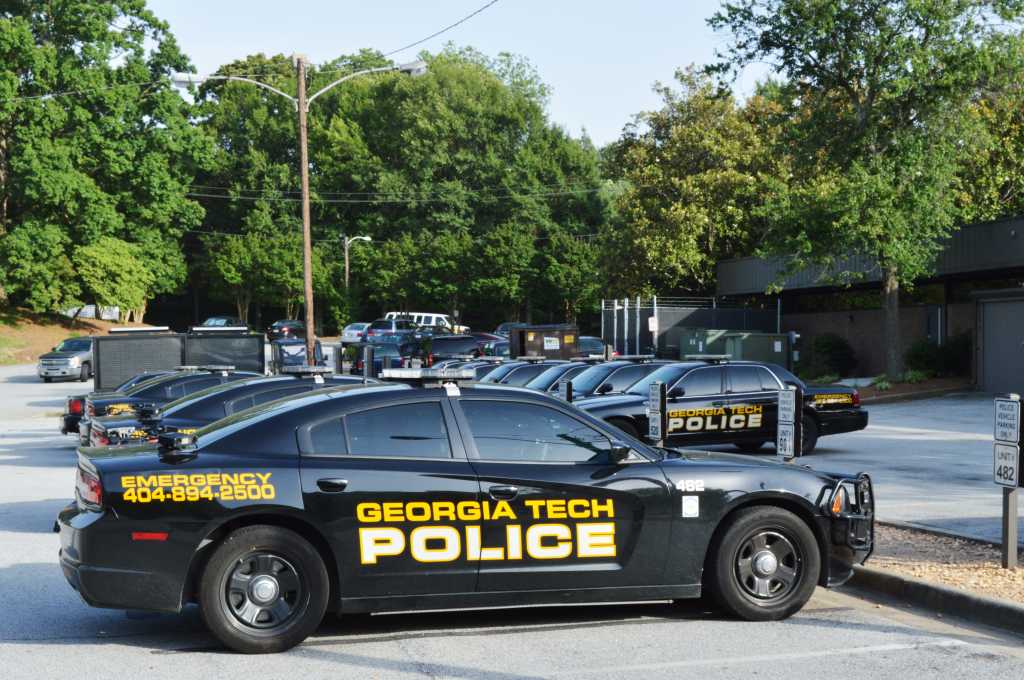
This summer, the Georgia Tech Police Department (GTPD) continues to develop its operations as a nationally accredited police force on and off the Tech campus.

According to Rob Connolly, Police Chief of GTPD, a number of training programs are currently being conducted by GTPD.

“Our K9 unit is actually not just helping train the USG schools but also other municipalities with K9s, and certifying them,” said Connolly. “[We are also doing] active shooter training, a tactical response to any active shooter. We’ve done some workshops with the University System of Georgia (USG) to help all the other schools which are not as resourceful to get training.

GTPD has partnered with Georgia’s Department of Homeland Security to conduct some of these training programs, and are carrying them out partly in conjunction with Gwinnett County.

Presently, GTPD is finishing the K9 unit certifications of Hall County Sheriff’s Office, Rockdale County Sheriff’s Office and Floyd County Police Department. Connolly added that last year, GTPD received an award from USG for its training programs.

“It’s a lot of outreach, and especially with the Board of Regents schools, we like to extend, help, and develop best practices and support other schools too,” Connolly said.

GTPD also continues to evolve its work on Tech’s campus. According to Connolly, GTPD has focused on working with Burns Newsome, Tech’s Director of Compliance for Title IX.

“We’ve also identified Captain Randy Barrone to be our Clery Compliance Coordinator for the Board of Regents on the committees,” Connolly said. “He governs the collection of data [for the annual security report] and the validating of those policies within that data, and making sure they meet compliance, and working across the whole campus to monitor all those changes.”

By being proactive, GTPD also hopes to reduce the number of Clery Act notifications it is required to issue, according to Connolly. New bike units are one way GTPD hopes to gain a more visibility and easier access for all students and faculty who wish to contact them.

GTPD has also implemented a new camera system, which incorporates feeds from locations across campus to provide a comprehensive method of monitoring for illicit activity.

A building layout of the entire campus can be accessed, which displays the current locations of all patrol cars currently on duty, as well as places where cameras are transmitting feeds. Any one of these feeds can be enlarged to show activity in that area.

According to Connolly, the new system helps the GTPD responds to incidents more efficiently and has assisted in the solving of many cases.

In conjunction with the implementation of the cameras, GTPD works with students to operate them.

“He patrols [the cameras], and when calls come in, he can go and check and see and put eyes on [the activity], so we can get direction of travel and a lot of other pertinent information,” Connolly said.

An overarching initiative passed by the USG on May 19 was aimed at centralizing implementation and oversight of safety procedures — among other things — at the public universities throughout Georgia.

“[The Board of Regents] wanted to make sure everyone was working off of the same requirements and on the same page,” said Bruce Holmes, Chief of Police for USG. “That came from the community, which were folks from the institutions. [For] the Clery Acts, they wanted to come up with some templates, not that everybody had to use, but just to make sure that everybody had the same information.”

However, since the policy of GTPD is nationally accredited, the initiative will likely not change much, according to Connolly.

“The standard that we’re at, based on the national accreditation, I don’t think it will change much,” said Connolly. “It might change the other 30 Board of Regents schools, but it really won’t change much of our [policy].”

Connolly added that the initiative will likely bring out some best practices among all of Georgia’s public universities.

“In the public safety area, they were looking at some assessment guidelines, [and] they named five areas for each department to provide services in,” said Holmes. “I think they were just trying to make sure each department was providing the same level of service.”

Another new addition by the GTPD is a touchscreen interface located in the lobby of police station. After hours, when the officer working in that area has left, students may use the interface to get in contact with officers on duty.

According to Connolly, the interface replaces a radio system, and will be able to be used to call into disptach. Passively, the screen of the interface displays GTPD safety videos. GTPD are still testing the new system.

Posted in UncategorizedComments Off on GTPD works on new initiatives with USG

Rolling Stones’ rocking return to Bobby Dodd

Photo courtesy of Rob Felt

Cloudy skies cleared up on the evening of June 6, when the Rolling Stones made their second appearance at Tech, drawing over 40,000 fans from over a 20-mile radius into Bobby Dodd Stadium. The stands and field were packed will people — a good portion of whom had attended the Stones’ concert at Bobby Dodd in 1989.

The concert generated an abundance of positive reviews. “It was a lot of fun,” said Ariana Olalde, second-year CE. “The [Rolling Stones] were super energetic. I have never seen the stadium so packed.”

During the concert, lead singer Mick Jagger joked, “We’ve had a great time here in Atlanta. I was very impressed by Stone Mountain — so much so that we’re going to make a Rolling Stone Mountain next door.” The final song was topped off with fireworks, a spectacular end to the night.

Ryan Bamford, former Senior Associate Athletic Director at Tech, spent a great deal of time and energy bringing the Rolling Stones to Tech, as well as Anschutz Entertainment Group (AEG) the presenter company for the Rolling Stones. Bringing the English rock band to Tech was a challenging process involving site visits and various contractual terms that took a couple years to bring to actualization.

“It caused a little anxiety on the part of AEG, as Tech was not affiliated with the music industry and the stadium had changed a lot in twenty years — so trying to fit a concert into the stadium was a real logistical challenge,” said Mike Bobinski, Georgia Tech’s Director of Athletics. “But our people did a terrific job. It was awesome. Absolutely awesome. It turned out to be a beautiful night, we had a little rain early before the show really started, and then it cleared into a gorgeous night. But our staff, our facility and events operations staff, Georgia Tech police, Georgia Tech parking, our Fire Marshall, the Atlanta Police, Marta—everyone had a piece in making this come together, which is really a nice collaboration to see. So many people supported the event, and they were very pleased when it came off really well. It’s a nice thing when a lot of people come together and something good happens.”

Not only did the concert bring the Georgia Tech community closer together, but also introduced the people of Atlanta to Tech. “We invited the community to come to campus and enjoy an event that was fun, safe, and entertaining, and they had a great time, so I think that must have some positive effect,” said Bobinski. “President Peterson was really pleased with how it came off and I love this event because it introduces us to different people, and gets them thinking about Georgia Tech in a different way, so that part is really a good corollary benefit.”

Based on the success and positive responses from the attendees during this event, Tech hopes to host more concerts and entertainment events like this in the future. “I think we’ll have the opportunity to be considered for future shows,” said Bobinski. “But having one show doesn’t necessarily mean that you’ll get another – it has to be the right show, it has to fit all of our parameters, we can only do it during certain parts of the year — but would we be interested in exploring the possibility given the success of this one? Absolutely.”

A portion of revenue generated from the concert will be added to Tech’s Department of Athletics budget to cover student-athlete’s attendance at Tech. “We have rough 380 student-athletes in total,” said Bobinski. “Those athletes are supported by a scholarship budget that has about 210 scholarships in it, so we are always looking for new and creative ways to raise additional revenue.” The Athletics Department has done smaller rentals of McCamish Pavilion and even filmed Walt Disney Pictures’ “The Million Dollar Arm” in the baseball stadium.

“We would love to plan future events like this again,” said Bobinski. “If we could find a way to work it out, where it would make sense all the way around, we would do it again, because it was a really positive first time out in twenty years. Let’s hope we don’t wait twenty more to do it again.”

Posted in UncategorizedComments Off on Rolling Stones’ rocking return to Bobby Dodd

Student Experience Survey demonstrates clear changes

Photo by John Nakano

Earlier this year, undergraduate SGA sponsored a Student Experience Survey in order to gauge attitudes within the student population in a variety of areas.

Overarching metrics examined within the study included the quality of student experience, Tech’s friendly and welcoming atmosphere, the ease of offering one’s own opinions and feedback about issues that affect students, and the likelihood of recommending Tech to a qualified prospect as a place to attend college.

According to the results, 82 percent of Tech students have experienced a high degree of stress in at least one area, with the most common being academics. While about 72 percent of students report being aware of stress relief resources at the counseling center, only 13 percent of students utilized them. Among students who desired support regarding stress, roughly one-third decided not to contact or use any resources.

Percentage changes from results of the 2009 survey were calculated as well. Certain areas were measured to be “high impact attributes,” which meant that they had a high degree of correlation with the overall perception of Tech by the student. Such areas included campus aesthetics, openness of student organizations, internship programs and quality of teaching.

Quality of teaching, an area with the fourth-highest derived importance, dropped in rating from 2009 by 4 percent. Yet Dillon Roseen, SGA’s undergraduate President, argued that the increased competitiveness of incoming Tech students may account for the change.

“The expectations of incoming students [of the teaching] are going to be drastically heightened,” said Roseen. “We do still need to keep pace with those increased expectations if that is the cause.”

Campus safety was rated 17 percent lower by students than in 2009. However, according to Matt Nagle, Tech’s Director of Media Relations & Issues Management, Tech’s expanded “safety borders” result in a greater degree of awareness in the community of crime than would have been present during the previous iteration.

“We wanted to make sure every student had an opportunity to share their feedback if they so chose,” said Kathi Wallace, Tech’s Director of Market Research. “About 3,500 responses were received, and of those, 1,957 were complete. The results are based on those 1,957, and that sample size results in a margin of error of plus or minus 1.9 percent.”

The survey is the next iteration of a 2009 study, which was originally planned to be part of a long-term effort to track student opinion. Information gained in the initial survey was primarily qualitative, and the results were shared with institutional and student leadership as well as a number of campus organizations.

With the 2015 incarnation of the study, SGA plans to distribute information gathered much more widely. Future goals involve implementing a similar survey every four years.

Posted in UncategorizedComments Off on Student Experience Survey demonstrates clear changes

Tuition hike approved by Board of Regents

Photo by Blake Israel

During discussion of the 2015-16 academic year at its meeting at Gwinnett College on April 14, the Board of Regents of the University System of Georgia (USG) approved 9 and 6 percent increases to tuition for in-state and out-of-state students, respectively.

“We understand the financial challenge that a tuition adjustment has on our students and their families, and we are committed to continuing to provide the very best education possible to ensure the value of their Georgia Tech degrees, now and in the future,” said Matt Nagle, Tech’s Director of Media Relations & Issues Management. “Almost all of Georgia Tech’s degree programs focus on technology and are among the most expensive to deliver. As a top 10 public university, we are committed to continued excellence and preserving the value of the degrees that we award to our students.”

From this academic year to the next, undergraduate in-state tuition will increase by $404, while out-of-state tuition will be increased by $849. Total undergraduate tuition amounts will be $4,905 for in-state and $15,002 for out-of-state. Graduate students’ tuition will be increased by 9 and 1 percent for in-state andout-of-state students, respectively. Part of the increase will be constituted by a shift of $100 from the Special Institutional Fee (SIF) into tuition. Plans are in place to phase out the SIF over five years through this process.

“The announced change signals that our voices were heard, and that when given a rational and feasible plan, the administration is willing to take action on student finances,” said Johnathan Lyon, the President of Graduate SGA. “Overall, tuition did go up, which is never great. For students without stipends, while their fee burden goes down, their overall cost-of-attendance goes up.”

The 9 percent increase to tuition ties with the University of Georgia and a number of other schools within the USG for the highest percentage increase. Among the out-of-state tuition increases, Tech’s is the highest. The tuition increase value is greater than the next highest college’s by $297.

Since 2010, tuition at Tech has been increased by 36.0 percent for in-state students and 13.5 percent for out-of-state students. This increase marks the first time that the two different rates of tuition have not seen identical flat increases of the same value. Previously, an increase of $500 to in-state tuition would result in an increase of $500 for out-of-state tuition, regardless of the increase percentages.

Students generally expressed a dissatisfied attitude regarding the tuition hikes.

“I feel like [the Board of Regents] should use money they have more efficiently,” said Arend Peter Castelein, a fourth-year CE. “It’s just business I guess.”

Other students referred to some of the comments made by President Barack Obama when he spoke at Tech on March 10. Among other things, the President called the institute, “one of the best bargains around.”

“I think it’s pretty annoying, especially since Obama just talked about college affordability when he visited,” said Sarah Lamothe, a first-year BME.

“More money from the state budget should be allocated to education, like it was in previous years,” said Luis Hasbun, a graduate CE.

A press release from the Board of Regents articulated specifics of the increases.

“To ensure we can continue to offer quality public higher education, we must continue to invest in our institutions,” said Chancellor Hank Huckaby. “We have carefully assessed the tuition rates for our institutions to make sure we are balancing the increasing costs of providing public higher education while keeping tuition and fees as affordable as possible.”

According to the press release, research institutions including Tech and the University of Georgia are in need of increased investment in order to provide essential student services and amenities. It was emphasized that the tuition changes are warranted if Tech (among other USG schools) is to remain competitive with nationally ranked colleges.

Also discussed at the Board of Regents meeting were proposed increases for housing and food service fees for colleges within the USG. However, mandatory fees other than those related to tuition and the SIF will not change from this academic year to the next at Tech.

According to the Board of Regents, support from the state of Georgia allows the USG to maintain a balance of 50 percent tuition and 50 percent state funding for public institutions of higher education.

Posted in UncategorizedComments Off on Tuition hike approved by Board of Regents

Novel captures hearts from Mars to Andromeda

Photo courtesy of Joan Allen Photo

The stakes have been raised in the second installment of the “Red Rising” trilogy. In the midst of political conflict, friends become foe, enemies become alliances and true love is forever but a reach away. In “Golden Son,” Pierce Brown does what few authors are capable; he delivers a story that is profoundly better than the first, which seemed impossible considering the epic nature of the first book.

To the world, Darrow is a “Gold”, the privileged elite of society that rules the worlds of the solar system with cruelty and absolute control. In secret, Darrow is a “Red”, a slave condemned to the mines of Mars as have his people been for generations. Commissioned by the Sons of Ares, Darrow infiltrates the Golds and begins a revolution to destroy the corrupt society. With each step, Darrow’s mission becomes more dangerous as the society spirals into chaos.

Where the first book started slow in an effort to set up the characters, the second starts with an immediate heart pumping battle scene. The action continues throughout the book producing a climax ridden storyline. This constant upheaval of the known allies and secret knowledge keeps the reader on edge until the very last page which will nearly stop a heart.

Brown is consistently realistic when dealing with hard situations. Surprisingly, this style gives the novel an unpredictable feel, because there are no guarantees. The book is told in first person from the viewpoint of Darrow. Because of this style choice, the reader is only given the information directly provided to Darrow which makes the other characters more of a mystery. The reader is constantly on edge, waiting for the next twist, deceitful action or loyalty change.

While the book is action-oriented, character development is woven artfully in between and during action sequences. In the first book, the protagonist, Darrow, seemed to be infallible, always finding a way to get out of whatever predicament in which he found himself. In this book, he is flawed to the point of failure. The golden boy, chosen to bring the suffering to justice, has all of his dreams ripped out from under him. His battle to regain his power is fraught with deceit and uncertainty.

Brown also creates a strong character in Darrow’s love interest, Mustang. Her character embodies strength and cunning. She is not the lovesick girl Darrow might have mistook her; she makes it quite clear that she is a genius.

Another phenomenal aspect of “Golden Son” is it’s cinematic potential. This true science fiction novel, when adapted to the big screen, would rival any “Star Wars” action sequence. Moving away from the war games that panned out in the first novel, the full-fledged battle among the planets of the galaxy would create a CG technology filled masterpiece.

The “Red Rising” trilogy has been heralded as the next “Hunger Games” and has been said to be reminiscent of “Game of Thrones”. “Golden Son” lived up to the hype and will stay in the hearts of science fiction fans for generations.

Posted in UncategorizedComments Off on Novel captures hearts from Mars to Andromeda

Health Challenge leads to solutions

Photo courtesy of Forge

Over the past weekend, the Atlanta VA Medical Center, the VA Center for Innovation and a company called Forge collaborated to host the 2015 Health Innovation Challenge on the weekend of April 10. During this event, students and professionals of various fields gathered together to pitch ideas aimed to promote the development of healthcare services. In this nonstop innovation sprint, the participants of this event were given 36 hours to complete the challenge of identifying an issue in health care and creating the beginnings of a solution.

The schedule was packed throughout the three days of the Health Innovation Challenge. On Friday, Dr. Carolyn Clancy, the Under Secretary for Health at the VA, who runs the largest integrated healthcare system in the US, kicked off the event as the keynote speaker.

Shortly after the kick-off, participants presented their pitches. This comprised of stating a problem that impacts healthcare, forming teams and then brainstorming solutions. After two rounds of pitches, official teams were finally formed.

Saturday was the innovation sprint. The day was full of various activities related to health care.

“We provided mentor support, software development kits from the VA’s new enterprise health management platform and 3D printers and other prototyping equipment,” Andrea Ippolito, the Co-Director of the event and Hacking Medicine 2015 VA Presidential Innovation Fellow, said.

Ippolito also co-lead MIT’s Hacking Medicine, similar to the Health Innovation Challenge.

The event also concluded on Saturday with a number of team presentations, final review judgements and an awards ceremony.

“The winning team of the event designed and 3D printed a reimagined retractor device for vaginal hysterectomy surgeries which has the potential to improve patient safety, outcomes and provides a better, easier experience for the surgical team,” Ippolito said. “The second place team designed a fast way to screen eyes in primary care settings to prevent blindness down the line.”

The hackathon is an enriching experience as it involves interaction with all fields used to better healthcare services, including medicine, engineering, designing, entrepreneurship and public relations. Often, the initial solutions created during these three days are implemented in large companies, with large global outreach.

“No preparation is needed; however, it is always helpful to collect problems that you have witnessed in healthcare or experienced,” Ippolito said. “I think the secret sauce for healthcare hackathons is that we start with a real problem impacting healthcare and medicine and go right
from there.”

To people who are interested in participating in the next health innovation challenge, Ippolito eases future participants’ concerns. She welcomes newcomers interested in health innovation.

Posted in UncategorizedComments Off on Health Challenge leads to solutions