
Author Archives | Sonja Kleven

New bill grants legal amnesty to reporters of sexual assault, even if under the illegal influence of drugs or alcohol

Editor’s note: This article discusses sexual harassment. If you or anyone you know has experienced sexual harassment, the Aurora Center’s 24-hour helpline can be reached at (612) 626-9111.

Reporters of sexual assault who are in possession of or under the influence of illegal substances can now contact emergency authorities to seek assistance without fear of legal consequences, according to a new provision in the Public Safety Omnibus bill signed by Gov. Tim Walz on June 30.

Members of the Minnesota Student Association (MSA) began advocating for the provision to be added to law in 2018.

The bill states that the first person to call 911 and seek help for an incident of sexual assault will not be charged or prosecuted even if they are under the influence of illegal substances. To be granted immunity, the person calling must stay at the scene until emergency help arrives and provide the name and contact of the person in need of assistance.

The provision applies to any incidents that occur on or after Aug. 1.

“Already so many young women and men have been victim of sexual assault,” said Rep. Heather Edelson (DFL-Edina), the chief author of the bill. “If you remove the barrier of, ‘Listen, you are not going to get in trouble and we want to hold that person accountable. In fact, we need to do that because that person could create more victims.’ If we really get that out there, this small piece of legislation could have a big impact.”

Student advocacy

University of Minnesota students have been working to pass a bill addressing amnesty for sexual assault victims for four years according to Sam Parmekar, the outgoing state government coordinator for MSA.

MSA consulted with stakeholders, such as the Aurora Center for Advocacy & Education and the University Police Department, to gather additional opinions and support for the bill.

Even with executive board changes, the COVID-19 pandemic and other legislative factors slowing its passage, MSA has continued to advocate for the bill.

MSA leadership has been advocating for legislation to protect students in emergency medical situations for almost a decade, including the Medical Amnesty Law in 2013, Parmekar said.

“That bill, essentially, created the concept of medical amnesty where if someone is experiencing a medical emergency as a result of drug overdose, alcohol poisoning or something like that, they could contact emergency services or someone could contact emergency services on their behalf and they would receive immunity from possession, consumption or sharing of those substances,” Parmekar said.

However, the bill did not apply to individuals that needed emergency support due to a sexual assault.

“Four years ago, [MSA] brought forward this bill to close that loophole and make sure that those protections also applied to individuals who had been sexually assaulted,” Parmekar said.

The students worked to gather bipartisan support for the bill, according to Parmekar. Ultimately, they were able to earn the DFL majority votes in the House and the Republican majority in the Senate in order to include the provision in the final Public Safety Omnibus bill.

All universities in Minnesota are prohibited from academically punishing students if they report sexual assault and illegal drugs or alcohol are found, Parmekar said. However, before this provision, there was no statewide protection from criminal consequences.

The bill’s significance

Many young adults do not report sexual assaults when alcohol or drugs are involved out of fear of the legal consequences related to the substances.

According to a 2019 survey by the AAU Climate Survey on Sexual Assault and Sexual Misconduct, 54% of women who experienced a sexual assault and “reported penetration did not contact a program or resource because alcohol was involved.”

“There is obviously quite a stigma about being believed if you are assaulted under the influence. But a large part of that is the perception that, if I was drinking or I was doing drugs and I admit that to someone in authority, I am going to get in trouble,” Parmekar said. “I think there are students who really feel fear for the academic consequences, or fear that they might lose their job or scholarship. The whole reason we want to bring this forward is that we do not want anyone to ever have to make that calculation.”

Women ages 18 to 24 are also at a higher risk for sexual assault, according to the Rape, Abuse, & Incest National Network. Women attending college are at an even higher risk; they are three times as likely to experience sexual assault than women in general, and 50% of sexual assaults happen at the beginning of the school year from August to November, according to the Association of American Universities.

This bill is particularly important in light of the Minnesota Supreme Court’s recent decision involving the definition of a “mentally incapacitated” person, Edelson said.

In the decision, the court ruled that a victim of sexual assault did not meet the requirements to be considered “mentally incapacitated” and unable to consent to sex because she had voluntarily consumed alcohol.

Revisions in the Public Safety Omnibus bill closed Minnesota’s “intoxication loophole,” Edelson said. Now, the definition of “mentally incapacitated” includes a person intoxicated “to a degree that renders them incapable of consenting or incapable of appreciating, understanding or controlling the person’s conduct.”

“We want victims to know, and we want people reporting an assault to know, that assault outweighs any possible underage drug use or underage alcohol use that could possibly be happening,” Edelson said. “Regardless of whether or not you have consumed alcohol or drugs, that’s not a free pass for you to be sexually assaulted. And that is the key: Using drugs does not mean somebody can violate you, and we want people to know that.”
Posted in UncategorizedComments Off on New bill grants legal amnesty to reporters of sexual assault, even if under the illegal influence of drugs or alcohol

Improved transportation infrastructure coming to University Avenue Southeast and Fourth Street Southeast

Renovations for transportation infrastructure, including improved bike lanes, are slated to begin on University Avenue Southeast and Fourth Street Southeast near the University of Minnesota campus, the two most heavily trafficked bike lanes on Hennepin County roadways.

The roadway improvements will take place on the stretches of University Avenue Southeast and Fourth Street Southeast between I-35W and Oak Street, right before Huntington Bank Stadium. The University, City of Minneapolis, Minnesota Department of Transportation, Metro Transit and Hennepin County are collaborating on plans for the upgrades.

The project is currently in phase two, where project managers are deciding on the design of the improved roadway system. The two options for improvements include a two-way bike lane on University Avenue Southeast and a one-way bike lane on Fourth Street Southeast, or one-way lanes on both roads.

Design plans will be completed by June of 2022, and construction will begin in the spring of 2023.

“[The improvements] came out of wanting to create some dedicated space for all the modes [of transportation] and provide a little more comfort or safety in that regard to separate them out a little bit,” said Kelly Agosto, a project manager for Hennepin County and one of the engineers working on the renovation project.

Plans for renovations began in 2016, and while minor improvements to the two roads were made in 2019, large-scale improvements are now a part of the future construction plans.

The bike lane on University Avenue Southeast is the most heavily trafficked of all Hennepin County roadways, according to a 2016 county bike study. The study found that an average of 564 people biked on the street per day while Fourth Street Southeast saw 305 bikers per day, the second most in Hennepin County.

Mark Racchini, an incoming fourth-year student at the University, lives to the west of I-35W in the Marcy Holmes neighborhood. Biking is Racchini’s primary mode of transportation, and he bikes along University Avenue Southeast and Fourth Street Southeast almost every day.

“Just the amount of traffic, number one, and then also the speed that the traffic is going, especially on [Fourth Street], there is just a lot happening,” Racchini said. “Right at the intersections around I-35W is always just mass chaos with people turning … I think safer bike lanes would be much appreciated and a huge improvement.”

Options for renovations

There are two layout options being considered for renovations.

Layout “A” would see a two-way bike lane installed on University Avenue Southeast and a one-way bike lane on Fourth Street Southeast. Layout “B” would look similar to the current infrastructure on both streets, with a one-way bike lane on each.

Both layouts include plans to install either plastic bollards or concrete curbs as physical barriers between the bike lane and vehicle traffic. Currently, the only separation between bikers and vehicles is a painted line.

Racchini said he would prefer layout “A.”

“This is so bad, but sometimes late at night, I will head back on University, just because I live off University,” Racchini said. “I will head back going the opposite way that the route has. I would definitely prefer the first option where you have two [lanes], east and west bound.”

While a two-way bike lane may be convenient for students, Agosto said it may present safety concerns. Because two-way bike lanes on one-way roads are not common in the Twin Cities, drivers may not be looking for bikers coming from both directions while turning at intersections.

Both plans will replace and update aging roadway infrastructure. Traffic lights will be updated and pedestrians will have easier access to bus stops. Push buttons and pedestrian ramps will also be updated to better comply with the Americans with Disabilities Act.

Hennepin County welcomes opinions about the plans from all people, especially students that frequently utilize the bike lanes, Agosto said.

“Now is definitely the time to still send any feedback, and then even all the way leading up to construction when we’re going through the details of the design,” Agosto said. “We’re definitely looking for [feedback] from the students because students have a big stake in the area here.”

Posted in UncategorizedComments Off on Improved transportation infrastructure coming to University Avenue Southeast and Fourth Street Southeast

New PSG leadership discusses plans for advocacy, collaboration with other student organizations

In June, the Minnesota Daily talked with the new Professional Student Government (PSG) President U.J. Bhowmik and Vice President Victoria Anderson about their goals and priorities for their term.

Bhowmik is entering her second year as a Juris Doctor candidate in the University of Minnesota Law School, and Anderson is enrolled in two master’s programs in the School of Public Health — the master’s of public health and master’s of healthcare administration.

How do you feel about being elected as PSG’s president and vice president?

Bhowmik: “First, we’re so excited and so honored that we were elected. I know there were people running who then dropped out prior to the election so we were the only people on the ballot, but it’s still really cool.”

Anderson: “I think what we’re most looking forward to is hearing the student body’s needs and how we can assist with them. Also, it’ll be nice since U.J. and I are in different programs, we can have an interprofessional background for president and vice president since we vary between three different programs, so we have a little diversity there.”

What are your goals for the upcoming year?

Bhowmik: “I want to have more collaboration with [the Minnesota Student Association (MSA)] and [the Council of Graduate Students (COGS)]. I know we share a space with them at the [University] but, when I was in MSA I remember I literally didn’t know what PSG was. We’re so often overlooked because we’re a smaller community. I’m really excited to do more stuff in collaboration with [MSA and COGS], because together our voices seem to be more amplified. There’s a lot of full-University issues that impact professional students as well that we don’t really get as much of a say in because MSA especially is pretty loud with what they need. But, our needs sometimes differ.”

Anderson: “I think that’s a really good question because we’re actually going to be in person this year so it’ll be a little different for everyone to come to school. Mostly just to be involved with the students and the community at the [University]. Seeing what they need and how to address it by rolling out certain resources and policies that they have in mind, from what they need, so we can basically just listen to the community in that regard.”

What are some of your hopes for PSG as an organization this fall?

Bhowmik: “For me, at least internally with PSG, I wanted to kind of echo that sense of community as an organization. I want everyone to feel like they are doing something that matters. And in the past I feel like people have this dissociation, especially with Zoom PSG, it was really difficult to get people to want to be there — and [PSG leadership] did a great job. But, internally I think we want to make everyone feel as comfortable and be as flexible as possible. So, I’m definitely thinking if we do have in-person meetings, we will be doing a hybrid version, so people can attend from home, if possible, and that way we will have the maximum attendance, and everyone can get the information they deserve to be able to hear.”

Anderson: “I think the main one for me is to be community-oriented for the students, just to ensure that they have access to the proper health services that they could need, potentially. And then also assisting with mental health, specifically while being back on campus for the school year since the pandemic has started.”

What impact do you hope to have on PSG and the University after your terms end?

Bhowmik: “Just kind of creating a sustainable inter-governmental structure, and being able to have more openness of communication with COGS and MSA. Because we’re all here for similar reasons, even if our priorities may be different at times. I want to create something that lasts and a culture of that to keep going forward.”

Anderson: “Definitely listening to the students because I think that’s how we tie down the information. And just hoping to have a really positive long-term impact on PSG and the University by ensuring that we understand how the student body feels. Just kind of teaching them that we can have different people from different programs on the board; U.J. and I knew each other beforehand, but just encouraging that along the way is I think important, too.”

Are there any initiatives that you feel strongly the student body knows your stance on?

Bhowmik: “An example I love to give is that three people in my specific class of 50 people have had children in the last year as we’ve been on Zoom. And them being on Zoom has actually made it more accessible for them to be able to attend classes in times they may not have been able to. The childcare facilities at the [University], it’s great that we have that, but I think we need more of that because it needs to be affordable, especially for students. And I want to create a way that we can keep the hybrid format for students. I think it’s just having that kind of exemption, now that we know it’s so possible to just record a class, why shouldn’t we have that option for all of our students? It’s not a unique issue for professional schools. That’s kind of my biggest thing — we’ve learned so much, we shouldn’t just go back without bringing what we learned in the last year and a half.”

Anderson: “We take mental health very seriously. I think that’s a big one during this time, for sure. And ensuring that [students] have access [to mental health resources] through Zoom and not only in person is really important because of health insurance and access, it’s hard for them to be able to get that from the [University] online versus in-person. Like I was saying, it is important to me.”

Is there anything else you would like to add?

Bhowmik: “Just that everyone can feel comfortable reaching out to us directly on our personal emails or even the professional email. I am a big fan of actually interacting with people. I am very happy to go talk to someone in person if they don’t feel comfortable writing out a concern. I’m also going to make sure we have anonymous forms available.”

This interview has been lightly edited for length and clarity.

Posted in UncategorizedComments Off on New PSG leadership discusses plans for advocacy, collaboration with other student organizations

New graduate student leadership talks goals, initiatives for the next year

Minutes after the first executive board meeting of their new term as the speaker and president of the Council of Graduate Students (COGS), Richard Gonigam and Rielle Perttu Swanson sat down with the Minnesota Daily on July 9 to share their goals and priorities for the upcoming year.

Gonigam, a Ph.D. candidate in the Department of Integrative Biology and Physiology, and Swanson, a Ph.D. candidate in the Department of Animal Sciences, took office on July 1. Over the next year, they said they will continue to advocate for the provost’s task force on advising in graduate education and policies that affect international graduate students.

How does it feel to be elected as speaker and president of COGS?

Gonigam: “I’m in an interesting scenario in that I got here in August. So, I’m not only new to COGS, but new to the University of Minnesota. Not many people get to say, even in their graduate career, that they’re co-leading an organization and responsible for representing the interests of 12,000 employees and students at one of the largest state systems in the United States, or that they’re responsible for managing that kind of nonprofit. So, it’s a little cliche, but I’m a little honored. It’s also an interesting time to be in this role. There is a lot of uncertainty as to how things are going to move forward and how our organization itself is going to function in the next year, but it’s exciting.”

Swanson: “Looking back on being in undergrad, I never expected this. So, exciting. Scary.”

What unique perspectives do both of you offer to the Council?

Gonigam: “The work that I did at my undergraduate institution spanned really broadly across student affairs, department level administration, college level shared governance and the senate and student government at that university. One of the unique things that I have is a really wide breadth of experience in different shared governance systems and different styles. Not just differences between the [University of Minnesota] and University of Illinois, where I went, but differences at different levels, even, and an attention to detail that comes with that. It requires a tremendous amount of not only strategic thinking but also really rigid non-strategic thinking when you’re trying to accomplish an advocacy goal because there are defined responsibility areas. There are people, committees and processes for many of these things already. It’s important to be able to simultaneously be very rigid, because we have to stay within our constitution or within [Robert’s Rules of Order], or within the way we go about things, and also flexible enough to develop a strategy that allows you to move forward and reach a productive conclusion with administrators.”

Swanson: “I never was in [undergraduate] student government. So, being in graduate student government is completely new to me. I was the representative to the Board of Regents before my role now as president, so that was my first introduction into student government. I’m like a non-traditional graduate student in the perspective that my funding has been insecure for the last five years I’m going on now. I’m aware of what it’s like to experience funding issues [as a graduate student] … Throughout my graduate experience, from my master’s to my Ph.D., we’ve just been putting together different funding sources. So if the department had a teaching assistantship, I would take that; if they had a lecture role available, I would take that. I’ve been a research assistant every summer to get through. Putting on all those different hats and blending into those different experiences have made me diverse when it comes to understanding graduate student issues.”

What are some of the [internal] goals that you have for the next year?

Gonigam: “The goals for this year are, and they’re going to sound a little blasé, but it is bringing graduate students back into the fold of our organization. We have three missions. The first is the advocacy that we do on behalf of graduate students, the other two are our grants program and providing a social space for graduate students. One of the big differences between our education and an undergraduate education is we’re very siloed. Had I not met Rielle through this organization, I would have probably literally never seen her ever on campus … So, for a lot of graduate students, the only opportunities that they get to interact with students outside of their college and in other fields is our programming. And that hasn’t been there for an entire year, nor has our grants program. That’s the largest portion of our budget and a tremendous amount of the money that we collect goes back to supporting graduate students. So, part of my goal is to just bring COGS back up to speed and get us back engaged with our constituents.”

How do you think the COGS organization has fallen short in the past and how do you plan to improve?

Swanson: “Previously, I feel like participation has been low just because people haven’t felt confident, welcomed and included in the organization. These are things that, moving forward, Richard and I really want to focus on — getting up our engagement, having people want to come to these meetings, participate and feel like they’re actually being heard … I also feel we have really good directors coming in for this year. I feel like that will also change our environment in COGS for people who want to be more involved. Historically, COGS had a reputation where people didn’t feel like they could speak their voices or be included. That’s something that I don’t think will be an issue with the incoming directors.”

Gonigam: “I think in the past the model for how we deal with advocacy has been, in some ways, a little bit top-down … That process works well, and it’s not like it doesn’t provide opportunities for representatives to bring things into the organization, but I don’t think there’s any reason that we have to restrict ourselves to that. I would be much happier, and I think the organization would be much more engaged … if we have tried to focus more on a bottom-up approach. If we tried to more accurately capture what is going on at the individual units and individual programs, and then bring those concerns up. Even if it’s something where it doesn’t work with people bringing things up, having that better connection with individual programs and individual units at the bottom level will improve our ability to know when something is happening.”

How would you implement the bottom-up approach rather than top-down?

Gonigam: “Part of the bottom-up approach is interacting with [graduate student groups] and forming relationships with them. And when I say that, I really do mean real and I going and chatting with the presidents of those groups, or going into their meetings, or members of our executive committees going to their meetings and having an opportunity for them to directly speak with us, to learn about us and to have a direct line into the governance process. I don’t know if that’ll be enough — I don’t know if just giving people a voice will be enough, but I know that it hasn’t been done in the past so that’s a good first step.”

Are there any initiatives on behalf of graduate students that you plan to advocate for right away?

Swanson: “So, currently we’re working on the provost’s task force on advising in graduate education.”

Gonigam: “Graduate students lie in a really weird area — we’re part employee, part student. The way that ends up playing out is we’re students when it’s convenient for the University and we’re employees when it’s convenient for the University … That’s something that I think is tough to realize about graduate education — how different it is than undergraduate education and how, as a result, graduate students are a significantly, I don’t want to say a significantly more vulnerable population, but I think I’m fair in saying that. Graduate students are the largest employee class across the University of Minnesota system. So, the provost initiative on advising in graduate education is an attempt to have a conversation at the university level about ways in which policy can be developed and applied and ways in which we can change the environment in higher education, or at the very least at the [University] around graduate advising and around graduate education, to make sure that graduate students are treated fairly. And to make sure that we’re treated with the same deference and respect that employees and faculty are … The big thing with the initiative is the adviser has a tremendous amount of power, and our weird status between student and employee means there are not a lot of safeguards for us, academically or as employees. That’s one of, if not the big initiative, for the next year.”

This interview has been lightly edited for clarity and length.

Posted in UncategorizedComments Off on New graduate student leadership talks goals, initiatives for the next year

All public, nonprofit private colleges in Minnesota now eligible for state funding for food insecurity

The University of Minnesota is now eligible to apply for state funding to address food insecurity and receive designation as a “hunger-free campus” after Gov. Tim Walz signed a revised version of the Hunger Free Campus Act, originally passed in 2019, into law on June 26.

As part of Walz’s group of bills dedicating funding to higher education, all public and nonprofit private colleges in Minnesota are eligible to apply for up to $8,000 in grant funding to start programs to combat food insecurity on their campuses and receive the “hunger-free campus” designation. Schools with the highest number of Pell Grant-eligible students will take priority to receive funding.

Schools are considered for the “hunger-free” designation if they meet five criteria. They must have an established food pantry on campus; inform likely eligible students that they qualify for benefits such as Supplemental Nutrition Assistance Program (SNAP); hold a hunger awareness day or event each academic year; have an emergency grant program to help students with food insecurity; and establish a hunger task force.

The designation was originally drafted in 2019 by LeadMN, a student-led organization that represents two-year college students in Minnesota. The designation passed, but only included state community and technical colleges and did not include funding to help schools start programs.

“What was really interesting about not having the money was we actually saw that [the designation] was still effective,” said Matt Gutsch, the director of government relations for LeadMN.

Through follow-up assessments, LeadMN found that schools were opening food pantries, creating basic needs coalitions and holding educational events to meet the five requirements to be “hunger-free,” even without funding. The designation outlined tangible steps for colleges to follow to address food insecurity, Gutsch said.

In March, Sen. Aric Putnam, DFL-St. Cloud, reintroduced a revised version of the bill into the Minnesota Senate, asking for all public and nonprofit private colleges to be eligible for the designation.

Along with student activists from organizations such as LeadMN and Swipe Out Hunger, an organization dedicated to addressing food insecurity on college campuses nationwide, Putnam also asked the State Office of Higher Education to include funding for schools to start and sustain programs to help meet the five criteria to be considered “hunger-free.”

The revised bill now includes appropriations — over $300,000 — for schools across Minnesota to apply for grants.

“In the state legislature it is like a drop in the bucket in their budget, but it is a win because you can work from there,” said Rebecca Leighton, a health promotion specialist at Boynton Health and the founder of the Nutritious U food pantry at the University. “You are not starting at zero now. In future years, we can go back and say, ‘Look at the success of this, can we get more money?’ And so you grow it.”

The revised bill also changes the language around food assistance programs, giving direction to schools to notify students employed in work-study programs that they may qualify for programs such as SNAPs. Fewer than 40% of SNAP-eligible college students receive the nutrition benefits.

In 2019, Leighton implemented a program to screen students for SNAP eligibility and connect them with resources at the University. Since the start of the program, Leighton and her team have connected almost 2,000 students to SNAP resources.

Funding impact on Minnesota colleges

According to Boynton Health’s 2018 College Student Health Survey, 17.4% of University students reported worrying about whether their food would run out before they had the money to buy more.

However, due largely to Leighton’s work to start programs at the University such as Nutritious U, the University already meets the criteria outlined in the Hunger Free Campus Act, according to Sam Parmekar, a recent graduate of the University and the outgoing state government coordinator for the Minnesota Student Association.

Parmekar also said he is hoping that the financial incentive will encourage institutions to apply for the designation.

“We are hoping that [the funding] will encourage more schools to meet the criteria, and, of course, with the funding available that means a lot of smaller schools like our community, technical and tribal colleges will have some of that financial assistance in order to meet those criteria requirements,” Parmekar said.

It is also important that many Minnesota colleges are now eligible for the funding because many students transfer from two-year to four-year institutions, according to Gutsch.

“That food insecurity transfers with them,” Gutsch said. “It does not matter if they are at Normandale Community College and go to St. Cloud State or the [University]. If they were food insecure before they are probably still going to be food insecure.”

Leighton also said that she is hopeful that the bill will start conversations around food insecurity and pave the way for future legislation.

“It’s the logistical — it’s just money that is good, but it also means that state legislators understand that students are hungry. That is, to me, the bigger win here,” Leighton said. “The money is important, it needs to grow, we need more resources, and one of the ways to get there is to have state legislators recognize that this is an issue. It’s a first big step into addressing this problem systemically.”

Posted in UncategorizedComments Off on All public, nonprofit private colleges in Minnesota now eligible for state funding for food insecurity

“I want to push student government out of the box”; MSA leadership discusses goals for the upcoming school year

The Minnesota Daily sat down with the new Minnesota Student Association (MSA) President Abdulaziz Mohamed and Vice President Samiat Ajibola to discuss their plans for advocacy and what they are excited to accomplish as MSA’s new leaders in the coming year.

The pair will be the first Black leadership team elected as student body president and vice president at the University of Minnesota, and Mohamed will be the first Somali student body president. Mohamed and Ajibola began their terms on July 1.

How does it feel to be elected as MSA’s president and vice president?

Mohamed: I don’t think it has necessarily set in yet. It’s really humbling to be able to be elected as student body president of one of the largest undergraduate student populations. I’m really looking forward to this opportunity to represent students at all levels of government, as well as at the institutional level, too.

Ajibola: I am very honored. Honestly, if I was asked if I would be in this position a year ago today, I would probably laugh because I never saw myself in student government. But I realized that a lot of students don’t see themselves in student government, which is a big reason why I wanted to run in the first place. It’s not a place that’s super prestigious and only for certain types of students, but it is really a place for anyone who’s just passionate about advocacy.

What are your goals for the upcoming year?

Mohamed: One of our goals for this upcoming year is to meet the basic needs of students. This pandemic has exacerbated many issues that students have been facing for some time now, some of which being food insecurity, housing insecurity, college affordability and worsening mental health. With that comes some personal and professional responsibility to get it right this year. And for us, by pursuing a multifaceted advocacy approach that engages with the Board of Regents, University administration and elected officials at the local, state and federal levels of government, there’s immense opportunity for change when it comes to dealing with these types of issues.

Ajibola: My goal, and I say this a lot, is just to make everyone really uncomfortable. I want to push student government out of the box that they’re usually in. I want to push administration out of the same pattern of the way that they’ve been interacting with students. I also want to push students to rise to an occasion where they realize that they’re paying tuition for this University, so this is their school, and whatever they want, as long as it’s valuable to every single student, I would love to push for it.

What are you most excited to do in your first semester?

Mohamed: I’m very excited to go back in person and have in-person meetings. There’s so many people that I hope to have the pleasure of seeing and working with, some of whom are MSA members, student groups and faculty alike, and just getting back to campus life and having an in-person MSA experience is something I’m looking forward to.

Ajibola: I want a food co-op so bad. I need a grocery store on campus [as soon as possible]. To have our campus be classified as a food desert when we’re one of the top universities in the world seems really backwards to me. I want to give every student a chance to find affordable food that’s also healthy.

How do you feel that MSA has fallen short in the past and how do you plan to improve?

Mohamed: I’ve been in [MSA] since my freshman year, and one thing I’ve noticed is that, while MSA has done a great deal to help students, at the end of the day, nothing has fundamentally changed for students. My diagnosis is that change and progress happens with narrative shifts in our administration, and the Board of Regents have had a narrative of comfortability and complacency. This year especially, we’ll be looking at shaking up the comfortable and pushing to change the University’s narrative by empowering and uplifting students through our advocacy.

Ajibola: I think that MSA has fallen short in the fact that they really are passionate about important issues, but then we pass things through forum and when [the administration] says no, that’s just kind of it. And that’s super frustrating to those who worked hard and also to these students who really need things. I really want MSA this year to not take “no” for an answer, especially when it’s for the common good of all students.

How do you feel about the University’s decision to not mandate the vaccine and how do you feel about making the campus a safe place for students to come back?

Mohamed: Although MSA hasn’t formally taken a position on mandating the vaccine, what was most concerning about the University’s announcement of this decision was the lack of measurable action steps to drive up the vaccination rate and help students feel safe when coming back to campus. I think one of the ways we will emerge from this pandemic is to be strategic and creative about how we encourage folks to get vaccinated, and ensure students’ health and wellness. These conversations will be extensive in the coming months and I look forward to engaging in them.

Ajibola: My background is in public health, so I have a unique interest in this. Mandates can be important if they’re utilized correctly, but I don’t think a mandate is absolutely necessary to get people to get vaccinated. When we think about vaccines, we have to remember the institutional racism against other communities and the fear that has brought in the medical system. We also have to think about different religions and things like that. I would like to see more campaigns focused around vaccinations and overall, not just vaccinations, but how to keep yourself safe on campus — with or without them. So, talking about the use of masks and how they work, talking about washing your hands, about talking about taking care of yourself … really making sure that everyone’s educated on how that works.

Is there anything else you would like to add?

Mohamed: I think the impact that I want to have, and something that I’ve heard from past MSA presidents, is to leave the organization and the University better than when I found it. I think to step into a leadership position of this magnitude, representing 35,000-plus undergraduate students, can seem daunting. But also it’s an honor to be able to serve in this position and to have an impact like that is something that will not come easy, but I really look forward to that challenge.

Ajibola: Over the past couple of months there has been a lot of mistrust in MSA as an organization, and I think that it’s really fair to have that mistrust, but also to remind people that every single student at the University is a member of MSA whether they like it or not. And as a member of an organization that reflects us as a student body, I want everyone to know that they have a voice and that they have a stake in the organization and this University, and be willing to voice what they need and be able to come to all of us and say what they want — and then we can formulate a plan to make it happen.

This interview has been lightly edited for clarity and length.

Posted in UncategorizedComments Off on “I want to push student government out of the box”; MSA leadership discusses goals for the upcoming school year

UMN grad raising $1 million to renovate M Health Fairview’s Journey Clinic

Casey O’Brien, a five-time cancer survivor and a recent graduate from the University of Minnesota’s Carlson School of Management, started the Team One-Four fundraising campaign at the beginning of June to raise $1 million to renovate M Health Fairview’s Journey Clinic.

So far, O’Brien’s campaign — named after his jersey number while football playing for the Gophers — has raised over $125,000 to add integrated health services and entertainment, like Netflix, Spotify, books and more, to every room in the outpatient clinic.

“The idea behind it is that, you know, obviously, we are not going to cure cancer overnight, but what we can do overnight is we can make that experience better for kids who have to spend time at the hospital,” O’Brien said.

The money will also go toward expanding the services that the clinic can offer in an outpatient setting. And because the clinic serves children of all ages, needs will vary, according to Dr. Brenda Weigel, the director of the Division of Pediatric Hematology and Oncology at the University of Minnesota.

While the clinic currently offers integrated health and well-being services like massages, music and art therapy for those staying in inpatient care, the services offered in the outpatient setting are limited.

“We do not ever want to have someone look forward to the coming to the hospital, but we do not want their days to seem like they go forever,” O’Brien said. “We want to keep people busy so that the whole family can find something that they like to do.”

Inspiration for the fundraiser

Located on the ninth floor of the University of Minnesota Masonic Children’s Hospital, the Journey Clinic serves pediatric patients with cancer and other blood diseases receiving treatments that do not require an overnight stay.

It is also where O’Brien received treatment for osteosarcoma, a malignant tumor of a bone.

Because doctors are able to do more treatments, especially for cancer, without keeping patients overnight, the clinic has become increasingly important in recent years, according to Weigel.

“It is not only for the children with cancer, which is the majority of the patients, but also there are patients who receive very frequent treatment [at the Journey clinic] with many other illnesses,” Weigel said. “So, kids with rheumatologic disorders, endocrine disorders and genetic disorders that have infusion therapy, all get treated at the Journey clinic. It is incredibly important.”

O’Brien said the idea to renovate the Journey Clinic sparked after he finished his last football game in December. The following day, O’Brien called the University of Minnesota Foundation, the fundraising organization for the University, to talk about his initial idea: donating one of his jerseys to the ninth floor.

“I wanted to hang a jersey up on that floor so that when kids came off the elevator, they could see my jersey and say, ‘No matter what kind of news I get or whatever kind of chemo I have to go through today, someone else has been here and they are still able to live out their dream, so I can still live out my dreams, too,’” O’Brien said.

O’Brien’s idea evolved after talking with Nicholas Engbloom, the director of community partnerships for the University of Minnesota Foundation.

“And so [Engbloom], who I was talking with about fundraising, he was like, ‘Yeah, that is a really great idea, but why don’t we just raise a million dollars instead?’” O’Brien said.

O’Brien’s cancer journey

O’Brien was first diagnosed with osteosarcoma at 13 years old after doctors found a tumor on his knee. Over the next nine months, O’Brien traveled to the University’s hospitals to undergo chemotherapy treatments and a knee replacement — and his doctors told him that his football career was over.

“I knew that I did not want to be done playing football because it really felt like it was something that kept me motivated through all my chemo,” O’Brien said. “Being in a team locker room and being a part of something that was bigger than me was really important to me.”

After beating cancer once in high school and playing as the placeholder for his football team at Cretin-Derham Hall High School in St. Paul, O’Brien decided he wanted to play football at the division one level.

But he said that many universities, though they liked his story, were concerned about taking on liability if he were to get injured, instead offering him a spot as only a practice squad player.

“I did not want to do that,” O’Brien said. “I wanted to go somewhere where I would have a chance to play.”

O’Brien got his chance from P.J. Fleck, the University of Minnesota’s head football coach, as a freshman in 2017. He played for the team throughout his time at the University, playing important roles in two games during his sophomore year.

“Casey is one of the best people you will ever meet, so his effort to raise $1 million for the M Health Fairview’s Journey Clinic doesn’t surprise me,” Fleck said. “His life, even with everything he has been through, has always been about serving and giving to others … When you do that you find success in your life as well.”

After overcoming cancer once, O’Brien’s cancer came back in the spring of his freshman year at the University and then again during his junior year.

He would take chemotherapy pills at practice and travel to the Journey Clinic every Wednesday for treatments. All the time spent at the clinic meant O’Brien learned how important it was to have activities to do while receiving treatments, he said.

What’s next for Team One-Four

O’Brien and his Team One-Four team campaign plan to collaborate with the hospital to host fundraising events in the fall in an effort to reach the $1 million goal.

“I just want to really highlight how exceptional Casey is and his commitment to giving back,” Weigel said. “His commitment to wanting to highlight a part of the hospital that is integral to the care and treatment of so many … I admire him greatly for what he is doing and he truly, truly is an amazing young man.”

Posted in UncategorizedComments Off on UMN grad raising $1 million to renovate M Health Fairview’s Journey Clinic

UMN senate members encourage University to reverse vaccine decision

University of Minnesota student and faculty senators will submit a proposal to the Senate Consultative Committee (SCC) in early July to discuss a resolution that calls for the University to mandate COVID-19 and influenza vaccines starting in fall 2021.

The resolution, which has more than 150 sponsors, effectively asks the University to overturn its recent decision to not make the COVID-19 vaccine mandatory for University community members. University President Joan Gabel announced the decision to not require the vaccine in a systemwide email on June 14.

Once reviewed by the SCC, the proposal will move to the University Senate floor for discussion.

Dr. Jason Kerwin, a faculty senator and professor in the Department of Economics, co-authored the resolution with Adam Sychla, a third-year graduate student and student senator. Kerwin and Sychla met with representatives from the Office of the President on June 10 to discuss the resolution and still plan to move it forward despite the University’s decision to not require the COVID-19 vaccine.

The resolution asks the University to require the vaccine for all students, staff and faculty within three months of its full approval by the Food and Drug Administration (FDA). Medical and conscientious exemptions, like religious reasons, would be permitted.

The FDA has approved the Pfizer-BioNTech, Moderna and Johnson & Johnson vaccines for emergency use but none of the three vaccines have received full approval.

“Once there is full approval, there will be a three-month window in which people have to get vaccinated and after that it will be mandated,” Kerwin said. “It puts this on the exact same grounds as the four other vaccinations that students are already required to get in order to come to the University.”

Minnesota law requires all students born after 1956 and attending a college in the state to be vaccinated against tetanus, measles, mumps and rubella, with limited exceptions for health and conscientious reasons.

“I think that there is a lot of support for this, and we have endeavored to make this as comparable to the existing vaccination mandates as possible and as accommodating as possible for people who, if you have a legitimate medical concern, you know there is an exemption there,” Kerwin said.

Reasoning behind the resolution

Kerwin and Sychla said they feel it is important to mandate the vaccine for all University community members that are able to receive it in order to protect those who cannot get the vaccine for health or religious reasons.

“That is a major concern that I have — that there are going to be people who simply cannot attend courses or take on really substantial risks for themselves or their family members to do so,” Kerwin said. “And this is why other universities, a huge fraction of our peer institutions, have already mandated vaccines in the same way.”

In her email on June 14, Gabel acknowledged immunocompromised community members, advising them to “work through their campus’ disability resources or human resources teams” to address any safety concerns.

Both public and private universities across the United States are requiring the COVID-19 vaccine for university community members starting in the fall.

Fellow Big Ten schools at the University of Michigan, University of Maryland, Northwestern University and Purdue University will require the COVID-19 vaccine in the fall, barring medical or religious exemptions. Indiana University will require the vaccine but will not require proof of vaccination.

Sychla said that COVID-19 has been an “omnipresent stressor” over the last year for his friends, and that many students will not feel safe returning to campus if the University is not requiring the vaccine.

“Within the mission statement of the University, we are aiming for research, discovery, teaching, learning, outreach and public service,” Sychla said. “Those are core pillars of [the University’s] mission. Any one of these can only happen in a safe and equitable environment.”

Requiring the vaccine would help campus community members feel safer when returning to normal in-person operations, Kerwin added.

“This is all about making sure that everybody has access to a high-quality education at the University of Minnesota, that we can come back to in-person classes and that everybody is able to attend and nobody is excluded because of their health risks or health concerns,” Kerwin said.

Posted in UncategorizedComments Off on UMN senate members encourage University to reverse vaccine decision

High school senior advocates for better mental health resources for PSEO students

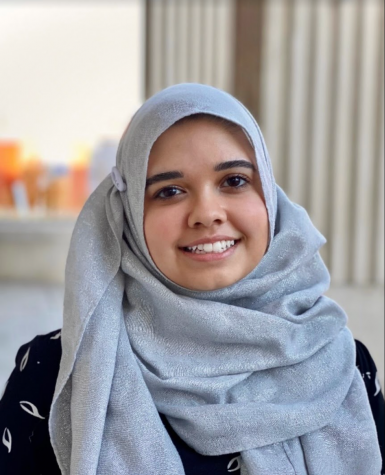
Photo courtesy of Safiya Anwar.

After circulating a survey to the Post-Secondary Enrollment Options (PSEO) student population, Safiya Anwar and her team asked Boynton Health to include full-time PSEO students in its mental health clinic.

Because PSEO students are not required to have insurance or pay student services fees, they do not have access to the mental health clinic at Boynton. Anwar, the president of the PSEO Student Association and a member of the Minnesota Student Association’s Health and Wellness Committee, started an initiative to increase PSEO student access to mental health resources at the University.

High school students can enroll in the PSEO program, which enables them to take courses at local universities to earn college credit.

PSEO students can access short-term mental health groups and resources, such as “Let’s Talk,” a virtual drop-in consultation, and Student Counseling Services. However, they are not able to access therapy sessions through Boynton.

“Those really aren’t suitable for the long term,” Anwar said. “So, I wanted to explore our options and see if we could get access to a more long-term support resource.”

Anwar and her small team have been working on the mental health initiative since last fall. Anwar began by meeting with stakeholders, including the nonprofit group “People for PSEO” and Scott Coenen, the director of pre-college programs.

In the fall, Anwar set out to learn more about obstacles to mental health care for PSEO students, such as students’ status as minors, which could lead to privacy concerns. She also worked to recruit more individuals for the project.

To better understand what actions the PSEO office could take to support PSEO student mental health, Anwar and her team circulated a small survey this spring. The survey received responses from just under 16% of the PSEO student body at the University.

Sixty percent of respondents said that they were not aware of available mental health resources, while others said that the resources felt “out of reach” or “not substantial enough” to help. Students also mentioned technical concerns and feeling guilty about accessing resources on the survey.

“Despite full course loads, [students] felt guilty or not important enough to access them,” Anwar said. “And that was mainly because they felt like they weren’t a ‘real’ college student, even though they were taking a full course load.”

Beckett Crain, a former PSEO student, said that it is easy to feel isolated as a PSEO student.

“I mean it’s kind of othering. You feel like you’re sort of an undercover agent,” Crain said.

An overwhelming number of students indicated that Boynton’s therapy sessions would be beneficial, according to Anwar.

Roo Case, a first-year PSEO student at the University, said that the University’s help with transitioning from high school to college life is minimal. He said that while he is personally comfortable with minimal direction, he could understand how it would be challenging for some students.

“I think there is a little bit more of a, ‘Plop, here you go, have fun,’” Case said. “There isn’t a good kind of slope into, ‘This is how college works, get used to it, and, you know, if you need help, let us know.’ … I wouldn’t be surprised if people have gone, ‘Boy, I’m having issues and I don’t know who to ask.’”

As a result of the survey, the PSEO office is planning to implement strategies to build awareness about existing mental health resources, such as emphasizing at orientation that advisers are a resource for those struggling academically.

An adviser will begin checking on PSEO students outside of advising appointments at least twice a semester, Coenen said. The PSEO office is also considering hosting a “burnout roundtable” with representatives from Student Counseling Services, current students and Boynton to talk about stress.

The PSEO office will be working to reduce the stigma about asking for mental health help. Coenen said there is still work to be done.

“I think that’s another byproduct of the survey, and [Anwar’s] work is, I think just making sure we continue to hammer home awareness, and then really reduce stigma and shame around support,” Coenen said. “I think it’s hard to imagine when you’re struggling what the resource can really do for you.”

Posted in UncategorizedComments Off on High school senior advocates for better mental health resources for PSEO students

Panhellenic Council and Interfraternity Council to stay split this spring

The formal partnership between the Panhellenic Council (PHC) and Interfraternity Council (IFC) will stay severed this spring semester to hold the IFC accountable for implementing policies that address racism, sexism and safety issues in their community.

The PHC ended their relationship with the IFC late last August in a letter that said the relationship between the councils “perpetuates racism, heteronormativity, sexism and sexual violence.” In the letter, the PHC said that every PHC chapter “has a conflict with a chapter in the [IFC] related to sexual assault.” The PHC also condemned the IFC for their lack of initiative regarding the Black Lives Matter movement and their poor adherence to COVID-19 guidelines. The Panhellenic Council voted again to stay separate from the IFC on Feb. 21.

The organizations will reevaluate their partnership every semester to ensure “progress is being made within each individual organization,” Audrey Schmalz, president of the PHC, said in an email to the Minnesota Daily.

The two councils will continue the termination of any council-wide initiatives other than Greeks Against Sexual Violence. Because the PHC cannot bar individual chapters from organizing events with IFC chapters, individual sororities may still co-host events with fraternities.

“We wholeheartedly believe changes made should stem from within …” Schmalz said in the email. “We are first and foremost working to rebuild our individual community and want to see IFC succeed in doing the same.”

As is routine at the beginning of November, both councils elected new executive boards. The new IFC executive board outlined its priorities for the spring semester, and the PHC plans to release its benchmarks in the coming weeks.

The IFC explained its initiatives further in a Q & A session on Feb. 20. Questions, which Greek community members submitted anonymously before the meeting, included topics such as the IFC’s relationship with the Multicultural Greek Council (MGC), their stance on sexual assault cases and their relationship with the University of Minnesota Police Department.

“Time and time again, your group fails to connect with organizations in MGC and have only tokenized us,” one comment read. “There has been no recognition of the past and how MGC has been pushed out. MGC exists because people of color needed our own space. It pushes us further and further away from you, and I hope that you can do better in the future to make meaningful relationships.”

Daniel Akah, vice president of programming for the IFC, acknowledged that some groups do not feel included in the IFC community.

“I think that’s completely valid. I think right now, what IFC needs to do is reckon with that past, understand why [MGC and NPHC] were created in the first place,” Akah said.

The IFC outlined other priorities for the spring semester at the Feb. 20 meeting, such as implementing the Greek Life Access Fund by next fall. According to Jackson Deal, the IFC president, the scholarship program will aim to financially support members from underrepresented communities in Greek life.

At the beginning of 2021, the IFC also created a Diversity, Equity and Inclusion (DEI) committee. The volunteer-only committee has six members: two Black students, three white students and one Hispanic student. The IFC has not added a DEI position to their executive board, as PHC did this spring semester.

“We understand the value of the direct representative,” Deal said. “However, IFC wanted to include many diverse opinions within our DEI efforts.”

The Aurora Center is also working with the IFC to reestablish the Prevention Advocates program that “fizzled out last spring due to COVID” by next fall, Deal said. The program aims to educate Greek life members on sexual assault prevention and speak with victims of sexual assault. The IFC executive council has not determined if members are required to take the program.

The IFC has also increased fines for violating council bylaws or social policies, including COVID-19 guidelines. According to Deal, while the IFC used to be able to fine chapters a maximum amount of $750, the IFC can now fine chapters $25 per member per infraction. If a chapter has 100 members, it could face a fine of $2,500 per infraction.

The PHC has also been making changes within its community. The council elected the first vice president of Diversity, Equity and Inclusion in November and has been focusing specifically on inclusion efforts within their recruitment and member programming.

“I think we have a long way to go,” Sylvia Wu, president of Alpha Phi Gamma, said. “Some culture in Greek life can definitely be improved, like, when it comes to sexual assault and racism. I think that the PHC is doing what they can by halting collaboration and re-evaluating that every semester. It kind of serves as a reminder like, ‘You’ve got to keep working on this.’”

Posted in UncategorizedComments Off on Panhellenic Council and Interfraternity Council to stay split this spring