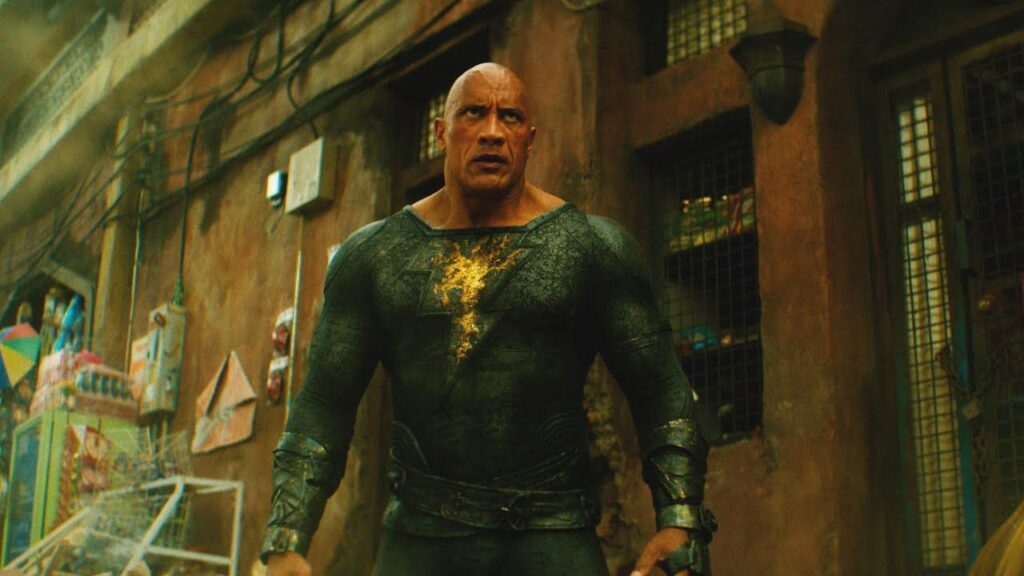
From the DC Extended Universe comes “Black Adam,” starring Dwayne Johnson, Aldis Hodge, Sarah Shahi, Pierce Brosnan, Noah Centineo and other top-billed cast members.
The “Shazam!” spinoff introduces Teth-Adam, a superpowered former slave from 5,000 years ago. In a present-day city known as Kahndaq, the citizens suffer under the occupation of the Intergang, a military group in search of the Crown of Sabbac, a magical artifact known to give its wearer immense power.
When Teth-Adam (later called Black Adam) is awoken and freed from his 5,000-year resting place, he is ready to seek justice for the people of Kahndaq in his own unconventional way. He is subsequently confronted by the members of the Justice Society of America, led by Hawkman (played by Hodge), and Kahndaq-native archaeologist Adrianna Tomaz (played by Shahi). The two-hour film is packed full of action, superhuman combat, culture and — believe it or not — social commentary.
A week before the movie’s release on Oct. 21, actors Hodge and Shahi sat down with various members of the press, including a representative from the Technique, to discuss the impact of the film not just for themselves as individuals but also for today’s world as a whole.
As actors of color — Hodge being Black and Shahi being Spanish-Iranian — the two talked about the lack of superhero role models for them growing up and how that influenced their respective characters. According to Hodge, “[the superheroes growing up were] all just imaginary because there’s no real reflection or representation of me [in comics].” Shahi agreed, saying, “I couldn’t relate to Wonder Woman or Supergirl, so I didn’t see myself in any of them.”
Both actors agreed that they had taken inspiration for their characters from their mothers. Hodge explained that his mother “was my leader for very many years of my life, and in terms of leadership, that’s who I pull from to create the leadership that Hawkman charges forward with because [she’s] the only real superhero that I know.”
Hodge has spent about half of his career with the goal of joining “the superhero universe” in order to be the representation that neither he nor Shahi got growing up.
A prominent topic of discussion that prefaced the film’s release was whether or not its titular character, played by Dwayne Johnson, is to be viewed as a hero or a villain. While the people of Kahndaq see Black Adam as a hero and a champion of the people, he seldom displays textbook “heroic” qualities. He kills mercilessly and without a second thought, which becomes his main point of contention with the Justice Society. This underlying discussion of morality and justice weaves throughout the entire film in a way that feels subtle enough that it is not in viewers’ faces, but still noticeable in a way that has the ability to make them think.
When asked about the relative moral grayness of many of the characters and how/what that added to the film, Hodge told the interviewers, “[the movie] poses the question ‘What is justice? Is what’s right for one right for all?’ … We get to have a real conversation, a substantial conversation, in the midst of all of this wonderful action… [and you find that] there’s a duality here that it’s not just right and wrong. There’s a middle ground, and that allows us to have an intellectual conversation about how we deal with one another and how we move forward.”
His character, Hawkman, is seen throughout the movie as a very morally “black and white” hero. Hodge describes Hawkman’s stance as “having a very principled construct of what justice is.” In Hawkman’s opinion, heroes are heroes and villains are villains. There are “dos” and there are “don’ts,” and there are no in-betweens. But Black Adam pushes those boundaries, challenging those beliefs in a way that leaves audiences unsure who is “wrong” and who is “right.”
Shahi also spoke on Black Adam’s role as a morally gray main character, saying, “he’s really blurring the line between good and bad, and I’ve … found myself thinking that’s like real life too, in a way, because we’re not 100% saints all the time, we’re not 100% sinners all the time. … We make choices in moments because we feel like it’s the right thing to do, whether [or not], looking back, [it] was the right or wrong thing to do, you were still trying your best to achieve whatever it is that you wanted.”
Shahi’s character, Adrianna, is native to Kahndaq and sees the oppression that her people face every day from outsiders. According to the actress, Adrianna “wants to protect her people, her son — everything. She can’t do that unless Intergang goes ‘bye-bye’. The only way [that is going to happen] is if someone kills them.”
Yet no one in the audience would say that she is an antagonist because they recognize how her life experiences have shaped her views, and how the sustained cultural suffering can “justify” the way that Black Adam exacts justice through violence.
Despite being filled with seemingly heavy topics, the movie is able to wrap its social relevance with humor, magic and action scene after action scene.
Many audience members might not even consciously process the commentary hidden within the movie until after it is over and they have the chance to reflect on the plot.
For avid superhero fans, “Black Adam” should definitely be added to the watch list. It expands the DC Extended Universe in a way that feels unforced and does so with fairly quality effects — something many superhero movies have been lacking lately.
Whether one wants to enjoy the movie at face value for its many fight scenes and character interactions or they are interested in reflecting on the messages lying amongst the fray, it has something for all movie-goers.
Posted in UncategorizedComments Off on Action-packed ‘Black Adam’ hits theaters
Tuesday, Oct. 4: the neon letters of the Coca-Cola Roxy light up the front of the venue. A screen underneath tells passersby what — or rather, who — has people lining up and down the sidewalk, waiting to get inside.
Eight-time Grammy-nominated indie rock band Death Cab for Cutie (often simply called “Death Cab” by fans) performed in Atlanta on the sixth stop of their 34-stop tour promoting their newest album — the 10th in their discography — “Asphalt Meadows,” which was released in mid-September.
During the show, the band did not just play songs from the new album, instead playing songs from nearly all 10 of their albums, only excluding “Something About Airplanes,” which was first released in 1998.
Going on their 25th anniversary, the band attracted fans of all ages, from small children on their parent’s shoulders to adults with greying hair. Their musical style has a soft alternative sound that makes it a perfect genre for anyone to enjoy.
At 7 p.m., the doors finally opened and the crowd made their way into the converted movie theatre. Coca-Cola Roxy has two floors: a main, hardwood, standing-room-only floor and a second story with seating. Six chandeliers hang from the ceiling, an unusual yet beautiful sight for a concert venue.
As people waited for the show to start, they bought merchandise and drinks, found a spot to stand and talked with others around them. There were conversations about hobbies, past shows and which album(s) was/were the first to spark peoples’ love for Death Cab.
While the room had the buzz of pre-concert excitement, there was also a comforting, community-like feeling, something familiar despite the room being full of strangers.
To start the show, there was one opener: an indie-folk singer by the name of Thao. After her performance, it was time for Death Cab for Cutie to make their appearance.
The group started with a song of “Asphalt Meadows.” Lead singer Ben Gibbard was illuminated from behind by a single stage light for the first verse before the rest of the lights suddenly came to life at the first chorus. The singer’s voice sounded nearly identical to the recorded version, a gentle and melodic sound that fits perfectly into Death Cab’s indie style.
The crowd moved along to the music but the overall feeling of the room was very calm. It was congruent with a setlist that emulated feelings of love, nostalgia and a relaxed sense of happiness. The band members themselves moved about the stage occasionally but often stayed in one general area moving back and forth, not completely still but not overloaded with energy.
People sang along to every song; everyone seemed to be truly living within these moments of time. Despite the variety of albums covered by the band that night, there was a seamless feeling to the set list, like every song was written to be played together. In tandem with the set list, the band’s lighting setup involved vibrant colors that moved in rhythm with the band’s performance, creating captivating patterns across the stage.
The last song of their official setlist was “Foxglove Through the Clearcut,” an introspective and moving spoken-word piece that has been described by the band as “by far the most personal song on the [new] record.”
It felt like a natural closer to the show, the narrative elements similar to that of a film’s ending monologue. After the last line, the band walked offstage as the audience cheered.
Only moments had passed before people were chanting for an encore. Moments later, the calls were answered when the band came back on stage, launching into a four-song encore.
All in all, the feelings of togetherness brought on by Death Cab for Cutie’s music were the best parts of the show. It was a blend of the energy of live music combined with a lo-fi genre that ensured an enjoyable show for every fan there.
Posted in UncategorizedComments Off on Relax and enjoy the music with Death Cab for Cutie
On Oct. 6, the iconic big top of Cirque du Soleil will open its doors to the city of Atlanta, the place that the “KURIOS – Cabinet of Curiosities” will call home until late December. The 35th show since the company’s founding in 1984, traveling publicist Rebecca Williams describes “KURIOS” as a “nod to the industrial revolution, [featuring homages to] the invention of the steam train, electricity [and] the gramophone.”
The Technique attended Cirque du Soleil’s advance media day last Tuesday, Sept. 20, to see a small preview of some of the talent highlighted within the upcoming show and participate in a question-answer session to find out what really goes into putting on a show of Cirque du Soleil-caliber.
The event began with a short but exceptional performance by Andrii Bondarenko, who has a solo act in “KURIOS” as a hand balancer. The Ukrainian artist started in the athletic circuit in his home country of Ukraine, winning silver and two gold medals in three different acrobatic world championship competitions before moving into circus arts.
He joined Cirque du Soleil in 2011 and has been with “KURIOS” since its development in 2014. During the Q&A panel, he explained the difference between acrobatics in the world of sports and the world of circus.
“When [you’re competing] in sports, you just have to be precise and that’s it. But when you’re onstage, you have to be [an] artist,” Bondarenko said. “Even if you do [make a] small mistake, people — the audience — they don’t care. You can play with [it] and they still love it.”
According to Bondarenko, all Cirque du Soleil artists learn to apply their own makeup and hair pieces, which differ between every show, at the company headquarters in Montreal, Canada. While his hair and makeup only takes 40 minutes, other characters could need a whole two hours for their looks. Bondarenko’s particular act has him often upside down and his costume consists of what appears to be brightly colored 1920s formal wear.
“[The clothes] need to look good onstage and also be comfortable for the artist to perform in,” Bondarenko said. Therefore, each costume is custom-made specifically to the performers’ measurements, also taken in Montreal.
During the tour, the team puts on approximately eight to ten shows each week, with three shows on Saturdays. The intense schedule means that, for the onstage performers, not taking care of themselves could lead to injury and/or early retirement. Many performers will stay after the shows to stretch and condition.
On show days, Bondarenko warms up with a 90-minute routine before the first show, then precedes any following shows with a much shorter warmup, usually around half an hour.
Like any other live production though, Cirque du Soleil does not just rely on the onstage artists to bring the circus to life. The technicians and specialized staff traveling with the show play an instrumental role in ensuring that “KURIOS” runs smoothly no matter where they are.
Setting up the cirque site takes approximately an entire week (though tearing it down only takes two days). Traveling with roughly 66 trucks, 2,000 tons of equipment (including 400+ props) and over 800 costumes, the touring team is quite literally a small village.
According to Williams, 110 people move with the show, with only 49 of them being performers. The company also employs roughly 150 locals in each city they stop.
The technicians of “KURIOS” are responsible for anything and everything from lighting, rigging, sound, carpentry and props.
In addition to those who have consistent roles in the offstage “choreography” of the show, there are also people who act as “swing techs.” Similarly to swings on Broadway, swing techs are cross-trained in multiple “tracks,” allowing them to bounce between different jobs as needed.
The wardrobe team helps to maintain every performer’s costumes, many of whom have additional “specialties” within the department.
“We have a girl called Jordan who looks after wigs, mustaches [and] all of the hats in the show … [and] a guy called Ryan, who is a shoe technician, but also very skilled in working with non-fabric costumes,” Williams said.
The heart of the Cirque du Soleil mobile village is the kitchen tent, which provides a jaw-dropping 300-400 meals each day to the show’s cast and crew.
Tasked with feeding “110 people from 27 different nationalities … from [performers] like Andrii to riggers who are maintaining the show every night …,” the kitchen team still manages to provide different options, including those accommodating allergies or other dietary restrictions, “which is amazing,” Williams said.
Having just finished its two-month stay in Washington, D.C., “KURIOS – Cabinet of Curiosities” will premiere at Atlantic Station in Atlanta in less than one week. It will remain there until Christmas Eve, its yellow and blue tents visible from off I-75/85.
The show is an imaginative story of a hidden world full of wonder and innovation, made possible not just by the gifted artists who merge reality and fantasy onstage but also by the multitude of tour members who handle all the magic that needs to happen offstage.
Tickets can be found at cirquedusoleil.com/kurios.
Posted in UncategorizedComments Off on A peek into Cirque du Soleil – KURIOS
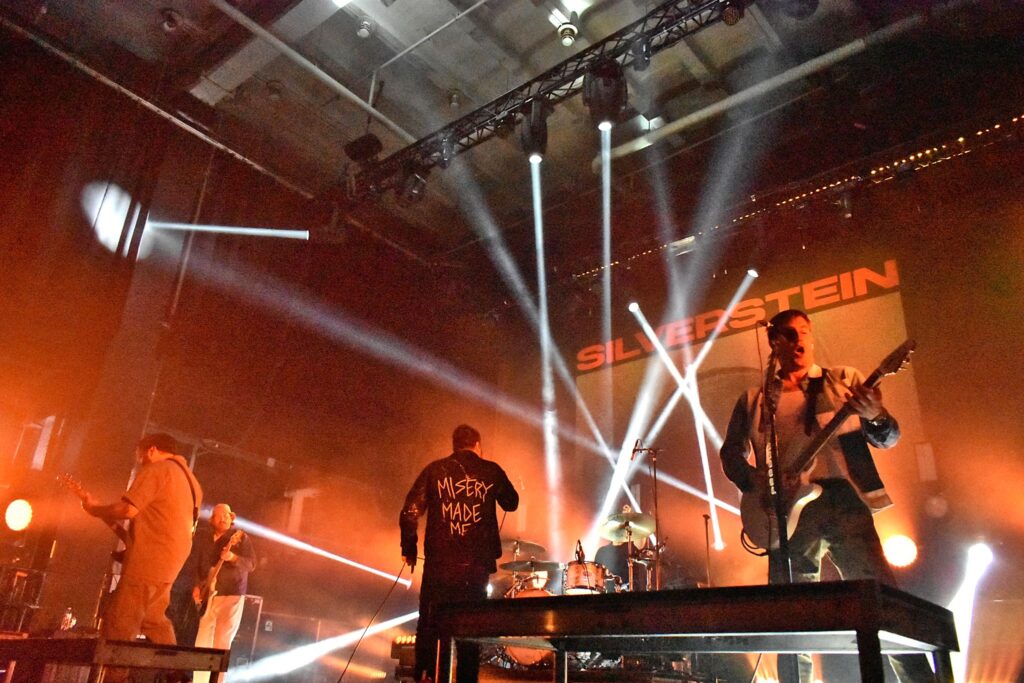
Last Tuesday on Sept. 13, Heaven at the Masquerade played host to a co-headlining show featuring Canadian post-hardcore band Silverstein and Australian metalcore band The Amity Affliction. Support for the show included UnityTX and Holding Absence.
The tour follows the release of Silverstein’s 10th studio album “Misery Made Me.” Inspired by events transpiring over the last two years, the album itself represents the collective misery of the world and of Silverstein. In “Misery Made Me,” Silverstein explores angst, disassociation and the cloud of hopelessness and isolation plaguing us all. Having been on the rock scene since 2000 and having released a total of 11 studio albums, the group has seen over two decades of immense success, procuring over 500 million streams, selling over 1 million albums and gaining a nomination for the Juno Awards’ Rock Album of the Year. Despite their success and acclaim, the band claims to be “just getting started.”
Even the opening song of the album, “Our Song” represents Silverstein’s reclamation of suffering and affliction into a force that forges the band’s future. “Our Song” is an anthem for all that misery breeds survival — it breeds perseverance. Lead singer Shane Told sings, “Misery made me … nothing can break me down.”
Following Tuesday night’s show, lead singer Shane Told sat down with the Technique to talk about the pandemic, the new album and tour.
Thank you for meeting with me. So – tour, [new] album, how are you feeling right now?
Really good! The album’s been so well received. [In general, that’s] always nice but for this to be [album] number ten and us to be a band this long, and for people to have this much enthusiasm about what we’re doing and want to hear us play new songs live, not old songs live? That’s pretty cool.
So I think doing the record and then coming to this tour — it’s an exciting time for our band. Everything’s going so well. People are into the record and people are coming to the shows, so what else is there?
In terms of the record: what was the writing process of “Misery Made Me” like?
It was a little different because we wrote it during the pandemic when we weren’t around each other. We saw each other [a few times] when we did a couple of live streams but it wasn’t the same as when we tour [and] we see each other all the time.
So a lot of it was written [by us] in our own individual domiciles and sending files back and forth: “Oh I wrote this, what do you think?” But it was also interesting because the record was very dark — a frustrated record. That’s how [the songs] were coming out because of what we were all going through with the isolation [in Canada].
Our lockdown was pretty intense and very long,
Copyright 2021 Janat Batra, Editor-in-Chief, and the Georgia Tech Board of Student Publications
were closed for, like, a year. It was pretty wild. It was really interesting because [the songs were] very dark but then once we got together to actually record it, we were really happy to be together and spend so much time [with each other].
[We] were living together, we were staying up late at night, drinking wine and waking up early to play golf and shooting hoops in the parking lot between takes, and all that stuff was really uplifting because we hadn’t had that social interaction between us for so long. We really missed each other in that way, so it was really interesting being really happy recording really sad, depressing, frutrated, pissed off music. But I think that there’s magic there.
There was a weird [duality] for how the shape that [the record] took. I think you [can] feel a certain energy in it that, if we wrote these songs and then had to record them in our own homes, you would’ve felt a different energy, whereas, with this, there was a magic to this record that people hear. And it was something intangible.
[Would you say] the songs follow a “progression” of feelings and emotions or are they all a generalized overview [of emotions]?
Well, songwriting isn’t linear. I think that’s something that’s important.
It’s funny sometimes when you’ll hear a song and the first line of the song is maybe a cool word or something and then the song kind of meanders to the point where you’re like “well that first line doesn’t really go with the rest of the song” because — and I’m guilty of this too, every songwriter is guilty of this — when you start to write lyrics in a linear fashion like that, then sometimes things can meander into a place where stuff doesn’t make cohesive sense.
Something that we’ve been doing more and more lately is we start with a title and then we go “okay this is a title, this is what the song’s about” and then from there you say “okay, well what are the things associated with [the title].”
You almost start in the middle of the page and kind of work your way out and that’s before you’re even trying to fit a cool phrase or sentence into a melody [or] into music. You have a general kind of idea of “okay this is what I’m gonna actually write a song about.”
So I think that’s something that isn’t talked about all that much but it is a way that some of the best songwriters write.
I don’t know if I exactly answered your question, but the other thing [that’s] very important to note [is] that no two songs are ever the same in our band.
Like, there are songs that are written from a lyrical idea and no music and then something comes about.
There [are] things [like] a guitar riff and that builds.
Sometimes it’s a drum beat or a drum fill, or it can be anything, and that creates the basis for the song. There’s no formula to music and [while] there is an element of science to it, it’s not an exact science — it’s an art. It’s important to remember that you can’t paint every song with the same brush.
You have to take a different approach to figure out “what does this song need?”
What would you say is something you want fans to take away from “Misery Made Me”?
Well, that’s a great question. I think there was a fear, at one point, of writing “The Pandemic Record” because it seemed almost cliché, like “Oh we went through this, and here’s ‘The Pandemic Record’” and every artist is gonna have their version of “The Pandemic Record.” Once you start to think about it, really in, let’s say, the last 100 years, this is the only time there’s been something that literally every human being on Earth can relate to.
Everyone went through some form of restrictions or lockdown.
No matter whether you’re from — Atlanta or Toronto or [anywhere else] — everybody had this experience.
So we just embraced it and said “okay, this is how we’re feeling and I’m sure that we’re not alone in feeling this” and I think [that’s] such a beautiful thing.
Sometimes you hear a song as a fan and it speaks to [you] and [you] can relate to it so much — like the songwriter wrote it for [you] and that was what we tried to do.
We just said, “this is what I’m going through, [these are] some of the things I used to do: get in my car and drive around because there was nothing else to do in the middle of the pandemic” — [experiences] like that.
So I think [that] was something we just decided was honest and real and I think that it really worked in that people really relate to the record. [Because] we all went through it and even though we’ve gotten through it on paper and … we’re back to “normal,” the pain and the damage [has] been done in a lot of cases.
Some people are still really struggling with this, or it’s changed them, or some people have various levels of PTSD, or just depression or anxiety from going through that time.
The mental health aspect of the pandemic was a little understated in a lot of ways, with people saying “oh, this is how many [cases] and this is how many deaths and this is how full the hospitals are” and it’s like, “well what about everybody’s mental state?” So I think that was just something that we really felt was important to talk about and it’s like “what else are we gonna write about? Nothing else is happening.”
Would you say [the band’s sound] has evolved and how? What would you say drove that evolution?
Oh, that’s a good question. We’ve been a band for 22 years, right? It’s important to understand, [that’s] more than half my life.
So, when you do something that long and you do it full-on and you care about it and you work at it, then I think sometimes you’re so immersed in it that there can be some confusion of like “What are we doing? Which direction should we be going?” and I think that I — I’ll say “I,” I could probably say “we” but I’ll give myself a little bit of credit — in that, it was very important to me that we took things as they came and addressed each song and each step and we never tried to make some kind of change because we wanted to be perceived a certain way or anything because we like our band and we like our music so there’s never been a point where we make a record and we’re like “aw we [hate] this record, we wanna make a record that sounds completely different.” That’s never happened.
We’ve always looked back and [been] like “maybe this song or this part or maybe we do this differently” but it’s always been a natural progression between records.
So, if you listen to our first album and you listen to our tenth album, some people would say “this is like, completely different,” and if our tenth record was where our second album was, [it] probably [would’ve freaked] out our fans, right? But if you look at each increment between records five and six or records two and three, I think that people recognize some of the micro-changes and the small steps that have come to be without us getting to a place where we’re, for lack of a better term, “alienating” our fanbase or pissing them off or changing in a way that makes them not even angry but maybe sad because [when] you like a band, you don’t want them to sound completely different.
So I think we’ve been conscious of that and, a lot of the ways that we’ve evolved have been in certain “tools” — like [we] started tuning the guitars a little lower, [and] along the way, we’ve added some different sounds here and there.
We’ve experimented on this record, and the last one, [adding] a little bit more synths and keyboards, which we never would’ve done back in the day. So those are some things that we’ve brought in, but I think at our core, the reason that we make music and records hasn’t really changed.
Shifting a bit towards [the]tour real quickly, you’ve been on tour for about three weeks and you guys have the rest of North America and then Europe after, right?
We’ve got a lot of stuff going on! We’ve got this tour: we’re in Atlanta today, we go to Florida, we go to Texas, through some of the Midwest and back to the East Coast, then Canada to finish, and then we do the When We Were Young Festival, which is going to be pretty crazy.
And then we do the Emo’s Not Dead Cruise, [which will] be really interesting — we’ve never done a cruise before. And then, we go back to Europe at the end of the year with Comeback Kids and Senses Fail and that’s how we round out the year.
Speaking of [the] When We Were Young Fest, I know what it was first announced, the first graphic that everyone saw completely flipped out the rock scene. How was that pitched to you guys?
Yeah, I can tell you the story: it was about a year ago and we got an email that said “do you want to play a show in Las Vegas with My Chemical Romance for this much money?,” and that was it. And we said “Alright, it’s enough money, it’s Las Vegas, and [it’s] My Chemical Romance. Alright, sure, sign us up.” We didn’t know anything else. We didn’t know if it was a couple [of] bands, or just us, opening. So we just agreed to it.
[We] completely forgot all about it until literally 30 minutes before you saw the ad-mat, I saw the ad-mat, and I remember looking at it and going “Oh … this is pretty crazy like everyone is playing this thing. Wow,” and I knew it was going to be a big deal, and then, of course, you remember what happened, everyone was trying to get tickets and then they added another day, and then they added a third day. So it’s gonna be really exciting.
A lot of it was funny like, I had to make a statement [because] people thought it was like a “Fyre Fest scam,” [but] it’s not!
It’s totally legit and obviously, in a place like Las Vegas, they have the infrastructure where they can make it happen. You don’t have to worry about that. So I think it’s gonna be really fun.
To round things off, as a band, what do you think you’re looking forward to the most as you continue your career?
I think we’ve always kind of had the same goals. When we started touring internationally, we were able to go to different countries and see the world for free. [It was] something we never thought [we’d get to do].
Like, I’d never been to Europe before the band, and now I’ve been to Europe like [30] times, so it’s really cool to be able to do that, and we still want to expand [and]
play some [at] territories we’ve never played before. And I think musically, we’ve maybe hit on something with this last album and unlocked something, creatively, in how we can work and the music we can make, and I personally feel pretty excited for that chapter because I think we still have so much to give and so much to say.
Maybe it’s partly due to the pandemic, but I think we’re getting along better — communicating better as a band. You get older and maybe a little more comfortable in your own skin, a little smarter and a little more reasonable. We’re not dumb kids anymore, so I think that all that just kind of turns into a really nice, respectful, fun, safe place that we have in our own world of Silverstein. It’s a been pretty crazy couple of years and it hasn’t all been easy but I think now, where we’ve ended up, it feels really good.
“Misery Made Me” is out now on all streaming platforms via UNFD Records.
Posted in UncategorizedComments Off on Interviewing Shane Told of Silverstein
Since 1987, Atlanta has played host to Dragon Con, one of the largest fan-run, multi-media and pop culture conventions in the world.
Built from the desire to have a single convention that could cater to fans of more than one genre, the five-day event focuses on everything from science fiction, fantasy, gaming and anime to literature, music, art and film.
Since its creation, Dragon Con has grown far beyond the original single-hotel layout with an attendance of around 1,200 people.
Now, the convention stretches between five different hotels as well as the AmericasMart and attracts over 75,000 people every Labor Day weekend.
One of the main attractions over the course of the weekend was the Dragon Con Parade.
Traipsing through Midtown Atlanta, the parade route traveled the length of Peachtree Street NE before looping around to end in front of the Hyatt hotel on Peachtree Center Avenue NE.
Thousands of people lined the sides of the streets as cosplayers walked the roads dressed as characters from almost every kind of media, such as movies, TV shows and video games.
The parade creates an energetic buzz of excitement around the city every year, and this year was no exception. As early as 7:30 a.m. on Saturday morning, costumed convention attendees could be seen finding spots to watch the parade or getting ready to walk in it themselves.
Netherworld Haunted House prepared a towering float of skeletons, zombies and ghoulish pumpkins while several feet in front of them, two men prepared a rolling replica of the X-Wing (Star Wars), complete with R2-D2 perched on top.
Over the next several hours, costumed and plain-clothed fans of all ages roamed the streets as they waited for the parade to start.
They fixed each other’s makeup, mingled, took pictures with their favorite characters and just generally absorbed the feel-good energy of the weekend.
One such attendee was Chris Godbey, a California-native who has been active in the convention scene since 1970. Because she has family living in Georgia, she says that she keeps a costume closet at their place, allowing her to change costumes every day of Dragon Con.
When she spoke to the Technique, the woman was dressed as a character from Erin Morgenstern’s “The Night Circus.”
She wore a layered black and white skirt underneath a lined black corset.
An ornate shoulder cover sat on top of the corset and beads stood out like silver raindrops against the black mesh of the cover.
Black satin gloves were pulled up past her elbows and a floppy black and white hat shrouded her face. A single red flower stood out as the only pop of color in her costume.
Her elaborate costume, combined with the fact that she has a different one for every day of the convention, shows the dedication that many Dragon Con fans have to the annual event.
While costume contests are a common thing during most conventions, Dragon Con was one of the first of its time to encourage all-day cosplay outside of competition.
The weekend attracts skilled cosplayers from near and far who see it as the perfect opportunity to show off the products of countless hours of work.
Some convention-goers have sewn dresses seen in video games, pieced together leather armor by hand, crafted motorized fairy wings and designed intricate headpieces and fake weaponry from fictional worlds.
Saturday morning, they all walk down the street in a celebration of creativity.
After the parade concluded in between the spread of host hotels, Dragon Con continued to be a lively environment where fans could showcase the passion that they have for the media that they love and receive nothing but acceptance and support from those around them.
New cosplayers smiled widely as children who recognized their character in the parade came to ask for a photo with them.
People excitedly got in line for panels hosted by their favorite actors, artists and authors; shopped among the numerous vendors selling everything from pins and t-shirts to shoulder puppets and figurines; and formed new friendships in the halls of the hotels.
The annual convention has become a staple of Atlanta, bringing thousands of people and celebrities over Labor Day weekend for almost 120 hours of memories that will continue to be talked about until next year’s con rolls around.
Posted in UncategorizedComments Off on The Dragon Con parade takes Atlanta by storm
One of the newest shows to grace the streaming scene, “The Sandman” is a dark fantasy comic adaptation that has quickly made itself into one of Netflix’s most successful debut shows, spending its first week in the first place spot on the Top 10 charts — something that has only been done by three other shows in 2022, according to Forbes.
The series is based on the widely popular comic series of the same name, written by Neil Gaiman and published by DC Comics from 1989-1996.
An onscreen version of “The Sandman” has been in constant development for years but never made it past the murky area of tentative proposals.
That is, until Netflix made a deal with Warner Bros to adapt the series, bringing Gaiman himself on as an executive producer.
The show itself follows Dream, also called Morpheus (Tom Sturridge), an “anthropomorphic personification” of all dreams, nightmares and that which is outside of waking reality.
Dream belongs to a family known as “The Endless,” immortal human-like manifestations of the seven longest-running concepts such as Desire, Death, Despair and Dreams.
Morpheus, while on a mission in the waking world, is captured by a human magic-user named Roderick Burgess and imprisoned, his symbols of power stolen by his captors. After a century of entrapment and isolation, Dream escapes his cage and returns to his realm, referred to as “The Dreaming,” only to find that it fell into decay in his absence.
Determined to restore his realm, Dream goes in search of his stolen symbols of power, as well as the dreams and nightmares that escaped into the waking world while their creator was missing. One such nightmare is known as The Corinthian (Boyd Holbrook).
Having escaped into the waking world before Morpheus’s capture, The Corinthian is determined to live outside of Dream’s control and he spends the years of his creator’s detainment preying on mortals as a serial killer. Upon learning of the being’s escape, the nightmare becomes fixated on figuring out how to strip the dream lord of his power.
As afantasy-horror comic series, the storyline travels between different timelines and realms, dealing with characters and creatures both human and not. These elements seem as though they would make it dangerously easy to create a television show that is confusing, rushed, campy and/or just poorly written. However, viewers will be pleased to find out that none of those are the case with the Netflix adaptation.
The first episode grants audiences exposition in the form of Dream’s own narration andsome light world-building before it moves into the story at a pace that feels just right for the premise of the show. In the episodes to follow, viewers never feel as if things are moving too quickly, except when it is an intentional decision by the show writers done for a reason that will be seen later in the episode.
Morpheus, the Sandman himself, is played by English actor Tom Sturridge who does a phenomenal job bringing the character to life. Playing a character who is moody, resistant to change and sometimes mildly insensitive, Sturridge delivers Dream’s lines with little-to-no change in vocal inflection. While this might not be desirable for many character roles, it works perfectly for the lord of dreams.
The flatness of Morpheus’ tone establishes his personality as a no-nonsense being, showing audiences the way that he believes himself to be outside the realm of human feelings. In addition to delivery, Sturridge’s nonverbal acting adds another layer to his
on-screen character.
Similarly to his lack of tone when speaking, Dream seldom shows emotions on his face. This does not mean Sturridge does not find ways to clue viewers in on what the character is thinking through subtle movements of his brow, faraway looks in his eyes and the rare tug of his mouth lifting into a smile.
The main characters are not the only important things in a successful show, however. In addition to brilliant casting, “The Sandman” spared no effort in creating visually stunning scenes.
From the CGI that went into The Dreaming and Hell, to the camera angles and lighting in the waking world, the quality of the series shows the attention to detail that the production team put into the creation of their work. The show has a way of making audiences feel specific emotions exactly when necessary, from discomfort and unease to wonder and relief.
The visual allure of the series makes it all the more enjoyable to watch.
Comic adaptations can often be hit-or-miss, and Netflix’s “The Sandman” is definitely a hit. Well-casted characters, artfully-shot scenes and dialogue pulled straight from the source text for the comic book fans comprise a series that is nothing short of captivating.
Regardless of viewers’ experiencewith the comics, the show is undoubtedly worth the watch.
Posted in UncategorizedComments Off on “The Sandman” muses on dreams and darkness
Panic! at the Disco (P!ATD) is a band that seems to have a place in almost everyone’s middle school “emo phase”. Since its formation in 2004, the band’s sound, image and lineup have evolved.
The original pop-punk sound eventually drifted more towards pop, the outfits became more polished and modern, and the members cycled in and out until, eventually, there was only one member left: Brendon Urie.
Despite the now solo venture, Urie continues to produce music under the P!ATD name, and this past Friday (Aug. 19, 2022), the band’s seventh studio album, “Viva Las Vengeance,” was released.
A dramatic and fanatical ode to Urie’s upbringing in Las Vegas, the 12-track collection does not live up to the Panic! at the Disco name. None of the songs truly stood out to me as strong pieces of music; instead all the songs blended into the same poorly written and similar-sounding tune.
Although it seems that Urie is attempting to return to old P!ATD’s sound, the songs lack any of the lyrical prowess that helped the older albums like “A Fever You Can’t Sweat Out” and “Pretty Odd” distinguish themselves as not just music but pieces of poetry.
Instead, Urie’s lyrics sound like the rough draft of a D-student’s college admissions essays: full of simple sentences and repetition, with an inconsistent rhythm and only a mere few eloquent lines here and there.
Viva Las Vengeance is also a prime example of the saying “just because you can, doesn’t mean you should,” mainly regarding Urie’s overuse of his signature high notes.
The singer has long been known for his wide vocal range but there was a noticeable difference in the newest album: his voice sounded much more strained in nearly every note he sang. Instead of marveling at his vocal talents, listeners are left cringing as he attempts to sing higher and higher.
Had Urie sang in a more limited range, he wouldn’t have sounded as if he were yelling with pitch adjustments.
Musically, the album is a mess. Drawing inspiration from as many glam rock bands as it can — the most prominent one being Queen — multiple musical styles clash with each other throughout not just the album but even during the songs themselves.
The resulting chaos is nothing short of confusing. The only thing that Brendon Urie succeeded in doing with “Viva Las Vengeance” was pulling the name of Panic! at the Disco further away from what the band originally was.
The overly grandiose sound, boring lyrics, poor mixing, and pitchy vocals make listeners wish that Urie would simply take his own advice in the title track: “Shut up and go to bed.”
Posted in UncategorizedComments Off on Panic! at the Disappointment: new album flops
There are many reasons that moving to a big city like Atlanta can be exciting for young adults. If you’re an avid music fan, one of those reasons is the multitude of venues scattered around the city. At a school like Tech, students have easy access to downtown Atlanta, and by extension, an abundance of live music.
Several places are already well known by most, such as Mercedes-Benz Stadium and State Farm Arena, which act as concert venues while not hosting Atlanta’s soccer and basketball games. However, the biggest venues are not the only places to find invigorating live music.
Unlike stadium shows that have layers upon layers of seating surrounding one stage in the center, the following venues have all of their seating in front of the stage so no matter where you are, you will always have a full view of the artists you are seeing.
THE MASQUERADE
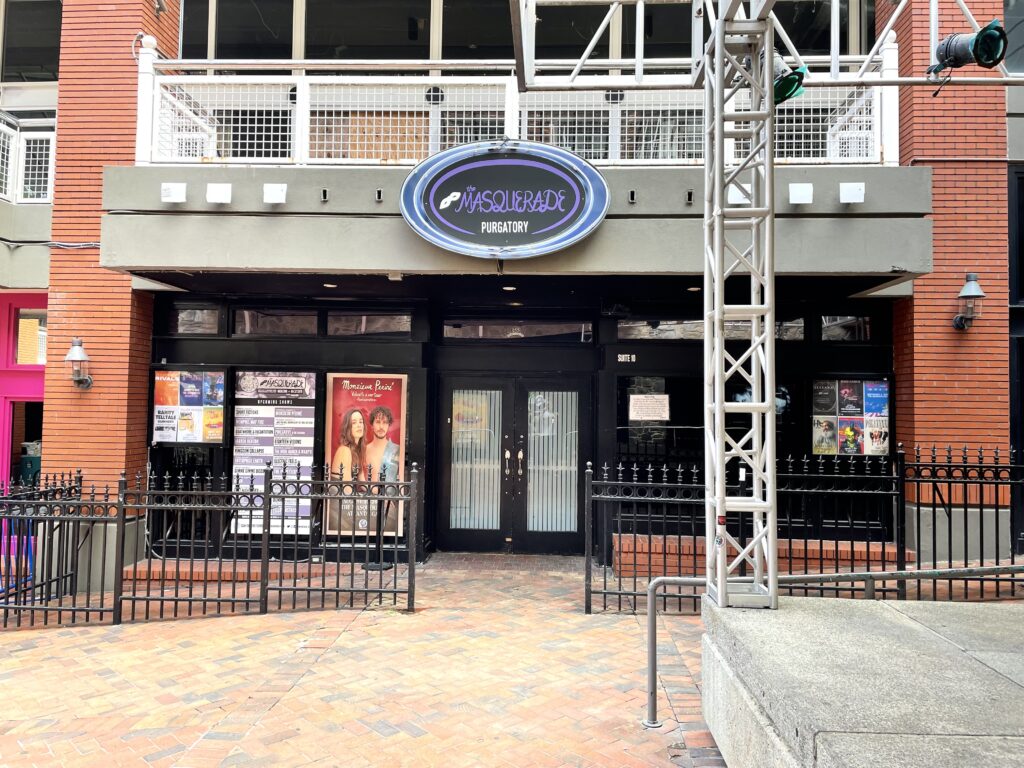
Only a 15-minute drive away from Tech — or a seven-minute walk from the Georgia State MARTA station — is the Masquerade. The venue can be found in the lower area of Underground Atlanta known as “Kenny’s Alley.” It was founded in 1989 and is known for its three different indoor areas named Heaven, Hell and keeping with the trend, Purgatory.
The venues surround an open-air courtyard and vary in size, Purgatory being the smallest with a capacity of 300, Heaven being the largest with a capacity of 1500 and Hell being a size in-between the two.
Over the years, the Masquerade has played host to legendary bands such as Nirvana, Foo Fighters and Nine Inch Nails. Now, its stages are occupied by groups ranging from ODESZA to Sleeping With Sirens.
The venue is also filled with music festival history. In 1992, the first Warped Tour played the complex and was later followed by the first Imagine Fest and Shaky Knees festival, both in 2013, and the first Wrecking Ball ATL in 2015.
The environment itself is unique and buzzing with energy, whether you are on a couch in Purgatory, in the pit in Hell or enjoying the view from the second floor of Heaven. For fans of the alternative, rock, metal, indie, electronic and punk genres, this venue is an absolute essential.
THE TABERNACLE
Driving five minutes south of the North Avenue apartments of Tech will find you at the Tabernacle. Located behind the SkyView Atlanta Ferris wheel and across the street from Centennial Olympic Park, this venue was opened in 1910 as a Baptist church. It remained as such until some time in the 80s, when the congregation moved and the building lay abandoned. However, the 1996 Olympic Games saw it converted into a thriving live music location.
The venue has hosted a variety of big names from every genre during its lifetime, including artists like Prince, Duran Duran and — in more recent years — Lizzo, Conan Gray and the Jonas Brothers.
The main concert hall itself has a listed capacity of 2,600 with a standing-room-only main floor and three separate seated balconies. All areas mentioned above can be accessed by purchasing a general admission ticket, though the seats are first come, first serve.
Visual reminders of the venue’s origins as a church remain in its large stained-glass windows, wood panel floors, patterned walls and balconies, and the ornate chandelier hanging from the ceiling.
BUCKHEAD THEATRE
Another 15-minute drive away from Tech, in the opposite direction of the Masquerade, lies Buckhead Theatre, a former movie-theater-turned-music-venue. Originally opened in 1931, the venue underwent seven name changes before returning to its current name when it was renovated and reopened in 2010.
The theater has staged notable artists like Joan Jett and the Blackhearts, Lynyrd Skynyrd and The Offspring, but doesn’t only function as a concert venue. Buckhead Theatre also hosts a variety of non-music acts such as comedy specials and theater performances; it is also a popular location for weddings, corporate luncheons, bat/bar mitzvahs and other private events.
Built in an elegant Spanish-baroque style, the venue has lamp-lit concrete arches, heavy maroon curtains and an overall rock-and-roll feel to it. The theater itself is said to hold roughly 1,400 people, with a main floor and upper balcony. Outside, a large electronic marquee topped with two screens is visible from the street, reminiscent of the brightly lit Broadway theaters of Times Square.
THE COCA-COLA ROXY
One of the newer venues in Atlanta is the Coca-Cola Roxy. It opened in 2017 and is named after one of Buckhead Theatre’s previous monikers — before it returned to being “Buckhead Theatre.” A 15-minute drive down I-75 N, right off the highway, sits the 40,000-square-foot music venue. With a listed capacity of a little over 2,000, the venue has seen artists from all genres, ranging from Twenty One Pilots to Juice WRLD to Hozier.
Much like Buckhead Theatre, the Coca-Cola Roxy also books private events like weddings and corporate parties. The layout includes a main floor and balcony seating, both of which are said to be ADA wheelchair compliant. Finished hardwood floors and six glittering chandeliers elevate the ambiance of the space, regardless of whether you’re there seeing BABYMETAL or attending a wedding. Out front, a brightly lit marquee mimics that of its old home at the Buckhead Theatre, lighting up the street well into the night.
AISLE 5
Little Five Points is an expressionist neighborhood in Atlanta located 11 minutes away from Tech by car. The area itself is covered with brightly colored murals and street art, the perfect hub for alternative subcultures ranging from punks to hippies.
Nestled in between Arden’s Garden juice shop and Moods Music record store is Aisle 5. In one of the smaller venues in Atlanta, you are most likely to find indie artists as well as groups that fall under more “alternative genres.” Artists like The Wrecks, Sasha Sloan and Phoebe Bridgers have all played shows there.
Since the venue is much smaller than others, shows are primarily standing room only, with the exception of some barstools lining the far wall.
Because of its size, however, Aisle 5 concerts have a more intimate feeling to them, allowing the audience to feel more connected with whoever it is that they are seeing, no matter where in the room they are standing.
Though it may not be as known as other venues, don’t count this one out!
Live music is one of the many amazing things that the city has to offer, just find a band you like — or even one you have never heard of — and have a rockin’ night!
Posted in UncategorizedComments Off on Atlanta’s most popular concert venues
[This article contains minor spoilers for Stranger Things Season 4 Vol. 1.]
Since season one, fans of “Stranger Things” have seen the classic roleplaying game Dungeons & Dragons (D&D) as a central part of the young protagonists’ lives.
Now, as the release of season four, volume two draws closer, Mike Wheeler, Will Byers, Dustin Henderson and Lucas Sinclair have grown up significantly since that first D&D game of the show in the Wheeler’s basement.
Nevertheless, the game is once again front and center in the newest season with the addition of Eddie Munson, metalhead leader of the “Hellfire Club,” the Dungeons & Dragons club of Hawkins High School. When Vecna, a dark wizard from the Upside-Down and the season’s main antagonist, starts murdering students in Hawkins, the authorities, and soon the public, are quick to place Munson as their number one suspect.
Already labeled as a “freak” and “outcast” by the general population of Hawkins High, Munson’s widely-known participation in D&D only acts to solidify his position as a scapegoat, with people claiming the game involves devil-worship and ritualistic sacrifice.
While viewers of the show today might scoff at such dramatic accusations, the portrayal in “Stranger Things” of the public opinion of D&D is much closer to the truth than one might expect.
A Dungeons & Dragons game (known as a “campaign”) involves a group of players (that form a “party”) and a “dungeon master” (also called a “DM”). Each member of the party has their own character and special skills.
Each character’s specialty contributes to the success of the overall party.
The DM, armed with a Rule Book, leads the party through adventures, during which the players use polyhedral dice and basic math to make decisions for their characters.
One campaign is usually drawn out through several sessions of play and therefore, many parties choose to meet on a recurring and preestablished basis. Despite its age, D&D has millions of players worldwide to this date, with new platforms such as Twitch allowing people not just to play, but watch others play as well.
However, the game was not always so popular. Prior to the creation of Dungeons & Dragons in 1974, the publication of Anton LaVey’s “The Satanic Bible,” the Manson Family murders, a fabricated Evangelical memoir and the 1973 film “The Exorcist” began a culture of paranoia amongst devout Christians across the United States.
This paranoia continued to grow and by the beginning of the 80s, people were terrified of the mere idea of the occult. This hysteria led to a surge in accusations of abuse and ritualistic practices in a Red Scare-Esque phenomenon known as “Satanic Panic.”
The first step in the demonization of the game took place in 1979 when a young college student, James Dallas Egbert III, went missing from his dorm. The private investigator hired for the case learned the student played D&D and determined that the boy had lost touch with reality and wandered into tunnels beneath the school, unable to differentiate between real and fantasy.
However, the teen returned later, confessing that combined pressure from his parents and school had made him suicidal and the game had nothing to do with it, but by then it was too late: Dungeons & Dragons had been condemned by the public.
The controversy only grew from there. In 1983, a woman named Patricia Pulling founded the organization “Bothered About Dungeons & Dragons” (BADD) after her son took his own life two years earlier. She blamed the tragedy on D&D, saying her son had been “cursed” by another player during the campaign.
Pulling and members of BADD conducted an aggressive media campaign through both main-stream media outlets and conservative Christian media outlets, warning parents that Dungeons & Dragons would lead their children down a dark and dangerous path. “Stranger Things” fans saw these warnings referenced in the first episode of the new season, as Eddie Munson dramatically reads from a magazine article claiming that the game has been linked to “violent behavior…Satanic worship, ritual sacrifice, sodomy, suicide and even murder.”
While this article specifically was fabricated for the show, it was most likely adapted from a real article from Newsweek in 1985 titled “Kids: The Deadliest Game?” which blamed D&D for teen suicides and even included a statement from the aforementioned Patricia Pulling.
Something else that helped to build the case against Dungeons & Dragons during this time was “recovered-memory therapy.” This was the process in which psychologists helped patients “reconstruct” traumatic memories that they had repressed or forgotten, usually related to abuse.
It is important to note that recovered memories are not the same as dissociation, which is a proven common response to childhood abuse.
At its peak in the 90s, recovered memories were used to support numerous accusations of ritualistic abuse from people supposedly involved in Satanic cults. People were suddenly “remembering” being forced to do things such as participating in animal sacrifices and devil worship.
Many people lost jobs and went to jail because of recovered memory-related accusations.
In the mid-1990s, the FBI finally published a report showing that Satan-worshipping activity and ritualistic abuse had never actually been proven, despite the many people whose lives were ruined by the claims.
Psychologists came out to say that the process of recovered-memory therapy more often involved the power of suggestion and manipulation of memories that more often led to creating false memories and harming the patient’s mental health even more.
As years went on and more research was conducted, psychologists actually began to see that people who participated in role-playing games such as Dungeons & Dragons saw lower rates of suicide, improved problem solving and teamwork and an increase in confidence, especially among kids with behavioral struggles and or anxiety.
In addition to these findings, leaders of BADD, including Patricia Pulling herself, were shown to have lied about their qualifications, cherry-picked data and twisted words and personality traits to fit the narrative of evil they worked to spread.
Today, D&D is enjoyed by people of all ages and genders, and the times of recriminations of witchcraft and otherworldly evil are buried within the past. Now, the Satanic Panic is destined to live in works of fiction such as “Stranger Things” where audiences can have a laugh about dramatic claims of Devil worshipping teenagers, instead of worrying about being on the receiving end of them.
Posted in UncategorizedComments Off on Dungeons & Dragons and Stranger Things
On Friday, March 25, Tech’s spring break was coming to an end. As the evening drew near, there was a slight chill in the air, and the Atlanta Underground came to life as the Masquerade prepared for a night of live music.
From the outside, early concertgoers could hear Arizona-based band The Maine running through their soundcheck inside Heaven, one of the three stages within the venue. Eventually, the doors opened and people streamed into the darkly-lit space.
The first name on the lineup was a local band by the name of Stay Here. Energetic with the charmingly-awkward demeanor of a small band, they were more than successful in getting the crowd’s energy going.
By the end of their set, the audience was fired up and ready for more.
Next up was female pop-punk singer Charlotte Sands. Returning to Atlanta for the second time this year with drummer Dannen Reed Rector, Sands is a blue-haired powerhouse who knows how to work a crowd.
Her lyrics champion individuality, and her stage presence is one of pure, high-spirited fun. The audience clearly felt the same, screaming lyrics alongside her, cheering, jumping and dancing.
As a highlight of her performance, Sands grabbed two fuzzy cowboy hats from a pair of girls in the front row, who were overjoyed. The singer and Reed Rector both wore the hats for the remainder of their set before coming to the front after they were finished to return them to their original owners, hugging each one.
Finally, the time had come for the headlining band, rock group The Maine. Comprised of lead singer John O’Callaghan, lead guitarist Jared Monaco, bassist Garrett Nickelsen and drummer Patrick Kirch, the band is currently on tour all over the US following the 2021 release of their eighth album: XOXO: From Love and Anxiety in Real Time.
The band has been together since 2007, so they are no strangers to being onstage.
O’Callaghan balances strong vocals with a jocular between-song demeanor that created an environment that felt natural, friendly and lively.
From excitedly talking about his newborn child to laughing as the group played one of their earliest releases, a cover of Akon’s “I Wanna Love You,” the set was filled with personal connection between the band and the crowd of concertgoers.
Towards the end of the show, The Maine welcomed Charlotte Sands back to the stage to sing a recently released song on which the two had collaborated, “Loved You A Little.”
Sands and O’Callaghan played off of each other perfectly, each amplifying the other’s energy as their voices blended seamlessly.
Two songs later, the concert drew to a close, and the venue lights came on.
As people filed out, the air was buzzing with overlapping voices, music and energy. For those who attended, it was surely another great show for the books.
Posted in UncategorizedComments Off on The Maine bring punk to the Masquerade