Author Archives | Sloan Salinas

Magnolia Park brings bite to Atlanta’s Terminal West

Orlando-born rock band Magnolia Park has the road for their summer 2025 tour: The Vamp Tour, named for their most recent studio album. Their stop in Atlanta landed them at Terminal West in the King Plow Arts Center. Voted “Best New Venue” in 2012, Terminal West has copious floor space as well as a second-story balcony.

With four bands playing that night – three openers and Magnolia Park themselves – only half of them are U.S.-based. The openers, South Arcade and Hot Milk, hail from England. 

Though many concert-goers grow accustomed to the “doors” time on their tickets being about thirty minutes to an hour before the music starts, Terminal West works a bit differently. Rather than fans having to go from waiting outside to waiting some more inside, South Arcade, the first band of the night, began right at 6:30. In charge of the first round of hyping the crowd up, the four-piece pop-punk band started with immediate energy, which they carried through their seven-song set. 

Following South Arcade was post-hardcore band, Savage Hands. The band, originally from Maryland, strikes a balance between an emotionally melodic and aggressively biting sound, through both their instrumentals and lyrics. Their live performance, which included an unreleased song, was just as charged, and they kept the still-growing crowd fired up.

Immediately preceding Magnolia Park was Manchester-based punk rock band Hot Milk. However, before the whole band took to the stage, bassist Tom Paton entered solo to notify the crowd that their lead singer, Han Mee, had come down with laryngitis and was still having trouble speaking even after getting a steroid shot to try to restore her voice. Rather than forgoing the night’s performance, Paton reassured everyone that they were still going to play and Mee would try her hardest, but the crowd would need to help them out by singing along. The statement was met with cheers, and he ran back off to walk on with the other band members. 

Despite Mee’s lack of voice, Hot Milk’s performance was still a huge hit. Between songs, she bantered back and forth with co-singer and guitarist Jim Shaw, who was helping her sing her parts of the songs in addition to his own. At certain points during the show, he griped about her parts being higher than his normal range, much to the amusement of the crowd. 

Partway through one of their songs, the band paused to surprise Paton with a cake and party hats, interrupting their own song to sing “Happy Birthday.” Even though her voice was practically gone, Mee still did her best to interact with the crowd, even jumping off the stage and into the mosh pit for one of the songs. 

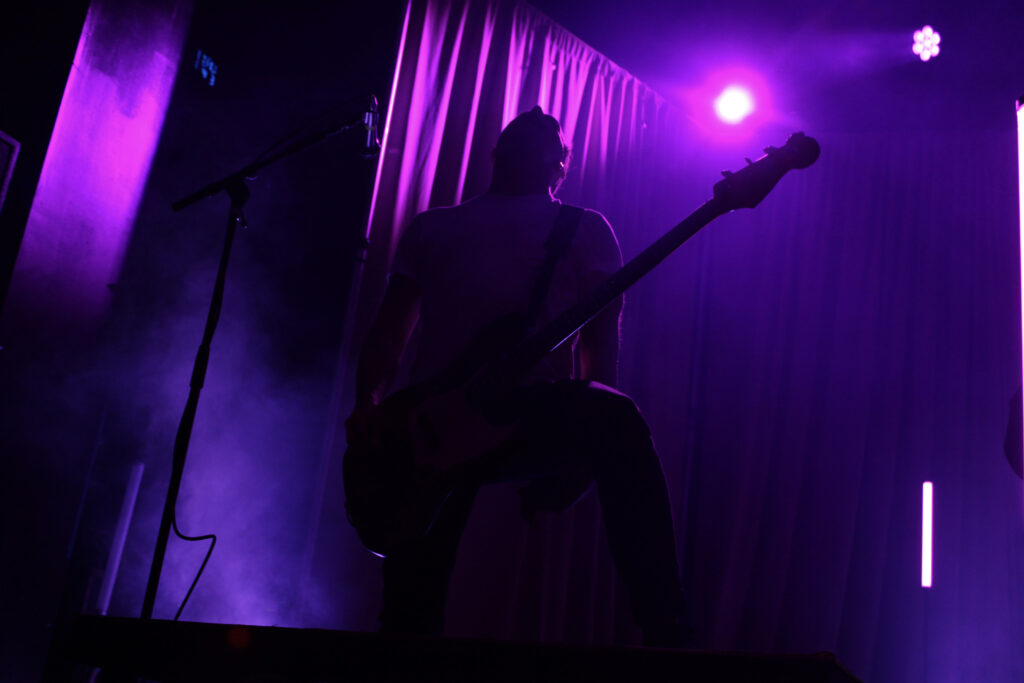
Magnolia Park’s stage setup included several vertical LED tube lights, synced to match the music, two empty coffins flanking each side of the stage, each one guarded by an angel statue similar to what someone might see in a cemetery and their backdrop, which read “Join the Vampires,” a reference to the fictional story the band created to accompany their newest album, “Vamp.”  

Before the band’s appearance onstage, a grainy audio clip talking about the actions of the vampires played to the darkened room, adding a feeling of immersion from the show’s start. 

Magnolia Park’s setlist featured songs mostly from “Vamp,” though there were a few from previous works. The newer songs have a noticeably heavier sound to them, leaning more toward a hard rock or even metalcore feel rather than the pop-punk style they started with. The shift is not for the worse, though, as lead singer Joshua Roberts has proven his ability to execute vocals with more texture than just clean singing, including full screaming parts.

It appears that the shift is favored by a significant number of their fans, considering that four out of their top five songs on Spotify are either from their most recent album or singles with similar styles.

Their two most popular songs on Spotify right now, “SHALLOW” and “WORSHIP,” were blended together as part of their set at the Atlanta show. Following one of their songs, “OMEN,” every member left the stage, except for Roberts, who launched into a solo, voice-only version of “WORSHIP.” Rather than singing the song the whole way through, Roberts held the note at the end of the song’s chorus, and the rest of the band members walked back on as the audio transitioned into the intro of “SHALLOW,” which they then played in full. 

Regardless of what song was playing, Magnolia Park knows how to captivate a crowd; each member’s musical talents are only further bolstered by their presence onstage. 

With all the excitement of the night, it seemed unlikely that the crowd could get any more energetic. However, that assertion was proved wrong when the band came out for an encore. Of the two songs they played during their encore, their first one managed to evoke even more spirit from the crowd. 

Magnolia Park re-recorded “I2I,” originally written for the 1995 film “A Goofy Movie,” as a part of “A Whole New Sound,” a 2024 compilation album consisting of covers of Disney songs by alternative bands. The band’s skill, plus a healthy dose of nostalgia, made Magnolia Park’s performance of “I2I” one of the most energetic of the entire night.

Magnolia Park’s “Vamp” tour will continue its run until mid-May.

The post Magnolia Park brings bite to Atlanta’s Terminal West appeared first on Technique.

Posted in UncategorizedComments Off on Magnolia Park brings bite to Atlanta’s Terminal West

“Sinners” arrives as one of 2025’s best films

The irony of a movie with the tagline “Dance with the Devil” releasing on Easter weekend certainly is not lost. Yet, if there’s anything audiences may learn from Ryan Coogler’s newest film, it’s that you can go to church and still commune with the “Sinners.” 

The Oscar-nominated director’s first feature-length film since “Black Panther: Wakanda Forever” in 2022 is a venture away from his typical work, delving instead into something a bit more terrifying. The deviation is certainly not for the worse, though, as Coogler and his super-powered team of actors and crew members offer up one of the best movies of 2025 so far. 

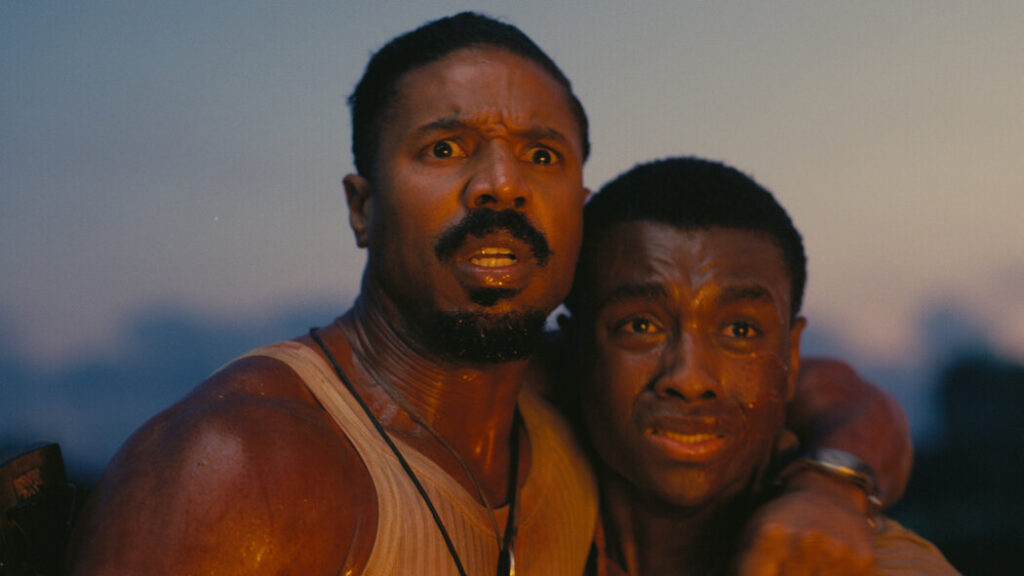
“Sinners” blends supernatural with Southern Gothic as it takes audiences back to Jim Crow-era Mississippi, where identical twins “Smoke” and “Stack” (Michael B. Jordan) return home after being away for a long while. 

After chasing World War I combat with some alleged work with Chicago gangsters, the brothers return to their hometown, bringing with them a truckload of bootleg liquor and plans to open a juke joint. Instead of a smooth and successful opening night, however, the joint receives an unexpected visitor, and the night of drinking and dancing turns into a night of frightening chaos.

The movie brings out impeccable performances from all its actors, starting first with Jordan, who plays not one, but two main roles in the form of the identical “Smokestack twins.” One of the most successful things about Jordan’s acting in “Sinners” is his ability to portray two completely separate characters at the same time. Smoke and Stack dress distinctly, speak with their own cadence and tone and even carry themselves with a different air.; Jordan’s attention to every detail of each of his roles makes it easy for audiences to forget that they are not looking at two different actors.

Hollywood newcomer Miles Caton plays Sammie — Aka “Preacher Boy” — the 19-year-old cousin of Smoke and Stack. Sammie is a musician with an otherworldly talent bolstered by the actor’s real talent. Having spent several years performing background for and touring with H.E.R., Caton auditioned for his first onscreen role at the suggestion and encouragement of the R&B singer. His soulful voice fits perfectly into the world of “Sinners,” captivating characters and audiences alike throughout the film. 

Seen first in the character of Killmonger in the first “Black Panther,” Coogler seems to have a track record for writing more substantial villains, whose views and desires often come with at least a modicum of validity. “Sinners” is no different.

The juke joint’s metaphorical descent to Hell begins with the introduction of Remmick, played by English actor Jack O’Connell. Preaching “fellowship and love” with an Irish lilt, the vampire claims to have good intentions at heart, just with some more-than-questionable methods to accomplish his mission. While it would have been understandable, if not expected, for the primary antagonist in a film about a Southern Black community to be fueled by racist ideology, the vampire has other reasons for the havoc he wreaks on the juke joint patrons. 

O’Connell’s performance — spurred by Coogler’s writing and emphasized through Remmick’s eerie glowing eyes and eager grin — crafts a charismatically sinister antagonist; one who is clearly dangerous, despite the altruistic words that he clearly believes as he speaks them. 

When talking about Coogler’s writing in relation to his character, O’Connell spoke of “a real richness, a real depth to Ryan’s writing and what we were striving towards, it wasn’t superficial. It was grounded in something that’s rooted in history, and that, to me, was the main thing I wanted to latch onto: the cultural richness that our characters were representing in individual ways.” 

This cultural richness is another element of “Sinners” that makes it the sensational film that it is. Coogler weaves together the music, customs, clothing and spirituality of the different cultures represented within the story with care and intentionality that is so clear it is nearly tangible. Not only that, but he does so specifically through the lens of when the movie takes place.

Consulting various experts with specializations ranging from Mississippi Choctaw culture and language to Mississippi Delta Chinese culture to Irish culture, Coogler elevates his film with more finesse than just plain, old-fashioned “good writing” by ensuring that what is ingrained in the real-life communities is just as ingrained in what goes onto the screen. These conscientious decisions directly contribute to some of the best scenes throughout the entirety of the movie. 

Several of these standout scenes share something else in common: the music. If culture makes up the veins of “Sinners,” music is the blood that runs through them. Sammie’s musical talents extend beyond the comprehension of time, possessing the ability to connect the past, the present and the future of Black culture and communities. The blues permeate through every moment of “Sinners” with historical accuracy, just as the genre permeates through decades of musical progress.  

The music of the film was the work of Oscar- and Grammy-winning composer Ludwig Göransson, who has worked with Coogler since their time as contemporaries at the University of Southern California (USC) film school. Göransson did extensive research to create a soundtrack that was both accurate to the 1930s and yet still felt new. The composer, along with Coogler and a few other members of their music team, toured the Deep South, visiting studios and museums while connecting with blues musicians, men and women who had both visited and performed at juke joints like the one in the film. 

Coogler supported Göransson’s musical prowess and attention to authenticity and immersion by intentionally casting musicians in whichever roles were going to require musical performances in the film. The resulting effect on “Sinners” is something incredibly powerful, surrounding audiences with the soul of Blues from the community that first built it. Though there were a few musical instances that lacked the significant Blues influence, particularly among the vampires, there was still a clear desire for cultural authenticity. Performances that feature Remmick also feature 19th-century Irish folk songs in line with the character’s pre-Christian Irish heritage. 

It is important to note that “Sinners,” while featuring musical performances, is not a musical. The film emphasizes the role that music plays in cultural identity, spirituality and religion, community and history through its musical scenes, but does not use the music to move the plot along narratively. 

Ryan Coogler’s “Sinners” is more than just another vampire movie. It is a multi-layered display of culture, a celebration of heritage in which every decision — from acting to music to costuming and props — is meaningful. Each character, from the main “Smokestack” twins to any of the patrons at the juke joint, has a story that impacts their actions. Nothing that Coogler does with the film is “just because;” everything is thought out and intended to show what it cannot simply tell, filling “Sinners” with symbolism and underlying meaning that leaves audiences with the desire to ruminate on what they have seen. 

With “Sinners,” the director has reinforced the acclaim that has followed him since getting his start in the film industry by delivering not just a movie, but a work of art.

“Sinners” is in theaters now.

The post “Sinners” arrives as one of 2025’s best films appeared first on Technique.

Posted in UncategorizedComments Off on “Sinners” arrives as one of 2025’s best films

Concert review: Anberlin ignites the Masquerade

Florida-born American alt-rock band Anberlin recently wrapped up their first tour of 2025, starting the year with a celebration of the 20th anniversary of their second record, “Never Take Friendship Personal.” From February to April, the band performed the album on stages across the United States, followed by an encore of a few of their other popular songs. 

Accompanied by supporting bands The Dangerous Summer and Copeland, their tour stopped in Atlanta at Heaven at the Masquerade on April 3.

Anberlin has had a presence in the emo and pop-punk music scene since their formation in 2002, signing to a record label within their first year as a group and reaching the top 20 of the Billboard 200 in just five years with the release of their third album, “Cities.” Despite their long history, which includes a hiatus from 2014 to 2018, long-time fans can see most of the original members still rocking out onstage. Founding musicians Joseph Milligan (lead guitar, backing vocals), Deon Rexroat (bass) and Nathan Young (drums, percussion) all still share their energy and passion with live audiences. Rhythm guitar player Christian McAlhaney, while not part of the original lineup, has been a part of the band since 2007, having a solid place among the group nonetheless. 

The biggest difference fans will notice when seeing Anberlin perform live is the absence of original lead singer Stephen Christian, who took an indefinite hiatus from touring in 2023. Upon Christian’s announcement, however, he reassured fans that he was not quitting the band altogether, just taking a step back from the touring aspect. As part of the same announcement, the band revealed the musician they had chosen to fill in for Christian: Memphis May Fire’s Matty Mullins. 

A self-proclaimed long-time fan of Anberlin, Mullins was excited for the opportunity and began touring with the band as their live lead vocalist in 2024. In his own post, the metalcore singer reassured Memphis May Fire fans that MMF would still be his first priority and that tour schedules were specifically arranged to allow him to tour with both bands without conflict. He also introduced himself to Anberlin fans, telling them that he was in no way going to try to become or replace Christian, but rather make sure that audiences still got “110%” of the passionate energy they go to Anberlin shows expecting. 

Their Atlanta show was certainly a reinforcement of that promise. 

Following The Dangerous Summer, indie-rock group Copeland commemorated their album “In Motion,” also celebrating a 20th anniversary, by playing the album in lieu of their typical assortment of songs. Copeland’s lead singer, Aaron Marsh, had appeared with Anberlin on their album “Cities, ” and many fans of one band overlapped with the other. As each band played, fans steadily filled the room until the time had finally come for the headlining act.   

Each member of Anberlin took the stage to raucous applause. Instead of a standard backdrop with the band logo printed on it, the stage was set up with a clean white curtain and LED lights, reminiscent of the simple white and light blue color scheme of the “Never Take Friendship Personal” album cover.

Mullins was the last to join the band, running on to start the opening number, the album’s titular song. Greeting the crowd, he shouted, “My name is Matty Mullins and these guys behind me, they’re called Anberlin!” 

There were several points throughout the show, his introduction included, in which Mullins separated himself from the official full-time lineup of Anberlin, talking about how excited he was to celebrate their accomplishments with them. It was a subtle, yet noticeable commitment to his promise not to replace Christian as the band’s lead singer. Despite this distinction, he still performed among the other members with enthusiastic and natural chemistry, smiling genuinely throughout their set.

Mullins has a different voice than Christian, but one that still lends extremely well to Anberlin’s genre and sound. Often including significantly more of his harsh screams in MMF’s music, Anberlin’s comparatively softer style utilizes Mullins’s strong, clean vocals, with a sporadic scream here and there. A general consensus from many fans on social media is while Mullins may not be Stephen Christian, he certainly does Anberlin’s music justice, in both sound and spirit.

After playing through “Never Take Friendship Personal,” Mullins thanked the crowd and the band left the stage. In typical concert fashion, however, they did not stay offstage for very long, instead returning for a four-song encore from some of the band’s other albums. Two of the songs, “Seven” and “High Stakes,” featured Mullins on the recorded versions. 

Anberlin’s 20th Anniversary tour for “Never Take Friendship Personal” was a nostalgic experience for many fans who had been listening to the band since the beginning. Mullins and the official Anberlin members performed a passionate and energetic set; their love for the music and playing was evident not only in how good they sounded but also in how happy they looked.

Following his travels with Anberlin, Mullins is hopping back on the road with his band, Memphis May Fire, for the Shapeshifters tour from April to May before picking back up with Anberlin for their summer performances.

The post Concert review: Anberlin ignites the Masquerade appeared first on Technique.

Posted in UncategorizedComments Off on Concert review: Anberlin ignites the Masquerade

Ray Mendoza and Kit Connor stay true to soldiers’ memories in ‘Warfare’

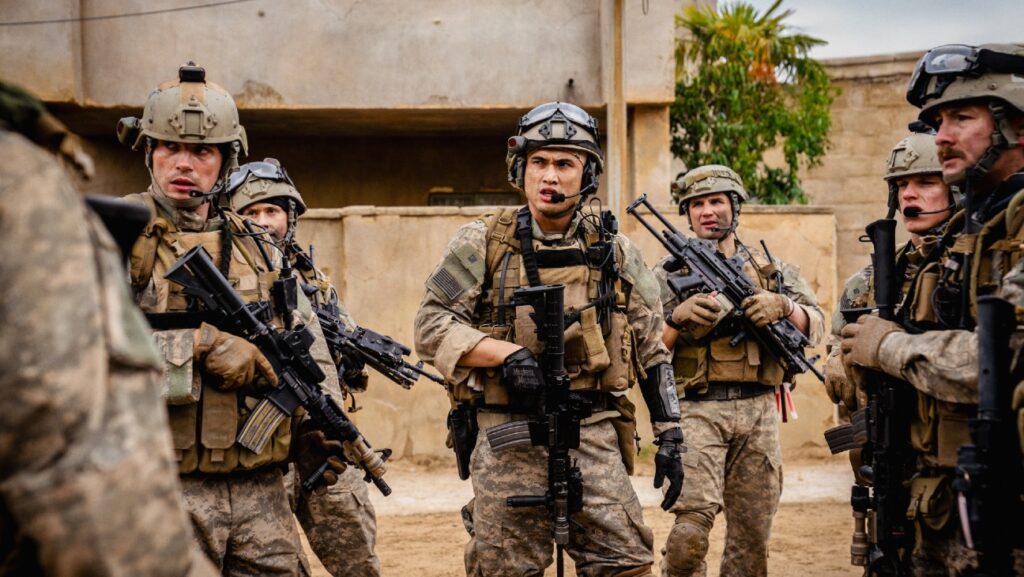
“Warfare” is unlike any movie you’ve seen before. Not quite a biography, nor a biopic, but a real story all the same. The 95-minute film recounts the events of a 2006 Navy Sea, Air and Land (SEAL) mission in Al-Qaeda-controlled Ramadi Province, Iraq. While it may look like a typical war movie at first glance, “Warfare”’s significance lies most in its backstory, intentions and execution. 

Rather than the “based on a true story” branding that combat movies like “Lone Survivor” and “Saving Private Ryan” have, “Warfare” instead proclaims that “everything is based on memory.” 

The tagline is not just a fancy way of saying the same thing. Instead, it refers to the way that writer-directors Alex Garland and Ray Mendoza created the film by “forensically” piecing together the timeline and details of the mission-gone-wrong through interviews with the SEALs who were actually there, one being Mendoza himself. 

The mission was meant to be relatively straightforward: the “Op 1” team — one of the three groups that the SEAL team had split into — was in charge of surveilling an urban residential area from the second-story apartment of a building that was next to an insurgent house, which they did not realize until it was too late. 

Following a surprise enemy attack with a grenade, the team attempted to extract their wounded, only for an improved explosive device (IED) to gravely injure two of the SEALs. From there, the situation became increasingly dire, as the SEALs, now surrounded, had to keep themselves and their wounded teammates alive while waiting for another chance to evacuate. 

Despite the fact that United States military operations had been active in Iraq since early 2003 and would continue for roughly another five years following the mission in the Ramadi Province, “Warfare” focuses solely on this one event experienced by this specific team, forgoing any mention of the larger conflict concurrently at hand. Furthermore, it was an explicit rule between the co-writers to create the film’s screenplay based on exactly what was reported, with none of the dramatization or editorialization that many war-based movies tend to infuse for the sake of keeping viewers entertained. 

This decision traces back to the fact that, according to Mendoza, general audiences were not who he had in mind when creating “Warfare.” During an interview with the Technique, the writer-director explained, “I made it for Elliot … and I kind of made it for veterans; that was kind of what I was focused on. … It’s not about anything other than the event because we were making it for one person.” 

When he says Elliot, he is referring to Elliot Miller, a sniper and combat medic on the Ops 1 team who sustained extensive and severe injuries from both the grenade and IED explosion. To this day, Miller is unable to remember what happened. “Warfare” acts as a “living document” that gives him the ability to see what happened that day, experiencing it through the memories of his teammates. 

The timeline, screenplay and set design were all reliant on the interviews that Garland and Mendoza conducted with Miller and Mendoza’s former team, as well as other “characters” involved. The first to be interviewed for the movie, Mendoza told the Technique that Garland “almost functioned as a therapist. He was like, ‘What were you feeling? Do you have regrets? What went wrong?’… It was very therapeutic in some ways.” For the other interviews, the co-writers conducted them together, comparing everyone’s recounts to reconstruct the day, bringing it out of the past and eventually onto the screen.

The intentionality behind the film is something that carries throughout every decision made by everyone involved, adding a layer of depth and rawness that not even the most emotional military-centric movies manage to achieve. 

“Warfare” holds nothing back, laying everything out on the table without the cinematic cushions of dissolves or fade-to–black shots that might spare audiences from seeing the gruesome parts of combat, such as graphic injuries and dead bodies. Any techniques that may provide a sense of comfort and dissonance, such as the ability to see incoming attacks before the characters are excluded from the film. Viewers are just as caught off guard by the grenade as the SEALs are, and, because the soldiers are not given the comfort of knowing when they will be rescued and if their teammates will survive until then, neither are viewers. 

The adherence to reality, rather than typical war movie conventions, also stands out in the film’s incredible sound design. Similar to the lack of cinematic visual cues, “Warfare” also lacked typical auditory effects, such as a soundtrack or instrumental scoring. Audiences are only able to hear the ambient sounds of the Iraqi residential area outside the building and the SEALs going about their business inside.

The sound design’s greatest strength comes in the skillful way that it handles the absence of sound. The silence in many portions of the film is still loud in its own way, with every rustle of clothing and shift in body position noticeable, building feelings of tension and uncertainty. If the soldiers are surprised, so is the audience. Moments after the IED explodes, viewers experience the same feelings of panic and disorientation as the SEALs as they try to compose themselves enough to get to safety.

Though the writing and directing aspects of the film were done together, Garland and Mendoza each had particular responsibilities when it came to making the movie. According to a separate interview with Garland, he was in charge of handling the technical and logistical aspects, while he says “the heart and soul of the story, including working with the actors, became [Mendoza’s] job.”

“Warfare” also stands apart from typical military movies in its focus on casting younger actors. Rather than the actors that typically play onscreen soldiers — the older ones with well-known faces — Garland and Mendoza looked for men in their 20s and 30s. Tying back to the desire for realism, Mendoza wanted to remind anyone watching the movie that, more often than not, the soldiers actually fighting wars like the one in Iraq are very young. In fact, to qualify for the Navy SEALs, soldiers must be under 29 years old. 

The cast roster includes Will Poulter (“Maze Runner”), Joseph Quinn (“Stranger Things”), Cosmo Jarvis (“Shōgun”), Taylor John Smith (“Where the Crawdads Sing”), Charles Melton (“Riverdale”) and Kit Connor (“Heartstopper”). Mendoza himself, a Navy SEALs communications officer during this mission, was played by 23-year-old D’Pharaoh Woon-A-Tai (“Reservation Dogs”). 

While none of the actors hit the Navy’s minimum age of 17 years old, their youth does not go unnoticed, closely resembling college students more than action heroes. 

In addition to age, physicality was another factor taken into account when Garland and Mendoza made casting decisions. Before filming, the cast underwent a three-week boot camp based on BUD/S (Basic Underwater Demolition SEAL), the training that real Navy SEALs have to go through to prepare them for the intense, high-stress situations they are expected to perform under. 

The training was led by Mendoza — who also served as a Land Warfare Training Detachment and BUD/s instructor during his time with the Navy — and Tim Chappel, a former Royal Green Jacket in the British Army. The training included everything the actors needed to learn for their roles, from radio etiquette and proper terminology to weapons handling and tactical maneuvering. 

During an interview with the Technique, Connor, who plays Tommy, a gunner on the Ops 1 team, described the whole experience working on “Warfare” as “different to anything that I’d ever experienced or known.” Among the younger cast members at 21 years old, he said that he knew the role, and the preparation it required, “was going to be a challenge … I was definitely nervous to begin with, but I think it was a fascinating experience for all of us to kind of immerse ourselves in that world and experience it together.”

Connor talked about the long, 12 to 15-minute takes they would do during filming and each actor’s elevated commitment to these particular roles. He said, “Whether the camera was on you or not, we were kind of expected to stay in [the role] as much as possible and never really switch off, which was something that, often on a film set, you don’t really have to do, although I do think … that’s really one of the things that makes the ensemble’s performance a level better, is just the fact that every time that any character looks at another person in the room, they’re not taken out of [the scene], they’re completely immersed in it.” 

“Immersive” is certainly a spot-on word to describe “Warfare,” and the immersive nature of the film helped to create the sense of realism that Mendoza wanted.

To maintain and further the authenticity of the filming process, Mendoza brought in additional expertise in the form of original members of his SEAL team, including Elliot Miller. 

“It’s much easier to see the weight of a situation and to see the effects and the impact of an event when you have the people who were present around you. So I think it was just a really positive thing for us as actors to be able to understand not only the people that we were portraying, but the effects of that event and the true weight of it,” Connor said. 

This weight that the actor describes is palpable even to audiences. Even for people who do not tend to lean toward military-centric movies, watching “Warfare” allows a glimpse into an experience that is so personal to someone and shows the process of multiple people’s lives changing in mere hours. 

“Obviously, I know [that] anyone outside of that is going to receive it a certain way but I wasn’t so much focused on ‘Oh this is how I want other people to receive it, outside of one community.’… it’s focusing on those peaks and valleys, those microstory points in there. … [I wanted] veterans to use this as a voice. So now, anyone outside of that, maybe it helps bridge a gap, maybe it raises a question or a way to start a conversation … if that’s something you’re interested in learning and talking about, then that’s great, this is a great starting point for that,” Mendoza said.

“Warfare” may not be the movie viewers will go to for a feel-good hour-and-a-half, but it is definitely a movie worth seeing. It is a powerful memory that has been waiting to be recounted in this way since Mendoza got his start in the film industry; a beautifully and painstakingly crafted tribute from one brother to another.

The post Ray Mendoza and Kit Connor stay true to soldiers’ memories in ‘Warfare’ appeared first on Technique.


Posted in UncategorizedComments Off on Ray Mendoza and Kit Connor stay true to soldiers’ memories in ‘Warfare’

Ray Mendoza and Kit Connor stay true to soldiers’ memories in ‘Warfare’

“Warfare” is unlike any movie you’ve seen before. Not quite a biography, nor a biopic, but a real story all the same. The 95-minute film recounts the events of a 2006 Navy Sea, Air and Land (SEAL) mission in Al-Qaeda-controlled Ramadi Province, Iraq. While it may look like a typical war movie at first glance, “Warfare”’s significance lies most in its backstory, intentions and execution. 

Rather than the “based on a true story” branding that combat movies like “Lone Survivor” and “Saving Private Ryan” have, “Warfare” instead proclaims that “everything is based on memory.” 

The tagline is not just a fancy way of saying the same thing. Instead, it refers to the way that writer-directors Alex Garland and Ray Mendoza created the film by “forensically” piecing together the timeline and details of the mission-gone-wrong through interviews with the SEALs who were actually there, one being Mendoza himself. 

The mission was meant to be relatively straightforward: the “Op 1” team — one of the three groups that the SEAL team had split into — was in charge of surveilling an urban residential area from the second-story apartment of a building that was next to an insurgent house, which they did not realize until it was too late. 

Following a surprise enemy attack with a grenade, the team attempted to extract their wounded, only for an improved explosive device (IED) to gravely injure two of the SEALs. From there, the situation became increasingly dire, as the SEALs, now surrounded, had to keep themselves and their wounded teammates alive while waiting for another chance to evacuate. 

Despite the fact that United States military operations had been active in Iraq since early 2003 and would continue for roughly another five years following the mission in the Ramadi Province, “Warfare” focuses solely on this one event experienced by this specific team, forgoing any mention of the larger conflict concurrently at hand. Furthermore, it was an explicit rule between the co-writers to create the film’s screenplay based on exactly what was reported, with none of the dramatization or editorialization that many war-based movies tend to infuse for the sake of keeping viewers entertained. 

This decision traces back to the fact that, according to Mendoza, general audiences were not who he had in mind when creating “Warfare.” During an interview with the Technique, the writer-director explained, “I made it for Elliot … and I kind of made it for veterans; that was kind of what I was focused on. … It’s not about anything other than the event because we were making it for one person.” 

When he says Elliot, he is referring to Elliot Miller, a sniper and combat medic on the Ops 1 team who sustained extensive and severe injuries from both the grenade and IED explosion. To this day, Miller is unable to remember what happened. “Warfare” acts as a “living document” that gives him the ability to see what happened that day, experiencing it through the memories of his teammates. 

The timeline, screenplay and set design were all reliant on the interviews that Garland and Mendoza conducted with Miller and Mendoza’s former team, as well as other “characters” involved. The first to be interviewed for the movie, Mendoza told the Technique that Garland “almost functioned as a therapist. He was like, ‘What were you feeling? Do you have regrets? What went wrong?’… It was very therapeutic in some ways.” For the other interviews, the co-writers conducted them together, comparing everyone’s recounts to reconstruct the day, bringing it out of the past and eventually onto the screen.

The intentionality behind the film is something that carries throughout every decision made by everyone involved, adding a layer of depth and rawness that not even the most emotional military-centric movies manage to achieve. 

“Warfare” holds nothing back, laying everything out on the table without the cinematic cushions of dissolves or fade-to–black shots that might spare audiences from seeing the gruesome parts of combat, such as graphic injuries and dead bodies. Any techniques that may provide a sense of comfort and dissonance, such as the ability to see incoming attacks before the characters are excluded from the film. Viewers are just as caught off guard by the grenade as the SEALs are, and, because the soldiers are not given the comfort of knowing when they will be rescued and if their teammates will survive until then, neither are viewers. 

The adherence to reality, rather than typical war movie conventions, also stands out in the film’s incredible sound design. Similar to the lack of cinematic visual cues, “Warfare” also lacked typical auditory effects, such as a soundtrack or instrumental scoring. Audiences are only able to hear the ambient sounds of the Iraqi residential area outside the building and the SEALs going about their business inside.

The sound design’s greatest strength comes in the skillful way that it handles the absence of sound. The silence in many portions of the film is still loud in its own way, with every rustle of clothing and shift in body position noticeable, building feelings of tension and uncertainty. If the soldiers are surprised, so is the audience. Moments after the IED explodes, viewers experience the same feelings of panic and disorientation as the SEALs as they try to compose themselves enough to get to safety.

Though the writing and directing aspects of the film were done together, Garland and Mendoza each had particular responsibilities when it came to making the movie. According to a separate interview with Garland, he was in charge of handling the technical and logistical aspects, while he says “the heart and soul of the story, including working with the actors, became [Mendoza’s] job.”

“Warfare” also stands apart from typical military movies in its focus on casting younger actors. Rather than the actors that typically play onscreen soldiers — the older ones with well-known faces — Garland and Mendoza looked for men in their 20s and 30s. Tying back to the desire for realism, Mendoza wanted to remind anyone watching the movie that, more often than not, the soldiers actually fighting wars like the one in Iraq are very young. In fact, to qualify for the Navy SEALs, soldiers must be under 29 years old. 

The cast roster includes Will Poulter (“Maze Runner”), Joseph Quinn (“Stranger Things”), Cosmo Jarvis (“Shōgun”), Taylor John Smith (“Where the Crawdads Sing”), Charles Melton (“Riverdale”) and Kit Connor (“Heartstopper”). Mendoza himself, a Navy SEALs communications officer during this mission, was played by 23-year-old D’Pharaoh Woon-A-Tai (“Reservation Dogs”). 

While none of the actors hit the Navy’s minimum age of 17 years old, their youth does not go unnoticed, closely resembling college students more than action heroes. 

In addition to age, physicality was another factor taken into account when Garland and Mendoza made casting decisions. Before filming, the cast underwent a three-week boot camp based on BUD/S (Basic Underwater Demolition SEAL), the training that real Navy SEALs have to go through to prepare them for the intense, high-stress situations they are expected to perform under. 

The training was led by Mendoza — who also served as a Land Warfare Training Detachment and BUD/s instructor during his time with the Navy — and Tim Chappel, a former Royal Green Jacket in the British Army. The training included everything the actors needed to learn for their roles, from radio etiquette and proper terminology to weapons handling and tactical maneuvering. 

During an interview with the Technique, Connor, who plays Tommy, a gunner on the Ops 1 team, described the whole experience working on “Warfare” as “different to anything that I’d ever experienced or known.” Among the younger cast members at 21 years old, he said that he knew the role, and the preparation it required, “was going to be a challenge … I was definitely nervous to begin with, but I think it was a fascinating experience for all of us to kind of immerse ourselves in that world and experience it together.”

Connor talked about the long, 12 to 15-minute takes they would do during filming and each actor’s elevated commitment to these particular roles. He said, “Whether the camera was on you or not, we were kind of expected to stay in [the role] as much as possible and never really switch off, which was something that, often on a film set, you don’t really have to do, although I do think … that’s really one of the things that makes the ensemble’s performance a level better, is just the fact that every time that any character looks at another person in the room, they’re not taken out of [the scene], they’re completely immersed in it.” 

“Immersive” is certainly a spot-on word to describe “Warfare,” and the immersive nature of the film helped to create the sense of realism that Mendoza wanted.

To maintain and further the authenticity of the filming process, Mendoza brought in additional expertise in the form of original members of his SEAL team, including Elliot Miller. 

“It’s much easier to see the weight of a situation and to see the effects and the impact of an event when you have the people who were present around you. So I think it was just a really positive thing for us as actors to be able to understand not only the people that we were portraying, but the effects of that event and the true weight of it,” Connor said. 

This weight that the actor describes is palpable even to audiences. Even for people who do not tend to lean toward military-centric movies, watching “Warfare” allows a glimpse into an experience that is so personal to someone and shows the process of multiple people’s lives changing in mere hours. 

“Obviously, I know [that] anyone outside of that is going to receive it a certain way but I wasn’t so much focused on ‘Oh this is how I want other people to receive it, outside of one community.’… it’s focusing on those peaks and valleys, those microstory points in there. … [I wanted] veterans to use this as a voice. So now, anyone outside of that, maybe it helps bridge a gap, maybe it raises a question or a way to start a conversation … if that’s something you’re interested in learning and talking about, then that’s great, this is a great starting point for that,” Mendoza said.

“Warfare” may not be the movie viewers will go to for a feel-good hour-and-a-half, but it is definitely a movie worth seeing. It is a powerful memory that has been waiting to be recounted in this way since Mendoza got his start in the film industry; a beautifully and painstakingly crafted tribute from one brother to another.

The post Ray Mendoza and Kit Connor stay true to soldiers’ memories in ‘Warfare’ appeared first on Technique.
Posted in UncategorizedComments Off on Ray Mendoza and Kit Connor stay true to soldiers’ memories in ‘Warfare’

Ray Mendoza and Kit Connor stay true to soldiers’ memories in ‘Warfare’

“Warfare” is unlike any movie you’ve seen before. Not quite a biography, nor a biopic, but a real story all the same. The 95-minute film recounts the events of a 2006 Navy Sea, Air and Land (SEAL) mission in Al-Qaeda-controlled Ramadi Province, Iraq. While it may look like a typical war movie at first glance, “Warfare”’s significance lies most in its backstory, intentions and execution. 

Rather than the “based on a true story” branding that combat movies like “Lone Survivor” and “Saving Private Ryan” have, “Warfare” instead proclaims that “everything is based on memory.” 

The tagline is not just a fancy way of saying the same thing. Instead, it refers to the way that writer-directors Alex Garland and Ray Mendoza created the film by “forensically” piecing together the timeline and details of the mission-gone-wrong through interviews with the SEALs who were actually there, one being Mendoza himself. 

The mission was meant to be relatively straightforward: the “Op 1” team — one of the three groups that the SEAL team had split into — was in charge of surveilling an urban residential area from the second-story apartment of a building that was next to an insurgent house, which they did not realize until it was too late. 

Following a surprise enemy attack with a grenade, the team attempted to extract their wounded, only for an improved explosive device (IED) to gravely injure two of the SEALs. From there, the situation became increasingly dire, as the SEALs, now surrounded, had to keep themselves and their wounded teammates alive while waiting for another chance to evacuate. 

Despite the fact that United States military operations had been active in Iraq since early 2003 and would continue for roughly another five years following the mission in the Ramadi Province, “Warfare” focuses solely on this one event experienced by this specific team, forgoing any mention of the larger conflict concurrently at hand. Furthermore, it was an explicit rule between the co-writers to create the film’s screenplay based on exactly what was reported, with none of the dramatization or editorialization that many war-based movies tend to infuse for the sake of keeping viewers entertained. 

This decision traces back to the fact that, according to Mendoza, general audiences were not who he had in mind when creating “Warfare.” During an interview with the Technique, the writer-director explained, “I made it for Elliot … and I kind of made it for veterans; that was kind of what I was focused on. … It’s not about anything other than the event because we were making it for one person.” 

When he says Elliot, he is referring to Elliot Miller, a sniper and combat medic on the Ops 1 team who sustained extensive and severe injuries from both the grenade and IED explosion. To this day, Miller is unable to remember what happened. “Warfare” acts as a “living document” that gives him the ability to see what happened that day, experiencing it through the memories of his teammates. 

The timeline, screenplay and set design were all reliant on the interviews that Garland and Mendoza conducted with Miller and Mendoza’s former team, as well as other “characters” involved. The first to be interviewed for the movie, Mendoza told the Technique that Garland “almost functioned as a therapist. He was like, ‘What were you feeling? Do you have regrets? What went wrong?’… It was very therapeutic in some ways.” For the other interviews, the co-writers conducted them together, comparing everyone’s recounts to reconstruct the day, bringing it out of the past and eventually onto the screen.

The intentionality behind the film is something that carries throughout every decision made by everyone involved, adding a layer of depth and rawness that not even the most emotional military-centric movies manage to achieve. 

“Warfare” holds nothing back, laying everything out on the table without the cinematic cushions of dissolves or fade-to–black shots that might spare audiences from seeing the gruesome parts of combat, such as graphic injuries and dead bodies. Any techniques that may provide a sense of comfort and dissonance, such as the ability to see incoming attacks before the characters are excluded from the film. Viewers are just as caught off guard by the grenade as the SEALs are, and, because the soldiers are not given the comfort of knowing when they will be rescued and if their teammates will survive until then, neither are viewers. 

The adherence to reality, rather than typical war movie conventions, also stands out in the film’s incredible sound design. Similar to the lack of cinematic visual cues, “Warfare” also lacked typical auditory effects, such as a soundtrack or instrumental scoring. Audiences are only able to hear the ambient sounds of the Iraqi residential area outside the building and the SEALs going about their business inside.

The sound design’s greatest strength comes in the skillful way that it handles the absence of sound. The silence in many portions of the film is still loud in its own way, with every rustle of clothing and shift in body position noticeable, building feelings of tension and uncertainty. If the soldiers are surprised, so is the audience. Moments after the IED explodes, viewers experience the same feelings of panic and disorientation as the SEALs as they try to compose themselves enough to get to safety.

Though the writing and directing aspects of the film were done together, Garland and Mendoza each had particular responsibilities when it came to making the movie. According to a separate interview with Garland, he was in charge of handling the technical and logistical aspects, while he says “the heart and soul of the story, including working with the actors, became [Mendoza’s] job.”

“Warfare” also stands apart from typical military movies in its focus on casting younger actors. Rather than the actors that typically play onscreen soldiers — the older ones with well-known faces — Garland and Mendoza looked for men in their 20s and 30s. Tying back to the desire for realism, Mendoza wanted to remind anyone watching the movie that, more often than not, the soldiers actually fighting wars like the one in Iraq are very young. In fact, to qualify for the Navy SEALs, soldiers must be under 29 years old. 

The cast roster includes Will Poulter (“Maze Runner”), Joseph Quinn (“Stranger Things”), Cosmo Jarvis (“Shōgun”), Taylor John Smith (“Where the Crawdads Sing”), Charles Melton (“Riverdale”) and Kit Connor (“Heartstopper”). Mendoza himself, a Navy SEALs communications officer during this mission, was played by 23-year-old D’Pharaoh Woon-A-Tai (“Reservation Dogs”). 

While none of the actors hit the Navy’s minimum age of 17 years old, their youth does not go unnoticed, closely resembling college students more than action heroes. 

In addition to age, physicality was another factor taken into account when Garland and Mendoza made casting decisions. Before filming, the cast underwent a three-week boot camp based on BUD/S (Basic Underwater Demolition SEAL), the training that real Navy SEALs have to go through to prepare them for the intense, high-stress situations they are expected to perform under. 

The training was led by Mendoza — who also served as a Land Warfare Training Detachment and BUD/s instructor during his time with the Navy — and Tim Chappel, a former Royal Green Jacket in the British Army. The training included everything the actors needed to learn for their roles, from radio etiquette and proper terminology to weapons handling and tactical maneuvering. 

During an interview with the Technique, Connor, who plays Tommy, a gunner on the Ops 1 team, described the whole experience working on “Warfare” as “different to anything that I’d ever experienced or known.” Among the younger cast members at 21 years old, he said that he knew the role, and the preparation it required, “was going to be a challenge … I was definitely nervous to begin with, but I think it was a fascinating experience for all of us to kind of immerse ourselves in that world and experience it together.”

Connor talked about the long, 12 to 15-minute takes they would do during filming and each actor’s elevated commitment to these particular roles. He said, “Whether the camera was on you or not, we were kind of expected to stay in [the role] as much as possible and never really switch off, which was something that, often on a film set, you don’t really have to do, although I do think … that’s really one of the things that makes the ensemble’s performance a level better, is just the fact that every time that any character looks at another person in the room, they’re not taken out of [the scene], they’re completely immersed in it.” 

“Immersive” is certainly a spot-on word to describe “Warfare,” and the immersive nature of the film helped to create the sense of realism that Mendoza wanted.

To maintain and further the authenticity of the filming process, Mendoza brought in additional expertise in the form of original members of his SEAL team, including Elliot Miller. 

“It’s much easier to see the weight of a situation and to see the effects and the impact of an event when you have the people who were present around you. So I think it was just a really positive thing for us as actors to be able to understand not only the people that we were portraying, but the effects of that event and the true weight of it,” Connor said. 

This weight that the actor describes is palpable even to audiences. Even for people who do not tend to lean toward military-centric movies, watching “Warfare” allows a glimpse into an experience that is so personal to someone and shows the process of multiple people’s lives changing in mere hours. 

“Obviously, I know [that] anyone outside of that is going to receive it a certain way but I wasn’t so much focused on ‘Oh this is how I want other people to receive it, outside of one community.’… it’s focusing on those peaks and valleys, those microstory points in there. … [I wanted] veterans to use this as a voice. So now, anyone outside of that, maybe it helps bridge a gap, maybe it raises a question or a way to start a conversation … if that’s something you’re interested in learning and talking about, then that’s great, this is a great starting point for that,” Mendoza said.

“Warfare” may not be the movie viewers will go to for a feel-good hour-and-a-half, but it is definitely a movie worth seeing. It is a powerful memory that has been waiting to be recounted in this way since Mendoza got his start in the film industry; a beautifully and painstakingly crafted tribute from one brother to another.

The post Ray Mendoza and Kit Connor stay true to soldiers’ memories in ‘Warfare’ appeared first on Technique.
Posted in UncategorizedComments Off on Ray Mendoza and Kit Connor stay true to soldiers’ memories in ‘Warfare’

Ray Mendoza and Kit Connor stay true to soldiers’ memories in ‘Warfare’

“Warfare” is unlike any movie you’ve seen before. Not quite a biography, nor a biopic, but a real story all the same. The 95-minute film recounts the events of a 2006 Navy Sea, Air and Land (SEAL) mission in Al-Qaeda-controlled Ramadi Province, Iraq. While it may look like a typical war movie at first glance, “Warfare”’s significance lies most in its backstory, intentions and execution. 

Rather than the “based on a true story” branding that combat movies like “Lone Survivor” and “Saving Private Ryan” have, “Warfare” instead proclaims that “everything is based on memory.” 

The tagline is not just a fancy way of saying the same thing. Instead, it refers to the way that writer-directors Alex Garland and Ray Mendoza created the film by “forensically” piecing together the timeline and details of the mission-gone-wrong through interviews with the SEALs who were actually there, one being Mendoza himself. 

The mission was meant to be relatively straightforward: the “Op 1” team — one of the three groups that the SEAL team had split into — was in charge of surveilling an urban residential area from the second-story apartment of a building that was next to an insurgent house, which they did not realize until it was too late. 

Following a surprise enemy attack with a grenade, the team attempted to extract their wounded, only for an improved explosive device (IED) to gravely injure two of the SEALs. From there, the situation became increasingly dire, as the SEALs, now surrounded, had to keep themselves and their wounded teammates alive while waiting for another chance to evacuate. 

Despite the fact that United States military operations had been active in Iraq since early 2003 and would continue for roughly another five years following the mission in the Ramadi Province, “Warfare” focuses solely on this one event experienced by this specific team, forgoing any mention of the larger conflict concurrently at hand. Furthermore, it was an explicit rule between the co-writers to create the film’s screenplay based on exactly what was reported, with none of the dramatization or editorialization that many war-based movies tend to infuse for the sake of keeping viewers entertained. 

This decision traces back to the fact that, according to Mendoza, general audiences were not who he had in mind when creating “Warfare.” During an interview with the Technique, the writer-director explained, “I made it for Elliot … and I kind of made it for veterans; that was kind of what I was focused on. … It’s not about anything other than the event because we were making it for one person.” 

When he says Elliot, he is referring to Elliot Miller, a sniper and combat medic on the Ops 1 team who sustained extensive and severe injuries from both the grenade and IED explosion. To this day, Miller is unable to remember what happened. “Warfare” acts as a “living document” that gives him the ability to see what happened that day, experiencing it through the memories of his teammates. 

The timeline, screenplay and set design were all reliant on the interviews that Garland and Mendoza conducted with Miller and Mendoza’s former team, as well as other “characters” involved. The first to be interviewed for the movie, Mendoza told the Technique that Garland “almost functioned as a therapist. He was like, ‘What were you feeling? Do you have regrets? What went wrong?’… It was very therapeutic in some ways.” For the other interviews, the co-writers conducted them together, comparing everyone’s recounts to reconstruct the day, bringing it out of the past and eventually onto the screen.

The intentionality behind the film is something that carries throughout every decision made by everyone involved, adding a layer of depth and rawness that not even the most emotional military-centric movies manage to achieve. 

“Warfare” holds nothing back, laying everything out on the table without the cinematic cushions of dissolves or fade-to–black shots that might spare audiences from seeing the gruesome parts of combat, such as graphic injuries and dead bodies. Any techniques that may provide a sense of comfort and dissonance, such as the ability to see incoming attacks before the characters are excluded from the film. Viewers are just as caught off guard by the grenade as the SEALs are, and, because the soldiers are not given the comfort of knowing when they will be rescued and if their teammates will survive until then, neither are viewers. 

The adherence to reality, rather than typical war movie conventions, also stands out in the film’s incredible sound design. Similar to the lack of cinematic visual cues, “Warfare” also lacked typical auditory effects, such as a soundtrack or instrumental scoring. Audiences are only able to hear the ambient sounds of the Iraqi residential area outside the building and the SEALs going about their business inside.

The sound design’s greatest strength comes in the skillful way that it handles the absence of sound. The silence in many portions of the film is still loud in its own way, with every rustle of clothing and shift in body position noticeable, building feelings of tension and uncertainty. If the soldiers are surprised, so is the audience. Moments after the IED explodes, viewers experience the same feelings of panic and disorientation as the SEALs as they try to compose themselves enough to get to safety.

Though the writing and directing aspects of the film were done together, Garland and Mendoza each had particular responsibilities when it came to making the movie. According to a separate interview with Garland, he was in charge of handling the technical and logistical aspects, while he says “the heart and soul of the story, including working with the actors, became [Mendoza’s] job.”

“Warfare” also stands apart from typical military movies in its focus on casting younger actors. Rather than the actors that typically play onscreen soldiers — the older ones with well-known faces — Garland and Mendoza looked for men in their 20s and 30s. Tying back to the desire for realism, Mendoza wanted to remind anyone watching the movie that, more often than not, the soldiers actually fighting wars like the one in Iraq are very young. In fact, to qualify for the Navy SEALs, soldiers must be under 29 years old. 

The cast roster includes Will Poulter (“Maze Runner”), Joseph Quinn (“Stranger Things”), Cosmo Jarvis (“Shōgun”), Taylor John Smith (“Where the Crawdads Sing”), Charles Melton (“Riverdale”) and Kit Connor (“Heartstopper”). Mendoza himself, a Navy SEALs communications officer during this mission, was played by 23-year-old D’Pharaoh Woon-A-Tai (“Reservation Dogs”). 

While none of the actors hit the Navy’s minimum age of 17 years old, their youth does not go unnoticed, closely resembling college students more than action heroes. 

In addition to age, physicality was another factor taken into account when Garland and Mendoza made casting decisions. Before filming, the cast underwent a three-week boot camp based on BUD/S (Basic Underwater Demolition SEAL), the training that real Navy SEALs have to go through to prepare them for the intense, high-stress situations they are expected to perform under. 

The training was led by Mendoza — who also served as a Land Warfare Training Detachment and BUD/s instructor during his time with the Navy — and Tim Chappel, a former Royal Green Jacket in the British Army. The training included everything the actors needed to learn for their roles, from radio etiquette and proper terminology to weapons handling and tactical maneuvering. 

During an interview with the Technique, Connor, who plays Tommy, a gunner on the Ops 1 team, described the whole experience working on “Warfare” as “different to anything that I’d ever experienced or known.” Among the younger cast members at 21 years old, he said that he knew the role, and the preparation it required, “was going to be a challenge … I was definitely nervous to begin with, but I think it was a fascinating experience for all of us to kind of immerse ourselves in that world and experience it together.”

Connor talked about the long, 12 to 15-minute takes they would do during filming and each actor’s elevated commitment to these particular roles. He said, “Whether the camera was on you or not, we were kind of expected to stay in [the role] as much as possible and never really switch off, which was something that, often on a film set, you don’t really have to do, although I do think … that’s really one of the things that makes the ensemble’s performance a level better, is just the fact that every time that any character looks at another person in the room, they’re not taken out of [the scene], they’re completely immersed in it.” 

“Immersive” is certainly a spot-on word to describe “Warfare,” and the immersive nature of the film helped to create the sense of realism that Mendoza wanted.

To maintain and further the authenticity of the filming process, Mendoza brought in additional expertise in the form of original members of his SEAL team, including Elliot Miller. 

“It’s much easier to see the weight of a situation and to see the effects and the impact of an event when you have the people who were present around you. So I think it was just a really positive thing for us as actors to be able to understand not only the people that we were portraying, but the effects of that event and the true weight of it,” Connor said. 

This weight that the actor describes is palpable even to audiences. Even for people who do not tend to lean toward military-centric movies, watching “Warfare” allows a glimpse into an experience that is so personal to someone and shows the process of multiple people’s lives changing in mere hours. 

“Obviously, I know [that] anyone outside of that is going to receive it a certain way but I wasn’t so much focused on ‘Oh this is how I want other people to receive it, outside of one community.’… it’s focusing on those peaks and valleys, those microstory points in there. … [I wanted] veterans to use this as a voice. So now, anyone outside of that, maybe it helps bridge a gap, maybe it raises a question or a way to start a conversation … if that’s something you’re interested in learning and talking about, then that’s great, this is a great starting point for that,” Mendoza said.

“Warfare” may not be the movie viewers will go to for a feel-good hour-and-a-half, but it is definitely a movie worth seeing. It is a powerful memory that has been waiting to be recounted in this way since Mendoza got his start in the film industry; a beautifully and painstakingly crafted tribute from one brother to another.

The post Ray Mendoza and Kit Connor stay true to soldiers’ memories in ‘Warfare’ appeared first on Technique.

Posted in UncategorizedComments Off on Ray Mendoza and Kit Connor stay true to soldiers’ memories in ‘Warfare’