Author Archives | Shreeya Gounder

Could the co-op program benefit from restructuring?

Photo by Lucas Tusinean | The Triangle

“If it ain’t broke, don’t fix it” is oft-cited advice, but there are always benefits to renovating something that could use a few upgrades. It is undoubtedly true that the cooperative education program at Drexel is not broken, as it sees a significant amount of success and receives high praise, but it is also a fact that it is nowhere close to perfection. 

An analysis of the National Graduates Survey found that students who completed at least one co-op while in college earn higher salaries on average three years after graduation and often have higher GPAs than their peers. The same study suggests a trend of undergraduate programs moving towards more comprehensive internship programs and advises colleges and universities to establish a co-op program. Drexel is already a step ahead in both culture and reputation, but for some reason, it feels as though we are standing still. This is a golden opportunity to become more competitive and gain more ground, especially at a time where colleges and universities are fighting for the enrollment of dwindling classes. It may not be enough that Drexel ranks second in co-op and internship-focused institutions across the country, as the university  ranks 98th for universities overall (it’s beginning to matter less how good a program is, — according to a Niche survey; the majority of polled students’ decisions were heavily influenced by prestige and name recognition).

How, then, are we standing still, and more importantly – how can we move forward? A month into my first co-op, I could attest to the merits of the program, however, several easily solvable issues yet linger, issues that put it at a disadvantage. 

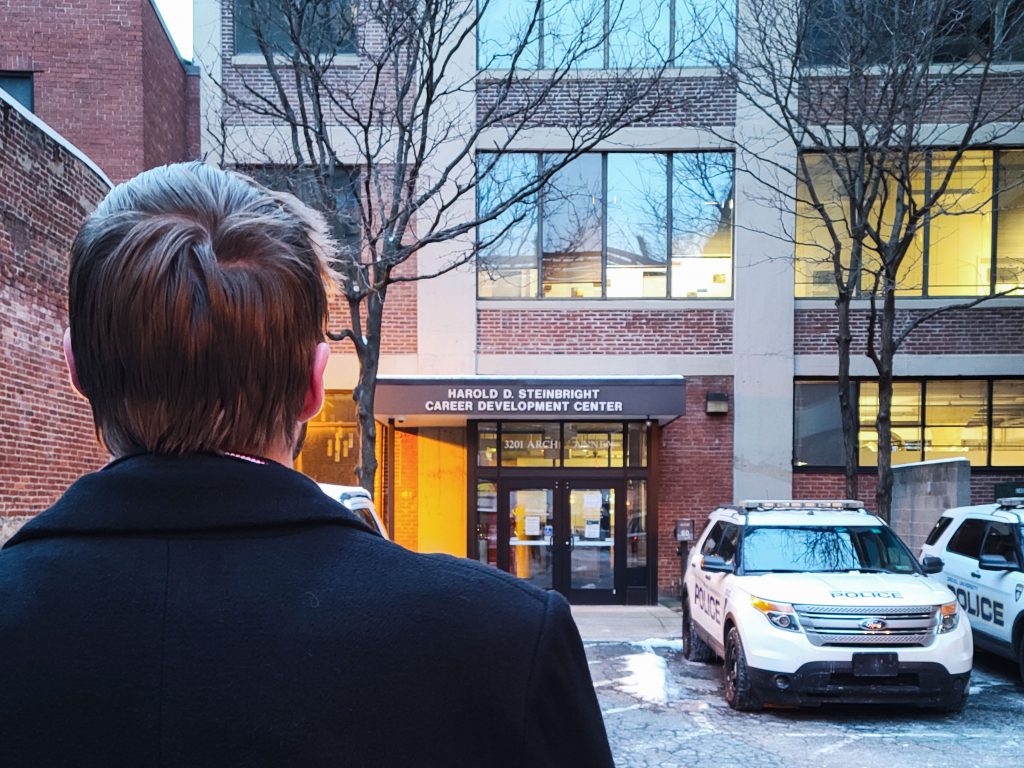
As with everything else, outward appearance matters. The Steinbright Career Development Center’s website does the job, but its outdated interface can be very confusing to users —  students and employers alike. The lack of attention given to SCDC Online runs the risk of coming off as unprofessional to employers interested in the co-op program. Making the website user-friendly is the best way to ensure that the best opportunities are seen by students. 

The curriculum for COOP 101 has also been cited by many students as unhelpful, as the requirements for the resume projects differ depending on the professor, and sometimes do not line up with the actual ideal resume formats suggested during application season. 

Drexel University could also better promote the program to prospective students. An applicant who does not look very deeply into the school and only applies because it is a local option, or perhaps because it ranks in the top 100 universities or just because the acceptance rate is high, may not even know about the co-op program. Sure, it is associated with the school’s name, but that is only useful for applicants well-acquainted with the school and its reputation. This alone does not speak to the benefits of the program, or provide applicants with an idea of how they could fit into it.

What solutions, then, can be suggested for these grievances within the program? I suggest killing several proverbial birds with one metaphorical stone– student involvement! Who can better describe the ways to improve student experience, than the students themselves? Having an opportunity for both website users and participants in the program to describe the ways the experience could have been better for them is the clearest path to improving it. A user interface makeover for the SCDC website is long overdue, to the point where there could be merit to making that project itself a co-op, perhaps for User Experience Design students to take advantage of. If the program is not being marketed as well as it could, why not hold brainstorming sessions with students studying marketing and related fields, asking in what ways the program might appeal better to other people their age? Who else could attest to the efficacy (or lack thereof) of the required COOP 101 course than a student who has had it on their roster? Utilizing the university social media pages to highlight several students a year and give them an opportunity to talk about their time in co-op, across all of the departments, would reach more prospective students in a more impactful way. And, of course, there is no one better to speak of the success and merits of the program than those who have gained valuable insights and long-lasting connections in their 6-18 months inside of it. 

Of course, it may also prove useful to look at the only school with a co-op program that outranks ours — that of Northeastern University in Boston, Massachusetts. A deep dive into their website suggests that many of the aforementioned suggested solutions might work in our favor. Their easy-to-navigate information page on the program markets it well to incoming students, provides stories of successful students and highlights employers, and offers extensive resources. That isn’t to say that SCDC does not do these things, but Northeastern provides a good model for how it can be done better. 
Time will only tell of the benefit brought to the co-op program when the looming switch to semesters takes place, but that is not a question for today. Big changes such as that one will, of course, have a major impact on the efficacy and acclaim of the program. But the small changes, the ones made possible by students and staff working in tandem, may provide the same degree of success.

This article is part of a grant awarded to The Triangle from the Solutions Journalism Network investigating student mental health at Drexel University. 

Posted in UncategorizedComments Off on Could the co-op program benefit from restructuring?

Breaking down Drexel’s Club Sports Tier System

Photo by Evie Touring | The Triangle

As a student at Drexel University, participating in a club is a great way to engage with peers and spend time doing something that you are interested in or love. In recent years, a club sports tier system was implemented in Drexel’s club sports community, which has made club requirements more difficult and dreadful for students to deal with, including the SAFAC allocation process. Because of the changes, the stress resulting from adhering to the tier system has significantly impacted my mental health and the same goes for many other members of club sports.

I am a student athlete myself and heavily involved with the Drexel Ski and Snowboard Team’s executive board. My responsibility on the ski team is to manage our social media presence, plan events outside of competitions, coordinate with the fundraising chair to spread awareness on upcoming fundraisers and contribute to executive board decisions.

Since the implementation of the tier system in 2022, what is supposed to be a manageable responsibility has become a stressful, time-consuming position on top of being a competitor as well. The team relies on some of my responsibilities to ensure we remain a certain “status” on the tier system club sports implemented.

In this article, I will be breaking down the most significant parts of the Club Sports Tier System document that heavily contributed to a decline in my mental health and that of my team.

The purpose of the tier system is stated in Article 1 in the document: “Drexel University recognizes a broad spectrum of Club Sports. All Club Sports are unique and have different needs. This Tier System will outline different levels of responsibilities and requirements and highlight the corresponding benefits awarded to each Club Sport upon completion.”

In Article 3 of the document, it also mentions the criteria each club sport will be evaluated on. “All Club Sports will be evaluated in five categories during the year. These categories are number of competitions, number of Dragon Development Meetings attended, accountability points accumulated, fundraising, and community service.”

In the chart depicted below, it shows what tier your club would be based on the five deciding factors mentioned before. If your team is in the red tier for more than two years, your club will no longer be recognized.

Accountability Points

The categories that really take a toll on my mental health are the last three: “Accountability Points,” “Fundraising” and “Community Service.”

You can earn accountability points for your team in numerous ways. There are easy routes to take to earn points for your team. Having a discipline-free year gets your club 20 points. Or participating in community service, which is already a requirement, gets your club 30 points. And even doing officer training by the deadline gets your club 30 points added to your accountability score.

However, even with all three of those accountability point scenarios added together, to receive gold tier status your team would still need to accumulate over 40 more points. You and your team must go the extra mile to receive those.

Personally, I thought it would be a good idea to manage posting weekly every term. Your team gets 20 points for posting weekly. But as a full-time student who is also a student journalist on the side, managing a weekly post adds up to be a lot. In the fall, I also undergo the co-op interview process. In the winter, I am in my competitive season for the team. And in the spring and summer, content becomes hard to post because our season comes to a close after five to eight weeks into the winter.

The weight of taking the time to curate posts, hoping the content I create is engaging, actively managing our social media accounts, and comparing our team’s performance to other teams so that my team can earn accountability points to stay afloat in the gold-tier status becomes a draining task when posting weekly. My mental state is also heavily impacted by social media in general, so not having an option to post content I am proud of on my own schedule and instead enduring the pressure to frequently post really takes a toll on me.

Fundraising

This chart also mentions that to obtain gold tier status for your team, you must fundraise at least 20 percent of your team’s SAFAC request. My team’s SAFAC request totaled to be about $9,000. That means that we must fundraise over $1,800 to remain in the gold tier. If anyone is familiar with doing fundraisers with Chipotle, Blaze Pizza, Board and Brew, Saxbys and other organizations that are similar, you know that you only receive 20-30% of the total fundraised if your organization meets the required minimum raised. 

Mia Tomlinson, former competitor and treasurer of the ski team, mentioned in a statement, “the fundraising is also flawed because it’s us spending $10-15 for food, for example, for only a small portion of that to go to the club. It would be more efficient to just give the club the $15.”

Most of the participants going to the ski team’s fundraisers have been the athletes and some alumni, usually the fundraised amount received totals to about $15-$30. There are only so many times your team and alumni can support you at an expensive fast food joint before interest wanes and your efforts add up to nothing.

Last year, my team attempted other ways to hold engaging fundraisers like raffling off a snowboard or creating a bake sale, but Club Sports did not approve because these types of fundraisers were not in accordance with the rules and regulations at the time.

Any student at Drexel knows how expensive the tuition is. Asking my teammates to consistently come out to expensive food joints to support their team when they already have team dues plus the possibility of rent, food, class materials and much more makes me feel guilty, especially when there is a possibility that we will not even receive a penny from the fundraiser.

Community Service

The last category on the chart, community service, states that the total amount of hours of community service accumulated should average to be 10 hours per person to qualify for the gold tier status. The ski team has over 40 members on the team. That means one or more persons on the team must accumulate over 400 hours of service to qualify for the gold tier status.

This is a huge stressor for me and my fellow executive board members because we all have different, busy schedules and we definitely do not have an average of 400 hours lying around to participate in community service when we are in classes or co-op under the fast-paced quarter system. This category makes achieving the gold tier status feel impossible to me and over time has dwindled my mental health.

You may be asking yourself, why break your back to achieve the gold tier status? In the chart below, it shows the benefits of having gold tier status.

Practice and home event scheduling does not apply to my team because the ski and snowboard team does not have an on-campus slope to practice on and all of our competitions are away at local ski resorts. But the funding request is extremely crucial to us. As I mentioned before, our SAFAC request was about $9,000 this year. We partake in an incredibly expensive sport and are required to follow certain rules imposed by club sports and United States Collegiate Ski and Snowboard Association that requires us to afford huge expenses like lift tickets, hotel rooms for every competition and athlete registration fees. 

Even if my team is granted the entirety of our SAFAC request, our team dues still add up to over $450 per athlete. It also seems unfair to me that even if we work to have the gold tier status, 100% of the team’s SAFAC request is not guaranteed. It is crucial that we attempt to obtain gold tier status so we have a better chance of receiving all of our SAFAC requests. Otherwise, our dues must be raised which could force many athletes who love the sport to refrain from returning to the ski team. Also, if our team does not receive gold, our already stressful responsibilities on the executive board will become positions that are mentally unmanageable and could force members to step down from their positions.

Jocelyn Conroe, former President of the ski team, shared a quick statement on what she thought of the tier system.

“I think it was a wacky system with good intent- trying to hold us to the standards of varsity teams. Just stressful due to lack of support,” said Conroe.

Stewart Conley, the current Treasurer of the ski team, has also been mentally impacted by the tier system. 

“The tier system has put a lot of stress on the team and the e-board. I know that the tier system was well intentioned and was meant to keep the clubs in check, but making this the only way in which we can receive the money we require to run the club is what really makes the system stressful. The money we receive from SAFAC covers only a fraction of what we need to run the club and then it could be cut even more if we do not get into a high enough tier. The clubs are a place of stress relief for a lot of people, myself included, and the tier system takes that away,” added Conley.

Though it makes sense to put in effort to receive the gold tier perks, the way the tier system is setup currently is a draining responsibility that I have tried to manage for the past two years. Hopefully, some of the requirements dilute to make it seem more incentivizing.

This article is part of a grant awarded to The Triangle from the Solutions Journalism Network investigating student mental health at Drexel University. 

Posted in UncategorizedComments Off on Breaking down Drexel’s Club Sports Tier System

Trespassing on your own school

Photo by Kasey Shamis | The Triangle

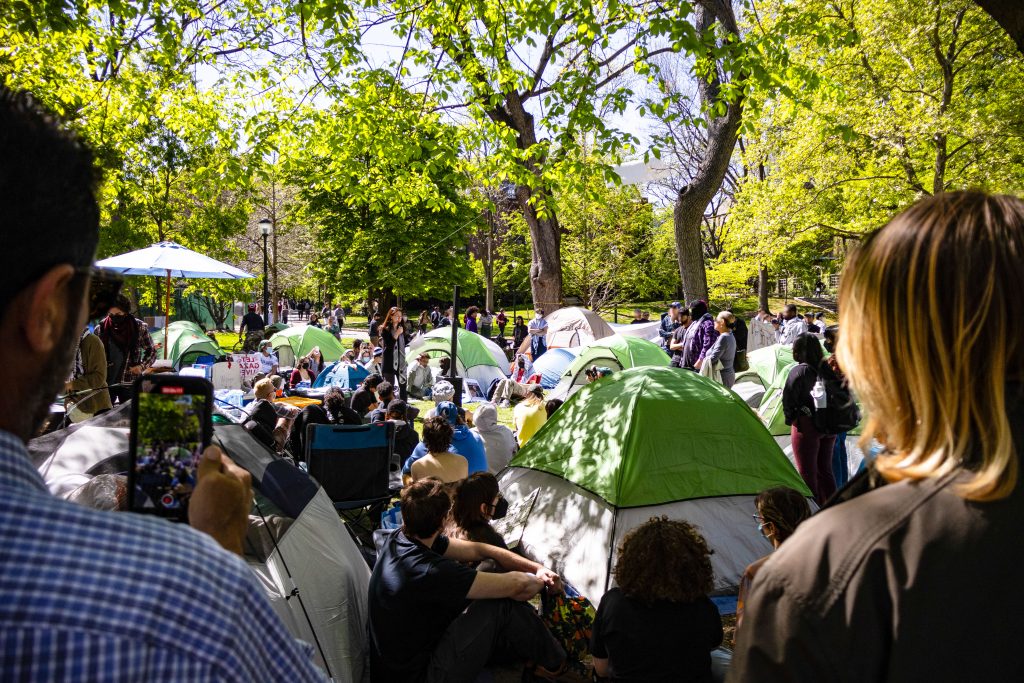
On April 18, 2024 the Spectator, Columbia University’s student newspaper, reported that President Shafik of Columbia had identified a student protest as a “clear and present danger” and called in the New York Police Department to arrest hundreds of students for trespassing on the campus lawn. Those students also received interim suspensions.

You read that right. Columbia students were accused of trespassing on the grass. What was the “clear and present danger?” They were peacefully camping without stopping any campus operations at the time. The encampment was in protest of the war in Gaza and Columbia’s refusal to divest from the war infrastructure. Columbia’s actions set a precedent for other universities like U.T. Austin and Princeton to arrest students for camping despite having allowed other peaceful yet expressive protests in the past.

Regardless of your personal views on the Israel-Palestine war, this is a huge violation of the right to free expression. Although the students were arrested for violating the facially neutral law of trespassing, circumstantial evidence seems to suggest that the students were really arrested for protesting against their university. Students are generally allowed on the lawn, and the only reason Columbia had a problem with people being on the lawn is because the students were protesting. While private organizations technically have the right to decide who to allow on their property, as a university, Columbia should be encouraging the free exchange of ideas which means students should be granted the same level of protections as the Constitution would grant if the students were at a public university. Failure to do so leads to a chilling effect on speech where students become afraid to speak out against important issues in a similar way that selective enforcement of, say, workplace rules against workers attempting to unionize might stifle speech.

It is meaningless to have freedom of speech if it does not protect controversial, unpopular or offensive viewpoints. Radical ideas sometimes propel society forward in ways that we would believe in the present time. There is also educational value in evaluating unpopular ideas and explaining why exactly those ideas are false. Expressing ideas into a void is meaningless, which is why it is important for protests to have a visible presence — like through an encampment — even if the ideas being expressed make some uncomfortable. Of course, this right does not extend to calls for harassment, intimidation, insurrection or the destruction of life or property.

Columbia also violates the due process of students. By issuing interim suspensions, Columbia’s student conduct process presumes the accused to be guilty until proven innocent. The U.S. justice system operates in the reverse, precisely because it is too easy for a government to weaponize its power against those that government officials do not agree with. A murderer in the U.S. justice system has more due process rights than a Columbia student. The consequences of a wrongful suspension are serious. If further investigation determined that a suspension was not warranted, the student would have missed weeks of classes and not had access to campus, putting all academic terms the suspension lasted for in jeopardy. Even if the student were to be reinstated in good standing, the student would be facing accrued student loan interest charges, a record of suspension, and social stigmatization.

The power dynamic between a university and student is also highly asymmetrical which imposes an obligation on the university to look out for the best interests of its students. College is a highly expensive decision that gives students little choice but to finish their degree to pay off their loan. If the university comes up with new rules for students, students have little choice but to follow them because dropping out is seldom a realistic choice. Schools must then not abuse their power to chill speech they do not agree with. 

The national wave of arrests should concern all students. While it is currently being applied in the context of the Israel-Palestine war, this gives universities the ability to shut down future protests as well, further threatening the free expression of ideas.

In Philadelphia, students across Philadelphia set up an encampment following the Columbia debacle. Although no arrests have been made at this point, University of Pennsylvania administrators have issued threats to the protesters including suspension. Again, students were threatened with disciplinary procedures for the sole act of protesting.

Drexel’s Student Code of Conduct explicitly prohibits “constructing shelters, camping, or sleeping on Drexel-owned or operated properties…unless otherwise authorized by the Department of Public Safety.” In the most literal interpretation of this clause, the Code would prevent students from falling asleep in class. It can also be applied in an antisemitic way by preventing Jews from celebrating sukkot, a holiday mandating Jewish students to er\ect a temporary outdoor shelter, and in the current context, prevents students from expressing their views or defending free speech at “the most civically engaged university in the United States.”

At this time of heightened unrest, it is important for Drexel and universities nationwide to develop official policies protecting the right to free expression and outlining the specific procedure over when police can be called to intervene in a protest.

Posted in UncategorizedComments Off on Trespassing on your own school

Why you should get out more this spring 

Photo by Kasey Shamis | The Triangle

Ah, the summer time, grassy fields, picnic blankets and hours spent laying out in the sun. What gets better than spending your time doing that? Midterms season, apparently. Given that it’s week five of the spring term with summer quickly approaching (a blessing for the lucky freshman who spend their summer free from the commitment of summer classes or coop), apparently not. Midterms season sees many students longingly staring out of their window at the passerby enjoying the Vitamin D and their peers at other institutions nearing the start of their summer break, and begrudgingly looking back down at their computer to submit the next assignment or study for the next three exams they have back to back. I’m here to tell you: go outside right now!

Being exposed to natural light has a myriad of benefits, not only for health and wellness but for productivity as well. The demands that many students face can be overwhelming, especially at a fast-paced university like Drexel. Heightened levels of stress and cortisol levels accompany those demands. Studies have shown that productivity actually improves if employees (or students in this case) are closer to a window, absorbing the rays of sun that they can manage to find around campus. Not only does natural light (not the light in the basement of the library) improve mood (which is good for overall happiness), but it also has an influence on the melatonin and serotonin levels produced in the body and brain. 

Vitamin D, which many students are already familiar with, has known effects on increasing bone health and decreasing the risk of fractures (both things that I am sure we want to maintain as much as possible). Just 8-10 minutes of sun exposure at noon has the potential to provide enough Vitamin D to be sufficient for human health and wellness. Fat cells in the body have the ability to store Vitamin D for months, so even just a little sun exposure can really go a long way in maintaining that healthy, happy persona that I’m sure many college students aim to embody. 

Looking beyond those pretty obvious effects of just a little sunlight exposure on the daily, a boost in creativity also accompanies more sun exposure. While this not only allows students to spend precious moments outside, they can also justify the benefits of spending time with friends on a picnic blanket on Lancaster Walk as they write their 1000 word midterm easily or sitting on the picnic tables near the volleyball courts cramming for their exam the next day. 

For students really adamant about their class or work commitments preventing them from seeing the light of day for most of the rest of spring term, simply having natural light nearby when working has been proven to improve overall wellbeing and happiness. Going for a quick 20 minute walk outside around campus or a picnic on a day off can really make the world of a difference.

Posted in UncategorizedComments Off on Why you should get out more this spring 

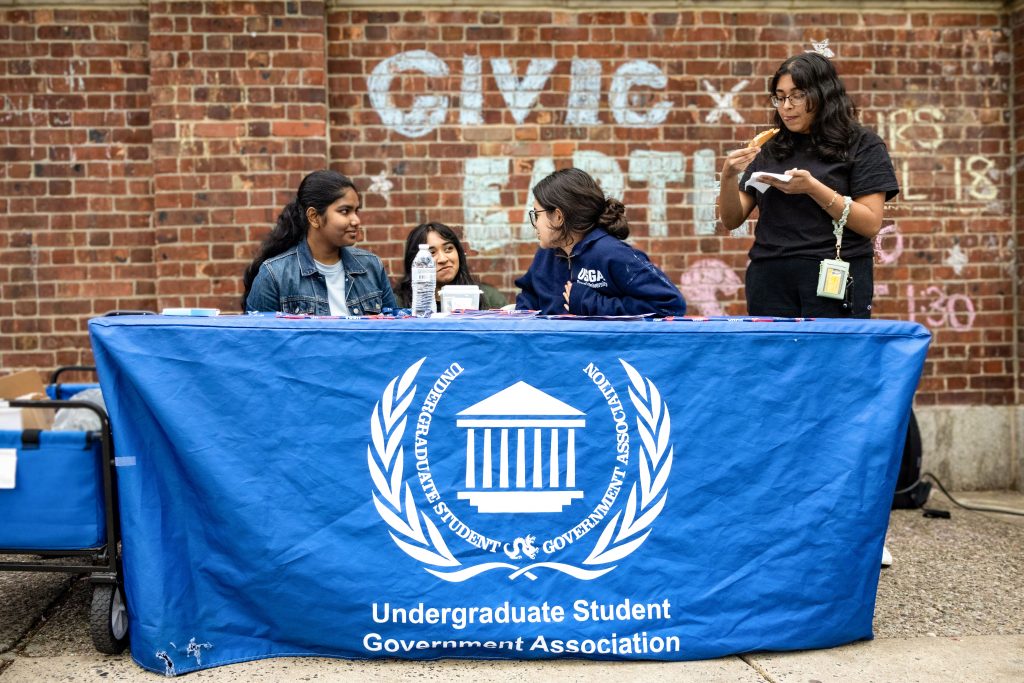
The flawed election process of Drexel’s student government

Photo by Kasey Shamis | The Triangle

In no democratic world does the current government elect the next government. In no world, that is, except at Drexel University. With “election” season coming, it is important to note that the senators of the Undergraduate Student Government Association (USGA) are not actually elected.

After a prospective student senator receives 50 nominations from any undergraduate student (~0.36% of the undergraduate body), the prospective senator must be elected by at least ⅔ of the currently sitting representatives. For spring term elections, this means that the only people actually voting are non-returning students and seniors who will not have to bear the consequences of the decisions of a future government.

USGA purports its mission to be “to fairly represent the Drexel Student Body and to foster relations between the students and the University community. This organization exists to be the official voice and advocate on behalf of the undergraduate student body to the Drexel University administration.”

It is a bit ironic for an undemocratic government to claim to be the official voice of the undergraduate student body. After all, prospective senators campaign not to the undergraduate student body but to mostly graduating seniors in the government. If I had to pick someone to replace me, who would I pick? I would probably pick the student that I believe most closely represents my views. Thus, the student government’s views remain constant and unchanging year after year even if the views of the overall student body have changed. Over time, opinions can diverge so greatly that USGA no longer speaks for all students, rendering it illegitimate. Student senators that disagree with everyone else can risk future committee chair positions and even their re-election.

But wait! The president and vice president are directly elected by the entire student body. The president has the power to veto legislation and speak for the students. However, having two out of 52 students (3.8%) be elected does not make a government democratic. The veto power is usually insignificant anyway because most USGA work is done through initiatives which are started not by any formal action of USGA but by a single student senator seeking change. Most importantly, the president and vice president are required to have previously served in USGA for at least three quarters which means they still exhibit like-mindedness with the rest of the government.

The effects of disenfranchisement can be seen playing out. For example, USGA’s bylaws require student senators to fulfill civic engagement event requirements. These events are held in-person. This prevents Drexel’s thousands of online students from gaining representation in the government which means USGA cannot advocate on their behalf. USGA has also been relatively superficial in their advocacy and have typically worked on minor initiatives like putting chalk in the Recreation Center and spreading awareness about holding doors open while taking no action to challenge Drexel’s administration on larger campus issues that draw the attention of many students like RA unionization.

The undergraduate students of Drexel University must demand their government to do better, and USGA needs to amend their selection process to allow students to democratically elect their government.

Posted in UncategorizedComments Off on The flawed election process of Drexel’s student government

How long is long enough for spring break?

Photo by Dylan Elwell | The Triangle

Three weeks ago, I, along with many other Drexel students, painfully trudged back to Philadelphia at the end of spring break, a glorious week-long bed rot where I ate my weight in food, watched (an unhealthy amount of) Netflix shows and simply did nothing. I believe my laziness was completely warranted. The ten-week winter term, followed by an absolutely grueling finals week that ended at 3 p.m. on a Friday, took a lot out of me. So, I wholeheartedly believe that the week of spring break was absolutely necessary for me to mentally recover from the (rather traumatizing) term that had preceded. 

But alas, spring break flew by and before I knew it, I was gearing up for yet another 10-week term which will be followed by three more terms after that before I get a six-month break for my co-op. By the time I get to that point, I will have completed a total of six straight academic quarters, a reality that many of us are no stranger to. However, this raises the question: how long is long enough for our little breaks? While the irrational, bed-rot loving part of me wants to say “one month between each quarter should be enough,” the rational part of me wonders if having a few extra days of spring break at the cost of a shorter winter break will really be more conducive to preventing the burnout that I am currently experiencing. 

Drexel’s winter break generally ranges from three to four weeks. The winter break for the 2024-2025 school year is slated to be 23 days long, a little over three weeks. The spring break for the 2024-2025 school year is eight days long. However, given that we have nearly a week for Thanksgiving less than a month before our winter break, perhaps we could benefit from stealing some of those winter days and adding them to our spring break. Studies have shown that a two week break actually increases engagement with work and decreases levels of burnout. So perhaps we really should consider adding a few extra days, or maybe even a week between our winter break and spring term. Especially since Drexel, unlike some of the surrounding universities in Philadelphia, are starting the break fresh off final exams, adding an extra week may really be more conducive to happier and more productive students in the long run. 

Moral of the story: more spring break is better. But hey, maybe I am biased. 

Posted in UncategorizedComments Off on How long is long enough for spring break?

Malcolm Kenyatta is an Auditor General we can depend on

Photo courtesy of the Malcolm Kenyatta Campaign

Representative Malcolm Kenyatta has represented his North Philadelphia House district since 2019. He has made a name for himself as a representative willing to fight for the needs of working-class Americans and students. Kenyatta grew up in a working poor family with divorced parents. His dad was a social worker, and his mom was a home health aide. His parents worked constantly, showing Kenyatta just how unfair the economic picture is in American society. This influenced his decision to get involved as a junior block captain at a young age. He began hosting community-based events focused on deep poverty while bringing together experts to try to unpack why Philadelphia has maintained its status as the poorest big city in America.

Kenyatta still serves as a member of the Pennsylvania House of Representatives and has now set his sights on a potentially more impactful role: auditor general. The auditor general is the chief fiscal watchdog of the commonwealth — a perfect role for Kenyatta who currently sits on the finance, commerce, judiciary and state government committees. He has also worked to pass our state budgets, providing him with the required set of skills needed to be an effective auditor general.

While speaking with Kenyatta, he mentioned a few very concerning facts about his Republican opponent, Tim DeFoor, including the fact that he is an election denier similar to Donald Trump. DeFoor also made the terrible decision to get rid of the bureau of school audits. Kenyatta let me know during a discussion we had that, “It doesn’t make sense that we are not doing annual compliance audits of our schools. Bear in mind, the funding we appropriate for K-12 education is the largest expenditure out of the budget every year […] He closed the office; I’m going to reopen it.”

The auditor general is admittedly not the most exciting position in the world. Kenyatta acknowledged that it is a job that you have to explain, saying, “I don’t know that people always easily make the connection to what the auditor general role is and what’s happening in their lives, but it’s an important connection for us to make. The auditor general is that one person in government who if they’re doing it well are keeping you from getting screwed, or making sure that the tax dollars are utilized appropriately. That we’re getting the bang for our buck. That we’re using our dollars for things people are actually worried about.”

Kenyatta’s approach to the auditor general is very different from the Republican Tim DeFoor’s. Kenyatta noted that most people do not even know who the auditor general is. He’d like to change that. When discussing DeFoor’s total lack of effort to engage with people living in Pennsylvania, Kenyatta said, “He’s not in there standing up for us. His entire campaign is funded by huge financial interests who want him to, frankly, not focus on all the different aspects of the job that he could be focused on. I find the fact that people do not know him, and aren’t aware of him, it’s really meaningful in terms of his ability to do this job.”

Malcolm Kenyatta is a unique candidate, one who has come along at the right time in the right place. As the 2024 presidential race begins to heat up it is important to remember that there are other candidates who are also running. That includes Kenyatta, whose unique personal story and drive to help the working class make him a rare candidate that deserves to be our next auditor general. He will not get there without us, though. Kenyatta mentioned during our interview that he needs people to spread the word about his campaign. This can be done via social media or just word of mouth.

“People get their political news more and more not necessarily through the national outlets but through Facebook and Instagram. Folks sharing that information is really helpful,” Kenyatta said before we ended our interview.

Many students will be voting for the first time this year and it is important to remember that there are so many great candidates who care about them. Kenyatta, a Drexel University graduate himself, cares about the future of students and wants to use the office of auditor general to improve their lives. Let’s work together to get a fellow Drexel Dragon elected at the statewide level this November. Learn more at his website: malcolmkenyatta.com.

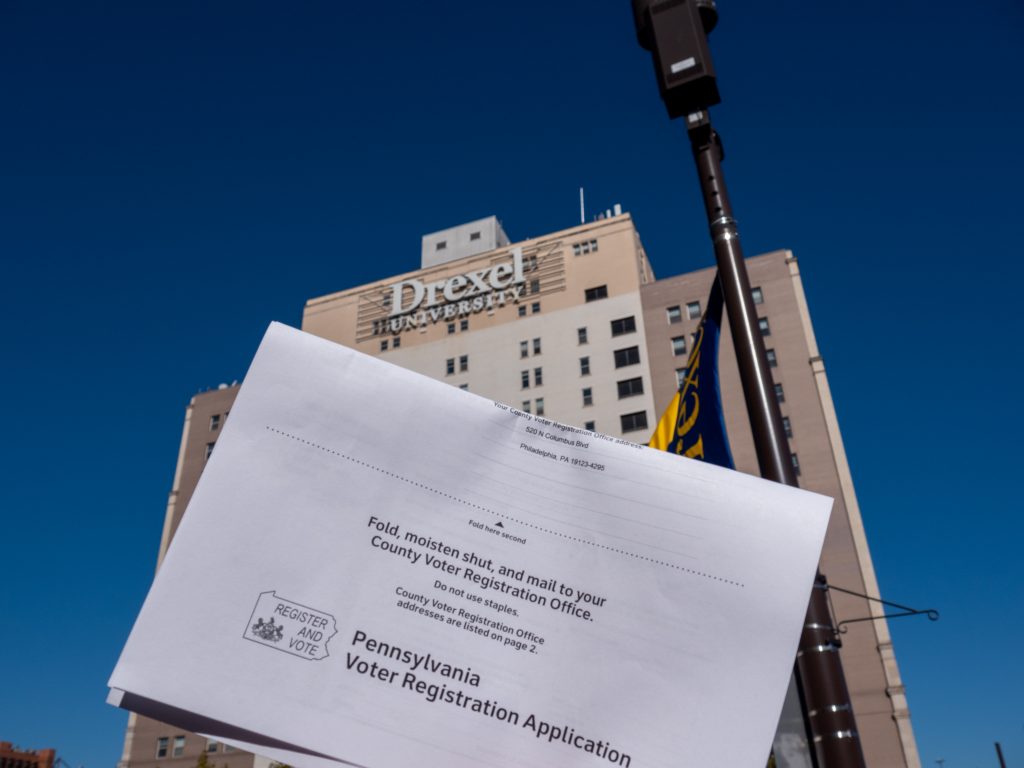
Don’t forget to vote in the primary on April 23. Information on how to vote can be found at this website: vote.pa.gov/Voting-in-PA.

Posted in UncategorizedComments Off on Malcolm Kenyatta is an Auditor General we can depend on

Signature requirements are unfair for ballot access

Photo by Samuel Gregg | The Triangle

In order to get on the ballot in the state of Pennsylvania, you must first collect signatures from voters during a specific window of time in the winter. The number of required signatures is dependent on the office a candidate is seeking. As an example, a candidate attempting to run for attorney general in the state of Pennsylvania must first collect 1000 signatures, including 100 signatures from five different counties. That is a lot of signatures for a political race many people do not pay attention to. This is an even bigger hurdle to overcome when you factor in the fact that many of the signatures collected will not be counted because of random errors or legal challenges.

Jared Solomon, a candidate for Pennsylvania Attorney General, spoke with me a bit about petition requirements stating, “The signature requirement indicates a candidate’s level of support. It forces us to engage on the ground with voters to hear their concerns and find ways to do better. Petitions are the beginnings of our Democratic process and make candidates and current elected officials responsive to the issues of the day.”

Still, the number of signatures required to get on the ballot is a subject of debate. While it is true that petitions to get on the ballot force candidates to engage with voters, many candidates have been prevented from running for public office because they failed to collect enough signatures within the signature collection timeframe.

Former Philadelphia City Council President Darelle Clarke announced his intent to not seek re-election last year. The timing of his announcement limited the ability of candidates to collect enough signatures to appear on the ballot. Despite six other candidates collecting signatures for a chance at Clarke’s city council seat, only Jeffrey Young Jr., who began collecting signatures before Clarke’s announced retirement, successfully collected enough signatures to get on the ballot. No Republican challengers were on the ballot, nor would they have stood a chance in the deeply Democratic North Philadelphia district. Even Clarke’s handpicked successor failed to collect enough signatures in time to get on the ballot. 

Young was sworn in as a City Council Member last month and will have four years to prove he does, in fact, deserve to be on the council. Still, many voters should be frustrated that the opportunity to choose their representative was taken from them because of the late start many candidates got to collect signatures. Many candidates did not begin collecting signatures out of respect for Darelle Clarke, who had been on the city council since 1999 and was still pondering a run for re-election. There was likely some frustration with Clarke for waiting so long to announce his retirement, but even more frustrating is the requirement to collect signatures in the first place.

In the 2022 Michigan gubernatorial primary election, James Craig, the former Chief of the Detroit Police Department, was disqualified from appearing on the ballot after his campaign failed to collect enough signatures. Despite his front-runner status for the nomination, Craig was removed from the ballot along with several other Republican candidates due to their submission of invalid signatures. Tudor Dixon went on to win the Republican nomination and lost the general election to incumbent Democratic Governor Gretchen Whitmer.

While incumbent governor Gretchen Whitmer has done a fantastic job, the opportunity to select between two strong candidates was unquestionably taken away from Michigan voters. Dixon was known for extreme positions on issues and had never worked in public life. Her career had been primarily in right-wing journalism where she defended the usage of blackface and spread the idea that the George Floyd protests were part of a scheme by Democrats to cause chaos during an election year. While the disqualified Republican candidates were not dream candidates by any stretch of the imagination, they still would have been better than Tudor Dixon. Michigan’s 2022 gubernatorial race, along with Philadelphia’s city council race to replace Darelle Clarke, both show us the drawbacks of signature requirements for ballot access.

When candidates are unable to collect enough signatures for ballot access, they are prevented from running for public office. Some people would argue that this system prevents extremist candidates with limited support from running for office. That argument has been proven false by Tudor Dixon’s ability to get on the ballot. Extremist candidates attract a lot of attention, and unfortunately, many of them have an easier time getting on the ballot than regular people whom you may slightly disagree with.

Add to that the confusing nature of ballot requirements which change depending on the state you live in and the race you are running for, and the process is so confusing that dozens of great candidates have likely never even attempted to run for public office because they simply do not understand where to start. Signature requirements are unfair, and it is time for the state of Pennsylvania to change the way candidates get on the ballot. For the sake of our future, we must allow well-qualified candidates the chance to show themselves to voters; or else the sad day may come when a candidate like Tudor Dixon does win a campaign for governor.

Posted in UncategorizedComments Off on Signature requirements are unfair for ballot access

The real reason Dean Phillips is running for president

Photo by Lucas Tang | The Triangle

Dean Phillips is a current member of the US House of Representatives representing Minnesota’s third congressional district. The district, which wraps around the western suburbs of Minneapolis, is where I grew up. In 2018, the year Phillips launched his congressional campaign, I had the opportunity to meet him on several occasions. He seemed to care a lot about the people living in his district and appeared to have good reasons for running for Congress. Frustratingly, Phillips has launched a longshot bid for president against Joe Biden despite the lack of any good reason to do so.

Many people were not aware that South Carolina conducted their primary earlier this month in a shakeup to the Democratic primary calendar. Phillips captured less than 2% of the vote, a smaller percentage than author Marianne Williamson who dropped out after the South Carolina primary. This colossal defeat would normally end the campaign of any serious presidential candidate. Why is Dean Phillips still running then?

People run for public office for one of two reasons: they believe doing so will allow them to address issues they care deeply about or they want to stroke their own egos. Dean Phillips is unfortunately the latter. In 2018, Phillips ran as a centrist Democrat in a district where many people identify themselves as centrist Democrats. Now, as a presidential candidate, Phillips’ only justification for running seems to be that he thinks Biden is too old. This is such a weak argument for launching a primary campaign against a sitting president. The presidents of Austria, Iraq, Ireland, Italy, Liberia and Nepal are all around the same age as Biden, some are older, and all are perfectly capable of doing their job.

In New Hampshire’s rogue primary, Phillips attempted to appeal to the progressive left despite running as a proud centrist just two years ago. Phillips can’t seem to figure out what he believes in, other than the fact he believes being in his 50s would somehow make him a better president than the guy who has been doing the job for the past four years. This severe lack of conviction for anything meaningful shows us the true reason Phillips is running for president – to secure his place in history.

As I mentioned before, there are many reasons people may choose to run for president. Some people run for president because they care about policy issues. Others do so to sell books or start a podcast. Phillips falls into a very rare category, which is the worst of them all – he wants an ego boost. He will get nothing out of running for president other than being remembered as the guy who ran against Biden in 2024. Phillips, a multi-millionaire, has absolutely no political future left and he’s okay with that. Biden will be the nominee for the Democrats in 2024, and Phillips will go back to Minnesota to live out a life filled with more comforts than many of us will ever enjoy. With a net worth of over $80 million, he will never need to work another day in his life. At this point, it is about being remembered and having his face next to Biden’s on the 2024 primary Wikipedia page.

Last year I wrote an opinion essay on why age limits should be implemented in Congress. Many politicians stay in one position for over 40 years because they love the idea of dying in office and being celebrated. There are entirely too many people who end up in public office who only want to stroke their own ego. Joe Biden is not one of those people. After being president for four years he truly believes that he can defeat Donald Trump a second time and continue the work he has done up to this point. Rather than worrying about Joe Biden, we should really be worried about Dean Phillips. A man whose ego is so enormous and whose only goal is to elevate himself that even if did become president he likely would not care enough about any of us to do anything good.

As Dean Phillips continues his ego campaign around the country, I implore you to avoid giving this megalomaniac the very thing he wants – fame at your expense. Primary challenges are never inherently bad. Sometimes candidates have good reasons to run against incumbents. Ron Harris launched a primary challenge against Dean Phillips after he thought he could run for president and his congressional seat at the same time, and we should all hope that Harris comes out victorious if Phillips does flip-flop (as he is known to do) and run for his House seat again.

Folks interested in influencing Biden’s policy agenda should consider volunteering with organizations dedicated to causes they care about instead of voting in a primary for a guy who is incapable of deciding what his own beliefs are. It is time to send Phillips back to his Minnetonka mansion and re-elect Joe Biden as president.