Author Archives | Sanjana Bandi

What we know about Drexel’s Academic Transformation

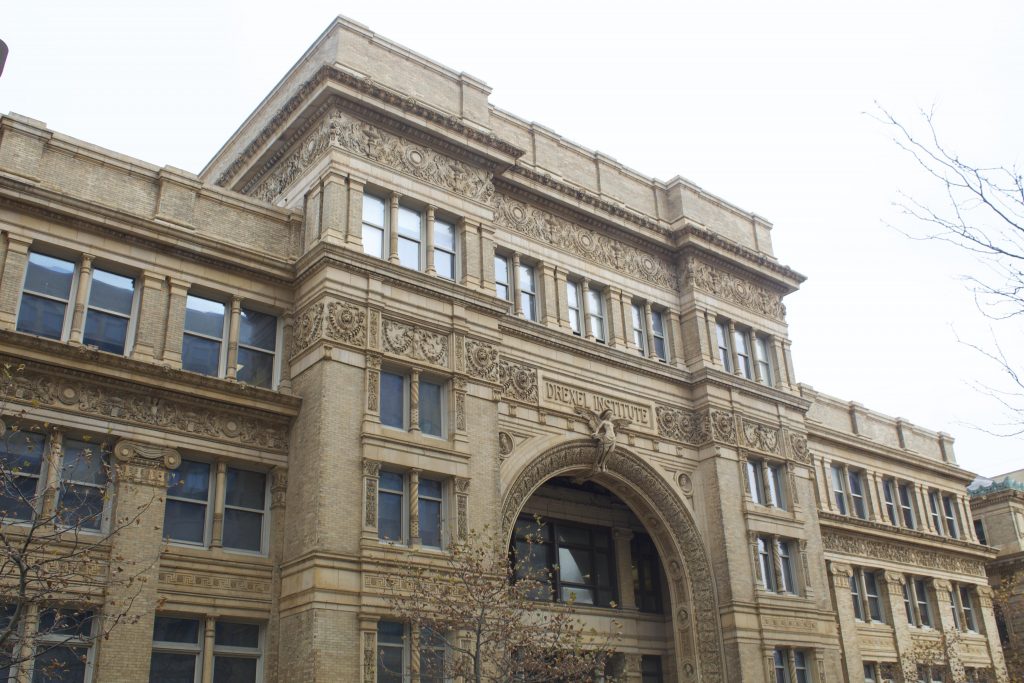
Photo by Evie Touring | The Triangle

Drexel University is preparing for a significant academic overhaul that will reshape its curriculum, academic calendar and institutional structure, set to take effect in Fall 2027. As part of the Academic Transformation initiative, the university will transition to a semester-based system, consolidate academic units and redefine core competencies for students.

This transformation, sponsored by Provost Paul Jensen and steered by Vice Provost for Academic Strategy and Communications Amy Weaver, is being developed through five working groups: Calendar, Core Competencies, Curriculum, Academic Unit Integration/Alignment and Consistency. These groups, made up of members of the Provost’s Office, faculty and other key university leaders, are tasked with designing the implementation of changes that will impact both current and future students.

With such sweeping changes, students are left wondering: What happens to co-op? How will current students transition? How will the transition impact course availability and flexibility?

To gain insight into what this means for the university as a whole, the Triangle sat down with  Steven Weber, PhD, vice provost for Undergraduate Curriculum and Education and a key member of the transformation steering team. As a co-lead of the Calendar, Core Competencies and Curriculum working groups, Weber provided a close look at the coming changes.

The current push for academic restructuring stems from a comprehensive 2023 report from the University Advisory Committee on Academic Structure, which emphasized the need for more student flexibility and a streamlined academic structure. However, Weber acknowledged that the broader challenges Drexel faces also played a role. In the 2024 fiscal year, Drexel faced a $63 million operating loss, alongside a 15 percent drop in fall enrollment. These pressures, combined with national uncertainty for universities, make it clear that Drexel needs to become more competitive and sustainable in the long term.

“It’s evident that this is a hard time for higher education,” Weber said. “There’s lots of uncertainty in that sector. Part of it is long-standing trends, and part of it is more recent developments with the change in the presidential administration.”

The university sees the planned shift to semesters as a way to make Drexel more attractive and accessible to more students — an example being the large population of transfer students, particularly those from Philadelphia-area community colleges.

“Many students finish high school and go to community college for one or two years before transitioning into a four-year program, and the fact is that we’re at a natural disadvantage for attracting those students when we’re on a quarter calendar,” Weber explained.

Drexel’s quarter system has historically been a barrier for prospective transfer students; the university hopes that aligning its schedule with institutions like the Community College of Philadelphia will simplify credit transfers and make Drexel a more enticing option.

Weber shared that another goal for the transition from quarters to semesters is the alignment of Drexel’s academic calendar with not only other universities but also internal programs that already follow a semester model, such as Kline School of Law, which operates on semesters and the College of Medicine, which has multiple semester calendars.

For students, the transition raises different concerns about course flexibility. Under the semester model, students will take fewer but longer courses, which could limit their ability to double major, add minors or explore diverse subjects. 

Weber acknowledged this concern but pushed back against the idea that students would receive a diminished academic experience, stating, “You’re not getting less education. You’re just breaking up your education into different-sized buckets—smaller for quarters, larger for semesters.”

However, the shift inevitably means that instead of taking around 60 courses over 12 quarters, students will take closer to 40 courses over 8 semesters. While each course may cover more material in-depth, this change raises questions about whether students will have as many opportunities to customize their degree paths. 

In addition, while it may be the goal that every class becomes a deeper and more rewarding experience, Weber shared that “it would be outside the scope of my job here… to mandate or legislate what happens in the classroom. That’s at the discretion of the instructor, or the curriculum committee for the course department.”

Although, the university does plan to “incentivize and reward excellent teaching” by putting in place structures that foster “strong pedagogy, interdisciplinary teaching and learning,” Webber disclosed.

The biggest concern for many is the fate of the co-op, which has been at the heart of Drexel’s identity since its introduction in 1919. Initially designed to give students real-world experience while still in school, co-op has grown into the defining feature of Drexel’s experiential learning model.

“I also think that the thing that Drexel is known for is co-op, and we should continue to keep co-op as a centerpiece of our institution,” Weber emphasized. “It’s a central distinguishing part of our value proposition.”

Drexel’s six-month co-op cycle will remain unchanged under the semester system. Unlike Northeastern University, which offers four-month co-ops as an option to its students, Drexel has prioritized maintaining its signature six-month rotations.

“One thing that was not on the table was the six-month co-op. We’re not touching that,” Weber said.

However, the exact structure of co-op within the semester model has not been disclosed. While Weber confirmed that a solution has been worked out, he declined to share details, stating that the information has not yet been made public.

“We did make sure that everything still works, so nothing would break,” he assured.

In addition to maintaining current co-op structures (four-year, one co-op and five-year, three co-ops programs), Drexel plans to introduce a new five-year, two-co-op option. 

“Maybe you want to use some of your summers for something other than working or studying,” Weber said. “Maybe you want to go study abroad, travel, do an internship, or work at a nonprofit.”

The goal, according to Weber, is more flexibility in the student academic experience — a recurring motivator throughout the transformation.

Weber noted that while co-op will remain at the forefront, the university hopes to better highlight other experiential learning opportunities in which Drexel excels. 

“We do really well in research experiences for undergraduate students, global experiences, civic engagement and collaboration with local industry on projects. But prospective students and their families often aren’t aware of that,” Weber stated, emphasizing that part of the transformation’s goal is to ensure these opportunities are more visible and accessible. 

The hope is that “Recognizing there’s a broader landscape of experiential education beyond co-op… might broaden the appeal of Drexel to other students and their families for whom co-op doesn’t seem like the right mix initially.”

Beyond co-op, Drexel is also redefining core competencies, which will establish university-wide learning objectives — “hallmarks of a Drexel education,” as Weber describes — without enforcing a rigid core curriculum. Weber described them as a way to unify the academic experience while making it easier for students to change majors without losing progress.

“Drexel asks too much of an 18-year-old who doesn’t know exactly what they want to do,” he said. “There’s 14 schools and colleges, 120 degree programs, all manner of co-op opportunities… and you’re expected to decide everything before you start.” 

The intended result is that by standardizing key learning outcomes, students will feel less locked into rigid academic tracks.

A major aspect that comes along with the standardization of learning is course consolidation. Drexel plans to reduce redundancy in its course offerings by merging similar courses across departments. 

“We have many, many more [course variations] than we need,” Weber said. “This is an opportunity to redesign every single course to fit a semester model and consider—what makes sense?”

The idea is to create a more cohesive, less fragmented curriculum. However, the trade-off is that some niche or specialized courses may be eliminated or merged into broader categories, potentially limiting highly specific academic pathways. 

Faculty played a significant role in shaping the transformation through Faculty Senate nominations. “We put out an announcement to faculty and staff that there would be these five work streams, and we invited all faculty and staff to nominate themselves and describe their credentials,” Weber explained. 

Each workgroup has two or three co-chairs—always including at least one faculty member—and consists of six to eight faculty members alongside a small number of staff. 

However, when asked about how student voices are being included in the restructuring process, Weber shared that student involvement has been limited. Undergraduate Student Government Association representatives participated in one discussion. The majority of students have not had access to planning documents or contributed to any decision-making processes.

For students already enrolled at Drexel, the transition raises questions about how their degree progress will be affected. While specific details have not yet been finalized, Weber assured that the university is committed to a smooth transition.

“There is every commitment to make sure students are not in any way disadvantaged by living through that transition,” he said. “The details of that will have to be shared publicly in due course.”

Advising services will play a critical role in helping students navigate the shift. Drexel plans to provide clear written guidance to ensure students understand how their credits, schedules, and degrees will transfer into the new system. However, given historical student concerns about the reliability of academic advising at Drexel, it remains uncertain how smoothly this process will unfold.

As the Fall 2027 transition approaches, Drexel communication emphasizes that while this is a massive undertaking, it is meant to enhance, not disrupt, the student experience. 

“We will put out a transition plan that will work for the students, and the end result will be a better Drexel,” Weber affirmed.

Posted in UncategorizedComments Off on What we know about Drexel’s Academic Transformation

New findings shed light on Drexel murder case

Photo by Kasey Shamis | The Triangle

A local court case from the 1990s has come to the public’s attention again as questions have been raised about the supposed circumstances surrounding the 1984 strangulation of Drexel University undergraduate student Deborah Wilson, as detailed in a January court filing.

On Nov. 30, 1984, Wilson was found dead at the bottom of a flight of steps in Randell Hall after she had stayed up late working on an assignment. She was said to have been missing her socks and shoes when her body was discovered, a key detail that would later lead to the conviction of Security Guard David Dickson Jr.

Dickson had not initially been associated with the crime. The case tapered out of the public eye over nine subsequent years, but a confluence of factors that were discovered by an investigating grand jury eventually led to his arrest in 1993. These included Dickson having been on guard duty in the same building that Wilson was found in, testimonies from Dickson’s fellow security guards that said he had claimed he knew how to strangle someone and statements from many women who stated that Dickson had attempted to steal their sneakers in the past. 

Another key player in forming the assertions made against Dickson was criminal profiler Richard Walter. In 1992, a Philadelphia group of homicide investigators called the Vidocq Society was introduced to the case by Sgt. Robert Snyder. Walter, a part of this group, was quick to point to Wilson’s missing shoes. With this info, he quickly formulated the idea that Dickson had murdered Wilson due to a foot fetish, a claim that was deemed credible due to material later found at Dickson’s house confirming this sexual preference of his.

After being arrested in June of 1993, Dickson was tried twice in 1995. The first trial included testimony from Jay Wolchansky, an informant who claimed that Dickson had confessed his actions to him while they both resided in the Philadelphia Detention Center. With an unconvinced jury, the trial was inconclusive. The second trial featured another incarcerated informant named John Hall, a frequent testifier for supposed inmate confessions. In response to the second trial, the jury delivered a guilty verdict against Dickson for robbery and second-degree murder.

Within the past several years, questions about the credibility of Hall’s claims have called for reexaminations of trials he has contributed to. In addition, the prosecutor for the Wilson case, Roger King, had not informed anyone involved in the trial that Hall had previously lied in court. Also, Hall may have had ulterior motives as he was granted a degree of clemency for his cooperation in the trial against Dickson.

Reinvestigations into the circumstances surrounding Wilson’s death have been reignited due to uncertainty in the evidence used for the trial. In 2022, lawyers working through the nonprofit firm Phillips Black found that undisclosed accounts from witnesses back in 1984 provided that Wilson’s white tennis shoes were located in proximity to the scene. This has since challenged the original assertion about Dickson’s ostensible motive for the murder, that he desired Wilson’s shoes for sexual satisfaction. This, in addition to the criminal profiler Walter having lost his credit over the years due to his history of lying about his credentials and faulty contributions to various cases, has generated skepticism.

As it stands now, no conclusion has been reached as a result of additional investigations into Wilson’s murder. Questions remain about whether or not the case will be retried due to newfound evidence.

Posted in UncategorizedComments Off on New findings shed light on Drexel murder case

Market Street building to bring new business to campus

Photo by Kasey Shamis | The Triangle

The latest Schuylkill Yards development at 3151 Market Street is set to open soon. Brandywine Realty Trust is bringing over 400,000 square feet of new life sciences lab space to West Philadelphia in partnership with Drexel University through a ground lease.

3151 Market will also include retail offerings: namely, a Fine Wine & Good Spirits liquor store and a Starbucks on the ground floor. The FW&GS will be a “Premium Collection” location, featuring high-end spirits and events like wine tastings. It will be the closest liquor store to campus, facing John F. Kennedy Boulevard. Drexel representative Niki Gianakaris did not comment on the store’s opening.

The new Starbucks location seems poised to supplant the one currently located in Gerri C. LeBow Hall across the street. The agreement for the LeBow location “is currently up for renewal. Through Drexel’s partnership with Aramark, the best coffee service option for LeBow is being explored and evaluated,” Gianakaris told The Triangle.

“Drexel Business Services conducted a survey in Spring 2024 in partnership with the USGA to collect retail preferences for the campus. This data, along with Aramark’s ongoing feedback survey data is being used to help determine the path forward,” she added.

In addition, “A total of $122.6 million from Schuylkill Yards and the portion of F Lot ground leases were added to Drexel’s endowment,” noted Gianakaris. 

Ground leases involve the university leasing its land to a developer, who in turn builds on the site. The university receives ground lease payments either upfront for the endowment or recurring towards the operating budget.

While 3151 Market is the latest Schuylkill Yards project, it appears to be the last for the foreseeable future. Plans for 3001 JFK Blvd., another life sciences skyscraper, have been put on hold as the demand for lab space slows. But whether or not the buildings find tenants, the developments have been a boon for the university’s endowment.

Life sciences developments were embraced as a part of the university’s 2030 Strategic Plan and were particularly touted by former university President John Fry. They have been envisioned as a way to turn parking spaces into convenient co-op placements, and to create a “gateway” to University City. This booming section of West Philadelphia has benefited from a raft of federal and state incentives to spur redevelopment, though 3151 Market does not appear to be a beneficiary of them.

Signage is in place for the Fine Wine & Good Spirits location, but an opening date has yet to be announced. There are no signs of the planned Starbucks yet. A Brandywine representative told the Triangle in November to expect the retail offerings to open early this year, and for a planned food hall in the nearby Bulletin Building at 3025 Market Street to join them later in the year. 

Posted in UncategorizedComments Off on Market Street building to bring new business to campus

Student commuters react to SEPTA fare hike

Photo by Emma Yashinsky | The Triangle

Amidst a budget crisis, the Southeastern Pennsylvania Transportation Authority (SEPTA) implemented a 7.5% fare increase on Dec. 1, 2024. The fares for buses, subways, trolleys and Regional Rail trains –– all modes of transportation used by countless students in both the Philadelphia area and outside — were increased following SEPTA’s ongoing budget shortfall and expiration of COVID-19 relief funds.

Despite Governor Josh Shapiro’s temporary funding solution, SEPTA pressed that without permanent funding, it needed to “make cuts to service and implement further fare hikes.” 

A 7.5 percent fare increase quickly turns into an additional $5 to $12 per week in transportation costs for travelers who need to reach campus for their daily classes, lectures or other academic commitments.

Reactions to SEPTA services have generally been mixed. On one hand, SEPTA is efficient in bypassing the notorious I-95 traffic jams and morning rush; on the other, SEPTA services are known for their frequent delays, unexpected schedule changes and inconsistent performance, all of which continue to disrupt the daily commuting experience for many travelers. A fare increase only heightens frustration among commuters

Many Drexel University students rely on SEPTA’s accessible interregional services, such as the buses, Market-Frankford Line and the Regional Rail to reach campus in a timely and secure manner.

James Samuel Jr., a Drexel University junior and economics student, stated that the Trenton Regional Rail train alleviated the “pretty high gas expenses” that racked up when he used to drive to campus.

“Driving is also mentally draining as you must stay focused the entire time, and it can be very frustrating especially during the morning and evening rush hours,” shared Anna Bokarev, a fourth-year English student who rides the West Trenton line. “During those times of the day, it is increasingly more dangerous, and the commute time is unpredictable.”

A common sentiment amongst train riders is that the train handles the traveling, allowing them to focus on other tasks.

 Samuel Jr. enjoys the ability to multitask on his way to campus: “It’s nice to be able to get work done on the train…I realized how much extra time [the train gives] me to get work done when I otherwise would have been driving.”

Johnson Lin, a fourth-year management information systems student, appreciates SEPTA’s proactive staff on the Broad Street Line and trolley lines, who “[ensure] a clean environment for riders.” 

“Help can be expected from the workers stationed at each train station if I ever encounter any problem,” Lin added.

Bokarev also values the attitudes and availability of service workers. She particularly respects that SEPTA offers services for “senior travelers to make public transportation more accessible” such as the SEPTA Senior Fare Program, which provides free travel for seniors on all SEPTA transit routes (paid for by the Pennsylvania Lottery).

Calvin Keeys, a senior environmental sciences student, has found “the maps and schedules for each of the services [to be] very detailed and descriptive.” 

Despite some areas of satisfaction with SEPTA, several pressing concerns remain unresolved.  This includes railroad switch malfunctions, especially during the winter, as SEPTA spokesman Andrew Busch highlighted. Although these switches are equipped with electric heaters, adverse weather conditions can compromise them. 

Busch explained, “If a switch does go down, it’s going to cause delays. On Regional Rail, a prolonged delay on one line can easily cascade onto other lines due to the system’s interconnected nature.”

Lin expressed that these major SEPTA delays directly impact his ability to be on time to his classes: “I must switch between two different services — train and trolley — so one delay can cause a chain of delays” which adds to his frustration.

Samuel Jr. shared the same sentiments: “SEPTA is regularly late, which can be especially annoying when my classes end late in the day and I end up having to wait even longer to get a ride home.” 

What especially frustrates Samuel Jr. and many other commuting students is “the train [being] held up on the track, sometimes for upwards of half an hour.”

While waiting to go home via the trolley line, Keeys noted the inconsistency of which trollies are on schedule and which are not. 

“Sometimes the trolley will come at the expected time and sometimes it will arrive late,” continued Keeys, frustrated as he watches other trolleys pass.

SEPTA’s decision to increase fare prices across all their transportation modes only adds to the growing frustrations students already feel toward the system.

Drexel students may purchase a Key Card for their convenience, allowing them to simply tap at the fare gate rather than purchasing a ticket every time they want to travel to and from campus. Having a Key Card reduces fare prices compared to purchasing a ticket. The [typical] fare was previously $2.00 per ride using the Travel Wallet whereas purchasing a ticket or using  cash was $2.50.

“[It] defeats the point of even having one,” Keeys remarked.

SEPTA acknowledged that this increase  to  match the cash fare creates skepticism about the  Key Card’s value, which was once worthwhile due to its lower fares.

Likewise, Samuel Jr. expressed his skepticism, stating, “I’d like to see proof that SEPTA’s costs are somehow increasing to justify the fare hike.” Even so, “the fare hike has not changed my commuting habits directly.”

Similarly, Lin points out the hike “doesn’t affect my commuting habits” because it is still better than driving through the urban Philadelphia area to reach Drexel.

To justify the fare increase, SEPTA’s Chief Operating Officer Scott Sauer stated only about 20 percent of SEPTA’s operating revenues come from fares. 

“We want to provide a great service,” he continued, “In order to do that, we need a funding source.”

Despite SEPTA’s mission to increase revenue, SEPTA Board Chair Kenneth Lawrence expressed concern for the long-term effects on SEPTA’s sustainability: “Instead, we are now faced with the very real possibility of shrinking the system and entering into the transit death spiral.”

These conflicting statements from SEPTA representatives do not alleviate the pressing issues.

Lin felt that “the price increase appears to only sustain the current operations rather than enhancing the quality of riding experience.” 

Additionally, he believes there will be an increase in people avoiding the fare price — and reducing the revenue collected –– by performing stunts such as jumping over or pushing through the fare gates: “This raises concern for longer term sustainability and [means paying] riders will have to shoulder the burden.”

Samuel Jr. attributes fare avoidance to SEPTA employees, claiming, “I’ve seen a good few conductors just ignore when someone has an old ticket or no fare. It seems to me that that behavior would be encouraged without repercussions.”

Bokarev views lax fare collection as a response to ease up on delays in the system: “My Regional Rail line is very frequently delayed. I’ve noticed that to make up for it, conductors sometimes will avoid scanning Key Cards and collecting fares. Although the idea is good in nature, it does not at all benefit travelers who buy weekly or monthly passes.”

When asked regarding potential future remedies for the SEPTA fare hike, students did not seem hopeful.

“I don’t feel that SEPTA will provide any targeted solutions for students because that will be unfair to everyone else.” Lin did not appreciate the alternative option if he had to stop relying on SEPTA: “[A] Drexel parking pass costs around $500 per quarter. That will be equivalent to 6 months of me riding public transportation.”

Samuel Jr. instead hoped for Drexel to intervene for its commuters, such as sponsoring discounts or passes, both of which could abet student concerns of commuting. 

Keeys added, “Drexel already provides discounts for monthly TransPasses and New Jersey Transit” so he suggested the possibility that the university could provide more discounts for all students.

Ultimately, while public transportation remains a necessary means for traveling to and from Drexel for many students, the fare increase underscores frustrations with SEPTA’s reliability and affordability. Without targeted solutions, commuting Drexel students are left to navigate a system that struggles to inspire confidence in reaching campus, even if it is better than alternatives like driving.

Posted in UncategorizedComments Off on Student commuters react to SEPTA fare hike

Ex-VP’s hostile workplace claims against Drexel advance

Photo by Taylor Clark | The Triangle

A federal judge for the Eastern District of Pennsylvania granted most of Drexel University’s motion for summary judgment against Kim Gunter but has allowed her hostile work environment claims to move forward.

As the Triangle previously reported, on April 8, former Drexel Vice President and University Chief Compliance and Privacy Officer Kim Gunter sued Drexel on six counts of employment discrimination based on race, color, sex and a hostile work environment.

Executive Vice President, Treasurer, and Chief Operating Officer Helen Bowman is alleged to have described the lawsuit in a text message to another employee as “shit!” and “21 pages of crap!”

Under Title VII of the Civil Rights Act of 1964, the plaintiff must first establish a “prima facie” case by providing evidence of four elements: she is a member of a protected class, she is qualified for her position, she suffered an adverse employment action and the action could give rise to an inference of intentional discrimination. If a “prima facie” case is established, the burden shifts to the employer to identify a legitimate non-discriminatory reason. Then, the burden shifts back on the plaintiff to prove that the employer is using the reason as a pretext for discrimination. 

A defendant can file a motion for summary judgment for a court to judge whether either side’s burdens were met. The motion is granted if the party opposing the motion cannot meet these burdens when the facts are viewed in the light most favorable to the party opposing the motion. In this case, Drexel filed a motion for summary judgment to dismiss Gunter’s claims.

In her complaint, Gunter, a Black female, alleged that she was treated differently than her predecessor, a white male, by her subordinate Bill Shea, the Associate Vice President and Chief Audit Executive. Shea claimed that he reports to the Audit Committee for operational purposes but to Gunter for administrative purposes, such as signing timesheets. When Gunter tried to exercise control over Shea, he complained, and other administrators expressed confusion at his complaints and pointed out that he had no problem with Gunter’s predecessor. Throughout Gunter’s employment, Shea continued to reject her authority, and Gunter complained to Drexel. The Internal Audit Department was eventually removed from her oversight at her request.

Judge Joshua Wolson ruled that because Shea did not have a negative working relationship with Gunter’s predecessor, he cannot serve as an appropriate comparator as to how an employee of a different race, color or sex might be treated. Thus, Gunter’s lawsuit fails to provide evidence that gives rise to an inference of intentional discrimination. 

The judge also ruled that Drexel provides the legitimate non-discriminatory reason of not getting along, and Gunter has no evidence to refute that claim, so her claims of pretext are summarily dismissed. 

Gunter’s claim of retaliation is dismissed because she failed to show that she suffered a materially adverse harm; in fact, she asked to have Internal Audit removed from her responsibility. Her claim of punitive damages fails due to a lack of presented evidence that Drexel had the subjective belief that it was violating the law.

However, because the evidence could be interpreted to show that Drexel did not do enough to stop Shea’s insubordination after the first verbal warning, her claims of a hostile work environment survived summary judgment. Gunter lost her motion to reconsider on the grounds that she filed too late and did not bring up anything new for consideration. The case is scheduled to proceed to trial on May 12, 2025.

Judge Wolson wrote, “Ms. Gunter has offered just enough evidence to suggest that Mr. Shea (and his subordinates) treated Ms. Gunter the way they did because of her sex, race, and color, and she has evidence that Drexel knew about it and didn’t do enough to stop it.”

Posted in UncategorizedComments Off on Ex-VP’s hostile workplace claims against Drexel advance

Agreement between SEPTA and unions prevents strike

Photo by Gabby Rodriguez | The Triangle

Amidst conversations in early November about looming Southeastern Pennsylvania Transit Authority worker strikes that would halt services and hinder travelers’ transportation plans, several Philadelphia transit unions have eased community fears by reaching another one-year agreement with SEPTA.

The three unions involved, SMART Local 1594, which covers Norristown High Speed Line and suburban bus workers, Philadelphia’s largest union AFSCME DC 33 and TWU Local 234 are now able to provide more financial security to a total of about 14,000 employees.

TWU Local 234 had initially confirmed their intention to strike by voting amongst their members. Their plan was to enter a strike once their previous SEPTA contract expired on Friday, Nov. 8. However, once meetings with SEPTA began, the strike date was repeatedly pushed back as conversation continued. The new deal was achieved on Wednesday, Nov. 20, reversing the union’s initial plans to strike.

On Friday, Dec. 6, TWU Local 234 plans on holding a ratification vote within their organization. If passed, the new contract will begin on Sunday, Dec. 8. They agreed the settlement would introduce a pension increase and five percent pay increase among employees. The agreement also covers new safety protocols, such as bulletproof enclosures for bus drivers to sit in, which would be tested in eight active buses before being mandated system-wide. The entire deal is projected to cost Philadelphia $80.2 million.

The end-of-year SEPTA strike discussions occurred while concerns approached regarding post-COVID-19 financial issues that would lead to large service cuts and a significant 29 percent fare increase for travelers on Jan. 1, 2025.

On Friday, Nov. 22, a press conference was held at the Frankford Transportation Center where Pennsylvania Governor Josh Shapiro formally announced that SEPTA would be receiving $153 million, avoiding the fare hikes. Funds were able to be directed towards SEPTA after decisions were made to cut the funds of several Pennsylvania highway projects. 

Shapiro reassured other Pennsylvanians affected by the highway project cuts that “we’re still going to get those projects done for you on time.”

Even though the potential January fare hikes were prevented by the deal made on Nov. 22, a 7.5 percent fare increase was still introduced on Sunday, Dec. 1. 

Urging for more support, Shapiro called for additional funds to be directed towards SEPTA, challenging “each of the four suburban counties, and the great city of Philadelphia, to step up and add funding to this package to support our community.”

Posted in UncategorizedComments Off on Agreement between SEPTA and unions prevents strike

Philly Council soon to vote on 76 Place

Photo by Kasey Shamis | The Triangle

While most Philadelphians spend their holiday season ice skating in Dilworth Park or shopping on Chestnut Street, Council members engage in the public hearings regarding a monumental decision: the proposed Philadelphia 76ers arena near Chinatown. On Dec. 12, they will vote on the plan referred to as 76 Place, a $1.3 billion arena in Market East for the Sixers. The largely divisive proposal was endorsed by Mayor Cherelle Parker in a video posted to X on Sept. 18. 

Mayor Parker proudly calls her agreement with the Sixers “historic” and “the best financial deal made by a Philadelphia mayor for a local sports arena.”

NoArenaPhl, Asian Americans United and Students For The Preservation of Chinatown are a few of the many groups opposing 76 Place. Their demonstrations represent the majority of Philadelphia voters. The Save Chinatown Coalition conducted a poll revealing that only 18 percent of Center City residents approved of 76 Place. 

“Disruption is the short-term effect. Gentrification is the long-term effect,” says Ming Chu Hyunh, president of the Northeast Philadelphia Chinese Association. 

She worries that rent will rise in Market East and that Chinese residents will be forced out of Chinatown. Hyunh, of Chinese descent, admits that she rarely visits Chinatown, simply because of the “constant traffic jams” and fears that the creation of 76 Place would worsen congestion.

Unlike Hyunh, Deborah Wei, co-founder of Asian Americans United, is optimistic, as her attempts to protect Chinatown have previously succeeded. The Sixers announced their current plan in July of 2022 and the fight against it has not stopped since. Wei was pulled out of an October council while urging Councilman Mark Squilla (D) to join the ‘no-arena’ side. Squilla is the representative for the 1st district, which encompasses East Market. 

“The 76ers can actually join a new city and I’m dead ass. They’re not good enough to have an arena displace Philadelphians-no sports team is,” Wei posted to X. 

“No cost for Philly taxpayers” is a phrase repeatedly highlighted on the 76 Place website. David Adelman, Chairman of 76 Place, and his team consistently seek to remind Philadelphians of the several positive outcomes of the project. According to their website, the execution of the arena will create over 9,100 construction jobs, generate $1.5 billion in tax revenue and increase commerce for local businesses. 

Mayor Parker excitedly agrees with these benefits, calling this an “unprecedented revival of Market Street.” 

The Sixers have also outlined their community benefits agreements, which would result in $6 million being allocated to local businesses in Chinatown. Hyunh considers these economic benefits to be shortsighted. 

During a telephone interview, Hyunh briefly mentioned the trauma she experienced while living in Chinatown, New York, during 9/11: “I watched from where I worked. I watched them burn down.” 

She worries about what terrorists could do under the new presidency and rejects the idea of any largely condensed groups of people, particularly near Chinatown. Hyunh suggests that the Sixers utilize the acres of land in North Philadelphia rather than encroach upon the existing Chinatown and Fashion District.

The Sixers are the oldest franchise in the National Basketball Association, and Philadelphia’s Chinatown is one of the last remaining in America. Therefore, it is no surprise that the stakes feel high for both proponents and opponents alike. As the history of each respective side fights to be preserved, council members will continue to seek negotiation. The members’ pressured decision will be finalized by Dec. 19. 

Posted in UncategorizedComments Off on Philly Council soon to vote on 76 Place

Drexel SHARP raises awareness of lead contamination

Photo courtesy of SHARP

During a recent community dinner at the Dornsife Center for Neighborhood Partnerships on Nov. 12, Drexel University’s Sanitation Health Aid Relief Project had the chance to raise awareness about a critical environmental health issue: lead contamination in drinking water. The event brought together residents of West Philadelphia, and SHARP worked to provide them with the necessary resources to address the risks of lead exposure.

A distinct feature of the community dinner was the number of resources being offered to residents; there were tables providing services and information on several important topics. 

Brooke Law, a senior data science major and SHARP’s Event Coordinator shed light on her experience tabling: “It was cool to see how many people attended. As it turned out, a lot of community members were aware of lead in the water, so the conversations centered around how long they had lived in the community and their desire to address the issue.” 

SHARP’s table was more than an educational space — it was an interactive one.

Because so many residents had previous knowledge of the risks of lead contamination in their water, SHARP focused on providing them with the concrete resources to make a change, “like the number to call the Philly water department to get your water tested for lead,” stated Law. 

The organization also gave out Brita water filters for residents who need them to reduce the amount of contaminants in their drinking water. This hands-on approach allowed them to take first-hand control of their health and well-being.

SHARP’s efforts were funded by the Anti-Racist Civic Engagement Mini-Grant from the Lindy Center for Civic Engagement, which enabled them to expand their outreach with educational materials. The organization also partnered with Toxic Free Philly, a local group dedicated to reducing environmental toxins in Philadelphia communities, ensuring that SHARP’s resources were targeted toward the specific needs of West Philadelphia residents.

Before the event, SHARP conducted research to ensure that the issue of lead contamination was a relevant concern for West Philadelphia residents. Many houses in the area are older, which increases the likelihood of lead pipes still being in use. This knowledge helped guide the tabling materials, which included concise flyers and magnets designed to convey essential information without overwhelming residents with text. The use of larger fonts was also a deliberate decision to make the materials more accessible to a broader audience. 

According to their grant proposal, SHARP’s aims were to “communicate the risks of lead in water, symptoms of lead exposure and resources for further assistance if lead is suspected to be in drinking water.”

For Law, the motivation to participate in the event stemmed from a deep-seated belief in the importance of sanitation and access to clean water. 

“That’s what drove my participation,” she shared. “I never like to pass up an opportunity to engage with the community.”

The tabling event was a success not just because of the information shared but because it allowed residents to feel supported and connected. SHARP members are hopeful that future events will continue to expand on this model, reaching even more residents who may not yet be aware of the risks of lead contamination. The group plans to host additional tabling events to continue educating, providing resources and empowering community members to take charge of their health.

SHARP has made a tangible impact on the West Philadelphia community by offering both knowledge and the tools necessary to take action. Students who want to attend future events can stay connected through their Instagram account, @drexel.sharp, and through the Dornsife Center @dornsifecenter. 

Posted in UncategorizedComments Off on Drexel SHARP raises awareness of lead contamination

Brief student voter guide

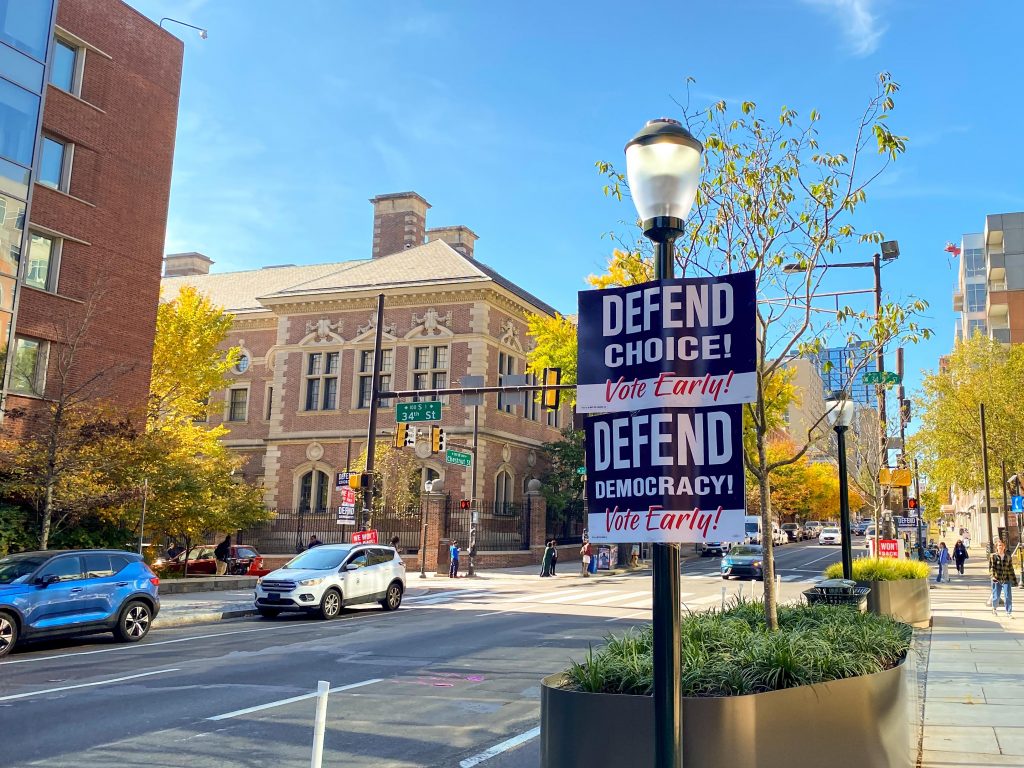
Photo by Anjalee Sharma

Election day, Tuesday, Nov. 5, is near. For the first time, Drexel University has given students a day off to allow time to votes. This guide provides key information to help you feel prepared and informed when you go to the polls.

Key dates to know:

Mail-in ballots: If you requested a mail-in ballot in Pennsylvania, it must be returned and received by 8 p.m. on Nov. 5. You can return your ballot by mail or visit a drop-off location, which is listed at vote.phila.gov/ballot-drop-off.

In-person voting: Vote in-person at a polling place from 7 a.m. to 8 p.m. on Nov. 5. If you are in line by 8 p.m., you can vote.

How and where to vote:

On-campus voting: Students living in Drexel’s residence halls can vote in person at the Drexel Recreation Center. 

If you live elsewhere, you can find your polling place at vote.phila.gov. 

If this is your first time at your polling place, you must bring a form of ID. Valid forms of ID include a voter registration card, driver’s license, passport or your DragonCard.

A guide to the candidates: 

U.S. President

Kamala Harris, representing the Democratic Party, is the current vice president of the United States. She’s previously served as a U.S. senator and as California’s attorney general. She aims to restore abortion rights, lower taxes for the middle class and address climate change with legislation. She also supports the Equality Act and wants to revive the border security bill.

Donald Trump, representing the Republican Party, is the first prior U.S. president to be convicted of felony crimes. He hopes to carry out strict immigration policies, lower taxes for corporations and raise foreign goods tariffs. He has taken credit for the national right to an abortion being overturned by the Supreme Court in June 2022.

Chase Oliver, representing the Libertarian Party, is an activist from Atlanta. He believes “no government should regulate personal activities” or ” impose harsh penalties.”

Jill Stein, representing the Green Party, is a physician from Chicago whose goals are to guarantee free childcare, ban fracking, and close the country’s military bases abroad.

U.S. Senate

Bob Casey, representing the Democratic Party, is a three-term Senate incumbent whose campaign is for the working people. He supports raising the corporate tax rate. He is against a ban on fracking but advocates for a tax credit for clean energy manufacturing jobs. He hopes to extend Medicare programs, support programs for injured veterans and people with disabilities and favors the Women’s Health Protection Act.

Dave McCormick, representing the Republican Party, is a former hedge fund CEO. He is an advocate of fracking, supporting all forms of energy. He wants to reinstate Trump-era immigration policies, ban social media use for kids under the age of 16 and support an abortion ban except in situations including rape and incest. He believes states should determine abortion laws.

John C. Thomas, representing the Libertarian Party, is an educator who believes in smaller government and wants to stand up for citizens tired of inflation and the government spending money on wars abroad.

Leila Hazou, representing the Green Party, is a Palestinian small-business owner who wants to defend human rights in Pennsylvania and internationally, supporting environmental protection and a permanent cease-fire in Gaza.

Marty Selker, representing the Constitution Party, is a truck driver who is against abortion and believes the country needs to embrace more Christian, western values.

Attorney General

Eugene Depasquale, representing the Democratic Party, has served two terms as the Pennsylvania auditor general and says he uncovered $2 billion in waste, fraud and abuse in the role. He hopes to defend workers, go after scammers and support universal background checks for guns.

Dave Sunday, representing the Republican Party, has been the district attorney for York County since 2018 and speaks of his reduction in homicides and expansion of the Drug Task Force to address drug trade.

Robert Cowburn, representing the Libertarian Party, is a lawyer who wants to protect citizens from state and federal overreach.

Richard Weiss, representing the Green Party, is a lawyer who supports Medicare for all and a cease-fire in Gaza.

Justin Magill, representing the Constitution Party, is an attorney who believes the point of government “is to secure our God-given Individual Rights.”

Eric Settle, representing the Forward Party, is a lawyer who led the effort to pass Act 62, which requires insurance companies to cover services for children with autism. 

Auditor General

Malcolm Kenyatta, representing the Democratic Party, is the first openly gay Black man to serve on the General Assembly. He wants to create a school audit bureau and a Bureau of Labor and Worker Protections, and he believes his upbringing in North Philadelphia helped him understand how the government works for people who depend on it.

Tim Defoor, representing the Republican Party, is the current auditor general. Previously, he was the elected controller of Dauphin County, where he led audits and fraud investigations for the state inspector general, the attorney general, and a central hospital system. He has also promoted financial literacy in K-12 schools.

Reece Smith, representing the Libertarian Party, works in financial services and wants to audit the offices of state legislature leaders.

Eric Anton, representing the American Solidarity Party, believes the government should be “informed by the Christian tradition.”

Bob Goodrich, representing the Constitution Party, believes in “demonstrating character, competence, and commitment.”

State Treasurer

Erin Mcclelland, representing the Democratic Party, was trained under former Treasury Secretary Paul H. O’Neill O’Neill and was a consultant for a White House initiative. She pledges not to invest worker pensions in foreign holdings.

Stacy Garrity, representing the Republican Party, is a retired Army Reserve colonel and Pennsylvania’s Treasurer. She has cut waste, reduced fees as Treasurer and improved the state’s unclaimed property system.

Nickolas Ciesielski, representing the Libertarian Party, founded the party’s Bitcoin Caucus and believes Bitcoin can solve many political issues.

Troy Bowman, representing the Constitution Party, is the party’s treasurer.

Chris Foster, representing the Forward Party, is an entrepreneur who believes in fiscal responsibility.

U.S. House 3rd District

Dwight Evans, representing the Democratic Party, is running unopposed for his fifth term representing the 3rd District. He sits on the Ways and Means Committee, is responsible for raising the country’s revenue, and is an ally of Philadelphia Mayor Cherelle L. Parker.

Pa. House 10th District

Amen Brown, representing the Democratic Party, is running unopposed for his third term, representing parts of West Philadelphia. He was born and raised in his District and believes the state should spend its money to send students from high-poverty districts to private schools.

Pa. Senate 7th District

Vincent Hughes, representing the Democratic Party, has represented Philadelphia in the state Senate since 1994. He is the minority chair of the Senate Appropriations Committee, which determines government spending across Pennsylvania.

Resources and support:If you need help at the polls, you can always call the Election Protection Hotline: 866-OUR-VOTE. Any other voting information can be found at philadelphiavotes.com.

Posted in UncategorizedComments Off on Brief student voter guide

Neville Vakharia’s vision as Honors College dean

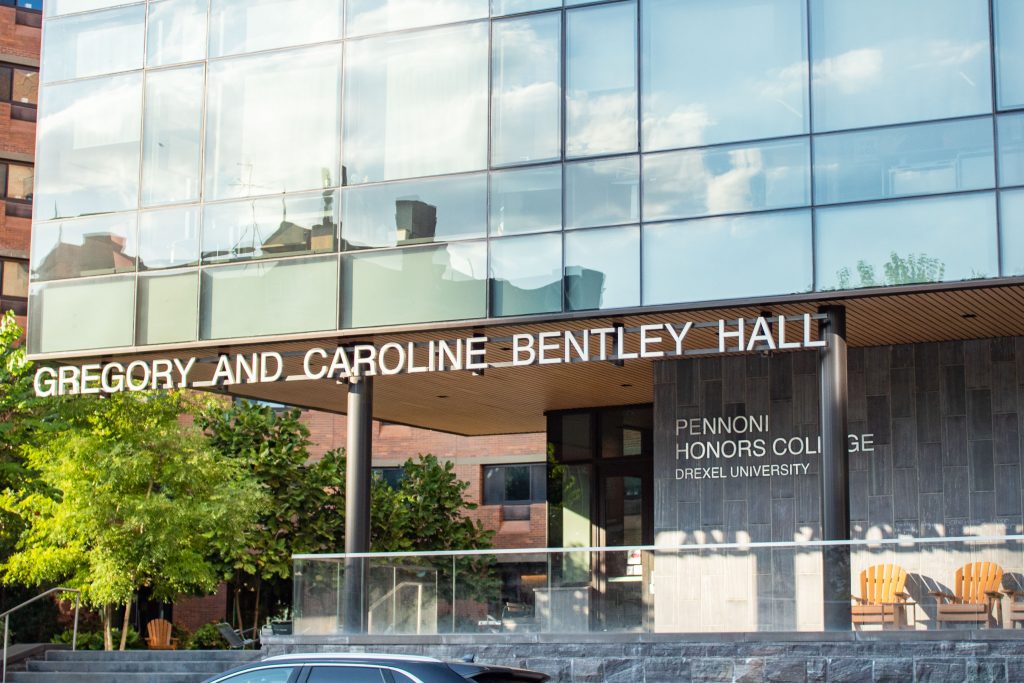
Photo by Evie Touring | The Triangle

Just a month into his new role, the recently appointed Dean of Drexel’s Pennoni Honors College, Dr. Neville Vakharia, is embracing the vibrant energy that defines the school. “It’s been great. Amazing people, amazing students. I’m just having a blast,” he said. 

Vakharia succeeds Dr. Paula Marantz Cohen, who stepped down after over a decade of leadership that enriched both student life and academics at Pennoni and Drexel as a whole. Though he acknowledges that he has “a lot to learn,” Vakharia is excited to build on that foundation, diving into his new responsibilities and setting the stage for the college’s future.

A “triple Dragon” with a PhD in information science, an MS in arts administration and a B.S. in materials engineering, the Dean brings a uniquely diverse background to his role. Originally trained as an engineer, he has transitioned into a career that includes nonprofit work and the arts. “I think I’ve always been sort of an interdisciplinary person,” he shared. “I was able to practice as an engineer, but I also realized that everything we study — whether it’s engineering or design or arts — teaches you a way of thinking.” This broad perspective has guided him throughout his career, allowing him to translate his skills across fields. “Interdisciplinary is a way of thinking that gets you where you want to go,” he said.

Despite leaving traditional engineering, Vakharia emphasizes how much of that training informs his current work. “Studying engineering at Drexel really taught me about problem-solving, project management, and ways to come at a problem based on evidence and fact, but also accounts for the people involved,” he explained. “As an engineer, you’re constantly thinking, ‘How can I improve something? How can I solve a problem or address a need?’ That mindset is so important to everything I do, even now.”

Vakharia’s interdisciplinary background shapes his vision to encourage Drexel students — particularly those in STEM fields — to engage more with the arts and other fields outside their majors. “We always have to look beyond the boundaries of our discipline,” he urged. “If we explore other fields and disciplines, it can help us in turn with our own.” He prompts students to take classes outside their major, engage with diverse faculty and avoid limiting themselves to one track. “Drexel is a large university with such a diverse population and courses. There’s something for everyone here,” he added.

The dean is particularly focused on raising awareness about all that the Honors College offers. “I was surprised how few people actually know the depth of what Pennoni does,” he remarked. Describing the Honors College as “the intellectual and social hub of the university,” he outlined his plans to foster “broad thinking, civil discourse, interdisciplinary innovation, and student learning.”

In the coming years, increasing engagement across the university will be a key focus. “We want to be more proactive in engaging the entire campus community in various intellectual and social endeavors,” he said. Part of this approach involves meeting with internal and external stakeholders, aligning Pennoni’s goals with Drexel’s greater needs and developing a strategic plan to drive the college forward.

For students interested in joining the Honors College or simply making the most of their Drexel experience, Vakharia encourages a mindset of curiosity and exploration. “We’re looking for students who want to get the most out of their time at Drexel, who are intellectually curious, whose interests span multiple disciplines, and who want to have fun,” he said, adding that Pennoni holds a variety of events ranging from panel discussions to activities like trivia and pumpkin carving.

Beyond social and academic engagement, the Honors College also places a strong emphasis on civic and social impact. “Social impact and civic engagement are very important pillars of Pennoni,” Vakharia explained. “All students engaged in Pennoni — whether as Honors students or through other academic programs — are getting enhanced learning in civic engagement. We even have a new Honors with Distinction program that allows students to get civically engaged, whether it’s here in West Philadelphia or in their home countries.”

Reflecting on his time as both a Drexel student and now as an administrator, Vakharia strongly believes this is a stirring moment for the university. “I’ve seen multiple decades of Drexel in my studies, and I think this is the most exciting time in the university’s history,” he said. “We’re undergoing a major academic transformation that’s going to enhance the student experience.”

His advice to current students is simple: “Look for the connections in your academic journey. Just because you study one particular field doesn’t mean that’s the only field where you can apply your skills. Rather than thinking of courses, think of skills. And you never know where life will lead you — so follow that direction and make the most of what you can.”

With his interdisciplinary approach and commitment to student success, Vakharia is well-positioned to lead the Honors College into a novel era. As he put it, “We’re open for business, and we’re here to serve you.”

Posted in UncategorizedComments Off on Neville Vakharia’s vision as Honors College dean