
Author Archives | Sana’a Abouantoun, Contributor

1980s SLU Alum Shares Recollections and Advice for Young Student Journalists

CHESTERFIELD – During his time as The University Newspaper’s associate editor, Timothy “Tim” Hogan and fellow UNews journalists organized rallies and marches on campus to protest student aid budget cuts and tuition increases in the late 1970s and early 1980s. They brought together students from Washington University, University of Missouri St. Louis and Fontbonne University to make change.

Today, Hogan, now 69 and on hospice, urges the SLU community to acknowledge the contributions of student journalists and offers words of wisdom. He shares his experiences working with the student newspaper decades ago, connects the past to current events and the necessity of good journalism.

“I like to express myself sometimes, but at the core of it all was the desire to see about making a difference,” Hogan said. “Yes, that’s what I learned when I was down at Saint Louis University, that making a difference is where you have the opportunity to truly learn.”

Hogan said his job was not just to report the news, but to cover the areas that were particularly important to students, even if he received pushback from the administration. Being a part of the UNews was not about appeasing the administration, he said, but about being committed to pursuing stories no matter the consequences. 

The administration, under the leadership of Reverend Thomas R. Fitzgerald S.J., decided to cut the student aid budget. Hogan believed that the budget cut risked weakening students’ ability to think for themselves. 

“[SLU’s administration] thought that they shouldn’t subsidize intellectual curiosity. I call it unilateral intellectual disarmament. What you’re trying to do is make up a generation of people who are followers. They’re not leaders,” Hogan said.

“You’re not going to have the critical listening skills, abilities to see what’s going on around them and respond to in a fashion that they can make a critical difference,” Hogan said. 

The administration dismissed the UNews as putting out “wrong” information at the time, Hogan said. Despite this, the UNews’s mission always remained to publish honest stories aimed at keeping the public and students informed. Hogan said that by exposing the truth, students were protected from potential decisions the university wanted to make without students’ knowledge or input.

“At the core of what we’re up to here is trying to find out what’s so, in search of the truth,” Hogan said. 

Fitzgerald wanted to meet with UNews staff daily and discuss their coverage.  

“Sometimes he didn’t think it was fair. [Fitzgerald felt] we needed more input from the university about some things,” Hogan said.  

Frustrated with the administration’s dismissive treatment, Hogan wished SLU had made a simple acknowledgment of the contributions he and his fellow student journalists were making in the UNews and that it was not so “antagonistic.” 

“I felt too often we were treated like children. [Fitzgerald] treated us in a very condescending way,” said Hogan. 

The administration wanted the UNews to be broader in their perspective, covering how the administration’s decisions affected the university at large, rather than the individual student. 

“I got the impression [the president] wanted us to be more of a PR paper. They got a whole PR department for that. My job [was] to report,” Hogan said. 

For Hogan, being a part of the UNews was not about appeasing the administration.

“I was passionate. … I did try to see how much I could get away with. I call bullshit bullshit,” Hogan said. 

Emphasizing the importance of accuracy in journalism, Hogan said that writers, then and now, have to be constantly sharp and meticulous. 

“Do it right, you lose your credibility when you don’t get it right. You lose your voice. You have to be that good, not sometimes, all the time,” Hogan said. 

The UNews created the Assistant Editor position to recognize all of Hogan’s contributions to the organization. Hogan expressed his gratitude for the UNews team.  

“I really enjoyed working for the paper. The people there were fantastic, I was so lucky,” Hogan said. “No assholes, no incompetents.” 

Professor Emeritus Avis Meyer, who holds a doctorate in English and literature and was the UNews’ faculty advisor from 1974 to 2016, described Hogan as “tenacious and fairminded.” He spoke on Hogan’s presence and contributions to the organization during his time. 

“He was like the big brother on the staff. He had a big head of red hair and he was gonna be a lawyer, he already moved like a lawyer. He was a little bit older, a little bit wiser, he was on top of his game,” Meyer said. 

Tim sitting in front of his window at Delmar Gardens West on Sept. 11.

Before retiring 10 years ago, Meyer also worked for the St. Louis Post Dispatch and taught copy editing, editorial writing and basic journalism courses at SLU. 

“The best and the brightest kids were [and still] are on the school’s paper. I got to work with brilliant kids every year for 42 years,” Meyer said. 

During his time as an undergraduate student, Hogan was not only part of the UNews, but also part of the Beta Chapter of Alpha Delta Gamma at SLU. After finishing his undergraduate degree in 1983, he went to SLU Law, graduated law school in 1985 and became an injury attorney. 

John Parker, fellow ADG brother, SLU alum and good friend of Hogan’s, said that Hogan pushed him intellectually and helped him consider new perspectives. 

“[Hogan] certainly makes me a better person. He opens up my thinking [and] will point out things that maybe I didn’t see,” said Parker. “I always thought ‘man if I was president, [Hogan] would be on my staff,’… the guy’s brilliant. I mean, he’s really smart.” 

Parker and Hogan met in the fall of 1981 when Hogan finally decided to join ADG after making friends with many members. Fellow ADG brothers were lightheartedly suspicious of Hogan since he was a student journalist; they thought he might write an expose of their fraternity. Parker expressed how he will miss their exchanges. 

“One thing I’m gonna miss about him is that I just can’t call him and have arguments about politics and stuff,” Parker said. 

Parker also commented on Hogan’s selflessness. 

“He would give you the shirt off his back,” Parker said. “When he goes, the world will be a darker place.” 

Hogan expressed gratitude toward the life he’s lived. 

“The way I live my life is to see if I have the opportunity to be a critical difference in things. And to be perfectly frank, I have had a blast. I’ve had an amazing life of adventure and wonder. I’ve gotten to go places I never thought I would go to and do things I never thought I’d get to do, and it was fun,” Hogan said, smiling and looking out his window. “Life should be about adventure and fun.”


Posted in UncategorizedComments Off on 1980s SLU Alum Shares Recollections and Advice for Young Student Journalists

1980s SLU Alum Shares Recollections and Advice for Young Student Journalists

CHESTERFIELD – During his time as The University Newspaper’s associate editor, Timothy “Tim” Hogan and fellow UNews journalists organized rallies and marches on campus to protest student aid budget cuts and tuition increases in the late 1970s and early 1980s. They brought together students from Washington University, University of Missouri St. Louis and Fontbonne University to make change.

Today, Hogan, now 69 and on hospice, urges the SLU community to acknowledge the contributions of student journalists and offers words of wisdom. He shares his experiences working with the student newspaper decades ago, connects the past to current events and the necessity of good journalism.

“I like to express myself sometimes, but at the core of it all was the desire to see about making a difference,” Hogan said. “Yes, that’s what I learned when I was down at Saint Louis University, that making a difference is where you have the opportunity to truly learn.”

Hogan said his job was not just to report the news, but to cover the areas that were particularly important to students, even if he received pushback from the administration. Being a part of the UNews was not about appeasing the administration, he said, but about being committed to pursuing stories no matter the consequences. 

The administration, under the leadership of Reverend Thomas R. Fitzgerald S.J., decided to cut the student aid budget. Hogan believed that the budget cut risked weakening students’ ability to think for themselves. 

“[SLU’s administration] thought that they shouldn’t subsidize intellectual curiosity. I call it unilateral intellectual disarmament. What you’re trying to do is make up a generation of people who are followers. They’re not leaders,” Hogan said.

“You’re not going to have the critical listening skills, abilities to see what’s going on around them and respond to in a fashion that they can make a critical difference,” Hogan said. 

The administration dismissed the UNews as putting out “wrong” information at the time, Hogan said. Despite this, the UNews’s mission always remained to publish honest stories aimed at keeping the public and students informed. Hogan said that by exposing the truth, students were protected from potential decisions the university wanted to make without students’ knowledge or input.

“At the core of what we’re up to here is trying to find out what’s so, in search of the truth,” Hogan said. 

Fitzgerald wanted to meet with UNews staff daily and discuss their coverage.  

“Sometimes he didn’t think it was fair. [Fitzgerald felt] we needed more input from the university about some things,” Hogan said.  

Frustrated with the administration’s dismissive treatment, Hogan wished SLU had made a simple acknowledgment of the contributions he and his fellow student journalists were making in the UNews and that it was not so “antagonistic.” 

“I felt too often we were treated like children. [Fitzgerald] treated us in a very condescending way,” said Hogan. 

The administration wanted the UNews to be broader in their perspective, covering how the administration’s decisions affected the university at large, rather than the individual student. 

“I got the impression [the president] wanted us to be more of a PR paper. They got a whole PR department for that. My job [was] to report,” Hogan said. 

For Hogan, being a part of the UNews was not about appeasing the administration.

“I was passionate. … I did try to see how much I could get away with. I call bullshit bullshit,” Hogan said. 

Emphasizing the importance of accuracy in journalism, Hogan said that writers, then and now, have to be constantly sharp and meticulous. 

“Do it right, you lose your credibility when you don’t get it right. You lose your voice. You have to be that good, not sometimes, all the time,” Hogan said. 

The UNews created the Assistant Editor position to recognize all of Hogan’s contributions to the organization. Hogan expressed his gratitude for the UNews team.  

“I really enjoyed working for the paper. The people there were fantastic, I was so lucky,” Hogan said. “No assholes, no incompetents.” 

Professor Emeritus Avis Meyer, who holds a doctorate in English and literature and was the UNews’ faculty advisor from 1974 to 2016, described Hogan as “tenacious and fairminded.” He spoke on Hogan’s presence and contributions to the organization during his time. 

“He was like the big brother on the staff. He had a big head of red hair and he was gonna be a lawyer, he already moved like a lawyer. He was a little bit older, a little bit wiser, he was on top of his game,” Meyer said. 

Tim sitting in front of his window at Delmar Gardens West on Sept. 11.

Before retiring 10 years ago, Meyer also worked for the St. Louis Post Dispatch and taught copy editing, editorial writing and basic journalism courses at SLU. 

“The best and the brightest kids were [and still] are on the school’s paper. I got to work with brilliant kids every year for 42 years,” Meyer said. 

During his time as an undergraduate student, Hogan was not only part of the UNews, but also part of the Beta Chapter of Alpha Delta Gamma at SLU. After finishing his undergraduate degree in 1983, he went to SLU Law, graduated law school in 1985 and became an injury attorney. 

John Parker, fellow ADG brother, SLU alum and good friend of Hogan’s, said that Hogan pushed him intellectually and helped him consider new perspectives. 

“[Hogan] certainly makes me a better person. He opens up my thinking [and] will point out things that maybe I didn’t see,” said Parker. “I always thought ‘man if I was president, [Hogan] would be on my staff,’… the guy’s brilliant. I mean, he’s really smart.” 

Parker and Hogan met in the fall of 1981 when Hogan finally decided to join ADG after making friends with many members. Fellow ADG brothers were lightheartedly suspicious of Hogan since he was a student journalist; they thought he might write an expose of their fraternity. Parker expressed how he will miss their exchanges. 

“One thing I’m gonna miss about him is that I just can’t call him and have arguments about politics and stuff,” Parker said. 

Parker also commented on Hogan’s selflessness. 

“He would give you the shirt off his back,” Parker said. “When he goes, the world will be a darker place.” 

Hogan expressed gratitude toward the life he’s lived. 

“The way I live my life is to see if I have the opportunity to be a critical difference in things. And to be perfectly frank, I have had a blast. I’ve had an amazing life of adventure and wonder. I’ve gotten to go places I never thought I would go to and do things I never thought I’d get to do, and it was fun,” Hogan said, smiling and looking out his window. “Life should be about adventure and fun.”


Posted in UncategorizedComments Off on 1980s SLU Alum Shares Recollections and Advice for Young Student Journalists

1980s SLU alum shares recollections and advice for young student journalists

CHESTERFIELD – During his time as The University Newspaper’s associate editor, Timothy “Tim” Hogan and fellow UNews journalists organized rallies and marches on campus to protest student aid budget cuts and tuition increases in the late 1970s and early 1980s. They brought together students from Washington University, University of Missouri St. Louis and Fontbonne University to make change.

Today, Hogan, now 69 and on hospice, urges the SLU community to acknowledge the contributions of student journalists and offers words of wisdom. He shares his experiences working with the student newspaper decades ago, connects the past to current events and the necessity of good journalism.

“I like to express myself sometimes, but at the core of it all was the desire to see about making a difference,” Hogan said. “Yes, that’s what I learned when I was down at Saint Louis University, that making a difference is where you have the opportunity to truly learn.”

Hogan said his job was not just to report the news, but to cover the areas that were particularly important to students, even if he received pushback from the administration. Being a part of the UNews was not about appeasing the administration, he said, but about being committed to pursuing stories no matter the consequences. 

The administration, under the leadership of Reverend Thomas R. Fitzgerald S.J., decided to cut the student aid budget. Hogan believed that the budget cut risked weakening students’ ability to think for themselves. 

“[SLU’s administration] thought that they shouldn’t subsidize intellectual curiosity. I call it unilateral intellectual disarmament. What you’re trying to do is make up a generation of people who are followers. They’re not leaders,” Hogan said.

“You’re not going to have the critical listening skills, abilities to see what’s going on around them and respond to in a fashion that they can make a critical difference,” Hogan said. 

The administration dismissed the UNews as putting out “wrong” information at the time, Hogan said. Despite this, the UNews’s mission always remained to publish honest stories aimed at keeping the public and students informed. Hogan said that by exposing the truth, students were protected from potential decisions the university wanted to make without students’ knowledge or input.

“At the core of what we’re up to here is trying to find out what’s so, in search of the truth,” Hogan said. 

Fitzgerald wanted to meet with UNews staff daily and discuss their coverage.  

“Sometimes he didn’t think it was fair. [Fitzgerald felt] we needed more input from the university about some things,” Hogan said.  

Frustrated with the administration’s dismissive treatment, Hogan wished SLU had made a simple acknowledgment of the contributions he and his fellow student journalists were making in the UNews and that it was not so “antagonistic.” 

“I felt too often we were treated like children. [Fitzgerald] treated us in a very condescending way,” said Hogan. 

The administration wanted the UNews to be broader in their perspective, covering how the administration’s decisions affected the university at large, rather than the individual student. 

“I got the impression [the president] wanted us to be more of a PR paper. They got a whole PR department for that. My job [was] to report,” Hogan said. 

For Hogan, being a part of the UNews was not about appeasing the administration.

“I was passionate. … I did try to see how much I could get away with. I call bullshit bullshit,” Hogan said. 

Emphasizing the importance of accuracy in journalism, Hogan said that writers, then and now, have to be constantly sharp and meticulous. 

“Do it right, you lose your credibility when you don’t get it right. You lose your voice. You have to be that good, not sometimes, all the time,” Hogan said. 

The UNews created the Assistant Editor position to recognize all of Hogan’s contributions to the organization. Hogan expressed his gratitude for the UNews team.  

“I really enjoyed working for the paper. The people there were fantastic, I was so lucky,” Hogan said. “No assholes, no incompetents.” 

Professor Emeritus Avis Meyer, who holds a doctorate in English and literature and was the UNews’ faculty advisor from 1974 to 2016, described Hogan as “tenacious and fairminded.” He spoke on Hogan’s presence and contributions to the organization during his time. 

“He was like the big brother on the staff. He had a big head of red hair and he was gonna be a lawyer, he already moved like a lawyer. He was a little bit older, a little bit wiser, he was on top of his game,” Meyer said. 

Tim sitting in front of his window at Delmar Gardens West on Sept. 11 (Ismael Domin).

Before retiring 10 years ago, Meyer also worked for the St. Louis Post Dispatch and taught copy editing, editorial writing and basic journalism courses at SLU. 

“The best and the brightest kids were [and still] are on the school’s paper. I got to work with brilliant kids every year for 42 years,” Meyer said. 

During his time as an undergraduate student, Hogan was not only part of the UNews, but also part of the Beta Chapter of Alpha Delta Gamma at SLU. After finishing his undergraduate degree in 1983, he went to SLU Law, graduated law school in 1985 and became an injury attorney. 

John Parker, fellow ADG brother, SLU alum and good friend of Hogan’s, said that Hogan pushed him intellectually and helped him consider new perspectives. 

“[Hogan] certainly makes me a better person. He opens up my thinking [and] will point out things that maybe I didn’t see,” said Parker. “I always thought ‘man if I was president, [Hogan] would be on my staff,’… the guy’s brilliant. I mean, he’s really smart.” 

Parker and Hogan met in the fall of 1981 when Hogan finally decided to join ADG after making friends with many members. Fellow ADG brothers were lightheartedly suspicious of Hogan since he was a student journalist; they thought he might write an expose of their fraternity. Parker expressed how he will miss their exchanges. 

“One thing I’m gonna miss about him is that I just can’t call him and have arguments about politics and stuff,” Parker said. 

Parker also commented on Hogan’s selflessness. 

“He would give you the shirt off his back,” Parker said. “When he goes, the world will be a darker place.” 

Hogan expressed gratitude toward the life he’s lived. 

“The way I live my life is to see if I have the opportunity to be a critical difference in things. And to be perfectly frank, I have had a blast. I’ve had an amazing life of adventure and wonder. I’ve gotten to go places I never thought I would go to and do things I never thought I’d get to do, and it was fun,” Hogan said, smiling and looking out his window. “Life should be about adventure and fun.”



Posted in UncategorizedComments Off on 1980s SLU alum shares recollections and advice for young student journalists

St. Louisians celebrate Lebanese and Arab culture at the 58th annual Lebanese Festival

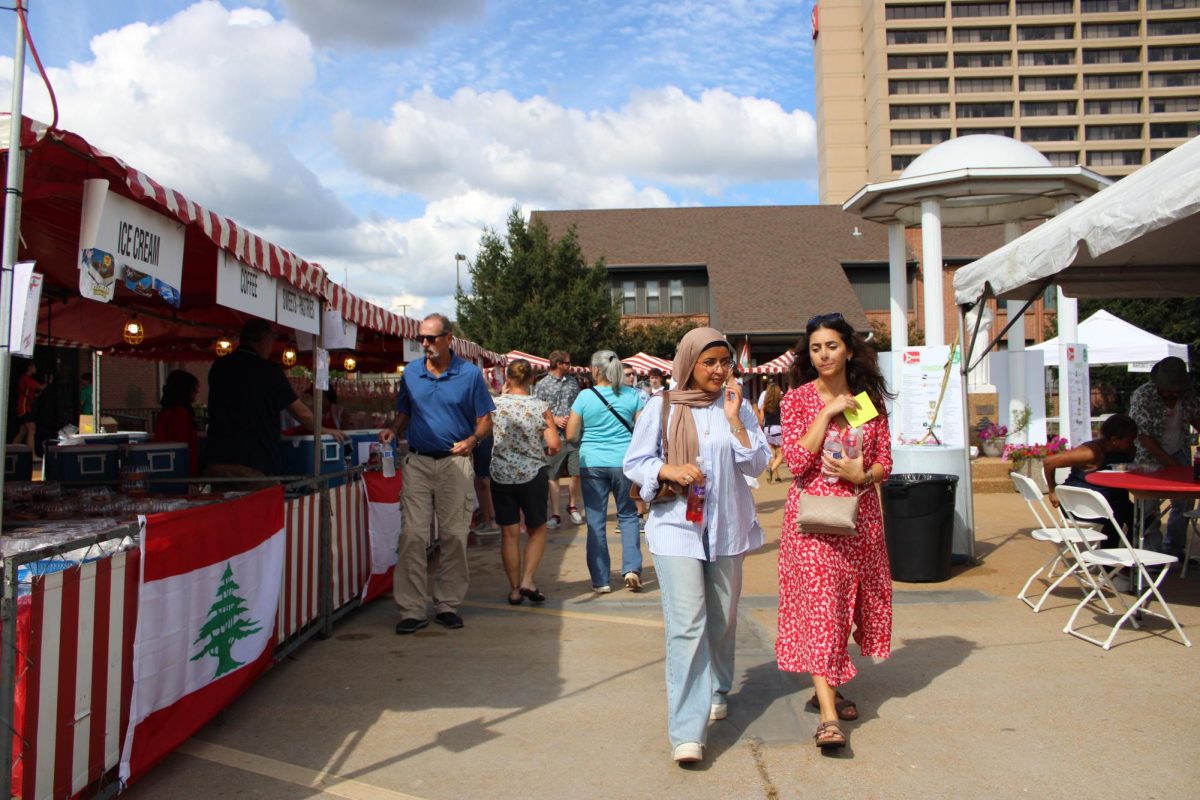
As the sun set over a lively crowd, singer Said Abi Akl and his band serenaded dancers and festival-goers with songs by Fares Karam and Marwan Khoury on Saturday, Sept. 13. Dabke groups moved to the upbeat, celebratory music while others nearby feasted on shawarma, falafel and baklava or browsed Lebanese souvenirs such as cedar tree necklaces, decorative hookah magnets and hip scarves. 

This year marks the 58th anniversary of the Lebanese Festival, hosted by St. Raymond Maronite Cathedral from Sept. 12-14. The event raises funds for the cathedral, commemorates Lebanese culture and acknowledges the Exaltation of the Cross, a liturgical feast celebrated Sept. 14 to honor the cross on which Jesus Christ was crucified.

“Jesus just reminds us to carry our cross and to follow him, and so we come, we serve, we do it with joy and with love,” long-time volunteer Daisy Kevorkian said. 

Kevorkian said she volunteers at the festival because she’s passionate about “our Maronite faith, our community.” 

Kevorkian admires Lebanese people’s faith despite the economic crisis, war and injustices happening in their country.      

“What’s there not to like about [Lebanese culture]? The food, the hospitality, the perseverance and persistence [of the Lebanese people],” the volunteer said. 

“They’re still holding on. You know, four years ago, they bombed Beirut again, everything destroyed. They are always picking up the pieces and starting over,” the volunteer said, referring to the 2,750 metric tons of ammonium nitrate that exploded at Beirut’s port on Aug. 4, 2020, killing more than 218 people. The disaster was among the largest non-nuclear explosions in modern history.

From left, Daisy Kevorkian, Nina Bouhasin and Jennifer Nesser pose at their souvenir stand on Sunday, Sept. 14, 2025, at St. Raymond Cathedral in St. Louis.

Many attended the festival for a variety of reasons. Joana Dominguez and Philip Trad attended to “just kind of see what’s going on [and] see who’s here. When you’re around the same culture as you, the same ethnicity, there’s kind of like … a familial sense there. We wanted to be a part of  that a little bit,” said Trad, who heard about the festival on the radio and is half Lebanese with English, Irish and German heritage. 

Trad has been to Lebanese conventions before and said having one in St. Louis was a good opportunity for him to enjoy his culture. “Why the hell not,” he says as Fares Karam’s song “El Tannoura,” or “the skirt” in English, blasted in the background.  The song describes a beautiful, self-confident woman who wears a short skirt and effortlessly attracts men’s attention.

Dominguez, whose grandmother is Lebanese and lived most of her life in Mexico City, said, “We always try to keep the culture around. My house is full of cedar [tree icons] and we go to the Maronite church [in Mexico City] and we… often go to Lebanese restaurants.” 

When she moved to St. Louis, Dominguez asked Philip where they could get Lebanese food. That’s when they discovered the cathedral and its Wednesday Luncheons, where volunteers and workers cook and serve Lebanese dishes. She and Philip first connected through conversations about their Lebanese heritage.

Joana Dominguez, left, and Philip Trad pose for a photo by the Lebanese Sweets booth on Sunday, Sept. 14, 2025, at St. Raymond Cathedral in St. Louis.

Jenna Andrawos and Sarah Elking, two young festival volunteers, said they show up “to give back to the community and step up for the next generation.” Their favorite Lebanese foods include stuffed grape leaves, or warak enab in Arabic. The dish can be made with ground beef or lamb and rice seasoned with spices such as salt, pepper and cinnamon, marinated in lemon juice and olive oil. Many variations use different blends of spices. 

The young women also enjoy maqluba, a layered rice dish flipped upside down when served. It consists of layers of rice, vegetables, meat and sometimes nuts and raisins cooked in a flavorful broth. Additionally, they tabouleh, a traditional salad made with finely chopped parsley, tomatoes, bulgur wheat and mint, seasoned with olive oil and lemon juice.

Sarah Elking, left, and Jenna Andrawos pose at their cabbage rolls and grape leaves stand on Sunday, Sept. 14, 2025, at St. Raymond Cathedral in St. Louis.

Tony Hamad, the head chef who prepares dishes for the cathedral’s Wednesday luncheons, said he takes special pride in his chicken shawarma sandwich.

His wife, Mary, who also volunteers in the kitchen, said the couple first introduced the shawarma to the festival’s menu seven years ago.

“The main purpose of this festival is to bring people to our culture and our community … and of course to [have people] come visit … and support our church,” she said.

Mary added that she hopes people will stop by to taste the shawarma. “Everyone should come down and experience the Lebanese Festival. Come try the best chicken and beef shawarma that me and my husband make from scratch, and you guys won’t regret it. You can only get it once a year because it’s only offered here at the Lebanese Festival.”

Posted in UncategorizedComments Off on St. Louisians celebrate Lebanese and Arab culture at the 58th annual Lebanese Festival

St. Louisians celebrate Lebanese and Arab culture at the 58th annual Lebanese Festival

As the sun set over a lively crowd, singer Said Abi Akl and his band serenaded dancers and festival-goers with songs by Fares Karam and Marwan Khoury on Saturday, Sept. 13. Dabke groups moved to the upbeat, celebratory music while others nearby feasted on shawarma, falafel and baklava or browsed Lebanese souvenirs such as cedar tree necklaces, decorative hookah magnets and hip scarves.

This year marks the 58th anniversary of the Lebanese Festival, hosted by St. Raymond Maronite Cathedral from Sept. 12-14. The event raises funds for the cathedral, commemorates Lebanese culture and acknowledges the Exaltation of the Cross, a liturgical feast celebrated Sept. 14 to honor the cross on which Jesus Christ was crucified.

“Jesus just reminds us to carry our cross and to follow him, and so we come, we serve, we do it with joy and with love,” long-time volunteer Daisy Kevorkian said. 

Kevorkian said she volunteers at the festival because she’s passionate about “our Maronite faith, our community.” 

Kevorkian admires Lebanese people’s faith despite the economic crisis, war and injustices happening in their country.

“What’s there not to like about [Lebanese culture]? The food, the hospitality, the perseverance and persistence [of the Lebanese people],” the volunteer said.

“They’re still holding on. You know, four years ago, they bombed Beirut again, everything destroyed. They are always picking up the pieces and starting over,” the volunteer said, referring to the 2,750 metric tons of ammonium nitrate that exploded at Beirut’s port on Aug. 4, 2020, killing more than 218 people. The disaster was among the largest non-nuclear explosions in modern history.

From left, Daisy Kevorkian, Nina Bouhasin and Jennifer Nesser pose at their souvenir stand on Sunday, Sept. 14, 2025, at St. Raymond Cathedral in St. Louis.

Many attended the festival for a variety of reasons. Joana Dominguez and Philip Trad attended to “just kind of see what’s going on [and] see who’s here. When you’re around the same culture as you, the same ethnicity, there’s kind of like … a familial sense there. We wanted to be a part of  that a little bit,” said Trad, who heard about the fe

stival on the radio and is half Lebanese with English, Irish and German heritage. 

Trad has been to Lebanese conventions before and said having one in St. Louis was a good opportunity for him to enjoy his culture. “Why the hell not,” he says as Fares Karam’s song “El Tannoura,” or “the skirt” in English, blasted in the background.  The song describes a beautiful, self-confident woman who wears a short skirt and effortlessly attracts men’s attention.

Dominguez, whose grandmother is Lebanese and lived most of her life in Mexico City, said, “We always try to keep the culture around. My house is full of cedar [tree icons] and we go to the Maronite church [in Mexico City] and we… often go to Lebanese restaurants.” 

When she moved to St. Louis, Dominguez asked Philip where they could get Lebanes

e food. That’s when they discovered the cathedral and its Wednesday Luncheons, where volunteers and workers cook and serve Lebanese dishes. She and Philip first connected through conversations about thei

r Lebanese heritage.

Joana Dominguez, left, and Philip Trad pose for a photo by the Lebanese Sweets booth on Sunday, Sept. 14, 2025, at St. Raymond Cathedral in St. Louis.

Jenna Andrawos and Sarah Elking, two young festival volunteers, said they show up “to give back to the community and step up for the next generation.” Their favorite Lebanese foods include stuffed grape

leaves, or warak enab in Arabic. The dish can be made with ground beef or lamb and rice seasoned with spices such as salt,

pepper and cinnamon, marinated in lemon juice and olive oil. Many variations use different blends of spices. 

The young women also enjoy maqluba, a layered rice dish flipped upside down when served. It consists of layers of rice, vegetables, meat and sometimes nuts and raisins cooked in a flavorful broth. Additi

onally, they tabouleh, a traditional salad made with finely chopped parsley, tomatoes, bulg

ur wheat and mint, seasoned with olive oil and lemon juice.

Sarah Elking, left, and Jenna Andrawos pose at their cabbage rolls and grape leaves stand on Sunday, Sept. 14, 2025, at St. Raymond Cathedral in St. Louis.

Tony Hamad, the head chef who prepares dishes for the cathedral’s Wednesday luncheo

ns, said he takes special pride in his chicken shawarma sandwich.

His wife, Mary, who also volunteers in the kitchen, said the couple first introduced the shawarma to the festival’s menu seven years ago.

“The main purpose of this festival is to bring people to our culture and our community … and of course to [have people] come visit … and support our church,” she said.

Mary added that she hopes people will stop by to taste the shawarma. “Everyone should come down and experience the Lebanese Festival. Come try the best chicken and beef shawarma that me and my husband make from scratch, and you guys won’t regret it. You can only get it once a year because it’s only offered here at the Lebanese Festival.”


Posted in UncategorizedComments Off on St. Louisians celebrate Lebanese and Arab culture at the 58th annual Lebanese Festival

Volunteers make 57th annual Lebanese festival come to life

The 57th annual Lebanese festival offered a joyful immersion into their heritage while supporting the St. Raymond Maronite Cathedral’s role in St. Louis’ Arab community from Sept. 13 to Sept. 15. Traditional Arabic music played and volunteers ran booths selling Lebanese souvenirs, cultural attire and Middle Eastern cuisine which was cooked by members of the church and their families. 

The festival also featured children’s games, raffles and prizes. Professional Dabke dancers lead dancing groups, bringing in the festival goers. The main act was singer Said Abi Akl and his band, bringing live music to the community. 

These three consecutive days at the church were filled with families, students and members of the church. The church members volunteer their time to set up and run all the components of the festival. They consist of people passionate about celebrating Lebanese culture, supporting the church and making memories. 

Large Lebanese and Arab communities are established and cultivated at the St. Raymond Maronite Cathedral and many of these individuals ran the booths at the festival. Many of them cited that they have been doing it for years for their families and to raise more money for the church while spreading their native traditions. 

Posted in UncategorizedComments Off on Volunteers make 57th annual Lebanese festival come to life