A new Drexel study found that while Pennsylvania’s youth are more accepting of marijuana, their attitudes towards use of it recreationally has not increased.
The research, led by Phillip Massey, an assistant professor in the Dornsife School of Public Health, made use of a questionnaire that calculated the opinions of young Pennsylvania residents on marijuana — both before 2016, the year it was legalized for medical use, and after. The datasheet, created by the Pennsylvania Epidemiological Outcomes Workgroup, also explored access and use of the drug from 2013 to 2017.
A survey in the recently released report demonstrates that rates of adolescents who strongly disapproved of marijuana use — aged 12 to 17 years old — dropped 7 percent, from 60.7 percent in 2013 to 53.3 percent 2016. The survey also showed that the rate of young people who were opposed to trying marijuana plummeted from 71 percent in the years before its medical legalization to 62.2 in 2017. Additionally, the numbers demonstrating the willingness to try marijuana have gradually increased over the years.
The report could be pertinent to the overall discussion of marijuana legalization, as it debunks the worries of others that by legalizing weed, it would lead to greater use and potential abuse, according to Massey.
“Of course, we need to continue to monitor this trend, but these preliminary data tell me that the people who need marijuana for medical purposes are the ones benefiting from this law,” Massey told DrexelNow. “It doesn’t appear to be affecting youth use.”
The workgroup’s datasheet also addresses arrest rates related to marijuana in Pennsylvania. While it generally remained unchanged from 2010 to 2016, youth arrests fell significantly within the six years — from about 112 marijuana-related arrests per 100,000 to about 79 arrests in 2016. Massey believes the impact among juveniles may be related to marijuana decriminalization in Philadelphia and Pittsburgh.
Posted in UncategorizedComments Off on Drexel report: Pa. youth more accepting of marijuana
Many children who grew up in the ’90s have childhood memories consisting of coming home from school, changing out of their uniforms and meeting up with their neighborhood friends to play outdoor games like Tag, Hide-and-Seek or Ding Dong Ditch.
For Drexel graduate Steve Cereby, he remembers preparing for another heart surgery at the Children’s Hospital of Pennsylvania. He was only eight years old.
Cereby, now 24 years old, was born with congenital heart disease — a condition where a child is born with an abnormally structured heart. One in every four newborns are affected by the disease, according to Center for Disease Control and Prevention; Cereby was one of the them. At birth, surgeons opened an infant Cereby’s chest to fix a heart ventricle that failed to function properly. Eight years later, it was discovered that the first surgery did not fix the initial problem, causing his heart to enlarge to the size of an adult one. This would be his second and final heart operation.
Having two open-heart surgeries in less than a decade on Earth can be a daunting start to a child’s life, said Cereby, who lived in fear and anxiety during his childhood.
“I was rehabbing a lot, ya know, learning to breathe on your own again and walk again,” the Bucks County native said. “For a kid it’s just not fun. When you’re a kid, you’re like a puppy and just want to have fun and play around.”
Fortunately, Cereby rehabilitated well and was able to carry on a normal life through middle and high school, he said. But it wasn’t until he entered his college years that he felt motivated to use his experience to inspire children who face similar hardships.
“I’ll be the first to tell you that I was a selfish person growing up — everything was all about myself,” he said. “But as I matured, I felt that my purpose in life was to help people.”
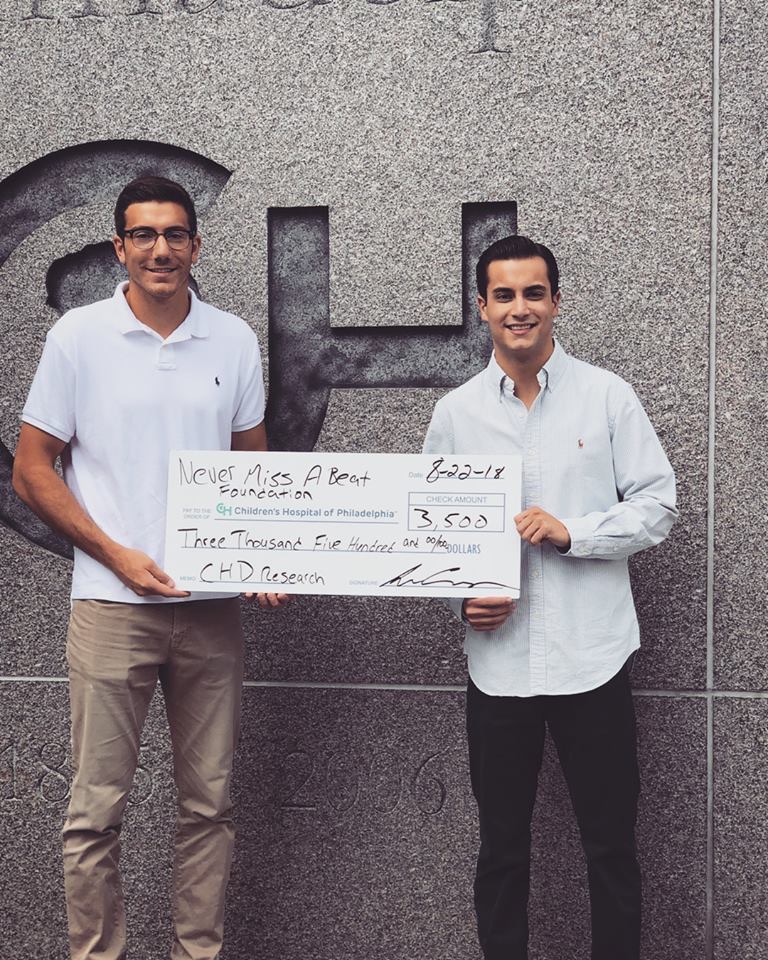
So, in 2016, after spending hundreds of dollars and several weeks to get 501(c)(3) status, 21-year-old Cereby founded The Never Miss A Beat Foundation — a non-profit organization that raises money for pediatric congenital heart disease research.
With the help of his family members, Never Miss A Beat organically got its name spread, through word-of-mouth and t-shirts being distributed to strangers in the Bucks County area. In just two years of the foundation’s existence, Never Miss A Beat has raised thousands of dollars through donations, raffles and fundraisers — all of which have been donated to CHOP to advance its research and diagnosis for all types of heart conditions.
Cereby’s second annual bowling fundraiser, held Bristol Lanes, raised over $3,000 with dozens in attendance.
This year so far, the foundation has raised over $5,000. Half of those funds were collected at his annual bowling event — which quadrupled in attendance compared to 2017’s turnout. The bowling fundraiser, hosted at Bristol Lanes this year, featured a raffle that included a significant prize for Philadelphia Eagles fans: a football signed by Super Bowl LII champion and Most Valuable Player Nick Foles.
While his non-profit aims to raise funds for children with heart defects, Cereby hopes his organization addresses the biggest need for congenital heart disease patients: awareness.
“There are so many people who still don’t know what CHD is, despite the fact that heart disease is the leading cause of death in America,” he said. “If awareness is raised, people will start to care, which means more funds allocated to tech and research on [heart diseases].”
At the 2018 bowling fundraiser, which was also submitted as Cereby’s senior project, he experienced a heartwarming moment where a family — stranger to him — brought their three-month-old child to the event. The toddler had CHD.
“They came up to me and the mom told me, ‘You have no idea what this means to us. You’re really inspiring us. Keeping doing what you’re doing,’” he said. “I’ve been complimented before by random people in person or on our Facebook page, but once that family told me how much it meant to them what I was doing, it felt bigger than the whole event because the impact I made was personal.”
As the non-profit continues to grow, Cereby is keen on getting other major pediatric hospitals involved in the organization, especially the No. 1-ranked Boston Children’s Hospital.
On a personal note, Cereby longs to continue to impact individual lives through his foundation because listening to inspiring testimonies helps him shy away from the selfish man he used to be, according to the Drexel graduate.
“Kids with CHD live in fear, and they need hope,” he said. “When they see someone like me — who has lived through what they’re dealing with … you start to realize you can’t live in fear because not only does it affect your heart, but it brings a lot of ‘what ifs’ to your life. I don’t want them to worry about that.”
To get involved with or learn more about the Never Miss A Beat Foundation, visit nevermissabeatfoundation.org.
Posted in UncategorizedComments Off on Drexel grad’s foundation raises money for congenital heart disease research
Gabby Frost, a Drexel University music industry major, has been building her non-profit organization, the Buddy Project, to promote mental health awareness and prevent suicide.
“Mental health is an important issue today. The rate for suicide has increased, and college and high school have become tougher and tougher, especially with things such as standardized testing, pressures of getting into college, and being on your own for the first time,” Frost said.
The Buddy Project aims to help those struggling with mental health issues by pairing people with “buddies,” with whom they can talk online.
Frost came up with the idea when she was using social media to find people with similar interests. After making many online friends throughout the world, she realized that people suffering from mental illness deserve the same opportunities. Since then, she has built the Buddy Project from the ground up. Instead of paying for advertisements, the Buddy Project grew through word of mouth and social media posts made by Frost herself.
The Buddy Project has continued to grow for the past five years. To date, it has paired over 219,000 people; it has recently become a 501(c)(3) and raised $40,000 for mental health facilities in the United States. However, Frost is also proud of the less tangible impacts that the Buddy Project has had. Many buddies have made life-long online friends, forging lasting relationships and in some cases, even meeting in person.
Frost is currently working on developing an app for Android and iPhone to bring The Buddy Project to mobile devices. She is also hoping to increase the scale of the project by raising funds through efforts such as a benefit concert, utilizing her skills as a music industry major. Finally, she wants to expand the Campus Rep Program to bring the Buddy Project to more middle school, high school and college campuses, and the Ambassador program, which encourages influencers of any type to raise awareness about mental health.
For students that are dealing with mental health issues, Frost recommends several things to deal with the pressures and stresses of college.
“Make sure you don’t prioritize your grades or schoolwork over yourself. You should surround yourself with people that will push you to put your mental health first. Finally, reach out, even if it’s tough to do. It’s good for yourself to get the help that you need to cope with your mental health,” Frost said.
Drexel has a free counseling center for students, and according to Frost, it is a great resource for those struggling with mental health. However, Frost wants these services to be promoted more frequently. She wants to make sure that all students know that it exists and that it is a free resource available to them.
Frost also has recommendations for helping others who may be struggling with mental health issues.
“Be willing to listen to people. Listening is so important, some people don’t even need to hear feedback, they just want to let out whatever they are going through and what they’re feeling. Also make sure that your friends do small self-care things, like eating, showering and brushing their teeth. Accomplishing those small things can help people find the strength to do more challenging things for those struggling with mental health issues,” she said.
Posted in UncategorizedComments Off on ‘Buddy Project’ continues to grow, promote mental health awareness
Dozens of Drexel University upperclassmen found themselves scrambling for a place to live for the upcoming fall term after University Housing cancelled their housing plans weeks before the start of the 2018-19 school year.
The university notified 74 upperclassmen via email that their on-campus housing was cancelled in order to accommodate the incoming freshmen. The sophomores, pre-juniors, juniors and seniors affected had already paid their security deposit, according to 6ABC Action News — who first reported the news July 27.
Drexel has made it clear on the Campus Services’ University Housing page, however, that on-campus housing is required of all freshmen students, but not guaranteed for upperclassmen. The page also notes that University Housing will prioritize residence halls located on the University City Campus to freshman students for the 2018-19 academic year.
“Drexel is working with 74 upper-class students who could not be accommodated in university housing due to demand,” the university said. “The University is working with these students and their families to find alternative housing in University-affiliated and University-approved properties.”
University Housing also provided a list of Drexel-affiliated properties for affected students to help finalize housing.
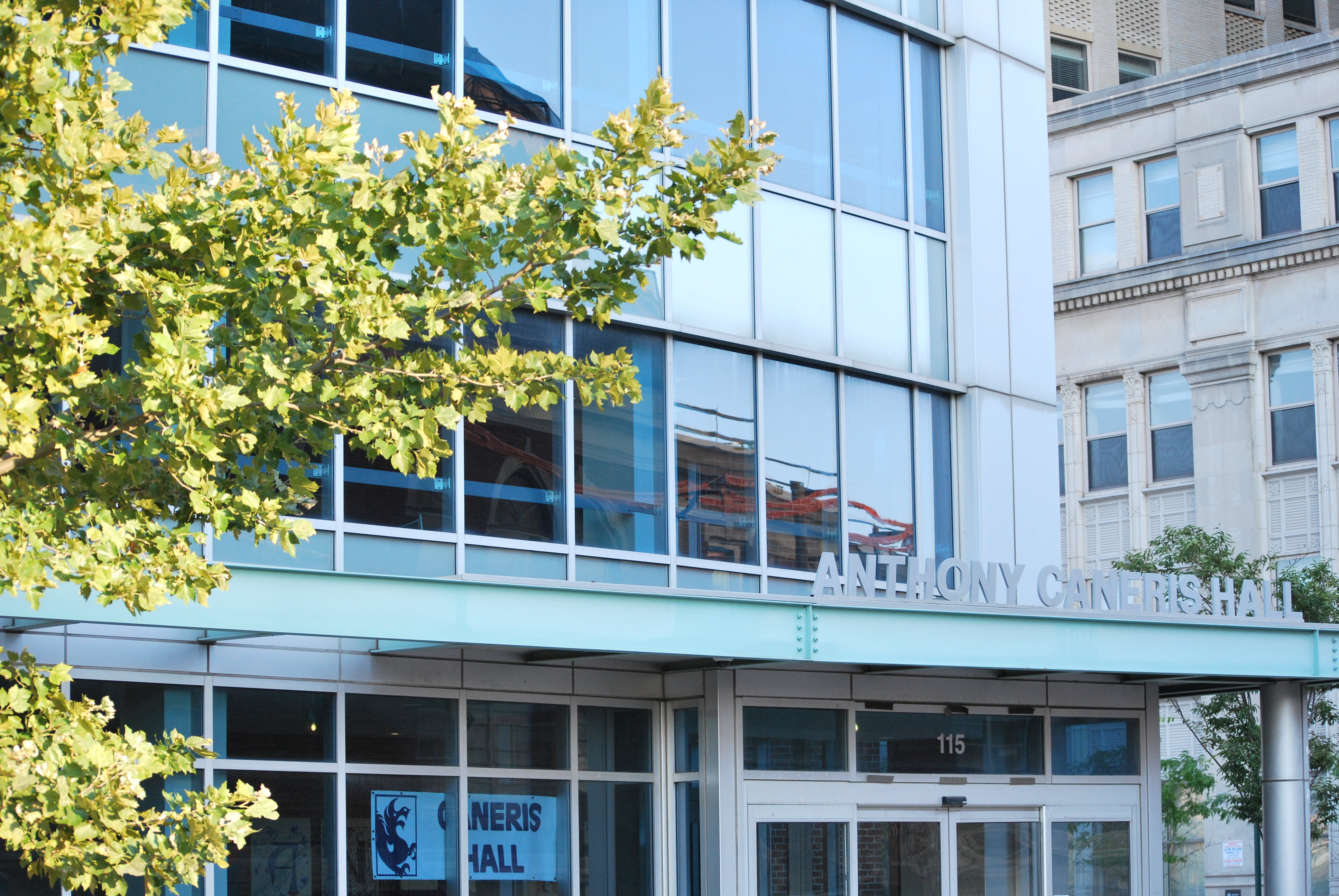
Still, the upperclassmen were only given a month’s notice to find a home for the upcoming term, according to junior nursing student Cameryn Verderame, who has held her work-study position at the Caneris Hall reception desk since the previous fall term.
“I had international students and upper-class students come up to me telling me they were being kicked out of their rooms,” Verderame said. “The messed up part about all this is that The Summit is cheaper than paying for Drexel dorms, but students still had to pay the dorm price because Drexel made the arrangements,” Verderame said.
The Triangle reached out to some of the Drexel-affiliated housing complexes such as The Summit, University Crossings and Chestnut Square for pricing and to see if they experienced an uptick in applications amid the issue. However, they refrained from commenting on the subject.
Drexel announced early May that Campus Services was preparing for the largest incoming freshman class in university history, with over 3,600 accepted students submitting deposits to start school this fall.
Verderame feels that this is part of the reason Drexel is guaranteeing on-campus accommodations only to freshmen.
“I feel they’re accepting too many freshmen at this point,” she said. “Caneris Hall was [an only-upperclassmen dorm]. Then last year was the first time freshmen lived in this building. And now this coming fall is going to be only freshmen.”
Should Caneris Hall limit their rooms to only first-year students, that would mean that all the University City campus residence halls will be strictly reserved for freshmen.
“[Upper-class students] choose to live in dorms because it’s easier for them,” Verderame said. “They’re closer to class, it’s less of a hassle and the students like the safety of living [in a dorm]. But now they feel they lost that safety and feel betrayed.”
Posted in UncategorizedComments Off on 74 upper-class students displaced by incoming freshmen
Although most research for behavioral health policy is accomplished in higher education, almost three-quarters of state legislators do not use universities as a primary source of information, according to a new study.
The study, which used 475 state legislators in a cross-sectional survey, was led by Dornsife School of Public Health Assistant Professor Jonathan Purtle. Of the 475 state legislators, only 27 percent sought research from universities as their primary source of information.
Instead, advocacy organizations, legislative staff and state agencies were the most frequently utilized sources. Purtle found 53 percent of legislators used advocacy organizations as a source of behavioral health research, while legislative staff was a source for 51 percent, and state agencies for 48 percent.
Purtle spoke about the disconnect between policymakers and university researchers in a DrexelNow article, saying, “Historically, university researchers have mainly asked research questions that are of interest to themselves and other university researchers. These are often different than the questions that are of interest to policymakers.”
Because of the disconnect shown in his study, Purtle aims to further find out “how policymakers get their public health information, what they think of it, and how it affects their actions. The hope is to demystify how policies get made — and show researchers what channels are most effective in influencing them,” the DrexelNow article explains.
The study found that political affiliation was correlated with the sources legislators used.Published in Psychiatric Services, Purtle’s “sought to characterize primary sources of behavioral health research and dissemination preferences of state legislators and assess differences by political party.” For example, the study showed that 34 percent of Democrats utilized university research as a primary source versus only 19 percent of Republicans. Of the most common source, advocacy organizations, 65 percent of Democrats cited them compared to 40 percent of Republicans.
Both Democrats and Republicans, however, rated “budget impact” and “cost-effectiveness” as the factors of research most important to them. This may help to explain why many policymakers opted to use sources other than university research.
Understanding how lawmakers choose their sources will help universities conduct research that will be utilized more. “We’re seeing that researchers have a variety of channels — such as advocacy organizations and state agencies — that they can reach legislators through. We must branch out from the traditional avenues we use for exposure and communicate the message of our research in an appealing way,” Purtle said to DrexelNow.
“To reach legislators and satisfy their information preferences, behavioral health researchers should target diverse audiences, partner with intermediary organizations, and craft messages that include economic evaluation data,” Purtle concluded from his research.
The full study, “Legislators’ Sources of Behavioral Health Research and Preferences for Dissemination: Variations by Political Party,” is available at Psychiatry Online.
Posted in UncategorizedComments Off on Drexel study: university research not a primary source for state legislators
The Drexel University School of Education received a $1.2 million grant to provide undergraduate students the opportunity to earn their teaching certificates in fields related to science, technology, engineering or mathematics.
The National Science Foundation’s Robert Noyce Scholarship program will give 24 Drexel undergraduates a pre-service teacher education to prepare them for teaching science and mathematics to middle grade students, which consists of grades four through eight. Students will go through the DragonsTeach Middle Years program to earn certificates.
DragonsTeach began at Drexel in 2014 with the National Math and Science Initiative Grant. This program allows STEM students to earn a teaching certification while continuing in their major. DragonsTeach allows students to go into Philadelphia schools to gain experience with teaching at all different levels. The DragonsTeach Middle Year program began in 2016, allowing students to earn certification in teaching English. But with this grant students will be able to earn certificates for mathematics and science education.
The project will use recently discovered knowledge in scientific, mathematical and education fields to support the 24 candidates as they focus on understanding the background and experiences of the students they are teaching. The goal of the project is to connect science, mathematics and engineering lessons to the personal experiences and cultures of students in high-need areas. The intent is that the new teachers will be able to make use of the background of each student in the classroom.
Leading the project is Sheila Vaidya, a professor in the School of Education.
“There is a strong need for middle grades STEM teachers in urban school districts, and this project will help us prepare more young men and women to fill these roles,” Vaidya told DrexelNow.
To receive scholarship, candidates must be U.S. citizens or permanent residents. Current Drexel sophomores or juniors who are interested in receiving a Noyce scholarship should reach out to Vaidya at vaidyasr@drexel.edu.
Posted in UncategorizedComments Off on Drexel STEM students get opportunity to earn teacher certificates
Drexel University might be one step closer to a lasting solution for the millions of Americans with eating disorders and struggling with weight management. The Weight, Eating and Lifestyle Science Center opened a treatment clinic July 16. The establishment of the clinic is in keeping with the WELL Center’s mission is to provide evidence-based treatment for obesity, eating disorders and related conditions like anorexia nervosa, bulimia nervosa and binge-eating disorders.
This is welcome news for patients who grapple with cycles of treatment and relapse due to outdated therapies. The WELL Center Clinic offers an approach to treatment that is personalized but backed by research.
The clinic is the brainchild of Evan Forman, Meghan Butyrn and Adrienne Juarascio, professors in the Department of Psychology.
Forman has spent a lifetime conducting research on the evaluation and dissemination of behavioral- and technology-based interventions for behavioral change. Butyrn, on the other hand, specializes on developing and evaluating behavioral interventions for obesity. Juarascio, in addition to developing treatments for eating disorders and obesity, also does research on factors that increase the risk and maintenance of eating pathologies. Both Butyrn and Juarascio are licensed clinical psychologists.
The combined expertise and experience of these three core faculty members, as well as numerous other experienced staff members at the WELL Center, has been the source of ingenious projects which examine whether acceptance-based treatment components and technological innovations can enhance treatment outcomes.
Research at the center focuses on how behavioral changes can be instituted by using ubiquitous smartphone applications and Fitbit activity trackers in aptly named studies like Project DASH and OnTrack. Free treatment and opportunities to participate in these projects will be available to eligible patients.
The center, which opened last year, is already establishing itself as a valuable resource in the Philadelphia metropolitan area. In May it sponsored a regional convention for the National Eating Disorder Association, which connects individuals with eating disorders and those interested in learning more about eating disorders and body image issues.
Such strong backing in science will form the backbone of treatment at the new WELL Clinic. Armed with interventions such as cognitive behavioral therapy for eating disorders, dialectical behavioral therapy and acceptance-based behavior treatment for weight loss and weight loss maintenance, the clinic promises to be an accessible resource for patients with these common problems.
Interested in making an appointment or learning more? You can contact the clinic at wellclinic@drexel.edu or call them at (215) 553-7100.
Posted in UncategorizedComments Off on Drexel’s new WELL clinic helps with eating disorders, weight management
A new Drexel study found that the fossil fuels, electrical utilities and transportation sectors spent more than $2 billion to influence Congress on climate change legislation.
Sociology and environmental science professor Robert Brulle analyzed climate lobbying data from legally required reports made available on websiteOpenSecrets.org — marking the first time a Drexel researcher has conducted a peer-reviewed, comprehensive analysis of lobbying data.
Brulle’s research also breaks down the various amounts lobbyists spent over the 16 years. From 2000 to 2006, about $50 million was spent on climate-related issues, which accounts for only two percent of the total spending. The expenditures increased in the following years, however, with lobbying efforts peaking at $362 million in 2009. But it declined sharply starting in 2011, and had dropped back to just over $50 million in 2016. Brulle noted from his study that the amount spent on climate change lobbying fluctuate depending on the timing of proposed legislation and congressional hearings.
“The Waxman-Markey Bill, formally known as the ‘American Clean Energy and Security Act,’ barely made it past the House in June 2009, by a vote of 219-212,” Brulle toldDrexelNow. “It’s clear that when the greatest threat presents itself — like when Congress and the Executive branch are aligned and favorable to and recognize climate change as a major issue, these corporations that engage in the supply and use of fossil fuels work the hardest to upend legislative efforts by increasing their lobby spending ten-fold.”
That these industry sectors outspend environmental groups has important implications for the fate and nature of future climate legislation — many of which are determined by intra-sector and inter-industry competition, according to Brulle. Given the vast expenditures and continuous presence of professional lobbyists, environmental and non-profit organizations are at a clear disadvantage with their one-time, short-term mobilization efforts.
“Lobbying is conducted away from the public eye. There is no open debate or refutation of viewpoints offered by professional lobbyists meeting in private with government officials,” Brulle told DrexelNow. “Control over the nature and flow of information to government decision-makers can be significantly altered by the lobbying process and creates a situation of systematically distorted communication. This process may limit the communication of accurate scientific information in the decision-making process.”
Brulle’s study also calculated that the $2 billion spent on climate change lobbying within those 16 years only accounted for a small percentage of the $53.5 billion spent in total on lobbying on other issues in the U.S.
Brulle hopes his research will inspire a “more efficacious strategy” over the “lopsided representation in lobbying.”
“Legislative outcomes fuel change, and to not address the lobbying imbalance or ignore this factor is short-sighted,” he said.
Posted in UncategorizedComments Off on Fossil fuel industries spent billions on climate change lobbying