

Author Archives | Rion Lomax

Separating the art from the artist: Music has always been political

Hailey Nguyen/The Cougar

Olivia Rodrigo’s charity single release “Serena Joy,” and Macklemore’s removal from Ed Sheeran’s tour following political statements onstage beg the question: Is it possible to appreciate an artist’s work while disregarding its implications and the artist’s views?

In a nation where “cancel culture” has become the norm, drawing the line between the artist and the art becomes a gray area.

Throughout history, music has been a crucial part of pop culture and social movements. Musicians can use their art to spread ideas through a language that reaches audiences around the world: music.

Using their platform

Macklemore was set to perform at eight of Ed Sheeran’s remaining U.S. shows but was dropped from the tour after several venues threatened to cancel their shows if he remained in the lineup. This occurred following the rapper’s “Free Palestine” statements and his performance of the protest song “Hind’s Hall” regarding the war in Gaza.

According to Rolling Stone, Macklemore said that part of the reason he wanted to do this tour was to speak up about this issue on a larger scale. Macklemore said Sheeran “couldn’t get past his public-facing, ‘I don’t take sides.’”

Following backlash from other artists and social media users, Sheeran addressed the issue, saying that he could no longer separate his musical career from his political views. 

When it comes to war and devastation, refusing to “pick a side” perpetuates the issue by failing to bring it to light. Artists with large platforms should use their voices to bring attention to important causes rather than completely disconnecting their politics from their public personas.

The art of political expression

Artists often use their actual work as a form of protest and free speech. Olivia Rodrigo’s latest single “Serena Joy,” along with her charity concert, Daisy Chain Fields, gave her an outlet to express her stances. 

“Serena Joy” draws inspiration from Margaret Atwood’s “The Handmaid’s Tale,” in which the character Serena Joy advocates for the society that eventually oppresses her. According to The Oxford Student, “Serena Joy” is “about complicity: using your own freedom to support a system that restricts the freedom of others, while assuming you will remain protected from its consequences,” echoing Rodrigo’s lyric, “If they do it to them, they’ll do it to you.”

Rodrigo’s song acts as a form of protest. At the very least, it gives Rodrigo a way to express her political concerns about policies affecting women in the U.S.

Rodrigo’s popularity gives both the song and her charity concert a wide reach while bringing attention and support to organizations that protect people’s rights.

Music has long reflected the political state of the world. From the 1960s through the 1990s, songs addressed movements and political conflicts ranging from the civil rights movement to apartheid. In 1985, Artists United Against Apartheid released “Sun City,” which called on musicians not to perform in South Africa. The 1969 Woodstock Music and Art Fair also became associated with messages of peace and opposition to the ongoing Vietnam War.

When music meets politics

Politics and music have always been connected. Artists can harness their skills and platforms to spread political awareness on a larger scale.

The idea of “separating the art from the artist,” or disregarding an artist’s views in favor of their other, nonpolitical works, can draw attention away from the political issues artists intentionally address through their work. Ignoring these forms of political expression risks overlooking the issues artists are trying to bring into public conversation.

Music is political.  

opinion@thedailycougar

—
“Separating the art from the artist: Music has always been political” was originally posted on The Cougar

Posted in UncategorizedComments Off on Separating the art from the artist: Music has always been political

Separating the art from the artist: Music has always been political

Hailey Nguyen/The Cougar

Olivia Rodrigo’s charity single release “Serena Joy,” and Macklemore’s removal from Ed Sheeran’s tour following political statements onstage beg the question: Is it possible to appreciate an artist’s work while disregarding its implications and the artist’s views?

In a nation where “cancel culture” has become the norm, drawing the line between the artist and the art becomes a gray area.

Throughout history, music has been a crucial part of pop culture and social movements. Musicians can use their art to spread ideas through a language that reaches audiences around the world: music.

Using their platform

Macklemore was set to perform at eight of Ed Sheeran’s remaining U.S. shows but was dropped from the tour after several venues threatened to cancel their shows if he remained in the lineup. This occurred following the rapper’s “Free Palestine” statements and his performance of the protest song “Hind’s Hall” regarding the war in Gaza.

According to Rolling Stone, Macklemore said that part of the reason he wanted to do this tour was to speak up about this issue on a larger scale. Macklemore said Sheeran “couldn’t get past his public-facing, ‘I don’t take sides.’”

Following backlash from other artists and social media users, Sheeran addressed the issue, saying that he could no longer separate his musical career from his political views. 

When it comes to war and devastation, refusing to “pick a side” perpetuates the issue by failing to bring it to light. Artists with large platforms should use their voices to bring attention to important causes rather than completely disconnecting their politics from their public personas.

The art of political expression

Artists often use their actual work as a form of protest and free speech. Olivia Rodrigo’s latest single “Serena Joy,” along with her charity concert, Daisy Chain Fields, gave her an outlet to express her stances. 

“Serena Joy” draws inspiration from Margaret Atwood’s “The Handmaid’s Tale,” in which the character Serena Joy advocates for the society that eventually oppresses her. According to The Oxford Student, “Serena Joy” is “about complicity: using your own freedom to support a system that restricts the freedom of others, while assuming you will remain protected from its consequences,” echoing Rodrigo’s lyric, “If they do it to them, they’ll do it to you.”

Rodrigo’s song acts as a form of protest. At the very least, it gives Rodrigo a way to express her political concerns about policies affecting women in the U.S.

Rodrigo’s popularity gives both the song and her charity concert a wide reach while bringing attention and support to organizations that protect people’s rights.

Music has long reflected the political state of the world. From the 1960s through the 1990s, songs addressed movements and political conflicts ranging from the civil rights movement to apartheid. In 1985, Artists United Against Apartheid released “Sun City,” which called on musicians not to perform in South Africa. The 1969 Woodstock Music and Art Fair also became associated with messages of peace and opposition to the ongoing Vietnam War.

When music meets politics

Politics and music have always been connected. Artists can harness their skills and platforms to spread political awareness on a larger scale.

The idea of “separating the art from the artist,” or disregarding an artist’s views in favor of their other, nonpolitical works, can draw attention away from the political issues artists intentionally address through their work. Ignoring these forms of political expression risks overlooking the issues artists are trying to bring into public conversation.

Music is political.  

opinion@thedailycougar

—
“Separating the art from the artist: Music has always been political” was originally posted on The Cougar

Posted in UncategorizedComments Off on Separating the art from the artist: Music has always been political

Universities fail women: Sexual assault victims deserve justice

Lily Huynh/The Cougar

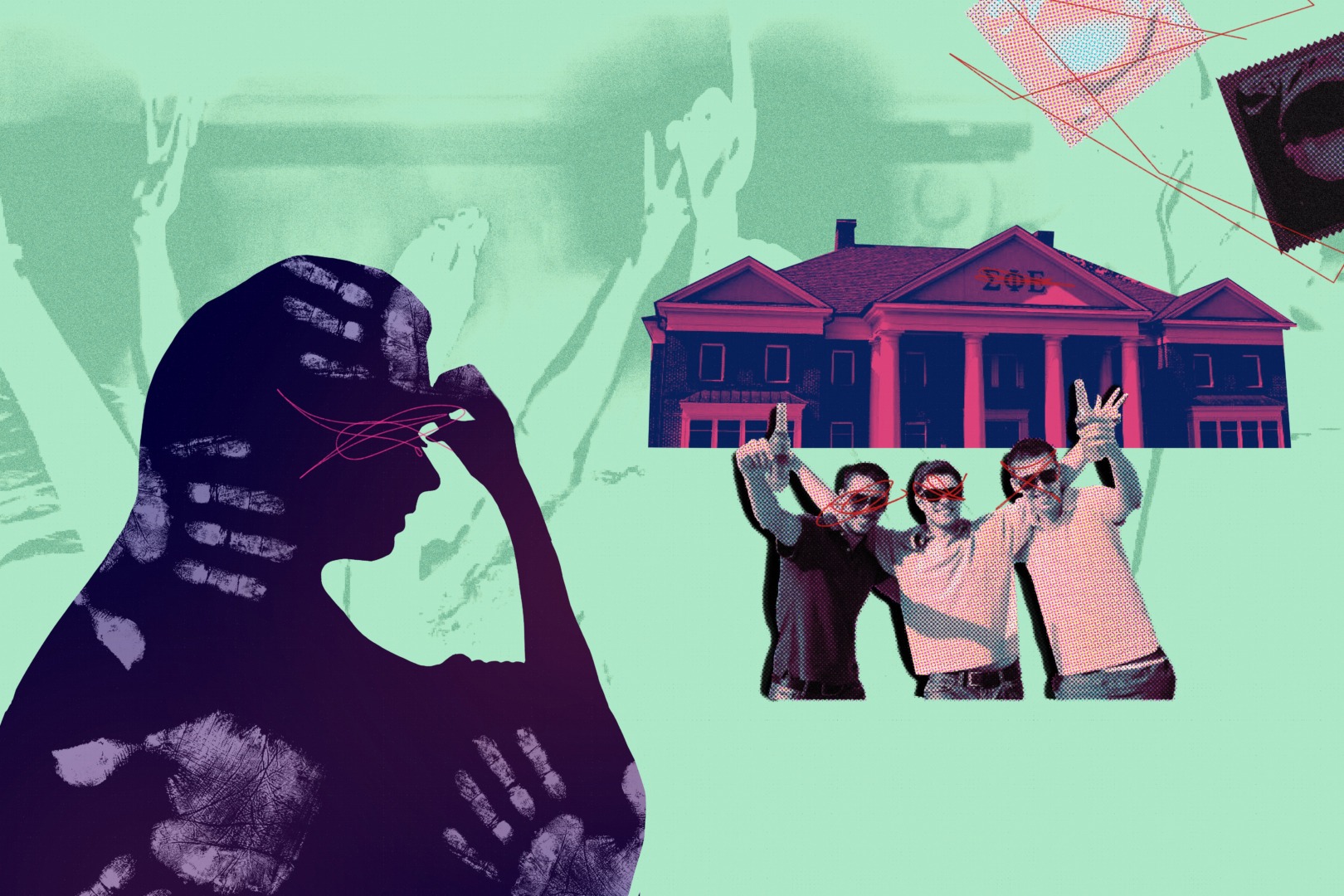
Last month, a former Cornell University student filed a lawsuit against the school, alleging that she was drugged and raped by seven members of the Chi Pi fraternity over a period of several hours in October of 2024. 

Following the assault, the unnamed ‘Jane Doe’ withdrew from Cornell; two of the involved men were expelled and the other five were suspended and allegedly offered the opportunity to mitigate punishment by writing essays. 

Sexual assault on college campuses

Though this incident has been covered extensively by the media, it’s essential to remember that rape and sexual assault of college students, especially female students, have been glossed over for decades as a typical feature of “Greek life.”

One in 5 women and one in 16 men experience some form of sexual assault in college. 

Research has found that men belonging to fraternities show a 62% higher likelihood of sexual aggression during their first two years after joining.

The commonality of sexual violence on college campuses has led to it being decriminalized. 

These cases are taken lightly in the hope of protecting the futures of perpetrators who “made a mistake.”Despite the existence of campus sexual assault task forces, rapists who happen to be college students often avoid legal repercussions for their actions. This further reinforces the idea that they can do as they wish with little consequence.

Women deserve better

Women are told their entire lives how they can avoid being sexually assaulted: how to defend themselves, who to surround themselves with and what to wear. This places the burden of sexual violence on them for not taking measures to prevent it. Meanwhile, this responsibility is seldom placed on the perpetrator and victims suffer the emotional and physical brunt of it.

One of the men in the Cornell case allegedly sent a message in the fraternity’s group chat, suggesting that a woman was available for sex, advertising “free p*ssy”. Another member replied later that night asking, “Shop still open?”

When these men looked at Jane Doe, they did not see a human being; they saw an object for their own pleasure and amusement. Taking something that does not belong to you does not make it “free.” 

As a female college student, I am afraid for myself. I am afraid for my friends. I am afraid for every woman out there who has ever been or sadly will ever be sexually assaulted — and there will be more. 

Interacting with Greek life no longer feels like a release from everyday stress and pressure, but a constant reminder of the risk of sexual violence and the dangers we could face while simply trying to enjoy the college experience. Every interaction, every passerby that strikes up a conversation feels like it could take a turn for the worse at any moment. 

Jane Doe’s bravery leaves an impact

As this story gets attention on social media, it is important to remember that the only reason this has gained so much traction is that the case was reopened two years later. 

The bravery and perseverance of Jane Doe and student journalists at the Cornell Sun have led to the exposure of the neglect of sexual assault victims in college.

There are millions of college students, including women, who have suffered at the hands of perpetrators of sexual violence. Their stories have not been told, nor have they received justice for the trauma they’ve endured.  

Universities need to do better to proactively stop acts of violence like these and monitor the behavior of Greek organizations more closely. There is no point to a task force that protects the lives of the guilty and disregards that of the innocent. 

Colleges need to stop protecting the futures of men who have destroyed the futures of women. 

As The Cornell Sun said best, “To Matthew Ingalls, Jonathan Newell, Winston Lee, Gillio Lopes, Diego Sarabia, Scott Norris and Scott Kretzschmar: We know who you are and we refuse to let you benefit from this university’s concealment.”

opinion@thedailycougar

—
“Universities fail women: Sexual assault victims deserve justice” was originally posted on The Cougar

Posted in UncategorizedComments Off on Universities fail women: Sexual assault victims deserve justice