
Author Archives | Published From FLOW

Q&A with Ward 2 City Council candidates Robin Wonsley, Michael Baskins

Ward 2 write-in candidate Michael Baskins is running against incumbent council member Robin Wonsley in the upcoming Nov. 7 elections. 

Ward 2 covers Marcy-Holmes, Prospect Park, Como, Cedar-Riverside and the University of Minnesota campus. Wonsley has been the Ward 2 council member and has run unopposed since 2021.

Wonsley is Minneapolis’s first Black Democratic socialist council member and has contributed to blocking the relocation of the 3rd Precinct police station and led discussions on police accountability and reform. 

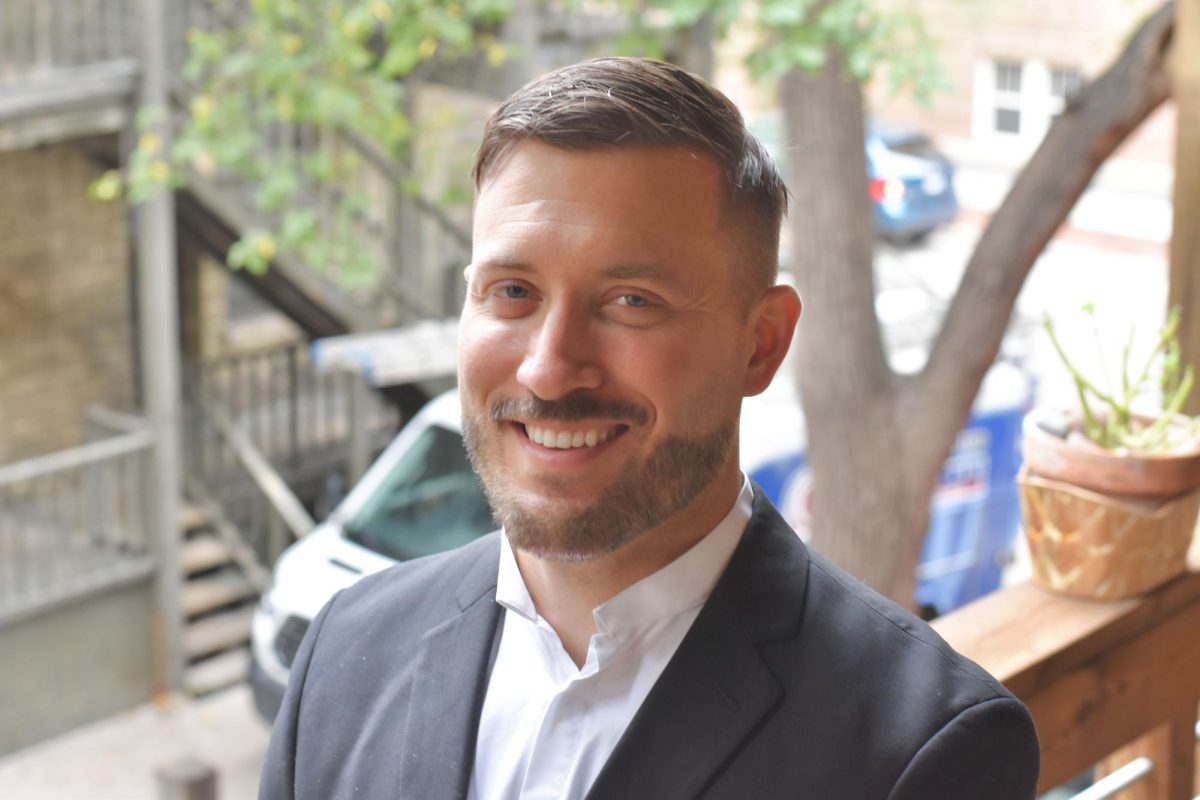
Baskins began his campaign as a challenger to Wonsley in September and said he wanted to provide an alternative choice for Ward 2 residents. Baskins said he cares about all sides of policy-making and wants to focus on improving Minneapolis’ job opportunities, housing and public safety. 

Wonsley and Baskins sat down with the Minnesota Daily for a Q&A to learn more about their campaign’s priorities. 

Minnesota Daily: Ward 2 covers student residents such as the University of Minnesota and Augsburg University. How would you ensure student voices are heard and give authority to their concerns? 

Michael Baskins: “I think the best way to do that is to have regular consultations with some of the most connected student groups in the University, the student government, the paper, the student council. I would work on a regular basis, on a monthly basis to communicate with each of those groups on what they’re hearing from the students on what the student issues are on the ground and certainly make their voices heard at the City Council level.

“It needs to happen every year to the students to let them know who their representative is because every year the students change. I think that’s one of the biggest challenges of campus is that it’s really hard to get every successive group of students to know who you are and to know who to contact you, but that would be built into my sort of marketing plan for each year.”

Robin Wonsley: “There are still lots of things to learn, but I’m so proud of my office for the outreach we’ve done both at the University of Minnesota and Augsburg University to build relationships with student leaders and campus organizations, to set up regular meetings with those students to hear about what concerns are at the top of their minds and be on campus and off campus. Oftentimes or throughout my term, I’ve been on campus, at minimum, at least once or twice a week to just hear from students. We’ve also worked with professors. I’ve spent lots of time partnering with classes. 

“We were able to also work with the students who were impacted by the Identity fiasco to now bring forward an ordinance that will make sure that no student going forward or renter will be stuck in a pre-lease agreement without some way of seeking recourse. It’s through collaboration like that that we’re even able to bring rental rights policies that are reflective of a lot of the issues that student renters are experiencing.”

Daily: Minneapolis has a long history of controversies with policing, concerns of lack of accountability and the federal and state consent decrees with the Minneapolis Police Department. What do you want to change within Minneapolis policing? 

Baskins: “I think it’s really important that we rebuild trust by communicating with the community what these consent decrees look like, what visibility and oversight power we have as the council, and then make sure that we are communicating what we’re learning in real-time to the community, essentially. I genuinely want to work with the police department on how we can support them in getting officers hired quicker and preventing the attrition of officers that they currently have. 

“I think that the Violence Interrupter Program is an excellent idea where they’re sending social workers to mental health crisis calls, and I support that and I would continue funding that. But I would make sure and audit it, make sure that it’s working collaboratively between the police and that both sides are communicating well.” 

Wonsley: “We’re super excited to really dig into this next police contract to make sure that it does have stronger provisions around discipline, around reforms and also removing language that might be harmful for residents. I also am proud of the work that we’ve done to foster transparency around it. My office led getting the contract released to the public last year, that had never happened before. Our conversations then prompted community listening sessions last summer, again, something that had never happened before. 

“One of my biggest priorities has been public safety beyond policing. Even our officers know that the model of overreliance on just law enforcement is not sustainable for them and it does not work for our constituents. Our BCR program, which is our mental health response 9-1-1 dispatch service, has been the clearest indicator of, you know, investing in public safety beyond policing actually works. Our officers love that program because they recognize that themselves, they are not qualified mental health experts and they were excited as well as our residents.” 

Daily: Ensuring affordable housing and rent control has been a recent concern for Minneapolis residents; how would you help ensure affordable housing is accessible to the public? 

Baskins: “Rent control that is a 3% cap on the rate on rent hikes per year would be the most, you know, extreme in the country. We’ve seen through studies that rent control does, and I’ll just say this again, that rent control does limit the construction of new housing, diminishes the quality of housing because landlords don’t put money back into it. 

“Instead of that, I would do targeted investment in low-income housing. That’s what we’re doing right now, and I think that it’s working fantastically. There’s countless articles that you can read about Minneapolis as a true leader in affordable housing.”

Wonsley: “Our office has been a major champion in calling for increased investments in public housing, and just this year alone we were able to work with our state-wide leaders as well as other local leaders like the board of estimates and taxation president to raise an unprecedented ten million dollar allocation to the Minneapolis public housing authority. That also resulted in an annual public housing levy being restored that will automatically assure five million dollars for public housing every single year.

“I’m super excited to work with my colleagues to advance a humane response policy. It’s very clear the whack-a-mole approach that we’ve been utilizing and dealing with our growing unhoused community is not working. We will evict an encampment and then you’ll see multiple encampments pop up nearly a few hours later and then we’re back in the same cycle. This is why we know that we have to do things that ensure the increase, or the expansion of actual affordable housing.”

Daily: How would you support small businesses in Minneapolis? 

Baskins: “I would listen to the needs of small businesses in the corridor and understand what their particular challenges are because they’re not all the same. One example is there was a desire to remove parking on Hennepin Avenue and I’ve mentioned this on my website. The small businesses were very concerned, sort of unanimously, that they would lose a large percentage of their business. It’s very hard to find parking, of course, as you know, in that area of the city, and if there’s no street parking, it’s going to dramatically affect those small businesses.

“A more general policy on how to support small businesses. Well, first of all, public safety is a big thing, right? So a lot of small businesses are very, sort of have been, very affected by sort of less safe neighborhoods. I certainly would direct the law enforcement public safety officers to ensure the protection in those areas.”

Wonsley: “I’m very proud of my colleague Jeremiah Ellison, who was able to get a substantial increase in funding for that program because it’s been super successful and we need more initiatives like that. Also with the rent control policy, I think we absolutely, as I mentioned within and regards to the commercial space in that being costly, with us moving into our new development model where, you know, we have the baseline of these structures being related to commercial space that are super costly, I do think we need to be looking at what our protections that we can also be leveraging to support leasers of commercial spaces.

“I’m a staunch worker advocate, pro-union all day every day. I cut my teeth and politics by working on the 15 minimum wage campaign and I’ve worked for unions, our teachers’ unions since then. I understand that you cannot have any type of business or you can’t be a leader in any industry without having workers. You have to have workers and that means those workers need to be also taken care of. They need to be paid beyond a livable wage. They need to be provided benefits like health care so that they’re not having to work multiple jobs in order to take care of those things or go without those particular needs. Anything that we can also do to make sure that workers are getting the pay and rights that they deserve is also crucially important.”

This interview has been edited for clarity and length.

Posted in UncategorizedComments Off on Q&A with Ward 2 City Council candidates Robin Wonsley, Michael Baskins

Minnesota defense gives up last-minute touchdown in loss to Illinois

Minnesota fell in the final minute to Illinois on a touchdown pass to receiver Isaiah Williams from quarterback John Paddock, dropping to 5-4 on the season, with a final score of 26-27.

Minnesota saw the return of Zach Evans to the backfield, but Darius Taylor missed his third game out of the last four. True freshman offensive lineman Greg Johnson made his second career start in the absence of Tyler Cooper for the second straight week.

Illinois Head Coach Bret Bielema went into the game 9-0 against the Gophers, including seven wins as the head coach of Wisconsin.

Gophers running back Sean Tyler fielded the opening kickoff and fumbled for the fourth time this season. The ball was recovered by Illinois at the 20-yard line.

Three plays later, Illinois quarterback Luke Altmyer hit tight end Tip Reiman over the middle for a 15-yard touchdown, making it 7-0 Illini.

Redshirt sophomore running back Jordan Nubin got the first two offensive touches for the Gophers and took them for 11 yards. Gophers quarterback Athan Kaliakmanis hit Corey Crooms Jr. for a 10-yard gain for consecutive first downs.

Kaliakmanis hit his go-to receiver, Daniel Jackson, on a back-shoulder fade for 24 yards. The following play, receiver Elijah Spencer torched man coverage across the field for a 15-yard touchdown reception, his first as a Gopher.

Altmyer and the Illini put together a long 14-play, 75-yard drive ending in a touchdown pass to a wide-open Williams. The touchdown reclaimed Illinois’ lead with the score of 14-7.

Evans got a pitch for his first touch after missing last week and ran it for 12 yards and a first down. Gophers tight end Brevyn Spann-Ford made a great catch on a high throw from Kaliakmanis and picked up 20 yards.

At the end of the first quarter, Kaliakmanis was a perfect six-for-six for 80 yards and a touchdown.

Spann-Ford found room over the middle and got into a foot race before running over the defender into the end zone for a touchdown, tying the game 14-14.

On the next drive, Illinois missed the field goal and the Gophers offense reclaimed possession. Chris Autman-Bell got his second catch of the season, picking up a first down on a gain of 10 yards. This was followed by Nubin getting back-to-back carries for 11 yards and another first down.

Minnesota utilized the hottest play in football, the “brotherly shove,” to keep the drive alive on third-and-one as Kaliakmanis picked up the first down.

The Gophers ran it on third-and-nine and picked up four yards, making it fourth down. Head coach P.J. Fleck called a timeout before the play clock expired.

Fleck, during the postgame press conference, said the idea was to break off a run and pick up the first down.

“We thought when they were getting into a two-safety defense, I thought we were going to pop a run,” Fleck said. “We got sacked there, we’re out of field goal range … that wasn’t safe. That was more just we wanted to take the lead going into halftime.”

Kicker Dragan Kesich trotted out to attempt a field goal to put Minnesota ahead with one minute and 25 seconds left in the first half. Kesich drilled the 36-yard attempt, putting the Gophers up 17-14.

Kaliakmanis and Spann-Ford led the Gophers on offense at the end of the first half, connecting for 58 yards and a touchdown.

Gophers defensive lineman Jah Joyner opened the second half’s first drive with a strip sack on third-and-nine. The ball was recovered by Gophers’ Chris Collins at the Illinois 12-yard line.

Crooms Jr. dropped a touchdown on the first down. After a run on second down, Kaliakmanis was sacked. Minnesota spoiled an opportune field position but ended up settling for a field goal, adding to their lead and making it 20-14.

Illinois used running back Kaden Feagin on four straight plays, the first three being rushes for 21 yards, and the last concluding the drive on a 54-yard receiving touchdown. Illinois’ extra point was good, pushing them past the Gophers with a score of 21-20 with just over 10 minutes left in the third quarter. The catch marked Feagin’s first career receiving touchdown and his third touchdown of the season.

Altmyer picked apart the Gophers secondary on Saturday, going 17-for-22 (77%) for 181 yards and three touchdown passes.

Kaliakmanis concluded the next offensive drive by bouncing a pass to Crooms Jr. and taking a sack on third down, forcing a punt on fourth-and-22. Mark Crawford’s punt went 49 yards and was downed at the Illinois 21-yard line.

The Gophers ended the third quarter going three-and-out after a personal foul on Illinois, making it the fifth straight drive between the two teams ending in a punt.

Gophers defensive linemen Kyler Baugh and Jalen Logan-Redding combined for a sack on third-and-eight. Minnesota took over at their own 31-yard line after a 37-yard punt by Illinois punter Hugh Robertson.

Nubin picked up nine yards on two carries, making it third-and-one. On third down, Nubin was dropped in the backfield after no one picked up the rush by backside backer Clayton Bush, resulting in a loss of two yards and a punt from Minnesota.

Illinois converted on a third-and-three across the middle of the field. As Williams went down, Gophers linebacker Cody Lindenberg punched the ball out and defensive back Justin Walley recovered.

Kaliakmanis dropped a perfect over-the-shoulder pass into the hands of Jackson in the end zone for a 31-yard touchdown. The Gophers attempted a two-point conversion but failed, keeping the score at 26-21.

Minnesota’s ballhawk, defensive back Tyler Nubin, intercepted Altmyer’s pass over the middle, and the Gophers got the ball back with four minutes left in the game. The interception marked his 12th career interception as a Gopher, tying the program record set by Sean Lumpkin and Jeff Wright.

The Gophers’ offense went three-and-out, forcing Illinois to take two timeouts before they punted it back to the Illini.

Gophers defender Anthony Smith’s strip sack on third-and-11 was recovered by Illinois at the line of scrimmage. On fourth-and-11, John Paddock, Illinois backup quarterback, found Williams for a gain of 22 yards.

On the next play, Paddock found receiver Pat Bryant for 17 yards and a second-consecutive first down into Minnesota territory.

Williams streaked down the middle, wide-open behind the Gopher defense and hauled in a 46-yard touchdown from Paddock. After a failed two-point conversion attempt, the Gophers trailed 27-26 with 50 seconds left.

Tyler Nubin, during the postgame press conference, said the game-winning touchdown happened due to miscommunication.

“Just miscommunication, that’s something that was something that happened multiple times in that game,” Nubin said. “That’s not us. When we’re not communicating, we’re not our best.”

Nubin also attributed miscommunication to the first two touchdowns where, on two separate plays, Illinois had a wide-open receiver in the end zone.

Minnesota did nothing on offense and could not convert on fourth down, leading to Illinois kneeling out the clock to end the game.

Kaliakmanis, during the postgame press conference, said it is up to the players to execute, and they fell short of that on Saturday.

“It really does all come down to execution as players,” Kaliakmanis said. “It’s a player’s game. We have to execute when we get the chance to execute.”

The Gophers lost their 10th straight game against Bret Bielema and still have not beaten him in his time as a head coach.

After the day started with Wisconsin and Nebraska losing, opening up the Big Ten West, the Gophers lost and the Hawkeyes won. Iowa now holds the prime position as leader of the division while Minnesota falls to 5-4 on the season and 3-3 in conference play.

Posted in UncategorizedComments Off on Minnesota defense gives up last-minute touchdown in loss to Illinois

UMN faculty use social capital to measure food insecurity among Somali Americans

As University of Minnesota researchers use in-person surveying to understand factors impacting food insecurity among Somali American communities, the University Campus Club cooks restaurant-level meals for college students experiencing food insecurity. 

A recent University of Minnesota research study found food insecurity in the upper-Midwestern Somali American community was almost double the national average.

Harshada Karnik, researcher at the Center for Public Health Systems, said organizations like the Department of Agriculture (USDA) study food insecurity. Food insecurity affects nearly 11% to 12% of the national population. 

“On a national level, the USDA does a good job of tracking where food insecurity is,” Karnik said. “But, if you look at the Somali American community in Minnesota, which is one of our biggest immigrant communities, we don’t have any data and that drove me to drill deeper.”

Karnik collected data from St. Cloud, Rochester, Mankato, Moorhead, East Grand Forks in Minnesota and Fargo and Grand Forks in North Dakota, Omaha in Nebraska and Des Moines in Iowa. It was common for members of the community to utilize their social network to make getting food possible, Karnik said.

For example, some people ask their neighbors for rides to local food shelves, advice on where to get food and babysitting help for when they go grocery shopping, Karnik added. 

Karnik worked with community members to remove the language barrier, conducting surveys in English in English-learning classes and mosques, Karnik said.

“It’s a new community in the country, so it’s very important to form those relationships by working closely with community leaders to ensure participation in the study,” Karnik said. 

Hikaru Peterson, Karnik’s mentor, said she hopes this research process will help identify new efforts in the community. 

“It could be an upstream of the supply chain, allowing community members to have the ability to grow their own land,” Peterson said. “Or maybe raise their own livestock so that they can have more of their culturally based food source.” 

The Campus Club at the University has been fighting food insecurity since 2020, partnering with the Kitchen Coalition, Swipe Out Hunger and Second Harvest Heartland to make restaurant-quality meals with donated food and serve food-insecure college students on campus.

Campus Club Executive Chef Beth Jones said since this effort was started, the club has provided more than 90,000 meals just to University students. 

Every Thursday at 3 p.m. on the first floor of Coffman Union, meals are given to students in need with no questions asked about income or financial need, making it a destigmatizing process, Jones said. 

There are usually 400 meals served from the Campus Club and those meals are typically gone in less than 30 minutes, according to Jones. There are vegan, gluten-free, vegetarian and allergen-free options. 

“I had this false impression that if a student graduates from high school and they get into college, they’re on the right track,” Jones said. “We don’t think about all those bumps along the road that can really throw people off, and hunger is just such a huge problem throughout this country and on campuses.”

This article has been updated.

Correction: The original version of this article misstated how the language barrier was lowered. Karnik partnered her survey with community members.

Clarification: The study was conducted by the University of Minnesota, not the Center for Public Health System.

Posted in UncategorizedComments Off on UMN faculty use social capital to measure food insecurity among Somali Americans

Opinion: Dinkytown’s Target is expensive because it can be

Theft at the Dinkytown Target is at an all-time high, only the victim here is not who their public relations team would have you believe. Students are being robbed down every aisle. The syndicate operates widely across the Twin Cities, artificially inflating the cost of goods in vulnerable communities to maximize revenue.

Avoiding their shakedown is nearly impossible. The few grocers within close proximity to the University are, for lack of a better term, ungodly expensive — but not because they have to be.

“Dynamic pricing” is a staple in the arsenal of corporate greed. This refers to retailers adjusting prices based on a store’s location, the time of day, an item’s projected profit over time or, based on my research, literally anything else.

What we have here is a classic example of economists translating predatory capitalism into jargon that is meant to excuse the immorality of their behavior. It isn’t price gouging, see. It’s dynamic! What’s not to love about that?

“If you live close by, there’s really no other option,” said Ciara Allen, a psychology major at the University of Minnesota. “I’ve noticed that the price of Advil and other stuff you would need is inflated, even compared to other Targets.”

Advil prices at the Quarry Target versus the Dinkytown Target.
Image by Kelly Rogers

She’s right. An identical bottle of Advil at the Dinkytown Target is a full $1.50 more than it is at the Target in the Quarry Shopping Center just two miles down the road. The only difference is that a student would need to take some kind of transportation to access the latter.

I’ve stopped in at the Dinkytown Target countless times to grab some items while trudging home after a long day of studying, too exhausted to wonder why my total was so high. But that’s probably what they hope for.

I reached out to Target for comment on the matter and, after an initial phone conversation with a company spokesperson, they provided this statement via email:

“Target’s goal is to be competitively priced in each market. Competitive pricing is based on the retail environment for each individual community, and in trade areas with more than one Target store, it is possible that Target’s prices on selected items may vary from one Target store to the next,” the statement said.

They assert that a Target in a food desert “may” be more expensive. I don’t buy it.

Unless the competition is “how much money can we squeeze out of this cornered market,” there’s nothing competitive about this pricing. A lack of competition is exactly why they can operate in this way. Kare11 investigated discrepancies in Target’s pricing in 2019, and even though they’ve supposedly moved away from that strategy, its basic function has stayed the same.

This scheme can only be described as hostile. While Target is certainly not the only offender, options near the University are practically nonexistent.

In the last few months, we’ve seen the consequences of unregulated capitalism take hold of our campus community. Every major expense that a student could possibly incur — groceries, rent or tuition — has been pushed to extremes that have not been seen before in human history. Something’s gotta give.

Being a student in this world is undignified. Cruel, even. You’re a cash cow for freakshow corporate vampires while simultaneously being as broke as you might ever be.

There’s nothing more insulting than being nickel-and-dimed from all sides, and we should not get used to it.

Posted in UncategorizedComments Off on Opinion: Dinkytown’s Target is expensive because it can be

Early voting pop-up event aims to improve voting accessibility

Minneapolis voters visited the University of Minnesota’s Weisman Art Museum on Halloween to vote in an early voting pop-up event ahead of the Nov. 7 election next Tuesday.

The event aimed to make voting more accessible to University students and the greater Minneapolis community. It was a collaboration between the University’s Undergraduate Student Government (USG), the Secretary of State’s office and the City of Minneapolis’ election team.

Katie Smithberg, USG’s Government and Legislative Affairs (GLA) local government coordinator, said the event was made possible by several new Minnesota state laws, which took effect in July, that provide greater flexibility on when and where Minnesotans can vote.

The new laws included expanding the right to be absent from work to vote anytime during the absentee voting period, extending the deadline for all absentee and mail-in ballots and allowing voters to sign in electronically, according to the Minnesota Secretary of State, Steve Simon.

Young voters are statistically less likely to vote, Smithberg said. With this year’s ballot featuring less-publicized local elections like those for city officers, school board members, township officers and other local ballot questions, this low turnout is particularly relevant.

Abigail Boettcher, a University student who came in to vote, said voting in local elections is a great opportunity for young voters to learn how the voting process works.

“When it comes time to vote in bigger elections, then you know what you’re doing,” Boettcher said. “You’re not confused and you also know how to register.”

Smithberg said event organizers wanted the pop-up event to serve as an easily accessible opportunity for students to get out and vote. GLA diligently promoted the event across its social media and spread awareness through word of mouth, according to Smithberg.

In the event students missed the social media campaign, Smithberg said organizers hoped people passing by would see the “Vote Here” signs outside Weisman and stop in to cast a ballot, even if they did not know there was an election.

Smithberg added the voting site’s convenience is specifically aimed at busy students.

“Many students have class all day, and then they have student groups or have jobs,” Smithberg said. “Having the opportunity for voting to be efficient, quick and right there is what students need.”

Volunteer Shae Horning said it is important to encourage people to vote, particularly in smaller elections.

“Local elections are so important,” Horning said. “The work that they do really impacts people’s everyday lives more than a lot of people I think realize.”

During last year’s elections, GLA helped organize Party to the Polls, an initiative offering University students free transportation to an early voting site in Minneapolis.

Smithberg said providing transportation was incredibly helpful to student voters, but students still found it difficult to find time in their days to make the trip off campus.

With this year’s early voting pop-up, Smithberg and other organizers wanted to provide student voters with a close and easily-accessible voting site, which they hoped would increase voter turnout.

Smithberg said the pop-up event was the latest in a series of GLA-sponsored events aimed to increase student voter turnout.

Voter Palooza, a collaborative effort between GLA and the Undergraduate Political Science Association (UPSA), was an event held before voter registration closed. At the event, Smithberg said GLA and UPSA members, as well as city election officials, were there to help students register to vote and answer general questions about the election.

Smithberg said this pop-up event was an opportunity to prove the effectiveness of having an on-campus voting site. If successful, GLA hopes to continue the event and move forward with improving voting accessibility.

“This isn’t the last of our efforts,” Smithberg said. We’re going to keep moving forward and create different opportunities to get people excited to vote.”

Posted in UncategorizedComments Off on Early voting pop-up event aims to improve voting accessibility

RecWell projected to break record attendance in 2023

The University Recreation and Wellness Center (RecWell) has seen strong student attendance this past year, with many interacting in the gym community.

After the RecWell closed for the COVID-19 pandemic, it has been slowly gaining back attendance, with this year projecting numbers similar to pre-pandemic levels.

Cody Mikl, assistant director for facilities at the RecWell, said student use is the strongest it has been since the build of the original recreation center in 1993, with over 7,000 validated scanned entries in a day.

Students tend to engage at least two to three times a week at the RecWell, said George Brown, the director of the RecWell and assistant vice-provost for Student Affairs.

Pre-pandemic attendance numbers showed 85% of the weekly traffic were students and the other 15% were non-students, including faculty, staff and alumni. Now, over 90% of the RecWell’s traffic is students, according to Brown.

“[Non-students] are not trafficking the rec center as much as they used to, but the students are more than making up for that,” Brown said.

According to public records, 868,802 cards were swiped into the RecWell during the 2018 calendar year by students. That number dropped to 376,452 swipes in 2020 during the COVID-19 pandemic but recovered to 815,528 in 2022. The number this year to date is 719,787.

For faculty, 38,163 cards were swiped in 2018 but that number has declined to 17,852 this calendar year.

There is also a difference in attendance throughout the school year, Mikl said, as the numbers tend to melt or taper through the fall semester and into winter break. The start of spring semester shows the highest attendance rate.

“It’s really cold in Minnesota in mid-late January, and our use is the highest throughout the year during that time,” Mikl said.

While the cold and rain might affect attendance, Mikl said he believes that is not the main impact. Students tend to lose energy throughout the semester as they work on all the things they need to get done.

Brown said he believes attendance is high because, as the single largest employer of students on campus, there is a lot of word of mouth and understanding of all the opportunities presented at the RecWell.

“What we see emerge really notably during and since the pandemic is what we call the ‘social well-being,’ the idea of congregating and being with others, particularly students,” Brown said.

Some students also tend to feel intimidated by the RecWell, though, according to Brown.

“That is a real concern,” Brown said. “We’ve heard that from students when we’ve surveyed is ‘it’s overwhelming, it’s intimidating, I don’t know how to use the equipment, I don’t know where to start.’”

According to Brown, there are mechanisms in place to help students overcome that intimidation. He said he encourages students to visit the RecWell website, where they can walk through many of the things offered, along with watching the Rec’s traffic meter showing how busy it is.

Mikl said there is something for everyone. Students can be social and talk with friends or go to the other parts of the facilities where privacy can be found.

“You can find a space that suits your speed, your style, your vibe,” Mikl said.

Brown recommends asking questions and for assistance and not being afraid to acknowledge the fact that students may not know where to start. He added the workers are there to help you navigate that challenge.

Students say social media has motivated them to workout

Liam Wright is a third-year student who goes to the RecWell around three to four times a week. One thing Wright said he has noticed is the increase in fitness content online.

“When I started over the pandemic, there were like a couple people that were big on Instagram for guys, and then a couple informational YouTube videos on how to workout,” Wright said. “Now, it’s really exploded.”

According to Wright, this increase has had a big effect because the less niche and more mainstream something is, the more people try it out and will get involved.

Mallory Nelson is a third-year student who goes to the RecWell to workout five days a week. She said she has noticed the RecWell is really busy at the start of each semester, but then it dissipates. Over break, she finds the gym is dead.

Nelson said she has seen an impact of social media on the gym and especially on females.

“I honestly think that TikTok and Instagram have made more girls want to lift and workout,” Nelson said. “I saw a change in attitudes towards lifting in social media.”

According to Nelson, it is important to not worry about how intimidating the gym seems as everyone is just there to workout.

“The biggest thing I hear is people are like, ‘The Rec is so busy, it’s so intimidating’ but no one gives a f—,” Nelson said.

Samuel Angell is a second-year student who lifts at the RecWell around five to six times a week. He said he usually sees the same people at the gym, but as it has gotten colder, a lot fewer people go to the gym.

Angell added the good thing about the RecWell is you can do anything at your own intensity. While it might be intimidating, he encourages students and participants to not worry about others and just do it.

“There’s not a ton of pressure or anything to be lifting certain weights or working out intensely or anything,” Angell said. “Everyone is just kind of doing their own thing.”

Brown said he has observed University students being extremely respectful of one another when they come into the spaces.

“I think there’s a spirit of cooperation that Minnesota students have and I applaud that,” Brown said. “That makes the experience at RecWell less negative or foreboding or intimidating because when you come in you feel like you’re among people who are going to accept you.”

Brown and Mikl encourage students to try the RecWell and use all of the resources available.

“This is yours, please explore it,” Mikl said. “We are literally here to serve you.”

Posted in UncategorizedComments Off on RecWell projected to break record attendance in 2023

Gophers goalie Justen Close and his impact as team’s defensive anchor

Goaltenders are the backbone of a hockey team and a large part of a team’s performance is dependent on how they play.

Justen Close, a graduate goalie for the Gophers, is no stranger to putting up stellar performances to shut the opponent down. Earlier this season, Close recorded two consecutive shutouts against St. Thomas and North Dakota.

Two years earlier however, Close had not yet earned his position as the starting goalie.

Brennan Poderzay, an assistant and goaltending coach for the Gophers, was in his first year with the team when Close took the starting role. He said there was no thought of Close playing a game while former starting goalie Jack LaFontaine was on the team.

Initially the backup goaltender for the first two seasons of his collegiate career, Close claimed the starting position for the 2021-22 season. Midway through the season, then-fifth-year LaFontaine signed a professional contract and moved on from the Gophers.

On Jan. 14, 2022, Close started his first game in goal for the Gophers and won, making 14 saves in the process. Ever since, Close has been the starting goalie for Minnesota.

The Gophers are coming off a three-game losing streak heading into their Friday night matchup against Minnesota Duluth.

Head Coach Bob Motzko said the Gophers’ losing skid has not rattled Close.

“He never changes,” Motzko said. “I don’t even know if he thinks he lost.”

According to Poderzay, Close’s maturity helps him decipher the difference between a good win and a bad loss. Poderzay said a large part of Close’s progress through the years is that he has become a leader for the team.

“He’s taken the role of being a captain without wearing a letter,” Poderzay said. “When he speaks, everybody listens.”

Playing his game

Poderzay compared Close’s goaltending to that of NHL goalie Alex Stalock. Poderzay said Stalock, who was formerly a player for University of Minnesota-Duluth in the late 2000s, is similar to Close because of their puck-handling skills.

Close, however, does not have a distinct goaltending style, according to Poderzay.

“There’s not a one size fits all goaltending structure in Justen’s game,” he said. “He’s extremely intelligent and he’s athletic.”

Close, compared to other goalies, is relatively smaller in stature, standing at 5-foot-10-inches tall. Poderzay said there used to be a stigma around “shorter” goalies; they used to have to be upward of 6-foot-3-inches to have successful professional careers.

Now, Poderzay said this stigma has been somewhat erased and there is more appreciation for the fundamentals of being able to stop the puck. He added smaller goalies have an insatiable desire to be students of the game.

“They’re more often than not extremely athletic,” Poderzay said. “If you can have a brain behind that athleticism, it makes stopping the puck a whole lot easier, no matter what size you are.”

Close’s athletic capability allows him to make timely saves like his incredible post-to-post save early on in the Gophers game versus Wisconsin last Friday.

These timely saves can help the team hold onto a tight lead late in the game. Although the Gophers lost the game to the Badgers, saves from Close kept his team within one goal for most of the game.

Jaxon Nelson, a graduate forward for the Gophers, said none of the three recent losses were Close’s fault.

“He always gives us the best shot to win,” Nelson said.

As an individual off of the ice

Poderzay said Close is a wise and mature individual. Despite being older than Close, Poderzay said there were times when he felt immature when talking to Close.

“You feel like you’re talking to your grandfather as opposed to a 25-year-old,” Poderzay said.

Nelson said Close always owns up to his mistakes and never blames anyone for anything.

There is one geographical difference between Close and his teammates. Close, a native of Kindersley, Saskatchewan, Canada, is one of two members of the Gophers not from Minnesota.

“I guess I’m used to it by now,” Close said jokingly about being one of two non-Minnesotans.

Poderzay said his time as a player and coach has allowed him to meet some other individuals from Saskatchewan.

“The guys from Saskatchewan hold a special place in your heart,” Poderzay said. “They’re the guys that you always enjoy catching up with.”

Close’s goalie partner, Nathan Airey, is from Cochrane, Alberta, Canada, making him the only other Gopher from Canada.

“It is good to have another Canadian around the locker room, for sure,” Close said.

Poderzay said Airey was recently cleared from injury to return for a full week of practice.

“I think there will be a lot of stories about [Airey] in the future,” Poderzay said. “I think that he has all the makings to be an incredibly special goaltender at this level.”

Airey is yet to debut in a game for the Gophers this season. Sophomore goaltender Zach Wiese played in the Gophers exhibition win versus Bemidji State but has not played in a regular season game.

Close is expected to continue his graduate campaign on Friday night when Minnesota hosts Minnesota Duluth at 3M Arena at Mariucci.

Correction: The initial version spelled Close’s name wrong. It is spelled Justen Close.

Posted in UncategorizedComments Off on Gophers goalie Justen Close and his impact as team’s defensive anchor

The state of podcasts: say what you want and listen when you want

Over the last decade, podcast listening has increased across all ages.

According to research done by the Pew Research Center, the percentage of people listening to podcasts has increased from 12% in 2013 to 42% in 2023.

With the increase in podcast listening, there has also been an uptick in podcasts being produced. The streaming platform Spotify has five million podcast titles.

University of Minnesota students, Sasha Kozachok and Taylor Effertz, have noticed the increase in podcasts.

Effertz knows numerous people who created a podcast for an assignment, for a club they are part of, or for fun.

People’s ability to create podcasts is easier than other forms of media because there is a low barrier to entering the podcasting world. Applications, such as Anchor, allow people to record podcasts wherever they are and upload them to platforms, such as Spotify.

Even Spotify has recently added features to make podcasting through Spotify better for both beginners and people who already have their podcasts started. These new features allow podcasters to customize their podcast page, get inside information on their analytics and explore more ways to get monetized.

Adjunct Professor Sarah Lemanczyk, who teaches classes on podcasting and multimedia journalism, has noticed an increase in the number of podcasts being created but not an increase in who is making money off of these podcasts.

“There’s a lot more people doing [podcasts], a lot more people making money off of them, but only 5% are really making sustainable money,” Lemanczyk said.

Regardless of if people are making money off podcasts, many people still want to create them.

“I think people want to get their voices heard,” Kozachok said.

Effertz echoed that idea and said everyone wants to have a platform now.

On a larger scale, newsrooms don’t necessarily produce podcasts to make money. Lemanczyk explained The New York Times podcast, “The Daily,” makes money because it broadcasts on public radio stations.

However, The Washington Post’s podcasts don’t make money in the same way: they are getting their content out to a group of people who may not have been paying attention to it at first.

“It’s about getting your content in front of a different audience that’s not used to seeing it,” Lemanczyk said.

Lemanczyk added Generation Z is the newly-prominent demographic for podcasts and said she thinks this is due to the fact Gen Z doesn’t associate specific content with specific mediums. For example, Gen Z can watch movies, listen to music and read a book without switching devices.

For Lemanczyk, she listens to the radio on an actual radio, but this “audio on demand,” as she referred to it, is what Lemanczyk loves about podcasting. It is part of what Gen Z has grown up with.

“You’re used to having the content you want, when you want it, who wouldn’t want that?” Lemanczyk said.

While many podcasters struggle to make money, creators still want a platform to express their opinions. Podcasting is not a new medium, however, it is continuing to grow everyday.

Posted in UncategorizedComments Off on The state of podcasts: say what you want and listen when you want

Improv is more than “yes and …”

Improv is short for improvisation, and the idea behind improv acting is there is no script because the performers have to make it up as they go along. 

Some University of Minnesota students have found improv helps them off-stage as well. 

A well-known technique in improv is to say, “yes and …” The goal of the phrase is to keep the scene going.  

“The most important thing is the acceptance of whatever is going on,” said Robert Wichterman, a member of Minnesota Long Form Improv. 

Wichterman added the “yes and …” phrase allows a performer to accept what was added to the scene. 

Z Dillard, another member of the University’s long-form improv troupe said improv isn’t about the individual and instead involves working with a group of people to create a scene. If someone kills off a character in a scene, the other performers must go along with that idea. 

While improv can seem to be more applicable to people who want to perform in their future careers, it can provide people with skills they will always carry with them. 

“I feel like improv has improved the way I talk to people,” Wichterman said. 

Fellow improv member Ethan Barber said improv has made it easier for him to give presentations in class. 

“If I can do a [crappy] British accent in front of an auditorium of people, it’s just not as nerve-wracking to talk about stuff you know,” Barber said. 

Improv also helps people learn how to properly think on their feet. Barber said improv has helped him in job interviews. He can take a moment and let an idea come naturally instead of saying the first thing that comes to mind. 

For co-founder of Minneapolis’s Blackout Improv Comedy, Joy Dolo, improv has had a more personal benefit. Dolo spoke about how being an African-American person in the Midwest’s predominantly white comedy scene required her to find her unique improv voice.

“I feel like improv helped me to find confidence in myself, so that I knew that when I said something, people would listen,” Dolo said. 

Throughout interviews, many of the performers encouraged anyone who is thinking about trying improv to go for it because it can improve the interpersonal and presentation skills of those who participate. 

Posted in UncategorizedComments Off on Improv is more than “yes and …”

Minnesota’s offensive line prides themselves on physicality

The Minnesota Gophers have the most rushing attempts in the Big Ten with 339 and churn out 4.1 yards per carry. Minnesota’s offensive line is integral in producing those rushing stats, especially considering the decimation of their running back room due to several injuries.

Three different running backs have received Big Ten awards for their play behind this stout offensive line.

Head coach P.J. Fleck told the media Monday morning the offensive line played well, dominating the line of scrimmage.

“I was really impressed with [the offensive line]. I thought our two tackles played well and Nathan Boe played well,” Fleck said. “I’m talking about competitiveness, firing off the ball, nasty play. Love that.”

The mentality of the offensive line is stressed week in and week out by Fleck and offensive coordinator Greg Harbaugh Jr.

Harbaugh, during a press conference Wednesday afternoon, said this physicality is expected of the offensive line.

“It’s what’s expected of them, it’s what’s demanded of them, the mentality that we’re going to do whatever we can to win,” Harbaugh said. “Callahan instills in them everyday physicality, the how and execution.”

In the second half of the Michigan State game, the Gophers only attempted four passes, completing one of them for ten yards. The other 26 plays were rushes that accumulated 145 yards and two touchdowns leading to the 27-12 victory.

Joe Rossi, defensive coordinator and linebackers coach for the Gophers, told the media Wednesday afternoon having an offensive line like the one Minnesota has is a luxury to the defense.

“Whenever you’re able to run the ball as an offense, the defense likes that, so being able to control the clock, grind it out, control the chains, that’s the defense’s best friend,” Rossi said.

The strong offensive line play helped Minnesota hold the ball for over 36 minutes against the Spartans.

Rossi said having a strong offensive line helps sharpen the defensive line during training camp and spring ball.

Veterans Quinn Carroll and Aireontae Ersery are used to the grind of the offensive line. Freshman offensive lineman, Greg Johnson, got his first start against Michigan State with Tyler Cooper injured.

Harbaugh, told the media Wednesday afternoon Johnson is still learning the small details and improving.

“He’s going to be a great player, he is continuing to get better every single day, focused on those little small details … I couldn’t be more proud of the way he’s handled the situation,” Harbaugh said.

The Gophers’ offensive line led the rushing attack to 200 yards last week against the Spartans. Minnesota’s rushing identity was on full display as they rushed the ball 50 times compared to just 22 pass attempts.

For the first time this season, quarterback Athan Kaliakmanis hit 200 passing yards in a game. The Gophers quarterback went 13-for-18 for 190 yards and a touchdown in the first half.

Minnesota not only established they had three capable backs last week but also Kaliakmanis can get the ball to their playmakers in space and tight windows.

The Gophers get a great matchup against an Illinois defense that is third worst in the Big Ten at stopping the run. The Fighting Illini allow 161 yards per game on the ground and 4.2 yards per carry.

Those two stats show the potential for a promising week for Minnesota’s rushing attack which is coming off one of its best games of the season.

Freshmen running backs Darius Taylor and Zach Evans did not play against Michigan State. However, they have not been ruled out for Saturday’s game. A three-headed monster in Taylor, Evans and Jordan Nubin presents a nightmare for Illinois Defensive Coordinator Aaron Henry.

Minnesota will host Illinois at Huntington Bank Stadium at 2:30 p.m. on Fox. They are looking to become bowl-eligible for the fifth straight season without counting the COVID-19 year.

Posted in UncategorizedComments Off on Minnesota’s offensive line prides themselves on physicality