Author Archives | opiniondesk

Breaking down Trump’s inauguration speech

In the weeks leading up to the inauguration, everyone was ready to see what President Donald J. Trump was going to say in his first official speech as president.

It was very unclear what was going to happen during Trump’s speech at the annual transition of power. I was expecting a lot of “Make America Great Again” and some other jingoistic language that perpetuated the Trump campaign.

The speech came on a rainy day with an American people watching and wondering where the country will be heading under a new and very green president. It was nothing truly special; nothing new or important was said. Trump gave a pretty normal stump speech. However, it was a calmer and more refined Trump, which needed to happen.

As with all things to do with Trump, there was a good Trump and a bad Trump. But unlike what CNN thinks, this is not the most radical inauguration speech, ever.

Good Trump

“The forgotten men and women of our country will be forgotten no longer.”

Trump has a very good way of making blue-collar, manufacturing, small-town people feel very good. He did an excellent job of giving those people hope—something that was all but lost for the last 2 presidencies. Trump brings hope, and he is extraordinarily, almost unnaturally, good at that. Trump said, “America will start winning again. Winning like never before. We will bring back our jobs.”

That pretty much sums it up.

Populism was a big part of the speech, and not always in a bad way. A vast part of Trump’s campaign was the #DraintheSwamp rhetoric (which he hasn’t done a great job of with his cabinet picks). Trump, per usual, did a great job making the people feel like the politicians were leaving politics. Somewhat quoting Bane, Trump said, “we are transferring power from Washington, D.C., and giving it back to you, the people.”

That is what people like to hear. Trump’s inherently populist rhetoric connects with an audience. They want the government to let the reigns go a little bit. This was great on his part. It shunned “the establishment” and gave the little guys hope.

Bad Trump

“Protection will lead to great prosperity and strength.”

Trump, on this most important day, destroyed any thought and hope conservatives had for a conservative Trump presidency. He did not lay out a new government more focused on limiting its rights (looks like John Locke was correct), which conservatives have been hoping for during the last 12 or so years.

The worst part of the speech is when he began to indirectly talk about free trade. Free trade has been a conservative principle until this election, when half the country forgot what they had been voting in favor of for the past 200 years. Protectionism does not work—it just sounds really good if you’ve lost your job or encountered tough economic times (which is more than understandable). Trump, though, knows his audience and he did a good job of talking about protectionism.

Then, there was nationalism. Nationalism was everywhere in Trump’s inauguration speech. If an English teacher asked me to pick out what Trump’s theme was, it would be nationalism. It is not an inherently bad thing, and the nationalism in Trump’s speech was not all bad (protecting the country from terrorists). But it was mostly bad.

The “America First” lingo is the bad nationalism. Sure, it’s good to care about your country. If you didn’t bad things might happen, but that can go too far. When protectionism turns into isolationism thanks to nationalism, a country without allies that is purely reliant on itself is ultimately created. Like it or not, globalism is here, and to stray too far away at this point in its development would not end well for America. 

While we have to wait and see what really comes of a Trump presidency, we have a few indicators, some good and some bad. We know he will not be the conservative that many people wanted him to be; he’s not a conservative. It’ll be extremely interesting to see where the country heads. We do have Gen. Mattis, now, and that man is the hero America deserves.

Assistant opinion editor Jorden Smith is a political science and creative writing senior and can be reached at opinion@thedailycougar.com

—
“Breaking down Trump’s inauguration speech” was originally posted on The Daily Cougar

Posted in UncategorizedComments Off on Breaking down Trump’s inauguration speech

Guest column: The Fed plays a delicate and vital role


As a student of history, I’ve always enjoyed studying about the ancient explorers of old who set out upon oceans they did not understand. I often like to compare these voyages to the complicated economic systems we see today. Sometimes, the wind blew much too hard and pushed the voyage off course. At other times, the wind blew at just the right speed, providing a strong sense of direction. Sometimes, there was no wind whatsoever and all appeared stagnant. Worst of all were the storms that tossed things about without regard for those who might be affected.

Unlike these ancient explorers, who were largely at the mercy of mother nature, the winds of an economic system can be lightly and cautiously directed utilizing monetary policy.

Monetary policy is the process of adjusting the money supply in order to influence interest rates. When the money supply grows, interest rates fall and economic activity increases as it becomes cheaper to borrow money.

On the other hand, when the money supply falls, interest rates rise and economic activity decreases as it become more expensive to borrow money. The Federal Reserve is tasked with the job of adjusting the money supply in order to meet two fundamental goals:

1. To insure long-run price stability (also known as inflation)

2. To achieve full employment (implies an unemployment rate of around 4.7%)

These two goals counter one another. To achieve full employment, interest rates must fall in order to encourage economic growth. But economic growth eventually brings with it increasing amounts of inflation. Thus, these rules must be carefully balanced.

Gross Domestic Product (or GDP) is the total finished output within an economy. There are two ways to look at GDP – actual or potential. Potential GDP is the long-run average GDP growth over time. For the United States, this tends to trend nearly linearly upward.

On the other hand, actual GDP will fluctuate above and below potential – notice the large movement below potential following the Financial Crisis of 2008. When GDP moves strongly above potential the economy is expanding and when GDP moves strongly below potential the economy is contracting.

The Fed plays a delicate and vitally important role in balancing the two policy rules in order to lessen the fluctuations of actual GDP around that of potential GDP. This means taking action that keeps inflation on average constant through time while simultaneously providing incentives for economic growth or contraction. These goals are met by altering the money supply that in turn influences interest rates.

Without the Federal Reserve, there would be two significant consequences. First, fluctuations around potential GDP would be much larger and would happen much more frequently. The economy would eventually expand too quickly and would thus precipitate rapid economic diminution, then the cycle would happen all over again. Second, inflation would fluctuate quite a bit more.

Without any long-term “anchor” for price stability, firms and consumers would bid up (or bid down) prices and yet there would stand no central governing body to act bringing the market back into equilibrium. This would feed back into the first problem.

The Financial Crisis has prompted much in the way of discussion regarding the Federal Reserve. The institution provided huge amounts of liquidity (or dollars) to a financial system that was ailing. I’m hard pressed to imagine a world where the Fed had not stepped in to provide emergency lending services to the nation’s biggest banks.

The reality would have been starkly negative as consumers and firms would have been unable to borrow money (due to excessively high market interest rates) or access cash deposits. While there is much to be debated regarding the Financial Crisis, I believe the Fed played a central role in preventing a much worse reality.

The Federal Reserve is not without its flaws. The institution has most certainly made bad decisions in the past – think the high inflation in the early 1980s largely precipitated by interest rates held too low for too long. But without such a monetary policy authority it is highly likely that our free market system would experience regularly large and volatile fluctuations in actual GDP.

In addition, inflation would be a lot more unpredictable. Over the past 25 years, the Fed has managed to do a good job balancing the expectations of firms and consumers while simultaneously providing a solid baseline of economic stability.

May we not be so quick to criticize the institution given a seemingly impossible job.

Guest columnist Reid I’Anson has a master’s in applied economics and bachelor’s in finance. To submit a guest column, contact opinion@thedailycougar.com.

—
“Guest column: The Fed plays a delicate and vital role” was originally posted on The Daily Cougar

Posted in UncategorizedComments Off on Guest column: The Fed plays a delicate and vital role

Students should study Egyptology and Assyriology

Egypt and Mesopotamia have some of the richest cultures to share.

From literary works to archaeological monuments, these two civilizations have a legacy unlike any other civilization. Despite their amazing gifts to humankind, most people know nothing about these civilizations. Even if they do, it is either through a biblical lens, a Greco-Roman democratic lens, an Afrocentric lens or an Egyptomania lens.

This is due to the fact that current scholarship ignores the past and focuses solely on contemporary issues. I call upon the University of Houston’s College of Liberal Arts and Social Sciences to form an Egyptology and Assyriology department.

Some naysayers espouse that studying ancient civilizations isn’t important because they are old, and we are better than them. If that’s the case, then why do the ancient Greece and Rome classes always fill up to max capacity with a waiting list? If there is so much enthusiasm for Ancient Greece and Rome, then history or literature courses on ancient Egypt and Mesopotamia will have just as much interest, if not more.

Studying Egyptology and Assyriology provides students with a new breadth of knowledge. It exposes students to the two oldest pagan religions that laid the foundation of the western world. It features fascinating art and architectural monuments, and it features a breadth of literary genres.

Students will also have the chance to study the world’s oldest languages. By learning these scripts, students will know what those coffins at the Egyptian exhibit say. They will gain an appreciation of the linguistic, philological and literary patterns of the languages’ texts.

Students can also gain an appreciation of the historical monuments that still stand to this day. Students can visit the pyramids, temples and ziggurats, if there are any left, and approach them with an advanced knowledge of these architectural marvels.

More importantly, students will be protecting two at-risk cultures. Though these cultures are already dead, the artifacts remain at risk of being forgotten or destroyed. Already, ISIS has bulldozed an entire ziggurat, reducing it to a beach of sand. Tons of ancient papyri sit in temperature controlled rooms untranslated at the Free University of Berlin.

Furthermore, we barely know anything about the kings and queens of Egypt and Mesopotamia without some sort of biblical or modern lens. Who actually knows the real Cleopatra or Ramses the Great, or the real Khufu, or the real Hammurabi?

And what of the literature? Who knows of the Tale of Sinuhe, or the Tale of the Shipwrecked Sailor, or the Tale of the Two Brothers? Setna the Magician? Who really knows Gilgamesh? Can we truly name any of these cultural heroes like we can Hercules, King Arthur and Beowulf? By reading these stories, it will diversify the literary and historical curriculum.

 These stories can be forgotten. If another great war happens, and these texts don’t get a translation—and fast, we risk losing the countless voices of our ancestors and our cultural heritage.

It shouldn’t matter whether one is white, African American, Mexican, Irish, Hispanic, German, Chinese, Arabic or any other ethnicity. These two cultures are the founders of western civilization. We should honor these cultures with integrity and respect.

We cannot let the sands literally blow away these fascinating cultures into dust. By adding an Egyptology and Assyriology department, UH will add diversity to the University’s curriculum and enrich our very beings as a whole.

Travis Kane is an English literature senior and a regular contributor to Cooglife magazine. He can be reached at opinion@thedailycougar.com

—
“Students should study Egyptology and Assyriology” was originally posted on The Daily Cougar

Posted in UncategorizedComments Off on Students should study Egyptology and Assyriology

Obama’s economy summed up

Courtesy of Getty Images.

When Barack Obama came into office, he was facing the worst economy since the Great Depression.

He had the incredible tasks of rebooting the American economy. The peak of the great recession saw many classic signs of a depressed economy with near zero percent inflation, an S&P 500 price to earnings ratio over 100, skyrocketing unemployment, etc.

This peak recession also saw the election of a new president, Barack Obama.

Though controversial, when in office, President Obama, in collaboration with Congress, the Federal Reserve, and the Treasury, introduced and passed measures to stimulate the economy. These changes included sweeping regulation reform, collapsing interest rates to zero percent, and increasing government spending by billions over years.

As President Obama’s time in office comes to a close, the eight years of data collection allow for a reasoned judgment, currently about his economic legacy. The data supports the idea that Obama, at the very least, led the economy to recover within his own philosophy.

President Clinton, in regards to the economic crisis, said, “there’s a more liberal way to do this, a more conservative way, but the best [way] to do it, is to do it quickly,” so of course, more conservative policies could have led to a recovery greater than or equal to the current recovery.

However, certain things like lowered interest rates and banking regulation are requisites to success, considering the housing collapse and the involvement of the banks.

The conclusion of 2016 leaves the United States with a 4.7 percent unemployment rate, near two percent (healthy) inflation and a PE ratio of around 25. The labor force participation lags behind, but the steady decline of the labor force participation rate began in 2000, which includes factors such as automation, increased retirement rates and lack of labor market confidence.

However, the post-WWII economic boom, which President-Elect Donald Trump often spouts as the previous American golden age, was characterized by a Labor Force Participation rate of around 58 percent, so considering the LFP today is 62 percent, this means it is headed in a logical direction.

Of course, no economic recovery is completely smooth or obvious in nature, but at the macro level, the economy remains in a better position than in 2008. Those denying an economic recovery are either ignorant or purposely dense.

Some say the economy is operating in a bubble, but the bubble for the past 75 months of job growth shows no signs of bursting.

Opinion columnist Cameron Barrett is an economics senior and can be reached at opinion@thedailycougar.com. 

—
“Obama’s economy summed up” was originally posted on The Daily Cougar

Posted in UncategorizedComments Off on Obama’s economy summed up

Betsy DeVos is unqualified to be Secretary of Education

Although this week’s confirmation of Secretary of Education nominee Betsy DeVos was all over the place, DeVos proved one thing: she is unqualified to be Secretary of Education.

Since late November, when President-Elect Donald Trump announced his pick for Secretary of Education, DeVos has been highly criticized for her lack of experience and her emphasis on privatizing public education. DeVos, who is a notable member of the Republican Party, is recognized for her position on school choice and voucher programs.

Specifically, DeVos has been credited for her involvement in lobbying for charter schools across Detroit, Michigan. However, evaluation of the program shows that although students may have more choices, the quality of education in these schools is unacceptable.

This fact alone makes DeVos unsuitable for this position. Putting aside the fact that DeVos has never been an educator or even worked in administration, the fact that one of her main advocacies has hindered the quality of education shows she doesn’t have much experience.

With no limit on the number of charter schools that can be created, Michigan has been renewing schools that have been underperforming and continues to open more schools. These schools also lack oversight, which has led to many instances of waste, fraud and abuse of funding.

DeVos is not an education leader and lacks vital experience in K-12 and higher education. During her confirmation hearing when Senator Kaine asked DeVos about holding charter, public and private schools accountable if they received Federal funding, DeVos repeated the phrase “I support accountability” many times. She avoided answering the question, and the reason seems obvious. If the charter schools that DeVos supports were to be held to similar standards, they would prove to underperform.

During DeVos’ confirmation hearing, Senator Alexander, Chairman of the Committee on Health, Education, Labor and Pensions, allotted only one round of questioning with five minutes for each senator on the committee. Senate Democrats wanted an extension, because previous hearings had up to two rounds of questioning.

This unprecedented move is unfair, because it protects DeVos from being asked questions that would continue to reveal she is unfit for the job. The Chairman who is enforcing the rule is a Republican, and it seems that this decision could lead to DeVos being pushed through even if she doesn’t deserve the position.

The confirmation hearing included many blunders on DeVos’s part. For example, when Senator Kaine asked DeVos about the Individual with Disabilities in Education Act, DeVos wasn’t aware that this major act was a Federal Law.

DeVos was also questioned on other issues, including higher education and guns in schools.

Higher Education:

Senator Elizabeth Warren questioned DeVos on her experience with higher education. In her time limit, Warren was able to highlight a key fact: DeVos has no experience in higher education. DeVos has never led or participated in loan programs. She has no personal experience with student loans or Pell Grants.

How can we expect someone who has no experience with some of the most basic aspects of financial aid in higher education to lead an entire department? It seems like that isn’t even a question we should be asking.

When asked what her plan was for protecting taxpayer dollars from waste, fraud and abuse, DeVos failed to provide a definite answer. She simply said that the people in her office would make sure that didn’t happen. It can be argued that just because DeVos has no personal experience with loans or Pell Grants, doesn’t mean she would be unfit for the job.

However, the fact that she lacked even a basic idea of how she would protect taxpayer dollars, or how she claimed she would need to review the requirement that schools needed to focus on future employment for students, shows that she is not fit to be Secretary of Education.

Guns:

Another notable moment during the confirmation was when DeVos was asked about gun-free zones on campuses. DeVos answered that it should be “left to locales and states to decide.” When pushed further on the matter, DeVos said, “I will refer back to Sen. Enzi and the school he is talking about in Wyoming. I think probably there, I would imagine there is probably a gun in a school to protect from potential grizzlies.”

As if the rest of the confirmation hearing wasn’t going poorly enough, DeVos decided to embarrass herself with this comment. If DeVos’s only justification for having guns on campus is potential grizzly attacks, she needs to do her research, because the chances of that happening are unbelievably low.

DeVos’ answers, which don’t actually address the question, seem as though she isn’t acknowledging the growing gun violence across the U.S. She confirmed that she would support President-Elect Donald Trump if he were to ban gun-free zones.

Although due to the short amount of time, many important issues were not discussed. The hearing did make one thing apparent—DeVos is not fit to be Secretary of Education. DeVos has no experience in K-12 education. Her only contribution to education—advocating for school choice—has proven to be ineffective.

She has not participated in any higher education activities that would make her suitable to manage the position of Secretary of Education. DeVos has simply used her wealth to push her own ideology, and without a proper plan and oversight, the future generation of our country is being forced to deal with the consequences.

The Committee is due to vote on DeVos’s nomination on January 24th. If the committee votes in favor of DeVos, the decision will head to the Senate floor.

Although the confirmation hearing seemed to prove DeVos is not fit for the position, it seems likely that she will be pushed through anyway.

Fariha Jawed is an accounting and political science junior and can be reached at opinion@thedailycougar.com

—
“Betsy DeVos is unqualified to be Secretary of Education” was originally posted on The Daily Cougar

Posted in UncategorizedComments Off on Betsy DeVos is unqualified to be Secretary of Education

Focus Friday – Trump Inauguration

Lack of centralization, lack of coordination, miscommunication and lack of forethought/preparation characterized the presidential campaign of Donald Trump. In stunning fashion, Donald Trump will be the person inaugurated on Friday, January 20th.

The people, divided into supporters of Trump and people who do not support Trump, should expect largely the same. The people should not expect many surprises or platform changes. Trump will continue to spout economic nationalism, more socially conservative policies, etc.

However, people should expect to Trump to take a different tone. Likely Trump will not openly criticize anyone in his speech. Trump will also likely keep his speech more idealistic to empower his supporters and widen his mandate.

Other than that, Donald Trump’s campaign messages should largely shine through to his inauguration speech but in a more tempered, calm, tone, similar to his victory speech.

According to the @RealDonaldTrump twitter, he wrote the inaugural speech himself three weeks ago. I expect that this speech will focus on “making america great again.” He’ll do this by talking about his plans to secure the economy, to better national security and replace the Affordable Care Act.

I also expect that he will take the time to give best wishes to his “many enemies and those who fought him and lost so badly.” Outside of Trump’s address to the nation, at least 64 democratic representatives will boycott the speech in solidarity with Representative John Lewis due to the recent twitter spar between him and the President-Elect.

Nationwide, citizens will be turning off their televisions to protest this speech. However, I urge everyone to listen, so you can plan and prioritize the goals that should be achieved in the next four years. This is the first step in holding your elected officials accountable.

Donald Trump is going to get up on the podium and be himself. Meanwhile, everyone who supported him is going to be attentively listening and everyone who did not support him is going to turn their TV to the food channel or someplace else in an effort to make some sort of statement through TV ratings that is beyond my comprehension.

He will talk about all of the usual things, no doubt. But it is my hope that he beats all odds and can say something that can set us down the path to understanding those who we are different from. And better yet, I hope he can act to help us down that path as well as use words. But it’s most certainly a reach.

With the Inaugural Speech just a day away, nothing concrete can be expected from Donald Trump’s speech. The direction and intention of Trump’s presidency appears unclear, as his stances have not been clearly defined. His stances on healthcare, the economy, foreign policy, and education have been all over the political spectrum.

Trump’s words have caused much divide between the American people as his stances have been ambiguous yet polarizing. You can expect Trump to repeat phatic catchphrases, like most politicians, as he praises his own victory and the victories of the Republican Party. We can expect some sort of attempt to bring the nation together and reassure the people of Trump’s goals.

There will certainly be some sort of protest towards his speech as many people, including some of his Democratic counterparts, believe his president to be illegitimate. We can expect this speech to be the same as his presidency: controversial, mediocre and somewhat comical.

Per usual with Trump, anything can happen (and probably will). While I expect a more refined and dignified Trump, there is the possibility that he breaks into the monotone yelling that characterized his RNC acceptance speech.

I expect “Make America Great Again” to be used multiple times, with an intent focus on jobs and national security. He’ll also try to heal a divided nation, but there’s no real telling how that will go since Trump is seen as divisive. Overall, it will be interesting.

“Focus Friday” contributors can be reached at opinion@thedailycougar.com

—
“Focus Friday – Trump Inauguration” was originally posted on The Daily Cougar

Posted in UncategorizedComments Off on Focus Friday – Trump Inauguration

It doesn’t always pour when it trickles

To quote Tears for Fears, everybody wants to rule the world.

Since there have been parties in power, the powerful have used their position in government to test their ideological theories. Beginning in the mid-1900s, conservatives have pushed adamantly to use the debunked trickle-down economics theory as their main source of economic growth.

Trickle-down economics is the concept that if you decrease taxes to elites and corporations, the extra money is reinvested into the company and redistributed down to the working class. The benefits of the wealthy should increase wages, bank lending and hiring.

This sounds great in theory, but is it reality?

Former President Ronald Reagan shifted the political spectrum as a whole to the right and created a more conservative consensus. Arguably, his biggest legacy was his economic policy, known as Reaganomics, which was rooted in this trickle-down theory.

According to thebalance.com, Reagan cut the top income rate from 70 to 28 percent and corporate taxes from 48 to 34 percent. While doing so, he increased defense spending by 35 percent, more than doubling the national debt from $997 billion to $2.85 trillion. Reagan’s act of cutting top incomes and then redistributing to conservative sectors did not hold any kind of legitimacy when it came to the plausibility of trickle down.

When it comes to United States politics, only mentioning the elites and highest bureaucratic officials won’t suffice. You have to be inclusive.

“When defense spending goes up, government contracts and jobs go up,” said Courtney Edwards, an IT professional with 10 years experience in the United States Air Force working in technology and logistics. “That is why America is constantly at a state of war or aiding in other wars.”

In his dealings with logistics, Edwards has personally seen how a government entity—the military—spends money and orders materials for defense.

Edwards said that there are multiple “engines and streams” that steer the economy a certain way, notably the ever-increasing defense spending and real estate.

Edwards’ words seemed to paint the economy as fragile in how it focuses solely on just two sectors of real estate and defense. That’s why every time the housing market gets a little fractured, the U.S. flips on itself.

Although Edwards can understand the foundation of Reagan’s actions, he doesn’t believe that the trickle-down theory works. This way of economics relies too much on the morale of the executives of corporations and the elites.

“Just because they get tax cuts, does not mean they will reinvest back into the domestic economy,” Edwards said.

This was the main opposition to this theory: the re-investments will happen, but the aid is not at home. It is common knowledge by now that corporations indulge in cheap or free labor available through activities like offshoring, the act of taking production abroad and selling them back to the states, sweatshops, the act of cramping people in unsafe factories, and the free labor of mass incarceration detailed in Ava DuVernay’s documentary 13th.

Big businesses expand and create larger ones, but that growth starts and stops at the top one percent. The wealth and resources don’t trickle down to the common citizen who uses the services from these business. But then why don’t the people take their dollars elsewhere?

The answer: monopolies.

With banks perpetuating the too-big-to-fail businesses, the consistency of the system has roots that are too old and deep. The tight ties between banks and business makes monopolies continue to prosper. In turn, the opportunity for American citizens to shift the flow of their dollars are slim to none.

The product that the trickle-down theory yields are not always re-purposed back into the country it feeds off of. The parallels of how the theory was made and who it exclusively benefits are apparent: constructed for and by the top.

If domestic money stays at home, the economy can possibly repair itself. If not, we will constantly reach for things that exceed our grasp.

Opinion columnist Dana Jones is a print journalism junior and can be reached at opinion@thedailycougar.com

—
“It doesn’t always pour when it trickles” was originally posted on The Daily Cougar

Posted in UncategorizedComments Off on It doesn’t always pour when it trickles

Aleppo situation continues to look dire

Aleppo, Syria is dying.

Both the city and its people are perishing due to ISIS and the ongoing war that restricts civilians’ ability to recruit international attention.

The United States is working with a coalition against ISIS, but recent reports depict a literal hell on Earth for the residents of Aleppo. People are warned not to go out to collect their deceased loved ones for fear of being shot on sight.

There are also reports of executions on top of the bombings that have already taken the lives of countless civilians.

At what cost does the decimation of ISIS, which should be the goal for any nation freeing Aleppo from extremists’ grasp, come at? Like war zones in the past, the people of Aleppo are coping with the results of opposing forces that have chosen their city as ground zero.

Americans are chronically stuck in their bubble of luxurious ignorance, choosing to pay attention to petty first-world problems instead of focusing their attention on the stories of those in Aleppo who are dying in the war zone that has encompassed their lives for the past five years.

While we worry about every tweet President-elect Donald Trump makes, mothers and fathers in Aleppo worry if they could give their children a proper burial since they may get shot trying to recover the bodies.

Evacuation plans have allowed some civilians to leave the city, but these are recent. This could have happened months ago, but the stakes for war were too high to consider human casualties at the time. This comes on the heels of reports that 82 civilians, including women and children, were gunned down on the streets or in their homes.

“While some were reportedly able to flee yesterday, some were reportedly caught and killed on the spot and others arrested,” said Rupert Colville, spokesman for the U.N. High Commissioner for Human Rights. “In these hours, it looks like a complete meltdown of humanity in Aleppo.”

The election is over. Tomorrow, Trump will be our president. The media and its consumers need to get over this; More crucial issues exist around the world.

A day focusing on Trump instead of real issues is another day of allowing atrocities like the war in Syria continue to happen. They can’t be stopped if the world doesn’t care enough about them.

The first step is to notice. The next is to remember.

The last step is to do something.

Opinion columnist Frank Campos is a media production senior and can be reached at opinion@thedailycougar.com. You can sign a petition for UH to offer scholarships to 10 Syrian refugees here. 

—
“Aleppo situation continues to look dire” was originally posted on The Daily Cougar

Posted in UncategorizedComments Off on Aleppo situation continues to look dire

Sidewalk overhaul in Lynn Eusan helps students

The updated sidewalk, which crosses in front of the Cougar Grounds coffee shop inside the UH Hilton, is a valuable improvement to the campus. | Justin Cross/The Cougar

Over the winter break, the sidewalk that curves around the bike racks between Cougar Village I and Moody Towers was redone in cement and made wider than the original. Pebble and cement slabs comprised the old sidewalk that, with the help of time, had become very uneven.

These changes could not be more welcome to the park.

Not only do the pebble sidewalks reveal their age throughout campus, they handle regular abuse that they were not designed for. 

The most recent example of this: When a large truck drove over a sidewalk for the Student Program Board’s Winter Wonderland, the sidewalk was not wide enough. The truck backed down the sidewalk in reverse in a zigzag motion because the driver over-corrected while trying to keep the wheels on the path. The tires went off the sidewalk, tearing up the grass on both sides and turning muddy sections into large ruts.

Now, students and campus vehicles can maneuver around each other because the sidewalk reaches several feet wider than its predecessor. Those awkward moments of having to choose between shuffling off the sidewalk so a utility cart can pass or forcing the vehicle to follow closely behind you will now occur on one fewer sidewalk.

Even though the vehicles and equipment used in constructing the sidewalk tore up the area around it, the grass will grow back over the soil eventually. It is a small, short-term price to pay for the sidewalk project.

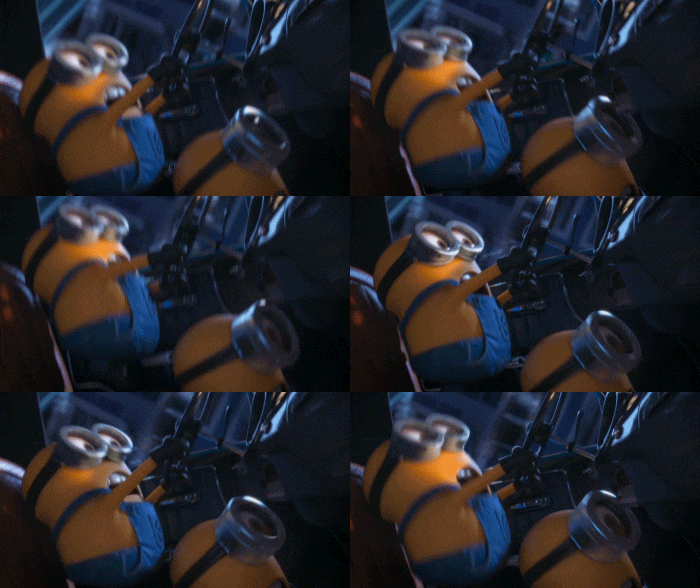
Another benefit: Students can skate on the new sidewalk more easily and smoothly. They will no longer rattle their way to class on uneven surfaces looking like a scene from the Minions movie.

And cyclists will no longer look like this on the most unkempt sidewalks.

Hopefully, the University will continue to improve the sidewalks — not only for the sake of practicality (many of the pebble slabs have become old and cracked), but also because they do not properly drain in the rain, creating massive puddles for students to walk through. The most notable no-drainage areas are in Butler Plaza near the power plant and the downhill walkways in front of the Satellite’s entrance.

As trivial as it may sound, students at CV1 and Moody should be excited about this new sidewalk near their residence halls, and UH should continue to prioritize the sidewalks to help maintain consistency and visual appeal for both current students and future ones.

Opinion editor Thomas Dwyer is a broadcast journalism sophomore and can be reached at opinion@thedailycougar.com

—
“Sidewalk overhaul in Lynn Eusan helps students” was originally posted on The Daily Cougar

Posted in UncategorizedComments Off on Sidewalk overhaul in Lynn Eusan helps students

Federal Reserve contributes to real economic crisis

The economy is the most vital part of a country’s stability.

A good economy will create jobs, lift median income and grow the GDP, so it is extremely important that no one—politician or bureaucrat—makes decisions that will ultimately afflict it.

Today’s economists are hell-bent on scientific experiments where they form a hypothesis that is theoretically accurate, collect data, analyze said data and generate results that either confirm or deny their hypothesis.

After this, the goal is to enact policy to help stimulate and/or grow the economy.

The experiments are fine and dandy until economists use them to find patterns to predict the future. This can be considered the real economic crisis. Simply put, there are too many variables and uncertainties to accurately predict an outcome.

These predictions have significant impact on the policy decisions of elected officials. Entities such as the Federal Reserve have an immense amount of influence on financial markets, as well on the political spectrum.  

In the Wall Street Journal article “Three Economists Walk into a Bar,” James Mackintosh discusses the shortcomings of modern day economists. Mackintosh writes, “This is where the biggest difference from meteorology comes in: Weather forecasts don’t change the weather, but economic forecasts can change the economy.”

When Janet Yellen hints that the Fed is going to raise rates during the next FOMC meeting, the market reacts. If the presidential election favors someone harder on fiscal policy, the market reacts. For example, when Donald Trump won the presidential election, the initial market reaction was a catastrophic start, followed by a strong close.

The point is that economists need to get their noses out of policy making and allow the markets to stimulate themselves.

Any person who has studied high school science knows that every action has an equal and opposite reaction. The same concept applies to the economy. If an economic entity such as the Fed props up the economy, the economy will eventually fall the same length. This can be said when we enter boom and bust cycles.  

In the shortest possible terms, a boom occurs when a particular industry is artificially inflated by either the Fed or another governing body. When that artificial boost becomes unsustainable, it deflates hard; example: the 2000 and 2008 crises.

At this point, either the Fed cannot see the bubbles coming, or it’s allowing them to occur intentionally. The Peter Schmidt article, “Do Central Bankers Know a Bubble When They See One?” discusses how the Fed misuses their capabilities and ultimately breaches its intended purpose.

Schmidt writes, “Senior Fed officials taking positions diametrically opposed to positions Alan Greenspan claimed formed the basis for the Fed’s policy toward bubbles, namely, allowing bubbles to burst and dealing with the consequences later.”  

This means that the Fed aims to be incredibly shortsighted. It chooses to make the economy look good at the moment and deal with the consequences after the fact. The issue is that the American people are the ones who shoulder those consequences, not the Board of Governors. 

The greatest piece of advice comes from within the Fed itself. The Fed needs to get their fingers out of the market. They need to raise interest rates back to their natural rate, 5 percent, and let the economy adjust on its own—let the country heal.

Although the sixteen-year economic stagnate is largely over, it will not return to its natural state unless the Fed and modern-day economists back down.

Opinion columnist John Brucato is a economics senior and can be reached at opinion@thedailycougar.com

—
“Federal Reserve contributes to real economic crisis” was originally posted on The Daily Cougar

Posted in UncategorizedComments Off on Federal Reserve contributes to real economic crisis