
Author Archives | opiniondesk

We should have more free classes at MD Anderson Library

The MD Anderson Library offers free classes that help students improve their skills in certain software and technologies. The success this program has seen is an indicator that we should have more. | Corbin Ayres/ The Cougar

With rising higher-education costs, every class counts and few electives can be chosen. To account for this trend, the workshops at the MD Anderson Library teach skills in various software. These workshops, however, should expand to hand skills, and because these workshops are a success, we should have more.

The workshops are instructor-led technology courses free to current UH students, staff and faculty. The current technology classes range from Photoshop and Acrobat to 3D printing and resume-writing. Students are required to sign up for courses through their myUH account because classes are limited in seating.

If a workshop is not offered, students can fill out a short class suggestions form for the library to increase the variety of courses available.

Attending the Photoshop 1: The Fundamentals workshop with no previous experience, I learned how to navigate the program and visualized the effect of tools in the toolbar. Each workshop topic, such as Photoshop, is a series of workshops that increase in complexity and difficulty when taken sequentially.

Even though seats are sometimes filled online, many people cancel on the days leading to the workshop, granting spots to those on the waiting list.

During the workshop, the instructor will walk through each step in the handout in more detail and demonstrate how to do it on the screen. Also, the instructor will walk around the class and help each student with their work and answer questions. If students are unable to attend the workshops, there are also handouts online, which are the same handouts given during the class. 

Chris Holthe has managed the UH Libraries’ Technology Training Program since 2015. In addition to teaching as a technology instructor, Holthe believes these workshops bring a more “hands-on design aspect” to the coursework in engineering-type courses.

He notes that the library is always adding new workshops and students get more attention because the class size is only 12 students.

More technology-skill classes can be offered, but hand-skill courses are currently not offered at all. Hand skills can range from painting to crochet to survival skills, such as tying rope. Although a prominent barrier is funding for supplies, each student can bring their own supplies in the beginning. When there is enough demand, perhaps supplies can be donated by a third party or funded by the library.

Hand skills or fine motor skills are an overlooked vital segment of education. It addresses a way to nurture creativity and innovation by physically designing a product. Also, some hand skills, such as coloring, do not require as much thinking. Research has found these activities to release stress and engage the mind in a different way than everyday classroom activities.

Another benefit to these workshops is they target students that identify as kinesthetic learners: those who learn best by example. These types of workshops allow them to understand what is happening and how to do it.

These workshops are about two hours long and in no way replace actual classroom material and experience. However, these workshops are a valuable addition to the classroom for the students to apply the material.

Staff writer Maryam Baldawi is a biology sophomore and can be reached at opinion@thedailycougar.com.

—
“We should have more free classes at MD Anderson Library” was originally posted on The Daily Cougar

Posted in UncategorizedComments Off on We should have more free classes at MD Anderson Library

Students should take advantage of the University Eye Institute

Many students are unaware of the health care services provided on campus. The University Eye Institute provides many benefits, and students should take advantage of them. | Photo courtesy of Wikimedia Commons/user: Capoch

As students, we spend our time looking at screens, absorbing blue light and exhausting our eyes with long study sessions exacerbated from a lack of sleep. Luckily, we have access to comprehensive eye exams right on campus, and students should take advantage of the low-cost eye services.

The University of Houston is home to the University Eye Institute, part of the College of Optometry, which is one of the highest ranked visionary eye care centers in the country. The UEI has globally-recognized optometrists that provide customized treatment and an on-site surgery center, which offers medical and corrective services for retina, cataracts, LASIK and cross linking.

UH students can go in for eye exams at a discounted rate of $35, and they can purchase lenses and contacts at a discounted rate. Not only are students saving some money, but they are helping fellow students studying optometry gain professional experience supervised by clinical faculty.

Students who go to the UEI for an eye exam are poised to gain all the good benefits. They can be part of a peer’s learning experience, learn more about their specific eye problems and find solutions to those problems, all at a relatively discounted price.

Julianne Knowles, OD FAAO Clinical Assistant Professor, Director of Family Practice Service and OPT II Co-Coursemaster, oversees the daily running of the Family Practice Service at UEI. She works with second-, third- and fourth-year students and treats patients at the optometry clinic.

Having more students come in to the UEI is a wonderful learning experience for optometry students as well as students who come in for an exam, Knowles said.

“I love the synergistic energy created when students come to see our students — the coming together of smart minds and sharing of their ideas and professions. I find our students benefit academically and professionally by walking a fellow student through the exam process and sharing the information,” Knowles said.

Although it is convenient for students on campus, not many know they have access to this service. As a result, it has remained relatively obscure with few students taking advantage of the UEI.

“I think our greatest challenge is that students just don’t know we are here,” said Director of Marketing at the UEI Diane Burkett. “Additionally, when we think about marketing tactics to get the word out, we always come back to the challenge of students being over-inundated with messages, so it’s tough.”

Students have a high list of priorities from a number of tests and presentations, a hectic social life and work, relegating health issues to the bottom of the list. It is tempting to ignore blurry eyesight or dry eyes after a long study session, but that should not be the case when we have access to the UEI.

“Most students don’t realize that we can help, whether it be providing them with a new digital design pair of glasses with computer blue-blocking technology for screen time or treating their dry eye from those long hours of studying with little rest,” Knowles said.

As UH students, we have access to resources that will help our mind and body function at optimal conditions. It would be a shame to waste this opportunity due to lack of knowledge. Why would we not use the resources that are at our fingertips?

The UEI has plenty of resources to meet the eye health needs of every unique student. We should take advantage of the resources offered on campus to keep our bodies and minds in top-notch condition, especially if it is Cougars helping Cougars.

The UEI is located right next to the Campus Recreation and Wellness Center on Calhoun Rd.   Students may schedule an appointment by calling them at 713-743-2020, requesting an appointment via their online appointment form or just by walking in.

Opinion columnist Janet Miranda is a marketing junior and can be reached at opinion@thedailycougar.com.

—
“Students should take advantage of the University Eye Institute” was originally posted on The Daily Cougar

Posted in UncategorizedComments Off on Students should take advantage of the University Eye Institute

Corporal punishment needs to end now

Corporal punishment is an archaic way of teaching children. It is regressive and cruel, and it must be outlawed immediately. | Photo courtesy of Wikimedia Commons/user: Kaldari

Traditionally, corporal punishment has been used on children in different settings as a means of punishing misbehavior. In the home setting, this has manifested as spanking, slapping, belting or virtually any other physical punishment that parents think up.

In the school setting, however, corporal punishment is mostly reserved to paddling, a form of punishment wherein students are spanked with a wooden board by a teacher or administrator.

Either way, corporal punishment is ineffective as a tool for punishment, is discriminatory in application and may leave lasting negative consequences on children who are being punished. For these reasons, corporal punishment should be abandoned as a parenting strategy at home and be banned in schools nationwide.

What may come as a surprise to many is the fact that public schools in the United States practice corporal punishment at all. Concentrated mainly in the south, 19 states, including Texas, currently allow for physical punishment in K-12 schools to be used as a form of disciplining students who misbehave.

The idea behind such punishment is that it demarcates clear boundaries for children and uses negative punishment to prevent the child from repeating the punishable offense.

While in theory this idea seems sound, research has repeatedly shown otherwise.

A 2016 study published in the Journal of Family Psychology found that corporal punishment is not effective at increasing short-term compliance, and another study found the same for long-term compliance and moral behavior. Furthermore, other studies also found that children who are subjected to such physical punishment are more likely to be even more aggressive and misbehaving than they initially were.

Not only does there seem to be no upside to the use of such punishment, but there are many downsides associated with such treatment.

One of the most severe downsides to using corporal punishment is the serious injuries that have resulted from doing so. According to the Society for Adolescent Medicine, approximately 10,000 to 20,000 children will require medical attention each year as a result of damage done by the use of objects used to punish, like paddles. Among the injuries children experience are bruises, cuts, nerve damage and even broken bones.

While it’s important to note that many schools that utilize corporal punishment do so only with the permission of parents on a case-by-case basis, this does not change the fact that it simply does not work regardless of the setting. Parents who utilize such punishment at home or permit for it to happen at school are typically victim to a flawed mindset that’s been passed down.

Many adults themselves were subject to physical punishment by their parents, and because of this they were falsely led to believe in its value.

Another, perhaps larger, problem with corporal punishment in schools is the manner in which it is practiced. Studies have repeatedly shown that regardless of the demographic composition of a school, Black children are much more likely to receive corporal punishment even though white children are more likely to attend schools who use such punishment.

Furthermore, another equally atrocious disparity is that students with disabilities are more likely to receive corporal punishment than their peers. These students, whose behavior is often linked to a disability like autism, Tourettes or obsessive compulsive disorder, are being punished for their condition instead of being properly accommodated by an understanding school system.

While, fortunately, the use of corporal punishment does seem to be declining, with approximately 166,807 students punished during the 2011-2012 school year, this fact alone is not enough.

Corporal punishment of adults has long been banned in prison and in U.S. military training facilities. Additionally, domestic violence has rightfully become taboo in our society, so why is it that battering the most vulnerable and defenseless population at a time of critical development is seen as necessary and instilling discipline? 

If that’s not enough, the greatest telltale sign of wrongdoing by keeping corporal punishment around is clear in states like Indiana. In Indiana, corporal punishment and injury of vertebrate animals is prohibited under an anti-animal cruelty statute. Meanwhile, the corporal punishment of children in school with objects is lawfully permitted. Think about that.

In states like Indiana, children are not given the same respect and dignity that animals are.

The United Nations Committee on the Rights of the Child has stated that corporal punishment and other forms of punishment committed against children are acts of violence and should be banned by all parties of the Committee on the Rights of the Child, or CRC. This fact, however, has not resonated well with the United States, which is quite literally the only country on the face of the planet that is not a member of the CRC.

Not only is the United States severely out of step with the international community on this issue, but so are teachers, administrators, politicians and parents who condone such punishment in the name of “straightening out” their children.

The children of the United States deserve better and the solution is simple: Protect our children and end corporal punishment at home and in school.

Opinion columnist Ryan Nowrouzi is a biomedical sciences junior and can be reached at opinion@thedailycougar.com.

—
“Corporal punishment needs to end now” was originally posted on The Daily Cougar

Posted in UncategorizedComments Off on Corporal punishment needs to end now

White women voting against their interests

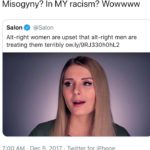
In both the 2016 presidential election and the 2018 midterm election, leftist activists have been baffled by the majority of white women voting for officials that typically campaign against policies that help women. This is a stark contrast to women of color, particularly black women, who have overwhelmingly voted Democrat.

This has caused a racial divide in feminist groups, as it implies white women value policies that favor white people over policies that will benefit women of various races and classes. In order for Democrats to win, white women must finally decide to place their gender over their racial privilege.

It is not controversial to say that the Republican party, though not necessarily individuals within the party, runs counter to much of modern day feminist thought.

The party objectively runs on a platform that seeks to end or obstruct women’s access to a safe and legal abortion, which women’s rights activists largely disagree with.

The party also opposes measures that would protect LGBTQ individuals as well as the legal recognition of same-sex marriages, instead favoring a “traditional” family structure.

Betsy DeVos, current Republican Secretary of Education, recently rescinded Title IX guidelines that regulated how colleges handled sexual assault cases on campus, which one in four women are likely to experience.

Furthermore, the party has seen a recent uptick in sexual assault accusations, headlined by the confirmation of Justice Brett Kavanaugh to the Supreme Court. 

Many pundits assumed white women in the 2016 election would vote against Donald Trump’s clear and violent misogyny. Exactly two years later, many of those same pundits estimated that, in the aftermath of Kavanaugh being sworn in, white women would finally say “no more” to the Republican congressmen who confirmed him.

Though these scandals certainly swayed some to vote blue when they previously wouldn’t have, the numbers haven’t been as overwhelming as political scientists predicted. White women appear to remain ideologically torn.

In the 2018 House election, nationwide votes cast by white women were divided 49 percent Democrat and 49 percent Republican. This is a decrease in Republican votes in comparison to the 2016 presidential election, in which 52 percent of white women voted for Trump.

Why, then, do white women seem to be voting against their best interest?

“Right-wing Women” feminist scholar Andrea Dworkin believes it to be a symptom of patriarchal structures that “the  woman  hangs  on to  the  very  persons, institutions  and  values  that  demean her.” She states that this submission to conservative values is largely a survival tactic.

While this may play some part, it is important to note that gender is not the only factor in any election and this theory does not paint the whole picture. White female voters continuously appear to be collectively unsure of whether they will vote in favor of their gender or their race.

Intersectional feminists and journalists of color like columnist Ashley Reese posit that white women’s allegiance to “Trump’s racist and classist policies, but apparently not his manners” will always win out, writing the demographic out as a lost cause.

The Republican party’s comparatively harsh, and arguably racially-charged, views on immigration, crime and social security may be the reason whiteness has won out over womanhood within the demographic.

It is important to note that despite the recent sexual assault scandals that may have swayed on-the-fence conservative women, the Republican party has succeeded in spinning the narrative to an immigration issue.

This redirection may have played some role in encouraging white women to vote against the party that would allegedly welcome “caravan after caravan of illegal aliens.” 

It is widely agreed that white women are a key electoral demographic. In order to avoid the white women majority voting Republican in close races like Texas’s 2018 Senate election, the Democratic party will have to either emphasize their comparatively pro-women platform or challenge deeply held racist views.

Otherwise, the party might not stand a chance in traditionally deep red states.

Opinion columnist Adison Eyring is a media productions and political science sophomore and can be reached at opinion@thedailycougar.com.

—
“White women voting against their interests” was originally posted on The Daily Cougar
Posted in UncategorizedComments Off on White women voting against their interests

#MeToo leading a path for our generation

The #MeToo movement helps to empower women and promote feminism. It serves as a symbol of equality among genders. | Photo courtesy of wikimedia commons/User James McNellis


The wake of the #MeToo movement has left a trail of change. Ongoing debates about gender equality have remained unresolved as the war between genders prevails. If you look back to when women were denied basic liberties up to now, there’s a definite advancement. With the digital age flourishing among this generation, the movement has encouraged more woman to speak out.

Initially, the movement was an online campaign that supported survivors of sexual harassment, assault and abuse. It was started around 10 years ago by Tarana Burke, who revealed a detailed encounter about her own experience.

The campaign went viral, launching the #MeToo movement as a phenomenon that has taken over Twitter, Facebook and Instagram, with people sharing stories of their own encounters.

In 2017, CNN reported that the #MeToo hashtag had been used over 825,000 times. More than 45 percent of people in the United States are friends with a person who has used this hashtag to send or post a message, according to Facebook.  

The #MeToo movement is providing a voice for a generation of individuals silenced by fear. Now, people are coming out about their own accounts of sexual assault. This increased visibility and awareness has shown that many of these traumatic events were brushed under the rug.

A national survey released in February of this year reported that 81 percent of women have said that they have experienced sexual harassment in their lifetimes.

Instead of getting away with their actions unscathed, men now must deal with the  consequences for their ill treatment of women.

In the wake of the exposure of Bill Cosby’s and Harvey Weinstein’s past sexually inappropriate actions, thousands of women have found the bravery to come forward and share the stories of their own traumatizing encounters. 

The #MeToo movement not only helps women withstand misogynistic treatment, but also helps to create a sense of shared responsibility to aid in the elimination of sexism. The movement continues to help women to share their stories and to show the world that women will not tolerate being silenced.

The movement, however, is not about feminism- it’s about equality. Although that’s not why #MeToo initially started, it helped to push the movement in the right direction to battle inequality.

Assistant opinion editor Laraib Hashmi is a print journalism senior and can be reached at opinion@thedailycougar.com.

—
“#MeToo leading a path for our generation” was originally posted on The Daily Cougar

Posted in UncategorizedComments Off on #MeToo leading a path for our generation

The nation needs to rise up against nationalism

President Trump openly declared himself a nationalist at a recent rally, associating himself with a group that devalues other nations to promote one’s own. | Photo courtesy of Wikimedia Commons/user: Evan Nesterak


At a recent Trump rally in Houston, Texas, Trump proudly declared himself a nationalist. Though he had previously only been associated with this ideology by critics and fans, this marks the first time our nation’s current leader has openly embraced the term.

In the two weeks since that rally, there have been multiple domestic terrorist attacks committed in line with nationalist ideals, while Brazil now operates under the control of their own nationalist leader. We need to loudly and passionately define and reject the nationalist movement before it results in further mass violence.

A portion of the rise in nationalism appears to be out of ignorance of the word’s fundamental meaning and historical context. Nationalism is not simply a more extreme form of patriotism. Patriotism, the ideology that nationalists often invoke as a defense of their ideology, is defined by the Merriam-Webster Dictionary as simply “love for or devotion to one’s country.”

Nationalism, meanwhile, is defined as “a sense of national consciousness exalting one nation above all others and placing primary emphasis on promotion of its culture and interests as opposed to those of other nations or supranational groups.” In the context of this definition, a nation is a group of people who inhabit a territory and share race, culture or history.

The very definition of nationalism implies action with the word “promotion.” Unlike patriotism, it is not an abstract feeling but a tangible movement that devalues other nations in order to promote itself through potentially violent means. The ideology is built upon active degradation of other countries or cultural groups.

Devoid of history or close examination, even this definition may seem harmless. Adherence to the America-first mindset posits the belief in the advancement of Americans – but then, of course, we’d have to define Americans. In the history of the nationalist movement in the United States, Americans have typically meant one group only: English-speaking white Christians. 

A recent Time opinion piece put forth the idea that white nationalism is a misnomer due to the lack of a distinctive “white” language, religion or culture throughout European history and thus no white nation. This stance, however, ignores the material reality of current U.S. race relations in favor of a technicality that only holds significance internationally.

Redefining an ingrained term

With the exception of recent immigrants or a handful of communities that have retained their heritage over generations, previously-distinct European groups have melded into the English-speaking, Christian, white cultural identity that dominates the United States.

It is this nation – a group that shares territory, race and history – that white nationalists seek to advance above all other demographics inside or outside of the United States. When American nationalism is spoken of, white nationalism is nearly always the movement that first comes to mind.

In fact, the connotation is so ingrained into American consciousness that many critics accused Trump of intentionally dog-whistling his white supremacist audience.

Due to this action, a total redefinition of nationalism in the United States as an interracial and inter-religious movement devoid of its historical connotations is impossible. There is no effort on behalf of nationalist groups to represent, include or campaign for non-white, non-Christian Americans anywhere in their movement. 

Even if re-branding would work, what would nationalism look like in a heterogeneous nation of immigrants?

If we choose to condemn globalism and only seek to promote national interests, would we ask our citizens to denounce the countries of their familial or cultural origins?

This view of America as a nation above all others raises the question of what makes an individual an American, and what their shared culture, race and history is comprised of.

Referring back to the Times article campaigning for a return of American nationalism, the author claims that nationalism declined after World War II due to a dissolution of American culture. In a sense this is true, but the reason is not a decline in patriotism or community.

The world had just seen the horrors that unchecked nationalism can produce firsthand, and the voices of non-white, non-Christian groups in the United States began to finally be heard.

The nation is clearly still grappling with what it means to be a true melting pot without devaluing any one racial or cultural group. The recent rise in nationalism is not only a response to this, but a step backwards in America’s progress that we cannot allow.

There is a reason nationalist movements only thrive in homogenous countries or groups that wish to create uniformity. Currently, the nation is too divided to come to a consensus as to what it means to be a nation of Americans. America is too fractured along political lines for there to be a coherent nationalist movement that is not founded upon racism or xenophobia.

Opinion columnist Adison Eyring is a media productions and political science sophomore and can be reached at opinion@thedailycougar.com.

—
“The nation needs to rise up against nationalism” was originally posted on The Daily Cougar

Posted in UncategorizedComments Off on The nation needs to rise up against nationalism

Opting out of vaccines is harmful to society at large

Anti-vaxxers create health risks for both their children and the surrounding population. In order to successfully combat widespread illness, this practice needs to be stopped. | Photo courtesy of Wikimedia Commons/user: Tm


Parents opting out of vaccinating their children endangers both their children and the population at large. Anti-vaxxers often claim that not vaccinating their children will not have any effect due to the majority of the U.S. population being fully vaccinated, which is a concept referred to as herd immunity.

However, that immunity is dwindling with the recent rise in numbers of those unvaccinated by choice.

Typically, the people who face the most consequences for these parents’ actions are not their children, who don’t deserve for their health to be put at risk either, but medically vulnerable groups. These groups consist of newborns, the elderly and people with unrelated medical concerns that weaken the immune system.

We cannot allow a shallow desire for individual liberty based on pseudoscience to overpower an easily solvable public health crisis.

According to the U.S. Centers for Disease Control and Prevention, the percentage of unvaccinated children under the age of 2 increased from 0.9 percent of children born in 2011 to 1.3 percent of children born in 2015, amounting to a jump of 0.4 percent. 

Such a small percentage may seem inconsequential, but with approximately 4 million babies being born in the United States each year, that equates to about 52,000 of those babies not receiving their vaccinations throughout childhood.

That number is significant enough to pose a threat to public health, particularly in communities where that number may be highly concentrated.

Parents who choose not to vaccinate their children often cite a 1998 article that claimed there was a link between the measles-mumps-rubella vaccine and autism in children.

Even within the report they could not find evidence for a causal relationship, however, and later studies in the two decades have since debunked the theory. Unfortunately, the discourse surrounding it has refused to die out, and there are still proponents of the theory to this day.

The result is an increasing number of individuals who, despite there being no scientific or medical basis for neglecting to vaccinate their children, choose not to.

The World Health Organization, states that herd immunity requires a minimum of 95 percent of the population having all necessary vaccines in order for the unvaccinated to have little risk of catching such diseases.

In theory, that 5 percent or less of unvaccinated citizens should be reserved for the medically vulnerable groups who have legitimate basis for not receiving all necessary vaccinations.

Though rare, there are children who cannot get certain vaccinations due to severe allergic reactions or particularly weak immune systems. When being exposed to the diseases vaccines could prevent, this population would be at an even greater risk of long-term health complications or death than those unvaccinated by choice.

Furthermore, parents who can both afford and have immediate access to vaccinations are ignoring the health and safety of children who lack these resources. According to a CDC study, the segment of the population most likely to not be fully vaccinated is children who live in rural communities or are uninsured.

These children, despite federal programs such as the Vaccines for Children Program that seeks to vaccinate the uninsured, do not have equal access to vaccinations, unlike the typically wealthier anti-vaxxers who largely started the trend.

Parents who do not vaccinate their children because of personal or religious convictions put not only their children but the medically and financially vulnerable at risk of health crises that we cannot afford or condone.

Parents who do not vaccinate their children because of personal or religious convictions not only put their children at risk of health crises, but the medically and financially vulnerable, as well. This allows for the unnecessary spread of disease that cannot be condoned.

Opinion columnist Adison Eyring is a media productions and political science sophomore and can be reached at opinion@thedailycougar.com.


—
“Opting out of vaccines is harmful to society at large” was originally posted on The Daily Cougar

Posted in UncategorizedComments Off on Opting out of vaccines is harmful to society at large

Sanctuary cities create a safer society

Sanctuary cities provide legal protection to immigrants, and also act to increase transparency. | Photo courtesy of Wikimedia Commons/user: MB298


Political talk on immigration has obscured the meaning of the term sanctuary city. A sanctuary city doesn’t have to be a city; it can be a city, a county, or even a state. It is an area wherein the local government limits how much help it offers to federal immigration enforcement officials and agencies. This includes the U.S. Immigration and Customs Enforcement, or ICE.

Sanctuary cities have been portrayed in a negative light under former president Obama and President Trump.

The latter, however, has called for an all-out attack on these cities. Despite the negative connotation attributed to the term, sanctuary cities are not a hole in immigration policy, but rather are a legal, realistic mechanism to allow entry for non-violent undocumented immigrants while creating a safer society.

Immigrants aren’t a threat

A primary concern about sanctuary cities is that they pose a safety risk by allowing undocumented immigrants to remain in the country. This false claim insinuates that immigrants are more of a threat than the average citizen. The demonization of immigrants as dangerous has been one of the focal points of the president’s attacks on sanctuary cities.

In reality, immigrants pose less of a threat than native-born U.S. citizens. In a 2015 study by the American Immigration Council, a non-profit and non-partisan organization, the results showed that higher immigration is associated with lower crime rates, and immigrants are less likely to commit crimes and be incarcerated than native-born citizens. 

In spite of this finding, President Trump signed into law Executive Order 13768, which threatens sanctuary jurisdictions by withholding federal grants to cities.

This move was a step toward better fulfilling a longstanding campaign promise to round up and deport large numbers of undocumented immigrants. Since then, a federal judge has blocked this executive order as an overreach of executive power, but this hasn’t stopped Trump from stoking unjustified fear in the public.

Most recently, Trump attacked a Pennsylvania senator on his view of sanctuary cities. “Bob Casey (D.) voted in favor of deadly sanctuary cities that released thousands upon thousands of illegal alien criminals and vicious gang members to prey on Pennsylvania streets, to prey all over this country,” Trump said. 

This number is false according to multiple sources, including Politifact, and is representative of the kind of patently false fear-inciting rhetoric Trump has used to scare the public. 

Not only is the number Trump cited in this argument false, so is his idea regarding the release of gang members and violent criminals. Sanctuary cities do not mean cities that don’t practice deportation.

A misconception about sanctuary cities is that they will not prosecute or deport any undocumented immigrant regardless of background, but this is not true.

Those who are arrested for a non-criminal offense are not subject to being held for ICE via what is known as a detainer request in sanctuary cities. Violent criminals or those who have repeatedly been deported and have returned, however, are routinely referred to ICE for further action.

Those in favor of eliminating sanctuary cities argue that their presence is unlawful and they violate the law by not following federal policy. The problem with this argument is twofold. Not only are sanctuary cities completely legal and protected under the Tenth Amendment, but they also offer protection under the law to undocumented immigrants where protection is due.

Being undocumented in the United States is a civil offense, not a criminal one. Undocumented immigrants are still entitled to constitutional rights, including the right to due process. This means that detaining an undocumented immigrant beyond what is legally required in order for ICE to investigate is unconstitutional. This has been upheld in several court cases, including in Florida and Oregon.

Sanctuary cities are mutually beneficial, creating safer cities by bringing undocumented immigrants out of the shadows. In the United States, there are approximately 11 million undocumented immigrants. In 2017, ICE performed 226, 119 deportations on undocumented immigrants.

The United States should focus on how to make the country a safer place for immigrants by pushing for greater social and economic cohesion that benefits all U.S. residents, instead of trying to force out individuals that President Trump falsely think provide a clear and present threat.

According to a study conducted by UC San Diego, sanctuary counties experienced approximately 35.5 fewer crimes per 10,000 people versus non-sanctuary counties and boasted stronger economies.

The reason for this difference is surmised to be caused by immigrants in non-sanctuary cities being dramatically less likely to report crimes, act as witnesses and work with local law enforcement if they think their status in the country is at jeopardy.

Despite what the current political climate suggests, fear is not an immigration policy. The hallmark of any good immigration policy is recognizing that undocumented immigrants will be present in any given country. Instead, the focus should be on maximizing safety through better screening, asylum requests and a path to citizenship when possible.

The country’s immigration policy should be led by level-headed realism, not stories of caravans and MS-13 gang members. A complete purge of undocumented immigrants would endanger all citizens by alienating peaceful immigrants from society and violating the rights guaranteed to them in the Constitution.

Sanctuary cities like San Francisco, Chicago, Los Angeles and many others provide reasonable legal accommodations to undocumented immigrants while also allowing the country to exercise its ability to enforce immigration policy. Let them be. 

Opinion columnist Ryan Nowrouzi is a biomedical sciences junior and can be reached at opinion@thedailycougar.com.


—
“Sanctuary cities create a safer society” was originally posted on The Daily Cougar

Posted in UncategorizedComments Off on Sanctuary cities create a safer society

Students need to redefine beauty standards

Beauty standards are both challenged and amplified by social media. As our generation moves to adapt to new standards, we should be moving towards individualistic expression and self love, not a cookie cutter template of “beauty” | Photo by Fiona Legesse


In a superficial world where standards for beauty are impossibly high, college students may struggle to live up to the ever-changing, pre-conceived ideals set forth by society. This impacts students’ perceptions of their bodies, causes depression and isolation, and lowers self-esteem.

What constitutes beauty? Is beauty defined by what society deems attractive?

The development of appearance-altering makeup routines, created by online beauty gurus and popularized by impressionable young women, says it all: there’s a distinct difference between a desire to look put-together and a desire to conform to societal beauty standards.

For students, appearance is important, but often takes a backseat to comfort and practicality. While students want to look good, they do not necessarily want to go to the lengths to adhere to society’s beauty standards.

“I come to campus in tights and a T-shirt and I feel great,” said English sophomore Grace Smith. “Comfort is more important, and when you’re comfortable you feel good, you feel beautiful. It’s just seeing yourself that way, like yeah I’m pretty and I don’t need makeup to make me feel that way.”

Beauty means something different to everyone. It can mean a wide range of things, not only physical beauty.

The definition of beauty means something different for everyone and extends beyond the physical.

“I feel beautiful in my hijab. I don’t wear a lot of makeup, but for me I don’t need it,” said marketing senior Maria Usmani. “I think that superficial beauty is advertised so much that we’ve just started to believe that that’s all there is. We need to look like this to be a part of that trend, and that’s not true.”

The decision to determine one’s own beauty and self-worth, independent of societal standards, allows students to be less critical of their appearances.

Students have the power to redefine societal beauty standards by making the choice to realize their beauty independent of outside influences.

Coming to campus, you’re exposed to different people, ideas and influences. You’re in a place where everyone has their own story, people have a background and we’re all just trying to fit in. Each of us has a socially constructed view about how we “should” see ourselves, but it’s up to us. We should redefine that and choose to set our own standards.

Coming to campus, students are exposed to a variety of people, ideas and influences. Each individual has a socially constructed view of how one ought to see themselves, but in the end, it’s up to us. We need to redefine beauty and choose to set our own standards.

Contributing writer Laraib Hashmi is a senior journalism major and can be reached at opinion@thedailycougar.com.

—
“Students need to redefine beauty standards” was originally posted on The Daily Cougar

Posted in UncategorizedComments Off on Students need to redefine beauty standards

Slow communication from UH presents health risks to students

When diseases like tuberculosis appear on campus, there needs to be clear and efficient communication between the University and student body. Delaying the spread of information puts students at risk of getting the disease due to ignorance of the situation. | Photo courtesy of Wikimedia Commons/user: Magnus Manske


Last week,  a member of UH involved in the Fine Arts Building was confirmed to have tested positive for tuberculosis. University officials have been slow to establish a communication channel with students and faculty regarding the case.

University authorities have been following the case closely under protocol outlined by the City of Houston. The University handled the case by contacting individuals who had extended contact with the individual first before informing the rest of the students and staff.

Although this is a good rationale to prevent panic, it is essential for UH authorities to inform the campus community about important and rare health concerns sooner.

Despite handling the case according to the proper guidelines, this doesn’t counterbalance the fact that UH needs a better communication system. The threat of disease on campus merits a stricter, more streamlined communication process that informs students and staff about potential threats in a quick, efficient manner.

It is reasonable for the University to wait for confirmation of a positive tuberculosis diagnosis from the individual affected, but there should be faster communication channels and more resources so students can understand how tuberculosis spreads.

“Tuberculosis is a very ubiquitous disease. It is all over the world, although it is less common today in developed countries than during the Industrial Revolution,” said professor of biology and biochemistry and NSM Associate Dean for Graduate Studies Anne Delcour, who teaches a class on infectious diseases.

TB is a contagious bacterial infection that can be fatal if it is left to spread and not caught and isolated.

Infected people can sometimes go into what is called latent TB, where your immune system has contained the bacteria but you do not show any symptoms, said Delcour.

“When people have the active form of TB and they are infectious, then they can spread the disease to other people,” Delcour said.

A slow communication response can put students with other health problems that result in immunosuppressive effects on their immune system at risk.

It is important to have good communication between students and the University for this reason. It is not only important for the health of students and staff, but it could lead to faster reaction times that would put less people at risk, especially individuals with medical problems that lead to weaker immune systems.

We need to make it easier and faster for students and faculty to be kept up to date on what is happening on campus, especially if it is something as serious as an infectious disease.

The City of Houston sent the City of Houston Health Department officials to speak to UH students and employees about tuberculosis and answer any questions. This attempt to keep students informed was inefficient, however, as many students’ busy schedules did not allow them to take advantage of this resource.

It is not an issue of increasing panic or fear of catching a disease. It’s an issue of communication. Students bombarded with hundreds of emails a day might not see the email, needlessly putting their health at risk.

Transparent communication needs to be a priority for any other infectious disease responses. For a more robust communication strategy, the University needs to react faster and raise awareness of the issue and its potential consequences because students and faculty have a right to know what is going on in their community.

Transparent communication should be a priority for any future disease and other emergency responses. The University needs to react faster, raising awareness of the issue and its potential consequences for those at the University. Students and staff have a right to know what is going on in their community.

Opinion columnist Janet Miranda is a marketing junior and can be reached at opinion@thedailycougar.com.


—
“Slow communication from UH presents health risks to students” was originally posted on The Daily Cougar

Posted in UncategorizedComments Off on Slow communication from UH presents health risks to students