
Author Archives | opiniondesk

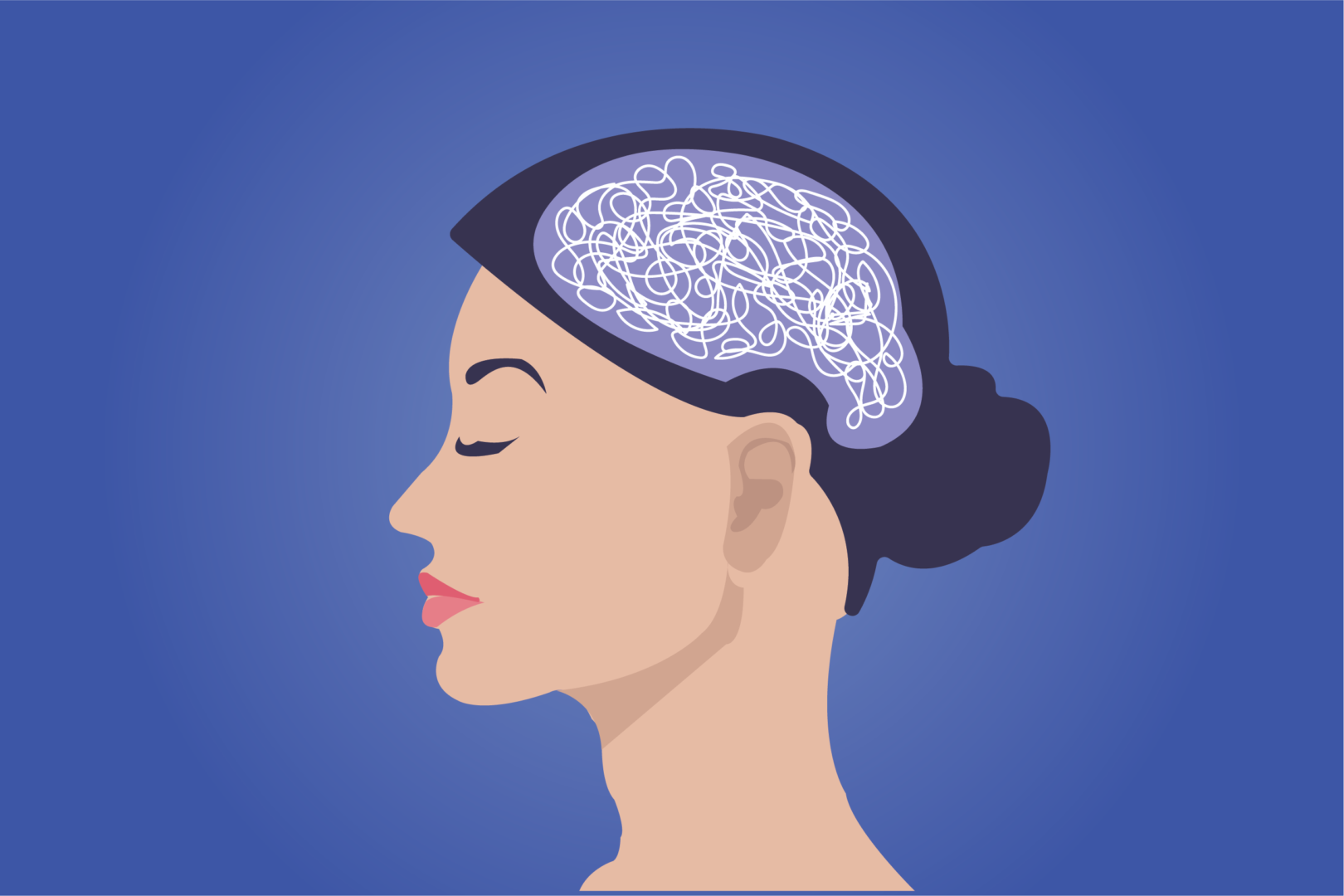
With social interaction on pause, it’s time to prioritize our mental health

Gerald Sastra/ The Cougar

By Gerald Sastra/ The Cougar

Gerald Sastra/ The Cougar

It is time to focus on mental health as decreased social interaction, disrupted routines and uncertainty have severely affected us in unprecedented ways. 

Pandemics, as it turns out, are, for most of us, incredibly stress and anxiety inducing. However, it is important to note that the coronavirus pandemic is affecting everyone differently.

Some are experiencing anxiety for the first time and have found comfort in productivity. Others that dealt with anxiety before are struggling to navigate a new world where “making the most out of quarantine” is the norm.  

There is a difference between wanting to occupy yourself while in quarantine and feeling an obligation to be productive. 

Social media posts of people showing off their creative genius during quarantine can make some people feel inferior because they are not creating masterpieces.

However, it is important to realize that not creating art or baking or whatever it might be is OK too. 

Productivity is great but so is just getting through the day. Some days are tougher than others and there is no universal guidebook for how to deal with the emotional drain of a pandemic. You just have to find what works best for you and do that. 

Mental health should be the priority, not the mechanisms we are using to get there. 

It is no surprise that social media usage has increased since restrictive measures were put in place around the world. One of the effects of increased usage is the growing influence social media has on the public. 

Although not officially recognized by the Diagnostic and Statistical Manual of Mental Disorders, social media depression does seem to be backed up by research.

According to a study, users who constantly check social media sites tend to experience increased feelings of anxiety and loneliness—feelings which we’ve gotten plenty of during quarantine. 

So if you have noticed that social media leaves you feeling drained, consider taking a break and safely going for a walk or finding an activity that suits you and makes you feel better. 

Experts are predicting a spike in mental health issues since quarantine and social isolation are psychologically affecting most of us; it seems like now is the best time to prioritize our mental health and well being. 

Mental health has been found to have an effect on physical health and since we are in the middle of a pandemic, focusing on mental health seems like a good step towards staying healthy.

UH has tried to provide students with as many virtual programs as possible. The campus recreation facility has made available several virtual activities for all enrolled students and the University has even made virtual campus tours for prospective students. 

While these activities can be helpful for some, there are some Cougars that need emotional support. 

The Counseling and Psychological Services office has reinstated their “Let’s talk” program. The program started Monday and will hold all appointments remotely, either by phone or video. It will also be free of charge. 

These efforts to ensure the physical and emotional health of the community are tools to help us overcome this challenge. It is up to us to seek the help we need and prioritize our mental health. 

Hopefully mental health continues to be a focus moving forward when we return to normalcy, whatever it might look like.

For more of The Cougar’s coronavirus coverage, click here.

Gina Medina is a journalism senior and can be reached at opinion@thedailycougar.com 

—
“With social interaction on pause, it’s time to prioritize our mental health” was originally posted on The Cougar


Posted in UncategorizedComments Off on With social interaction on pause, it’s time to prioritize our mental health

We should listen to medical experts before reopening Texas prematurely

Jiselle Santos/The Cougar

Multiple protests over reopening states — including Texas — have occurred around the nation in the last few weeks. The protesters demand that government leaders allow businesses to open again and let people return back to work as normal. They claim that the curve is flattening anyway.

They are correct that daily cases of the new coronavirus are dropping every day, but this is because stay-at-home orders are in place.

Gov. Greg Abbott has decided to let businesses reopen in Texas starting Saturday.

According to CNN, Texas public health officials believe that the state is not doing enough to increase testing availability. This means there is not enough evidence to warrant reopening.

Medical officials are not on board with Abbott’s decision, which is economically motivated. It’s important for people to have jobs, but it’s also important to prevent their death. Abbott should be ashamed of himself for making this dangerous call.

If we reopen, we risk the number of new cases increasing again, causing more people to become sick. We should listen to health professionals on when to reopen.

Additionally, if these protesters are worried about money from not working, instead of focusing on reopening, they should be advocating for better government assistance.

While there has been a drop in the daily number of new COVID-19 cases, this doesn’t mean we should stop the quarantine.

In fact, it is because of the quarantine that we have these lower numbers. If we immediately stop just because we see progress, coronavirus cases will increase in a matter of days.

Testing, while growing in availability, is still fairly limited. It isn’t wise to have things go back to normal without doing comprehensive testing.

Social distancing helped these numbers drop, so it’s clear we need to listen to what health professionals and scientists say. So far, scientists have warned against reopening America.

There is no reason to not trust medical professionals. They are more knowledgeable on the virus and it is their job to keep us safe.

Science has clearly shown that this virus can be spread through droplets, meaning that if a person coughs or sneezes near you, you risk being infected. It is common sense right now to stay away from people. 

Medical professionals do not have an ulterior motive in this. They are overworked and not given enough supplies to handle this pandemic. They don’t want this to go on any longer than we do. 

It’s understandable to get stressed and angry about this. Some of these people may be working class and their economic anxiety is validated, but they are focusing on the wrong solution. If we reopen now, it is likely that more people will die. 

Instead of protesting for reopening, we should advocate for better government assistance like stimulus checks that are more that $1,200. If they’re concerned about money for their families, this is what they should be organizing for.

Another important point is that some people advocating for the reopening of businesses don’t even care about flattening the curve. People like Lt. Gov. Dan Patrick say that risking lives is better than risking the economy.

“There are more important things than living,” Patrick said on Fox News on April 20.

Considering people who are most at risk for this virus are disabled, old and/or low income, this would insinuate that people in these categories are worth dying if it saves the economy. This argument is horrifying and very fascist in that it advocates a specific few dying to save the many. 

The economy is important, but people’s lives are and will always be more important.

So please, don’t go to protests. 

If you are angry at how the government has dealt with coronavirus, advocate for things that do not risk people’s lives.

Until medical professionals and scientists recommend a lift on quarantine, we need to stay home and advocate for our lives. 

For more of The Cougar’s coronavirus coverage, click here.

Anna Baker is an English sophomore who can be reached at opinion@thedailycougar.com

—
“We should listen to medical experts before reopening Texas prematurely” was originally posted on The Cougar

Posted in UncategorizedComments Off on We should listen to medical experts before reopening Texas prematurely

Shaming non-vegans is not the solution to coronavirus pandemic

Coronavirus graphic

Jiselle Santos/The Cougar

During any major event affecting public health, people tend to think about prevention. It is no different for a pandemic, but some messages are harmful.

People for the Ethical Treatment of Animals on March 21 tweeted “COVID-19 wouldn’t exist in a vegan world.” Not only is this idea misleading, but it is also insensitive to socioeconomic situations that prevent people from going vegan.

Diseases often arise when animals are in close contact with humans, such as farming or hunting. For example, the 1918 Spanish Flu is thought to have started on a chicken farm in Kansas. 

Coronavirus is thought to have started at a wet market in China, where live animals are sold for food. Here, there can be a lot of cross-species transfer with the animals being close.

It is true that meat-borne diseases can lessen when fewer people eat meat, but saying that a pandemic would not happen if we all stopped eating meat today is misleading. 

In addition to being misleading, blaming meat-eaters for the new coronavirus is classist and ignorant. While veganism has its benefits, it can be hard on the wallet. Over 47 million people in America live on food stamps, which give families of four $649 to spend on food for a month.

That is about five dollars per person per day. 

Additionally, there are food deserts in our country where grocery stores are far away leaving the community without easy access to fresh vegetables and fruits. These people rely on convenience stores for groceries, which often lack produce.

It is ignorant to look at the working class and lecture them about going vegan. 

When talking about veganism, we should always think about the sociopolitical and economic contexts. Yes, eating less beef is less harmful to the cow, but eating more vegetables is supporting an industry that barely pays farmers and leaves them in terrible working conditions. We’re substituting one cruelty for another, and we cannot ignore that.

Buying fresh vegetables is great, but we cannot expect a family on food stamps to do that. We can’t expect the most vulnerable people in our society to make these unnecessary sacrifices. 

If you want people to eat less meat, you need to be advocating for farm laborer rights and support their strikes and unions. You need to advocate for workers’ rights so that a family has the budget for a healthier diet. You need to advocate for more generous government programs so families can use their food stamps for more expensive foods like vegetables. 

There are a lot of conversations happening during this pandemic. Blaming poor people for not being vegan should not be one of them. Let’s look at capitalism and why it makes being vegan so difficult. Then we can talk about people eating less meat. 

Anna Baker is an English sophomore who can be reached at opinion@thedailycougar.com.

For more of The Cougar’s coronavirus coverage, click here.

—
“Shaming non-vegans is not the solution to coronavirus pandemic” was originally posted on The Cougar

Posted in UncategorizedComments Off on Shaming non-vegans is not the solution to coronavirus pandemic

These times highlight importance of internet service becoming a utility

Desktop computer

Jiselle Santos/The Cougar

About 21 million people lack broadband internet access in the U.S., according to the 2019 FCC broadband development report. However, that number from the federal government is misleading as a 2018 Microsoft survey shows the numbers are around 163 million who don’t have actual broadband speeds.

This is about 163 million people too many. The internet is a basic service and everybody should have access to it. 

The internet is vital for accessing information, according to a 2016 United Nations report. This is evident in the shift to remote classes and work during the coronavirus pandemic.

Given the coronavirus outbreak, it is understandable for schools to shift to online coursework. This is better than keeping students on campus. UH has a web page with information to help students with weak internet connections.

The 2020 Summer sessions will also be held with no on-campus instruction, which is astounding. What is not astounding is the lack of high-speed internet access in communities around the nation.

There is no question, students more than ever need high-quality internet.

The internet is not a luxury, rather it is a utility. Strangely, internet access is still not universal even though schools have transitioned to having a greater online presence.

In the current situation, those without the internet are at a significant disadvantage as the coursework is harder to access. In other communities, school districts have developed solutions to combat the problem. These range from setting up Wi-Fi hot spots to having faculty members deliver schoolwork door-to-door. While it is good for people to continue to have an education, this should not come with the extra hassle these teachers go through. 

It is exploitative for companies to withhold vital resources from people who can not afford it or are in locations too inconvenient for them to build a reliable infrastructure.

Governments around the world should seek to develop universal internet access. The current way we view internet access only harms people in poor or rural communities where the internet is too expensive or unavailable.

Rural areas are more dependent on satellite internet, which is slow with the average speeds between 10-30 megabits per second. To be considered broadband, it must exceed 25 megabits per second, but even that has serious latency issues and won’t work well for large families. Not to mention it’s vulnerable in bad weather and expensive, costing roughly double the price of fiber optic cable that some communities aren’t able to get.

People in these communities should not have to depend on inferior internet service.

The internet also provides a space for people to peacefully assemble and express themselves. Limiting this opportunity to only those who can afford it is unjust and it needs to change as soon as possible.

With something as important as education changing to an online format, it is time to rethink how we see the internet. The internet is a space where everybody should be able to learn and assemble regardless of location or wealth.

Santiago Gaughan is education sophomore, email him at opinion@thedailycougar.com

—
“These times highlight importance of internet service becoming a utility” was originally posted on The Daily Cougar

Posted in UncategorizedComments Off on These times highlight importance of internet service becoming a utility

Even if you’re bored out of your mind, now is not the time to go outside

Jiselle Santos/ The Cougar

COVID-19, the disease caused by the new coronavirus, is highly contagious and the U.S. has the most confirmed cases worldwide.

The U.S. has roughly 230,000 confirmed cases of COVID-19, and as of Wednesday, Harris County has nearly 850 cases.

I cannot stress this enough: stay isolated from as many people as possible. Self-quarantine is the easiest way to keep others safe.

Stay inside, wash your hands and take this seriously so we’re not stuck in quarantine for the next six months.

Seriously, do not go outside unless somebody’s dying (if you don’t have to). 

While self-imposed isolation is the easiest way to keep communities safe, it can get tedious. To prevent cabin fever, you must find ways to keep yourself busy during the day and talk to other people.

What makes self-quarantine so scary is the lack of a definite end date. Long periods of isolation can seriously damage the mind. It is numbing and physically taxing. Isolation can lead to boredom, anxiety and irregular sleep patterns.  

To combat this one should strive for structure. Having a routine will help you get back into the swing of things when the coronavirus goes away. You don’t have to write the next great American novel but having a dedicated time to do school work can help. Having a routine will keep your mind active and will also help ease the transition back to normal.

Alternatively, you can use FaceTime or other apps like Facebook Messenger, WhatsApp or Zoom to talk with friends and family. If that is not possible, find as many distractions as possible. I recommend drawing, working out or getting ahead in school work. 

The Campus Recreation and Wellness Center is hosting remote workouts until (at least) April 3 on Instagram Live and Facebook, which is nice if you want to get totally toned. If you’d rather tap into your artistic side, Pinterest, Twitter, and YouTube have several tips, challenges and tutorials to keep the creative juices flowing.

Times are scary, and the coronavirus will leave a great impact on the world, but for now, it is best to physically stay away from others and develop a routine to keep boredom at bay.

For more of The Cougar’s coronavirus coverage, click here.

Santiago Gaughan is not a coronavirus expert. Email him at opinion@thedailycougar.com.

—
“Even if you’re bored out of your mind, now is not the time to go outside” was originally posted on The Daily Cougar

Posted in UncategorizedComments Off on Even if you’re bored out of your mind, now is not the time to go outside

Panic buying leaves shelves bare and does more harm to neighbors, friends

The toilet paper aisle at HEB wiped clean with just a handful of single rolls left to sell. When the World Health Organization declared the coronavirus a global pandemic, people all over the United States began emptying grocery store shelves. | Katrina Martinez/The Cougar

The toilet paper aisle at  a local HEB wiped clean with just a handful of single rolls left to sell. When the World Health Organization declared the coronavirus a global pandemic, people all over the U.S. began emptying grocery store shelves. | Katrina Martinez/The Cougar

People are stocking up on toilet paper, masks and hand sanitizers in obscene amounts due to the new coronavirus.

This leaves so many people without their basic necessities — like health care workers who are forced to treat patients without masks or families who can’t find toilet paper or soap. 

Some are even reselling toilet paper at $5 a roll in places. This hysteria around toilet paper is ridiculous and price gouging it is even worse, not to mention exploitative. No one should be stockpiling toilet paper in the first place, but if you have extras, give them away. 

To understand why people are stocking up, specifically on toilet paper, requires a bit of psychology.

Steven Taylor, a psychologist who wrote “The Psychology of Pandemics,” said simply washing hands does not feel like it’s big enough to take on the threat of COVID-19, the disease cause by the virus. So, people take extreme measures and start hoarding supplies like toilet paper even if it doesn’t make much sense. 

Hoarding supplies allow people to feel a sense of control when all their school events, classes and sports have been canceled. If they over-prepare, they feel like they are doing something substantial against the virus, even if they really aren’t. 

It is understandable to want to prepare during a pandemic. Although we should recognize many people actually need these supplies and we should not be hoarding them away. More so, we should not upcharge products that some need like toilet paper and hand sanitizer.

The irony: The reason people cannot find these products in stores is because of those hoarding them.

We are in a pandemic. We shouldn’t see it as a business opportunity but a time to help each other. 

Many students support themselves and don’t have the money to pay $15 or more per roll. Additionally, if a student doesn’t have a car but lives on campus, they may have limited access to stores anyway.

As Cougars, we need to take care of each other. Of course, we still have to social distance from each other but with social media and technology we can check up on each other.

Check on anyone you know who is immunocompromised. Their dire need for quarantine may prevent them from getting all the supplies or even the food they need. If you are healthy, check up on them and ask if they need anything. There’s no shame in buying extras if you’re giving (not selling) them to someone else in need. 

First people bought out masks, then hand sanitizer, then paper towels and toilet paper. There’s no telling what will sell out next.

Instead of panic buying 200 cases of whatever it is, buy what you need. Then ask your friends, who might be more vulnerable, if they need anything and don’t charge them for it. Instead, just do something helpful for a friend. Students need to help each other during these uncertain times, not profit off each other. 

Anna Baker is an English sophomore who can be reached at opinion@thedailycougar.com

—
“Panic buying leaves shelves bare and does more harm to neighbors, friends” was originally posted on The Daily Cougar

Posted in UncategorizedComments Off on Panic buying leaves shelves bare and does more harm to neighbors, friends

Passive training isn’t the key to preventing sexual assaults

Justin Tijerina/The Cougar

One in five women are sexually assaulted on college campuses nationwide. At UH, there were 11 cases of rape and 13 cases of fondling on campus in 2018 reported to UHPD, according to the 2019 annual security and fire safety report.

This is the reality of what students must endure. Universities should do everything in their power to help survivors and prevent assault, but UH doesn’t necessarily rise to the occasion on this issue. 

Salutations is the online program freshmen must complete in the fall. The program is a video about basic college safety, defining words like “consent” and asking students what their perception of consent is. After the video, students take a quiz and then they’re done.  

This is helpful in a lot of ways and it features commentary from UH students, which grounds the program into the community.

The problem with the training is student passivity. All students do is watch a video and take a quiz without engaging in any real conversation about the topics at hand.

“Obviously, the stuff is important, but I wouldn’t say the training was impactful,” said civil engineering junior Gilbert Badillo. “I knew I wouldn’t do anything like that so the training felt pointless for me.”

There are 46,000 students at UH, in-person training would be hard to pull off but students should still contribute. If, after the video, students are surveyed to gauge any shifts in attitudes then that would show the impact the training has. Surveys are also a relatively cheap way to allow students to be more engaged with the material.

Additionally, while Salutations endorses intervening in stopping sexual misconduct, it does not give much information on how to do so.

The training on campus focuses on telling people to always ask for consent, which of course is a good thing. However, many students know about consent so treating them as a potential perpetrator is not effective. Instead, this program should teach bystander intervention techniques, which would work better and encourages viewers to take action when seeing signs of sexual misconduct.

Bystander intervention scenarios teach people how to effectively deescalate a situation while also correcting misconceptions that might keep people from intervening.

Many, if not most, know somebody who has been sexually assaulted, and this is just a sad truth. If  the University taught students how to prevent these things, it would create a whole population of students who are knowledgeable and know how to stop incidents before they happen across the campus.

Sexual assault is a major problem on college campuses and it’s the University’s duty to ensure the safety of their students, which in this case, means changing prevention training to give students a more active role in preventing sexual assaults.

Opinion writer Anna Baker is an English sophomore who can be reached at opinion@thedailycougar.com

—
“Passive training isn’t the key to preventing sexual assaults” was originally posted on The Daily Cougar

Posted in UncategorizedComments Off on Passive training isn’t the key to preventing sexual assaults

The time is now for students to take advantage of on-campus early voting

Percent of the total population that voted in each presidential election from 1996 to 2016. | Jiselle Santos/The Cougar

Students can vote on campus at the Hilton through Friday. | Kathryn Lenihan/The Cougar

It is our civic duty to vote and engage in our system of government. We must be politically aware and active if we seek any changes in our government, or even here at UH, because voting now will impact the nation for generations to come. 

There should be more emphasis on the real power we, as students, have with our votes. 

This semester, many of my professors have spoken about voting. Although college-aged people are typically more radical in their beliefs, I have seen quite a few of my peers believe there is no real obligation to vote. 

Whether it’s in classes or in conversation, we’re seeing the primary and presidential election come up more around campus, especially with Texas voting on March 3. 

The power to stimulate change is in our hands.

Over 53 percent of the voting-age population, or 41.4 percent of the total population, participated in the 2018 midterms. This is the highest rate of turnout in a midterm election since 1914 and is comparable to both the 2012 and 2016 presidential elections.

Students were 99 percent more likely to vote in 2018 than in 2014, according to Forbes.

Voter turnout among people attending college nearly doubled in 2018. Our votes made up nearly 21 percent of the ballots. This proves our votes to have a great impact on local, state and federal governments.

Percent of the total population that voted in each presidential election from 1996 to 2016. | Jiselle Santos/The Cougar

In a 2018 interview with Stephen Colbert, former congressman Beto O’Rourke said young voter turnout in Texas went up by about 500 percent compared to 2014.

PolitiFact confirmed the statement, which proves young people are becoming more invested in elections. The increase in young people voting brings attention to issues that affect us like healthcare, housing prices and student loans.

However, it’ll take more initiative to continue increasing voter turnout in Texas for the upcoming elections.

The state has passed new legislation limiting accessible voting for people across the state. We have the opportunity to vote on campus. This means we need to put more effort into getting the community to participate in the election, so we can get the change we want as a generation

Early voting ends on Feb. 28 and on-campus voting for Harris County residents will be in the Hilton. The primary election day is March 3, which is also the last day for mail-in voting.

We have the privilege to be at a university with a polling station on campus. We have a responsibility to ourselves and our community to participate in changing the world around us.

Bryana Torres-Martinez is a journalism freshman who can be reached at opinion@thedailycougar.com

—
“The time is now for students to take advantage of on-campus early voting” was originally posted on The Daily Cougar

Posted in UncategorizedComments Off on The time is now for students to take advantage of on-campus early voting

You’re not that different from the trans people around you

Juana Garcia/The Cougar.

Walk around the grocery store, and trans people are in the next aisle. Go to school, and trans people are in the classroom. Talk with strangers on the internet, and you’ll find trans people are also voicing their thoughts. Between 1.4 million and 3.23 million in the United States are known to fall somewhere within the broad umbrella of trans identities, including intersex people. I suspect the number is much higher.

Given the more recent visibility of trans people and the less than ideal representations in movies and in television shows, fear and misconceptions are commonplace. We often don’t realize how much everyone has in common.

Identity Transformations

People who are trans have typically (but not always) long felt deeply uncomfortable and incompatible with the gender and/or sex assigned at birth, and many of them embrace social and medical solutions to reconcile the split.

People who are trans often abandon their birth names in favor of ones that better fit their gender identity and don’t hold painful memories. For example, actress Nicole Amber Maines of “Supergirl” and subject of a powerful book was assigned a different, traditionally masculine first and middle name at birth; she abandoned it while making the social transition from male to female. Others might go by initials or by a name that isn’t gender-specific.

While I fall in the space between “trans” and “not trans,” I love my initials/nickname “AJP” for this very reason.

But disliking at least part of one’s name isn’t confined to the trans community. Think about the people you know: How many go by something other than their birth name, or would if they could? How many have different names for different situations? It is a significant number. A 2013 survey reported in the New York Times found that 21 percent of responders disliked the name assigned to them at birth.

For both trans men and women, social transitions often include a new appearance. One trans woman might buy skirts and wear makeup and a traditionally female hairstyle, while others might adopt a masculine external appearance. A trans boy might buy pants and get a buzzcut.

Trans or not, due to society’s intense focus on gender roles and appearances, we all struggle, at least occasionally, with behaving in the desired masculine, feminine or androgynous ways. Body image issues are pressing. Finding comfortable clothing, jewelry and hairstyles can be difficult.

Biological Transformations

Some trans folks only socially transition. But, some also opt for medications and/or surgeries.

Trans women are likely to take Estradiol for estrogen. Trans men are likely to take AndroGel or Axiron for testosterone. Surgeries to add or remove female breasts or to modify external genitalia are some common aspects of medical transitions.

Similarly, we all have, and often take advantage of, options to use hormones and surgeries to achieve desired feelings and looks. In 2018, 17.7 million people in the United States had elective cosmetic surgeries, according to the American Society of Plastic Surgeons. An NBC News report says that 20 percent of males 45 and older have used Viagra or similar medications and such medications are increasingly used by much younger men. Prescriptions for testosterone or estrogen replacement are common for a variety of medical conditions.

And for everyone, biological sex falls across a complicated spectrum. No one is 100 pecent male or 100 percent female with variation in chromosomes – chromosomes can come in combinations beyond XX and XY – secondary sex characteristics and external genitalia. Levels of estrogen and testosterone in the blood fluctuate throughout the day. Men have decreased levels of testosterone and increased oxytocin and dopamine levels when taking care of children. Women in the military, with the intense physical activity that involves, potentially have increased levels of testosterone.

Saving Lives

I don’t want to overstate the similarities between people who are and aren’t trans. 

Trans people have absolutely unique struggles. They are at significantly greater risks of dying by suicide or of facing violent attacks. Trans people, especially black trans women, have much more difficulty accessing equitable employment, healthcare and housing than other groups. Trans people face daily harassment, which many others will never know.

Still, realizing that the struggle to enjoy life and be comfortable in one’s own body and in society at large is a lifelong process for everyone should be a positive step toward making the world safer and more welcoming for trans people.

Everyone does things to personalize their body, even if this is just with ever-popular piercings and tattoos.

Understanding leads to acceptance and that saves lives. Trans people are people, and they are everywhere.

Andrew Joseph Pegoda, teaches women’s, gender and sexuality studies; religious studies; and first-year writing at the University of Houston and can be reached at @AJP_PhD on twitter or at opinion@thedailycougar.com.

—
“You’re not that different from the trans people around you” was originally posted on The Daily Cougar

Posted in UncategorizedComments Off on You’re not that different from the trans people around you

First-generation students shoulder burden of student loans

The average student loan debt among graduating students increased from $24,634 in 2009 to $29,900 in 2019. Combined with proliferating interest, this debt places intense financial stress on many first-generation students. | Juana Garcia/The Cougar

The average student loan debt among graduating students increased from $24,634 in 2009 to $29,900 in 2019. Combined with proliferating interest, this debt places intense financial stress on many first-generation students. | Juana Garcia/The Cougar

When my sister and I were growing up, our parents always told us they wanted us to go further than they did. They wanted us to become professionals and achieve what they believed was the American Dream.

My parents migrated to the country in the midst of the Civil War in El Salvador and still managed to clothe and feed us. They gave us the best life they could offer. They ingrained ambition into us and made everything feel possible. 

First-generation students often feel the pressure to exceed the success of their parents, many times without the financial literacy needed to fully understand how debt could hinder our ability to establish the stability we seek for ourselves.

The grand total of federal and private student loan debt exceeded the amount of auto loans in 2011, reached $1.5 trillion in 2018 and is expected to hit the $2 trillion mark by 2024 if these trends continue.

This is unacceptable.

While UH does give students various resources to help with academic success and mental health, there should be more available to students to help ensure they minimize their student loan debt. More informational seminars by the University could help teach financial literacy to the student population and allow them to make smart decisions.

Education is seen as my token to wealth and stability. My parents believed I could be rich if I got my education and worked hard. A college degree has always been an expectation my parents have had for me, they believed it would help me achieve all they’ve imagined for me.

It made dreams of someday buying them a house feel attainable. 

Millennials are deemed less interested in owning homes when, according to Forbes, they’re actually unable to purchase houses due to various financial challenges, which include student debt.

With crippling debt and proliferating interest, it begins to feel implausible to provide my parents with a home when it is out of reach not only for myself but for many in the same circumstances.

In the 2017-18 academic year, the average debt per bachelor’s degree recipient was $29,000. With the weight of debt on their shoulders, students are often blocked from establishing themselves until long after they’ve walked the stage. 

For many first-generation students, this is the real cost of our education. It is a payment that binds us at our feet, leaving us unable to move forward and may delay our goals for the rest of our lives.

Most first-generation students feel the pressure to succeed. Even though there is the possibility my life might change because of the high price of college, I’m fortunate to have chosen a university equipped with various resources for first-generation students.

Not only are there significant scholarships offered through UH, but organizations and resources through Counseling and Psychological Services that help deal with the pressure and stress we often feel. 

UH has provided a pivotal support system for first-generation students, as there is a large number of us here. Although, I may never really be able to foresee what my education will really cost me in the years to come.

Much like our parents, we will be the pioneers in creating a better foundation for generations to come.

Bryana Torres-Martinez is a journalism freshman who can be reached at opinion@thedailycougar.com

—
“First-generation students shoulder burden of student loans” was originally posted on The Daily Cougar

Posted in UncategorizedComments Off on First-generation students shoulder burden of student loans