Author Archives | news

Canceling cancel culture

What do J.K Rowling, Jimmy Kimmel, Doja Cat and Starbucks have in common? They have all been #cancelled on Twitter. It seems like every week there is a new celebrity that is getting heat for something they said or did that was not politically correct. Even if their words or actions took place years ago or even almost two decades ago, the internet stands the test of time. 

Although the cancel culture trend has added more to the conversation in regards to racism, homophobia, transphobia, xenophobia and other societal ills, its nature is outright dismissive. Cancel culture completely eliminates educational discourse.

It tells celebrities to shut up or be ready to put up with the backlash of any sort of apology they muster up. Instead of a thread of random users just wailing on a celebrity that they do not know, there needs to be an element of educating them on why what they did was wrong. 

Cancel culture is a prickly and complex idea that cannot be boiled down to right or wrong, black or white. On the other hand, in the case of celebrities being accused of heinous acts like sexual harassment or assault, there is nothing that can be said to ameliorate it or turn it into a teaching moment. In this case, cancel culture is a godsend.

For the likes of comedian, Chris D’Elia and actor, Ansel Elgort, who were both accused of sexual harassment or assault in the past month, their cancelations will most likely stick. Even if there is no legal justice done, they will most likely be blackballed from their industry. Twitter users now have the power to be judge, jury and executioner, and in some cases that is great, but in most, it is not.  

Author J.K. Rowling is most likely going to be canceled indefinitely for her transphobic comments and with good reason. She has done nothing but double down on her beliefs and does not show any signs of wanting to grow or learn.

This behavior undoubtedly warrants being canceled. TV personality Jimmy Kimmel has recently been canceled due to a skit he did in blackface over twenty years ago and a video resurfacing of him using the n-word. He recently apologized for his past behavior and is presently very vocal in his support of the Black Lives Matter movement. There are still thousands of people who want his show canceled and removed from his network.

I agree that yes he should be punished, but society needs to normalize the fact that people can grow and change their beliefs when learning new information and having more life experiences. 

There is a lot more grey area when it comes to the cancelation of singer Doja Cat. A video first came out of her engaging in a video cam call with quite a bit of racist rhetoric being said. When first seeing this video I wanted to give her the benefit of the doubt because it was hard to quite make out what was going on and being said.

But, when her song “Dindu Nuffin,” a racial slur used by the alt-right, resurfaced from 2015, I had to pause. How could I defend this? I could not. This song was released around the time of Sandra Bland’s death and is alleged to mock victims of police brutality. The apology that followed was lousy, disingenuous and was seemingly the final nail in the coffin to end her fifteen minutes of fame. 

Although corporations are not one person, they are held accountable online as if they are. Recently Starbucks and Taco Bell came under fire for sending employees home for wearing Black Lives Matter memorabilia to work. Understandably, both were canceled on Twitter for being racist.

The difference between celebrities and corporations being canceled is that corporations are almost always canceled in a fleeting manner. This is not the first time Starbucks has been canceled and that says a lot about cancel culture and its relationship with capitalism.

Why will we feel guilty about listening to a song by someone who said something racially insensitive once, but still go to Starbucks, a company that has a history of racist incidents?  

Cancel culture is a trend that almost always provides short term justice and yields little to no growth. So you called someone a ‘racist,’ now what? Why is what they did wrong and how can they make amends moving forward? 

Cancel culture is dangerous because it allows people to wallow in their ignorance and feel ashamed with no real conversation around it. It is easy to call someone out by their name or label them as something and move on to the next, but it is difficult to have an intelligent conversation with someone that may not initially see things the same way as you. This is the first step in canceling cancel culture.
Posted in UncategorizedComments Off on Canceling cancel culture

What I have to give

Today, while I was talking to a friend on the phone, I realized that this week marks my third month of living back home. Three whole months living in a home I have not lived in for three years. 

These past three months have contained so much, not even to mention all that has happened within the past week alone. So, here I sit, alone in a bedroom that has only recently started to feel like mine instead of the guest room. I have 14 unanswered text messages and several half-written letters to friends who have been on my mind, but for some reason I do not know what to say to them anymore.

I have always been the one who gives more in friendships. The one who loves more, shares more, cares more and does more. I do not really know who I am when it is not defined by what I give, which is why all of this distance has been such a crucial blow to me. All the isolating, seeing people I love from six-feet-apart, scheduling phone calls: it has taken more than my independence and routine; it has taken the very thing I thought made me who I am.

Lately, I have felt like a bad friend. I do not call my friends enough, write enough letters, send enough texts. In fact, I avoid my text messages. Most of them are simple, “how are you?” messages that I have no idea how to answer, so I do not even bother looking at them.

Whether I answer those questions or not, I know that this cannot go on forever. I cannot continue to support this endless feedback loop of feeling like the people I care about do not care about me while simultaneously avoiding the ones who so clearly do care. I want to be better than that, I want to break the cycle that has done nothing but push my head under every time I come up for air. 

As much as I would like to say that from now on I will leave no text unanswered, make an effort to call every person I think about or write someone new a letter every day, I know that is unrealistic. I know that right now, I am not the self that I was. I am a version of myself that wears thin most of the time, a version of myself who is trying to accept where they are while also not feeling quite ready to let go of where they were.

So, maybe instead of setting goals for myself that will continue to make me feel like I am falling short, I will be honest. Honest with my friends that responding to messages is hard for me right now, but I am trying to be better. Maybe this is a time where I stop expecting myself to do and start learning how to ask for what I need.

The pressure to maintain my friendships and to preserve the closeness that I found with my four roommates, does nothing to bring me closer to any of them. It only makes the truth harder to believe. 

The truth is that the people who are far away, the friends I play phone tag with more than I actually talk on the phone with, the friends whose messages remain unanswered, none of them are going anywhere and none of them love me any less for feeling confused in all of this. Chances are they feel the same way.

Perhaps it is time to shift this narrative that is driven by shame in my shortcomings and the fear of losing the things that I love. Tomorrow, I will wake up reminded that we all could use a little bit more grace as we learn how to accept where we are and do our best to love each other with what we have to give.

Posted in UncategorizedComments Off on What I have to give

COVID-19 archives collection seeks donations

During this time of change and uncertainty, it is important to document our experiences so our stories can later be re-told. Because of the importance of this, the Tech Archives have created a new collection of items based around COVID-19. To gain insight into the collection, as well as how items can be donated to it, the Technique sat down with Jody Thompson at the Archives. 

We began by discussing the importance of archiving events such as the current pandemic. Thompson shared her personal experience with archived material from over 100 years ago, when the Spanish Flu was running rampant. 

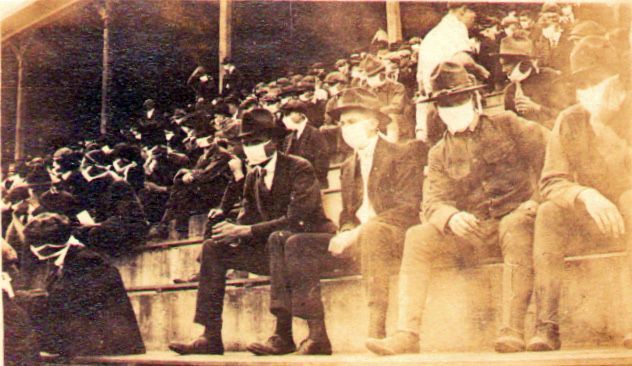
“If someone comes to the archives with a photograph, even 100 years from now, this collection can help us retell the story of what happened and sort of give a glimpse into what life was like during this time. Like with the 1918 photograph of students in the stands at Grant Field, we had a lot of people from sports venues and magazines contact us with that photo wanting to learn the history behind that. The archives help us to explain that history and that’s why they are so important.”

Thompson went on to explain that there were many interesting parallels between the Spanish Flu pandemic in 1918 and the current coronavirus pandemic. 

“It is interesting to look back at Tech during the Spanish Flu and see some parallels. For example, social distancing was sort of in place even back then and they knew to do that. They also used masks of course, as you can see from that 1918 photograph I mentioned earlier.”

Thompson claimed that many will want to document how students and people on campus, as well as how their experiences were.

 “These archives can be used for documenting experiences. Like with the 1918 Spanish Flu pandemic, a lot of people want to write books or even use these things for instruction in the classroom. These items can be used for instruction, research, projects, and as I mentioned before, documentaries and things of that sort.”

The Archives are collecting items with very few restrictions, as long as the item’s creator is the one submitting it. Thompson gave insight into where you can find inspiration for items to donate to the collection. 

“On our website you can find some ideas for items to kind of get those creative juices flowing. A professor in Scheller is giving us his last lecture to his medical related business class. So that is a really unique example.”

Although the Archives are collecting a wide array of materials, Thompson said photographs are best for capturing people’s individual experiences.

“Photographs can be from the spring semester or even from over the summer while everyone was home to sort of capture how everyone was feeling and all of the changes being dealt with. I had to go to campus a few weeks ago and was parked in the Peters parking deck. It was so odd to, around lunchtime, only see 4 cars in the parking deck. So just, things like that. The weirdness and how everyone is feeling during this odd time.”

Currently, the collection consists of some photographs such as Thompson’s photo of the empty parking deck, audio recordings from students which express their emotions while moving out of the dorms in the Spring, the Scheller professor’s last lecture, and a student’s project on designs which express their emotions during this time.

 “Most of the items we collect we are assuming will be digital so for this collection those items will be available for viewing on our website,” Thompson said. 

“You can search based on the type of item or just browse through the whole collection.”

To submit items virtually, students can go to the Archives homepage on their website. Once there, click the “Submit Now” button and upload your items through there. All of the instructions and any other information can be found on the web page in order to correctly document items. 

There is currently no cutoff date for when the collection will be accepting items so that the collection can capture how this fall semester will run and what our return to campus will be like. 

Posted in UncategorizedComments Off on COVID-19 archives collection seeks donations

Tech confirms COVID-19 cluster after first week of classes

Editor’s Note: Earlier today, we received a tip regarding a Greek organization, Sigma Alpha Epsilon, on campus and the organization’s number of reported positive coronavirus cases. The source was believed to be credible at the time, but after publishing the article, we received conflicting information which called the credibility of the tip into question. The section of the report below regarding the number of cases in Sigma Alpha Epsilon is erroneous, but there is a confirmed case of coronavirus within the organization. According to an email sent out by Tech’s Coronavirus Task Force, there is also another confirmed cluster of positive coronavirus reports in a Greek house in addition to Sigma Phi Epsilon. It is yet to be confirmed which exact Greek organization is infected.

On Aug. 22, Tech’s Covid-19 Exposure and Health Alerts page reported 33 new positive cases and confirmed the Institute’s first on-campus cluster. From those cases, 17 belong to the same off-campus Greek house with seven more cases being confirmed the day before. An inside source has confirmed that those 24 positive cases belong to Sigma Phi Epsilon (SigEp), a fraternity within the Interfraternity Council (IFC). 

The SigEp house, which is located on 5th St. NW, has been converted into an isolation space. Members of the fraternity who have tested negative for coronavirus are relocating for the time being, while members with positive cases who were living inside the house will remain there in quarantine. 

The source affiliated with the organization said that the first positive coronavirus case was confirmed on Aug. 19, with a handful of members within the fraternity showing symptoms. 

This exposure alert came after an email that was sent to the student body the day before on Aug. 20 from the Georgia Tech Coronavirus Task Force, which confirmed there were nine members of the same Greek household with coronavirus. 

“Because the students reported their positive tests to Stamps Health Services, this cluster was identified quickly, contact tracing and notification protocols were enacted promptly, and individuals have been appropriately isolated and quarantined,” the email read. 

The email later praised the student body’s participation in the surveillance testing program, which has made asymptomatic testing easily accessible to students on-campus. 

“We have seen a great response from many in our community, including those in the Greek community, who have shown up to participate in our surveillance testing program as well as practice the behaviors designed to minimize the risk of transmission. Collectively, however, we know we can do better.”

The fraternity released a statement on their Instagram account (@gtsigep) where they addressed the Tech community. 

“For the past several days, we have dealt with a spike in COVID-19 cases among our members. As of three days ago, our house was locked down to non-residents, and we have been working closely with our Alumni and Volunteer Corporation, the Office of Fraternity and Sorority Life, and Georgia Tech administration to test all other members of our chapter and to isolate those positive members, in compliance with requests from administration.” 

The fraternity’s statement went on to encourage other Greek organizations to be transparent about their positive coronavirus cases. 

“To our fellow Greek organizations – we have reported all positive cases to campus officials, and we encourage other organizations who have not to do so. We identified the majority of our cases through the assistance of Georgia Tech’s Coronavirus Task Force after a smaller spike was identified last week. Now is the time to step up and do the right thing

A separate source who is affiliated with Greek life and wishes to remain anonymous, has revealed that Sigma Alpha Epsilon (SAE), another organization under IFC, is allegedly not reporting positive cases within their fraternity. 

“SAE has 20+ cases of coronavirus and is intentionally not reporting them to the school,” said the anonymous source. 

It is currently unclear whether these alleged cases within SAE are connected to an off-campus party that occurred on the night of Aug. 18 at a bar named Churchill’s, located in Buckhead. 

“They were one of the three fraternities that threw a bar party at Churchill’s.” 

The other two fraternities whose members allegedly attended the off-campus party include Sigma Chi and Beta Theta Pi, with both organizations being IFC chapters as well. The off-campus party was held after the last night of sorority recruitment for the Collegiate Panhellenic Council (CPC). 

“[Bid day] is always celebrated by going out and hanging with the fraternities and tons of parties so that the new pledge classes can all meet,” said the anonymous source.

Students, faculty and staff who have tested positive for COVID-19 are encouraged to report their results to the Institute. The form to report positive cases can be found at health.gatech.edu/coronavirus.

Posted in UncategorizedComments Off on Tech confirms COVID-19 cluster after first week of classes

A love letter to Georgia Tech

Dear Georgia Tech,

Well. This isn’t how I thought we would be ending our journey together. I’m trying to buy into the idea that “it’s the climb” that matters, not reaching the top. Right now it feels a bit like we have turned around a few steps from the top of this mountain.

The only thing I can think to do or say is to express gratitude to you and the lessons I have learned here. So that’s what I will do.

Freshman year, I moved into Howell Hall. I left my door open as much as I could that first weekend, hoping that people would stop in and introduce themselves. They did. The girls I met on the second floor of Howell remain some of my closest friends to this day.

I said yes to everything those first few weeks. I said yes to cheesy freshman activities, to writing for the Technique, to attending every event I was invited to, to exploring campus late at night. This spirit of willingness and openness has transformed my Tech experience. I think in some ways I am still the bright-eyed and bushy-tailed freshman I used to be.

Thank you, Tech, for teaching me how to be open.

Sophomore year, I struggled. I suffered from severe anxiety and a constant, paralyzing fear. I hid under the counter when I heard a loud noise. I had panic attacks. I stepped down from my position as News Editor. I felt I was letting you, Georgia Tech, down.

Through all of this, you continued to expect the best from me. For better or for worse, the world was continuing to move on around me, and at some point I had to pick myself up and carry on. Once I decided to do this, it took all my strength, and all of the support of my loved ones. But I know now that I can pick myself up again and again.

Thank you, Tech, for teaching me how to weather a storm.

Junior year, I had returned from a summer in Europe. I felt refreshed and bold. I applied for internships at companies I had never even heard of, and in the spring I moved across the country for a semester in California. I spent the next few months in Austin. I traveled, and I met new people. I learned how to be alone, which was the scariest of all.

I felt like I had been equipped with skills I needed to make something of myself. That summer, I accepted a job offer. I fully committed myself to my future.

Thank you, Tech, for teaching me how to be brave.

Senior year, I felt secure. It was in that security that I grew the most. I began to settle into the person I know I am. I mentored younger writers, invested in new relationships, spent more time outdoors. I still lived within a few steps of those same girls from my freshman hall, but now they cooked with me in our apartment or grabbed coffee for a study session off campus. I enjoyed lunch with my coworkers on a sunny March day and walks with LMC friends between classes.

Most of all, I felt like I belonged on this campus, with these people. I loved the trees on Cherry Street and the flowers by Tech Tower. The best place to nap was on the red couch in the Technique office, and the best place to sit on a blanket with friends was Tech Green. I had cried in the Skiles Garden, and I had heard my laugh echo in the atrium of the architecture building. 

Thank you, Tech, for giving me a second home and a chosen family.

I think it is only through this forced distance that I have truly fallen in love with you, Tech. I am endlessly grateful for the opportunities, relationships, knowledge and passion that has arisen through my time with you.

I will be back someday to walk across the stage and toss my cap into the air. THWg.

Yours,

Polly

Posted in UncategorizedComments Off on A love letter to Georgia Tech

SMILE spreads positivity through “Hearts for Campus” project

SMILE, one of Tech’s newest campus organizations, is hoping to welcome students, faculty and staff back this year with printed, heart-shaped messages strung around campus.

SMILE, which stands for “Spreading Messages in Love and Encouragement,” has been collecting messages from members of the Tech community as part of their “Hearts for Campus” campaign. Individuals are encouraged to contribute their favorite Tech memory, a note about what they miss about campus or any general positive and welcoming messages to the project. 

“The Hearts for Campus initiative is to promote a positive and unifying community experience for the Georgia Tech community as a whole. It’s an opportunity for incoming students, returning students, faculty, staff and just everyone to get out whatever’s meaningful to them about Georgia Tech,” said Kori Alejandro, fourth-year EE and SMILE member. 

Robert Weimar, a third-year BA who serves as SMILE’s Executive Vice President, explained the inspiration behind the project. 

“We came up with this project this summer because we wanted to find a way to put on an event that promotes positivity while maintaining social distancing measures,” said Weimar. “We thought it would be poignant if students and faculty could somehow contribute something that would appear physically on campus even if they aren’t there, and we also figured that a lot of us have been missing Tech for a variety of reasons.” 

The white and gold printed hearts can be found around Tech Green, with the possibility of the messages spreading into other parts of campus depending on how many submissions they receive. 

“I’m hoping personally that [the Hearts for Campus project] just makes people feel like they’re not alone on this big campus,” said Heather Fleming, second-year ID, who has helped with the marketing part of the project.

“Tech is one of those places where I think people feel like there’s this cloud of stress that sits over us because we’re all going through hard classes, it’s a hard schedule and we’re all going through a lot during our day-to-day. So I’m hoping it’ll remind people that there are so many positive things about Georgia Tech … I’m hoping it gives them the energy and the determination to create positive memories and connections for themselves,” said Fleming. 

The hearts will be taken down a couple weeks into the school year, but SMILE hopes to preserve them for years to come. 

“The plan for after Hearts for Campus is to put all of the hearts in some sort of album or binder so that way we can display them all, and hopefully donate it to the library. That way it can be a part of the archives and they can look back on it ten years from now and see what people were doing at Tech and what they loved about campus,” said Fleming. 

Students interested in joining SMILE can visit the organization’s page on Engage for more information. Fleming, who joined earlier this summer, discussed what made her get involved with the organization. 

“There’s nothing better to do than just to be kind to people. It’s not hard, and it can make or break someone’s day,” said Fleming. “It’s nice that SMILE is smaller. It’s like just one big smiley happy family of people who just want to do nice things for other people.” 

The deadline to submit messages to the Hearts for Campus project is Monday, Aug. 10. The form can be found at tinyurl.com/hearts4campus and all students, faculty, staff and alumni of the Tech community are welcome to contribute. 

Posted in UncategorizedComments Off on SMILE spreads positivity through “Hearts for Campus” project

McLaughlin named dean of College of Engineering

Courtesy of GT Communications

After an exhaustive international search process, Steven McLaughlin has been named dean of the College of Engineering.

McLaughlin was the only finalist of the four named to already have a history at Tech, where he currently serves as the Steve Chaddick School Chair and a professor in the School of Electrical and Computer Engineering. He has accepted his new position and will officially begin on Sept. 15, replacing Interim Dean Larry Jacobs.

McLaughlin’s finalist seminar on June 26 was titled “Being Fearless in an Age of Acceleration” and pitched a vision for a College of Engineering that “act[s] bolder and collaborate[s] more.”

He came to Tech in 1996 and has been awarded both the honor Knight of the National Order of Merit from the Republic of France and the Presidential Early Career Award for Scientists and Engineers in the U.S. He holds a Bachelor of Science in Electrical Engineering from Northwestern University as well as a Master of Science in Engineering from Princeton and a Ph.D. from the University of Michigan.

Posted in UncategorizedComments Off on McLaughlin named dean of College of Engineering

Commission requests, is blocked from receiving extensive voter data

Courtesy of Tim Evanson

A commission created by President Trump issued a letter on June 28 that, for better or for worse, demonstrated the complications of federalism in which states administer their own elections. Said complications have proved so controversial that the letter has essentially been temporarily rescinded as of July 10.

The Presidential Advisory Commission on Election Integrity, formed this past May, initially sent a two-page letter attributed to vice chairman Kris Kobach to most states’ secretaries of state. In said letter, Kobach requested — and, critically, did not mandate — that states answer a questionnaire about election procedures (“What changes, if any, to federal election laws would you recommend to enhance the integrity of federal elections?” “What evidence or information do you have regarding instances of voter fraud or registration fraud in your state?”) as well as provide extensive data on voting. Though the laws of each individual state would need to be followed in this hypothetical disclosure, said data could include first and last names of registered voters, their addresses and dates of birth, the last four digits of their social security number, information on any felony convictions, their voter histories from 2006 onward and their political party if recorded.  

The letter suggests that secretaries of state submit their responses electronically to either an email address attributed to the commission or via the secure FTP site Safe Access File Exchange (or “SAFE”), which is used by the federal government for large data transfers on properly-configured military computers. It then reminds readers that any documents submitted to the commission can subsequently be made public.

On July 10, the commission issued a subsequent email to several states asking for a hold on sending any data, citing a complaint filed by the Electronic Privacy Information Center which is waiting on a federal court’s ruling. The American Civil Liberties Union had filed a lawsuit against the commission earlier the same day and cited ongoing concerns regarding the commission’s potentially-obfuscated credibility and intent.

More than 40 states had already responded with complete or partial refusals to comply. Those who would have provided some of the requested information include Vermont and North Carolina, both of which have cited preexisting open records laws and will not provide further information. Even Kansas, the state in which Kobach himself currently serves as Secretary of State, cannot legally provide social security numbers.

Wisconsin, in the wake of the July 10 email, aborted plans to inform the commission how to purchase its publicly-available data for a cool sum of $12,500. Arkansas’ secretary of state had apparently already sent its eligible data, which court documents indicate will be deleted without the commission ever accessing the information.

The state of Georgia would have provided information which is already publicly available, including voters’ names, parties and voting histories, but would withhold private information including social security numbers and driver’s license numbers. Secretary of State Brian Kemp and his office have repeatedly indicated that they have seen no evidence of fraudulent votes in the 2016 elections, and have cited Georgia’s voter ID laws as an important means to prevent fraud.

Mississippi’s secretary of state, Delbert Hosemann, indicated in a statement that his office had not received any correspondence from the Election Integrity Commission as of June 30 and had received a copy of the letter from another state. Were they to receive the request, Hosemann indicated playfully and firmly that Mississippi would not comply. It joined California, Kentucky, Massachusetts, Minnesota, New York, Pennsylvania, South Dakota, Tennessee and Virginia, all of which said they would not comply on states’ rights and voter privacy grounds.

Kobach’s letter initially requested that any information be submitted to the commission by July 14, which is now days away. Assuming the states who had denied the request never ended up contributing data, over 30 percent of the U.S. population would not have been represented in whatever data analyses the commission undertook. For the purposes of gaining insight into national-level trends those omissions would have posed significant challenges, especially because both important red and blue strongholds were then not represented.

It remains unclear precisely what the commission intended to do with the data they might have collected. The June 28 letter describes the group’s mission as “studying the registration and voting processes … and submitting a report to the President of the United States that identifies laws, rules, policies, activities, strategies and practices that enhance or undermine the American people’s confidence in the integrity of federal elections processes.” It aimed to have a report written and presented to President Trump sometime in 2018 and may have subsequently issued recommendations to individual states.

Critics of the commission have suggested since its creation that it is unnecessary at best, as there has not yet been any evidence of mass voter fraud, and potentially malevolent at worst. Governor Andrew Cuomo of New York referenced said allegations in his statement of noncompliance, saying that his state would not “perpetuate the myth voter fraud [sic] played a role in our election” and suggested that the commission focus on ballot accessibility.

President Trump fired back at the states who have refused to participate on July 1, tweeting: “Numerous states are refusing to give information to the very distinguished VOTER FRAUD PANEL. What are they trying to hide?” The White House has not yet offered comment on the commission’s halted activities.

Trump has claimed in the past that he would have won the popular vote in 2016 had it not been for mass voter fraud, particularly in Virginia, New Hampshire and California — claims which have been rated “Pants On Fire” by Politifact. While hard numbers on the frequency of fraudulent votes do not exist, given the ease with which mistakes and accidents can be mistaken for fraud, it is estimated that fewer than 75 noncitizens were able to vote in U.S. elections between 2000 and 2014.

Posted in UncategorizedComments Off on Commission requests, is blocked from receiving extensive voter data