

Author Archives | New Staff Writer

The disappearing right to anonymity

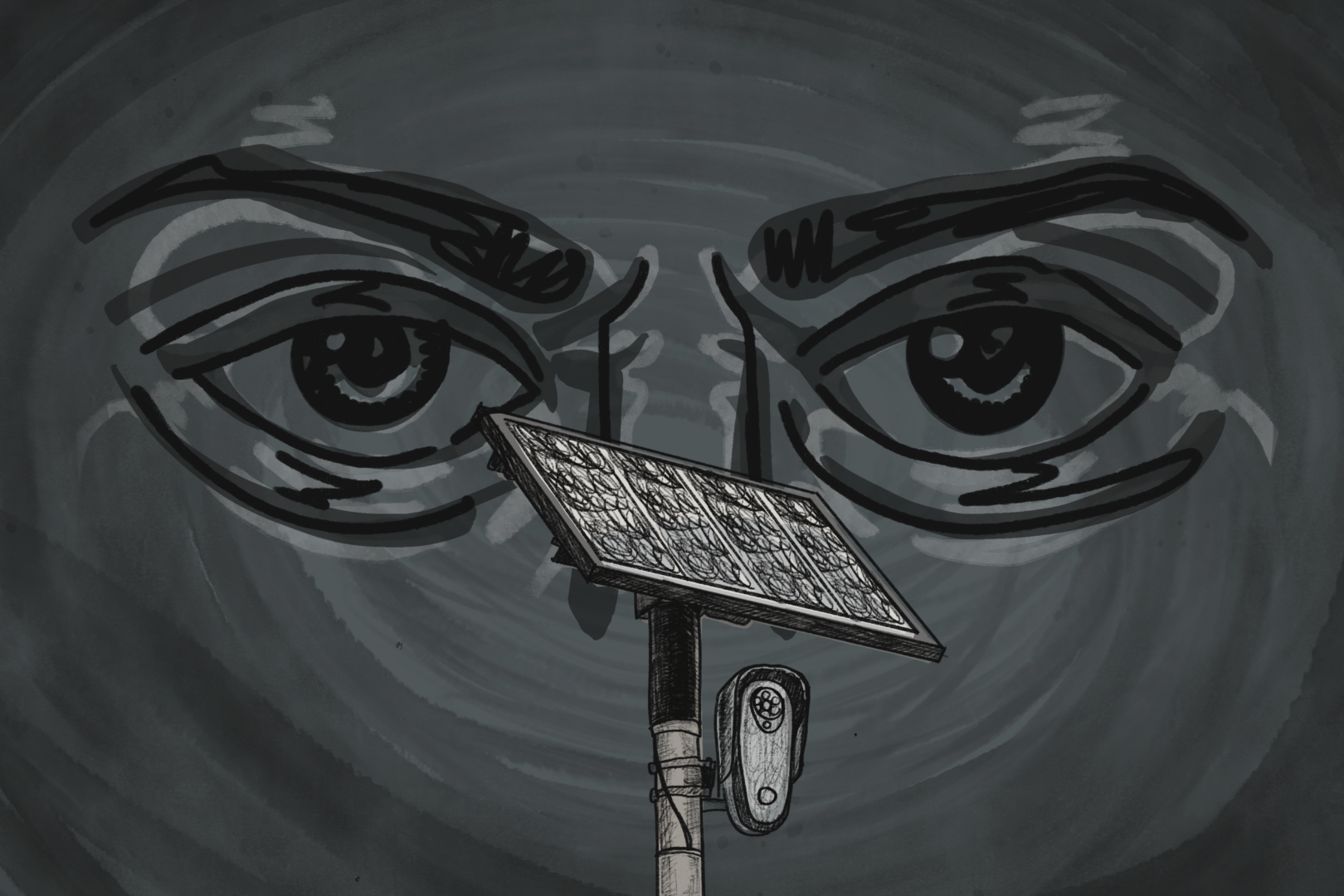
Isabel Bustos/The Cougar

Knowledge drives the world. Who has it, who doesn’t and how it can be controlled determines how people move through it.

It therefore stands to reason that people would want to be in control of how they are perceived, or, alternatively, how they are not perceived.

This latter option can be especially difficult to achieve today due to the overwhelming number of eyes in both the physical and digital world.

The use of “security cameras”

When it comes to the former, security cameras are omnipresent. However, these cameras are not usually connected to a wider network.

If they were, they would be much like the type of “security camera” found in Flock cameras located throughout the United States, including Houston.

They are purportedly automatic license plate readers, but the Harris County Sheriff’s Office also utilizes that functionality and a facial recognition technology called Clearview AI.

With these technologies located throughout the city, a person can potentially be tracked across miles and miles, creating a record of their movements that can be accessed by people with the right credentials.

In a world where the government grows ever more untrustworthy, this violation of privacy only creates further opportunities for personal information to be used against someone.

When posts become data

Indeed, the government already collects and disseminates information on social media wantonly.

The Brennan Center for Justice notes that there are limits on how the government may collect information from social media through the Privacy Act and individual social media platforms, though the former is very broad in its scope.

In addition, both of those types of limitations may be ignored by the government, especially in an age where law often seems more like a suggestion than anything else.

That information, when collected, is used by government agencies, including the FBI, DHS and the State Department. The Brennan Center for Justice reports that departments may share information collected on social media between them as they choose.

This grows more concerning considering the number of people who share their political thoughts on social media.

Though there is no reason to start self-censoring, there is reason to be concerned that, if the government were to shift further into authoritarianism, people could face consequences simply for expressing a different opinion.

Social media also does not necessarily mean a loss of anonymity for many who choose to go by an alias. They too could still be identified through various methods, including accidental recordings.

Privacy matters

For many, it can be hard to imagine why someone would willingly remain anonymous or go to great lengths to protect that anonymity.

Regardless of their reasons, those people exist and their wishes should be respected just as much as those who do not mind how their information is distributed.

Individually, this can be achieved by asking for permission before uploading content to social media or by warning others of Flock cameras in the area. 

Moving up in scale, the world has a responsibility to regulate these violations of privacy and to actually enforce those regulations. 

Privacy should not have to mean disappearing from the world. But as social media and cameras continue to make people easier to track, anonymity is becoming harder to protect and that should concern everyone.

opinion@thedailycougar.com

—
“The disappearing right to anonymity” was originally posted on The Cougar

Posted in UncategorizedComments Off on The disappearing right to anonymity

Fan fiction is saving youth literacy

For years, fan fiction has been viewed as amateur writing rather than a legitimate creative outlet. But that criticism ignores one of the most obvious truths about young readers. They have not stopped caring about stories. They just want to participate in them. 

For many young adults, reading does not begin with a classic novel or a school assignment. It begins online, scrolling through chapters written by people who love the same characters they do. 

That does not make fan fiction less literary. It makes it one of the most accessible storytelling spaces for young adults.

Fan fiction allows readers to engage with stories beyond the page. It allows them to rewrite endings, expand character arcs and explore identities that may be missing from mainstream books.

A background character can become the lead. A world that once felt limited can be expanded. At its core, fan fiction is participatory literature. Readers are not just consuming a story. They are responding to it, reshaping it and even publishing their own versions.

More than a corner of the internet

That participation is part of what makes fan fiction so influential. Platforms such as Archive of Our Own and Wattpad have given young people access to writing communities without needing a publisher.

Archive of Our Own has grown into one of the largest fan fiction archives online, with 10 million registered users and 17 million works across thousands of fandoms. Wattpad has also become a major platform for writers, with stories from original fiction to fandom-inspired work. 

The size of these platforms shows that fan fiction is not a small corner of the internet. It is a major part of how young people read, write and talk about stories.

For young adults, fan fiction makes reading feel personal. Instead of being told what matters in a story, readers decide what characters and themes to follow. That freedom is especially important for young readers who rarely see themselves represented in traditional publishing. 

It creates room for stories about race, gender, sexuality, disability, culture and mental health in ways mainstream media may avoid or overlook. 

Learning outside the classroom

Fan fiction also works as an informal writing workshop. Writers receive comments from readers after each chapter. Not every comment is a formal critique, but instead includes encouragement, grammar corrections, suggestions or emotional reactions. 

This exchange between writer and audience helps young writers understand pacing, character development and reader response.

Educators describe fan fiction communities as spaces where writers learn through fans’ feedback. Unlike traditional classrooms, these platforms are built around choice. Writers are motivated because they care about the characters and the people reading their work.

That motivation matters at a time when many educators and literacy organizations are concerned about young people reading less for enjoyment. Fan fiction offers a different path. It may not always look like traditional reading, but it still requires interpretation, analysis, creativity and revision. 

Like an English class, fan fiction asks readers to analyze characters, themes, and conflicts. The difference is that fandom writing lets them do it through stories they already love.

Rewriting the literary canon

Also influencing mainstream publishing, stories that once lived in online fandom spaces now shape books, television and pop culture. Writers who began in online archives have gone on to publish original books, and publishers now pay closer attention to these online platforms in search of new talent.

Still, fan fiction faces criticism. Some argue that it relies too heavily on existing worlds or deem its form of publishing unprofessional.

But literature has always been built on reinterpretation. Myths are retold, fairy tales are rewritten as modern books continue to remix history, folklore and classic texts. 

Fan fiction is treated as strange only because it happens online and is often associated with young people, fandom and women. 

This criticism overlooks what fan fiction actually does. It teaches young readers that stories are not fixed objects. They can be questioned, expanded and reimagined, giving them the confidence to share their work.

Fan fiction may not replace traditional literature, but it does support it. It keeps young people reading when required books do not. It builds communities around storytelling and gives readers a reason to care deeply about narrative. 

For many young adults, fan fiction is not a guilty pleasure. It is their first library and first creative home. It is not the opposite of literature. 

It is proof that young people were never satisfied with only being readers, but instead loved stories enough to start writing their own.

Opinion@thedailycougar.com

—
“Fan fiction is saving youth literacy” was originally posted on The Cougar

Posted in UncategorizedComments Off on Fan fiction is saving youth literacy