
Author Archives | Maria Krylova

Chess: The mental stimulant that’s actually good for you

Audrey Cedor / The Cougar

Quick question, can you think of a specific TikTok video you saw yesterday? What about an Instagram Reel? Maybe you can name one out of a hundred. As for me, I spent all night scrolling TikTok yesterday and couldn’t tell you a single thing I watched.

Doomscrolling has become a familiar tradition online. Before TikTok, Instagram Reels and YouTube Shorts, we scrolled through Tumblr posts, Pinterest feeds and bottomless wells of Facebook memes.

As one Reddit user wrote, “15 years ago we used to doomscroll text…10 years ago we doomscrolled images…five years ago we started doomscrolling videos.”

However, the short-form video style of content is uniquely dangerous. A study published in the American Psychological Association found that “repeated exposure to highly stimulating, fast-paced content may contribute to habituation, in which users become desensitized to slower, more effortful cognitive tasks.”

In short, TikTok and Instagram videos act as addictive stimuli; their nature leads users to binge content and overwhelm their brains with information. While doomscrolling may feel relaxing, it quietly destroys your ability to concentrate. 

So, how do you protect your brain in a world full of endless video content? The answer: chess.

Why chess beats scrolling

I know, board games in the big 2026, but chess isn’t a regular game. It is often said that there are more possible variations of a chess game than there are atoms in the observable universe.

Which means chess has the same infinite possibilities as a bottomless TikTok feed, without all the looksmaxxers, people filming themselves crying and copy-paste iterations of the same trends.

Playing chess is a healthy alternative that lets you stimulate your brain in a slow, more deliberate way. It puts you into a “flow state” and produces many mental benefits over time, like improving memory and creativity, enhancing critical thinking and boosting self-confidence. Chess helps prevent dementia and can even be used to manage symptoms of ADHD. 

It also gives people a chance to connect with each other in a competitive way that’s cheaper and more accessible than sports, thanks to online platforms like Chess.com. Sustainable stimulation without the brain rot.

Well, you might say, chess is boring. It’s a pastime for lonely grandfathers sitting in public parks, not young people and especially not young women. It’s never been used in ancient Indian battle strategy, or routinely taught to knights and royalty as a status symbol and educational tool.

It wasn’t banned by the Taliban last year due to concerns of gambling, and it certainly didn’t cause the U.S. and Soviet Union to butt heads after a surprising American victory in 1972. It’s a perfectly irrelevant game without almost 1,500 years of history.

The gender divide is trickier. Chess is definitely male-dominated, the top champions being Garry’s, Bobby’s and Magnuses. It can feel intimidating, lonely or plain uninteresting for women to enter what seems like a stuffy “male” activity. 

However, this participation gap is all the more reason to bring more women in. After all, the game of chess we know today wouldn’t exist if it weren’t for a woman.

A game shaped by women

The queen is now the most powerful chess piece, but it used to be one of the weakest; it could only move one square diagonally, like a pawn. In fact, queens weren’t in the original game at all; a piece called a “vizier” was used instead.

Things changed in 1475 when Queen Isabella of Spain began expanding her influence, uniting two fractured kingdoms into a strong Spanish state and funding expeditions that led Europeans to discover the Americas. 

This powerful female monarch inspired an upgrade to the chess piece, and the rules changed so that the queen could move in any direction and in long strides. The whole game became faster, more exciting and more decisive. “Mad Queen’s Chess” became the pioneer of the contemporary game.

At the end of the day, your brain is the most powerful piece on the board that is your body. Like the queen, it needs to operate, not in short, limited bursts, but in sustained, sweeping movements. 

You don’t have to give up the Internet forever or never go on TikTok again. Just occasionally exercising your cognitive abilities with chess would be a good investment in your mind.

And while you may not remember any specific games, you will be better able to remember your own life. In a world full of pawns, be the mad queen.

opinion@thedailycougar.com

—
“Chess: The mental stimulant that’s actually good for you” was originally posted on The Cougar
Posted in UncategorizedComments Off on Chess: The mental stimulant that’s actually good for you

Chess: The mental stimulant that’s actually good for you

Audrey Cedor / The Cougar

Quick question, can you think of a specific TikTok video you saw yesterday? What about an Instagram Reel? Maybe you can name one out of a hundred. As for me, I spent all night scrolling TikTok yesterday and couldn’t tell you a single thing I watched.

Doomscrolling has become a familiar tradition online. Before TikTok, Instagram Reels and YouTube Shorts, we scrolled through Tumblr posts, Pinterest feeds and bottomless wells of Facebook memes.

As one Reddit user wrote, “15 years ago we used to doomscroll text…10 years ago we doomscrolled images…five years ago we started doomscrolling videos.”

However, the short-form video style of content is uniquely dangerous. A study published in the American Psychological Association found that “repeated exposure to highly stimulating, fast-paced content may contribute to habituation, in which users become desensitized to slower, more effortful cognitive tasks.”

In short, TikTok and Instagram videos act as addictive stimuli; their nature leads users to binge content and overwhelm their brains with information. While doomscrolling may feel relaxing, it quietly destroys your ability to concentrate. 

So, how do you protect your brain in a world full of endless video content? The answer: chess.

Why chess beats scrolling

I know, board games in the big 2026, but chess isn’t a regular game. It is often said that there are more possible variations of a chess game than there are atoms in the observable universe.

Which means chess has the same infinite possibilities as a bottomless TikTok feed, without all the looksmaxxers, people filming themselves crying and copy-paste iterations of the same trends.

Playing chess is a healthy alternative that lets you stimulate your brain in a slow, more deliberate way. It puts you into a “flow state” and produces many mental benefits over time, like improving memory and creativity, enhancing critical thinking and boosting self-confidence. Chess helps prevent dementia and can even be used to manage symptoms of ADHD. 

It also gives people a chance to connect with each other in a competitive way that’s cheaper and more accessible than sports, thanks to online platforms like Chess.com. Sustainable stimulation without the brain rot.

Well, you might say, chess is boring. It’s a pastime for lonely grandfathers sitting in public parks, not young people and especially not young women. It’s never been used in ancient Indian battle strategy, or routinely taught to knights and royalty as a status symbol and educational tool.

It wasn’t banned by the Taliban last year due to concerns of gambling, and it certainly didn’t cause the U.S. and Soviet Union to butt heads after a surprising American victory in 1972. It’s a perfectly irrelevant game without almost 1,500 years of history.

The gender divide is trickier. Chess is definitely male-dominated, the top champions being Garry’s, Bobby’s and Magnuses. It can feel intimidating, lonely or plain uninteresting for women to enter what seems like a stuffy “male” activity. 

However, this participation gap is all the more reason to bring more women in. After all, the game of chess we know today wouldn’t exist if it weren’t for a woman.

A game shaped by women

The queen is now the most powerful chess piece, but it used to be one of the weakest; it could only move one square diagonally, like a pawn. In fact, queens weren’t in the original game at all; a piece called a “vizier” was used instead.

Things changed in 1475 when Queen Isabella of Spain began expanding her influence, uniting two fractured kingdoms into a strong Spanish state and funding expeditions that led Europeans to discover the Americas. 

This powerful female monarch inspired an upgrade to the chess piece, and the rules changed so that the queen could move in any direction and in long strides. The whole game became faster, more exciting and more decisive. “Mad Queen’s Chess” became the pioneer of the contemporary game.

At the end of the day, your brain is the most powerful piece on the board that is your body. Like the queen, it needs to operate, not in short, limited bursts, but in sustained, sweeping movements. 

You don’t have to give up the Internet forever or never go on TikTok again. Just occasionally exercising your cognitive abilities with chess would be a good investment in your mind.

And while you may not remember any specific games, you will be better able to remember your own life. In a world full of pawns, be the mad queen.

opinion@thedailycougar.com

—
“Chess: The mental stimulant that’s actually good for you” was originally posted on The Cougar
Posted in UncategorizedComments Off on Chess: The mental stimulant that’s actually good for you

Chess: The mental stimulant that’s actually good for you

Audrey Cedor / The Cougar

Quick question, can you think of a specific TikTok video you saw yesterday? What about an Instagram Reel? Maybe you can name one out of a hundred. As for me, I spent all night scrolling TikTok yesterday and couldn’t tell you a single thing I watched.

Doomscrolling has become a familiar tradition online. Before TikTok, Instagram Reels and YouTube Shorts, we scrolled through Tumblr posts, Pinterest feeds and bottomless wells of Facebook memes.

As one Reddit user wrote, “15 years ago we used to doomscroll text…10 years ago we doomscrolled images…five years ago we started doomscrolling videos.”

However, the short-form video style of content is uniquely dangerous. A study published in the American Psychological Association found that “repeated exposure to highly stimulating, fast-paced content may contribute to habituation, in which users become desensitized to slower, more effortful cognitive tasks.”

In short, TikTok and Instagram videos act as addictive stimuli; their nature leads users to binge content and overwhelm their brains with information. While doomscrolling may feel relaxing, it quietly destroys your ability to concentrate. 

So, how do you protect your brain in a world full of endless video content? The answer: chess.

Why chess beats scrolling

I know, board games in the big 2026, but chess isn’t a regular game. It is often said that there are more possible variations of a chess game than there are atoms in the observable universe.

Which means chess has the same infinite possibilities as a bottomless TikTok feed, without all the looksmaxxers, people filming themselves crying and copy-paste iterations of the same trends.

Playing chess is a healthy alternative that lets you stimulate your brain in a slow, more deliberate way. It puts you into a “flow state” and produces many mental benefits over time, like improving memory and creativity, enhancing critical thinking and boosting self-confidence. Chess helps prevent dementia and can even be used to manage symptoms of ADHD. 

It also gives people a chance to connect with each other in a competitive way that’s cheaper and more accessible than sports, thanks to online platforms like Chess.com. Sustainable stimulation without the brain rot.

Well, you might say, chess is boring. It’s a pastime for lonely grandfathers sitting in public parks, not young people and especially not young women. It’s never been used in ancient Indian battle strategy, or routinely taught to knights and royalty as a status symbol and educational tool.

It wasn’t banned by the Taliban last year due to concerns of gambling, and it certainly didn’t cause the U.S. and Soviet Union to butt heads after a surprising American victory in 1972. It’s a perfectly irrelevant game without almost 1,500 years of history.

The gender divide is trickier. Chess is definitely male-dominated, the top champions being Garry’s, Bobby’s and Magnuses. It can feel intimidating, lonely or plain uninteresting for women to enter what seems like a stuffy “male” activity. 

However, this participation gap is all the more reason to bring more women in. After all, the game of chess we know today wouldn’t exist if it weren’t for a woman.

A game shaped by women

The queen is now the most powerful chess piece, but it used to be one of the weakest; it could only move one square diagonally, like a pawn. In fact, queens weren’t in the original game at all; a piece called a “vizier” was used instead.

Things changed in 1475 when Queen Isabella of Spain began expanding her influence, uniting two fractured kingdoms into a strong Spanish state and funding expeditions that led Europeans to discover the Americas. 

This powerful female monarch inspired an upgrade to the chess piece, and the rules changed so that the queen could move in any direction and in long strides. The whole game became faster, more exciting and more decisive. “Mad Queen’s Chess” became the pioneer of the contemporary game.

At the end of the day, your brain is the most powerful piece on the board that is your body. Like the queen, it needs to operate, not in short, limited bursts, but in sustained, sweeping movements. 

You don’t have to give up the Internet forever or never go on TikTok again. Just occasionally exercising your cognitive abilities with chess would be a good investment in your mind.

And while you may not remember any specific games, you will be better able to remember your own life. In a world full of pawns, be the mad queen.

opinion@thedailycougar.com

—
“Chess: The mental stimulant that’s actually good for you” was originally posted on The Cougar
Posted in UncategorizedComments Off on Chess: The mental stimulant that’s actually good for you

Chess: The mental stimulant that’s actually good for you

Audrey Cedor / The Cougar

Quick question, can you think of a specific TikTok video you saw yesterday? What about an Instagram Reel? Maybe you can name one out of a hundred. As for me, I spent all night scrolling TikTok yesterday and couldn’t tell you a single thing I watched.

Doomscrolling has become a familiar tradition online. Before TikTok, Instagram Reels and YouTube Shorts, we scrolled through Tumblr posts, Pinterest feeds and bottomless wells of Facebook memes.

As one Reddit user wrote, “15 years ago we used to doomscroll text…10 years ago we doomscrolled images…five years ago we started doomscrolling videos.”

However, the short-form video style of content is uniquely dangerous. A study published in the American Psychological Association found that “repeated exposure to highly stimulating, fast-paced content may contribute to habituation, in which users become desensitized to slower, more effortful cognitive tasks.”

In short, TikTok and Instagram videos act as addictive stimuli; their nature leads users to binge content and overwhelm their brains with information. While doomscrolling may feel relaxing, it quietly destroys your ability to concentrate. 

So, how do you protect your brain in a world full of endless video content? The answer: chess.

Why chess beats scrolling

I know, board games in the big 2026, but chess isn’t a regular game. It is often said that there are more possible variations of a chess game than there are atoms in the observable universe.

Which means chess has the same infinite possibilities as a bottomless TikTok feed, without all the looksmaxxers, people filming themselves crying and copy-paste iterations of the same trends.

Playing chess is a healthy alternative that lets you stimulate your brain in a slow, more deliberate way. It puts you into a “flow state” and produces many mental benefits over time, like improving memory and creativity, enhancing critical thinking and boosting self-confidence. Chess helps prevent dementia and can even be used to manage symptoms of ADHD. 

It also gives people a chance to connect with each other in a competitive way that’s cheaper and more accessible than sports, thanks to online platforms like Chess.com. Sustainable stimulation without the brain rot.

Well, you might say, chess is boring. It’s a pastime for lonely grandfathers sitting in public parks, not young people and especially not young women. It’s never been used in ancient Indian battle strategy, or routinely taught to knights and royalty as a status symbol and educational tool.

It wasn’t banned by the Taliban last year due to concerns of gambling, and it certainly didn’t cause the U.S. and Soviet Union to butt heads after a surprising American victory in 1972. It’s a perfectly irrelevant game without almost 1,500 years of history.

The gender divide is trickier. Chess is definitely male-dominated, the top champions being Garry’s, Bobby’s and Magnuses. It can feel intimidating, lonely or plain uninteresting for women to enter what seems like a stuffy “male” activity. 

However, this participation gap is all the more reason to bring more women in. After all, the game of chess we know today wouldn’t exist if it weren’t for a woman.

A game shaped by women

The queen is now the most powerful chess piece, but it used to be one of the weakest; it could only move one square diagonally, like a pawn. In fact, queens weren’t in the original game at all; a piece called a “vizier” was used instead.

Things changed in 1475 when Queen Isabella of Spain began expanding her influence, uniting two fractured kingdoms into a strong Spanish state and funding expeditions that led Europeans to discover the Americas. 

This powerful female monarch inspired an upgrade to the chess piece, and the rules changed so that the queen could move in any direction and in long strides. The whole game became faster, more exciting and more decisive. “Mad Queen’s Chess” became the pioneer of the contemporary game.

At the end of the day, your brain is the most powerful piece on the board that is your body. Like the queen, it needs to operate, not in short, limited bursts, but in sustained, sweeping movements. 

You don’t have to give up the Internet forever or never go on TikTok again. Just occasionally exercising your cognitive abilities with chess would be a good investment in your mind.

And while you may not remember any specific games, you will be better able to remember your own life. In a world full of pawns, be the mad queen.

opinion@thedailycougar.com

—
“Chess: The mental stimulant that’s actually good for you” was originally posted on The Cougar

Posted in UncategorizedComments Off on Chess: The mental stimulant that’s actually good for you

The Heritage Foundation’s war on choice

Rishi Chava/ The Cougar

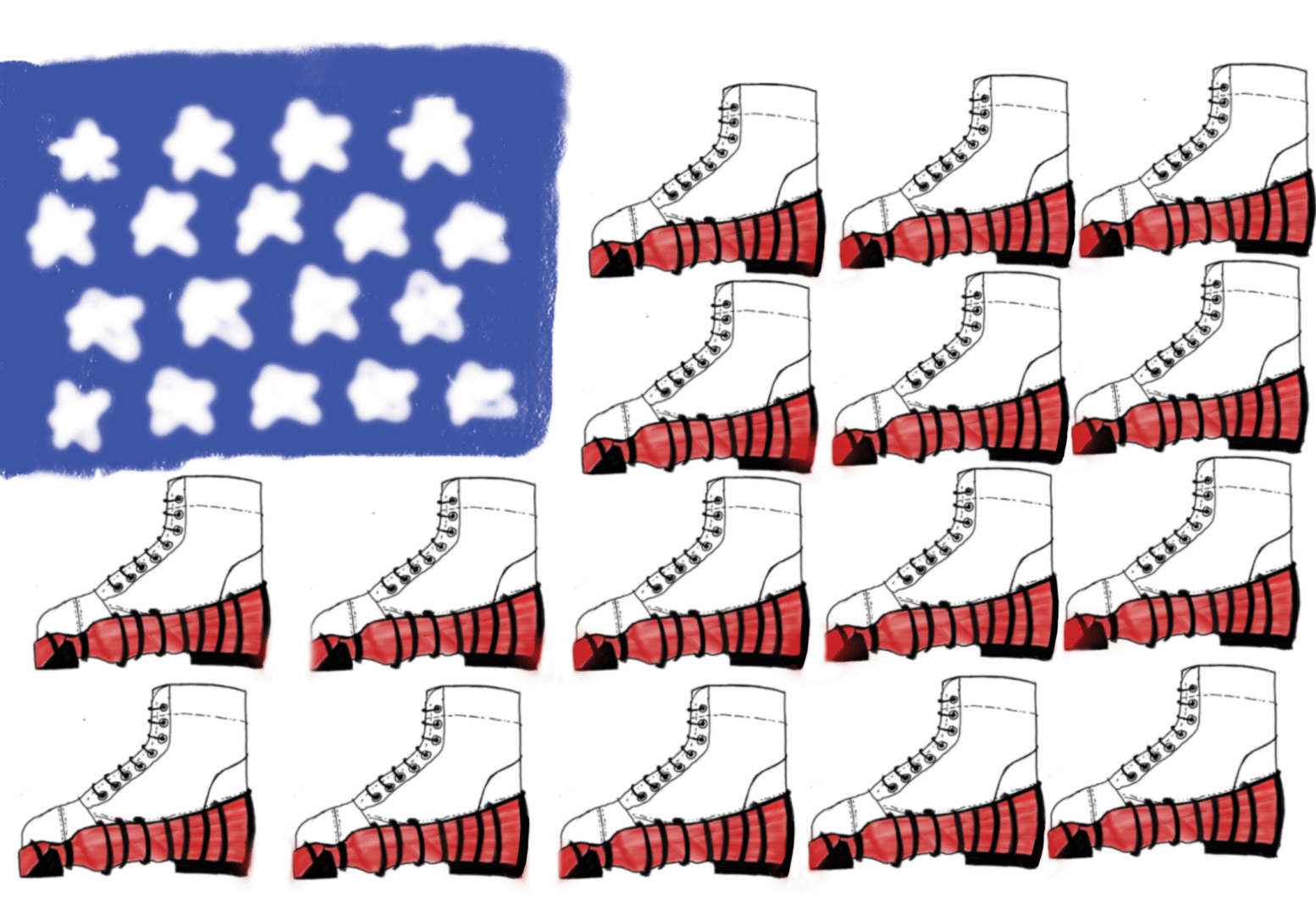
The Heritage Foundation is the dark dragon looming in the shadows behind some of Trump’s most dangerous policies. A far-right Christian nationalist group, which also created Project 2025, laid the plans for mass deportation, attacks on reproductive care and gutting of the bureaucracy that we are living through today.

Now, Heritage has come out with a new plan, “Saving America by Saving the Family,” where women are once again the sacrificial lambs.

The proposal’s purpose is “to remove the many obstacles blocking the formation of healthy families.” According to them, a healthy family, is between a fertile man and woman, no LGBTQ+ space allowed. 

What are these obstacles? Seemingly everything: welfare programs prioritizing single moms, birth control, the legalization of gay marriage, no-fault divorces and higher education. Young Americans are apparently wasting their time pursuing pointless credentials.

Higher education

College is painted as a kindergarten playground where young adults can prolong being kids for as long as possible, as if learning isn’t an adult pursuit. 

Heritage frames their argument as a battle against degrees required for jobs that don’t need them. However, it completely ignores the benefits of college that aren’t related to book smarts.

Learning about the world, meeting people of various backgrounds and opinions, discovering new hobbies and networking are just as crucial. 

Their ‘success sequence’ involves people getting married right after high school, going to work and immediately having kids. Curricula should focus on “practical knowledge that prepares young people for a successful family,” because who needs doctors and sociologists when you have relationship management?

Womens sacrifice 

Their “opportunity cost” of having children; in short, admit that modern women lose valuable opportunities for income and leisure when they have kids. More and more women are weighing their options and deciding to put themselves first. 

The goal seems to remove the many obstacles blocking the formation of healthy families.  

Econimist and social philosopher Catherine Pakaluk states in the document that from her research, women are valued having children over anything else. 

“The relevant obstacle to choosing a child, they said, was the cost of missing out. They talked about sleepless nights and giving up comforts, plans, hobbies, status, income, a clean house. Giving up alone time. Giving up freedom,” said Pakaluk, “These costs were big and consequential, they conceded. But they had a reason to pay the price. This isn’t a story about it being easy to have kids—it’s a story about having a reason to do ‘the most hard thing you’ve ever done’ more than once.”

The foundation calls the family “an institution worthy of sacrifice,” whose sacrifice? Their rhetoric around childbearing is not one of choice, but of obligation, of civic duty. Giving birth is the new tax American women will have to pay.

The proper family

Heritage claims it is protecting children’s rights. They say there is a crisis in America’s falling marriage and fertility rates. This robs children of their right to a “natural family with married parents,” referring to their biological mother and father.  

Aside from nothing being natural about the nuclear family, marriage is a man-made institution that’s only been around a limited time in human history, and historically, children were raised in large communities. This creates a strict definition of what constitutes a proper family and who is fit to raise children. 

Queer or transgender couples, cohabiting people, asexuals and aromantics, infertile people and spouses who simply don’t want children are breaking this supposed “biological function” of marriage. 

It was never about children, or The Heritage Foundation wouldn’t support giving birth young, which statistically breeds child abuse. It was about the dwindling Social Security fund and the “meaningful work and prosperity” that large populations provide. 

Labor, taxes and soldiers are what children mean to these people. Starting a family is a wonderful goal, but it should be done on your terms, not the government’s. The best way to change the government is by going to school.

They’ve already dismantled the Department of Education. Don’t let them take your education, too.

opinion@thedailycougar.com

—
“The Heritage Foundation’s war on choice” was originally posted on The Cougar

Posted in UncategorizedComments Off on The Heritage Foundation’s war on choice

When peaceful protest meets violent reality

Lily Huynh / The Cougar

“There’s no such thing as nonviolent resistance.” 

“Darkness cannot drive out darkness; only light can do that. Hate cannot drive out hate; only love can do that.” 

This Black History Month, many people will be remembering Martin Luther King Jr.’s famous words, spoken in his 1957 sermon in Montgomery, Alabama. These words echo the sentiments of many other well-known phrases: turn the other cheek, don’t sink to their level and remember that an eye for an eye makes the whole world blind.

These refrains are so common that they often go unquestioned. From an early age, students are taught to value compromise and peaceful protest as the primary and most legitimate ways to resist injustice.

Historical figures such as Martin Luther King Jr. and Mahatma Gandhi are widely emphasized in educational curricula for their commitment to nonviolent resistance. While movements involving armed resistance are discussed less frequently or in less depth.

For example, maroon communities, groups of formerly enslaved people who escaped and organized resistance against plantation systems, are not always explored extensively in standard curricula. Similarly, the Black Panther Party is often presented in limited or simplified ways. 

Students also learn about John Brown, the white abolitionist who raided a federal armory in an attempt to arm enslaved people. Though his efforts ultimately failed and led to his execution for treason. The way these histories are presented can shape broader perceptions about which forms of resistance are remembered, emphasized and considered legitimate.

When suffering became strategy

King is the very face of nonviolent resistance, famous for his use of civil disobedience and preaching for peace and cooperation. During the many marches and sit-ins King organized, he instructed protesters not to fight back when attacked by police or angry white bystanders. He also ensured there were plenty of photographers on the scenes to document the beatings and police brutality that inevitably occurred.

This strategy of gaining public sympathy via media attention culminated in the Children’s Crusade in 1963. King’s campaign was beginning to stagnate; adults were reluctant to protest for fear of losing their jobs. It was James Bevel, another civil rights strategist, who proposed the solution: using children. 

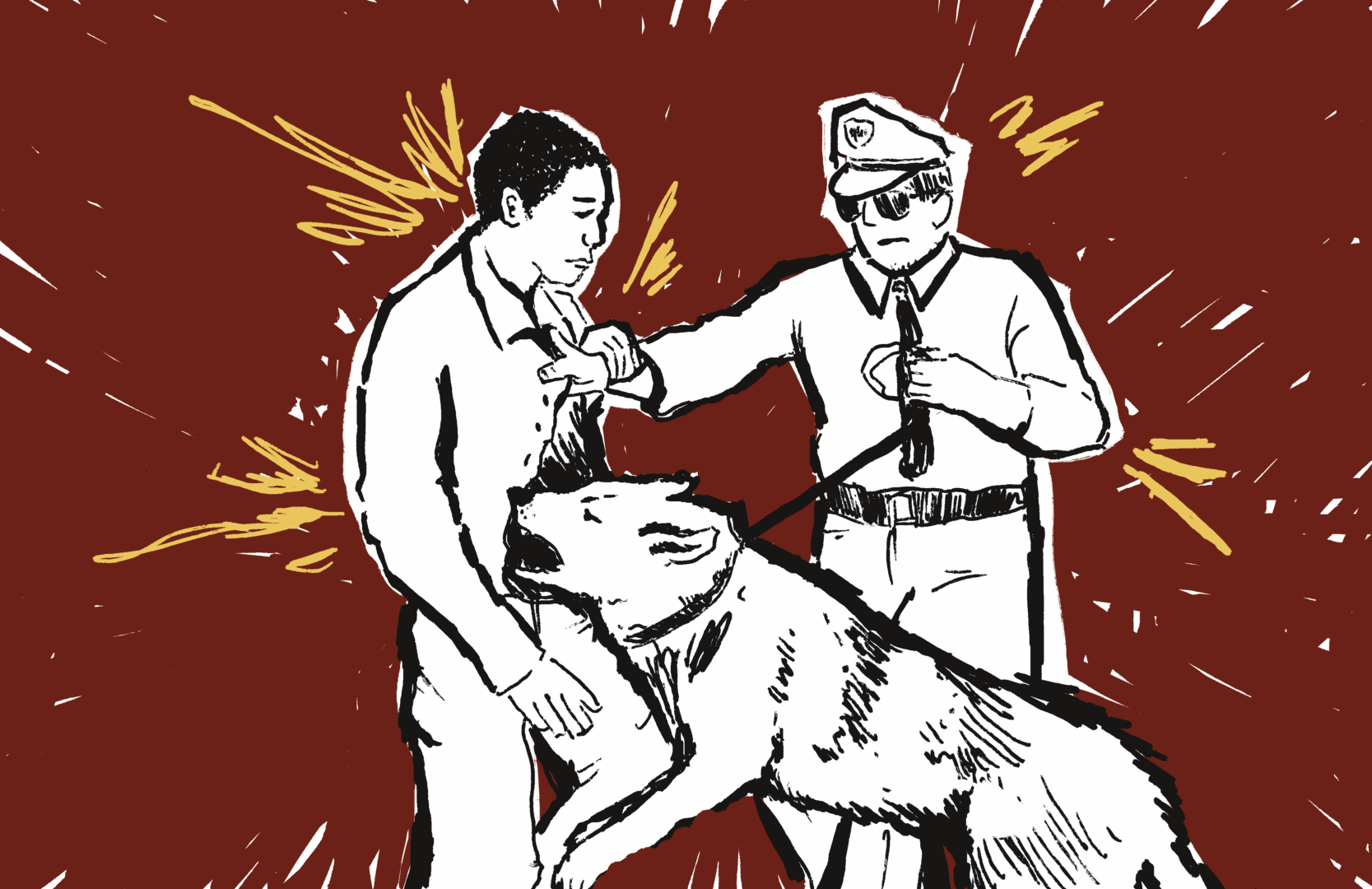
King initially opposed the idea, but he ultimately approved it. On May 2, 1963, thousands of African American children walked out of school to be handcuffed, blasted with fire hoses and set upon by police dogs.

This is where the famous photograph was captured that changed everything.  Taken by American photographer Bill Hudson, it shows a 15-year-old boy caught mid-step with the jaws of a German Shepherd inches from sinking into his belly. Its leash is held by a white cop, whose hand is fisted in the boy’s knit sweater. The street is crowded; many dark faces turn to look at the scene, but nobody goes to help. The boy does not fight back. The violence was the point.

This iconic image was published in newspapers around the world. The outrage it sparked paved the way for the desegregation of Birmingham and, eventually, the passage of the Civil Rights Act of 1964. 

It resulted from the strategic choice to have children be brutalized on camera, and it worked. But what it really shows is that there is no such thing as nonviolent resistance. There is only a question of who is experiencing the violence, the people doing the oppressing or the people forced to endure it.

Nonviolence in the modern era

Of course, peaceful methods for resolving conflict should always be tried first, and they can work if those in power are receptive to change. But how can we turn the other cheek in a country where selfishness and cruelty are rewarded with power?

In the United States, it seems like protest alone is no longer enough to force meaningful change. Hunger strikes and even extreme acts of self-sacrifice in support of Palestine have captured attention, but the policy outcomes remain unclear. 

Videos of immigration enforcement and detention practices circulate online constantly, yet detention centers continue to expand, including in Texas. Images of children in detention centers have become some of the defining photographs of our generation. Yet public outrage often struggles to translate into lasting action.

Moments that should feel impossible to ignore instead become part of the daily stream of information people scroll past. Over time, the shock fades, and what once sparked national attention becomes normalized. 

This raises difficult questions about the limits of moral appeals alone. King’s philosophy showed the power of nonviolent resistance, but it also depended on the public’s willingness to confront injustice and respond.

Today, that response feels less certain, and it forces us to question what meaningful resistance looks like in a time when awareness does not always lead to change.

Opinion@thedailycougar.com

—
“When peaceful protest meets violent reality” was originally posted on The Cougar

Posted in UncategorizedComments Off on When peaceful protest meets violent reality