
Author Archives | Maria Krylova

Entry-level jobs aren’t entry-level anymore

Lily Huynh / The Cougar

In January, I applied to a technical writing internship on the University’s career services website. The company expressed interest in hiring me and sent the next steps in the application process. 

This included a three-part personality test, composed of a hundred relevant questions such as: would I prefer to assemble a drawer or play in a band? Am I very likely, neutral or unlikely to pick up money off the ground? I also had to complete a 45 minute test on pattern recognition and basic math and language skills.

I finished these tasks promptly and emailed the hiring manager, expressing my continued interest. She got back to me four days later. They were not interested in doing an interview at that time. Two months later, the job application is still open.

Stories like these are common amongst students on the job hunt. Internship postings on Handshake, a popular employment website for students, declined by more than 15 percent between January 2023 and January 2025, while applications per internship have more than doubled in the past two years.

Reports show that only 30 percent of 2025 college graduates have found full-time jobs in their field, and it takes dozens of applications for most students to land even an internship.

The role of AI 

A major reason students and recent graduates have trouble getting noticed is the rise of artificial intelligence and applicant tracking systems that screen resumes. Computers are increasingly being used to scan resumes for specific keywords before they are passed on to hiring managers. 

This means qualified candidates have to tailor their resumes to each job, or risk automatic rejection for minor wording differences.

This hyper-specific system, unsupervised by real people, significantly slows down the job-hunting process and makes mass applying ineffective.

This creates an unfair balance between employers and prospective employees; the humble applicant must create a highly personalized resume and cover letter for each job, only to receive an automated rejection email, if they get an answer at all.

There is also the issue of “ghost jobs,” or job openings listed as active that aren’t actually hiring. Companies may list ghost jobs to create the illusion of growth, meet quotas or monitor competitors’ wages.

According to Forbes, a whopping 30 percent of job postings in 2025 were fake. That’s more than two million fake opportunities wasting people’s time in an economy where people are already growing desperate.

Hiring manager bias

If you peek into the world of hiring managers on social media, you will find a maze of conflicting advice. It’s natural for recruiters to have different preferences as individuals.

However, there are a shocking number of arbitrary, unspoken rules irrelevant to the position that determine the jobseeker’s success.

If you watch videos of hiring managers revealing what makes them decide not hire someone, their standards range from reasonable professional expectations to more subjective critiques.

Some claim candidates answer questions too quickly, fail to use a unique enough verb to describe themselves, appear too confident or ask too many questions.

This means even if you get past the application process, the interview is more like a game of reading the recruiter’s mind and performing the right gimmick rather than a legitimate search for the most qualified candidate.

The personality issue

One might argue that job interviews aren’t only about the candidate’s qualifications; the recruiter must also ensure the person fits the company’s culture. It’s true that people should be able to adapt their personalities to the workplace and know when and where certain behaviors are appropriate. 

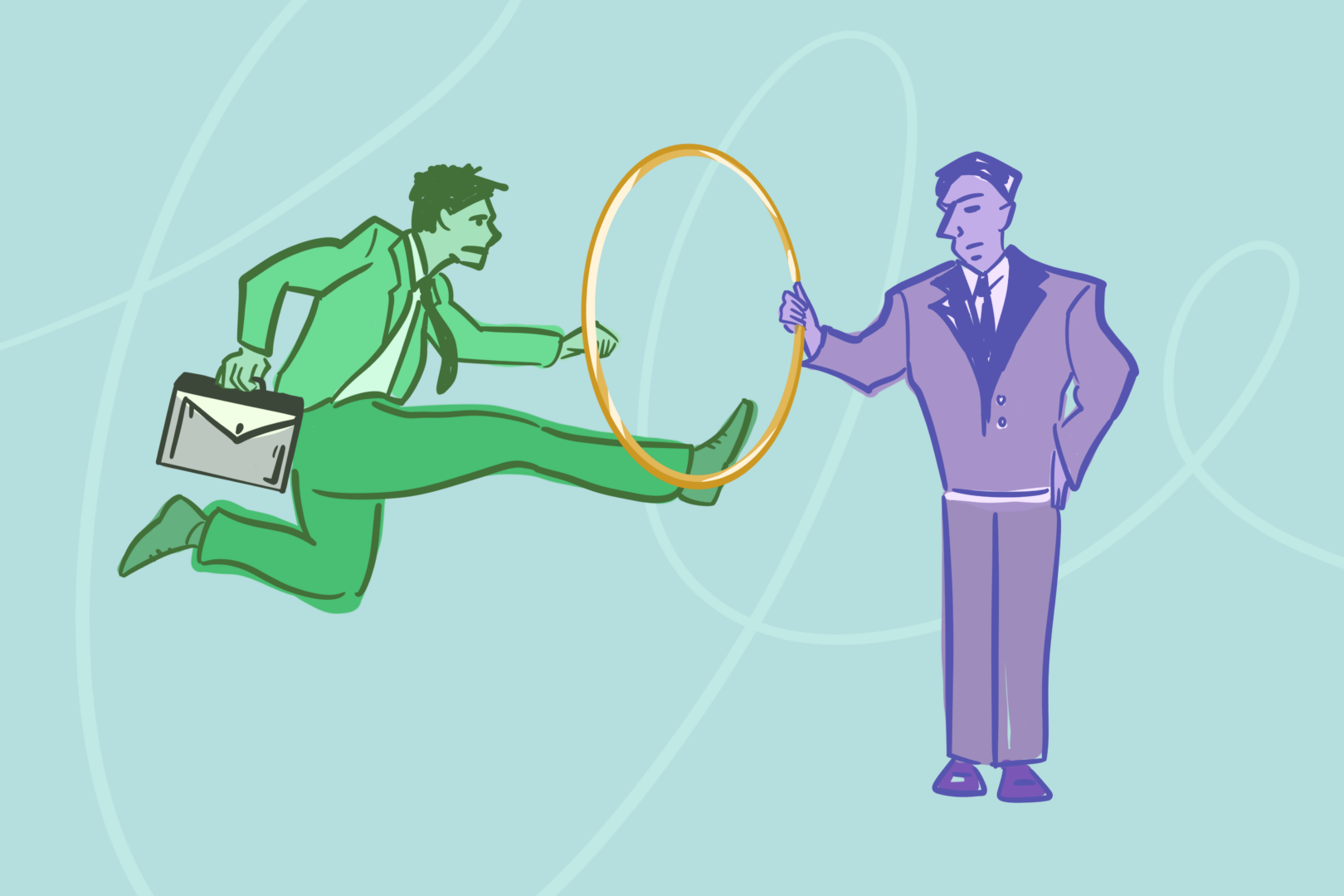
However, the willingness to jump through invisible hoops is not a good test of someone’s personality, but only their level of desperation to get hired.

If a person is fundamentally polite and professionally qualified, they are perfectly capable of performing a job, even if they didn’t describe themselves uniquely enough.

As of December 2025, 42.5 percent of recent college graduates are underemployed. When people face rejection after rejection due to minute restrictions, they eventually have to resort to any job that pays the bills, and all the time and money poured into degrees becomes meaningless.

The machine and human bias in the entry-level hiring process needs to stop before Gen Z becomes the generation of mall Santas with PhDs.

opinion@thedailycougar.com

—
“Entry-level jobs aren’t entry-level anymore” was originally posted on The Cougar

Posted in UncategorizedComments Off on Entry-level jobs aren’t entry-level anymore

Chess: The mental stimulant that’s actually good for you

Audrey Cedor / The Cougar

Quick question, can you think of a specific TikTok video you saw yesterday? What about an Instagram Reel? Maybe you can name one out of a hundred. As for me, I spent all night scrolling TikTok yesterday and couldn’t tell you a single thing I watched.

Doomscrolling has become a familiar tradition online. Before TikTok, Instagram Reels and YouTube Shorts, we scrolled through Tumblr posts, Pinterest feeds and bottomless wells of Facebook memes.

As one Reddit user wrote, “15 years ago we used to doomscroll text…10 years ago we doomscrolled images…five years ago we started doomscrolling videos.”

However, the short-form video style of content is uniquely dangerous. A study published in the American Psychological Association found that “repeated exposure to highly stimulating, fast-paced content may contribute to habituation, in which users become desensitized to slower, more effortful cognitive tasks.”

In short, TikTok and Instagram videos act as addictive stimuli; their nature leads users to binge content and overwhelm their brains with information. While doomscrolling may feel relaxing, it quietly destroys your ability to concentrate. 

So, how do you protect your brain in a world full of endless video content? The answer: chess.

Why chess beats scrolling

I know, board games in the big 2026, but chess isn’t a regular game. It is often said that there are more possible variations of a chess game than there are atoms in the observable universe.

Which means chess has the same infinite possibilities as a bottomless TikTok feed, without all the looksmaxxers, people filming themselves crying and copy-paste iterations of the same trends.

Playing chess is a healthy alternative that lets you stimulate your brain in a slow, more deliberate way. It puts you into a “flow state” and produces many mental benefits over time, like improving memory and creativity, enhancing critical thinking and boosting self-confidence. Chess helps prevent dementia and can even be used to manage symptoms of ADHD. 

It also gives people a chance to connect with each other in a competitive way that’s cheaper and more accessible than sports, thanks to online platforms like Chess.com. Sustainable stimulation without the brain rot.

Well, you might say, chess is boring. It’s a pastime for lonely grandfathers sitting in public parks, not young people and especially not young women. It’s never been used in ancient Indian battle strategy, or routinely taught to knights and royalty as a status symbol and educational tool.

It wasn’t banned by the Taliban last year due to concerns of gambling, and it certainly didn’t cause the U.S. and Soviet Union to butt heads after a surprising American victory in 1972. It’s a perfectly irrelevant game without almost 1,500 years of history.

The gender divide is trickier. Chess is definitely male-dominated, the top champions being Garry’s, Bobby’s and Magnuses. It can feel intimidating, lonely or plain uninteresting for women to enter what seems like a stuffy “male” activity. 

However, this participation gap is all the more reason to bring more women in. After all, the game of chess we know today wouldn’t exist if it weren’t for a woman.

A game shaped by women

The queen is now the most powerful chess piece, but it used to be one of the weakest; it could only move one square diagonally, like a pawn. In fact, queens weren’t in the original game at all; a piece called a “vizier” was used instead.

Things changed in 1475 when Queen Isabella of Spain began expanding her influence, uniting two fractured kingdoms into a strong Spanish state and funding expeditions that led Europeans to discover the Americas. 

This powerful female monarch inspired an upgrade to the chess piece, and the rules changed so that the queen could move in any direction and in long strides. The whole game became faster, more exciting and more decisive. “Mad Queen’s Chess” became the pioneer of the contemporary game.

At the end of the day, your brain is the most powerful piece on the board that is your body. Like the queen, it needs to operate, not in short, limited bursts, but in sustained, sweeping movements. 

You don’t have to give up the Internet forever or never go on TikTok again. Just occasionally exercising your cognitive abilities with chess would be a good investment in your mind.

And while you may not remember any specific games, you will be better able to remember your own life. In a world full of pawns, be the mad queen.

opinion@thedailycougar.com

—
“Chess: The mental stimulant that’s actually good for you” was originally posted on The Cougar

Posted in UncategorizedComments Off on Chess: The mental stimulant that’s actually good for you