Author Archives | Margaret Khayat

The untold stories of living in a first-year dorm

When I was younger, I dreamed of living in an apartment. I would imagine myself walking through a revolving door into a giant brick building with a forest green awning.

I would ride in the elevator up to my condo on the fourteenth floor, where a fluffy gray cat would brush against my legs and purr with delight. I tried to picture how I would decorate. 

Would I have a sleek, modern apartment? That kind of futuristic style where everything is so white and harsh that one questions if anyone has ever lived there? 

Or maybe my apartment would be quaint, with bookshelf-lined walls overflowing with dog-eared novels and notes in their margins? 

More than anything else, though, I was excited to have my own space. I could fill it with whatever I wanted: blue and white porcelain plates, Halloween decorations, plants, pinball machines, lies, truth or love. 

I could paint the walls a new color every day, and only I would know what colors were beneath the surface. 

My imaginary apartment was freedom, knowledge and power. 

So when I arrived in my first-year dorm, needless to say I was slightly disappointed when there were no bookshelves or cats or revolving doors. 

The room was empty except for the furniture issued by the university, the air conditioning unit and two Command hooks stuck to the wall from the last tenant. 

The walls were beige, the floor was a gray-blue carpet and the door had a fire evacuation plan taped on it. 

It reminded me more of an office or classroom than any home I had ever lived in. I climbed on the desk and hung a plant from one of the Command hooks. From my window, I could see lines of students trailing in with duffle bags and cardboard boxes, all of them taking in their surroundings, just as

I had minutes earlier. These were the people I would live with for the next year. 

That night we had a floor meeting, where we discussed quiet hours (ten to ten) and the prohibition of electric scooters in rooms (they are a fire hazard), as well as any concerns we had moving forward into the year. 

My concerns were more personal, (“what happens if you come back and need to cry, but your roommate is in the room?”), so I kept them to myself. 

Some asked about room checks, others asked about the Wi-Fi password. Although I had no questions, it seemed odd to me that the trials and tribulations of living alone could be summarized in fifteen minutes. Was it really going to be as simple as that?

Turns out, in a lot of ways, it is as simple as that. I did not stop waking up in the morning or brushing my teeth. For the most part, living alone is pretty similar to living with my family. I just have different schedules and routines that do not revolve around the people I live with. 

What I do every day is pretty much up to me.

I can eat cereal for dinner and sleep until noon, or I can eat my veggies and do pilates. I quickly learned that power is freedom, but that freedom is a daunting realm when all I had ever known was codependency. 

However, as the months went on, my world became exponentially smaller. My list of goals went from “make a lifelong friend” to “wash sheets.” 

My mindset changed from “make lifelong memories” just to “live.” So, like everyone who has to make the transition to living alone, I learned a lot.

I learned that it is best to have DayQuil on hand so I do not have to go to CVS while sick. 

I learned that putting too much detergent in the laundry does not make the washer explode, but it will make the clothes in it a bit too soapy. I learned to keep an umbrella in my bag if there is rain in the forecast, and that rain is a lot less glamorous when

I have to walk to class in it. 

I learned that string lights make any room more pleasant, and that the gray-blue carpet is a lot nicer with friends sitting on it. 

Although my dorm is nothing like the beautiful apartments I imagined growing up, the stories told in it are more breathtaking and wonderful than any green awnings or revolving doors. 

From the abandoned Command hooks to the carving in my desk, there are narratives contained in these four walls that I will never know. The ghosts of lessons others have learned as arbiters of their own power, freedom and the knowledge they left with. 

Each chip in the wall and notch in the bed frame is a dog-eared novel that I will never read, but knowing that they existed is enough to calm my fears, which I will scribble in the margins of my own story. 

Posted in UncategorizedComments Off on The untold stories of living in a first-year dorm

‘Barbarian:’ Who are the snakes?

Warning: Spoilers ahead

The hollow rattle of a viper’s tail chatters in the distance, invoking fear in prey and people alike. Snakes slither through life, blending in and striking at anything less powerful than them. They are a symbol of evil and death. Colloquially, however, snakes are not animals, but people. They are backstabbers — the barbarians — who have a tendency to manipulate situations to craft a narrative that presents themselves as innocent. Zach Cregger’s 2022 film “Barbarian” subverts horror movie tropes and questions who the true snakes of society are. It encompasses themes of power hierarchies, social class, fate and the injustice of existence, ideas that Cregger highlights using violence, irony and juxtaposition. 

Although the first half of the film has valuable commentary surrounding feminism and perceptions of men and women today, the second half of the film truly dives into major societal divisions with the introduction of Hollywood executive AJ Gilbride (Justin Long, “Tusk”). AJ enters the movie speeding down a California highway singing “Riki Tiki Tavi” by Donovan in a vintage red convertible when he receives a call that someone accused him of sexual assault, and that he is getting dropped from the project he was working on. AJ curses at the people at the other end of the line, pulls off the side of the road and stares off into the distance with his mouth agape. 

This scene foreshadows the rest of the plot and the major themes of the film in a gloriously ironic way. “Riki Tiki Tavi” alludes to a short story from “The Jungle Book” by Rudyard Kipling, in which a mongoose kills a cobra attempting to attack the British family that adopted Rikki-Tikki. The moral of this fable is based in colonialism and that the British should not punish “good” colonized peoples. In the song, however, Donovan calls out the offensiveness of the story, saying that the mongoose was a victim of the power structures in his society. The lesson of the song is to distrust the powerful, because they will not kill snakes for their people. AJ fails to recognize that he is in a position of power, and that he is the snake someone is trying to kill. He views himself as a victim of his accuser’s “lies” and as such attempts to take the situation into his own hands. 

The juxtaposition between the narratives permeated by those in power versus those that are disempowered is a prominent feature of the film. For example, when AJ arrives in his Detroit AirBnB and goes downstairs only to discover the hidden corridor as well as the room with the bloodstained bed, he immediately goes back upstairs to see if he could count the secret tunnel in the square footage of the house when he sold it. 

AJ’s oblivion is comical, but also furthers the idea of how one’s treatment in society can shape their perception of various issues. A situation that was alarming to Tess, a young Black woman, was simply a way to make money for AJ, a middle-aged, white man. Time and time again, AJ tries to profit off the backs of the disempowered, from sexual violence to gentrifying a poor suburb. 

A second introduction, that of the house’s previous owner, Frank, is equally as jarring as AJ’s arrival in the film. The film cuts from a desolate gray to an overly saturated scene in a seemingly utopian neighborhood. In the flashback sequence, it is revealed that a man named Frank inhabited the house in the 1980s and would stalk women, kidnap them and then rape them in the basement. As his neighbors left due to a Reagan-era fear that the poor and overwhelmingly Black communities of Detroit were a threat to their safety and power as white people, Frank remained in the house with the women he assaulted. Not only does this scene carry extreme weight in terms of plot, it forwards many of the ongoing themes of the film. It firstly tackles the central idea that no organization will fight the true threats to a society, as the U.S. government fabricated “snakes” of the suburbs and failed to address someone who had abducted dozens of women. Even Frank’s neighbors ignored blatant signs that he was lying, such as the work uniform he wore to go undercover labeled “Carlos.” They continued to believe that the threats to their community were elsewhere, creating dramatic irony.

The similarities between AJ and Frank truly reach a head when AJ  finds an elderly and bedridden Frank sitting in bed in the depths of the tunnel system under the house. AJ gives Frank water and tells Frank that he will help him leave, before looking at Frank’s shelf of cassettes labeled with names and descriptions of women next to a TV. It becomes abundantly clear who the man is and what he has done. AJ is visibly terrified and appalled, ironically so, because he is essentially looking at a reflection of himself. Frank pulls out a gun from his bedside table and kills himself, foreshadowing AJ’s own death and the consequences of immoral action. 

Although there are a myriad of examples of power abuses in the film, like the police not taking Tess’s kidnapping seriously and calling her a criminal for breaking the window to escape, the clearest example of abuse is one of the final scenes of the film. Shortly after AJ shoots Tess, they find themselves running away from The Mother, Frank’s victim who was a “misdirect” villain of the story before Frank’s crimes were revealed. AJ sprints up the stairs of the water tower, with Tess limping behind him. When Tess makes it to the top, The Mother is just behind her. In an attempt to save himself, AJ pushes Tess off the edge of the water tower, which distracts The Mother, giving AJ time to run down the stairs. When he gets to the bottom, he finds that The Mother threw herself under Tess to break her fall. AJ is extremely apologetic and tries to deflect blame, saying that Tess slipped off the tower. Then, The Mother wakes up from under Tess and kills AJ for threatening her baby, Tess, as she was taught to do in the basement. 

It is clear Tess sympathizes with the woman, who is a victim of her circumstances. However, societal failures do not always excuse individual action, and the lines between good and evil can be blurred. With nobody else to turn to, Tess shoots The Mother with Frank’s — her and The Mother’s captor’s — gun. This ending was bittersweet, but known since AJ entered the film. After all, Donovan says, “When I was a young man, I was led to believe there were organizations to kill my snakes for me … but when I got a little older, I learned I had to kill ‘em myself.”

Posted in UncategorizedComments Off on ‘Barbarian:’ Who are the snakes?

‘Jeopardy!’ season of champions kicks off

Nov. 11 is the first day of finals in the “Jeopardy! Tournament of Champions” for season 38. The championship pits the 21 top players of the season against each other in a series of games to determine the ultimate winner. The top three players after quarter- and semi-finals play will go head-to-head in up to seven finals games. The first competitor to come out on top in three games will win a $250,000 prize. 

Although this tournament occurs at the end of every season, this last season of the game show was uniquely historic. It was the first season since famed host Alex Trebek’s passing, which also meant that it was the first season of the show since 1984 that Trebek did not host. 

It is a near impossible task to fill the shoes of a great like Trebek, however, “The Big Bang Theory” and “Blossom” actor Mayim Bialik and the longest winstreak “Jeopardy!” champion in history, Ken Jennings, filled the job.

The two alternated hosting duties every few weeks. Each took on a tournament, with Bialik hosting “Jeopardy! College Championship” and Jennings hosting the “Jeopardy! Tournament of Champions.” 

To match an already unprecedented season, the contestants the two hosted proved to be some of the fiercest competition the show had seen since Ken Jennings’ 74-game run in 2004. 

It started with the “Amodio Rodeo,” the nickname given to Ph.D. student Matt Amodio’s 38-game streak. Amodio is known for his extremely strategic play, such as beginning all his responses with “what’s” to save time.

Amodio came away with the highest single-game winnings that season ($83,000) and the most correct responses in the game (42). When his run ended, he was second in consecutive games won in the history of the show, only behind Ken Jennings. 

Amodio’s performance on the show would have been season-defining any other year. However, in keeping with a remarkable season, Amy Schneider, an engineering manager, would clench the number two spot. Her 40-game run was the longest win streak by a female contestant on the show. Even more impressive than that, however, is her 95% accuracy in responses and $1.3 million in cash winnings. 

Although nobody snatched Schneider’s spot on the leaderboard, two contestants from season 38 would also make the top ten list of “Jeopardy!” champs. That means competitors from this season alone comprise nearly half the top ten list. 

One is Mattea Roach, a 23-year-old tutor from Nova Scotia whose 23-day run is the longest of any Canadian on the show. “Jeopardy!” questions tend to cater to an older, American audience, making her success on the show all the more impressive. She left the show with over $500,000 in cash winnings and the fifth spot on the list of most consecutive wins. The second is Ryan Long, a rideshare driver whose 16-game streak was enough to give him the number nine spot on the “Jeopardy!” all-time leaderboard, and nearly $300,000. Only Amy Schneider rivaled Long’s ability to run entire categories with both running a record-setting three categories in a single game.

Unfortunately, Long lost his quarterfinal match on Oct. 31, but his time on “Jeopardy!” was memorable nonetheless. 

At this time, the semi-finals are underway. Amodio, Schneider and Roach immediately qualified for a spot in the semi-finals as the top three players from the season. Six other competitors will join them in the semi-finals after their quarter-final wins. Among them are many fan favorites.

Posted in UncategorizedComments Off on ‘Jeopardy!’ season of champions kicks off

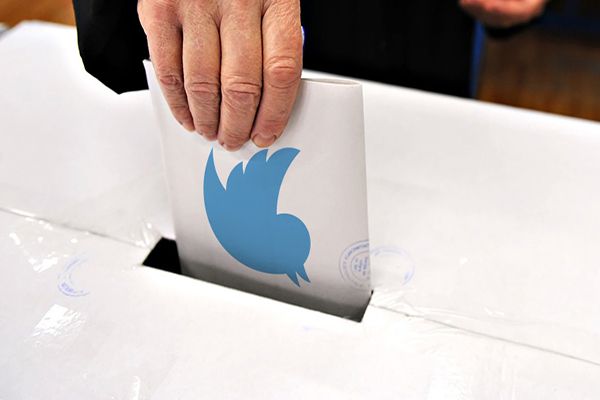
Politics and Twitter discourse

As midterm elections take place across the country, Twitter is awash with political commentary of all sorts. Search the name of any politician on the ballot this November to find thousands of typo-laden thoughts, opinions and assertions.

Recently, the social media site has been the battle-ground of many political conflicts, from banning public officials to sharing information on riots and protests. However, Jack Dorsey, the creator of Twitter, intended for the app to be a way for individuals to communicate with small groups of friends. How did the app evolve to be a crucial tool in conversations regarding politics?

Principally, experts say this divergence from friendly chats to planning coups began in the 2008 U.S. presidential election. Former President Barack Obama’s campaign used social media to establish a digital grassroots campaign, connecting individuals across the country.

Soon, other officials saw the value of social media and the usage of Twitter became commonplace for government officials, bureaucrats and political organizations to spread their messages. Now, politicians could put their finger on the pulse of younger voters, exploiting some of the largest consumers of social media content.

Additionally, what set Twitter apart from other voter outreach  strategies is that it further democratized the political process; users could interact with public officials, new politicians could kick off campaigns without large advertising budgets, there were almost no barriers to entry and arguably most importantly, users could interact directly with each other.

Anonymously, and from the comfort of their own homes, users could express their opinions and respond to others. The nature of social media ensured that if a user had an unpopular opinion, other users could search through their feed for more reasons to disagree with them. Behind a screen, it is clear how quickly searching for faults in others’ ideology could become a game — and spiral out of control.

On top of that, part of the effectiveness of Twitter as a political tool is algorithmic in nature. Social media apps are programmed to provide the user with similar content to what users have interacted with in the past. Thus, interaction intentionally creates a so-called “echo chamber” where algorithms only present opinions that the user agrees with on their timeline. 

Furthermore, as social media influence has greatly expanded in the last few years, politicians and programmers have found ways to micro-target potential electors using their personal data and consumer preferences.

The danger of social media is that it does not require face-to-face interactions, nor does it necessarily require a human conscience. Hence, bots can rule social media without users ever realizing that the opinions they agree with or the ones that anger them to the ends of the political spectrum are inhuman.

Nevertheless, the language people use on Twitter, particularly in the context of politics, cannot be explained by the adverse side effects of programming. The true demarcation of the rise of such jargon is former President Trump’s 2016 presidential bid.

Trump’s tweets were unlike those of other politicians in that he tweeted frequently and used informal language that was often contradictory or lacking in clarity, leaving room for personal interpretation. Whether intentional or not, Trump expertly took advantage of the volatile nature of Twitter, demanding attention from users on all sides of the political spectrum.

Since then, the line between Twitter rants and genuine political change has become blurred. Jokes have become opinions and bots have bolstered extremist tendencies. Twitter has fundamentally changed the nature in which people discuss politics. While it has made these types of conversations more accessible, it has also created an environment where only the most outrageous ideas garner attention. 

Just days ago, another factor was added into the equation that could change Twitter’s impact even more. On Oct. 27, businessman Elon Musk, CEO of Tesla and SpaceX, officially purchased Twitter for a whopping $44 billion. 

After overpaying for Twitter, Musk is anxious to make sure the site is lucrative. He has promised investors that he will cut costs by laying off workers and began the process immediately upon taking over.

Several of the executives Musk fired were entitled to receive golden parachutes under the merger agreement, but Musk is claiming that they were fired “for cause,” which would relieve him of this obligation. 

Additionally, Musk is planned to cut ties with lower-level employees before Nov. 1 to avoid awarding stock grants the employees earned that are scheduled to be awarded on that day. The former employees will likely mount legal challenges against Musk to collect the compensation that they believe they deserve. 

Given Twitter’s role as a source for news and sharing political opinions for better or worse, it is unclear how the change in ownership of such a potent political tool will further alter the landscape of discussions surrounding government. 

With an unknown future and a tumultuous past, Twitter discourse is an incredibly nuanced issue that cannot be resolved by a change in leadership.

Posted in UncategorizedComments Off on Politics and Twitter discourse

The problem of the wife guy

How does one define their existence? Some might answer this question with their purpose in life. Service to others. Happiness. Power. 

Others may speak of the legacy they wish to leave behind, one of progress or governance. Perhaps we are not defined by what we do but how we do it. How we worship, lead, hate and love. 

If one were to ask The Try Guys’ Ned Fulmer how he defined himself merely days ago, his answer to anyone who has followed his career would be obvious. Above all else, Ned existed to love his wife, Ariel Fulmer. 

Ned Fulmer’s entire internet presence was characterized by his marriage. 

He did not operate alone so much as he did as a unit, with Ariel at his side. 

He idolized his wife as if she were a goddess, praising her strength and beauty. Her role as a mother was even more remarkable, from labor pains to balancing her life as a working mom effortlessly. 

Ariel became so intertwined with her husband’s online presence that she too joined The Try Guys in an off-shoot called “The Try Wives.” Ariel and Ned Fulmer were the millennial nuclear family to envy and admire. 

That was, of course, until approximately a week ago when Twitter began to stir with allegations that Ned cheated on his wife with a Try Guys’ employee, his subordinate. These allegations were later confirmed by Fulmer in a Sept. 27th Instagram post. 

How did this “Wife Guy” fall from grace? 

Just ask John Mulaney, Adam Levine or any one of the other “Wife Guys” who allegedly cheated on the wives that they proclaimed their undying love for and shaped career moves around. 

This is not to say that Wife Guys do not love their wives or that nobody in the public eye can love their wife. However, when a wife defines one’s existence, it becomes an issue of patriarchy, identity and profit. 

The Wife Guy diminishes his wife to an object. She is not anything but “his wife,” and yet he is not described as “her husband.” Under the thin veil of feminism and supporting women, Wife Guys make their partners into trophies, beautiful things only they can touch. 

What empowers Wife Guy is not his appreciation for his wife, but his ownership of her. 

The Wife Guy makes a spectacle of his spouse, profiting not off his own excellence but his wife’s as well. In the case of Ned Fulmer it was his persona of the married Try Guy, with him mentioning his wife and the kids she gave him in every upload. Ariel was never herself on the YouTube Channel — she was only the “wife” or “mom.” 

John Mulaney, on the other hand, wrote bits about his wife’s witty comebacks and profited off them by mere association with her. 

Adam Levine wrote a song about supporting women and put his wife and daughter in the music video which garnered over 3.3 billion views. 

The underlying current in all these examples is that the Wife Guys are not the focus of their content; their wives are. Wife Guys love what their wives provide for them. 

Whether it be power, money or status, Wife Guys exploit their wives for the betterment of their own careers. 

When that power dynamic becomes the status quo, it is unsurprising that when Wife Guys cannot profit off their significant others, they seek out other validation.

Ned Fulmer’s legacy is now one of fakeness and infidelity. His life has been defined for him by the internet, for better or for worse.  

Now the question becomes this: did Ned Fulmer ever truly define his existence by loving his wife? 

Or did he love that she made him loveable? 

Posted in UncategorizedComments Off on The problem of the wife guy

Taylor Swift’s eventful appearance at the VMAs

The 2022 Video Music Awards (VMAs) took place on Aug. 28. It was a night of wins for chart-toppers and for artists on the rise. Bad Bunny and Billie Eilish took home awards for Best Artist and Best Song, respectively, and it was Dove Cameron who got a spot alongside industry titans as the Best New Artist winner. 

Musicians from every genre commanded the red carpet in fantastical fashion as well as classic silhouettes. 

However, the artist who came in big was singer-songwriter Taylor Swift, who won the award for Music Video of the Year for her 10-minute “All Too Well” short film and announced the release of her 10th studio album, “Midnights,” which is set to release Oct. 21 of this year. 

Swift took the red carpet by storm sporting a sleek bun, with her iconic blonde bangs brushed to the side. From the black winged liner to her bold red lips, her look on the carpet was quintessentially “Taylor.” Silver jewel strings draped into a stunning sleeveless halter gown left celebrities and Twitter alike in awe. 

Swift is known to hint at future projects through her fashion and this dress was chock-full of ambiguous meaning. Fans pointed out that Swift’s Oscar de la Renta dress bore some resemblance to iconic moments in Taylor Swift history from the dazzling gown she wore at the 2009 VMAs when Kayne West famously interrupted Swift’s acceptance speech to her “Look What You Made Me Do” music video where Swift, her neck draped with diamonds, sat in a bathtub full of the precious stones. 

In fact, many thought she was hinting at the re-record of her sixth studio album, “Reputation,” since her former label sold the masters to talent manager Scooter Braun. The nod to the “Look What You Made Me Do” music video from her “Reputation” album was enough for fans to speculate about the next Taylor’s Version to look out for in the coming weeks.

Although audiences can still expect Swift’s re-recordings, the announcement that stole the show was the release of her new album “Midnights,” which Swift announced during her acceptance speech for one of three VMAs she won that night. 

However, the exact details of her upcoming album are still unclear. In an Aug. 29 Instagram post, Swift described the album as “the stories of 13 sleepless nights.” But, there has yet to be a confirmed track-list or genre. 

The singer frequently uses cover art to hint at the ambience of the soundtrack and will even change her clothing and social media presence to curate a specific and consistent mood. 

Darkness and snakes set the tone for the electropop and R&B album in “Reputation,” whereas autumnal colors and French braids manifested in folk-pop album “evermore.”

So far, Swift has released four different album covers, united by muted colors and wood paneling. What does this mean for “Midnights”? Look no further than Tech expert on all things Taylor Swift, @gttaylorswiftsociety on Instagram for the answer to this question. 

“I’m really hoping that [Midnights] is a Fleetwood Mac, 70s pop rock type vibe,” says the Tech Taylor Swift Society, “just based off the cover art so far that’s what I’m getting.” 

As for the society’s feelings towards the new album: “I am super excited!” Tech Swifties can look forward to Taylor Swift’s 10th studio album available to stream on Friday, Oct. 21 at midnight sharp.

Posted in UncategorizedComments Off on Taylor Swift’s eventful appearance at the VMAs

Dawgs and dogs: put them both away

Midday shadows cast across the floor of Crosland Tower, shining through the multi-colored glass to paint the floor magenta, teal, crimson and gold. 

I took a seat on the tall cedar staircase, coffee in hand, gearing myself up to read textbook chapters for the next few hours.

I looked around at the diverse body of students staggered on the wood planks, admiring how people from a myriad of backgrounds all found solace in the same fine academic institution. No matter who one is or where they are from, there is a family for them at Tech. Everyday I encounter someone that makes me think more deeply about the world in which we live. 

That day in Crosland Tower, it was the person to my left, who had taken their shoes off, revealing their bare feet and untrimmed toenails. 

Feet are an issue I have grappled with my whole life. 

For many years I gave my mind the most credit for getting me places, but the truth is, my feet have taken me more places than my generally vacant mind.

At the same time, however, feet are the single most hideous body part. 

If there is anything I have learned from being a child of the internet, it’s to sacrifice anything for the aesthetic. 

Including body parts. Perhaps I was looking for an excuse to further procrastinate my readings, but I could not neglect the piggies in my periphery. 

Are feet the unsung heroes of transit, or should they be sequestered in the name of beauty? 

I contemplated this question for several seconds, allowing my gaze to defocus from my peer’s wiggling toes so I could divert my attention to solving the greatest philosophical question of the century. 

Now, to fully address this conundrum, I needed to consider my other interactions with “dogs,” or rather, “Dawgs,” of whom the entire campus manifests an eternal damnation of for approximately three months annually.

I most recently encountered a pack of Dawgs while walking into Tech Square following the game at  the Mercedes-Benz Stadium. 

They conquered frat row on electric scooters like a pathetic, albeit eco-conscious, gang. 

They came to a screeching halt next to Kappa Alpha in matching golf shirts and khaki shorts to greet a Tech student who seemed embarrassed to be in their presence. 

Every sentence that left their mouths contained a word that cannot be uttered on daytime television. 

Then, armed with their explicit vocabulary and cans of Natural Light, I shed a single tear as they scooted away into the night. At that moment, I realized dogs and Dawgs are one in the same. 

They both smell bad, they both show up in places uninvited and they both bark. 

A UGA fan or a foot jump scare are equally frightening. Sure, our lovely campus is united by our distaste for a certain school up North. Sure, feet bring us from point A to point B. Nevertheless, they are both deeply upsetting and in the face of such evils we must remain strong. 

I returned to my international affairs textbook,

knowing that my professor would be disappointed that I did not address this issue from a neorealist standpoint. 

My mind was once again at peace with the exception of my caffeine-induced anxiety. 

I turned to the student with their feet out to thank them for expanding my mind to new perspectives. 

However, they had turned their concentration from homework to eating a granola bar, allowing the crumbs to precipitate from their mouth onto their feet. 

I ultimately decided not to express my gratitude directly to them, and to instead give them space to take the time to properly feed their dogs.

Posted in UncategorizedComments Off on Dawgs and dogs: put them both away

Condom bingo bonanza

Going to college for the first time is a beacon for unsolicited advice. 

One piece of such advice was to “stay open-minded and flexible” followed by a disclaimer that open-mindedness was not to be applied to imbibing. 

Regardless, I latched onto the wisdom of my elders and decided to attend any Week of Welcome events that sparked my curiosity or interest. 

It was this attitude that landed me in the Howey Physics building, sitting before two adults wearing condom costumes.

The name of the game was “Condom Bingo,” a Week of Welcome event that the Tech Guidebook described as, “a fun, educational game that will focus on sexual health.” I wandered the halls of the building for a bit before stumbling into a lecture hall full of students, eagerly discussing the specifics of the highly anticipated event.

“Will we use condoms as bingo chips?”

 “Does the winner get crowned ‘King Condom?’”

 “Why are they playing ‘Stir Fry’ by Migos?”

As the gloriously autotuned voice of Quavo echoed through the lecture hall like a gospel hymn through a chapel, I took a seat and basked the lyrical genius of the Atlanta-based trio: “In the kitchen, wrist twistin’ like a stir fry.”

From the front of the lecture hall, the woman dressed as a Magnum XL condom welcomed the assembled students.

I would later find out that Magnum XL condom was Richelle Fields, a health educator from Tech’s Health Initiatives department. 

She, alongside her Trojan counterpart, Jess Ponder, also a health educator, placed bingo cards featuring sexual wellness terms before us. 

They explained the rules and reminded us to remain mature in the face of words like “vagina” and “pubic lice” (they did not ride the Stinger wearing condom costumes just for us to giggle at biology). 

Magnum XL or Trojan read the definition of one of the terms on our bingo sheets, and we had to mark the correct word. 

The first person to get six in a row was eligible to win a variety of prizes, courtesy of the Georgia Tech Health Initiatives department. 

Armed with my raspberry Mr. Sketch scented marker and all the courage I could muster, the games commenced.

The next 50 minutes were a whirlwind of vocabulary, hygiene kits and markers squeaking across printer paper. 

We discussed the services Tech Health Initiatives provided and how to access these services (third floor of the Stamps Health building). 

The event came to its zenith when Mangum XL and Trojan announced that they had gift bags for all the attendees. 

Upon hearing the word “gifts,” students swarmed the fireproof lab table at the front of the hall, grasping at white bags in a clear Sterilite container. A boy sitting behind me successfully grabbed four condoms (three banana, one strawberry). 

By the time I reached Magnum XL and Trojan, they were condomless, but I did get a bumper sticker with an image of a condom and the words “JUST WEAR IT” in the style of the Nike slogan. 

Although I left the building more educated than when I entered, it felt anti-climactic to leave without any of the titular swag from the event.

This was easily remedied with the edu-ma-cation I received at Condom Bingo. After a quick trip to Stamps Health Services, next door to the CRC, I easily obtained my own tropical fruit condoms from a bowl guarded by a cardboard cutout of Buzz.

Posted in UncategorizedComments Off on Condom bingo bonanza