
Author Archives | Karen Wei

Khator reflects on UH history in annual State of the University address

University of Houston President Renu Khator delivers the State of the University address, Wednesday, Oct. 8, 2025, in Houston, Texas. | Matthew Guzman/The Cougar

UH System chancellor and UH president Renu Khator delivered the annual State of the University address on Oct. 8 at the Moores School of Muisc Opera House. Khator’s address gave an overview of UH’s history in anticipation of the upcoming Centennial anniversary.

“As we smile with pride at our present and with great anticipation for our future, we must never forget that it is our past that has brought us to this moment here today,” Khator said. “Our history is the foundation of all our present and future successes.”

Khator began by describing UH’s evolution as a learning institution. UH was initially established as Houston Junior College in 1927, then in 1934, was designated as a four-year university. Enrollment grew steadily over the years, from 1,100 students in 1934 to 5,000 by 1945 and 10,000 twenty years later. The University currently enrolls almost 50,000 students. 

Khator also recognized notable alumni through the years and described efforts by the University to regroup and rebuild in the face of adversity, from the oil bust of 1982 to Tropical Storm Allison in 2001, Hurricanes Katrina and Rita in 20065 and Hurricane Ike in 2008.

“For Houston and for the University of Houston, adversity and momentum have always gone together,” Khator said.

Khator recognized major donors, former and current members of the Board of Regents, as well as UH staff, and highlighted UH’s expansion to regional branches.

In more recent years, UH attained Tier One status as a University, the addition of several new colleges including the Hobby School of Public Affairs, the Katherine G. McGovern College of the Arts, the Andy and Barbara Gessner College of Nursing and Tilman J. Fertitta Family College of Medicine.

“Today, the students for whom we built this university are writing the new chapter, victory chapter, for the University of Houston,” Khator said. “They are proving that every national championship is attainable and every national honor is achievable. Goldwater, Gates Cambridge, Marshall, Truman, Fulbright, they are making them all.”

Khator spoke on construction project developments, with Centennial Plaza expected to open in May and Centennial Hall expected to be ready for occupancy by next fall. 

Then, Khator pivoted to UH’s research accomplishments, highlighting faculty accolades across engineering, humanities and the arts.

“Our goal is to drive this innovation engine to $500 million of annual research expenditures,” Khator said. “With the newly launched UH Health, cutting-edge UH energy, achieving this goal is not a question of if but when.”

Finally, Khator traced the history of Cougar sports, starting with its first program: ice hockey. In 1946, UH gained five intercollegiate varsity teams: men’s basketball, football, tennis, golf and track and field.

Khator highlighted athletic achievements through the decades, concluding with the men’s basketball team’s appearance in the national championship in 2025.

“From one win to national championships and gold medals, this is our journey,” Khator said.

After a showing of a short Centennial video, Khator turned the focus of her speech to the future, emphasizing the need to continue serving students.

“Our University will continue to thrive as long as we don’t forget our core mission and that core mission is our students,” Khator said. “But that mission cannot be an excuse to not excel in anything else. We must excel and compete against the best of the best on every front.”

news@thedailycougar.com

—
“Khator reflects on UH history in annual State of the University address” was originally posted on The Cougar

Posted in UncategorizedComments Off on Khator reflects on UH history in annual State of the University address

Khator reflects on UH history in annual State of the University address

University of Houston President Renu Khator delivers the State of the University address, Wednesday, Oct. 8, 2025, in Houston, Texas. | Matthew Guzman/The Cougar

UH System chancellor and UH president Renu Khator delivered the annual State of the University address on Oct. 8 at the Moores School of Muisc Opera House. Khator’s address gave an overview of UH’s history in anticipation of the upcoming Centennial anniversary.

“As we smile with pride at our present and with great anticipation for our future, we must never forget that it is our past that has brought us to this moment here today,” Khator said. “Our history is the foundation of all our present and future successes.”

Khator began by describing UH’s evolution as a learning institution. UH was initially established as Houston Junior College in 1927, then in 1934, was designated as a four-year university. Enrollment grew steadily over the years, from 1,100 students in 1934 to 5,000 by 1945 and 10,000 twenty years later. The University currently enrolls almost 50,000 students. 

Khator also recognized notable alumni through the years and described efforts by the University to regroup and rebuild in the face of adversity, from the oil bust of 1982 to Tropical Storm Allison in 2001, Hurricanes Katrina and Rita in 20065 and Hurricane Ike in 2008.

“For Houston and for the University of Houston, adversity and momentum have always gone together,” Khator said.

Khator recognized major donors, former and current members of the Board of Regents, as well as UH staff, and highlighted UH’s expansion to regional branches.

In more recent years, UH attained Tier One status as a University, the addition of several new colleges including the Hobby School of Public Affairs, the Katherine G. McGovern College of the Arts, the Andy and Barbara Gessner College of Nursing and Tilman J. Fertitta Family College of Medicine.

“Today, the students for whom we built this university are writing the new chapter, victory chapter, for the University of Houston,” Khator said. “They are proving that every national championship is attainable and every national honor is achievable. Goldwater, Gates Cambridge, Marshall, Truman, Fulbright, they are making them all.”

Khator spoke on construction project developments, with Centennial Plaza expected to open in May and Centennial Hall expected to be ready for occupancy by next fall. 

Then, Khator pivoted to UH’s research accomplishments, highlighting faculty accolades across engineering, humanities and the arts.

“Our goal is to drive this innovation engine to $500 million of annual research expenditures,” Khator said. “With the newly launched UH Health, cutting-edge UH energy, achieving this goal is not a question of if but when.”

Finally, Khator traced the history of Cougar sports, starting with its first program: ice hockey. In 1946, UH gained five intercollegiate varsity teams: men’s basketball, football, tennis, golf and track and field.

Khator highlighted athletic achievements through the decades, concluding with the men’s basketball team’s appearance in the national championship in 2025.

“From one win to national championships and gold medals, this is our journey,” Khator said.

After a showing of a short Centennial video, Khator turned the focus of her speech to the future, emphasizing the need to continue serving students.

“Our University will continue to thrive as long as we don’t forget our core mission and that core mission is our students,” Khator said. “But that mission cannot be an excuse to not excel in anything else. We must excel and compete against the best of the best on every front.”

news@thedailycougar.com

—
“Khator reflects on UH history in annual State of the University address” was originally posted on The Cougar

Posted in UncategorizedComments Off on Khator reflects on UH history in annual State of the University address

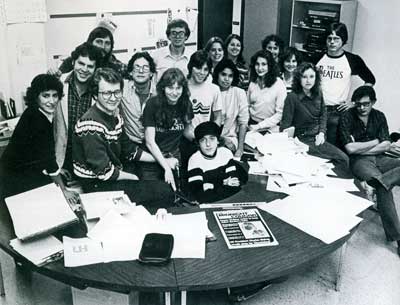
A brief history of The Cougar: UH’s student newspaper reporting on 92 years of American and Houston history

The Courtesy of The Cougar

The pages of The Cougar span generations.

Born in 1928, The Cougar published its first volume on April 6 as the official newspaper of the Houston Junior College, but was reborn with the establishment of UH in 1934. 

The Cougar still continues pushing onwards, writing, documenting and photographing the beating heart of Houston: its namesake University. But from the publication’s infancy till today, the paper has not existed in a vacuum.

The Cougar conducted its first poll of the student body as worries rose over what would eventually become World War II, asking if students supported FDR’s seeking a third term.

On Dec. 19, 1941, The Cougar responded to the Pearl Harbor attacks and subsequent call to war with a “Defense Issue”. Even as wartime rationing stunted business growth and limited advertising revenue, The Cougar continued publishing and even released its first summer issue on June 19, 1942.

With students and alumni being called into the armed forces, The Cougar launched a campaign to use funds from paying subscribers to send out the paper to 500 servicemen from UH. “Wars may come and go, but the Cougar goes on forever” read an editorial cartoon from the April 2, 1943 edition. 

Decades later, The Cougar responded to President John F. Kennedy’s assassination in its Nov. 27, 1963 edition, featuring a campus memorial service on its front page.

The newspaper also took a strong stance against the Vietnam War: after four students were killed during a protest at Kent State University, The Cougar’s front page declared “1, 2, 3, 4, We don’t want your f-ing war”.

The editorial board of The Cougar actively pushed for abortion rights, free contraceptives on campus and the Equal Rights Amendment. 

Beyond political commentary, The Cougar bore witness to national tragedy: on 9/11, the editorial board wrote that rather than “jump to conclusions and blame innocent people…this is a time to come together to mourn the nation’s losses.”

Student reporters also brought insight and humanity to The Cougar’s coverage when the space shuttle Columbia broke apart over Texas in February 2003. 

Since then, The Cougar has continued to publish with relentless attention to the forces shaping the world around students: elections from the national to local level, natural disasters, new laws, changes in the University and so much more.

Now, as the publication confront a national administration like none before it, multiple ongoing international conflicts and cultural debates that never fail to spark controversy, trust that this is far-from-exhaustive account of the paper’s history serves only as a starting point for what we hope to achieve in the future.

We’re honored to have you with us.

For more about The Cougar’s history, explore the UH Student Publications 75th anniversary website. 

news@thedailycougar.com

—
“A brief history of The Cougar: UH’s student newspaper reporting on 92 years of American and Houston history” was originally posted on The Cougar

Posted in UncategorizedComments Off on A brief history of The Cougar: UH’s student newspaper reporting on 92 years of American and Houston history

A brief history of The Cougar: UH’s student newspaper reporting on 92 years of American and Houston history

The Courtesy of The Cougar

The pages of The Cougar span generations.

Born in 1928, The Cougar published its first volume on April 6 as the official newspaper of the Houston Junior College, but was reborn with the establishment of UH in 1934. 

The Cougar still continues pushing onwards, writing, documenting and photographing the beating heart of Houston: its namesake University. But from the publication’s infancy till today, the paper has not existed in a vacuum.

The Cougar conducted its first poll of the student body as worries rose over what would eventually become World War II, asking if students supported FDR’s seeking a third term.

On Dec. 19, 1941, The Cougar responded to the Pearl Harbor attacks and subsequent call to war with a “Defense Issue”. Even as wartime rationing stunted business growth and limited advertising revenue, The Cougar continued publishing and even released its first summer issue on June 19, 1942.

With students and alumni being called into the armed forces, The Cougar launched a campaign to use funds from paying subscribers to send out the paper to 500 servicemen from UH. “Wars may come and go, but the Cougar goes on forever” read an editorial cartoon from the April 2, 1943 edition. 

Decades later, The Cougar responded to President John F. Kennedy’s assassination in its Nov. 27, 1963 edition, featuring a campus memorial service on its front page.

The newspaper also took a strong stance against the Vietnam War: after four students were killed during a protest at Kent State University, The Cougar’s front page declared “1, 2, 3, 4, We don’t want your f-ing war”.

The editorial board of The Cougar actively pushed for abortion rights, free contraceptives on campus and the Equal Rights Amendment. 

Beyond political commentary, The Cougar bore witness to national tragedy: on 9/11, the editorial board wrote that rather than “jump to conclusions and blame innocent people…this is a time to come together to mourn the nation’s losses.”

Student reporters also brought insight and humanity to The Cougar’s coverage when the space shuttle Columbia broke apart over Texas in February 2003. 

Since then, The Cougar has continued to publish with relentless attention to the forces shaping the world around students: elections from the national to local level, natural disasters, new laws, changes in the University and so much more.

Now, as the publication confronts a national administration like none before it, multiple ongoing international conflicts and cultural debates that never fail to spark controversy, trust that this far-from-exhaustive account of the paper’s history serves only as a starting point for what we hope to achieve in the future.

We’re honored to have you with us.

For more about The Cougar’s history, explore the UH Student Publications 75th anniversary website. 

news@thedailycougar.com

—
“A brief history of The Cougar: UH’s student newspaper reporting on 92 years of American and Houston history” was originally posted on The Cougar

Posted in UncategorizedComments Off on A brief history of The Cougar: UH’s student newspaper reporting on 92 years of American and Houston history